2027 Surgical ICU Nurse Workday: Patient Mix, Responsibilities, and Teamwork
Audited and Verified:
Our Editorial and Data Verification Process
Research.com uses government datasets, official education statistics and primary institutional information to support its career and degree guides. Our review process checks factual accuracy, occupational definitions, source dates and the requirements associated with the credentials discussed.
How This Article Was Fact-Checked
Our editorial team verifies salary estimates, employment projections, education requirements and program information against original data providers and official organizations. Salary figures are checked against the relevant occupational definitions and reporting periods. Information about licensure, accreditation and required in-person training is reviewed separately.
Fact-checked and verified on:

Co-Founder and Chief Data Scientist
A surgical intensive care unit (SICU) can be a compelling first specialty—or a demanding transition for an experienced RN. The work centers on patients whose condition may change rapidly after major surgery, so the quality of orientation and team support matters as much as interest in critical care.
This guide follows a typical shift, explains the patient mix, and connects the job's demands to education, credentials, pay, and career choices. Use it to decide whether SICU nursing fits you and what to ask before accepting a position.
Key Things You Should Know
- A surgical ICU nurse commonly cares for one or two patients at a time, but assignments depend on acuity, staffing, and unit policy—not a universal ratio.
- The work combines continuous assessment, postoperative monitoring, complex therapies, documentation, family communication, and rapid coordination when a patient deteriorates.
- An active RN license is essential; a SICU-specific degree is not. Supervised orientation and demonstrated unit competencies are more important to initial readiness than an optional specialty certification.
What does a surgical ICU nurse do during a typical workday?
A SICU nurse cares for critically ill patients before or after surgery, or after a severe injury requiring surgical care. The exact sequence changes with admissions, procedures, emergencies, and whether the nurse works days or nights. A useful way to picture the job is as a repeated cycle of assessment, intervention, reassessment, and communication—not a checklist completed once per shift.
At handoff, the nurse reviews why each patient is in the ICU, the operation or injury, current stability, recent changes, planned procedures, and priorities for escalation. During the shift, the nurse assesses the patient and trends vital signs and other ordered monitoring; administers and evaluates medications and therapies within the care plan; manages ordered devices; documents findings; and prepares for tests, transfers, or bedside procedures. A change in bleeding, breathing, circulation, or neurologic status can immediately reorder those priorities.
Teamwork is continuous. The bedside RN shares observations with surgeons, intensivists, advanced practice clinicians, respiratory therapists, pharmacists, and other staff; coordinates with rehabilitation and case management when appropriate; and explains the plan to patients and families. The RN does not independently set surgical or medical treatment orders. For someone comparing bedside critical care with an advanced practice role, comparing FNP clinical arrangement models is a separate decision: an FNP program's placements do not replace SICU onboarding.
Before applying, ask a unit to describe its actual handoff process, admission and transfer workload, escalation support, and how assignments change when a patient becomes unstable. Those details reveal more about the workday than a shift length alone.
What types of patients do surgical ICU nurses care for?
The mix depends on the hospital's services. A SICU may receive patients after complex abdominal or vascular operations, major trauma, transplant surgery, or other procedures that require intensive monitoring. Some arrive directly from the operating room; others transfer in after complications develop elsewhere. Patients may need ventilatory support, close monitoring for bleeding or infection, or support for unstable circulation.
"Surgical" describes the service and care context, not a promise that every patient is recovering predictably from an operation. One assignment may involve a patient expected to improve and transfer out; another may involve multiple organ problems and difficult conversations with family. Nurses considering a different patient population should compare the work itself: psychiatric nurse practitioner study on a budget leads toward an advanced practice role with a different focus, not an alternative form of SICU training.
Ask prospective employers which surgical services they support, where patients arrive from, and what conditions new hires encounter during orientation. "SICU" can describe substantially different clinical experiences across hospitals.
How do you become a surgical ICU nurse?
First, complete a nursing program that qualifies you to seek RN licensure in the state where you intend to practice. After meeting that state board's requirements, passing the NCLEX-RN, and receiving an active RN license, apply for a SICU position. Graduation, exam passage, licensure, and an employer's decision to hire you are separate steps.
Hospitals vary in whom they hire. Some offer new-graduate critical care residencies; others expect prior ICU, step-down, emergency, or postoperative experience. Neither route makes a nurse independently ready on day one. Look for supervised orientation, a consistent preceptor, exposure to the unit's common patient types, and documented progression toward required competencies. If you already hold a degree outside nursing, entry-level nursing degree comparisons can help you distinguish programs leading toward initial RN eligibility from programs intended for licensed nurses.
For an interview, prepare an example of recognizing a change in a patient's condition, communicating it clearly, and following through—even if that experience came from supervised clinical education rather than ICU employment. Then ask how the unit supports new hires when they need help during a shift.
There is no required "SICU degree." A qualifying associate degree in nursing or prelicensure bachelor of science in nursing can provide a route to RN licensure, subject to state requirements. The better choice is the one that meets your licensing goal and the hiring expectations of hospitals you can realistically join, without overlooking cost and time.
An ADN may offer a more affordable initial route in some markets, while a BSN may align more directly with employers that prefer or require it. A licensed ADN-prepared RN can also consider an RN-to-BSN program later. If you are already an RN considering graduate education, ADN-to-MSN program planning concerns a different goal; an MSN is not a prerequisite for SICU bedside practice.
Compare job postings from several target hospitals before choosing a degree route. Check whether "BSN preferred" differs from "BSN required," whether new graduates are eligible, and whether an employer supports further study. Degree level does not substitute for critical care orientation or observed performance.
Most nurses do not enroll in a separate prelicensure "SICU nursing program." General RN education covers assessment, anatomy and physiology, pathophysiology, pharmacology, clinical judgment, communication, and supervised patient care. Critical care preparation then becomes more specific through an employer's orientation, simulation, precepted shifts, and competency evaluation.
Unit learning may address postoperative complications, hemodynamic monitoring, mechanical ventilation in collaboration with respiratory therapy, medication safety, infection prevention, and escalation during emergencies. Teaching about a device or therapy is not the same as authorization or demonstrated ability to manage it independently. The employer determines which unit competencies must be validated under its policies.
Do not confuse advanced practice coursework with this transition-to-practice training. For example, exploring 12-month FNP study pathways concerns preparation for a different licensed role and does not provide a shortcut through bedside SICU orientation.
Yes, a program may deliver some coursework online and still prepare a student to pursue RN licensure, provided it meets applicable educational and state requirements. Prelicensure nursing education also includes required in-person clinical learning and, commonly, on-site labs or simulation. "Online" does not mean that patient-care practice, scheduled assessments, or clinical placements can be completed from home.
For a licensed RN, online RN-to-BSN or graduate coursework may be easier to combine with SICU shifts, but live sessions, fieldwork, and campus visits can still affect the schedule. Exploring faster online DNP routes is relevant only if your goal later requires that degree; a DNP is unnecessary for the SICU bedside role itself.
Before enrolling, request the program's written clinical-site arrangements, attendance requirements, and state eligibility information for your location. If you already work in a SICU, do not assume employment hours automatically count toward a program's required clinical experiences.
A SICU bedside nurse needs an active RN license authorizing practice in the relevant jurisdiction. The employer may also require training and validated competencies for its equipment, therapies, and emergency procedures. Confirm current requirements with the state board and prospective employer rather than treating a job posting from another state as authoritative.
Critical care certification, such as AACN Certification Corporation's CCRN credential, is a professional specialty credential, not an RN license or permission to perform procedures. Eligibility includes requirements set by the certifying organization, including qualifying practice experience; check its current handbook before planning an exam. Basic or advanced resuscitation credentials may be employer requirements, depending on the position.
A postgraduate credential for another role is not interchangeable with critical care certification. Shorter postgraduate family nursing preparation, for instance, addresses an advanced practice education pathway, not a SICU RN's required license or bedside competencies.
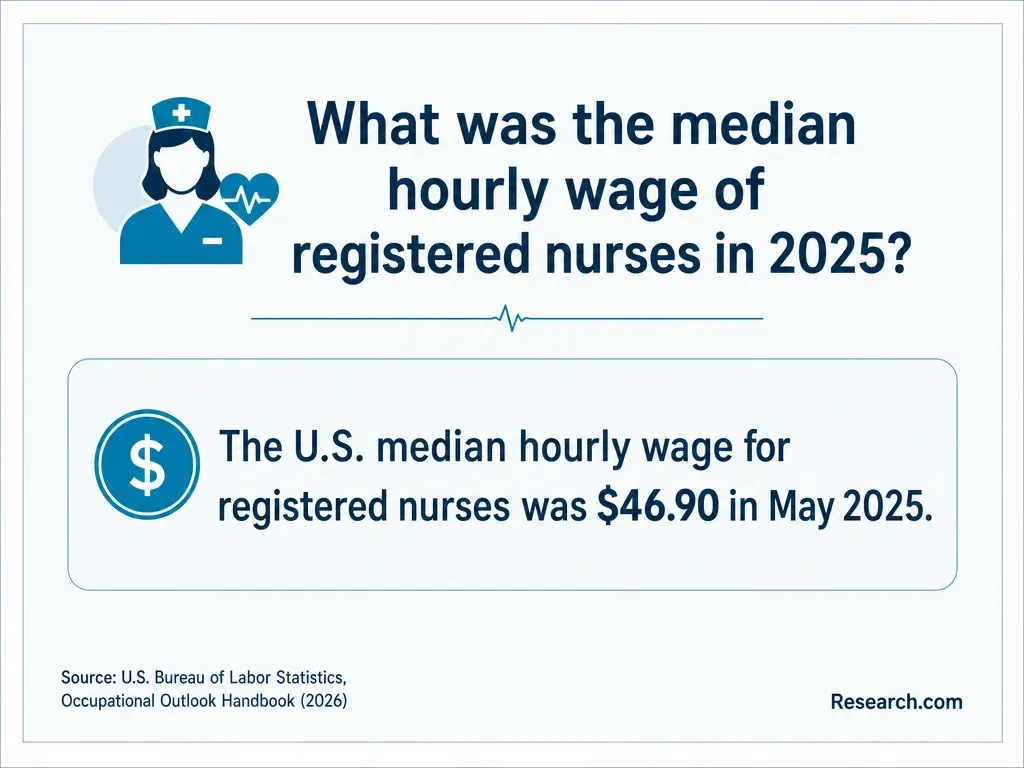
There is no single reliable national median wage specifically for "surgical ICU nurse." The U.S. Bureau of Labor Statistics reports wages for the broader registered nurse occupation, not a separate SICU category. That figure can provide context, but it cannot predict an individual SICU offer. Location, employer, experience, collective bargaining arrangements, shift differentials, overtime, and on-call expectations can all change total compensation.
Compare written offers using base hourly pay and the conditions attached to additional pay. Ask when differentials apply, how overtime is calculated, whether residency time is paid at the usual rate, and what benefits cost you. If an employer offers education assistance, check its eligibility and repayment terms before using projected future pay to justify another degree. Affordable master's progression for bachelor's-prepared RNs may be worth evaluating for a later role, but an MSN should not be assumed to raise bedside SICU pay.
Experienced SICU nurses may move into charge nursing, precepting, clinical education, quality or safety work, or other critical care settings. Each move has different expectations: being an excellent bedside nurse does not automatically confer supervisory authority or qualify someone to teach independently. Internal opportunities and employer-supported development may be more direct than another degree.
Some nurses later seek advanced practice roles or graduate preparation in leadership or education. The right route depends on the target job, not on the assumption that a higher degree is always better. DNP programs with flexible admission criteria may be useful to compare if a DNP fits a defined goal, but admission flexibility does not establish APRN eligibility; the program's specific track, supervised experiences, certification pathway, and state requirements matter.
Before leaving bedside practice, name the work you want to do next and review actual postings. That check may show that a committee project, preceptor experience, or targeted employer training is more useful than graduate enrollment—or that formal advanced preparation is necessary.
How do you choose an accredited nursing program?
For an aspiring SICU nurse, start with the program's ability to support initial RN licensure in your intended state. Verify state board approval or recognition and the program's applicable nursing accreditation separately from the institution's accreditation. These are different checks; none guarantees admission, licensure, or a SICU job.
Next, compare supervised clinical access, scheduling, total costs, published outcomes, and support for the transition into practice. Ask whether the school can document clinical placements and whether local hospitals recruit its graduates into critical care residencies. For an already licensed RN considering a later advanced practice goal, affordable online nurse practitioner programs require a separate review of the exact specialty track, clinical arrangements, and certification eligibility; they are not the route to an initial SICU RN position.
The best near-term program decision is one that gets you eligible for RN licensure and leaves you prepared to learn safely under supervision. The best first SICU job is one that makes that supervision real.
Other Things You Should Know About Nursing
No. A post-anesthesia care unit (PACU) generally focuses on immediate recovery after anesthesia, while a SICU provides ongoing intensive care to critically ill surgical patients. Patient overlap does not make orientation or competencies interchangeable.
No. Many SICUs operate around the clock. Ask about nights, weekends, holidays, rotating schedules, and how often staff must cover extra shifts before accepting an offer.
It can be. Nurses spend substantial time on their feet and help reposition or mobilize patients using available staff and equipment. Ask how the unit supports safe patient handling.
Ask how nurses get help when a patient deteriorates, who supports admissions, and what new hires are expected to manage by the end of orientation. Protect patient privacy and follow the hospital's shadowing rules.
- Handoffs and transitions of care in the intensive care unit - PMC https://pmc.ncbi.nlm.nih.gov/articles/PMC11836866/
- Chapter 2 Perioperative Care - Health Alterations - NCBI - NIH https://www.ncbi.nlm.nih.gov/books/NBK613066/
- Who works in intensive care? | ics.ac.uk https://ics.ac.uk/patient-resources/working-in-intensive-care.html
- 12 Hours on the Frontlines: A Day in the Life of an ICU Nurse | healthecareers.com https://www.healthecareers.com/career-resources/nurse-career/a-day-in-the-life-of-an-icu-nurse
- A Day in the Life of an ICU nurse | Altera Digital Health https://www.alterahealth.com/2022/05/a-day-in-the-life-of-an-icu-nurse/
- Understanding Nurse-to-Patient Ratios by Healthcare Setting https://www.nurse.com/blog/how-nurse-to-patient-ratios-differ-healthcare-settings-nsp/
- What every nurse should know about staffing | American Nurse https://www.myamericannurse.com/what-every-nurse-should-know-about-staffing/