2027 Skill Mix vs Staffing Numbers: How Nursing Teams Are Described
Audited and Verified:
Our Editorial and Data Verification Process
Research.com uses government datasets, official education statistics and primary institutional information to support its career and degree guides. Our review process checks factual accuracy, occupational definitions, source dates and the requirements associated with the credentials discussed.
How This Article Was Fact-Checked
Our editorial team verifies salary estimates, employment projections, education requirements and program information against original data providers and official organizations. Salary figures are checked against the relevant occupational definitions and reporting periods. Information about licensure, accreditation and required in-person training is reviewed separately.
Fact-checked and verified on:

Co-Founder and Chief Data Scientist
A unit can have enough people on a shift and still lack the right clinical coverage. Staffing numbers describe how many workers or hours are available; skill mix describes the roles and capabilities represented in that coverage. For nursing students, new graduates, and nurses comparing jobs, the distinction affects patient safety, delegation, workload, and the education needed for different responsibilities.
This guide explains how to read a team description, connect it to nursing pathways, and ask better questions about a program or workplace.
Key Things You Should Know
- A team of two RNs differs from a team of one RN and one LPN/LVN, even though both have two licensed staff members.
- Two people each working 12 hours supply 24 staff-hours, but their roles, timing, assignments, and competencies determine what care those hours can support.
- RN, LPN/LVN, and unlicensed assistive personnel (UAP) have different preparation and permitted duties; a degree alone does not establish licensure or readiness for a particular assignment.
What do skill mix and staffing numbers mean in nursing teams?
Staffing numbers report the quantity of personnel or labor available, such as workers per shift or nursing hours per patient day. Skill mix describes who provides that labor - for example, the share supplied by RNs, LPNs/LVNs, and nursing assistants. Neither measure alone establishes whether staffing is safe.
Suppose a shift has one RN and one LPN working 12 hours each. That is two staff members and 24 licensed nursing staff-hours, but only 12 are RN hours. Replacing the LPN with an RN leaves headcount and total licensed hours unchanged while changing the skill mix. The appropriate arrangement depends on patient needs, the work assigned, applicable law, and available support - not an assumption that one mix is always better.
When reviewing a staffing claim, check its denominator and time period. An average for an entire facility can conceal differences between units or between day and night shifts. An RN staffing percentage also says little about experience with that unit's patients. Nurses interested in organizational staffing analysis may encounter these questions in online DNP executive and organizational pathways, but an additional degree is not required to ask how a prospective employer calculates coverage.
How do RN, LPN, and UAP roles differ within nursing teams?
Role labels indicate different preparation and legal authority, not interchangeable units of labor. State nurse practice acts, employer policies, patient condition, and demonstrated competence determine which tasks a team member may perform.
The comparison below explains why a staffing roster should identify roles rather than report only a total headcount.
| Team member | Typical preparation | Contribution and key limit |
| RN | Approved prelicensure RN program and RN license | Assesses, develops and evaluates nursing care, exercises clinical judgment, and delegates within applicable rules; assignments must still match competence and resources. |
| LPN/LVN | Practical or vocational nursing program and LPN/LVN license | Provides nursing care within state-defined scope, often with RN or other authorized supervision; scope and supervision rules vary. |
| UAP, including nursing assistants | Employer-required training and, for some roles or settings, state-required credentials | Performs assigned supportive tasks; does not acquire a nursing license through delegation. |
Delegation is a clinical decision, not a way to make a short-staffed shift appear fully covered. An RN remains responsible for appropriate assessment, assignment, supervision, and follow-up under applicable rules. Someone considering planning an accelerated practical nursing pathway should confirm that the program meets their state's eligibility requirements and understand that an LPN/LVN license is distinct from an RN license.
How do nursing degree pathways prepare students for staffing responsibilities?
Prelicensure RN programs teach students to recognize changes in patient condition, prioritize care, communicate with team members, and make appropriate assignments. Classroom work, simulation, and supervised clinical practice build those abilities; graduation does not by itself establish independent workplace competence.
An ADN/ASN or prelicensure BSN can provide a route toward initial RN licensure if the program meets the relevant state's requirements. A BSN generally adds broader study in areas such as population health, evidence-based practice, and leadership. An RN-to-BSN program instead assumes an existing RN license and does not serve as a first route to that license. For a person with a prior degree outside nursing, comparing nursing degrees for non-nursing graduates means separating prelicensure options from programs that require an RN license.
For staffing decisions, compare programs by their opportunities to practice handoffs, escalation, assignment, and supervised team care - not by degree title alone. An employer's orientation and unit-specific competency checks remain essential after licensure.
First verify that the prelicensure program is approved or otherwise recognized by the board of nursing in the state where you intend to seek initial licensure. Then check institutional accreditation and whether the specific nursing program holds accreditation from an applicable nursing accreditor, such as ACEN or CCNE. These are separate checks: institutional accreditation covers the institution, program accreditation covers a defined nursing program, and the state board determines licensure eligibility under its rules.
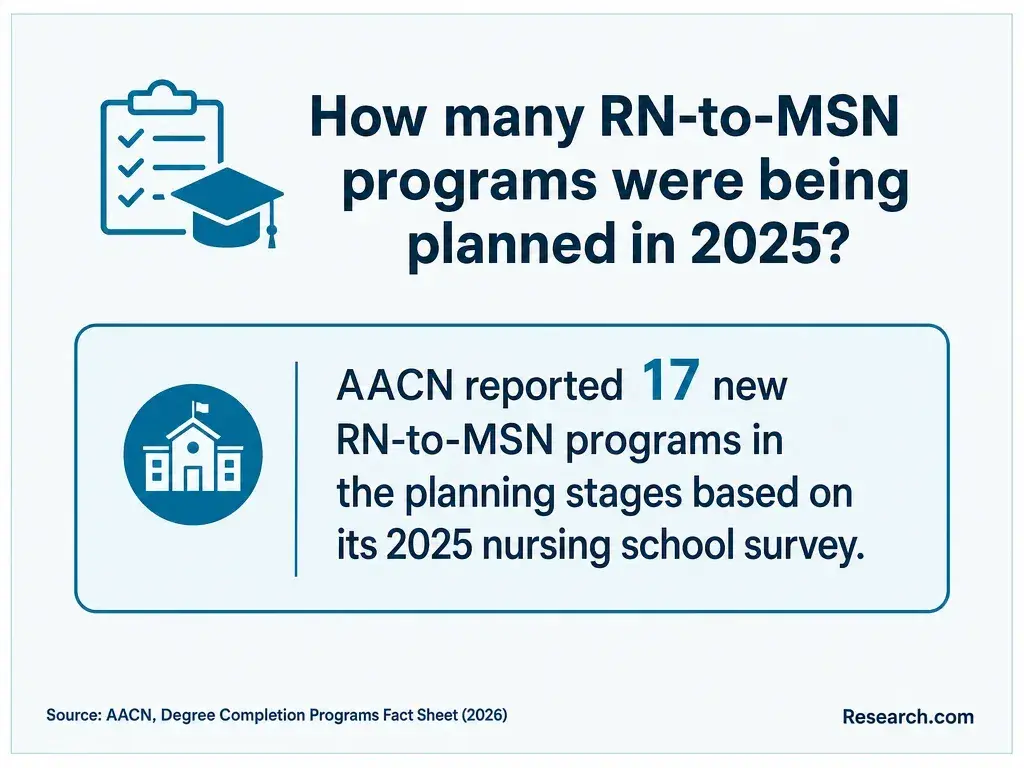
Ask the school for the exact degree and campus or delivery track covered, and confirm its status directly with the relevant accreditor and board before enrolling. This matters especially when a pathway changes institutions or credentials: MSN pathways that accept ADN-prepared nurses are postlicensure routes, not substitutes for confirming that an initial RN program qualifies its graduates to apply for licensure.
A prospective RN generally completes a state-acceptable prelicensure nursing program, applies to a state board of nursing, meets that board's eligibility requirements, and passes the NCLEX-RN. The board - not the school or examination alone - issues the license. Requirements such as background checks and application procedures vary by jurisdiction.
Licensure authorizes RN practice within applicable law; it does not establish competence for every unit or authorize advanced practice. New RNs should expect employer orientation, supervised progression, and competency evaluation before taking on unfamiliar assignments. Likewise, shorter family NP certificate pathways concern additional, population-focused preparation for eligible nurses; they do not replace RN licensure or automatically confer APRN authorization.
Online delivery can make lectures easier to access, but prelicensure students must still complete required skills instruction, assessments, and supervised clinical learning in formats accepted by the program and regulator. Campus-based programs may make scheduled labs more predictable, while either format can involve fixed clinical shifts, travel, or limited placement choices.
Ask for a sample term schedule that identifies live classes, labs, simulation, clinical days, and who arranges placements in your area. Already-licensed RNs have a different choice: when comparing no-traditional-clinical RN-to-BSN options, check whether a program instead requires projects, practice experiences, local-site participation, or scheduled meetings. "Online" does not mean entirely asynchronous or free of on-site obligations.
Health assessment, pathophysiology, pharmacology, and adult or specialty nursing courses help students understand what care a patient needs. Clinical judgment, communication, documentation, ethics, and leadership work help them decide what to do, whom to involve, and when to escalate. Simulation and supervised clinical experiences let faculty observe those decisions; a completed course is not proof of independent competence.
For the skill-mix question, look for learning activities that require students to distinguish an RN assessment from an assignable task, give a clear handoff, and reassess after delegation. Later specialty study may address a different goal: PMHNP certificate programs by duration concern preparation for a psychiatric advanced practice role, not a general solution to bedside RN staffing shortages.
Length depends on prerequisites, course sequence, transfer-credit decisions, enrollment pace, and clinical placement availability. An ADN commonly takes about two years of nursing study, while a traditional BSN commonly takes about four years of undergraduate study; prerequisites or part-time enrollment can change the elapsed time. RN-to-BSN schedules vary because students enter with prior nursing education and an RN license.
Compare each school's written, program-specific cost estimate rather than tuition alone. Include fees, books, equipment, background checks, immunizations, transport to clinical sites, examination and licensing expenses, and earnings you may forgo. If considering graduate specialty study, budget-conscious PMHNP study options should be evaluated on total required costs and clinical-site logistics, not the advertised per-credit price. For the narrower goal of understanding or participating in staffing decisions, employer education or targeted continuing education may cost less than another degree.
After obtaining an RN license, a new graduate may seek roles in hospitals, ambulatory care, long-term care, or community settings, subject to employer hiring and orientation requirements. Job titles alone do not reveal workload: compare the actual patient assignment, RN-to-LPN/UAP mix, charge-nurse support, and how orientation changes before independent assignments.
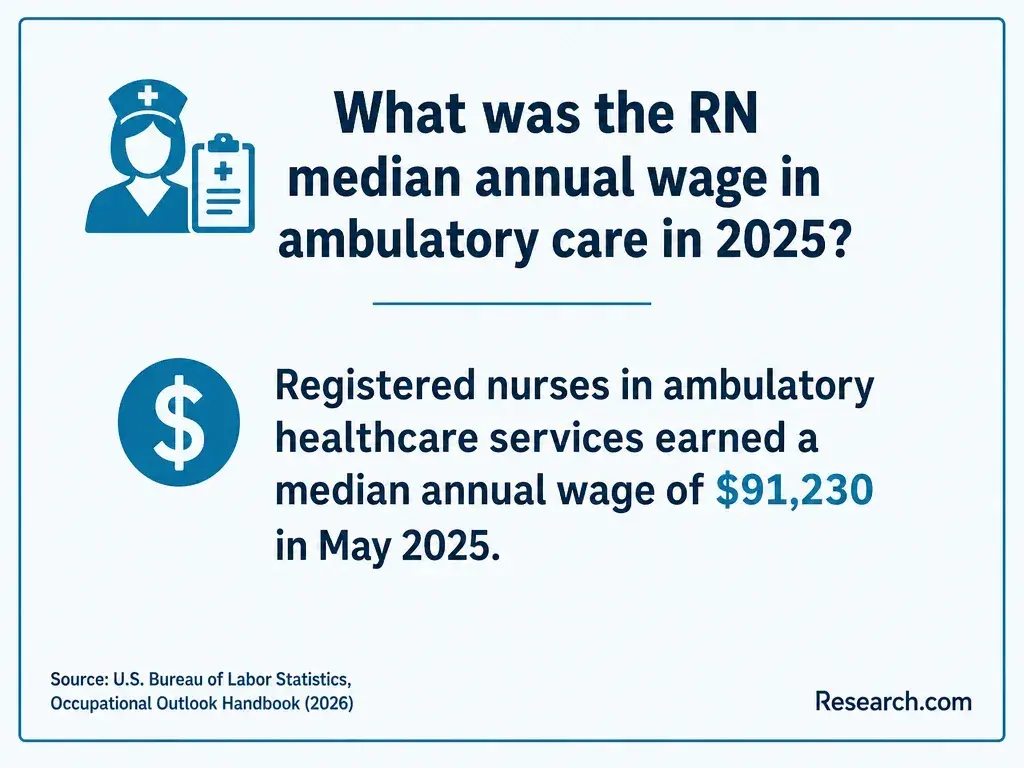
The U.S. Bureau of Labor Statistics reports an occupation-wide median annual wage for registered nurses; it is not a starting salary or a wage attached to an ADN or BSN. Location, setting, shifts, and experience can substantially affect an offer. Nurse practitioner pay describes a different occupation with additional requirements. Nurses considering exploring less expensive nurse practitioner study should compare that role's duties and educational costs separately from an RN job offer.
How strong is demand for nurses, and which standards guide staffing?
U.S. Bureau of Labor Statistics projections can indicate national demand for registered nurses, but they cannot predict openings, schedules, or working conditions on a particular unit. Staffing decisions are more local: state law, setting-specific regulations, employer policy, patient acuity, nurse competencies, and professional guidance all matter. No single national RN-to-patient ratio describes every U.S. nursing setting.
Before accepting a position, ask how the unit adjusts assignments when patients' needs change, how RN and support-staff hours are measured, who covers breaks and absences, and how new nurses raise a safety concern. If your aim is to lead staffing improvement rather than change clinical roles, planning an accelerated DNP pathway is only one possible route; relevant experience, employer-led quality work, and focused leadership training may be more direct.
Other Things You Should Know About Nursing
No. It does not show whether enough people are present at the right times, whether they have relevant competencies, or how demanding their assignments are.
A student's supervised learning is not automatically a substitute for an employee assignment. The school, clinical site, and applicable rules determine the student's permitted activities and supervision.
No. LPNs/LVNs hold nursing licenses; nursing assistants and other UAP provide supportive care under applicable training, assignment, and supervision rules.
Ask which workers and shifts it includes, whether it is an average or an actual assignment, and how the unit responds when patient needs or staffing change.
- Nursing and Patient Safety | PSNet https://psnet.ahrq.gov/primer/nursing-and-patient-safety
- Hospital nurse-staffing models and patient - PMC - NIH https://pmc.ncbi.nlm.nih.gov/articles/PMC6478038/
- Framework for Safe Nurse Staffing and Skill Mix | gov.ie https://www.gov.ie/en/department-of-health/campaigns/framework-for-safe-nurse-staffing-and-skill-mix/
- Nurse staffing levels and patient outcomes: A systematic review of longitudinal studies - ScienceDirect https://www.sciencedirect.com/science/article/pii/S0020748922001407
- JMIR Nursing - Calculating Optimal Patient to Nursing Capacity: Comparative Analysis of Traditional and New Methods https://nursing.jmir.org/2024/1/e59619/
- Nurse Staffing Measures | ANA https://www.nursingworld.org/practice-policy/nurse-staffing/nurse-staffing-measures/