2027 Return on Investment of an Online Applied Psychology Bachelor's Degree: Salary vs Cost

Co-Founder and Chief Data Scientist
Imagine a working professional aiming to transition into the applied psychology field through an online bachelor's degree but unsure if the financial investment will lead to meaningful salary growth. With average early career salaries for applied psychology graduates around $50,000 annually, compared to the national median of $42,000 for all fields, the decision involves weighing upfront tuition costs against long-term earnings.
This uncertainty often stalls career pivots despite the field's growing demand. This article analyzes salary outcomes versus educational expenses, guiding readers to make informed choices about the return on investment for an online applied psychology bachelor's degree.
Key Things to Know About the Return on Investment of an Online Applied Psychology Bachelor's Degree
- Tuition for online applied psychology bachelor's degrees averages $15,000 to $25,000-significantly lower than traditional programs-making it accessible for budget-conscious students.
- Salary outcomes post-graduation range from $45,000 to $65,000 annually, with growth linked to specialization, experience, and advanced certifications.
- Non-financial benefits include enhanced job security, career advancement potential, and continuous professional development opportunities that support long-term success.
What Is the True Cost of Earning an Online Applied Psychology Bachelor's Degree From Enrollment to Graduation?
Students pursuing an online applied psychology bachelor's degree total cost face various direct and indirect expenses throughout their education journey. Evaluating these helps in making informed decisions about the true financial commitment involved.
- Tuition Fees: Tuition is the largest cost and varies significantly by school. National Center for Education Statistics and IPEDS data show that online bachelor's programs in applied psychology usually list prices from $15,000 to $40,000 for the full degree. However, many students pay 25% to 50% less after receiving grants and scholarships, which reflects the net price.
- Technology and Access Fees: Most programs charge mandatory technology fees between $100 and $500 annually to support online platforms and student resources. Specialized software may be required for coursework involving research or data analysis in applied psychology.
- Textbooks and Materials: Course materials, including textbooks and digital resources, add approximately $1,000 to $2,000 overall. While some e-textbooks offer cost savings, many essential applied psychology texts remain expensive.
- Proctoring and Exam Fees: To maintain academic integrity, online exams frequently require proctoring services with fees ranging from $30 to $60 per test, which can total $200 to $400 over four years.
- Indirect Costs: Students must budget for reliable internet service, computer hardware, and potential income loss if studies reduce work hours. These factors vary widely but are crucial to consider.
Combining these expenses results in an estimated total between $20,000 on the low end-with generous financial aid-and up to $45,000 for higher-priced institutions without assistance. This cost range sets a realistic baseline for analyzing return on investment by comparing potential salary gains against educational expenses. First-generation college students on tight budgets and professionals planning advancement can use this data to assess how much their online applied psychology bachelor's degree may realistically cost from enrollment to graduation.
For those exploring flexible pathways, this information supports thoughtful planning when choosing the best online applied psychology program. Interested readers can also explore programs recognized as one of the easiest online degree options, which might align well with workload capacity and budget considerations.
How Does the Starting Salary for Applied Psychology Bachelor's Degree Graduates Compare to the Total Cost of the Degree?
Graduates holding an online applied psychology bachelor's degree often begin their careers in roles such as human resources specialists, social service coordinators, or case managers. According to the Bureau of Labor Statistics (BLS) Occupational Outlook Handbook, the median starting salary for these entry-level positions generally ranges from $45,000 to $55,000 annually. When set against the total cost of earning an online applied psychology degree-which can range between $20,000 to $50,000 depending on tuition and financial aid-graduates can assess their financial outlook more clearly using a payback period metric.
The payback period compares total degree cost to starting salary. In an ideal scenario where tuition costs $20,000 along with significant aid, graduates might offset their investment in approximately 5 to 6 months of gross starting salary. Conversely, for more expensive programs costing up to $50,000 without extensive aid, the payback period extends to around 11 to 13 months. This calculation excludes taxes and living expenses but provides a practical baseline for first-generation college students balancing tight budgets or working professionals shifting careers.
Beyond starting salary, BLS projections indicate a 10% to 15% median wage growth over several years, improving long-term financial returns for graduates. Students should also consider non-financial benefits such as job stability, career progression, and professional skills. For prospective students exploring affordable options, the family therapy degree pathways may offer valuable alternatives with comparable growth opportunities.
- Median Starting Salary: Entry-level positions for applied psychology graduates typically offer annual wages between $45,000 and $55,000, according to BLS data, establishing a realistic earnings benchmark.
- Degree Cost Range: Total costs for online applied psychology bachelor's degrees generally fall between $20,000 and $50,000, influenced by tuition and financial aid availability.
- Payback Period: Graduates can expect to repay their degree investment within 5 to 13 months of starting salary, with variation due to cost and aid differences.
- Salary Growth Potential: Projected wage increases of 10% to 15% during early career stages enhance the degree's overall financial value.
- Beyond Finances: Career advancement, job security, and professional development contribute significant non-financial returns on investment.
What Is the Average Return on Investment (ROI) for an Online Applied Psychology Bachelor's Degree Over a 10-Year Career?
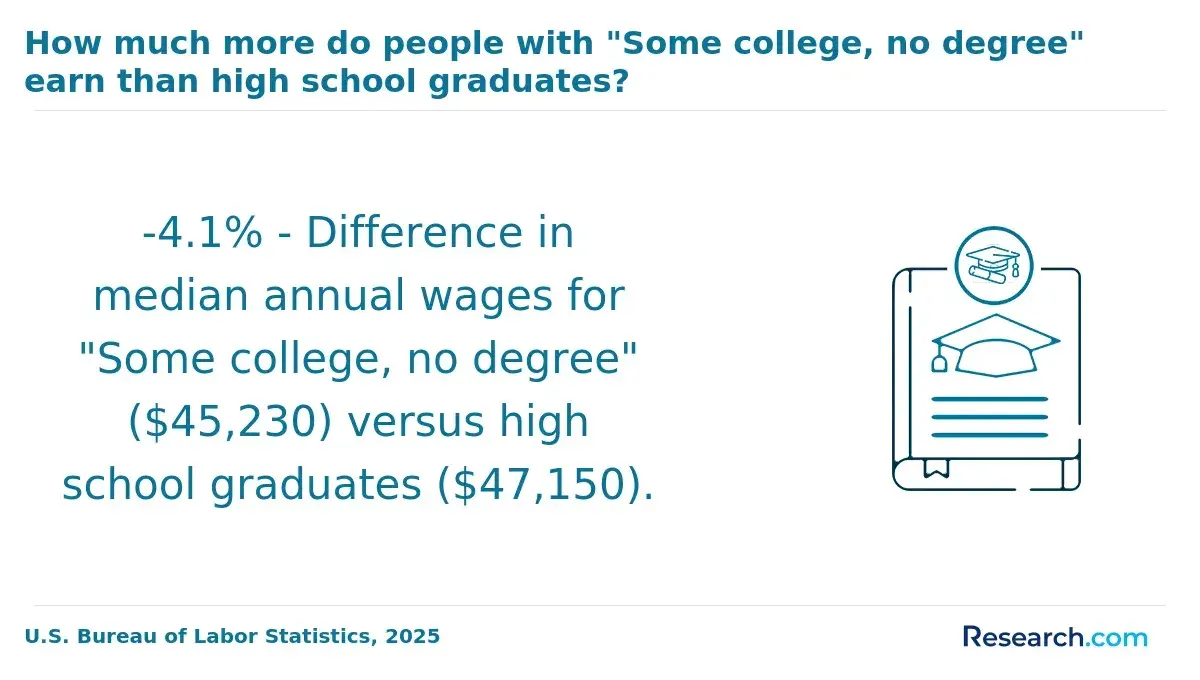
Return on investment (ROI) in higher education compares the total cost of earning a degree to the extra income a graduate gains over a decade, relative to someone holding only a high school diploma or associate degree in the same field. According to the Georgetown University Center on Education and the Workforce, ROI is calculated by subtracting the degree's full cost from the cumulative earnings gap between degree holders and non-degree holders.
Using median wage data from the Bureau of Labor Statistics, the starting salary for applied psychology graduates averages around $50,000 annually. Assuming a 3% yearly raise, total earnings over 10 years reach approximately $552,000. In comparison, individuals with only a high school diploma earn about $30,000 yearly, accumulating roughly $331,000 over the same period with similar raises. This results in an earnings differential of about $221,000 before education costs are accounted for.
The typical cost for an online applied psychology bachelor's degree ranges from $30,000 to $60,000; using a midpoint of $45,000, the net ROI after 10 years is roughly $176,000. This figure is consistent with the national average ROI for bachelor's degrees, indicating that the investment in an applied psychology degree remains competitive and financially sound.
- Clear Definition: ROI measures the net financial benefit of a degree by subtracting all related costs from the additional income earned compared to less education over time.
- Sample Calculation: Based on BLS wages, cumulative earnings for applied psychology graduates reach $552,000 over 10 years, outpacing high school graduates by $221,000 before deducting degree expenses.
- Cost Consideration: With average tuition near $45,000, graduates can expect a net gain of about $176,000 after 10 years.
- Comparative ROI: The financial return of this degree aligns closely with the average for all bachelor's degrees nationally, supporting its value as an investment.
A professional who chose to pursue an online applied psychology bachelor's degree shared that the decision hinged on carefully weighing the upfront expenses against projected earnings. He described feeling hesitant initially due to financial constraints but found that breaking down the costs and potential salary growth helped him commit confidently. "Knowing the numbers gave me peace of mind," he explained, emphasizing how the flexibility of the online program allowed him to balance work and studies without sacrificing income. The practical outlook on ROI provided by data-driven comparisons was instrumental in his journey toward establishing a sustainable career path.
How Do Online Applied Psychology Program Tuition Rates Compare Across Public, Private, and For-Profit Institutions?
Tuition rates for online applied psychology programs can differ significantly among public, private, and for‑profit institutions. Generally, public universities tend to offer more affordable tuition—especially for in‑state students—while private and for‑profit schools often charge higher rates but may include additional services or flexible scheduling options. Comparing these differences helps prospective students evaluate overall cost, financial aid opportunities, and the value of each online applied psychology degree
- Public Institutions: Public universities remain the most economical option for online applied psychology degree tuition, especially for in-state students. Many now offer flat-rate online tuition, charging the same fee regardless of residency, which benefits nontraditional and out-of-state learners. For the 2023-2024 school year, typical in-state tuition ranges between $5,000 and $9,000 annually, with flat-rate pricing usually falling inside this range.
- Private Nonprofit Schools: These institutions typically charge higher tuition, around $15,000 to $30,000 per year. Despite steeper costs, students often receive enhanced academic support, extensive networking, and improved graduation outcomes, which contribute to stronger career prospects. Scholarship opportunities and financial aid can make these programs financially viable.
- For-Profit Colleges: Usually promoting the lowest tuition-roughly $4,000 to $10,000 annually-these schools target working adults and career changers. Yet, they frequently report lower graduation rates, and employers may view their credentials skeptically, which can limit salary growth and job security after graduation. These factors should be carefully weighed against initial savings.
Choosing the lowest tuition does not guarantee the best financial return. While for-profit colleges may reduce upfront debt, graduates often face challenges with career progression. Public and private nonprofit programs demand higher initial investment but typically provide better nonfinancial returns such as professional development and employer recognition, which enhance long-term earnings and stability. When comparing costs, incorporating verified salary outcomes and program quality is essential for an informed decision on the online applied psychology degree tuition comparison.
Working professionals and first-generation college students should consider the comprehensive value of their education investment, factoring in both price and professional advantages. For those exploring options that balance cost and quality, the best online business degree guides may offer useful insights applicable across fields.
What Long-Term Salary Growth Can Applied Psychology Bachelor's Degree Holders Expect Over a 20- to 30-Year Career?
Applied psychology bachelor's degree holders typically see a steady rise in earnings influenced by experience and career progression. Initial years (0-5) involve entry-level roles like assistants or coordinators, with median salaries around $45,000 to $55,000 annually. This phase focuses on building core skills and adapting to workplace demands.
- Mid Career Acceleration: Between 5 and 10 years, salary growth speeds up as professionals advance into specialized roles such as behavioral analysts or human factors specialists. Median pay often increases to $65,000 to $75,000 per year, reflecting greater job complexity and some supervisory duties.
- Established Career: At 10 to 15 years, many move into managerial or senior specialist positions, earning $80,000 or more, with high-demand sectors occasionally offering six-figure incomes.
- Late Career Stability: With 15 to 30 years of experience, professionals often take on consulting, strategic, or educational roles. Earnings tend to stabilize or rise gradually, underpinned by extensive expertise and marketability.
- Lifetime Earnings Premium: Over two to three decades, degree holders can expect an earnings advantage of roughly $400,000 to $600,000 compared to non-degree peers, due to better job access and promotions.
- Career Advancement: The degree unlocks specialized roles with higher pay and benefits, offering stronger job security and professional growth opportunities.
A professional who completed an online applied psychology bachelor's degree shared that early challenges involved balancing coursework with full-time work, which tested her time management skills intensely. She reflected that the program's flexibility allowed her to apply psychological principles directly to her job, accelerating her promotion to a supervisory role within a few years. "It wasn't an overnight change," she said, "but being able to see how theory translates into real-world results kept me motivated. Now, with over a decade in the field, I witness firsthand how that degree opened doors I hadn't imagined." Her experience highlights how sustained effort and relevant education together fuel long-term salary growth and career fulfillment.
How Does the ROI of an Online Applied Psychology Bachelor's Degree Compare to an Associate Degree or a Professional Certificate?
The return on investment (ROI) of an online applied psychology bachelor’s degree is generally higher than that of an associate degree or a professional certificate over the long term. Bachelor’s degree holders often have access to a wider range of career opportunities, higher starting salaries, and greater potential for salary growth compared with those holding lower‑level credentials. When comparing ROI, students should also consider factors such as program cost, industry demand, and long‑term career goals.
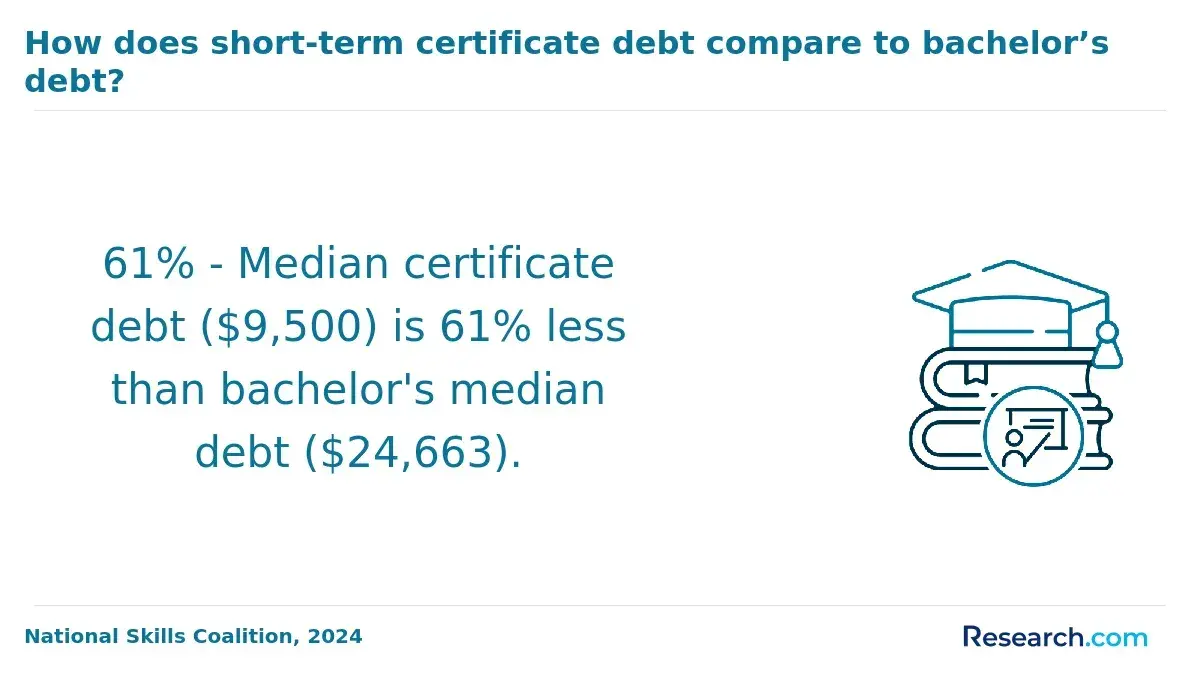
- Cost: Tuition for an online applied psychology bachelor's degree generally falls between $20,000 and $40,000, significantly exceeding the $8,000 to $15,000 range typical for associate degrees. Certificates tend to be the least costly option, often costing less than $5,000 depending on the provider. This price spread reflects the varying levels of depth and duration across these credentials.
- Salary Potential: Median annual wages vary notably by credential level. According to the U.S. Bureau of Labor Statistics, those with a bachelor's degree in psychology-related fields earn about $75,000, while associate degree holders make around $45,000, and certificate holders earn approximately $35,000. The salary advantage of a bachelor's degree grows over time, underscoring its value for long-term earning capacity.
- Short-Term Investment: For individuals seeking rapid entry into the workforce or with budget constraints, certificates and associate degrees provide affordable and quicker pathways. These options are well-suited for career changers needing immediate skill development or working professionals balancing education with other commitments.
- Long-Term Returns: The bachelor's degree offers stronger career advancement and better job security. It opens opportunities in leadership, specialized roles, and graduate education that shorter credentials rarely provide. Over the course of a career, the higher initial costs usually pay off through increased earnings and professional stability.
- Decision Framework: Choosing the right credential depends on financial resources, career goals, and time availability. If minimizing debt or entering the job market quickly is a priority, associate degrees or certificates may be the best fit.For those targeting leadership positions or broader career options, investing in a bachelor's degree is generally more beneficial.
Beyond immediate income, a bachelor's degree enhances critical thinking, research abilities, and professional networking. These aspects contribute to long-term resilience amid shifting labor market demands.
Which Online Applied Psychology Specializations or Concentrations Yield the Highest Earning Potential After Graduation?
Specializing within an online applied psychology bachelor's degree can considerably enhance salary prospects and overall return on investment, according to Bureau of Labor Statistics data. Graduates focusing on specific tracks tend to earn higher median salaries compared to generalist applied psychology graduates entering similar fields.
- Industrial-Organizational Psychology: Careers in human resources, talent management, and organizational development offer median annual salaries often above $97,000. These roles usually require certifications like SHRM-CP, adding upfront costs but delivering strong salary premiums and career advancement.
- Forensic Psychology: Jobs in legal or correctional settings provide median wages around $61,000, higher than generalists. However, this path often demands additional certification or graduate education, which can delay return on investment but enhance long-term earnings and job security.
- Health Psychology: Positions in patient advocacy, wellness coordination, and behavioral health counseling offer median salaries near $80,000. Certifications such as Certified Health Education Specialist may require extra investment but broaden career opportunities.
- Human Factors Psychology: Focused on technology usability and workplace safety, this concentration delivers median earnings around $84,000. Though less common, it typically requires ongoing professional development and offers strong entry-level pay.
- General Applied Psychology: Graduates without specialization commonly earn median salaries near $55,000, frequently entering support or entry-level roles. This route has lower upfront costs but slower salary growth.
For first-generation college students, working professionals, or career changers with limited budgets, selecting a specialization aligned with current skills and career goals can optimize time-to-ROI. While some specializations entail further certification or graduate studies, investing in these areas usually correlates with enhanced job security, higher salaries, and meaningful professional development.
With verified salary data from the Bureau of Labor Statistics and educational cost comparisons from IPEDS and higher education research organizations, students can make informed decisions about online applied psychology programs to best fit their financial and professional aspirations.
How Do Employer Tuition Reimbursement and Financial Aid Reduce the Net Cost of an Online Applied Psychology Bachelor's Degree?
Employer tuition reimbursement programs can significantly ease the financial burden of earning an online applied psychology bachelor's degree. According to the Society for Human Resource Management (SHRM), nearly 60% of U.S. employers offer tuition assistance, which often covers part or all of a degree program's expenses.
Under IRS Section 127, employers may provide up to $5,250 per year in tax-free educational benefits. This cap allows employees to reduce their out-of-pocket tuition without increasing their tax liability. Many companies require course completion before reimbursement, fostering steady academic progress and enhancing job-related skills.
Federal and institutional financial aid further minimize costs for online applied psychology bachelor's students. Grants, scholarships, and subsidized loans-such as Pell Grants provided by the U.S. Department of Education-help many students lower net tuition by 40% or more. These funding sources often do not require repayment, a crucial advantage for managing long-term debt. Institutions may also offer merit-based scholarships targeted specifically at applied psychology majors, increasing access to affordable education.
Consider a typical student who receives $5,000 annually through employer tuition reimbursement combined with $8,000 in federal grants and scholarships. For a $40,000 program, the net cost drops to approximately $27,000-a 33% reduction. This substantial saving makes degree completion more attainable, especially for working adults balancing education and employment. In addition to saving money, pursuing financial aid and employer benefits enhances career advancement opportunities and job security. For those also interested in graduate studies, linking to programs such as masters in organizational leadership online can provide further professional growth options.
- Employer Tuition Benefits: Approximately 60% of employers offer tuition reimbursement up to $5,250 per year tax-free, reducing out-of-pocket costs and supporting ongoing education.
- Financial Aid Impact: Grants, scholarships, and subsidized loans reduce net tuition by large margins, especially for low- and middle-income students.
- IRS Section 127 Limits: Limits ensure tax-free employer contributions remain capped, maximizing benefits without additional tax burden.
- Combined Savings: Using both employer benefits and federal aid often lowers total degree costs by one-third or more.
- Practical Example: A student with $5,000 annual employer reimbursement and $8,000 in financial aid on a $40,000 degree pays roughly $27,000 net-making the investment more manageable.
What Hidden Costs Should Students Factor Into the Total Investment of an Online Applied Psychology Bachelor's Degree?
When budgeting for an online applied psychology bachelor's degree, students often overlook several hidden expenses that significantly impact the total cost. These additional financial costs for applied psychology bachelor's students can easily add $1,000 to $3,000 or more beyond tuition, extending the break-even timeline on the degree's return on investment.
Technology fees, commonly charged annually for online access and support, range between $100 and $500 depending on the institution. Proctoring services required for online exams-costing about $30 to $50 each-are another recurring expense that many students do not anticipate. Graduation fees for administrative processing of diplomas generally add another $100 to $300.
Certain research methods or statistics courses may require specialized software licenses costing several hundred dollars per term. Additionally, professional memberships in psychology-related organizations, while optional, provide valuable networking and career resources and typically cost $50 to $150 annually. These hidden expenses of online applied psychology degree programs cumulatively create a financial burden that can shift the ROI timeline for working professionals or career changers.
Prospective students should always request a comprehensive cost-of-attendance breakdown that fully details these fees beyond tuition to ensure realistic financial planning. Doing so helps those on a tight budget or first-generation college students make informed decisions by comparing programs effectively.
- Technology Fees: Annual online access and tech support fees range from $100 to $500, adding significant costs over multiple years.
- Proctoring Expenses: Online exams often involve fees of $30 to $50 per test, which can accumulate across terms.
- Graduation Charges: Diploma processing and administrative costs typically fall between $100 and $300 and must be factored into budgets.
- Specialized Software: Some courses require paid licenses for software used in research or statistical analysis, sometimes costing hundreds per semester.
- Professional Memberships: Optional psychology organization dues range from $50 to $150 annually and can support career advancement.
Those interested in cost-efficient pathways might also consider how these expenses compare to other fields by reviewing data such as the cheapest mechanical engineering degree online programs to better assess value across disciplines.
How Does the Accreditation Status of an Online Applied Psychology Program Affect Graduate Salary and Employability?
Regional accreditation evaluates the entire college or university, ensuring consistent academic quality, while programmatic accreditation reviews specific applied psychology programs for their standards. Employers and licensing boards often prefer degrees from regionally accredited institutions because they signal a reliable and rigorous education. According to surveys by the National Association of Colleges and Employers (NACE), hiring managers favor candidates holding regionally accredited degrees, associating them with stronger preparation and higher starting salaries. In contrast, degrees from non-accredited or solely nationally accredited schools may hinder employment prospects and reduce salary negotiation leverage.
Graduates from improperly accredited programs frequently face obstacles when applying for professional licensure or advanced degrees in applied psychology, especially in healthcare and government roles. This restriction limits career growth, job security, and income potential over time. To avoid these pitfalls, prospective students must verify accreditation status through trusted sources like the U.S. Department of Education's accreditation database and the Council for Higher Education Accreditation (CHEA).
- Regional vs Programmatic Accreditation: Regional accreditation covers the entire institution's quality, while programmatic accreditation assesses the applied psychology program specifically; both influence employer trust and licensure options.
- Employer Preferences and Salary Impact: NACE data shows hiring managers prefer regionally accredited degrees, linking them to higher pay and better job opportunities compared to non-accredited diplomas.
- Licensure and Further Education: Proper accreditation is often mandatory for sitting licensure exams and entering graduate programs, which are essential for advanced positions and earnings.
- Risks of Non-Accredited Schools: Attending these programs may restrict access to key jobs, government roles, and long-term professional advancement.
- Verification Resources: Utilize U.S. Department of Education and CHEA databases to confirm accreditation and protect your financial and career investments.
What Entry-Level Job Titles and Salary Ranges Are Available to Graduates of Online Applied Psychology Bachelor's Programs?
Graduates with an online applied psychology bachelor's degree commonly begin their careers in roles that vary widely in pay and sector. These positions demonstrate the versatility of applied psychology skills across industries.
- Behavioral Health Technician: Median starting salaries range from $33,000 to $41,000, mostly in healthcare settings; specialized mental health facilities offer higher wages.
- Human Resources Assistant: Typically earns between $35,000 and $45,000, with the highest entry pay in finance and technology sectors due to competitive hiring.
- Case Manager: Entry salaries span $36,000 to $47,000 in social services and government agencies; certifications like counseling or substance abuse enhance earning potential.
- Rehabilitation Specialist: Starting pay generally falls between $34,000 and $44,000, with private healthcare and government roles offering better compensation.
- Research Assistant: Median salaries are about $32,000 to $42,000, commonly found in academic and healthcare research contexts; expertise in data analysis can raise starting earnings.
- Psychology Technician: Entry-level pay ranges from $33,000 to $43,000, chiefly in clinical and hospital environments offering higher salaries.
- Vocational Counselor: Salaries begin at $35,000 to $46,000, mainly in government and education sectors; additional certifications may accelerate salary growth.
- Marketing Analyst: Starting wages are between $40,000 and $50,000, with technology and finance industries paying the most, especially for those with applied psychology knowledge of consumer behavior.
Internship participation and specialized applied psychology concentrations-such as organizational psychology or counseling-can position graduates toward the top salary ranges. Credentialing such as Certified Rehabilitation Counselor (CRC) or HR certifications also improves income prospects early on. These entry-level salaries play a critical role in how fast the educational investment pays off through career advancement, job stability, and professional development.
What Graduates Say About the Return on Investment of Their Online Applied Psychology Bachelor's Degree
- Lennon: "Choosing the online applied psychology bachelor's degree was a strategic decision for me after closely evaluating its ROI against the tuition costs. Beyond the financial aspect, the flexibility allowed me to maintain full-time work while studying, which significantly boosted my income stability. The program's focus on practical skills gave me a competitive advantage when I sought promotions in my current field."
- Forest: "The non-financial rewards of an online applied psychology degree surprised me the most. It opened doors to new career paths that I hadn't considered before, improving both job security and job satisfaction. Looking back, the investment in this degree has paid off by providing me with a stronger professional network and confidence to navigate complex workplace challenges."
- Leo: "Pursuing an online applied psychology bachelor's transformed my professional outlook entirely. The degree helped me move to a leadership role that was previously inaccessible without higher education credentials. Professionally, the ROI was clear-not only in salary increases but also in the increased respect and responsibility I now hold within my organization."
Other Things You Should Know About Applied Psychology Degrees
On average, graduates of online applied psychology bachelor's programs can expect to recoup their tuition costs within five to seven years after entering the workforce. This timeline depends on factors such as initial salary, total program cost, and career progression speed in psychology-related roles. Higher starting salaries or accelerated career advancements may shorten this period.
Salary outcomes for graduates vary significantly by geographic location due to differences in regional demand and cost of living. For example, urban centers and states with a high concentration of healthcare or corporate employers often offer higher wages. Additionally, industry sector matters-graduates working in healthcare, human resources, or organizational development tend to earn more than those in community services or education.
Employer surveys consistently indicate that an applied psychology bachelor's degree is valued for its practical skills in understanding human behavior and data analysis. Labor market data show stable growth in roles requiring this degree, particularly in mental health support, human resources, and market research fields. Employers often prefer candidates with this degree for entry-level positions that require both interpersonal skills and critical thinking.
References
- Employer-offered educational assistance programs can help pay for college | Internal Revenue Service https://www.irs.gov/newsroom/employer-offered-educational-assistance-programs-can-help-pay-for-college
- Return on Education for Bachelor’s Degrees | SoFi https://www.sofi.com/learn/content/roi-by-bachelor-degree/
- Unveiling the Potential: Advantages of an Online Psychology Degree https://www.calcoast.edu/news/unveiling-the-potential-advantages-of-an-online-psychology-degree
- How Employers View Online Degrees in Counseling and Psychology https://www.counselingpsychology.org/how-employers-view-online-degrees-in-counseling-and-psychology/
- 5 Top Careers in Applied Psychology https://www.bestmastersinpsychology.com/lists/5-top-careers-in-applied-psychology/
- Tuition Reimbursement: How Do Employers Benefit from It? | KBI Benefits https://www.kbibenefits.com/tuition-reimbursement-benefits
- Employer Tuition Assistance Program / Employee Tuition Reimbursement - Finance | Learn & Work Ecosystem Library https://learnworkecosystemlibrary.com/topics/employer-tuition-assistance-program-employee-tuition-reimbursement-finance/
- The Top 15 Best Affordable Online Master’s in Psychology and Masters in Counseling Degree Programs http://www.masters-in-psychology.net/top/best-affordable-online/
- Top 5 Highest-Paying Psychology Careers - Rivier Academics https://www.rivier.edu/academics/online/resources/program-resources/top-5-highest-paying-psychology-careers-rivier-university/