
2027 Questions to Ask Before Accepting an Emergency Department Nurse Position
Audited and Verified:
Our Editorial and Data Verification Process
Research.com uses government datasets, official education statistics and primary institutional information to support its career and degree guides. Our review process checks factual accuracy, occupational definitions, source dates and the requirements associated with the credentials discussed.
How This Article Was Fact-Checked
Our editorial team verifies salary estimates, employment projections, education requirements and program information against original data providers and official organizations. Salary figures are checked against the relevant occupational definitions and reporting periods. Information about licensure, accreditation and required in-person training is reviewed separately.
Fact-checked and verified on:

Co-Founder and Chief Data Scientist
An emergency department offer can look attractive on paper while leaving the most important working conditions unclear. For a new graduate or an RN moving into emergency care, the decision depends less on the job title than on staffing, supervised orientation, scheduling, safety, and the patients the unit serves.
This guide gives you specific questions to ask before accepting, explains which education and credentials matter, and helps you distinguish a manageable learning curve from a position that expects you to work beyond your preparation.
Key Things You Should Know
- Ask for the orientation plan in writing: its length, preceptor arrangement, competency checks, and what happens if you need more supervised time.
- Compare actual shifts, patient assignments, boarding, security, and escalation support - not just the hourly rate. Emergency departments operate around the clock, but schedules and resources vary substantially.
- An active RN license is the basic practice credential. Emergency certifications and a BSN may matter to a particular employer, but neither replaces unit-specific training or demonstrated competence.
What Does an Emergency Department Nurse Do?
Emergency department (ED) nurses assess and reassess patients with conditions ranging from minor injuries to life-threatening illness. Depending on the department, they may participate in triage, initiate care under authorized orders and protocols, administer medications, coordinate tests and transfers, document changing conditions, and communicate with patients, families, physicians, and other team members. The pace is unpredictable, but the central skill is consistent: recognizing when a patient needs attention now and escalating concerns safely.
Before accepting, find out what the work looks like on this unit. These questions expose differences that an ED job title cannot:
- Which patients will I care for after orientation - adult, pediatric, trauma, behavioral health, or a combination - and which assignments require additional training?
- How are assignments adjusted for acuity, triage responsibilities, boarded patients, and the experience of the nurse?
- Who responds when several patients deteriorate at once, and are charge nurses routinely assigned their own patients?
- What security, behavioral-health, and workplace-violence response resources are available on every shift?
Ask to speak with a nurse on the shift you would work and, if possible, observe the department through an approved interview or shadowing process. If your long-term goal is system leadership rather than ED bedside practice, leadership-focused online DNP program comparisons address a different career decision; a DNP is not a prerequisite for this position.
What Education Is Required to Become an Emergency Department Nurse?
Most ED nurse positions are RN roles. A prelicensure associate degree in nursing (ADN or ASN) or Bachelor of Science in Nursing (BSN) can prepare a graduate to seek RN licensure, subject to state requirements. Some employers accept either degree; others prefer or require a BSN. A degree does not by itself authorize nursing practice, and neither degree makes a new graduate independently ready for every ED assignment.
For an applicant already licensed as an RN, the more urgent education question is what the employer will teach. Ask whether the department hires new graduates or nurses without ED experience, how its residency or orientation differs for each group, and whether a preceptor will work the same shifts as you. Request the expected progression from observation to supervised assignments to independent assignments, including documented competency checks and a process for extending orientation.
If you are changing careers and do not yet hold an RN license, start with nursing education pathways without prior licensure, then verify that any program you consider qualifies graduates to seek initial RN licensure in your state. If you already are an RN, a new degree may be less useful for this immediate move than a strong ED transition program.
What Licensure and Exams Are Needed for Emergency Nursing?
Confirm that you have, or can obtain before your start date, an RN license or other authorization to practice in the job's state. Nursing-program graduation, eligibility to take the NCLEX-RN, passing the exam, and issuance of a license are separate steps. If you are relying on a multistate license, confirm that your privilege covers the position and remains valid under the applicable compact rules.
Ask the recruiter which credentials must be active when you accept, when you start, and after orientation. Also ask who verifies licensure, pays required fees, and handles a delayed start if a license has not been issued. A new graduate should not assume an offer permits RN practice while licensure is pending.
An ED RN position is distinct from a nurse practitioner role, which has additional education, certification, and state authorization requirements. Resources about exploring FNP programs with preceptor coordination may help with a later advanced-practice goal, but FNP study neither substitutes for RN licensure nor establishes readiness for ED nursing.
If you are choosing an entry-to-practice program, compare the degree against the hiring policies of EDs where you want to work. If you already have an offer, ask whether a BSN is required for the role, expected within a stated period, or merely preferred. Get any degree-completion condition - and any employer tuition assistance - in writing before accepting.
The pathways below differ in when they prepare you for initial licensure. None guarantees an ED job or replaces specialty orientation.
| Pathway | Best fit for this decision | Point to verify |
| Prelicensure ADN/ASN | Applicants seeking an RN pathway when target ED employers hire associate-degree graduates | State licensure eligibility and local hiring policies |
| Prelicensure BSN | Applicants whose target employers require or prefer a BSN, or who want that degree before entering practice | Total cost, clinical access, and time to RN eligibility |
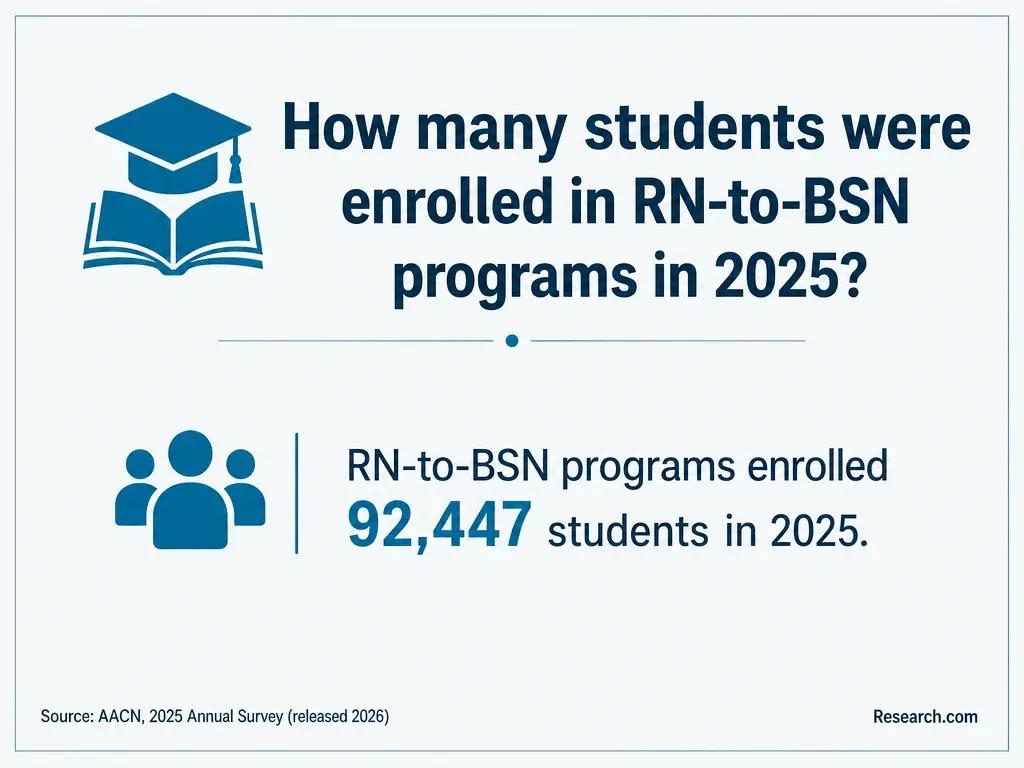
| Postlicensure RN-to-BSN | Already-licensed RNs who want to meet a degree expectation while working | Employer deadline, scheduling, and tuition support |
For an ADN-prepared RN, continuing from an ADN into MSN study is another academic possibility, but an MSN is not normally needed to accept an ED staff-nurse position. Choose further education for a defined future role, not as a substitute for evaluating this offer.
This matters most if the offer includes a BSN-completion requirement or you plan to study while working. Online lectures may reduce commuting, but prelicensure nursing programs still require approved hands-on learning. Postlicensure programs can also include scheduled meetings, projects, or practice-based experiences. "Online" does not necessarily mean that you can complete every requirement around rotating ED shifts.
Ask the school for the actual weekly timetable and required in-person activities, then compare it with the employer's scheduling rules. Can you reliably attend labs, clinical placements, or live sessions after nights? Will the department accommodate an exam or campus visit during orientation? If not, deferring enrollment until you have settled into ED practice may be safer and less costly than taking on both transitions at once.
Already-licensed RNs can examine BSN completion pathways with alternative practice experiences, but should verify each school's exact requirements. A program's format does not remove an ED employer's orientation or competency requirements.
Prelicensure courses in assessment, pharmacology, pathophysiology, adult and pediatric nursing, mental health, and clinical judgment provide a foundation for ED practice. Simulation can help students rehearse prioritization and team communication, but it is not proof that a graduate can manage an ED assignment independently. Supervised clinical performance and employer-assessed competencies matter after graduation.
For a job offer, ask which learning opportunities are included in orientation: triage observation, pediatric and behavioral-health exposure, resuscitation-team participation, EHR training, and feedback on escalation and documentation. Ask how the unit handles skills you have not encountered before, rather than assuming a nursing-school course covered them sufficiently.
Graduate study - including shorter online DNP programs - is not a shortcut to those bedside competencies. For most incoming ED RNs, the relevant educational benefit is supervised, role-specific training rather than another degree.
If you already hold an RN license and are evaluating an ED offer, nursing-school admission requirements are not the immediate gatekeeper; the employer's hiring and onboarding criteria are. Ask whether the offer is contingent on a degree, license issuance, background check, health clearance, prior experience, or completion of specified training. Clarify the deadline and what happens if a condition is not met.
If you still need initial RN education, schools set their own prerequisite courses, grades, application steps, and clinical-placement conditions. Admission to a college does not necessarily mean admission to its nursing major. Confirm that the particular program is appropriately recognized for the licensure pathway you need, rather than choosing it solely because an ED recruiter expressed interest.
Graduate admissions are a separate decision. DNP application options by selectivity should not influence whether a staff ED role is a good fit today; graduate-program admission does not replace RN licensure, ED orientation, or employer validation of skills.
There is no single required "emergency nursing program" with a standard tuition or length. Initial RN education varies by pathway and school; ED residency and orientation vary by employer and prior experience. Before accepting, request the orientation schedule and identify who pays for required courses, certification exams, uniforms, and travel to training sites.
The comparison below separates offer-related costs from optional education costs so that a higher hourly rate does not obscure what you must pay or the time you must commit.
| Cost or time commitment | What may vary between offers |
| Orientation | Paid hours, shift pattern, preceptor coverage, and ability to extend supervised training |
| Required credentials | Course and exam fees, paid training time, renewal costs, and reimbursement rules |
| Schedule | Night, weekend, holiday, and on-call expectations; shift differentials and eligibility rules |
| Optional degree study | Tuition, fees, travel, time away from work, and employer-assistance conditions |
Calculate your likely earnings using the offered base rate and the shifts you can realistically work, not the maximum advertised differential. If you later consider graduate school, BSN-to-MSN tuition and fee considerations belong in a separate education budget; they are not a necessary cost of taking an ED staff position.
Employers commonly specify life-support training, but the exact courses and deadlines depend on the department's patients and policies. Ask whether Basic Life Support, Advanced Cardiovascular Life Support, pediatric training, or trauma-related courses are required at hire or offered during onboarding. Confirm whether the employer provides paid time and covers initial and renewal fees.
The Certified Emergency Nurse (CEN) credential is a professional specialty certification, not an RN license or a universal prerequisite for ED employment. If the posting mentions CEN, ask whether it is required, preferred, or supported after you gain ED experience. Check the certifying organization's current eligibility and renewal rules before paying for an exam.
Do not confuse ED specialty development with preparation for a different clinical role. Lower-tuition psychiatric nursing graduate programs may interest an RN pursuing psychiatric advanced practice later, but they do not replace the behavioral-health safety training and support needed on an ED shift.
What Salary and Job Outlook Can Emergency Nurses Expect?
The U.S. Bureau of Labor Statistics reports wages and employment projections for registered nurses, not a separate national ED-nurse occupation. Its RN figures provide labor-market context, but an occupation-wide median is not a reliable prediction of your ED offer. Location, experience, employer, scheduled shifts, overtime eligibility, and differentials can materially change pay.
Compare written offers using base pay, differential rules, benefits, retirement contributions, and any bonus repayment terms. Then weigh those terms against orientation quality, staffing support, commute, and the shifts you can sustain. An offer that pays more for nights may be less valuable to you if its schedule or support makes it difficult to remain in the role.
Ask how ED nurses advance within the organization - such as through precepting, clinical ladders, or specialty roles - and which opportunities are actually available to staff on your shift. Exploring less expensive nurse practitioner study is relevant only if you later choose an advanced-practice career; it should not be counted as a required expense or promised return from this ED job.
Other Things You Should Know About Nursing
Yes. Ask whether the hospital permits an interview-day observation or shadow shift. Follow its privacy and safety rules, and use the visit to understand workflow - not to perform patient care.
Ask the recruiter to resolve the discrepancy in writing before you accept. Pay, shift, work location, start date, and any repayment obligation are especially important to confirm.
Ask which units ED nurses may be assigned to, how often floating occurs, what orientation is provided, and how assignments account for demonstrated competencies. Seek the actual policy rather than relying on "rarely."
Yes. If the employer cannot explain its safety procedures, escalation support, or expectations for assignments outside your training, declining may be more prudent than relying on assurances that you will "figure it out."
- Breaks and Meal Periods | dol.gov https://www.dol.gov/general/topic/workhours/breaks
- Workplace Violence Prevention Program for City of Eureka | eurekaca.gov https://www.eurekaca.gov/950/City-of-Eureka-Workplace-Violence-Preven
- Fact Sheet: Lunch or Other Meal Periods | U.S. Office of Personnel Management https://www.opm.gov/policy-data-oversight/pay-leave/work-schedules/fact-sheets/lunch-or-other-meal-periods/
- elaws - Family and Medical Leave Act Advisor https://webapps.dol.gov/elaws/whd/fmla/9e2.aspx
- Nurse-patient assignment models considering patient acuity metrics and nurses' perceived workload - ScienceDirect https://www.sciencedirect.com/science/article/pii/S1532046415000726
- Integrating Education with Annual Competency Assessment in Emergency Nursing Practice | ANPD https://www.anpd.org/NPD-In-Motion/Article/integrating-education-with-annual-competency-assessment-in-emergency-nursing-practice
- Components of an Effective Nurse Orientation Pathway | American Association of Critical-Care Nurses https://solutions.aacn.org/blog/components-of-an-effective-nurse-orientation-pathway
- Orientation of New Graduate Nurses to Acute and Critical Care | aacnjournals.org https://aacnjournals.org/ccnonline/article/46/3/43/33038/Orientation-of-New-Graduate-Nurses-to-Acute-and
- Understanding nursing staff ratio models | wolterskluwer.com https://www.wolterskluwer.com/en/expert-insights/update-on-nursing-staff-ratios


