2027 Questions to Ask Before Accepting an Adult ICU Nurse Position
Audited and Verified:
Our Editorial and Data Verification Process
Research.com uses government datasets, official education statistics and primary institutional information to support its career and degree guides. Our review process checks factual accuracy, occupational definitions, source dates and the requirements associated with the credentials discussed.
How This Article Was Fact-Checked
Our editorial team verifies salary estimates, employment projections, education requirements and program information against original data providers and official organizations. Salary figures are checked against the relevant occupational definitions and reporting periods. Information about licensure, accreditation and required in-person training is reviewed separately.
Fact-checked and verified on:

Co-Founder and Chief Data Scientist
An adult ICU offer can look attractive until you learn how the unit assigns unstable patients, trains new hires, and covers short staffing. Whether you are a new graduate or an experienced RN changing specialties, those details matter more than the job title alone.
This guide explains the qualifications behind the role and, more importantly, the questions to ask about orientation, clinical support, workload, scheduling, and compensation. Use the answers to judge whether the position offers a safe, sustainable path into critical care.
Key Things You Should Know
- Ask how often nurses receive one versus two patients, what triggers a 1:1 assignment, and who helps when acuity changes; a posted ratio alone does not describe the workload.
- Request a written orientation plan with preceptor assignments, competency checks, and proposed 30-, 60-, and 90-day reviews; ask what happens if you need more time.
- Compare the entire offer - not just hourly pay - including 12-hour shift expectations, weekends, call, differentials, benefits, and the unit's recent turnover and overtime data.
What does an adult ICU nurse do, and what responsibilities come with the role?
Adult intensive care unit (ICU) RNs assess and care for adults who need close monitoring or treatment for life-threatening illness. Depending on the unit, patients may require mechanical ventilation, vasoactive infusions, invasive monitoring, or support after major surgery. Nurses reassess patients frequently, administer and evaluate ordered treatments, document changes, coordinate with the care team, and escalate deterioration. Specific procedures depend on training, employer policy, orders, and state scope-of-practice rules.
Before accepting, ask which patients the unit actually treats: medical, surgical, cardiac, trauma, or a mix. Find out who responds to an unstable patient, whether respiratory therapy and a provider are available on site, and how admissions, transfers, and family communication affect assignments. A role focused on continuous bedside care differs substantially from outpatient advanced practice; fast-track psychiatric NP MSN study, for example, prepares for a different role and does not replace ICU onboarding.
What education and licensure are required to become an adult ICU nurse?
An adult ICU nurse needs an active RN license in the state of practice, or other applicable authorization to practice there. Employers may hire graduates of approved prelicensure associate or bachelor's nursing programs, but their degree preferences and experience requirements differ. Graduation, NCLEX-RN eligibility, passing the exam, and receiving an RN license are separate steps; confirm when the employer requires proof of licensure.
Ask whether the opening accepts new graduates, requires prior acute-care experience, or offers a specialty-transition program for experienced RNs. If you already hold a non-nursing bachelor's degree but are not an RN, an accessible admission route to accelerated nursing study may be worth investigating alongside other prelicensure options. No prior degree substitutes for initial RN preparation and licensure.
Do adult ICU nurses need critical care certification?
Specialty certification is not the same as an RN license, and it is generally not a prerequisite for starting an ICU job. The AACN Certification Corporation's adult CCRN credential recognizes eligible nurses' critical care knowledge and practice experience. Check its current eligibility rules before planning an exam date; an employer may encourage or reward certification after you gain experience.
Ask whether the unit pays exam fees, provides study support, or offers a certification differential - and whether that differential continues after renewal. Also ask how the unit validates bedside competencies, because certification does not replace orientation or authorize work beyond your scope. A time-efficient PMHNP certificate pathway serves a different advanced-practice goal; a school-issued certificate is not an ICU specialty credential.
For an applicant who already has an RN license, an additional degree is not automatically the best next step. Compare the employer's degree policy with the quality of its critical care orientation. An ADN- or BSN-prepared RN may be eligible for a particular opening, while a BSN may matter for that hospital's hiring preferences or future advancement.
If you are not yet an RN, compare prelicensure ADN and BSN options by state-board eligibility, supervised clinical preparation, cost, and time to licensure. If you are already licensed and want a bachelor's degree, an RN-to-BSN program is a postlicensure route, not initial ICU training. ADN-to-MSN education pathways may suit a later graduate goal, but an MSN alone does not establish critical care competence or necessarily qualify someone for advanced practice.
For this offer, ask: "Does my current degree meet your hiring and promotion requirements, and will you support further education if I choose it?"
Prelicensure programs build foundations in assessment, anatomy and physiology, pathophysiology, pharmacology, medication safety, and clinical judgment. ICU readiness then depends on supervised practice with the unit's patients and equipment. Orientation should address recognition and escalation of deterioration, ventilator-related nursing care, hemodynamic assessment, high-alert medication processes, infection prevention, documentation, and communication during emergencies.
Ask which skills are taught in simulation, which require observed bedside performance, and who signs off competencies. Request an example of the orientation checklist rather than assuming a critical care course guarantees independent readiness. Graduate-level DNP project-based practice expectations concern a different educational objective; they should not be mistaken for validation of ICU bedside skills.
Online coursework can reduce commuting, but initial RN education still requires program-approved, supervised clinical learning and may require in-person labs or simulation. A campus-based program may make scheduled hands-on activities easier to access, while a hybrid format may fit an employed student better. Neither format guarantees ICU clinical exposure or a particular job offer.
If you are considering study alongside an ICU job, ask for the actual weekly schedule: live classes, lab days, clinical shifts, campus visits, and travel. Confirm whether the employer will accommodate those commitments. Even short-format DNP degree programs can carry substantial scheduled requirements; "online" should not be read as "available whenever you are off shift."
If accepting the position depends on starting or finishing a nursing program, verify admission to the nursing track - not merely the institution. Prelicensure schools may set science prerequisites, laboratory requirements, minimum grades, course-age limits, entrance assessments, and clinical-placement conditions. Requirements vary, and an accelerated program may have a particularly demanding sequence.
Ask each school for a written review of your prior coursework and a term-by-term plan showing when supervised clinical placements occur. Then compare that plan with the ICU employer's scheduling requirements. Published lists of barriers to DNP admission address a later graduate decision, not eligibility for initial RN education or an ICU offer.
There is no single "adult ICU nurse training" price or timeline. An unlicensed applicant must first complete an eligible prelicensure nursing program and obtain an RN license. A licensed RN changing specialties instead needs employer-specific orientation, whose length depends on prior experience, unit acuity, and demonstrated progress. Ask for the planned orientation length, whether it is paid at your regular rate, and who can approve an extension.
Calculate the cost of the decision using the written offer: base pay, differentials, benefits, commuting, required purchases, education expenses, and any repayment obligation tied to a hiring bonus or training agreement. If comparing further education, obtain the school's full charges rather than relying on a per-credit price. Cost-focused online psychiatric NP options serve another career path and are not a necessary expense for bedside ICU practice.
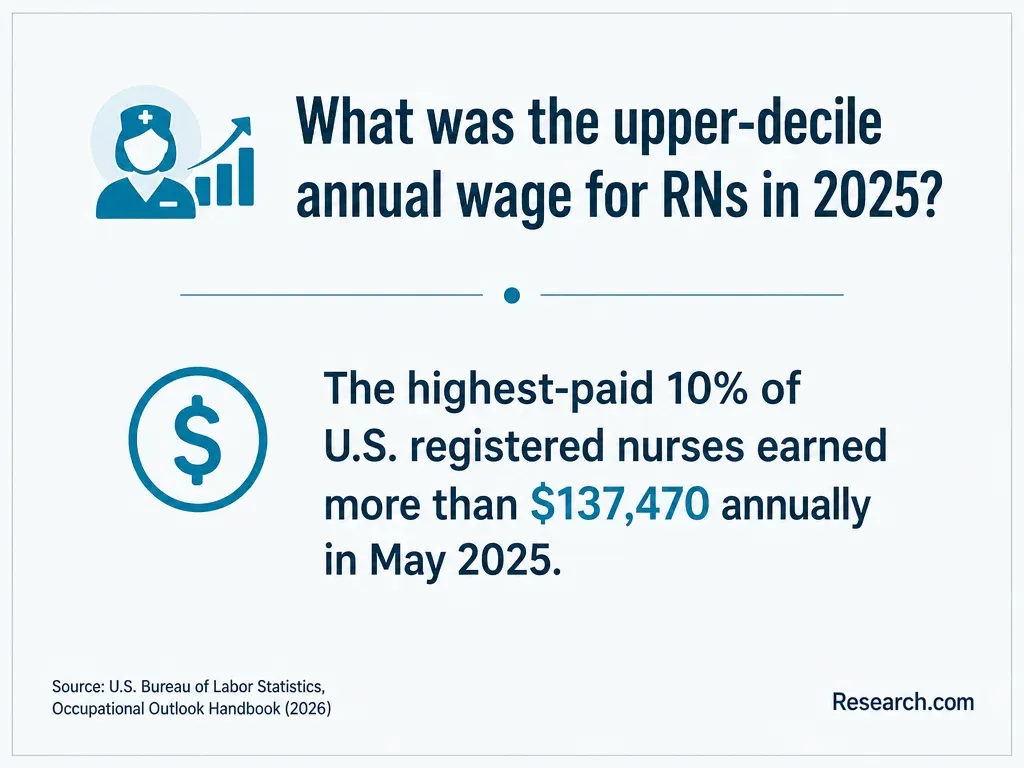
ICU nurses are included in the broader registered nurse occupation; national RN wage figures do not isolate adult ICU pay or predict an individual offer. Your earnings depend on location, employer, experience, shift, overtime, and negotiated differentials. Request a written breakdown of base rate, night and weekend premiums, overtime rules, bonuses, and when pay is reviewed.
ICU experience may support advancement into precepting, charge nursing, quality and safety work, education, or management, subject to employer requirements. It can also inform a later decision about graduate study, but a different clinical role requires its own preparation. For example, 12-month FNP coursework and clinical expectations concern nurse practitioner preparation, not automatic advancement from ICU employment. Ask the hiring manager which advancement paths have actually been available to nurses on this unit.
How can you evaluate an accredited nursing program for adult ICU careers?
If you still need an RN degree, first confirm that the exact prelicensure program meets the relevant state board's requirements for initial licensure eligibility. Check institutional accreditation and the nursing program's accreditation status separately; neither, by itself, describes an employer's ICU orientation. Ask the program about supervised clinical placements, simulation, completion and NCLEX results, and whether graduates have entered local acute-care residencies.
For the job offer, evaluate the employer with the same attention to evidence. Ask to speak with a recent hire and a preceptor, observe the unit if permitted, and request written answers to the following questions:
- What were typical assignments and staffing gaps on this unit over the past several months, and how is a patient assigned 1:1 care?
- How are preceptors selected, how is orientation progress assessed, and what support is available after orientation?
- What are the weekend, holiday, floating, and on-call rules, and what would cause them to change?
- What were recent turnover and overtime levels, and what actions has leadership taken in response?
Assess the answers together. A strong education program cannot compensate for an unsafe or poorly supported first ICU job. Conversely, a well-supported employer transition may be more immediately useful than another degree. If a future graduate program enters your plans, investigate its clinical-placement obligations separately; family NP programs that help arrange clinical placements address graduate preparation, not ICU hiring support.
Other Things You Should Know About Nursing
If the employer permits it, a shadow shift can reveal how nurses communicate, obtain help, and manage admissions. Observe without accessing records or providing care unless you are authorized to do so.
Compare its after-tax value and payment schedule with any repayment terms. A bonus does not resolve concerns about inadequate orientation, unsafe assignments, or a schedule you cannot sustain.
Some details may be confidential, but the manager should be able to explain assignment decisions and support during staffing gaps. Vague or inconsistent answers are useful information when comparing offers.
You can ask whether base pay is fixed by a new-graduate scale and whether shift choice, start date, education support, or bonus terms are negotiable. Get any agreed change in writing before accepting.
- Acuity, nurse staffing and workforce, missed care and patient outcomes | nih.gov https://pmc.ncbi.nlm.nih.gov/articles/PMC7754324/
- Night Work and Shift Work | dol.gov https://www.dol.gov/general/topic/workhours/nightwork
- Rapid Response Systems | PSNet https://psnet.ahrq.gov/primer/rapid-response-systems
- Healthcare - Workplace Violence | Occupational Safety and Health Administration http://www.osha.gov/healthcare/workplace-violence
- Understanding total compensation | UCnet http://ucnet.universityofcalifornia.edu/compensation/understanding-total-compensation/
- Rapid Response Team (RRT) in Critical Care - Springer Nature https://link.springer.com/rwe/10.1007/978-3-319-74588-6_9
- Standards Published for Critical Care Nurse Staffing | AACN https://www.aacn.org/newsroom/standards-published-for-critical-care-nurse-staffing
- Components of an Effective Nurse Orientation Pathway | American Association of Critical-Care Nurses https://solutions.aacn.org/blog/components-of-an-effective-nurse-orientation-pathway