2027 Questions to Ask Before Accepting a Palliative Care Nurse Position
Audited and Verified:
Our Editorial and Data Verification Process
Research.com uses government datasets, official education statistics and primary institutional information to support its career and degree guides. Our review process checks factual accuracy, occupational definitions, source dates and the requirements associated with the credentials discussed.
How This Article Was Fact-Checked
Our editorial team verifies salary estimates, employment projections, education requirements and program information against original data providers and official organizations. Salary figures are checked against the relevant occupational definitions and reporting periods. Information about licensure, accreditation and required in-person training is reviewed separately.
Fact-checked and verified on:

Co-Founder and Chief Data Scientist
A palliative care nursing offer can look appealing until you learn how many patients you will cover, who responds after hours, or whether orientation matches the clinical demands. For licensed nurses considering a first specialty role or a move between employers, the job title alone reveals little about day-to-day practice. This guide gives you specific questions to ask about scope, staffing, training, compensation, and support so you can compare the offer with your experience and decide what to clarify before signing.
Key Things You Should Know
- Ask for recent actual caseloads, visit expectations, after-hours coverage, and the number of nurses available when patients need urgent help - not just a target ratio.
- Confirm whether the job is palliative care, hospice, or both; the distinction changes referrals, workflows, patient needs, and sometimes on-call duties.
- Compare total compensation using base pay, overtime or visit rules, call pay, mileage, benefits, and paid training; an occupation-wide RN wage is not a quote for this position.
What should you ask before accepting a palliative care nurse position?
Start by establishing what the employer means by palliative care: specialized support for people with serious illness that may be provided alongside disease-directed treatment. Hospice is a distinct model for eligible patients approaching the end of life. Some employers combine both services, while others hire nurses for a hospital consultation team, outpatient clinic, or home-based program.
Ask the hiring manager to answer these questions for the specific position, preferably with a sample schedule and written job description:
- Which patients and locations would I cover, and what proportion of the work is hospice versus other palliative care?
- What would a typical week include: visits, symptom assessments, care coordination, documentation, travel, meetings, and on-call shifts?
- Who makes clinical decisions, who can I call for help, and how are urgent concerns escalated?
- What do actual staffing and caseloads look like, including during vacancies and weekends?
- What training, compensation, and advancement terms will appear in the written offer?
For an experienced RN, the central issue is whether the responsibilities and support fit existing skills. If you are not yet a nurse, accepting an RN position is not a substitute for qualifying for licensure; start by examining nursing degrees for students new to healthcare and verifying the program's licensure pathway with the relevant state board.
What education and nursing license does a palliative care nurse need?
For a position advertised as an RN role, employers generally expect an active RN license valid where the nurse will practice. An associate degree, diploma, or BSN can provide an educational route to initial RN licensure, but graduation alone does not grant a license. Employers may prefer a BSN or prior experience in oncology, geriatrics, home health, critical care, or hospice; check the posting rather than assuming one background is universally required.
Read the duties as carefully as the credential requirement. Ask whether the job is an RN case-management or consultation role, an LPN/LVN role with different supervision and scope, or an advanced practice position. A nurse practitioner role requires appropriate graduate preparation, certification, and state authorization; RN experience in palliative care does not independently confer APRN authority. For someone entering nursing with a prior non-nursing degree, accelerated entry-level nursing master's study is one possible educational route, but its exact initial-licensure outcome must be verified program by program.
What hospice and palliative care certifications are available to nurses?
The Hospice and Palliative Credentialing Center offers specialty credentials, including the Certified Hospice and Palliative Nurse (CHPN) for eligible RNs and the Advanced Certified Hospice and Palliative Nurse (ACHPN) for eligible advanced practice nurses. Other credentials serve different license levels or professional roles. Ask whether the employer requires a particular credential at hiring, expects it later, pays examination and renewal costs, and provides study time.
Check the credentialing organization's current eligibility and renewal rules before relying on an employer's description. Specialty certification documents achievement under that organization's standards; it does not replace a nursing license, authorize advanced practice, or prove readiness for an unfamiliar caseload. Likewise, exploring accelerated family NP certificates after a master's concerns formal preparation for a different role - not a shortcut to palliative nursing certification or NP authority.
Ask for an orientation plan tailored to your experience, not simply its duration. It should explain supervised visits or consultations, preceptor availability, documentation training, symptom-assessment and communication competencies, and how the employer decides when you can manage assignments independently. A new graduate or nurse moving from an unrelated setting may need a different progression from an experienced hospice RN.
Clarify who will be available after orientation when a patient's condition changes or a family needs urgent guidance. Training in difficult conversations, care coordination, and local escalation procedures matters as much as familiarity with the electronic record. If you are considering comparing RN-to-BSN practice expectations, keep academic coursework separate from employer-validated, setting-specific orientation; one does not replace the other.
Ask whether you will see adults, children, or both, and whether most patients have cancer, heart or lung disease, dementia, or other serious conditions. Confirm where visits occur and whether your role centers on direct assessment, consultation, case management, telephone triage, or a mixture. These differences affect clinical preparation, travel, family communication, and access to colleagues.
The following distinctions can help you interpret the job description; a single employer may combine several models.
| Setting | Work to clarify | Support to verify |
| Hospital consultation | Consult volume, follow-up responsibilities, and collaboration with bedside teams | Specialist availability and escalation process |
| Outpatient clinic | Appointment volume, telephone follow-up, and care coordination | Coverage between visits and access to prescribers |
| Home-based palliative care or hospice | Service territory, travel, visit expectations, and after-hours calls | Backup clinicians, equipment, and urgent-visit coverage |
Confirm the license and role for the population served. For example, exploring 12-month FNP study pathways concerns preparation for family nurse practitioner practice; it does not make an RN position an NP position or establish competence with every palliative population.
A single nurse-to-patient ratio can obscure workload in palliative care. An inpatient consultation nurse may handle new referrals and follow-ups, while a home-based nurse's day depends on travel distance, visit length, patient complexity, documentation, and unscheduled calls. Ask for the actual assignment range over recent months, not only the budgeted target, and find out what happens when a colleague is absent.
Request examples of how referrals are distributed, how much time is protected for charting and interdisciplinary meetings, and who covers lunch, leave, evenings, and weekends. Ask to speak with a nurse currently doing the job. If an employer describes the vacancy as an NP role or expects advanced practice duties, clarify its staffing model and required authorization before considering education costs such as those discussed when comparing NP programs organized by tuition. An RN should not accept an offer on the assumption that the role's scope can be settled later.
Ask for the position's pay range and a written explanation of how pay is calculated. An hourly hospital role, salaried case-management role, and per-visit home-care role may produce different earnings even when their advertised rates look similar. Confirm overtime eligibility, expected paid hours, differentials, on-call and callback pay, mileage or vehicle reimbursement, and whether required documentation and travel time are paid.
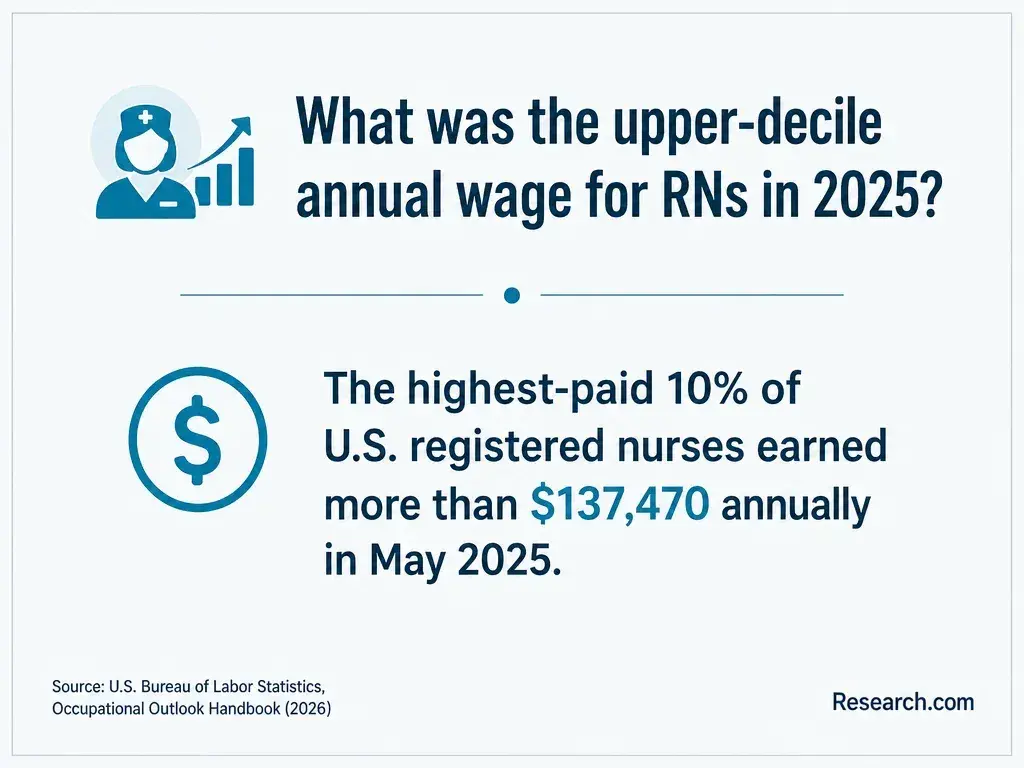
The U.S. Bureau of Labor Statistics reports wages for registered nurses as an occupation, not a separate national wage for palliative care nurses. That benchmark can provide context, but location, setting, experience, schedule, and the actual offer matter more here. Compare offers using a realistic workweek and out-of-pocket costs rather than a headline rate. If advancement would require graduate study, weigh the employer's pay policy against the cost of options such as lower-cost online BSN-to-MSN degree routes; a degree does not guarantee a raise.
Confirm the actual rotation: shift length, weekends, holidays, overnight call, response-time expectations, and how often nurses cover open shifts. For a caregiver or working parent, a nominally flexible home-based job may still require unpredictable travel or urgent evening visits. Ask whether schedules are posted far enough ahead to arrange care at home.
Compare health coverage, paid leave, retirement contributions, mileage, professional liability coverage where applicable, bereavement resources, and access to debriefing after difficult cases. Ask how tuition assistance works in writing: eligibility date, annual limit, approved programs, and repayment obligations. Those terms matter if you might later consider shorter routes to a DNP degree, but an advanced degree should serve a defined career goal rather than compensate for inadequate support in the current job.
Ask for examples of nurses who have advanced within the organization and what changed in their duties and pay. Possible directions include senior clinical roles, precepting, quality improvement, education, program coordination, or management. Moving into an NP position is a different transition that requires qualifying education and authorization, not merely tenure or a new title.
Match development opportunities to the work you want to do. A nurse interested in program leadership might explore online DNP executive and organizational pathways, while a nurse who wants to strengthen bedside palliative practice may benefit more immediately from mentoring and specialty continuing education. Ask whether advancement vacancies, protected project time, and internal hiring criteria actually exist.
How does the position support professional standards and continuing education?
Ask which hospice and palliative care guidelines inform the team's policies, how interdisciplinary plans are reviewed, and whether nurses can raise safety or ethical concerns without being left to resolve them alone. Clarify documentation expectations, privacy practices for home visits or remote work, and access to continuing education relevant to your assigned population. State license-renewal requirements and specialty certification renewal are separate obligations; verify each with the responsible authority.
Professional growth need not mean another degree. Ask first whether the employer funds courses, conference time, certification maintenance, or preceptor development. For an RN considering a longer academic route, ADN-to-MSN degree progression is one option to evaluate against a specific future role; it does not replace current clinical support, employer competency checks, or applicable licensure requirements.
Other Things You Should Know About Nursing
Yes. Palliative care can be provided alongside treatment for a serious illness. Ask how the employer coordinates with the patient's other clinicians.
Request a conversation with a current nurse and ask how colleagues handle disagreements, difficult family conversations, and requests for help. Compare those answers with the manager's account.
Request the complete description and written offer first. They should identify the role, work locations, schedule terms, compensation structure, and any conditions of employment.
Look at another delivery model, such as hospital consultation or outpatient care instead of a travel-heavy home role. Interest in the specialty does not mean every setting will fit your skills or circumstances.
- Advance Care Planning in Serious Illness: A Narrative Review | nih.gov https://pmc.ncbi.nlm.nih.gov/articles/PMC9884468/
- Core Elements of Hospital Diagnostic Excellence (DxEx) | cdc.gov https://www.cdc.gov/patient-safety/hcp/hospital-dx-excellence/index.html
- Fact Sheet #22: Hours Worked Under the Fair Labor Standards Act (FLSA) | U.S. Department of Labor https://www.dol.gov/agencies/whd/fact-sheets/22-flsa-hours-worked
- Standard mileage rates | Internal Revenue Service https://www.irs.gov/tax-professionals/standard-mileage-rates
- Federal Employee Compensation Package | U.S. Office of Personnel Management https://www.opm.gov/policy-data-oversight/pay-leave/pay-administration/fact-sheets/federal-employee-compensation-package/
- Care Coordination | Agency for Healthcare Research and Quality https://www.ahrq.gov/ncepcr/care/coordination.html
- Palliative & End-of-Life Care | AACN https://www.aacn.org/clinical-resources/palliative-end-of-life
- Palliative Care vs. Hospice: Which to Choose | CaringInfo https://www.caringinfo.org/types-of-care/what-is-the-difference-between-palliative-care-and-hospice-care/
- Care Coordination and the Essential Role of Nurses | ANA https://www.nursingworld.org/practice-policy/health-policy/care-coordination/
- Hospice and palliative care: What's the difference? | WSNA https://www.wsna.org/news/2022/hospice-and-palliative-care-whats-the-difference