2027 Questions to Ask Before Accepting a Cardiovascular ICU Nurse Position
Audited and Verified:
Our Editorial and Data Verification Process
Research.com uses government datasets, official education statistics and primary institutional information to support its career and degree guides. Our review process checks factual accuracy, occupational definitions, source dates and the requirements associated with the credentials discussed.
How This Article Was Fact-Checked
Our editorial team verifies salary estimates, employment projections, education requirements and program information against original data providers and official organizations. Salary figures are checked against the relevant occupational definitions and reporting periods. Information about licensure, accreditation and required in-person training is reviewed separately.
Fact-checked and verified on:

Co-Founder and Chief Data Scientist
A cardiovascular ICU offer can look attractive until you learn what happens on a difficult shift: which patients you will manage, who can help, and how quickly you are expected to work independently. For new graduates and RNs moving from another specialty, those details matter as much as the job title or hourly rate.
This guide gives you specific questions to ask about qualifications, onboarding, staffing, clinical exposure, compensation, and advancement so you can compare the offer with your experience and decide whether the unit is a safe, sustainable fit.
Key Things You Should Know
- Ask for a written orientation plan that specifies precepted shifts, competency checks, and support after orientation; a residency label alone does not establish readiness for independent CVICU assignments.
- Confirm how assignments change with acuity. A 1:1 assignment for one unstable patient and a 1:2 assignment for two patients describe different workloads, but neither number alone captures admissions, devices, or available support.
- Compare guaranteed base pay with the full schedule and benefits. Three 12-hour shifts total 36 scheduled hours before overtime or extra shifts, verify how the employer defines full-time status and calculates differentials.
What qualifications are required for a cardiovascular ICU nurse position?
A cardiovascular intensive care unit (CVICU) nurse is an RN who cares for critically ill cardiac or vascular patients, often after surgery or during treatment for severe heart disease. Before accepting, ask: "What qualifications are required on my start date, and which can I complete during orientation?" Request the job description and distinguish mandatory requirements from preferences.
An active RN license authorized for practice in the job's state is fundamental. Employers may also require recent acute-care experience, critical-care experience, or the ability to complete specific training. New-graduate openings exist, but the hospital's willingness to hire a new RN does not mean it expects immediate independent critical-care competence. If you have telemetry, emergency, step-down, or general ICU experience, ask which skills transfer and which require observed validation.
An LPN/LVN considering a CVICU RN position needs an RN-qualifying education and licensure pathway first. Comparing fast-track LPN completion timelines may help clarify an earlier step, but LPN preparation alone does not meet an RN job requirement.
Which nursing degree is best for cardiovascular ICU nursing?
For a licensed RN, the best degree for this job is the one that satisfies the employer's hiring policy without delaying essential clinical preparation. Ask: "Do you hire ADN- and diploma-prepared RNs into this CVICU, or require a BSN at hire or by a stated deadline?" Get any completion requirement and tuition-assistance terms in writing.
Both qualifying associate and bachelor's routes can lead to RN licensure after the applicable requirements are met; neither degree makes a nurse independently competent with complex CVICU patients. A BSN may meet an employer preference or support later applications, while an RN-to-BSN program can be an option for an already-licensed associate-prepared nurse. If you are considering comparing no-traditional-clinical RN-to-BSN options, verify the program's actual experiential work and schedule rather than assuming that "online" means no required practice activities.
An MSN or DNP is not normally a prerequisite for bedside CVICU nursing. If you already hold an RN license, a supported transition into critical care may address your immediate skill gap more directly than another degree.
Is the nursing program accredited for cardiovascular ICU careers?
A CVICU is a workplace specialty, not a separate nursing-program accreditation category. If you are still choosing your initial RN program, ask whether the specific prelicensure program meets the applicable state board's requirements for RN examination eligibility. Check institutional accreditation and any nursing-program accreditation separately; ACEN and CCNE accreditation, where applicable, serve different purposes from state board approval.
If an employer promises tuition support for a later degree, ask which institutions and programs qualify before relying on that benefit. This matters even if you eventually consider an ADN-to-MSN bridge program guide: a future program's entry requirements and accreditation do not change the license and bedside competencies required for the CVICU offer in front of you.
Ask the recruiter and nurse manager: "Which licenses, life-support courses, and specialty credentials must I hold at hire, and who pays for renewals?" Verify your RN authorization with the relevant state board. A multistate license is useful only when its privilege applies to the position and your circumstances.
Basic Life Support and Advanced Cardiovascular Life Support are common employer expectations, but required courses and completion deadlines vary. Some units also require device training or other employer-validated competencies. The CCRN credential, awarded by AACN Certification Corporation, is a critical-care specialty certification with its own eligibility rules; it is not an RN license or a substitute for orientation. Ask whether the hospital expects you to pursue it after qualifying experience and whether certification changes pay.
Do not confuse bedside CVICU credentials with preparation for another licensed role. For example, shorter online post-master's FNP certificates concern a family nurse practitioner pathway, not a credential needed to accept a CVICU RN position.
Orientation is the most important safeguard to examine if you are a new graduate or new to intensive care. Ask for the planned length, the number of precepted shifts, how assignments progress, and who decides when you are ready to work without a preceptor. A fixed end date is less reassuring than a documented process for extending support when competencies have not yet been demonstrated.
Ask how the unit teaches and evaluates hemodynamic monitoring, emergency response, medication safety, device care, escalation, and handoffs for the patients you will actually see. Find out whether preceptors receive training and protected time, what happens when a preceptor is absent, and whether an educator or experienced resource nurse is available on nights and weekends. Request a conversation with a recent hire about the transition after formal orientation ends.
Employer orientation should not be confused with graduate-program clinical placement. Family NP placement policies before enrollment address a different kind of supervised experience; an NP clinical placement does not replace CVICU onboarding, and bedside employment does not automatically satisfy an academic placement requirement.
"CVICU" can describe materially different jobs. Ask which patients the unit routinely admits: adults after cardiac surgery, people with advanced heart failure, patients after vascular procedures, or another mix. Clarify whether the unit receives patients directly from the operating room, transfers from other hospitals, or patients whose condition has deteriorated elsewhere in the facility.
Then ask which therapies an RN in this position is expected to manage after training. Depending on the hospital, examples may include invasive monitoring, mechanical ventilation, vasoactive infusions, temporary pacing, mechanical circulatory support, or continuous renal replacement therapy. Do not assume every CVICU uses every device. Ask which patients are transferred out, which teams respond to emergencies, and how frequently nurses encounter the highest-acuity cases. A position with rare exposure to a skill needs a credible plan for maintaining competence.
If your longer-term goal is psychiatric advanced practice rather than cardiac critical care, accelerated online PMHNP MSN programs represent a different population focus and education decision. A CVICU offer should be judged on the experience it will actually provide, not assumed to be preparation for every nursing specialty.
Ask for the actual schedule you would be assigned, not just the shift length in the posting. Confirm weekend and holiday rotations, night-shift expectations, on-call requirements, self-scheduling rules, and how often staff stay late for an admission or handoff. If you have caregiving or school commitments, ask when the schedule is published and whether orientation follows the same shifts you will eventually work.
Staffing deserves a more precise conversation than "What is the ratio?" Ask how assignments change for a fresh postoperative admission, an unstable patient, or a patient requiring multiple devices; whether nurses routinely receive a new admission while carrying another patient; and who covers breaks. Ask about charge-nurse assignments, respiratory therapy and other support, float expectations, and the process for escalating a workload you cannot safely manage. If possible, shadow the shift you would actually work.
Graduate study can add its own scheduling demands. Even shortest online nursing practice doctorates should not be treated as automatically compatible with rotating CVICU shifts; check any required live sessions, practice work, and travel before combining school with a new critical-care job.
Ask what advancement looks like within this unit, not just across the hospital. Possibilities may include precepting, charge nursing, a clinical ladder, unit education, quality-improvement work, or training for additional patient populations and devices. Ask for eligibility criteria, paid training time, and examples of roles that staff have actually moved into. A title without protected time or defined responsibilities may offer less development than a strong bedside mentorship arrangement.
If your intended destination is advanced practice, education, or leadership, determine whether the employer's experience and tuition benefits support that specific route. An MSN is not automatically an APRN program, and a CVICU RN role does not by itself qualify you for an NP position. For a nurse considering a psychiatric specialty change, online PMHNP tuition and fee considerations belong in a separate long-term plan rather than in the case for accepting this bedside job.
Ask for an itemized offer showing base hourly pay, scheduled hours, shift and weekend differentials, overtime rules, and any sign-on or retention bonus conditions. Confirm when differentials apply: a higher night rate may not cover orientation shifts worked during the day. Also check health coverage costs, retirement contributions, paid leave, parking, certification reimbursement, and tuition assistance. A bonus that must be repaid if you leave early is not equivalent to a higher base rate.
For a useful comparison, estimate annual scheduled base earnings from the offered hourly rate and paid hours, then add only differentials for shifts you realistically expect to work. Keep uncertain overtime and bonuses separate. The U.S. Bureau of Labor Statistics reports wages for registered nurses as an occupation; that figure is not a CVICU wage quote and cannot establish whether a particular offer is competitive. Compare local offers with similar shifts, experience requirements, and benefits.
If tuition support is part of your decision, obtain its annual cap, grade requirements, eligible programs, and repayment terms. Exploring less expensive MSN pathways after a BSN is useful only after you know what the employer will actually reimburse and whether graduate study serves your career goal.
What is the long-term demand for cardiovascular ICU nurses?
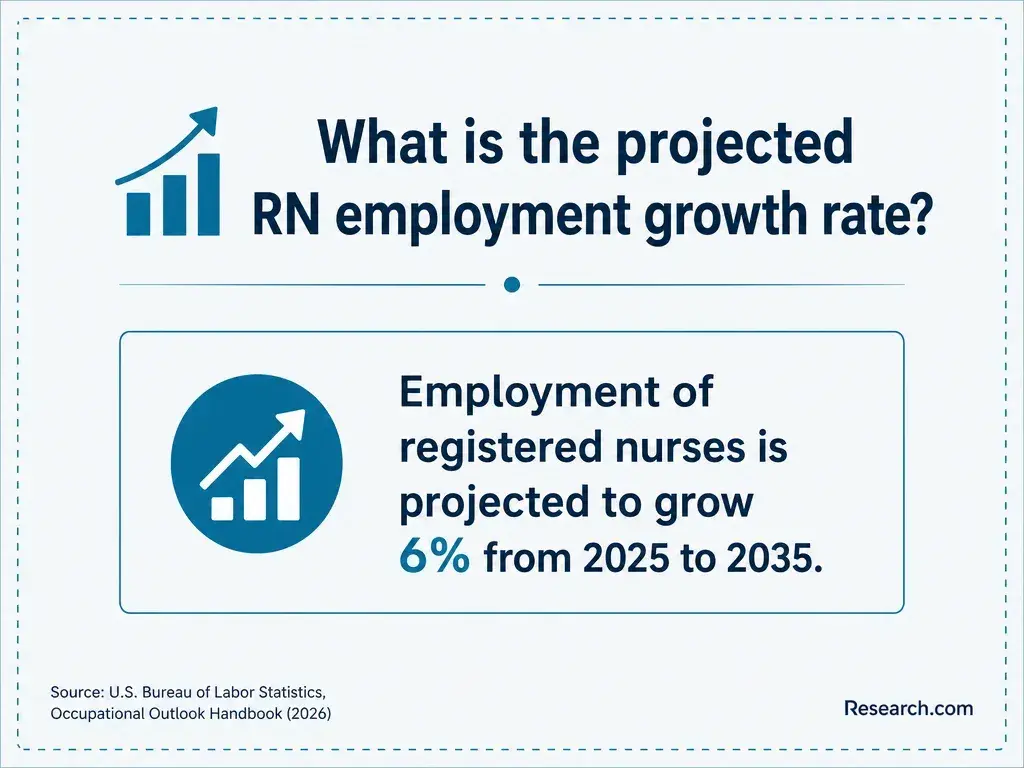
The U.S. Bureau of Labor Statistics projects employment for registered nurses as a whole, not CVICU nurses separately. Occupation-wide demand can provide career context, but it cannot predict openings on a particular shift or in a particular hospital. Local cardiac-service volume, turnover, budgets, and the hospital's training capacity will matter more to this offer.
Ask whether the unit is expanding or replacing departures, how long positions typically remain open, and whether it has maintained its orientation and staffing support during vacancies. Ask a manager what experience current staff have used to move into other critical-care or cardiac roles. These answers help you distinguish an opportunity to build durable skills from a vacancy that is difficult to retain staff in.
Long-term demand does not require a graduate degree for every CVICU nurse. If a later move into advanced practice becomes your goal, nurse practitioner program tuition comparisons can inform that separate investment; they should not be counted as a necessary cost of accepting this RN role.
Other Things You Should Know About Nursing
Yes. Ask to observe the shift you would work, subject to hospital policy and patient privacy. Pay attention to handoffs, access to help, and how assignments change when patients arrive.
Ask the recruiter to reconcile the difference before you sign. Get important terms - such as shift, pay, bonus repayment, and required degree deadlines - in writing.
Yes. Growth, a transfer, and repeated turnover can signal different working conditions. Ask the manager and, if possible, a current nurse; consider their answers alongside what you observe.
Promptly raise the specific patient-safety concern through the unit's escalation process and document it according to policy. Know how to contact the charge nurse and appropriate supervisor before you need them.
- Fact Sheet #22: Hours Worked Under the Fair Labor Standards Act (FLSA) | U.S. Department of Labor https://www.dol.gov/agencies/whd/fact-sheets/22-flsa-hours-worked
- Night Shift Differential for Federal Wage System Employees | U.S. Office of Personnel Management https://www.opm.gov/policy-data-oversight/pay-leave/pay-administration/fact-sheets/night-shift-differential-for-federal-wage-system-employees/
- Retention of Registered Nurses: A Brief Report on Interventions to Increase Retention in the Nursing Workforce https://nchealthworkforce.unc.edu/projects/nursing-workforce/retention_brief/
- Shift Differential - Regulation and Policy Hub https://policy.ufl.edu/policy/shift-differential/
- Rethinking Critical Care Orientation - AACN https://www.aacn.org/blog/rethinking-critical-care-orientation
- The Importance of the Optimal Nurse-to-Patient Ratio | wolterskluwer.com https://www.wolterskluwer.com/en/expert-insights/the-importance-of-the-optimal-nursetopatient-ratio