2027 Psychology Master's Programs With Stackable Certificates in ABA, Addiction, or Trauma

Co-Founder and Chief Data Scientist
Choosing a psychology master's is harder when you want specialized, job-relevant training without committing to several separate degrees. Stackable certificates can add ABA, addiction, or trauma expertise while you complete a graduate degree.
This matters because substance abuse, behavioral disorder, and mental health counselor jobs are projected by the U.S. Bureau of Labor Statistics to grow 17% from 2024 to 2034. This guide explains how these pathways work, what they qualify you to do, and how to avoid enrolling in a program that does not meet your career or licensure goals.
Key Things You Should Know
- A stackable certificate can strengthen a psychology master's curriculum, but it does not automatically qualify a graduate for counselor licensure, independent clinical practice, or BCBA certification.
- For ABA, verify that coursework, supervised fieldwork, and degree level meet current Behavior Analyst Certification Board requirements; a graduate certificate alone may not be enough.
- The U.S. Bureau of Labor Statistics projects 17% employment growth for substance abuse, behavioral disorder, and mental health counselors from 2024 to 2034, but job titles, salaries, and licensing rules vary substantially by state.
What is a psychology master's program with stackable certificates in ABA, addiction, or trauma?
A psychology master's program with stackable certificates is a graduate degree structure that lets students complete a core psychology curriculum and add a focused sequence of courses in an applied specialty. "Stackable" means certificate credits may count toward the master's degree rather than requiring students to repeat comparable coursework later.
These programs are most useful for students who want broad graduate training but need a clearer professional focus. A student interested in autism services may add applied behavior analysis (ABA); someone planning work in recovery settings may pursue addiction counseling coursework; and a student serving crisis-exposed populations may choose trauma-informed practice or trauma studies.
| Pathway | Primary focus | Best fit | Important limitation |
| ABA | Behavior assessment, intervention, measurement, ethics | Students pursuing behavior-support roles or BCBA-aligned education | Certification also requires supervised fieldwork and a qualifying degree |
| Addiction | Substance use assessment, recovery, prevention, counseling systems | Students interested in treatment, community mental health, or prevention | State credentialing may require a specific counseling degree and practicum |
| Trauma | Trauma-informed care, crisis response, resilience, assessment | Students working with clinical, school, nonprofit, or community populations | Trauma certificates rarely create a separate professional license |
A stackable design is not automatically the same as a clinical licensure pathway. Students seeking to become licensed professional counselors, marriage and family therapists, social workers, or psychologists should start with the degree and accreditation requirements for the license they want, then treat a certificate as specialization.
How do ABA, addiction counseling, and trauma certificates fit into a psychology master's curriculum?
Most programs place certificate courses alongside electives, concentration requirements, or a planned sequence after foundational graduate classes. The strongest designs show exactly which certificate credits apply to the degree, whether they appear on the transcript, and whether students can finish the certificate before graduating.
ABA is usually the most tightly regulated pathway because students may be seeking eligibility for a behavior-analytic credential. Addiction and trauma certificates are often more flexible, but their professional value depends on practicum access, faculty expertise, state requirements, and the kinds of employers students intend to pursue.
The comparison below helps distinguish a useful add-on from a credential that may be insufficient for the intended role.
| Certificate design | How it commonly fits the master's | What to confirm before enrolling |
| Embedded concentration | Required specialty courses replace general electives | Whether the concentration is recorded on the transcript and fits the target credential |
| Concurrent certificate | Additional credits taken during the degree | Total credit load, tuition for extra credits, and scheduling conflicts |
| Post-master's certificate | Completed after a general psychology degree | Whether prior courses transfer and whether it meets state or certification requirements |
Students who need speed should be cautious about assuming all master's programs can be completed in a year. Explore 1-year online master's options only after confirming that the compressed schedule still includes required practicum, fieldwork, and credential-aligned coursework.
What admission requirements and prerequisites do these psychology master's programs typically have?
Admission requirements vary by institution, but psychology master's programs commonly ask for a bachelor's degree, official transcripts, a statement of purpose, recommendations, and evidence of academic readiness. Some programs accept applicants from nonpsychology majors and assign prerequisite courses in research methods, statistics, introductory psychology, or abnormal psychology.
Programs connected to clinical counseling, school settings, or supervised practice may also require background checks, health documentation, immunizations, fingerprinting, or drug screening before placement. These requirements are often imposed by internship sites rather than the university itself.
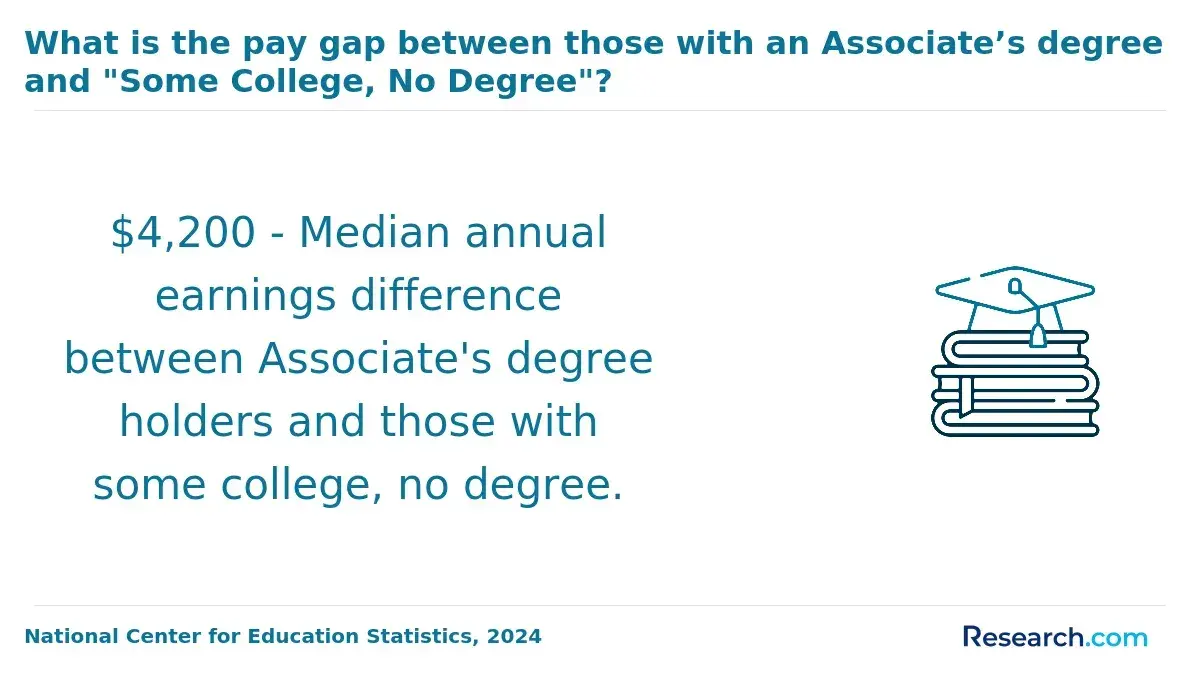
Applicants should ask admissions staff whether prerequisites can be completed before enrollment, during the first term, or through approved transfer coursework. People comparing short preparatory routes can review what degree can I get online in 6 months, but an associate degree generally does not replace graduate-level prerequisites or professional licensure education.
Before applying, prepare a short career statement that identifies the role you want, the state where you plan to work, and whether you need a license, certification, or employer-recognized specialization. That information makes it easier for a school to give a useful answer about fit.
How do online psychology master's programs with stackable certificates compare to campus-based options?
Online programs can make graduate study more workable for employed adults, caregivers, military-connected students, and learners who live far from a campus. They are often a strong fit when lectures are asynchronous and the school has established procedures for arranging approved local practica or ABA fieldwork.
Campus-based programs may be better for students who want in-person faculty access, university-affiliated clinics, structured research opportunities, or help securing local placements. The key distinction is not whether coursework is online; it is whether the school can support the supervised experiences required for the student's goal.
This comparison highlights the factors that matter more than delivery format alone.
| Factor | Online or hybrid option | Campus-based option |
| Schedule | Often more flexible, especially with asynchronous courses | Usually fixed meeting times and commute requirements |
| Practicum and fieldwork | May require students to locate approved local sites | May offer stronger access to local partner sites |
| Networking | Requires intentional virtual engagement and local professional outreach | Often easier through clinics, labs, and campus events |
| State eligibility | Must be confirmed before enrolling across state lines | Often designed around the institution's home-state rules |
Accelerated formats can reduce time away from the workforce, but they also intensify weekly reading, writing, skills practice, and placement demands. Compare the workload carefully with other fast-track college programs rather than choosing solely on the shortest advertised completion time.
Which accreditation, licensure, and certification standards should these programs and certificates meet?
Accreditation, licensure, and certification are separate checks. Institutional accreditation indicates that the college or university meets recognized quality standards. Programmatic accreditation may matter for certain professional degrees. Licensure is granted by a state board, while voluntary or profession-specific certification is issued by an external credentialing organization.
For a psychology master's with stackable certificates, students should first verify that the institution is accredited by an accreditor recognized by the U.S. Department of Education or the Council for Higher Education Accreditation. Next, they should evaluate the standards tied to their actual career target.
- For ABA, confirm that the program's verified course sequence status, degree curriculum, supervised fieldwork opportunities, and faculty guidance align with current Behavior Analyst Certification Board eligibility rules.
- For addiction counseling, check the licensing or certification board in the state where you expect to work; requirements may specify credit hours, practicum hours, supervised experience, examinations, or an approved degree type.
- For trauma-focused work, determine whether the intended role requires a clinical license, such as a counseling, social work, psychology, nursing, or marriage and family therapy license, before relying on a trauma certificate.
A frequent and costly mistake is assuming a school's general accreditation makes every concentration licensure-qualifying. Request a written statement about your state, degree track, and intended credential. If the school cannot confirm eligibility, contact the relevant state board before paying a deposit.
What core courses and specialized training are included for ABA, addiction, and trauma pathways?
Core psychology master's coursework commonly develops research literacy, ethics, assessment awareness, psychopathology knowledge, cultural responsiveness, and professional communication. The exact curriculum differs sharply between a general psychology master's and a clinical counseling-oriented master's, so course titles alone should not be treated as proof of licensure preparation.
Specialized coursework should build directly toward the population and setting you plan to serve. Students should review syllabi or course descriptions, not just marketing summaries, to see whether the sequence includes applied practice and current ethical standards.
| Pathway | Typical specialized subjects | Applied learning to look for |
| ABA | Behavior principles, measurement, assessment, intervention, ethics | Data collection, behavior plans, supervision exposure, approved fieldwork support |
| Addiction | Substance use disorders, screening, recovery models, group counseling, prevention | Motivational interviewing practice, treatment planning, referral systems, practicum |
| Trauma | Trauma theory, crisis intervention, developmental trauma, resilience, cultural considerations | Trauma-informed communication, safety planning, case conceptualization, supervised practice where applicable |
Technology is increasingly part of this preparation. Students may encounter telehealth policies, electronic documentation, virtual skills labs, and data tools. These tools can support care and service coordination, but they do not replace clinical judgment, confidentiality safeguards, or the supervised experience required by regulated professions.
How long do these programs usually take to complete, and what do they cost?
A full-time psychology master's often takes about two years, while part-time enrollment can take longer. A stackable certificate may fit within the degree's elective space, but it can also add terms when it requires additional credits, a sequenced practicum, or supervised ABA fieldwork.
Total cost is more meaningful than tuition per credit. Students should calculate required credits, mandatory fees, technology charges, books, residency travel, liability insurance, background checks, and placement-related expenses. Public, private nonprofit, and private for-profit institutions can all have different pricing models; institution type alone does not determine value.
The table shows the cost and time factors that most often change the real investment.
| Cost or timeline factor | Why it changes the decision | What to ask the school |
| Certificate credits applied to degree | Embedded credits may avoid paying twice for overlapping coursework | How many certificate credits count toward the master's? |
| Part-time versus full-time pace | Part-time study may support employment but extends time to completion | Can I change enrollment pace without losing my course sequence? |
| Practicum or fieldwork | Placement requirements can add travel, reduced work hours, or delayed completion | Who finds sites, and what costs are students responsible for? |
| Transfer credit | Accepted graduate credits may reduce remaining coursework | What is the transfer limit and how is equivalency determined? |
To reduce borrowing, compare net price after grants and employer tuition assistance, ask whether certificate courses qualify for aid when taken alone, and obtain a term-by-term cost estimate. Adult learners returning after a long break may also find useful planning ideas in one-year degree for seniors resources, although professional graduate requirements still determine the appropriate timeline.
What careers can graduates pursue with a psychology master's plus ABA, addiction, or trauma certificates?
Career options depend on the degree title, practicum, state law, employer policies, and credentials earned after graduation. A general psychology master's plus a certificate can support behavior services, research, program coordination, case management, prevention, and community-based roles, but it does not automatically authorize psychotherapy or independent diagnosis.
ABA-focused graduates may work as behavior technicians, behavior specialists, program coordinators, or, when all separate requirements are met, behavior analysts. Addiction-focused graduates may pursue roles in prevention, treatment support, recovery services, intake, care coordination, or counseling pathways where their education and state credential qualify them. Trauma-focused graduates may work in victim services, crisis programs, schools, nonprofits, healthcare navigation, and trauma-informed program development.
The following roles illustrate how specialization can shape employment direction without overstating what a certificate alone permits.
| Potential role | Relevant specialization | Typical setting | Credential caution |
| Behavior specialist | ABA | Schools, autism service providers, community programs | Scope of practice and supervision requirements vary by employer and state |
| Substance use counselor | Addiction | Outpatient programs, residential treatment, community agencies | May require state licensure or certification beyond the degree |
| Crisis or victim-services advocate | Trauma | Hospitals, nonprofits, shelters, justice-related programs | Often does not require clinical licensure, but duties are limited accordingly |
| Clinical counselor | Addiction or trauma emphasis | Clinics, schools, private practices, health systems | Usually requires a license-qualifying counseling degree and supervised postdegree experience |
This path is a strong investment for students whose intended role matches the program's documented outcomes. It is a weaker fit for someone whose main goal is independent therapy but who is considering a nonclinical psychology master's to save time or money; that shortcut can create expensive educational gaps later.
What salary ranges and job outlook can students expect in ABA, addiction, and trauma-focused roles?
Salary expectations should be tied to a specific occupation rather than a certificate title. Pay varies by state, setting, experience, license status, schedule, and employer. A trauma certificate, for example, may improve a candidate's fit for particular roles but does not create a national salary category.
The U.S. Bureau of Labor Statistics reports a $59,190 median annual wage for substance abuse, behavioral disorder, and mental health counselors in May 2024. That figure is a national occupational median, not a starting-pay promise, and it includes workers with different credentials and work settings. The same occupation is projected to grow 17% from 2024 to 2034, indicating strong demand but not guaranteeing openings in every local market.
| Career area | How to interpret outlook and pay information | Best next research step |
| ABA services | Compensation often differs between technician, specialist, supervisor, and independently credentialed analyst roles | Compare local job postings with the education and supervised-experience requirements for each title |
| Addiction counseling | National counselor data is useful, but state licensure and treatment-setting pay can vary | Check state board rules and wages in the metropolitan area where you intend to work |
| Trauma-focused services | Pay depends heavily on whether the position is advocacy, case management, licensed counseling, healthcare, or administration | Identify the role's required license before using salary figures to estimate return on investment |
For a practical return-on-investment estimate, compare the program's total cost and expected reduction in work hours against realistic local wages for roles you can legally and competitively obtain immediately after graduation. Ask schools for outcome information by degree track, but remember that past outcomes cannot guarantee your result.
How can students compare and choose reputable U.S. schools offering these specialized psychology programs?
Start with the job you want and work backward. Identify whether it requires a state license, a board certification, a supervised practicum, or an employer-specific credential. Then eliminate programs that cannot document alignment with those requirements in the state where you plan to live and work.
Use the following process to compare schools consistently instead of relying on program names, rankings, or tuition advertisements alone.
- Write down your target role, work setting, state, and preferred timeline.
- Verify institutional accreditation and confirm any programmatic, state, or certification alignment relevant to that role.
- Compare the degree title, total credits, certificate credits, required practica, ABA fieldwork support, and whether placements are arranged or student-sourced.
- Request a complete cost estimate that includes fees, fieldwork expenses, travel, and likely costs beyond tuition.
- Ask for written clarification about out-of-state online enrollment, transfer-credit rules, licensure disclosures, graduation outcomes, and career services.
- Speak with current students or alumni when possible, especially those who completed the same certificate pathway and live in your state.
Major red flags include vague statements such as "meets most state requirements," an ABA pathway that does not explain fieldwork support, a trauma certificate marketed as a clinical credential, or a counseling program that will not disclose whether graduates can pursue licensure in your state. A reputable school should explain both what its program prepares you to do and what additional steps remain.
The best choice is usually the least expensive program that clearly meets your required credential standards, offers workable access to supervised learning, and fits your schedule without forcing you into avoidable extra coursework.
Other Things You Should Know About Psychology
Possibly, but not automatically. Many states require a specific counseling, social work, marriage and family therapy, or psychology degree, along with practicum hours, supervised postdegree experience, and an examination. Check your state licensing board before enrolling.
Usually not by itself. BCBA eligibility depends on current Behavior Analyst Certification Board requirements, which can include a qualifying graduate degree, required coursework, supervised fieldwork, and passing the certification examination.
Yes. Trauma-informed training can be relevant to advocacy, crisis response, schools, case management, healthcare navigation, human services, and program administration. It does not, however, authorize clinical therapy unless you also meet the applicable licensing requirements.
Choose a licensure-focused degree if your goal is psychotherapy or independent clinical counseling. Choose a general psychology master's with a stackable certificate if you want applied specialization in roles that do not require that license, or if the program separately documents a route to your required credential.
References
- 2025: ABAI-Accredited Master's in ABA for the Most Streamlined Path to the BCBA® https://www.appliedbehavioranalysisedu.org/2025/06/abai-accredited-masters-in-aba-most-streamlined-way-to-earn-bcba/
- 2026 Best Master's in Applied Behavior Analysis (ABA) Programs - Online, Low Cost, & Quick Options https://www.counselingpsychology.org/psychology/degrees/applied-behavior-analysis/masters/
- Top Online ABA Master's Degrees Of 2026 | Psychology.org https://www.psychology.org/rankings/best-online-masters-applied-behavior-analysis/
- Best Masters in Psychology Degrees Updated for 2026, Online Included https://www.psychologydegrees.org/programs/masters