2027 Post-Master's Palliative Care Nursing Certificates for Nurses in Pennsylvania: Admission, Study Format, and Cost
Audited and Verified:
Our Editorial and Data Verification Process
Research.com uses government datasets, official education statistics and primary institutional information to support its career and degree guides. Our review process checks factual accuracy, occupational definitions, source dates and the requirements associated with the credentials discussed.
How This Article Was Fact-Checked
Our editorial team verifies salary estimates, employment projections, education requirements and program information against original data providers and official organizations. Salary figures are checked against the relevant occupational definitions and reporting periods. Information about licensure, accreditation and required in-person training is reviewed separately.
Fact-checked and verified on:

Co-Founder and Chief Data Scientist
If you already hold a nursing master's degree, a palliative care certificate may help you deepen your work with seriously ill patients without completing another full degree. The difficult part is finding a Pennsylvania program that actually awards a post-master's nursing certificate - not simply continuing education with a similar name.
This guide separates those options, explains what to verify about admission, clinical learning, format, and cost, and helps you decide whether a certificate or a shorter professional-development route better fits your role.
Key Things You Should Know
- A Pennsylvania school should be counted as an option only after it confirms an active, transcripted post-master's palliative care nursing certificate; a course series or continuing-education certificate is not the same award.
- Before applying, verify three details in writing: whether your existing graduate degree qualifies, whether supervised practice is required, and whether the school arranges or approves a suitable site.
- There is no reliable statewide certificate price: compare required credits multiplied by the applicable tuition rate, then add fees, travel, and any placement-related costs.
What is a post-master's palliative care nursing certificate?
A post-master's palliative care nursing certificate is graduate study taken after a master's degree to build knowledge of serious-illness care. It may address symptom assessment, communication about goals of care, family support, ethics, and coordination across settings. The school determines whether the award is a transcripted academic certificate, a noncredit completion certificate, or another form of training.
This distinction matters for experienced nurses. A palliative care certificate does not create an RN license, add an advanced practice population focus, or independently authorize an RN to practice as a nurse practitioner. If your goal is to obtain a graduate nursing degree rather than add specialty knowledge after one, ADN-to-MSN bridge programs address a different starting point.
Which Pennsylvania schools offer post-master's palliative care nursing certificates?
No specific Pennsylvania school can be reliably identified here as currently offering the exact award described in the title. That is more useful to know than an unverified list: schools may teach palliative care within an MSN or DNP, offer interdisciplinary graduate coursework, or issue continuing-education certificates without offering a standalone post-master's nursing certificate. Program names and availability can also change by admission term.
Pennsylvania nurses can inquire with graduate nursing offices, including those at the University of Pennsylvania and the University of Pittsburgh, but should not treat those inquiries as confirmation that either school offers this exact certificate. Ask for the current catalog entry, award name, required credits, admission term, tuition schedule, and a written explanation of who may enroll. If a school offers only prelicensure education, it is not a substitute; online coursework options for aspiring nurses serve a different audience.
What are the admission requirements for palliative care nursing certificates?
There is no universal admission checklist for this narrowly defined certificate. A transcripted post-master's nursing program will generally assess the applicant's graduate preparation and nursing background, but the school - not the certificate's title - decides which degrees, licenses, and prior courses it accepts.
Before paying an application fee, send admissions your graduate transcript, current RN license information, and, if applicable, APRN certification and a summary of prior clinical coursework. Ask whether admission requires a nursing MSN rather than another graduate degree; whether relevant palliative or advanced-practice courses can satisfy requirements; and whether a clinical site, preceptor, employment verification, or background clearance is needed. An APRN seeking a new NP population focus needs a different eligibility review: online FNP certificate routes after an MSN, for example, address FNP preparation rather than palliative care training alone.
A Pennsylvania-based certificate could be campus-based, online, or hybrid, but its delivery format cannot be assumed without a current course schedule. "Online" may still involve scheduled live meetings, supervised experiences, or visits to a clinical site. For a working nurse, those commitments often matter more than whether lectures are delivered online.
Request a term-by-term schedule showing synchronous sessions, campus visits, practice requirements, and whether a site near your home or workplace is acceptable. Also ask who finds and approves the preceptor. When comparing advertised flexibility, comparing online PMHNP certificate schedules can illustrate the questions to ask, but a PMHNP certificate is a different specialty and should not be mistaken for palliative care preparation.
Relevant graduate coursework may cover pain and other symptom assessment, serious-illness communication, advance care planning, psychosocial and spiritual concerns, ethics, and interdisciplinary care coordination. Some programs may integrate these subjects into existing advanced-practice courses rather than offer a dedicated palliative care sequence. A course title alone does not establish the depth of clinical instruction or supervised experience.
Compare syllabi against your intended work. An oncology RN planning a hospice transition may value family communication and home-based coordination; an NP in a serious-illness clinic may need more advanced symptom-management study within their existing scope. Psychiatric assessment can overlap with distress in serious illness, but affordable psychiatric-mental health NP pathways prepare nurses for a different advanced-practice role.
There is no defensible single completion time for Pennsylvania post-master's palliative care certificates without a verified program and its current course sequence. A short course series, a credit-bearing graduate certificate, and an individualized plan that includes supervised practice can have substantially different timelines.
Ask the school for the number of required terms at your intended enrollment pace, when each course is offered, and what happens if a clinical site is delayed. Prior graduate work may shorten an individualized plan only if the program formally accepts it. Likewise, fast-track mental health nursing graduate study has a different curriculum and should not be used to estimate a palliative care certificate's length.
A verified Pennsylvania-specific tuition figure is not available without an identified, active certificate and its current rate sheet. The sound comparison is total expected cost, not an advertised per-credit price. Two programs charging the same tuition can differ if one requires more credits, repeated travel, or additional terms of enrollment.
Build an estimate from the charges below, and ask the school which are mandatory for your admission term.
- Tuition: required billable credits multiplied by the rate that applies to your enrollment status.
- Institutional and course fees: technology, enrollment, graduation, or other required charges.
- Practice expenses: any required screening, travel, parking, or reduced work hours associated with supervised learning.
- Funding adjustments: employer reimbursement or aid only when eligibility, limits, and payment timing are confirmed.
If the certificate is not essential to your goal, compare its net cost with employer-supported continuing education. Nurses who still need an MSN should make that a separate calculation; comparing online BSN-to-MSN program costs concerns a degree pathway, not the price of a post-master's specialty certificate.
No school-issued palliative care certificate automatically grants specialty certification. The Hospice and Palliative Credentialing Center offers credentials for different nursing roles, including the Certified Hospice and Palliative Nurse (CHPN) for eligible RNs and the Advanced Certified Hospice and Palliative Nurse (ACHPN) for eligible advanced practice nurses. The credentialing organization sets the applicable license, experience, examination, and renewal requirements; the school cannot waive them.
Check the current handbook for the credential that matches your license and role, then ask whether the certificate's coursework addresses gaps in that exam's content outline. Also document qualifying practice separately from academic hours: classroom study, simulation, and ordinary employment are not automatically interchangeable. The distinction is similar when reviewing nontraditional practice formats in RN-to-BSN programs; a program's learning format does not determine what an independent certifier will accept.
Palliative care preparation can support work in hospice, hospital consultation, oncology, home-based care, serious-illness clinics, or nursing education. Duties differ by license and employer: an experienced RN may coordinate care and educate families within RN scope, while an appropriately licensed and certified NP may perform advanced-practice duties within their authorized role. Employers will still assess specialty experience, orientation needs, and demonstrated competence.
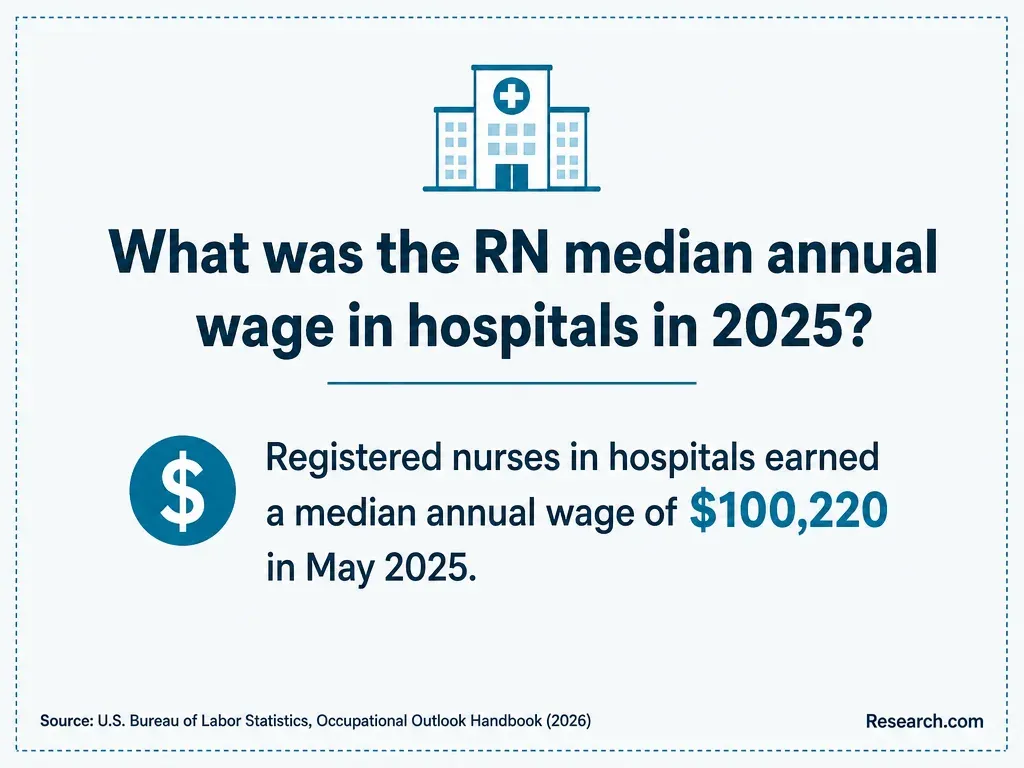
There is no dependable occupation-wide salary specifically for graduates of a palliative care certificate. The U.S. Bureau of Labor Statistics reported a $93,600 median annual wage for registered nurses in May 2024; that historical national figure covers RNs across specialties, settings, and experience levels, not Pennsylvania palliative care nurses or certificate holders. Use local job postings and actual offers for a compensation decision. If advancement rather than a new clinical specialty is the goal, DNP pathways that do not add a new clinical specialty represent another, typically larger educational commitment.
How can nurses choose an accredited palliative care certificate program?
Start with the exact award and its academic home. Confirm that the institution holds recognized institutional accreditation, then ask whether the certificate is within an accredited nursing program's scope; institutional accreditation, nursing program accreditation, state authorization, and professional certification answer different questions. Do not assume accreditation of an MSN automatically establishes the status of every separately advertised certificate.
Request the current catalog, a sample study plan, written placement responsibilities, and an itemized cost estimate. Compare the courses with your target duties and ask what graduates receive on their transcript. If your objective is an NP role rather than added palliative expertise within an existing role, compare the separate requirements and costs of an NP program; online NP program affordability comparisons are relevant to that distinct decision. Enroll only after the school has confirmed that its actual award, format, and required experiences fit your goal.
Other Things You Should Know About Nursing
Possibly. Ask whether the award qualifies under your employer's tuition-assistance policy, whether reimbursement requires a grade or continued employment, and whether noncredit training is treated differently.
The school must confirm enrollment eligibility for your location and any applicable practice-placement restrictions. Online delivery alone does not resolve those questions.
Some serious-illness education is interdisciplinary. Confirm whether shared courses award graduate nursing credit and whether any nursing-specific requirements remain.
A school-issued academic award generally remains on the transcript. That is separate from renewing an RN or APRN license or a professional specialty credential under its own rules.
- Publication 970 (2025), Tax Benefits for Education | Internal Revenue Service https://www.irs.gov/publications/p970
- Rule 1301:11-7-03 | Distance education. https://codes.ohio.gov/ohio-administrative-code/rule-1301:11-7-03
- Nursing | Department of State https://www.pa.gov/agencies/dos/department-and-offices/bpoa/boards-commissions/nursing
- Cost of Attendance (Budget) | 2025-2026 Federal Student Aid Handbook https://fsapartners.ed.gov/knowledge-center/fsa-handbook/2025-2026/vol3/ch2-cost-attendance-budget
- Post-Master's Certificate in Nursing - Palliative Care | Walden University https://www.waldenu.edu/online-certificates-programs/nursing-post-masters/palliative-care
- Palliative Care Certificate - Penn Nursing https://www.nursing.upenn.edu/palliative-care-certificate/
- What's the Difference Between Asynchronous and Synchronous Learning? | Ohio State Online https://online.osu.edu/content-hub/blogs/whats-the-difference-between-asynchronous-and-synchronous-learning/
- MSN APRN Admissions Requirements - UVA School of Nursing https://nursing.virginia.edu/admissions/grad-admissions/
- Palliative and Hospice Nursing Graduate Certificate | UNT Health Fort Worth https://www.unthealth.edu/college-of-nursing/palliative-and-hospice-nursing-graduate-certificate.html
- Clinical Practicum Information and Student Responsibilities | Bellin College https://catalog.bellincollege.edu/clinical-practicum-information-and-student-responsibilities