2027 Post-Master's AGPCNP Certificates for Nurses in Georgia: Gap Analysis and Primary Care Clinicals
Audited and Verified:
Our Editorial and Data Verification Process
Research.com uses government datasets, official education statistics and primary institutional information to support its career and degree guides. Our review process checks factual accuracy, occupational definitions, source dates and the requirements associated with the credentials discussed.
How This Article Was Fact-Checked
Our editorial team verifies salary estimates, employment projections, education requirements and program information against original data providers and official organizations. Salary figures are checked against the relevant occupational definitions and reporting periods. Information about licensure, accreditation and required in-person training is reviewed separately.
Fact-checked and verified on:

Co-Founder and Chief Data Scientist
A post-master's adult-gerontology primary care nurse practitioner (AGPCNP) certificate can prepare a Georgia nurse for a new population-focused role, but the path depends on what the nurse has already studied and practiced. An FNP, an acute care NP, and a graduate of a non-APRN master's program may need different coursework and supervised clinical experiences.
This guide explains how schools assess those gaps, what to verify about Georgia authorization and national certification, and how to compare programs without assuming that prior experience - or online delivery - will shorten the clinical requirement.
Key Things You Should Know
- A receiving program's formal gap analysis determines which graduate courses and supervised AGPCNP primary care experiences a nurse must complete; an existing MSN, DNP, or APRN credential does not automatically waive them.
- The ANCC's AGPCNP certification pathway specifies at least 500 faculty-supervised clinical hours in the role and population focus, but a school may require more; confirm the requirements that apply to your cohort and intended exam.
- Before enrolling, verify the exact certificate track, Georgia clinical-placement arrangements, eligibility for ANCC or AANPCB certification, and the separate steps for Georgia APRN authorization.
What Is a Post-Master's AGPCNP Certificate in Georgia?
A post-master's AGPCNP certificate is graduate education for a nurse who already holds a nursing master's or doctoral degree and needs preparation in the adult-gerontology primary care NP role. It generally leads to a school-issued certificate rather than another MSN. The educational goal is eligibility to seek population-specific national certification - not automatic permission to practice as an NP.
AGPCNP preparation emphasizes longitudinal care: health promotion, prevention, diagnosis, treatment, and management of common and chronic conditions across the adult and older-adult lifespan. It is not interchangeable with adult-gerontology acute care preparation, which centers on acutely ill patients.
An RN with a non-APRN MSN may need the full NP specialty sequence. An already-certified NP may have fewer academic gaps, but still needs the receiving school to evaluate documented coursework, competencies, and clinical experiences.
Population focus should drive the choice. Nurses who also want broad pediatric primary care should compare AGPCNP preparation with short online family nurse practitioner certificates; a shorter program in the wrong population focus is not a useful shortcut.
What Are Georgia's AGPCNP Certification and APRN Licensing Requirements?
Three decisions occur at different points: the school determines certificate completion and examination preparation; a national certifier determines examination eligibility and awards certification; and the Georgia Board of Nursing determines APRN authorization.
For adult-gerontology primary care, nurses should check the current requirements for the ANCC's AGPCNP-BC or the American Association of Nurse Practitioners Certification Board's AGNP-C. The certifiers' clinical documentation and eligibility rules should be checked against the program's curriculum before enrollment.
Georgia APRN applicants must meet the board's applicable RN-licensure, graduate-preparation, national-certification, and application requirements. Authorization to practice and authority to prescribe are separate questions: prescribing can involve Georgia nurse-protocol requirements and other applicable registrations. A multistate RN privilege, a certificate, or national certification alone should not be treated as Georgia APRN authorization.
Certification is role-specific. For example, short online psychiatric nursing certificates concern a different NP population focus and do not confer AGPCNP certification eligibility. Ask the Georgia Board of Nursing and the intended certifier to resolve any uncertainty about a proposed education pathway.
Which Georgia Schools Offer Post-Master's AGPCNP Certificates?
Emory University and Georgia State University are Georgia institutions to investigate for post-graduate or post-master's adult-gerontology primary care NP study. Certificate tracks, entry terms, admission eligibility, and enrollment status can change; neither an institution's AGPCNP master's track nor a general post-master's certificate listing confirms that the specific AGPCNP certificate is accepting applicants.
Request the current catalog page and a written response from each school before treating it as an available option.
The most useful comparison is not a school-name list but a written answer to the same questions: Does the award explicitly name AGPCNP primary care? Will the school perform an individual gap analysis? How many new, approved primary care hours will you need? Who secures and approves Georgia sites and preceptors? Does the completed plan support your intended national exam and Georgia application?
If a Georgia-based placement is the priority rather than a Georgia-based campus, an out-of-state program may merit consideration. Published online FNP programs with preceptor support illustrate why placement help is worth investigating, but FNP is a different focus; ask any prospective AGPCNP program specifically whether it can enroll you and approve clinicals in Georgia.
Online delivery usually changes where didactic courses are taken, not whether supervised patient care is required. The comparison below separates classroom convenience from the obligations most likely to affect a working nurse's schedule.
| Feature | Primarily online or hybrid | Campus-based |
| Course access | Remote classes may include live meetings and fixed deadlines | Scheduled in-person classes may make faculty access easier |
| Clinical learning | Approved in-person primary care placements remain necessary | Approved in-person primary care placements remain necessary |
| Travel | Check for campus intensives, simulation, and site travel | Plan for regular commuting and site travel |
| Best fit | Nurses with workable local placements and limited campus access | Nurses who can attend scheduled classes and want local contact |
Ask for a sample term calendar, including daytime clinical commitments. Unlike RN-to-BSN study without added bedside rotations, an NP certificate cannot be evaluated on coursework flexibility alone: its supervised advanced-practice placements are central to preparation.
The curriculum depends on the gap analysis. Schools commonly assess prior graduate preparation in advanced pathophysiology, advanced pharmacology, and advanced health assessment - often called the "three Ps" - alongside NP role courses and adult-gerontology primary care management.
Specialty work may address prevention, complex chronic illness, older-adult care, diagnostics, and clinical decision-making. Supervised practicum courses connect that learning to observed patient care and faculty evaluation.
Matching course titles alone is insufficient. A school may need syllabi to judge content, recency, credit level, and whether prior assessment or pharmacology was taught for an advanced practice role. Prior acute care training can be valuable without establishing competence in longitudinal primary care. Similarly, shorter online mental health NP master's programs prepare for a different focus; their courses should not be assumed to satisfy an AGPCNP specialty sequence.
Programs typically request an active RN license, an acceptable graduate nursing degree, transcripts, and evidence of prior APRN education or certification when relevant. Schools may also review GPA, a résumé, references, a statement of goals, and clinical-site eligibility. Admission to a university does not by itself establish admission to its AGPCNP certificate or approval of a proposed preceptor.
To make the gap review meaningful, assemble graduate syllabi; records of supervised hours by role, population, and setting; prior certification documents; and a current license record. An experienced APRN should ask which competencies the school will recognize and which new primary care experiences it requires. An RN whose master's is in education or leadership should expect a more extensive NP preparation review rather than assuming the degree title meets NP entry requirements.
A nurse without a graduate nursing degree generally needs a master's-level route first. For an associate-prepared RN, ADN-to-MSN admission requirements are a different starting-point decision, not a substitute for post-master's certificate eligibility.
There is no dependable Georgia-wide duration or price: a formal gap analysis can change the number of required courses and clinical terms, while tuition may be charged per credit or term. A nurse with eligible prior NP coursework may have a different plan from a non-APRN MSN graduate. Clinical-site availability and course sequencing can extend either plan.
Request an individualized, itemized estimate before comparing offers. It should identify tuition and mandatory fees; required credits and projected terms; books and technology; background checks and clinical clearances; travel or campus visits; certification and state-application expenses; and any expected reduction in work hours. Ask what happens financially if a preceptor becomes unavailable or a required course is offered only once a year.
When exploring less expensive nurse practitioner study, compare the total cost of the approved individual plan, not advertised per-credit tuition alone. Employer reimbursement may help, but eligibility and repayment conditions need separate confirmation.
The number a particular student must complete is set through the school's curriculum and gap analysis, subject to the intended certifier's rules. ANCC's AGPCNP eligibility criteria include a minimum of 500 faculty-supervised clinical hours in the role and population focus; that minimum is not a promise that every certificate student needs exactly 500 new hours or that every program caps hours there. Confirm the current standards for your entry cohort and chosen certification pathway.
Ask the program to state in writing how many hours must be newly completed, whether and how documented prior NP clinical education is considered, and which patient populations and settings qualify. Employment shifts, shadowing, simulation, and prior RN bedside hours should not be counted as supervised AGPCNP practicum without explicit program approval. A suitable preceptor and site also need approval before hours begin.
Compressed calendars require particular scrutiny. 12-month family NP study schedules provide a useful scheduling comparison, not evidence that AGPCNP clinical hours can be waived or completed outside the program's required supervision.
After obtaining the required certification and Georgia APRN authorization, an AGPCNP may pursue adult and older-adult primary care roles in outpatient practices, community health settings, geriatrics, and other settings consistent with preparation, law, and employer privileges.
The work can involve prevention, diagnostic evaluation, chronic-condition management, patient education, and care coordination. Graduation alone does not authorize NP practice, and a new role may still require employer orientation.
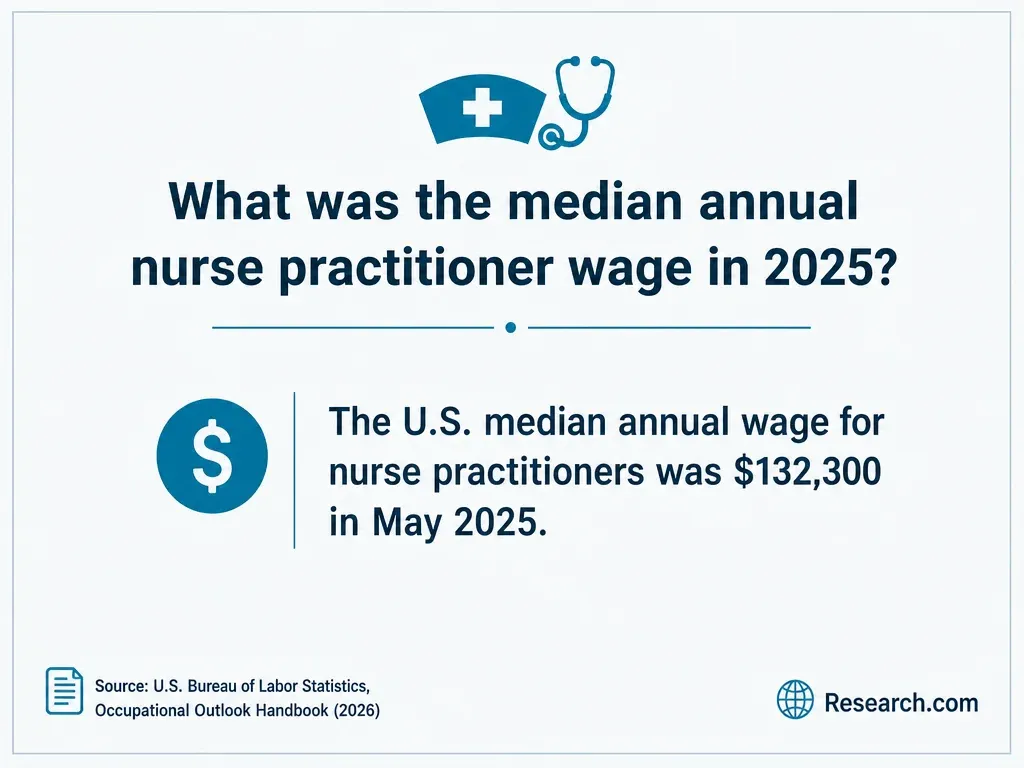
For pay research, use the U.S. Bureau of Labor Statistics nurse practitioner occupation as a broad benchmark, then compare actual Georgia offers by setting, schedule, benefits, and expected responsibilities.
BLS occupation-wide wages and employment projections do not isolate AGPCNP certificate graduates or predict an individual offer. If behavioral health is the intended career instead, try comparing psychiatric NP program costs rather than assuming either credential fits both roles.
How Can Nurses Choose an Accredited AGPCNP Certificate Program?
Check accreditation and eligibility at the specific program and certificate-track level. Institutional accreditation, nursing program accreditation through an organization such as CCNE or ACEN, state enrollment authorization, national examination eligibility, and Georgia APRN requirements answer different questions. A school's accredited MSN does not, by itself, establish the status or outcomes of every certificate it offers.
A practical final review has four steps:
- Obtain the current catalog description naming the AGPCNP certificate, its accreditor and applicable scope, and any Georgia enrollment restrictions.
- Request a written gap analysis showing accepted prior courses, required new courses, clinical hours, expected sequence, and total estimated charges.
- Confirm who finds, approves, and replaces clinical sites and preceptors, including deadlines and any required campus attendance.
- Ask the school to identify the intended certification examination, then check eligibility with that certifier and Georgia authorization requirements with the Board of Nursing.
If a certificate is unavailable or prior graduate work cannot be applied as expected, compare a full NP degree route on its own merits. A BSN-to-MSN program affordability guide is most relevant to nurses who still need an MSN; it should not replace an individualized certificate comparison for nurses who already have one.
Other Things You Should Know About Nursing
Adult-gerontology NP preparation generally includes adolescents beginning at age 13. Check the certifier's population definition and an employer's privileges; it is not general pediatric preparation for younger children.
Not automatically. The patient's location can trigger that state's APRN licensure and prescribing rules. Verify the destination state's requirements before providing care.
Do not assume so. Check the current Georgia Board of Nursing and national certifier requirements for your pathway; employers may set additional preferences.
A school-issued certificate records completed education. National NP certification and state authorization have separate maintenance or renewal requirements, which graduates must track independently.
- How to Guide: APRN | Georgia Secretary of State https://sos.ga.gov/how-to-guide/how-guide-aprn
- GA R&R - GAC - Chapter 410-11 REGULATION OF ADVANCED PRACTICE REGISTERED NURSES https://rules.sos.ga.gov/gac/410-11
- MSN: Adult-Gerontology Primary Care Nurse Practitioner | gwu.edu https://nursing.gwu.edu/programs/msn/adult-gerontology-primary-care-nurse-practitioner
- Post-Master's Adult-Gerontology Primary Care Certificate | Walden University https://www.waldenu.edu/online-certificates-programs/nursing-post-masters/adult-gerontology-primary-care-nurse-practitioner
- Adult-Gerontology Primary Care Nurse Practitioner Certificate | Georgia Southern University - https://www.georgiasouthern.edu/degrees/graduate-certificate-in-adult-gerontology-primary-care-nurse-practitioner
- Adult-Gerontology Primary Care Nurse Practitioner Postgraduate Certificate | Purdue University Global Academic Catalog https://catalog.purdueglobal.edu/graduate/nursing/adult-geronotology-primary-care-nurse-practitioner-certificate/
- Adult Gerontology Nurse Practioner (AGPCNP) Online Master's | Adelphi University https://onlineprograms.adelphi.edu/programs/ms-agpcnp-adult-gerontology-nurse-practitioner/
- Online Nursing Post-master's Certificate | gsu.edu https://online.gsu.edu/program/nursing-post-masters-certificate/
- AGNP Post Master's Certificate Online at William Paterson | WPUNJ https://online.wpunj.edu/degrees/healthcare/post-masters-certificate/adult-gero-np/
- Post-Master's AGPCNP Certificate - Nursing | Capella University https://www.capella.edu/online-nursing-degrees/nursing-certificate-programs/certificate-adult-gerontology-primary-care-nurse-practitioner/