2027 Pathophysiology Course Assessments in Nursing: Exams, Assignments, and Skills Evaluation
Audited and Verified:
Our Editorial and Data Verification Process
Research.com uses government datasets, official education statistics and primary institutional information to support its career and degree guides. Our review process checks factual accuracy, occupational definitions, source dates and the requirements associated with the credentials discussed.
How This Article Was Fact-Checked
Our editorial team verifies salary estimates, employment projections, education requirements and program information against original data providers and official organizations. Salary figures are checked against the relevant occupational definitions and reporting periods. Information about licensure, accreditation and required in-person training is reviewed separately.
Fact-checked and verified on:

Co-Founder and Chief Data Scientist
A pathophysiology course does more than ask nursing students to memorize diseases. Its assessments test whether they can explain what is changing in the body, recognize meaningful findings, and connect those findings to safe nursing priorities. For prospective and current students, the assessment format matters: it affects how to prepare, how grades are earned, and whether a course supports later clinical learning.
This guide explains common exams, assignments, and skills evaluations, then shows what to check in a syllabus or nursing program before enrolling.
Key Things You Should Know
- Expect three broad forms of assessment: knowledge-based exams, written or case-based assignments, and activities that apply concepts to patient scenarios.
- Clinical judgment questions may draw on the six cognitive skills in the National Council of State Boards of Nursing's model, but a pathophysiology grade is not proof of clinical competence.
- Check the syllabus for exam weight, grading and repeat rules, simulation or on-site requirements, and whether the course meets your intended nursing program's prerequisites.
What assessments are used in nursing pathophysiology courses?
Pathophysiology is the study of how disease or injury disrupts normal body function. Nursing courses typically assess both the underlying mechanisms and a student's ability to interpret their implications for assessment, monitoring, and patient safety. The mix varies by school, course level, and whether the course is part of a prelicensure or graduate curriculum.
The table shows what common assessment formats can demonstrate—and what they cannot establish on their own.
| Assessment | What it commonly tests | Important limit |
| Quizzes and unit exams | Mechanisms, terminology, patterns of findings, and application | A high score does not establish bedside performance |
| Case analyses and concept maps | Connections among causes, manifestations, and nursing priorities | Quality depends on the reasoning and evidence presented |
| Simulation or case discussions | Recognition of changes, communication, and decisions in a structured scenario | Simulation is not automatically equivalent to supervised patient care |
Some courses also grade participation, presentations, or cumulative projects. These are course assessments, not entrance tests: students comparing nursing admission test policies should separately check whether a school requires an admissions exam.
How do pathophysiology exams test nursing knowledge and clinical judgment?
Exams often move from recall to application. A recall item might ask what causes a physiological change; an application item might provide symptoms, vital-sign trends, and laboratory results and ask which finding needs closer attention. Formats can include multiple choice questions, multiple-response questions, short answers, and unfolding cases, depending on the instructor.
Strong answers connect a mechanism to observable findings without treating every patient with the same diagnosis as identical. For example, knowing why impaired gas exchange can change oxygenation helps a student interpret a trend; deciding what to do for an actual patient still requires the full assessment, supervision, and applicable clinical protocols.
To prepare, practice explaining why an answer fits and why plausible alternatives do not. Check whether exams allow a calculator, supply reference ranges, use partial credit, or require a minimum exam average separate from the overall course grade. Graduate assessments may expect greater depth in population-specific conditions; a student comparing PMHNP certificate completion timelines should confirm whether advanced pathophysiology is included, required beforehand, or evaluated for equivalency.
What assignments are common in nursing pathophysiology courses?
Case studies, concept maps, disease-process papers, discussion posts, and presentations are common. A useful assignment traces a clear chain: underlying cause, altered physiology, expected or concerning findings, and implications for nursing observation and communication. Instructors may also ask students to compare conditions with similar symptoms or explain how age and coexisting conditions affect a case.
Read the rubric before choosing a topic. It may reward accurate mechanisms, use of credible evidence, clear distinctions between expected and urgent findings, and appropriate limits on nursing conclusions. If a case is based on a real encounter, follow the school's and clinical site's privacy rules; remove identifying details and do not assume permission to use a patient record.
Assignment expectations can become more advanced after RN licensure. Students considering affordable master's progression for bachelor's-prepared RNs should compare actual course descriptions rather than assume an undergraduate pathophysiology paper satisfies graduate-level work.
Pathophysiology is primarily a knowledge course, so a hands-on checkoff is not universal. Where application is assessed, faculty may use simulated patients, unfolding cases, group discussions, or written responses to evaluate whether students notice relevant cues, explain their significance, communicate concerns, and reconsider conclusions when new information appears.
These activities assess application of knowledge, not automatic authorization to perform a procedure or provide independent care. A skills lab may separately evaluate a technique; supervised clinical courses evaluate performance with patients under program and site requirements. Ask which course owns each competency if an advertised "clinical application" component is unclear.
The distinction becomes especially important in advanced practice education. Comparing preceptor-provided FNP program options can help prospective students investigate placement support, but a pathophysiology simulation does not replace any supervised clinical experiences that the program and credentialing authorities require.
Most courses begin with normal physiology and examine inflammation, infection, tissue injury, fluid and electrolyte imbalance, and altered cellular function. They then apply those mechanisms across systems such as cardiovascular, respiratory, renal, endocrine, neurologic, and gastrointestinal health. The depth and order vary: a prelicensure course may emphasize common conditions and recognizable changes, while an advanced course may require more detailed interpretation across patient populations.
A productive study framework for each condition is to explain the normal function, identify what changes, connect that change to manifestations and test findings, and distinguish likely complications from facts not established by the case. This approach is more transferable than memorizing disease lists.
Course titles alone can conceal important differences in graduate pathways. When comparing psychiatric NP MSN programs by duration, check the actual advanced pathophysiology syllabus and population-focused requirements rather than assuming a shorter schedule means less demanding assessment.
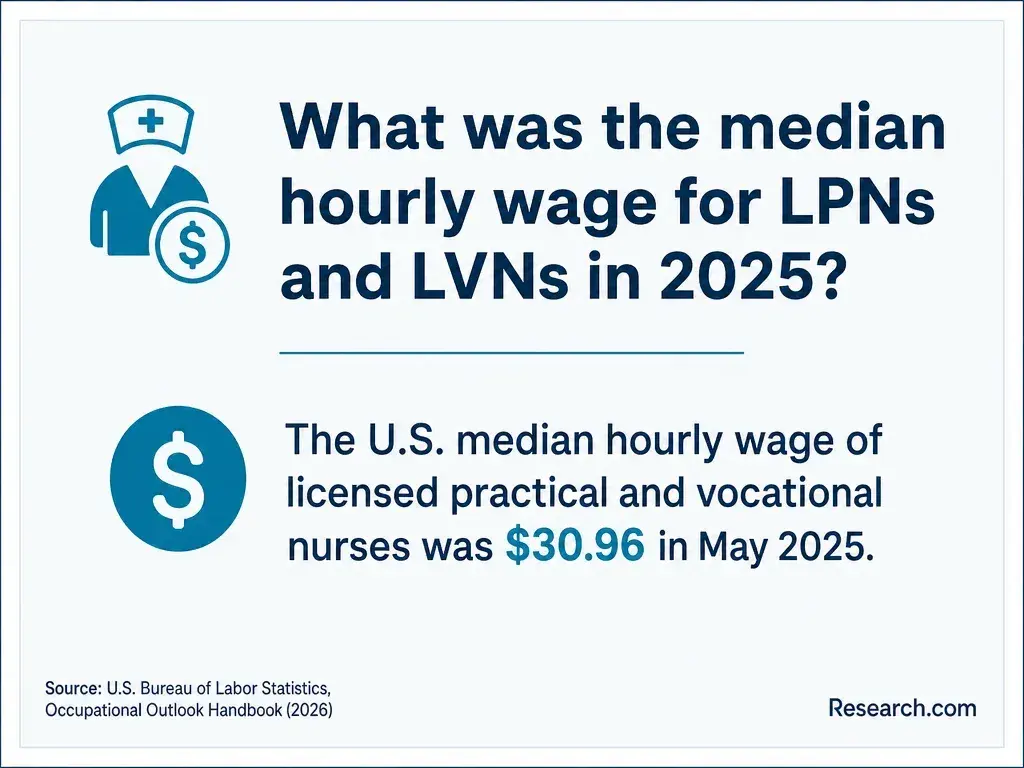
Pathophysiology helps students explain why assessment findings matter. That foundation supports clinical-judgment practice, but the NCLEX-RN tests entry-level nursing practice across a broader test plan; it is not a stand-alone pathophysiology exam. The National Council of State Boards of Nursing's clinical judgment model identifies six cognitive skills: recognize cues, analyze cues, prioritize hypotheses, generate solutions, take action, and evaluate outcomes.
When reviewing a practice case, first explain the disease mechanism, then identify which supplied findings change your interpretation. Compare your reasoning with the official NCLEX-RN test plan and your faculty's feedback. Avoid memorizing a fixed response to a diagnosis without considering the patient information in the question.
This NCLEX connection applies to initial RN preparation, not every nursing course. An already licensed APRN evaluating an accelerated post-master's FNP study should assess the certificate's advanced coursework and clinical preparation against the intended role, rather than use NCLEX preparation as its benchmark.
Human anatomy and physiology are common foundations because students need to understand normal function before explaining dysfunction. Depending on the school, microbiology, chemistry, admission to a nursing sequence, or concurrent enrollment in another nursing course may also be required. An advanced pathophysiology course may have different eligibility rules from an undergraduate one.
Before registering, obtain written confirmation that your prior courses meet the receiving school's requirements. Check the accepted grade, science-course age limit, laboratory requirement, transfer equivalency, and whether the course must be completed before nursing admission or can be taken during the program. Acceptance as elective credit is not the same as satisfying a nursing prerequisite.
If future graduate study is the goal, do not assume undergraduate credit will replace an advanced course. Students considering short family nurse practitioner program options should verify the program's specific advanced pathophysiology entry and completion rules before relying on a proposed timeline.
The learning objectives may be similar, but delivery changes the logistics. An online course may use timed exams, remote proctoring, scheduled live case discussions, and group assignments; a campus course may use testing centers and in-person discussion or simulation. Neither format is inherently easier, and "online" does not guarantee self-paced work.
Compare the published syllabus for exam windows, time zones, required software and equipment, identity checks, accessibility arrangements, live attendance, and any campus visits. Ask what happens if a proctoring connection fails and whether simulations are remote or in person. These details can matter more to a working student than the course label.
Also distinguish a course's assessment format from the requirements of an entire degree. A student reviewing online BSN completion clinical policies should confirm separately whether the pathophysiology course has on-site requirements and whether other courses require fieldwork.
Start with the intended outcome: an initial RN-licensure program, an RN-to-BSN degree, or graduate preparation. Then check the specific program and track, not just the university's reputation. Institutional accreditation, nursing program accreditation such as ACEN or CCNE where applicable, and state board approval for prelicensure education serve different purposes. Confirm their current status and scope with the responsible organizations and the program.
For this course decision, ask for the pathophysiology syllabus and grading policy. Compare assessment methods, minimum passing rules, tutoring access, course availability, and whether unsuccessful students can repeat the course without delaying a sequenced clinical placement. Request written clarification of licensure eligibility for the jurisdiction where you intend to apply; accreditation alone does not grant a license.
Total cost also matters, particularly when a course is part of a longer graduate pathway. When planning the cost of nurse practitioner education, include tuition and fees alongside required travel, technology, and clinical-placement expenses rather than judging value by a single course price.
How can pathophysiology performance affect nursing career pathways?
Strong pathophysiology performance can make later pharmacology, assessment, and clinical coursework easier to navigate because students can explain the mechanisms behind findings. Weak performance is a signal to address a knowledge gap early—not a verdict on someone's potential as a nurse. Review missed questions by mechanism and reasoning step, seek faculty feedback, and use tutoring before the next course builds on the same material.
A grade can also affect progression if a program requires a minimum course grade or limits repeats. Ask the program how those policies apply to your cohort. For employment, clinical performance, licensure, orientation, and role-specific competencies matter alongside academic work; neither a high course grade nor graduation independently establishes readiness for a specialty role.
Graduate plans should follow the intended role and required preparation, not a single undergraduate grade. An RN interested in psychiatric advanced practice can compare lower-tuition psychiatric nursing graduate programs, then verify admission standards, advanced coursework, supervised experiences, and applicable certification and state requirements.
Other Things You Should Know About Nursing
Only if the course policy permits it. Check whether the instructor offers exam corrections, remediation, or a retake, and whether any new score replaces or supplements the original grade.
That depends on the instructor and exam. Confirm permitted notes, reference ranges, calculators, and electronic resources before test day rather than assuming an open-book format.
There is no universal number. Use the syllabus's reading and assessment schedule to reserve time for reviewing normal physiology, working through cases, and revisiting missed concepts; increase that time if foundational sciences are unfamiliar.
Contact the school's disability or accessibility office early and follow its documentation process. Ask how approved accommodations will work with timed exams, remote proctoring, and any in-person assessments.
- Validating Assessment Tools in Simulation - StatPearls - NCBI https://www.ncbi.nlm.nih.gov/books/NBK560531/
- Considerations and strategies for effective online assessment with a focus on the biomedical sciences - PMC https://pmc.ncbi.nlm.nih.gov/articles/PMC8728109/
- Full article: Assessment for inclusion: rethinking contemporary strategies in assessment design | tandfonline.com https://www.tandfonline.com/doi/full/10.1080/07294360.2022.2057451
- Guidelines For Effective and Accessible Assessments | Trefny Innovative Instruction Center https://trefnycenter.mines.edu/resources/accessible-assessments/
- Nursing (NURS) | Texas State University https://mycatalog.txstate.edu/courses/nurs/
- Nursing Skills Lab (SKILLS LAB) - San Francisco | UC San Francisco General Catalog https://catalog.ucsf.edu/course-catalog/skills-lab/
- Nursing (NURS) | The University of Texas Health Science Center at San Antonio Catalog https://catalog.uthscsa.edu/generalinformation/coursedescriptions/nurs/
- Rubrics for Assessment | Center for Innovative Teaching and Learning | Northern Illinois University https://www.niu.edu/citl/resources/guides/instructional-guide/rubrics-for-assessment.shtml
- AACN Essentials FAQs | aacnnursing.org https://www.aacnnursing.org/essentials/tool-kit/faqs