2027 Organ Procurement Nurse Workday: Patient Mix, Responsibilities, and Teamwork
Audited and Verified:
Our Editorial and Data Verification Process
Research.com uses government datasets, official education statistics and primary institutional information to support its career and degree guides. Our review process checks factual accuracy, occupational definitions, source dates and the requirements associated with the credentials discussed.
How This Article Was Fact-Checked
Our editorial team verifies salary estimates, employment projections, education requirements and program information against original data providers and official organizations. Salary figures are checked against the relevant occupational definitions and reporting periods. Information about licensure, accreditation and required in-person training is reviewed separately.
Fact-checked and verified on:

Co-Founder and Chief Data Scientist
Organ procurement nursing is not a predictable bedside shift. A referral can lead to hours of clinical review, family communication, donor management, and coordination across hospitals and transplant teams. For nursing students and RNs considering the specialty, understanding that workflow matters more than finding a degree with "organ procurement" in its name. This guide explains who these nurses serve, what they do alongside other professionals, and how to evaluate the experience, training, schedule, and employer support needed to make the transition.
Key Things You Should Know
- Organ procurement nurses may support donation after a determination of death by neurologic criteria or donation after circulatory death; the clinical sequence and timing differ.
- An active RN license is the usual starting credential for nursing positions, but duties and additional requirements depend on the organ procurement organization and job title.
- Expect case-driven hours rather than a guaranteed eight-hour routine: referrals, donor management, recovery coordination, and on-call coverage can extend across nights or weekends.
What does an organ procurement nurse do during a typical workday?
An organ procurement nurse generally works for an organ procurement organization (OPO), sometimes under a title such as clinical donation coordinator. OPOs evaluate potential deceased donors and coordinate donation with hospitals and transplant programs. The nurse's precise responsibilities depend on the employer, staffing model, training, and state nursing scope of practice.
There may be no active donor case at the start of a shift. A nurse might review referrals, speak with hospital staff, check records, and prepare for on-call coverage. When a case proceeds, the work becomes time-sensitive. This table shows a representative workflow - not a sequence every nurse completes independently.
| Stage | Typical nursing contribution | Key boundary |
| Referral and evaluation | Gather clinical information and communicate with the OPO and hospital teams. | The OPO evaluates donation potential; the treating team remains responsible for the patient's care. |
| Authorization and donor management | Coordinate with authorized OPO staff, monitor information, and help implement the approved clinical plan. | Authorization and clinical decisions follow applicable law, organizational policy, and professional scope. |
| Organ allocation and recovery | Keep teams informed, document changes, and coordinate timing, transport, and operating-room readiness. | Allocation and surgical recovery involve other designated professionals and established processes. |
| Case completion | Complete records, handoffs, and quality follow-up. | Accurate documentation and privacy obligations continue after recovery. |
The role rewards nurses who can maintain a clear clinical picture while many teams act on different deadlines. Nurses interested primarily in improving coordination systems, rather than managing individual cases, may eventually explore post-MSN DNP pathways in systems leadership; that graduate study is not a prerequisite for frontline procurement work.
What types of patients do organ procurement nurses care for?
Potential organ donors are typically hospitalized patients with catastrophic illness or injury. Donation may proceed after death is determined by neurologic criteria, often called brain death, or after circulatory death under a separate protocol. The hospital's authorized clinicians determine death; an OPO nurse does not make that determination simply by holding a procurement role.
Before death, the patient's treatment decisions belong to the treating team and the patient or authorized decision-maker, as applicable. Donation planning must not replace appropriate patient care. After death has been determined, donor management can involve close attention to organ function and rapid communication about clinical changes. In donation after circulatory death, decisions to withdraw life-sustaining treatment must be separate from the donation decision, with responsibilities defined by hospital and OPO policy.
Families are central to the work even when they are not the nurse's clinical patient. Their communication needs, grief, and wishes deserve respectful attention, while designated staff handle donation discussions and authorization according to policy and law. Nurses drawn mainly to ongoing psychiatric treatment rather than time-limited donation coordination may find short PMHNP certificate pathways for nurses more aligned with that different career goal; such a certificate does not prepare someone to serve as an OPO coordinator by itself.
How do organ procurement nurses collaborate with transplant teams?
The OPO nurse connects teams that do not share one workspace or schedule. Hospital ICU nurses and physicians provide bedside care and clinical updates. OPO colleagues evaluate donation, authorization, and logistics. Transplant programs assess organ offers for their recipients. Laboratories, transport providers, and recovery teams contribute information or services needed at specific points.
Good teamwork depends on precise handoffs: what has been confirmed, what remains pending, who owns the next decision, and when another team needs an update. The procurement nurse may help coordinate testing and communicate changes, but does not independently accept an organ for a transplant recipient or perform surgical recovery. When evaluating an OPO job, ask how these responsibilities are divided and whom the nurse can contact when a case changes rapidly.
Experienced nurses seeking broader organizational leadership can consider accelerated DNP program comparisons, but a faster graduate program should not be confused with the supervised, employer-specific preparation needed for this teamwork.
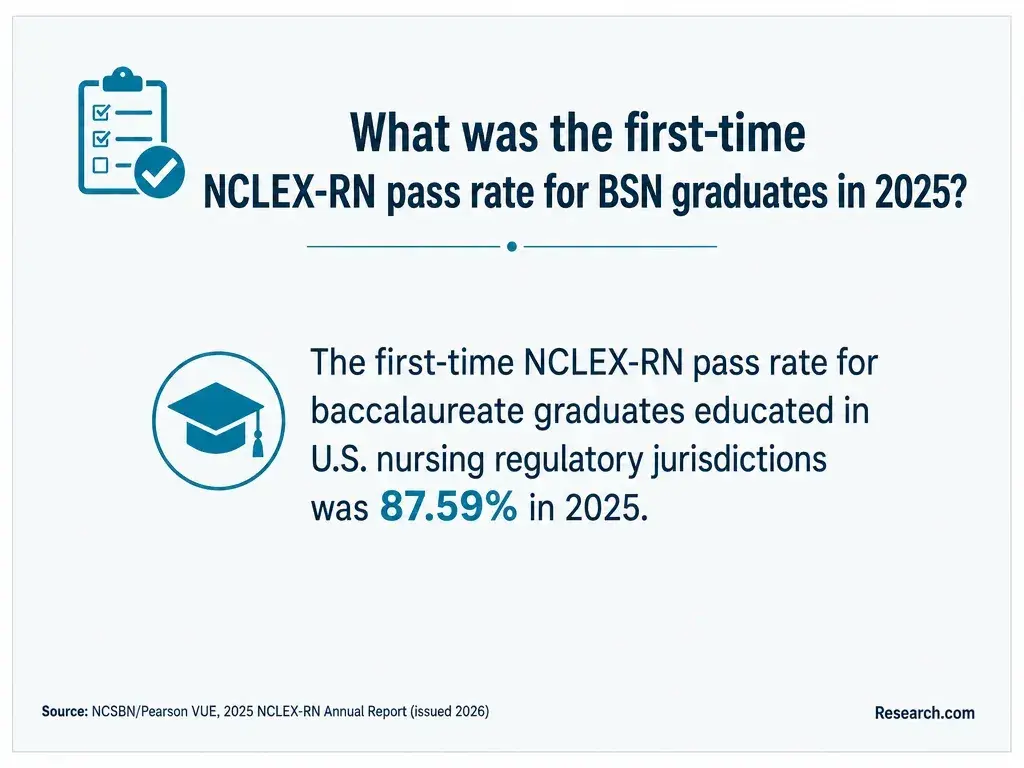
For a nursing position, the practical entry point is RN education followed by licensure and relevant clinical experience. An ADN or BSN can lead toward initial RN licensure through an eligible prelicensure program; a postlicensure RN-to-BSN program assumes the student is already an RN. Individual OPOs may prefer or require a BSN, so check the actual posting before paying for another degree.
Critical care, emergency, trauma, and other high-acuity experience can build skills in assessment, changing physiology, escalation, and interdisciplinary communication. It does not automatically qualify a nurse to manage donation cases independently. OPO orientation must address its own workflows, documentation, ethics, and competency expectations. Some donation-coordinator positions also accept non-nurses; applicants should distinguish those jobs from positions that require an RN license and nursing duties.
Someone with a prior non-nursing bachelor's degree can compare prelicensure routes, including ABSN programs with flexible admission requirements. Prior academic credit may shorten a route, but it neither grants an RN license nor replaces an employer's clinical-experience requirements.
An RN-designated position requires a valid RN license appropriate to where the nurse practices. Employers may also require a driver's license, travel availability, or particular clinical credentials. Applicants who will cover sites across state lines should ask the employer how it verifies practice authorization for each jurisdiction; a job's travel territory does not itself establish licensing privileges.
No single national specialty certification substitutes for RN licensure or makes every nurse eligible for an OPO job. Employers may value critical-care certification or require life-support training, but requirements differ by position. A certification also does not replace orientation and observed competency in donation workflows.
Do not mistake an unrelated advanced-practice credential for procurement preparation. For example, a guide to accelerated post-master's FNP study addresses a different clinical role and its own education and authorization requirements, not a shortcut into OPO nursing.
Foundational anatomy, physiology, pathophysiology, pharmacology, assessment, and ethics help nurses interpret complex clinical information. Critical-care learning adds experience with hemodynamics, ventilation, laboratory trends, infection prevention, and rapid escalation. Communication training matters just as much: the work requires accurate handoffs and sensitive interactions with people under severe stress.
Most role-specific learning occurs through OPO training rather than a standalone nursing degree track. Ask a prospective employer how orientation covers donation pathways, authorization boundaries, donor management, allocation communication, documentation, and supervised case progression. Classroom study or simulation can prepare a nurse to learn these tasks, but neither proves independent competence on a live case.
Graduate study is optional for most frontline roles. Nurses comparing later academic options should examine the actual curriculum rather than assuming that easier admission is more relevant; comparing prerequisite policies in DNP programs answers a different question from whether an OPO provides strong clinical onboarding.
The timeline depends on where you start. A nursing student must complete an eligible prelicensure program, meet the state board's requirements, pass the NCLEX-RN, obtain an RN license, and then qualify for an employer's experience expectations. An already-licensed ICU or emergency nurse may be closer to applying, but still needs OPO-specific selection, orientation, and competency assessment.
There is no reliable universal number of years from graduation to independent procurement work. Postings vary, and a new hire's readiness depends on case exposure and demonstrated performance - not just time on a payroll. Before accepting an offer, ask how many cases are typically observed and supervised, how competency is assessed, and what happens if suitable cases are slow to arise.
A short course or degree advertised for another specialty will not compress this experience. Short-format family NP degree and certificate routes, for instance, lead toward a different role and should not be used to estimate the procurement nursing timeline.
There is no single trustworthy national median for "organ procurement nurse" comparable to a separately tracked occupation. The U.S. Bureau of Labor Statistics reports wages and employment projections for registered nurses overall, not a dedicated OPO-nurse category. RN-wide figures can provide labor-market context, but they cannot predict a procurement offer, the effect of on-call work, or advancement at a particular OPO.
Compare offers using base pay alongside on-call compensation, overtime rules, travel reimbursement, benefits, and the hours spent responding to cases. Ask whether call is paid when no case occurs and how frequently it interrupts scheduled time off. This gives a more useful picture than comparing annual salary alone - especially if the role would replace shift differentials in a current bedside job.
Tuition should enter the calculation only if a particular credential is needed for the job or a separate career goal. Lists such as PMHNP programs compared by tuition concern another specialty; their prices are not a benchmark for the cost of entering organ procurement nursing.
An experienced clinical nurse may move into donation coordination, then pursue senior coordinator, education, quality, clinical operations, or OPO leadership positions if the employer offers them. Related work includes hospital donation liaison roles and transplant-center coordination, but these jobs differ: supporting a potential deceased donor is not the same as coordinating care for a transplant recipient.
Choose the next role by its daily work, not its title. A nurse who likes urgent, mobile, case-driven coordination may prefer OPO clinical work; one who wants a more consistent relationship with transplant recipients may prefer a transplant-center role. Ask about case volume, territory, call frequency, mentoring, and performance measures before switching.
For an ADN-prepared RN, master's nursing study after an ADN may eventually support a leadership or education objective. It is not automatically more valuable than targeted OPO experience for an initial clinical-coordinator application.
How can you choose an accredited organ procurement nursing program?
First, separate initial RN education from organ procurement job training. There is generally no prelicensure degree whose accreditation alone establishes readiness to work as an OPO nurse. If you are not yet an RN, verify the school's institutional accreditation, the nursing program's applicable accreditation, state board approval or recognition, and whether completion supports RN exam eligibility in your intended jurisdiction. Confirm those facts with the responsible school, accreditor, and board rather than relying on a program advertisement.
If you already hold an RN license, compare employers' onboarding instead: supervised case exposure, educator support, documented competency checks, travel expectations, and escalation coverage. Ask whether a course labeled "transplant" teaches deceased-donation coordination or mainly recipient care. Neither a course title nor a school-issued certificate guarantees eligibility for an OPO position.
Admissions policies matter when choosing an initial nursing route, but they are only one filter. Nursing schools with no TEAS score requirement may offer different application options; verify each program's clinical access and licensure pathway before deciding where to enroll.
Other Things You Should Know About Nursing
Ask a local OPO about approved observation or informational-interview opportunities. Patient privacy, hospital access rules, and the unpredictable timing of cases may limit shadowing.
No. They can involve different donor criteria, recovery processes, schedules, and teams. Read the posting closely to see whether the position covers organs, tissues, or both.
Ask interviewers about debriefing, peer support, time off after extended cases, and access to employee assistance resources. Also consider how frequent call and exposure to family grief fit your own support needs.
They can apply, and their transplant knowledge may help. The employer must still assess whether their experience matches donor-side clinical work and provide training for responsibilities they have not performed.
- 42 CFR Part 482 -- Conditions of Participation for Hospitals | ecfr.gov https://www.ecfr.gov/current/title-42/chapter-IV/subchapter-G/part-482
- Deceased Donation | hrsa.gov https://www.hrsa.gov/optn/patients/organ-donation/deceased-donation
- Organ Procurement From Patients With Trauma - NCBI - NIH https://www.ncbi.nlm.nih.gov/books/NBK555947/
- Donation After Circulatory Death (DCD) | aopo.org https://aopo.org/dcd-process/
- Deceased Organ Donation Process | unos.org https://unos.org/transplant/deceased-donation/
- Organ donation after circulatory death (DCD) | LifeSource https://www.life-source.org/latest/organ-donation-after-circulatory-death-dcd-what-it-means-how-it-happens-and-why-it-matters/