
2027 Online vs On-Campus Learning Design Doctorate Programs: Cost, Flexibility, and Employer Perception

Co-Founder and Chief Data Scientist
The real question is not whether an online or on-campus Learning Design doctorate is "better"; it is which format fits your work life, research goals, budget, and career market. NCES distance education data released in 2024 shows that graduate study is now substantially shaped by online learning, making format choice a central enrollment decision. This guide is for educators, instructional designers, training leaders, and higher education professionals comparing doctoral options. You will learn how cost, flexibility, fieldwork, dissertation structure, and employer perception differ so you can choose the format with the strongest fit.
Key Things to Know About Online vs On-Campus Learning Design Doctorate Programs
- Online Learning Design doctorates can match on-campus rigor when they use the same accreditation, faculty standards, research expectations, and dissertation requirements; the difference is usually delivery, not academic level.
- NCES graduate tuition data released in 2024 shows average tuition and required fees vary more by institution type than by format, with public graduate tuition averaging about $12,600 and private nonprofit graduate tuition averaging about $30,000 in the most recent national tables.
- Employer perception is increasingly skills- and evidence-based: BLS data updated in 2024 lists $74,720 as the median pay for instructional coordinators and projects modest job growth, so portfolios, research fit, leadership experience, and institutional credibility matter more than the online-versus-campus label alone.
What are the key differences between online vs on-campus Learning Design doctorate programs?
A Learning Design doctorate prepares students to research, design, evaluate, and lead learning systems in settings such as higher education, K-12, corporate training, healthcare education, government learning, and educational technology.
Programs may use titles such as Learning Design, Instructional Design, Learning Sciences, Educational Technology, Instructional Systems, or an EdD or PhD concentration in curriculum, instruction, or learning technologies.
The biggest differences between online and on-campus formats usually involve access, schedule, networking, residency expectations, and how students interact with faculty. The degree level, dissertation expectations, and admissions standards may be similar when the programs are housed in the same accredited institution.
The table below summarizes the format differences that most directly affect a doctoral student's day-to-day experience and long-term career fit.
| Comparison factor | Online Learning Design doctorate | On-campus Learning Design doctorate |
| Best fit | Working professionals, career changers, military-connected students, and students outside major university markets | Students who want face-to-face research mentoring, campus teaching opportunities, and frequent in-person collaboration |
| Course delivery | Asynchronous, synchronous, or hybrid online seminars | In-person seminars, lab meetings, teaching assignments, and campus-based research activity |
| Networking | Often national or multi-state cohorts with virtual collaboration | Often stronger local campus ties, faculty access, and in-person peer relationships |
| Flexibility | Usually higher, especially when asynchronous coursework is available | Usually lower because classes, research meetings, and assistantships follow campus schedules |
| Cost structure | May use flat online tuition, per-credit pricing, technology fees, and limited relocation costs | May use in-state/out-of-state tuition, campus fees, relocation costs, and possible assistantship support |
| Career positioning | Strong for applied leadership, instructional design management, and practitioner-scholar roles when the portfolio is strong | Strong for academic research, faculty pathways, funded assistantships, and campus-based research networks |
The practical takeaway is simple: format should support the way you will complete the degree. An online program may be the better option if you need to keep working and can build research momentum remotely. An on-campus program may be worth the disruption if your goals depend on close faculty collaboration, research lab access, teaching assistantships, or academic hiring networks.
Are online Learning Design doctorate programs as rigorous as on-campus programs?
Online Learning Design doctorates can be just as rigorous as on-campus programs, but only when the program uses comparable doctoral standards. Rigor comes from the curriculum, faculty qualifications, research methods training, comprehensive exams or milestone reviews, dissertation expectations, and the quality of advising-not from the classroom location.
A strong online doctorate should require advanced study in learning theory, instructional systems design, research methods, program evaluation, technology-supported learning, equity in learning environments, and organizational change.
It should also require students to produce original or applied doctoral research through a dissertation, dissertation-in-practice, or equivalent capstone approved by a faculty committee.
When comparing academic quality, focus on evidence rather than marketing language. These are the signs that an online or on-campus program is academically credible:
- The university is regionally accredited and the online doctorate is part of the same institutional quality assurance system as campus programs.
- Faculty publish or practice in areas connected to your research interests, such as learning analytics, instructional design, online learning, workforce training, or educational technology.
- The program includes doctoral-level research methods, not only practitioner courses.
- Students receive structured dissertation support, including proposal milestones, committee formation timelines, and writing feedback.
- The program publishes clear expectations for residency, synchronous attendance, comprehensive exams, and dissertation defense.
Students who are not yet ready for doctoral research may benefit from strengthening their instructional design foundation first. Comparing the best online instructional design master's programs can help prospective doctoral applicants identify prerequisite knowledge, portfolio expectations, and research interests before committing to a doctorate.
A common mistake is assuming that online means easier. In reality, online doctoral students often need stronger self-management because they must read, write, conduct research, collaborate, and meet advising deadlines with less built-in campus structure.
How does scheduling flexibility differ between online and on-campus Learning Design doctorate programs?
Scheduling flexibility is one of the biggest reasons students compare online and on-campus Learning Design doctorates. Online programs often serve working professionals, while on-campus programs may be built around full-time doctoral study, assistantships, and daytime research participation.
The table below shows how schedule design usually differs by format and why those differences matter for students balancing work, family, teaching, or design projects.
| Schedule element | Online format | On-campus format |
| Weekly class meetings | May be asynchronous, evening-based, or scheduled in live online sessions | Often scheduled during daytime or early evening campus blocks |
| Pacing | Often part-time or cohort-based; some programs allow accelerated progress | Often full-time or structured around academic-year sequencing |
| Work compatibility | Usually stronger for full-time professionals | More challenging unless the student has a flexible job or assistantship |
| Peer interaction | Discussion boards, video meetings, group projects, virtual residencies | Seminars, lab meetings, informal faculty contact, campus events |
| Time-management risk | High if the program is asynchronous and the student lacks a weekly study routine | High if commuting, teaching, research duties, and coursework overlap |
For many doctoral students, the real issue is not whether online is flexible; it is whether the flexibility is structured enough to keep them progressing. A fully asynchronous program may sound convenient, but it can become difficult if dissertation planning, peer support, and faculty contact are weak.
Before choosing a format, estimate your weekly capacity honestly. A practical review should include these steps:
- List your fixed commitments, including work hours, caregiving, commuting, teaching, and recurring meetings.
- Ask each program how many hours students typically spend weekly on reading, writing, research, and group work during coursework and dissertation stages.
- Confirm whether synchronous sessions are required and whether they are recorded if you work across time zones.
- Check whether summer enrollment is required, optional, or unavailable.
- Decide whether you need a cohort schedule to stay accountable or an individualized pace to manage work demands.
An online doctorate may make sense if your professional work can become part of your research context. An on-campus program may make more sense if you learn best through frequent live discussion, campus immersion, and in-person accountability.
Fieldwork in a Learning Design doctorate may include applied research, needs assessment, instructional design evaluation, workplace learning projects, school or university partnerships, usability testing, professional practice hours, or implementation studies. Requirements vary widely because Learning Design is not a single licensure-bound field in the way some counseling, psychology, or clinical education fields are.
Online programs often allow students to complete field-based research in their own workplace or local community, which can be a major advantage for instructional designers, teachers, administrators, and training managers.
On-campus programs may connect students with university labs, faculty grants, teaching centers, K-12 partners, or local education organizations. The table below compares common fieldwork patterns so you can see how location affects access, supervision, and research design.
| Fieldwork factor | Online doctorate | On-campus doctorate |
| Typical site | Student's workplace, local school, virtual learning environment, or community partner | University lab, campus teaching center, partner school, research grant site, or nearby organization |
| Supervision | Remote faculty supervision with local site permissions | Direct faculty supervision or campus-affiliated project oversight |
| Research access | Strong when the student already works in a relevant learning environment | Strong when faculty have established research sites and institutional partnerships |
| Residency impact | May require short campus visits for research seminars, defenses, or cohort intensives | Campus presence is usually built into the program schedule |
| Main risk | Difficulty securing local permissions, data access, or site cooperation | Less flexibility if the student's research interests do not match local projects |
Students sometimes overlook fieldwork because they focus only on coursework. That can be expensive later if an online student discovers that "fully online" still includes required residencies or if an on-campus student realizes the available field sites do not fit their dissertation topic.
Fieldwork expectations are especially important in programs tied to professional practice, accreditation, or external standards. For comparison, students reviewing other education-related fields, such as school psychology programs online accredited by NASP, will see how site-based requirements can shape whether an online format is truly practical.
Before enrolling, ask admissions and faculty whether you can use your workplace for applied research, whether employer permission is required, how human subjects review works, and what happens if your field site becomes unavailable.
The dissertation process should be one of the main deciding factors when comparing online and on-campus Learning Design doctorates. Coursework gets students admitted to candidacy, but dissertation support is often what determines whether they finish.
Online and on-campus programs may require the same core dissertation stages: topic development, literature review, research design, proposal approval, institutional review board review, data collection, analysis, writing, committee review, and defense. The difference is how advising, accountability, peer feedback, and research access are delivered.
The table below highlights where dissertation experience can differ by format.
| Dissertation element | Online format | On-campus format |
| Advisor access | Scheduled video meetings, email feedback, online writing groups | Office meetings, lab interaction, seminars, informal campus contact |
| Peer support | Virtual cohorts, online writing retreats, discussion platforms | Campus writing groups, research colloquia, lab communities |
| Data collection | Often local, workplace-based, or virtual | Often campus-connected, grant-based, or partner-site-based |
| Defense format | May be virtual or require campus attendance | Usually in person, though hybrid defenses may be allowed |
| Main completion risk | Isolation and unclear milestone tracking | Competing assistantship, teaching, and campus obligations |
The dissertation format should match your research goal. If you want to study learning design inside your current organization, an online EdD or applied doctorate may be a strong fit.
If you want to become a tenure-track researcher in learning sciences, educational technology, or instructional systems, a campus-based PhD with faculty research alignment may offer stronger preparation.
To avoid weak dissertation support, ask specific questions before applying:
- How soon are students matched with dissertation advisors?
- What percentage of students reach proposal approval within the expected timeline?
- Are dissertation courses credit-bearing, and do they include structured deliverables?
- How often do students meet with chairs after completing coursework?
- Are online students eligible for the same research groups, colloquia, and faculty mentorship as campus students?
- Can the defense be completed remotely, or is travel required?
A major red flag is a program that describes the dissertation vaguely. Strong doctoral programs can explain the process, the timeline, the support model, and the responsibilities of the student, advisor, and committee.
There is no single federal average tuition figure for online versus on-campus Learning Design doctorates specifically. NCES and IPEDS report graduate tuition by institution and sector, but not a clean national average for this exact field and delivery mode. That means students should compare program-published tuition, required fees, residency costs, and credit totals rather than relying on format stereotypes.
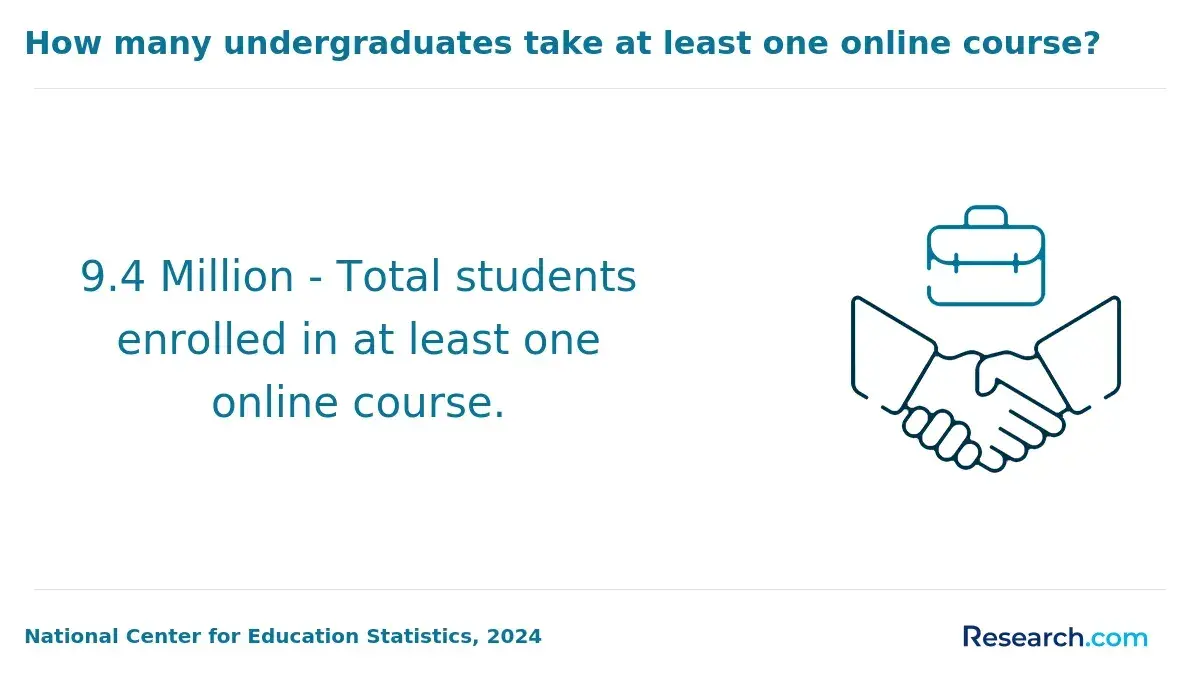
NCES graduate tuition data released in 2024 is still useful because it shows that institutional sector can matter more than delivery mode.
In the most recent national tables, average graduate tuition and required fees were about $12,600 at public institutions and about $30,000 at private nonprofit institutions, before individual program fees, living costs, and aid are considered.
The table below explains the tuition structures you are most likely to see when comparing online and on-campus Learning Design doctorate programs.
| Tuition factor | Online doctorate | On-campus doctorate |
| Per-credit tuition | Often a flat online rate for all students | Often differs for in-state and out-of-state students at public universities |
| Program total | Depends on credit count, dissertation credits, transfer policy, and continuation fees | Depends on credit count, residency status, assistantship funding, and time to completion |
| Mandatory fees | May include technology, online learning, library, graduation, and dissertation fees | May include campus, student activity, health, transportation, facility, and technology fees |
| Residency costs | May appear only for short intensives or dissertation defenses | Usually built into the cost of living near campus |
| Funding pattern | Employer tuition assistance and federal aid may be more common than assistantships | Assistantships, fellowships, and tuition waivers may be more available in research-focused programs |
Students comparing affordability should calculate the full degree price, not just the sticker tuition. A low per-credit rate can become less attractive if the program requires many credits, repeated dissertation enrollment, travel residencies, or high fees.
If cost is your primary constraint, comparing cheapest online EdD programs can help you identify how low-cost doctoral pricing is structured and what trade-offs to review, such as cohort size, faculty access, and dissertation support.
The safest approach is to request a written cost sheet from each program showing tuition per credit, total required credits, expected fees, residency costs, dissertation continuation charges, and financial aid eligibility.
Tuition is only one part of cost of attendance. For doctoral students, the total cost can also include fees, books, software, research tools, conference travel, dissertation expenses, commuting, relocation, housing, childcare, lost income, and loan interest.
Online students often save on relocation and commuting, but they may still pay technology fees, residency travel, home office costs, and dissertation-related expenses. On-campus students may pay more for housing and transportation, but they may have better access to assistantships, tuition waivers, research funding, and campus employment.
The table below compares cost categories that commonly differ by format. Use it to identify which costs are likely to appear on your budget before you accept an offer.
| Cost category | Online student impact | On-campus student impact |
| Relocation | Usually avoidable | May be required if the university is not local |
| Commuting | Usually low, except for residencies | Can be recurring and significant |
| Housing | Based on current location | May increase if the campus is in a high-cost area |
| Technology | May require a strong computer, webcam, software, and reliable internet | Still required, but campus labs and software access may reduce some costs |
| Conference travel | Often optional but valuable for networking and academic visibility | Often encouraged through faculty labs, research groups, or assistantships |
| Lost income | May be lower if the student remains employed full time | May be higher if the student reduces work or relocates for full-time study |
| Funding access | Employer benefits and federal aid may be important | Assistantships and fellowships may offset tuition or living costs |
Federal datasets do not report an average student loan debt specifically for Learning Design doctoral graduates, so students should avoid relying on broad doctoral debt figures as if they predict their own outcome. Your borrowing risk depends on tuition, aid, income while enrolled, employer support, time to completion, and whether you can avoid repeated dissertation-extension terms.
To compare cost of attendance accurately, build a side-by-side budget for each program. Include these items before deciding:
- Total required credits multiplied by tuition per credit
- Mandatory university, online, campus, dissertation, and graduation fees
- Residency travel, lodging, meals, and missed work time
- Books, software, transcription, research incentives, and data tools
- Expected years to completion, including dissertation continuation enrollment
- Employer tuition assistance, scholarships, assistantships, fellowships, and tuition waivers
- Estimated borrowing and loan interest if you cannot pay as you go
A cheaper online program may produce the better financial fit for a working professional. An on-campus program may be financially stronger if it offers a funded assistantship, tuition remission, and research experience tied directly to the student's career goal.
Employer perception of online doctorates has become more practical and evidence-based. Many employers in instructional design, learning and development, higher education administration, workforce training, and educational technology care most about institutional credibility, relevant experience, research ability, leadership skills, and portfolio evidence.
That does not mean format never matters. Some academic research roles, tenure-track positions, and grant-funded research jobs may still favor candidates with strong faculty mentorship, publications, teaching experience, and recognized research networks.
Those advantages can be easier to build in some on-campus PhD programs, though online students can also build them if the program provides research access and faculty collaboration.
The table below summarizes how different Learning Design employers may interpret doctoral format.
| Employer setting | What employers often value | Format consideration |
| Higher education instructional design | Learning management system expertise, faculty development, accessibility, assessment, project leadership | Online study can be a strength if it demonstrates direct experience with digital learning environments |
| Corporate learning and development | Performance improvement, needs analysis, learning analytics, stakeholder communication, measurable outcomes | Format usually matters less than portfolio, leadership record, and business impact |
| K-12 district leadership or curriculum roles | Instructional leadership, technology integration, evaluation, teacher professional development | Accreditation, state requirements, and relevant education experience matter more than delivery mode |
| Academic faculty roles | Research agenda, publications, teaching experience, conference participation, faculty references | On-campus PhD networks may help, but online doctorates can compete when research output is strong |
| EdTech and consulting | Product learning strategy, user research, evidence-based design, client communication | Portfolio and applied project outcomes often outweigh format |
BLS data updated in 2024 projects modest growth for instructional coordinators, which means the doctorate should be positioned as a specialization and leadership credential rather than a simple job-entry requirement. The degree can support advancement, but employers will still expect evidence that you can solve learning problems.
To understand employer perception in your target market, do not ask only whether an online doctorate is "accepted." Ask a more useful set of questions:
- Do job postings in your target field require a doctorate, prefer one, or simply value graduate education?
- Do employers name specific skills such as learning analytics, evaluation, accessibility, curriculum design, or organizational learning?
- Do current leaders in your target roles hold EdD, PhD, or master's degrees?
- Do faculty roles in your target institutions expect publications and teaching experience?
- Will the program name, university reputation, faculty expertise, and dissertation topic be easy to explain in interviews?
A major mistake is assuming employers will evaluate the format before they evaluate the candidate. In many Learning Design roles, the stronger question is whether the degree helped you produce credible research, measurable design work, and leadership evidence.
Program format can affect job prospects indirectly. Online versus on-campus delivery may shape your network, research opportunities, teaching experience, assistantship access, portfolio development, and geographic flexibility. Those factors influence hiring more than the transcript format itself.
BLS employment data updated in 2024 places instructional coordinators in a stable but not explosive labor market, with a median wage of $74,720 and projected growth that is slower than many high-demand technology occupations.
For prospective doctoral students, this means the degree should align with a clear advancement strategy: leadership, research, consulting, faculty work, senior instructional design, learning analytics, or organizational learning.
Online programs may improve job prospects for students who stay employed while studying because they can immediately apply research methods and design models to real organizational problems. On-campus programs may improve prospects for students who need academic teaching experience, research assistantships, conference exposure, and close faculty mentorship.
The job-market impact is strongest when the program helps you build evidence employers can evaluate. Strong outcomes may include:
- A dissertation or dissertation-in-practice connected to a real learning problem
- A portfolio with design artifacts, evaluation reports, learning analytics dashboards, or curriculum systems
- Conference presentations, publications, or practitioner white papers
- Leadership experience managing learning projects, faculty development, training programs, or technology implementation
- References from faculty, supervisors, clients, or research partners who can speak to your doctoral-level work
Students who want a faster doctoral route should be careful not to confuse speed with career value. Reviewing 1 year EdD programs online can be useful for understanding accelerated formats, but any fast-track option should still be judged by accreditation, workload, dissertation expectations, faculty support, and fit with your target roles.
Format matters most when it changes what you can demonstrate after graduation. If an online program helps you keep your job, lead applied projects, and complete relevant research, it may strengthen your career position. If an on-campus program gives you funded research experience and academic visibility, it may be the stronger route for faculty or research-intensive roles.
How do you choose between online and on-campus Learning Design doctorate programs?
The best format is the one that fits your goal, learning style, finances, research interests, and life constraints. A Learning Design doctorate is a major investment, so the decision should start with your target outcome rather than convenience alone.
Use a structured process before applying. This sequence will help you compare programs on the factors that actually affect completion and career value:
- Define your target role: faculty researcher, instructional design leader, learning and development executive, education consultant, curriculum director, EdTech researcher, or higher education administrator.
- Choose the doctorate type that fits the role, such as an applied EdD for practice leadership or a PhD for research-intensive academic goals.
- Confirm accreditation at the institutional level and check whether any state, employer, or professional requirements apply to your field.
- Compare faculty expertise with your research interests instead of choosing only by format or university brand.
- Request a full cost sheet that includes tuition, fees, residency expenses, dissertation enrollment, and estimated time to completion.
- Ask how dissertation advising works for online and campus students, including meeting frequency, proposal milestones, and defense format.
- Review fieldwork and research-site expectations, especially if you plan to use your workplace for data collection.
- Check career support, alumni outcomes, networking options, teaching opportunities, and access to conferences or research groups.
- Talk with current students or recent graduates about workload, faculty responsiveness, cohort culture, and dissertation support.
- Compare your top programs side by side and remove any option that creates avoidable financial, scheduling, or dissertation-completion risk.
Online Learning Design doctorates tend to make sense for experienced professionals who need flexibility, want to apply research in their current organization, and can stay disciplined without weekly campus structure.
On-campus doctorates tend to make sense for students seeking deep research immersion, assistantships, campus teaching experience, and close alignment with a faculty mentor's scholarly agenda.
Watch for red flags regardless of format. These include unclear accreditation, vague dissertation expectations, no published faculty information, unusually aggressive admissions promises, limited student support, high fees not included in advertised tuition, required residencies that are hard to schedule, or career claims that sound guaranteed.
The final question is not "Will employers respect online or on-campus more?" It is "Which program will help me finish, produce credible doctoral work, and move toward the role I actually want?" If the format supports those three outcomes at a cost you can manage, it is likely the stronger choice.
Other Things You Should Know About Learning Design
They can, but many universities use similar requirements across formats. Expect a graduate degree, transcripts, statement of purpose, resume, writing sample, recommendations, and sometimes an interview. Research-focused PhD programs may place more weight on faculty fit and prior research experience.
An EdD is usually better for applied leadership, workplace learning, curriculum innovation, and practitioner research. A PhD is usually better for academic research, faculty roles, and theory-building. The stronger choice depends on your career goal, not the prestige of the degree label.
Many online doctoral students do work full time, especially in practitioner-focused EdD programs. It is still demanding. Before enrolling, ask about weekly workload, synchronous class times, dissertation timelines, and whether your job can support fieldwork or applied research.
The biggest mistake is choosing based only on convenience or reputation. A good decision also considers total cost, dissertation support, faculty fit, fieldwork access, career goals, accreditation, and whether the student can realistically sustain the workload until completion.
- Advising and Mentoring - Admin-Academic-Advising https://academic-advising.dukekunshan.edu.cn/advising-and-mentoring/
- Student Services for Online Learners: Choosing the Right School for You https://www.onlineu.com/resources/college-planning/student-services-for-online-learners
- EdD vs. PhD in Education: Key Differences, Careers & Salary https://edd.alverno.edu/articles/professional-doctorate-vs-phd/
- How Employers View Online Degrees: Interviews with Nine Hiring Executives https://www.onlineeducation.com/features/how-employers-view-online-degrees
- How Much Does a PhD Cost https://aituedu.org/how-much-does-a-phd-cost/
- Average Cost of a Doctorate Degree [2026]: Ph.D., Psy.D. & More https://educationdata.org/average-cost-of-a-doctorate-degree
- Campus vs Online vs Hybrid Doctor of Education (EdD) Programs https://www.onlineeddprograms.com/faqs/campus-online-hybrid-edd-programs
- Online vs Traditional PhD Programs: 2026 Comparison Guide https://streamlinedai.app/blog/online-schools-phd
- Student Support Networks in Online Doctoral Programs: Exploring Nested Communities https://www.informingscience.org/publications/3676
- instructional design https://www.veletsianos.com/category/instructional-design/


