2027 Online User Experience Bachelor's Degree Completion Programs for Working Adults

Co-Founder and Chief Data Scientist
Working adults pursuing careers in user experience often struggle to find flexible, accredited degree completion programs that recognize prior learning and accommodate busy schedules. Nearly 60% of students enrolling in online UX bachelor's degree programs cite work commitments as their primary challenge. Without clear transfer credit policies and affordable tuition options, many risk delaying graduation or incurring excessive debt. This article evaluates how top online user experience bachelor's degree completion programs structure coursework, handle credit transfers, and support career advancement. It aims to guide professionals in selecting programs that align with their lifestyle, maximize previous academic efforts, and enhance employability outcomes.
Key Benefits of Online User Experience Bachelor's Degree Completion Programs for Working Adults
- Programs offer flexible schedules tailored for working adults, enabling balance between professional responsibilities and coursework without disrupting income flow.
- Fully asynchronous classes allow students to study anytime, accommodating demanding work hours and diverse time zones with no mandatory live sessions.
- The accelerated pace often shortens graduation time by up to 50% compared to completing a traditional four-year degree from the beginning.
What Are Online User Experience Bachelor's Degree Completion Programs, and Who Are They Designed For?
Online user experience bachelor's degree completion programs offer structured academic paths specifically designed for individuals who have already earned college credits and want to finish their degrees more efficiently than traditional four-year programs. Unlike starting anew, these programs prioritize transferring previously earned credits, significantly reducing the number of remaining courses.
According to the National Center for Education Statistics (NCES), over 36 million Americans have some college credits but no completed credential, making completion programs an ideal option for working adults. These programs often cater to transfer students, providing the flexibility to balance studies with professional and personal responsibilities through online or hybrid course delivery. The format is typically accelerated, allowing students to graduate faster without sacrificing academic quality.
As employers increasingly require bachelor's degrees for roles that once accepted less formal education, demand for these programs has surged. The best online user experience degree programs for transfer students emphasize tailored pathways that recognize prior learning and extensive transfer credit acceptance. This helps mid-career professionals, military veterans, and community college transfers achieve degree completion with reduced time and cost.
Many learners also take advantage of prior learning assessments to translate experiential knowledge into academic credit. To explore more options, consider looking at the best online colleges that accept FAFSA for affordable tuition and financial aid opportunities.
How Do Online User Experience Degree Completion Programs Differ From Traditional Four-Year User Experience Bachelor's Degrees?
Online user experience degree completion programs are structured distinctly from traditional four-year bachelor's degrees, especially regarding credit requirements, curriculum sequencing, and time to completion for students transferring in 60 or more credits. These differences are designed to accommodate working adults balancing other commitments.
- Credit Requirements: Completion programs generally require students to transfer a minimum of 60 credits, covering foundational courses and general education, allowing them to focus primarily on upper-division user experience coursework. In contrast, traditional bachelor's degrees require students to complete roughly 120-130 credits from the beginning, typically spanning four years.
- Curriculum Sequencing: Completion pathways emphasize specialized classes in user experience principles, design thinking, and applied research. They often replace general education requirements with competency-based assessments or life-experience credits that reflect prior learning. Traditional programs follow a linear progression, starting with broad general education before advancing into major-specific subjects later in the curriculum.
- Time to Completion: Students in completion programs usually finish their degrees within one to two years due to prior credits and flexible pacing options. Traditional degrees generally require a full four years of study, which may not suit adults balancing work and family responsibilities.
- Tuition and Cost Models: According to IPEDS data, completion programs tend to have higher per-credit-hour tuition but lower total program costs because fewer credits are needed. Traditional programs often have lower per-credit rates but higher overall expenses from longer enrollment periods.
- Curriculum Mapping for Adults: Online completion programs offer asynchronous courses, flexible scheduling, and recognition of professional experience. Designed specifically for adult learners, these programs differ from traditional programs, which are primarily aimed at recent high school graduates attending full-time on campus.
These structural differences highlight key differences between online user experience degree completion and traditional bachelor's degrees and demonstrate how transfer credit policies in online user experience degree completion programs support accelerated paths for transfer students. Prospective students seeking affordable options might also consider resources like the cheapest online counseling degree listings for comparative tuition insights.
2026 Update: Portfolio and Project Experience to Verify Before Enrolling
For the 2026 refresh, this section adds guidance on how working adults can judge whether an online UX degree completion program will help them graduate with credible, job-ready work samples.
- Whether courses include portfolio-building projects, not just exams or discussion posts
- Opportunities to complete usability testing, user research, wireframes, prototypes, and design documentation
- Whether capstone projects can be based on a current workplace problem or professional interest
- Access to commonly used UX design, prototyping, and collaboration tools through the program
- Instructor feedback from faculty or practitioners with current UX experience
- Clear expectations for accessibility, inclusive design, and ethical user research practices
- Career support that helps students present projects in a portfolio, resume, and interview setting
Checking these details helps students choose a completion program that does more than award credits—it supports a stronger transition into UX roles.
Which Accredited Universities Offer the Most Affordable Online User Experience Bachelor's Degree Completion Programs?
- Fort Hays State University: This institution provides a fully online user experience degree completion program with a flat tuition rate of $218.67 per credit hour, applicable to all online students regardless of residency. Accredited by the Higher Learning Commission (HLC), Fort Hays State lacks a specific programmatic accreditation for user experience but supports working adults through flexible transfer policies and recognition of prior learning to shorten time to degree.
- Wichita State University: Offering a consistent tuition charge of $247.50 per credit hour for both in-state and out-of-state learners, Wichita State's program is regionally accredited by the HLC. The curriculum emphasizes hands-on, project-based learning and leverages industry partnerships to foster career growth in user experience design.
- Appalachian State University: This program costs $282 per credit hour for in-state students, while out-of-state students pay $1,339 per credit hour. Appalachian State holds accreditation from the Southern Association of Colleges and Schools Commission on Colleges (SACSCOC). Their program accommodates working students with flexible scheduling and accepts prior learning credits to accelerate progress.
- Southern New Hampshire University: Charging $320 per credit hour across all online undergraduate offerings, including user experience, SNHU is accredited by the New England Commission of Higher Education (NECHE). Its curriculum features competency-based learning tailored to adult students and focuses on asynchronous instruction with practical industry tools.
- University of North Texas: Regional accreditation is through SACSCOC. The tuition fee is $397 per credit hour for Texas residents and $870 for out-of-state students. Their user experience degree emphasizes research in human-computer interaction but imposes higher costs on non-residents, potentially limiting access for some budget-conscious learners.
The most affordable universities generally offer flat-rate tuition regardless of residency, plus generous credit transfer and prior learning options that help students accelerate degree completion. Mid-tier programs typically have increased out-of-state fees and may provide more specialized content, though often at a higher cost.
Reflecting on his experience, a professional who enrolled in an online user experience bachelor's degree completion program described the journey as initially overwhelming due to balancing work and studies. He emphasized how important flexible course schedules were, allowing him to learn asynchronously and apply prior military and college credits, which lessened his course load. He noted, "Finding a program that recognized my past credits saved both time and money. Still, staying motivated in a fully online setting required discipline." These factors were critical as he built the foundation for his career in user experience.
How Many Transfer Credits Can Working Adults Apply Toward an Online User Experience Degree Completion Program?
Most online user experience bachelor's degree completion programs permit between 60 and 90 semester hours of transfer credits. This typically represents two to three years of prior academic work, allowing students to concentrate on upper-level coursework within their degree.
Transfer credits require a thorough evaluation to ensure that previous courses match in content and come from accredited institutions. Students often must provide official transcripts and detailed course descriptions for assessment in line with transfer credit policies for online user experience bachelor's degree completion programs.
Many community colleges and four-year universities form formal articulation agreements designed to ease credit transfers. These agreements reduce credit loss, helping students progress more smoothly toward graduation.
According to the U.S. Department of Education's transfer summit, students generally lose about 40% of their credits during transfer due to differences in curricula or accreditation. Prospective students aiming to minimize this should seek programs with guaranteed or structured pathways for transferring credits.
Certain user experience programs are especially welcoming, accepting ACE-recommended military credits and recognized professional certifications. This flexibility benefits veterans and experienced professionals with prior learning.
Requesting an official transcript evaluation before enrolling clarifies accepted transfer credits and helps map out remaining coursework efficiently. Working adults should consider this step carefully when planning their degree completion.
For more information on affordable degree options, explore the most affordable EdD programs.
What Are the Typical Admission Requirements for Online User Experience Bachelor's Degree Completion Programs?
Applicants typically need between 24 and 60 credits from accredited institutions, covering foundational courses in general education and user experience or related fields. This ensures a solid academic base before advancing. Other requirements include:
- GPA Requirements: Programs often require a minimum cumulative GPA around 2.5 to 3.0 on a 4.0 scale. More selective schools may demand higher GPAs, whereas open-admission options allow for more flexible standards.
- Required Documentation: Submission usually includes official transcripts and a completed application, sometimes supplemented with recommendation letters or a personal statement that outlines career goals in user experience.
- Prerequisite Coursework: Some institutions mandate introductory courses in user experience, design, psychology, or human-computer interaction to confirm foundational knowledge prior to upper-level study.
- Admissions Selectivity: Open-admission programs offer broader access with fewer restrictions but may provide less intensive academic support. Selective programs, while requiring stricter entry criteria, typically deliver more rigorous curricula and greater recognition in the job market.
- Conditional Admission: Certain schools allow provisional entry for applicants who nearly meet GPA or credit hour requirements, giving them a chance to prove their academic readiness through initial coursework.
- Application Enhancement: Prospective students can strengthen their eligibility by completing prerequisite or general education courses at community colleges, raising their GPA and easing the transition into bachelor's degree studies.
A professional who built a career after completing an online user experience bachelor's degree shared how navigating admission felt initially daunting. She recalled that assembling transcripts from various institutions was tedious but necessary to demonstrate her readiness. The option for conditional admission relieved some pressure when her credits slightly missed thresholds, allowing her to start coursework while proving her capabilities. Reflecting on her journey, she appreciated how completing prerequisite classes beforehand boosted both her confidence and academic performance once enrolled. Her experience highlights how persistence and strategic preparation can open doors to finishing a degree that advanced her career.
How Long Does It Take to Complete an Online User Experience Bachelor's Degree Completion Program as a Working Adult?
Completion times for an online user experience bachelor's degree vary significantly depending on transferred credits, course load, and program format. Students with 30 prior credits might spend up to five years finishing, while those transferring 90 credits could graduate in about one year. Typically, around 60 credits remain after transfer, setting the baseline for most timelines.
Part-time students taking about six credits per semester usually take longer, often four to five years when attending only fall and spring terms. Conversely, enrolling full-time with 12 or more credits per semester can shrink completion periods to roughly two or three years.
Many institutions offer eight-week accelerated courses instead of traditional 16-week semesters, enabling learners to focus on fewer classes at a time and complete them faster. Adding summer sessions further compresses the timeline. For example, a working professional taking two courses (6 credits) each fall and spring term might finish in about two and a half years without summer enrollment; increasing course load or adding summer terms can reduce this to less than two years.
Some programs utilize competency-based progression, allowing students to advance by proving skill mastery rather than clocking fixed class hours. This approach benefits those with prior experience or relevant knowledge by potentially shortening program length.
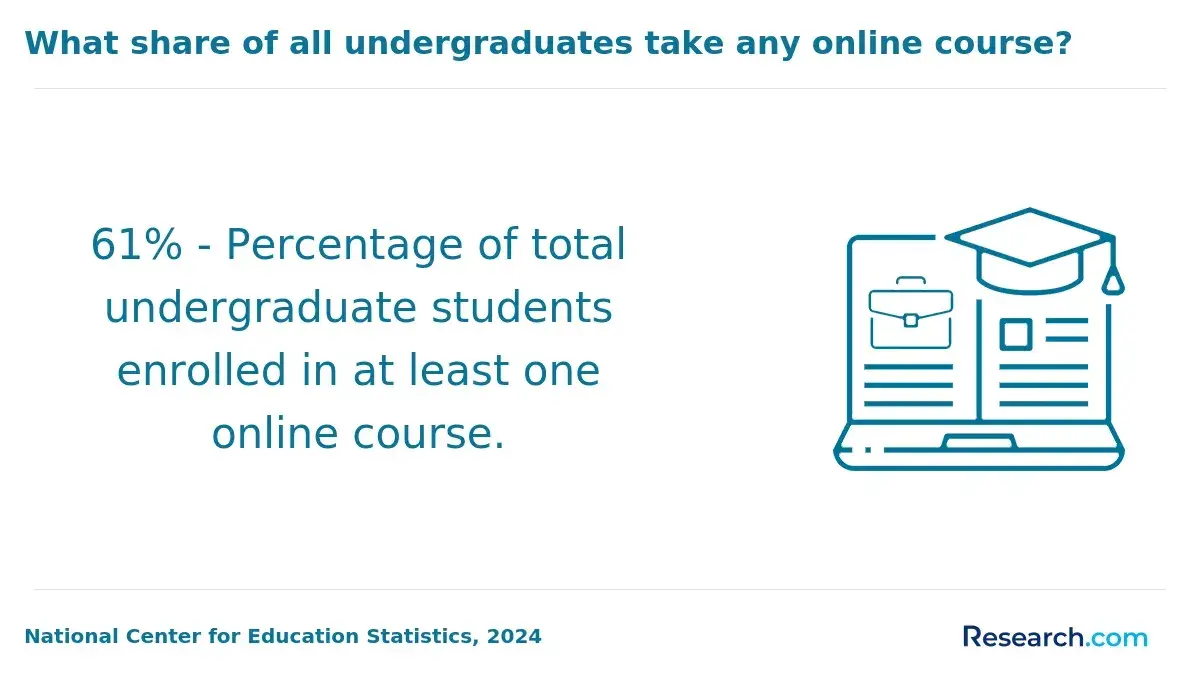
Realistic planning that considers personal responsibilities and employer support-such as tuition assistance or flexible work schedules-is essential to maintain balance and avoid burnout. Factoring in personal obligations and employer support helps set achievable goals and timelines. Recent studies indicate over 60% of adult learners prefer flexible, accelerated online programs to juggle education with professional and family demands.
What Financial Aid, Grants, and Employer Tuition Assistance Options Are Available for Online User Experience Completion Students?
Working adults completing an online user experience bachelor's degree have access to a variety of financial aid options tailored to their unique needs. Federal Pell Grants and Direct Loans remain available to eligible adult learners, including those returning after a break in their studies. Many states provide grants specifically designed for adult returners aiming to finish undergraduate degrees. Institutional scholarships often support students balancing work and education, with some schools offering awards geared toward those completing user experience or related programs.
Employer tuition assistance programs play a critical role in managing education expenses. Under IRS Section 127, employers can provide up to $5,250 annually in tax-free tuition benefits for undergraduate studies, significantly reducing out-of-pocket costs if your employer participates. Additionally, scholarships and fellowships targeted at adult learners completing user experience degrees often focus on technology, design, or professional advancement, helping ease financial burdens while supporting academic goals.
Before enrolling, consider these key financial aid actions to maximize your support:
- File FAFSA: Submit the Free Application for Federal Student Aid to access federal grants and loans; states and institutions also use it to determine eligibility for additional aid.
- Explore State Grants: Investigate your state's adult learner grant programs designed to assist those returning to college.
- Request Employer Benefits: Consult your HR department about tuition assistance policies and secure a formal agreement to utilize IRS Section 127 tax-free benefits.
- Apply for Scholarships: Seek out institutional and nationally recognized scholarships focused on user experience degree completers, especially working adults and career changers.
How Does Per-Credit-Hour Tuition for Online User Experience Completion Programs Compare Across Accredited Institutions?
Data from NCES and IPEDS show the national average tuition for online user experience bachelor's completion programs is about $350 per credit hour. This benchmark helps working adults who hold some college credits compare per-credit tuition rates across accredited institutions. A focused comparison of programs ranked by total tuition cost, factoring in typical transfer credits of 60 and 90 hours, reveals a wide range in total expenses.
For students with 60 transferable credits, total tuition commonly ranges from $15,000 to over $30,000. Those entering with 90 credits may pay as little as $7,500 up to nearly $20,000. It's important to note these amounts exclude ancillary fees, which can substantially increase costs and vary by institution.
- Ancillary Fees Matter: Beyond the per-credit tuition rate, many programs add technology fees, graduation fees, proctoring charges, and required textbook costs. These fees can add hundreds or over a thousand dollars, often representing 10-20% of the total program cost.
- Transfer Credits Impact Cost: Programs requiring more credits to graduate increase total tuition regardless of a low per-credit rate. For example, a $300 per credit rate with a 60-credit requirement can cost more than a $400 per credit program needing only 30 credits.
- Cost-Ranked List: Top programs balance tuition rates with credit hour requirements. Candidates should evaluate both factors to understand their true financial commitment rather than relying solely on advertised per-credit prices.
- Accreditation and Value: Accredited institutions typically maintain transparent pricing. Still, students must verify degree credit requirements align with their prior learning and transfer credits to avoid unexpected costs.
For those seeking additional information relevant to accelerated programs, this master psychologie à distance resource offers valuable insights.
The variation in how per-credit tuition rates vary for online user experience degree completion programs is a critical consideration. A thorough comparison of accredited institutions' tuition per credit hour for user experience online completion ensures a well-informed choice tailored to students' professional and financial needs.
What Prior Learning Assessment and Credit-by-Exam Options Exist in Online User Experience Degree Completion Programs?
Prior learning assessment (PLA) options enable working adults pursuing online user experience degrees to transform existing knowledge into academic credit, significantly reducing time to graduation. These assessments include credit-by-exam policies such as CLEP and DSST, portfolio reviews, and credit for military training evaluated through the American Council on Education (ACE).
Several top-ranked online user experience bachelor completion programs offer expansive and flexible PLA policies. These programs typically accept up to 60 credits through PLA, encompassing examinations, documented work experience, and professional training.
Many institutions recognize standardized exams like CLEP and DSST, allowing students to test out of foundational coursework. These tests provide a cost-effective and efficient method for earning credit in key user experience subjects without repeating familiar material.
Some programs permit students to submit portfolios demonstrating relevant work experience, projects, or professional certifications. Portfolio review processes vary, but successful submissions often require detailed documentation, reflective essays, and evidence of learning outcomes aligned with course objectives.
The ACE credit recommendation system plays a vital role, especially for military service members and professionals who have completed corporate training programs. Credits from ACE-evaluated military courses and industry certifications can fulfill general education or elective requirements in user experience bachelor completion programs.
Students are advised to carefully prepare and organize all prior learning evidence before submission. This includes official transcripts, training descriptions, syllabi, and letters of verification to facilitate institutional credit evaluation. Those exploring online user experience programs should verify specific PLA policies, including maximum credits allowed and accepted proof types.
Working adults interested in accelerating their degree completion may find comprehensive information on PLA and credit transfer options by researching BSc mathematics online programs, which often share similar credit-by-exam policies and prior learning assessment frameworks relevant to user experience studies.
How Do Asynchronous Schedules in Online User Experience Programs Accommodate Full-Time Working Professionals?
- Fully Asynchronous Delivery: Courses are designed so that students complete lectures, assignments, and assessments independently within set deadlines, accommodating learners in any time zone or with complex schedules.
- Discussion Flexibility: Online interaction happens through forums or message boards where students post and respond at their convenience, supporting diverse work hours without the need for real-time participation.
- Comparison of Formats: Asynchronous-only programs offer maximum schedule freedom, ideal for shift workers and travelers, while synchronous or hybrid formats include live sessions that foster immediate engagement but require fixed attendance times, which can be challenging for caregivers.
- Eight-Week Terms: Several institutions implement shorter course terms, enabling students to focus intensively on fewer classes, which helps balance academic goals with professional and personal commitments.
- Time Management Strategies: Successful students recommend setting dedicated study blocks, creating weekly to-do lists, and using calendar apps to track deadlines and avoid last-minute rushing.
- Digital Tools: Popular platforms include task managers like Trello or Todoist, note-taking apps such as Evernote, and calendar integrations that sync coursework with personal schedules to enhance organization and productivity.
What Concentrations and Career Tracks Are Available Within Online User Experience Degree Completion Programs?
Online user experience bachelor's completion programs typically include concentrations embedded within the 120-credit degree, ensuring no added credits increase tuition or extend graduation timelines. Some programs may offer optional certificate tracks requiring extra credits, so students should verify these details individually.
- Interaction Design: Focuses on developing user-friendly digital interfaces by blending psychology with graphic design. Graduates often pursue interaction designer or UI specialist roles, with median annual salaries near $105,000 per BLS data.
- Information Architecture: Emphasizes organizing digital content for intuitive user navigation. Careers include information architects and content strategists, professions projected to experience notable growth.
- Usability Testing and Research: Covers methods to evaluate and enhance user satisfaction and product functionality. Job options include UX researchers and usability analysts, fields known for data-driven roles and solid demand.
- Visual Design: Centers on digital aesthetics and branding, enabling graduates to work as visual designers or digital artists, skills valuable in web development and marketing sectors.
- Human Factors and Ergonomics: A specialized path focusing on adapting systems to human cognitive and physical abilities, often aligning with certifications such as Certified Professional Ergonomist for niche industry roles.
Choosing a concentration should balance individual interests with employment outlooks. Interaction design and usability research offer robust job growth and higher pay, while human factors provide niche certification advantages. Reviewing labor market data alongside program features helps working adults select a path aligned with career goals.
What Graduates Say About Online User Experience Bachelor's Degree Completion Programs for Working Adults
- Tobias: "The program's clear structure and regional accreditation really gave me confidence that my degree would be respected by employers. I appreciated how generous the transfer credit policy allowed me to apply my previous coursework, which saved time and money. Completing this online user experience bachelor's degree has significantly boosted my career trajectory in tech."
- Rex: "I initially worried about tuition costs, but the flexible pricing and financial models made finishing my degree manageable alongside my job. The prior learning options acknowledged the skills I had already gained, so I wasn't starting from scratch. Looking back, this program was exactly the practical and accredited pathway I needed to advance professionally."
- Arthur: "Reflecting on my journey, the accreditation standards ensured the program's rigor and credibility, which mattered when I transitioned roles. The transfer credit system was streamlined, letting me focus on advancing instead of repeating courses. Most importantly, the employer outcomes spoke volumes-it opened doors I never expected after earning my online user experience bachelor's degree."
Other Things You Should Know About User Experience Degrees
Online user experience bachelor's degree completion programs typically offer dedicated academic support, personalized advising, and career services tailored to working adults. These services may include one-on-one mentorship, resume workshops, job placement assistance, and networking opportunities to ensure students can successfully balance their studies and career advancement.
Some institutions have introduced flat-rate or subscription tuition models that allow students to pay a single fee per term regardless of course load. This model benefits working adults looking to accelerate their degree completion without increasing costs. However, such models are not universal, and many programs still charge per credit hour or course, so prospective students should carefully review tuition plans before enrolling.
Completing an online user experience bachelor's degree typically leads to higher earning potential and improved job stability compared to stopping after some college. The degree equips students with specialized skills in user research, design strategy, and usability testing, leading to more advanced roles. Industry demand for user experience professionals continues to grow, making degree completion a worthwhile investment in career advancement.
References
- User Experience Bachelor's Degree https://www.fullsail.edu/degrees/user-experience-bachelor
- Cost of Online Education vs. Traditional Education [2025]: Comparison https://educationdata.org/cost-of-online-education-vs-traditional-education
- Everything You Wanted to Know About Degree Completion Programs for Adults https://explore.neumann.edu/everything-you-wanted-to-know-about-degree-completion-programs-for-adults
- Best Online Degrees for Working Adults in 2026 https://straighterline.com/blog/degreecompletion-best-online-degrees-for-working-adults-in-2026
- UX Design: Certificate Program vs. College Degree https://www.nobledesktop.com/blog/ux-design-certificate-program-vs-college-degree
- timing is everything: the power of asynchronous communication in UX teams. https://www.randstaddigital.com/insights/blogs/customer-experience/timing-everything-power-asynchronous-communication-ux-teams/
- Benefits of Online Learning for Working Adults https://unity.edu/distance-education-blogs/benefits-of-online-learning/
- Asynchronous Work - A Detailed Guide https://4dayweek.io/schedule/asynchronous-work
- Understanding Online Course Pricing Today https://wallyboston.com/online-course-pricing/
- Online College Tuition Comparison: Online vs. In-Person https://www.uagrantham.edu/blog/online-college-tuition-comparison-online-vs-in-person/