
2027 Online Theology Master's Programs With University Scholarships: Awards, Eligibility & Tuition After Aid

Co-Founder and Chief Data Scientist
University scholarships can make an online Theology master's more affordable, but awards often have separate applications, enrollment rules, and limits on what fees they cover. College Board reported average 2024-25 graduate tuition and fees of $12,596 at public institutions and $29,931 at private nonprofit institutions.
This guide is for prospective Theology students comparing online options, need-based aid, merit awards, church support, and employer benefits. It explains how to estimate net tuition, confirm eligibility, and build a funding plan before enrolling.
Key Things to Know About Theology Master's Programs with Scholarships
- For 2024-25, average graduate tuition and fees were $12,596 at public institutions and $29,931 at private nonprofit institutions; compare each Theology program's per-credit tuition, required credits, and mandatory fees rather than relying on an advertised term price.
- Online Theology students may qualify for institutional merit scholarships, need-based grants, federal aid, denominational support, and employer assistance, but each award can set separate residency, enrollment, ministry-service, and renewal conditions.
- The best choice is usually the program with the lowest verified net cost after renewable aid, not necessarily the largest first-year scholarship; ask whether an award applies to online coursework and whether it reduces eligibility for other aid.
What online Theology master's programs offer university scholarships?
Several universities and divinity schools offer online or primarily online Theology-related master's study and maintain institutional scholarship programs for graduate or seminary students. Availability changes by academic year, and an institution may distinguish between "online," "distance," "hybrid," and campus-based students. Do not assume that a scholarship advertised by a theology school automatically applies to its online degree.
The programs below are examples of places to investigate, not a claim that every applicant or every online format is eligible. Request a written award estimate that identifies the exact degree, delivery format, credit load, and academic year.
| University or school to investigate | Online Theology-related study | Funding question to ask | Why the answer matters |
| Regent University School of Divinity | Online divinity and theology-related graduate options | Which institutional scholarships explicitly include online divinity students? | Graduate awards can have program-specific restrictions. |
| Liberty University Rawlings School of Divinity | Online theology and ministry graduate options | Can graduate scholarships, military benefits, or ministry discounts be combined? | Stacking rules can materially change the net bill. |
| Fuller Theological Seminary | Online and hybrid theological graduate study | Which scholarships apply by modality and degree track? | Hybrid and fully online students may be treated differently. |
| Dallas Theological Seminary | Online and distance theological education options | Are scholarship funds available to distance learners at the intended enrollment level? | Some awards depend on residency, campus participation, or donor criteria. |
| Biola University Talbot School of Theology | Selected online and hybrid theological graduate study | Are seminary scholarships renewable for online students? | A renewable award is more useful than a one-term discount. |
Start with institutions where the degree's curriculum, faith tradition, accreditation, and career purpose fit your goals. If your plan includes counseling or community-facing work, compare related academic pathways carefully; CACREP accredited counseling programs have different accreditation and professional-licensure considerations than a Theology master's.
A funding-focused shortlist should include no more than a few programs at first. For each, ask for the scholarship application calendar, the annual tuition estimate at your expected pace, and the percentage of online students who receive institutional aid if the school publishes it.
What is the average tuition for Theology master's programs before aid?
Before aid, the most useful cost estimate is total program tuition: published cost per credit multiplied by required credits, plus unavoidable fees. College Board's 2024-25 averages of $12,596 for public graduate tuition and fees and $29,931 for private nonprofit graduate tuition and fees are broad benchmarks, not Theology-program prices. Private nonprofit institutions can be mission-driven and generous with aid, while public institutions may begin with lower tuition; neither status alone determines value.
This comparison shows how to translate published pricing into a decision-ready estimate. Use the institution's current tuition schedule rather than these illustrative formulas.
| Cost component | How to calculate it | What students commonly overlook |
| Tuition | Per-credit rate × required program credits | Different rates for online, part-time, or graduate credits |
| Required fees | Term fees × anticipated terms | Technology, distance-learning, graduation, and student-service charges |
| Books and course materials | Estimate by course format and reading requirements | Digital platform subscriptions and specialized theological texts |
| Travel or residency costs | Transportation and lodging for required intensives | Programs described as online may include campus residencies |
| Net tuition after aid | Eligible tuition and fees − grants and scholarships | Loans reduce the bill now but are not a tuition discount |
Ask whether tuition is locked for continuing students and whether scholarships are expressed as a fixed amount, a percentage of tuition, or a maximum number of credits. A fixed award can lose purchasing power if tuition rises, while a percentage award may not cover fees.
Students comparing other graduate fields can use the same net-price method. For example, tuition comparisons for online masters speech pathology programs also require separating tuition discounts from loans and non-tuition expenses.
What types of financial aid and scholarships are available for Theology master's programs?
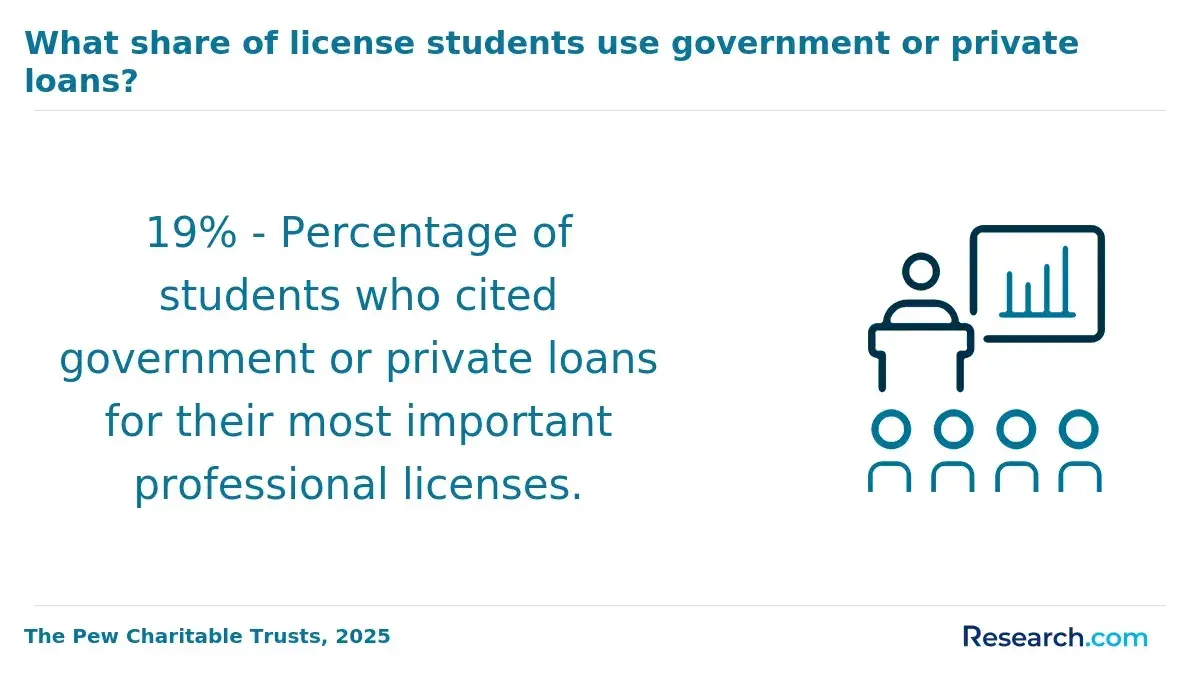
Theology master's funding usually comes from several sources rather than one universal "full scholarship." Scholarships and grants generally do not require repayment when students meet the terms. Federal loans must be repaid, while employer and denominational assistance may create work, service, or tax obligations.
The following categories help applicants target the funding sources that fit their circumstances.
| Funding type | Typical basis | Best fit | Key limitation |
| University merit scholarship | Academic record, leadership, ministry experience, or admissions profile | Applicants with strong prior achievement or a compelling vocational record | May be limited, competitive, and subject to renewal standards |
| University need-based grant | Financial need, usually documented through required aid forms | Students whose documented resources do not meet educational costs | Need can be recalculated each year |
| Denominational or church award | Membership, endorsement, service commitment, or ministry preparation | Students connected to a sponsoring faith community | May require verification or post-study service |
| Employer tuition assistance | Employment and job relevance | Working ministers, nonprofit staff, educators, and administrators | Often requires advance approval and continued employment |
| Federal Direct Unsubsidized Loan | FAFSA eligibility and school participation | Students who need financing after gift aid | Interest accrues and borrowing increases total repayment cost |
Federal Student Aid lists an annual $20,500 borrowing limit for Direct Unsubsidized Loans for graduate and professional students, subject to aggregate limits and other eligibility rules. Treat that amount as a borrowing ceiling, not a recommended budget: borrow only after confirming grants, scholarships, employer reimbursement, and personal cash-flow capacity.
Professionals whose jobs overlap with community outreach may also evaluate a degree in human services if employer reimbursement is available for a role-aligned credential. That is a career-fit decision, not a substitute for determining whether a Theology program meets your vocational goals.
How much do Theology master's scholarships typically cover?
Theology master's scholarships can range from a modest one-time credit to a renewable tuition reduction, but there is no reliable national "typical award" that predicts what one applicant will receive. Institutional awards are shaped by donor restrictions, annual budgets, enrollment goals, degree format, and the applicant pool. A school should state the award amount and duration in its financial-aid offer.
Use award structure - not only the headline amount - to compare offers.
| Award structure | What it may cover | Decision implication |
| Fixed annual amount | A stated amount applied each academic year | Calculate whether it remains available for the full program length. |
| Per-credit award | A stated amount for eligible credits | Confirm the maximum credit count and whether summer terms qualify. |
| Percentage tuition scholarship | A portion of eligible tuition charges | Determine whether fees, books, and residencies remain out of pocket. |
| Full-tuition scholarship | Eligible tuition up to stated limits | "Full tuition" rarely means all educational and living costs are covered. |
| One-time grant | A single term or academic-year credit | Useful for reducing first-year borrowing but less valuable than renewable aid. |
Compare offers over the entire degree, especially if one program is shorter or requires fewer credits. A smaller renewable award at a lower-tuition school can cost less overall than a large first-year award at a higher-priced program.
Before accepting, request answers to three questions: Is the award renewable? What charges does it apply to? What happens if you take fewer credits than planned? Those details determine tuition after aid more accurately than marketing language.
Who is eligible for Theology master's scholarships?
Eligibility varies by scholarship, so applicants should read the terms instead of relying on admission eligibility. Many university awards consider academic performance, financial need, ministry involvement, denominational affiliation, leadership, service, or a combination of factors. International students, part-time students, and students enrolled exclusively online may have different eligibility pathways.
These common criteria show what to verify before investing time in an application.
- Enrollment status: Confirm the minimum number of credits, whether summer enrollment counts, and whether online registration satisfies the requirement.
- Academic standing: Check the admission GPA expectation and the GPA required after enrollment to renew an award.
- Program eligibility: Verify that the exact master's title, specialization, and delivery format are included.
- Financial documentation: Need-based programs may require the FAFSA, institutional forms, tax information, or proof of unusual circumstances.
- Ministry or affiliation evidence: Church membership, denominational endorsement, employer verification, or a pastoral reference may be required.
- Citizenship or residency rules: Federal aid has different eligibility standards from institution-funded scholarships.
Students with strong academics but limited financial need should prioritize merit and vocation-based awards. Students with demonstrated need should submit aid forms early and ask whether institutional grants can be reconsidered after a documented change in circumstances. Applicants without qualifying university-scholarship profiles should still compare lower-cost programs, employer support, payment plans, and carefully limited federal borrowing.
What is the application process for Theology master's scholarships?
Scholarship applications often run alongside admissions and financial-aid processes, but they may have earlier deadlines. Missing a priority date can leave an admitted student eligible only for loans or remaining funds. Build one calendar that tracks admissions, FAFSA, institutional aid, external ministry awards, and employer reimbursement dates.
Use this sequence to submit a complete, comparable set of applications.
- Choose programs that meet your theological, academic, delivery-format, and budget requirements before pursuing every available award.
- Request each school's current scholarship list and ask which awards are open to fully online Theology master's students.
- Submit admission materials early because many merit awards require admission before review.
- Complete the FAFSA when seeking federal aid or any institution that uses it to assess need.
- Prepare transcripts, résumé, ministry or service record, recommendation letters, financial documents, and a focused personal statement.
- Tailor each statement to the award's stated purpose rather than reusing a generic essay without revision.
- Compare written offers by renewable amount, covered charges, enrollment requirements, and estimated total borrowing.
- Ask for reconsideration if another verified offer, documented financial change, or omitted qualification materially affects affordability.
Keep copies of every submission and decision. A thoughtful appeal is factual rather than emotional: identify the award, explain the changed or competing circumstance, attach requested documentation, and ask whether additional institutional funding is available.
Readers weighing a management-oriented alternative can compare pacing and cost structures in an accelerated business administration degree online program, but should not assume its scholarship terms transfer to theological study.
Do online Theology students qualify for the same aid as on-campus students?
Online Theology students can qualify for many of the same federal and institutional aid sources as campus students when the school and program are eligible, but equal access is not automatic. Federal aid eligibility depends on factors such as enrollment in an eligible program at a participating institution and the student meeting applicable federal requirements. Institutional scholarships may impose separate modality rules.
Ask the financial-aid office for a direct written answer to these points before depositing or registering:
- Does this named scholarship include students enrolled fully online?
- Does the program require an on-campus intensive, and are travel costs covered?
- Is the award prorated for part-time study or reduced course loads?
- Can distance learners access the same need-based institutional grant pool as campus students?
- Are international online students eligible for institutional aid even if they cannot receive federal aid?
Online study may reduce relocation and commuting costs, but it can still include technology fees, proctoring charges, books, and residencies. Compare the complete budget, not just the online tuition rate. A school that offers less institutional aid can still be the better choice if its total required cost is substantially lower.
Can Theology master's students combine multiple scholarships and grants?
Many Theology master's students can combine scholarships, grants, employer benefits, and loans, but each school controls its own packaging policy. "Stacking" means applying more than one source of gift aid to the same educational costs. It can reduce borrowing substantially, yet some institutional awards are reduced when outside funding arrives or when total aid exceeds the school's cost-of-attendance budget.
The trade-offs below can help you decide whether multiple smaller awards are worth pursuing.
| Potential benefit | Potential constraint | What to confirm |
| Lower need for student loans | Institution may revise aid after outside awards are reported | How external scholarships affect university grants and loans |
| More resilient funding plan | Different deadlines and renewal dates create administrative work | Whether each award is annual, term-specific, or one-time |
| Employer support plus university aid | Employer may require repayment if employment ends | Service, grade, repayment, and tax terms |
| Church or denominational support | Funds may be restricted to tuition or require ministry service | Payment recipient, restrictions, and post-graduation expectations |
Report outside awards promptly and ask the school to show the revised package in writing. Prioritize gift aid with the fewest restrictive conditions, then employer assistance that clearly supports your career plan, and use loans only for the remaining verified gap. Do not decline a renewable scholarship based on an assumption that smaller awards will stack without limits.
What are the requirements to maintain scholarship status in Theology master's programs?
Maintaining scholarship status usually requires continued enrollment, satisfactory academic progress, and compliance with the award's specific conditions. The exact GPA, credit load, review period, and renewal application process are set by the university or donor. A student can remain academically eligible for the degree while failing a more demanding scholarship renewal standard.
Review the award letter and student handbook for these recurring conditions.
- Maintain the stated cumulative or term GPA.
- Complete the required number of eligible credits each term or academic year.
- Make satisfactory academic progress under the institution's financial-aid policy.
- Remain in the approved Theology master's program and delivery format.
- Submit any annual renewal form, FAFSA, church endorsement, or service verification by the deadline.
- Notify the financial-aid office when enrollment, employment benefits, or outside scholarships change.
Save each award letter and create reminders one month before renewal deadlines. If illness, caregiving, a work emergency, or another documented event affects your enrollment or grades, contact the scholarship and academic offices immediately; some schools have appeal processes, but approval is never automatic.
What tips can help Theology master's students secure more scholarship funding?
More scholarship funding usually comes from better targeting and earlier preparation, not from submitting the same application everywhere. Focus your effort on awards whose criteria match your academic record, faith-community connection, ministry plans, financial circumstances, and online enrollment status.
These practices can improve the quality of your applications and reduce avoidable funding mistakes.
- Apply by priority deadlines, even when the admissions deadline is later.
- Ask each institution for an itemized estimate showing tuition, fees, scholarships, grants, loans, and expected out-of-pocket cost.
- Use recommendations from people who can provide specific evidence of academic ability, character, leadership, and ministry preparation.
- Explain a concrete vocational plan in scholarship essays and connect it to the donor or institution's stated mission.
- Ask your employer about reimbursement before enrolling, including required approvals and grade thresholds.
- Contact your church, denomination, regional foundation, and professional association for smaller awards that may supplement university funding.
- Compare multi-year net cost and likely borrowing rather than accepting the first large award you receive.
- Read all renewal and stacking rules before committing to a school.
Common mistakes include applying only for a school's general scholarship, overlooking online-student exclusions, treating loans as scholarships, and ignoring fees or required residencies. Students considering a technology-focused career pivot should likewise verify program-specific aid rules when reviewing an accelerated cyber security degree online option; funding eligibility is not interchangeable across programs.
Choose the Theology master's program that best supports your vocation at a sustainable total cost. If two academic options fit equally well, favor the offer with clear renewal terms, fewer borrowing needs, and a realistic course schedule that protects your eligibility.
Other Things You Should Know About Theology
Potentially, if the institution and program are eligible and the expense is qualified under applicable tax rules. Confirm eligibility with the school and consult a qualified tax professional or plan administrator before withdrawing funds.
Scholarships used for qualified tuition and required course materials may be treated differently from funds used for housing, travel, or other nonqualified costs. Keep records and seek tax advice for your situation.
Part-time enrollment can preserve income and employer benefits, but it may extend the program and can reduce or eliminate scholarships that require full-time enrollment. Compare the total cost and funding eligibility at both study paces.
Ask about payment plans, assistantships where applicable, church sponsorship, employer reimbursement, and future scholarship cycles. Then compare the program's full cost with lower-cost accredited alternatives before borrowing.
References
- Scholarship Meets Spirituality - Where to Find Free Theological Doctorates https://isdet.com/free-theological-doctorate-scholarships-with-spiritual-emphasis/
- 2026 Most Affordable Online Master's Degrees in Theology https://www.onlineu.com/most-affordable-colleges/theology-masters-degrees
- Online MA in Theological Studies | Foundational Training https://www.wts.edu/programs/mats
- International Students https://ptsem.edu/admissions-aid/how-to-apply/international-students/
- Funding Your Online Master's Degree: How to Pay Less with Financial Aid https://www.onlinemastersdegrees.org/financial-aid/
- Scholarships & Financial Aid https://www.garrett.edu/admissions/scholarships-financial-aids/
- Financial Aid - Oblate School of Theology https://www.ost.edu/financial-aid
- Admissions & Aid | Franciscan School of Theology https://www.fst.edu/admissions/
- Fully Funded Master's Programs in Religion and Theology | ProFellow https://www.profellow.com/fellowships/fully-funded-ma-mth-and-mdiv-programs-in-religion-and-theology/
- A Helpful Guide on Seminary Scholarships - United Theological Seminary https://united.edu/a-helpful-guide-on-seminary-scholarships/


