2027 Online Surgical Tech Degree Programs With No Letters of Recommendation Required

Co-Founder and Chief Data Scientist
Applicants who do not have recent professors or supervisors to recommend them may prefer surgical technology programs with streamlined admissions. "No letters of recommendation required" generally means applicants can submit a complete application without references; it does not mean the program waives transcripts, prerequisite courses, background checks, or clinical-readiness standards.
The U.S. Bureau of Labor Statistics projects 6% employment growth for surgical assistants and technologists from 2023 to 2033. This guide helps prospective students identify legitimate online or hybrid options, verify requirements, compare costs, and avoid programs that cannot support certification or clinical placement goals.
Key Things You Should Know
- Most surgical technology programs are hybrid, not fully online: lectures may be online, but hands-on labs and supervised clinical rotations are required because students must demonstrate sterile technique, instrument handling, and operating-room skills.
- A "no letters of recommendation" policy means references are not part of the standard application; schools commonly evaluate a high school diploma or GED, official transcripts, prerequisite grades, placement testing, an interview, and health or background-clearance items instead.
- For career value, prioritize accreditation and certification eligibility over admissions simplicity: the Bureau of Labor Statistics projects 6% job growth for surgical assistants and technologists from 2023 to 2033, but employer requirements and state rules can vary.
Which Online Surgical Tech Degree Programs Require No Letters of Recommendation?
Online surgical technology options are usually associate degree or diploma/certificate programs with online academic coursework and in-person clinical education. A school may not explicitly advertise "no recommendation letters," especially for entry-level programs, because letters are often simply absent from the published application checklist.
Programs most likely to use this approach include career-college diplomas, community-college certificates, and associate degree programs that admit students based on minimum academic and clinical requirements. However, applicants should not assume that a general college admissions policy applies to a selective surgical technology cohort. The department may have a separate application after general admission.
| Program type | Typical delivery model | How recommendation requirements commonly work | Important verification point |
| Certificate or diploma in surgical technology | Online theory with campus skills labs and local or assigned clinicals | Letters are often not listed for entry-level admission | Confirm whether the credential meets employer and certification expectations |
| Associate degree in surgical technology | Hybrid general education, technical courses, labs, and clinical rotations | May use transcripts and prerequisites instead of references | Ask whether program admission is separate from college admission |
| Completion or advancement program | Often online for already credentialed professionals | May require proof of certification or work history rather than letters | Determine whether it prepares new entrants for initial practice |
To locate a current option, search a college's surgical technology department page rather than relying on a general admissions page or third-party listing. Request the current application checklist in writing and ask one direct question: "Are letters of recommendation required for admission to the surgical technology cohort for my intended start term?" A program is genuinely no-recommendation only when the answer is no for your applicant category, not when letters are merely optional.
Applicants seeking a shorter route should also distinguish a surgical technology credential from the fastest degree to get online. A fast online credential is not automatically suitable for operating-room work if it lacks required labs, clinical education, or recognized accreditation.
What Are the Admission Requirements for Online Surgical Tech Degree Programs With No Recommendation Letters?
Admission requirements vary by institution, but streamlined admissions do not remove the need to show academic preparation and clinical eligibility. Many programs first admit a student to the college, then review a separate surgical technology application once prerequisites are complete.
The following materials commonly replace recommendation letters and help an admissions team determine whether an applicant can manage science coursework, technical training, and patient-safety responsibilities.
- Completed institutional and program applications, often with a deadline that is earlier than the college's general admission deadline
- Official high school, GED, and any college transcripts
- Minimum cumulative or prerequisite GPA, particularly in anatomy and physiology, biology, medical terminology, or algebra
- Required prerequisite courses and, at some schools, placement-test scores
- A personal statement, short-answer responses, or admissions interview
- Resume or documented healthcare experience when the program uses a point-based selection process
- Drug screening, criminal background review, immunization records, CPR certification, physical examination, and other clinical-site clearance requirements after conditional admission
GRE scores are generally not part of entry-level certificate and associate surgical technology admissions. An essay or resume may be requested, but requirements differ by school. Applicants returning to education after several years often benefit from explaining recent employment, caregiving, military service, or healthcare exposure in a concise statement, even where it is optional.
Before paying an application fee, compare the requirements in the catalog, the department page, and the application portal. If they conflict, use the newest dated document and obtain clarification from the program director or admissions office. A change from "not required" to "optional" may indicate that references can strengthen borderline applications, but it does not make them mandatory.
Are Online Surgical Tech Programs With No Letters of Recommendation Easier to Get Into?
Not necessarily. Removing recommendation letters reduces one administrative barrier, especially for adults without current academic contacts, but it does not indicate open admission to the professional program. Surgical technology cohorts can remain capacity-limited because schools need faculty, lab space, equipment, and enough clinical placements.
Programs may use minimum requirements, competitive ranking, or a combination of both. A student who meets the college's baseline admission standard may still need stronger prerequisite grades or a successful interview to receive a seat in the surgical technology cohort.
| Admissions feature | What it can mean for applicants | What it does not mean |
| No recommendation letters | Applicants do not need external references to submit a complete file | Guaranteed admission or reduced clinical standards |
| Minimum GPA listed | Applicants below that threshold may be ineligible | Every eligible applicant will be admitted |
| Rolling college admission | General admission may be processed throughout the year | The surgical technology cohort accepts students year-round |
| Online coursework | Some didactic courses may offer scheduling flexibility | Skills labs and clinicals can be completed entirely from home |
A common mistake is applying only because a program has no reference requirement. A better approach is to assess whether your academic record, available time for daytime clinicals, transportation, health-clearance eligibility, and financial plan fit the program. Students looking at other accelerated academic pathways can compare how an accelerated bachelor's degree psychology differs from a clinical allied-health program: acceleration in a classroom-based field does not eliminate surgical technology's hands-on training requirements.
What Do Online Surgical Tech Programs Evaluate Instead of Letters of Recommendation?
Without recommendation letters, admissions committees generally rely more heavily on evidence that is directly verifiable. This can make the process more predictable because applicants know which documents and grades will be reviewed, but it also makes accurate transcripts and completed prerequisites especially important.
The table summarizes common evaluation materials and what they may indicate. Schools set their own weighting, so applicants should not assume that a strong resume offsets missing science prerequisites.
| Alternative evaluation material | What admissions staff may assess | How an applicant can strengthen it |
| Official transcripts | Academic readiness, especially in required science courses | Complete prerequisites early and submit all prior college records |
| Prerequisite GPA | Preparation for anatomy, physiology, microbiology, and technical coursework | Retake or seek academic support for weak required courses when permitted |
| Personal statement | Career motivation, communication, and understanding of the profession | Explain specific exposure to healthcare and realistic clinical availability |
| Resume or work history | Reliability, transferable skills, and relevant healthcare experience | Use clear dates and describe patient-care, safety, or team-based responsibilities accurately |
| Interview or information session | Professional communication and understanding of program expectations | Prepare to discuss sterile practice, scheduling, and why the role fits your goals |
Surgical technologists prepare operating rooms, arrange equipment and instruments, maintain sterile fields, anticipate team needs, and assist before, during, and after procedures under the supervision of surgical personnel. Programs therefore may also assess professionalism, communication, manual dexterity, attention to detail, and the ability to follow safety protocols. These are not traits that an online application alone can fully establish, which is one reason labs and clinical evaluations remain central.
Do not fabricate healthcare experience or use a generic personal statement. If you are new to healthcare, explain your motivation honestly, show that you understand the clinical schedule, and emphasize documented academic preparation. That approach is more credible than treating the absence of letters as a shortcut around professional expectations.
How Can You Tell if an Online Surgical Tech Degree With No Recommendation Requirement Is Accredited and Legitimate?
Legitimacy depends on more than whether a college accepts online applications or omits letters of recommendation. For entry-level surgical technology, students should investigate both the institution and the specific program. Institutional accreditation can affect transferability and federal aid eligibility, while programmatic accreditation and clinical quality can affect certification preparation and employer confidence.
In the United States, the Commission on Accreditation of Allied Health Education Programs and the Accrediting Bureau of Health Education Schools are prominent programmatic accreditors associated with surgical technology education. Prospective students should verify a program's current status directly through the accreditor's directory and confirm that the specific campus or delivery location is covered. Accreditation status, candidate status, and institutional approval are not interchangeable.
Use these steps before enrolling, particularly when a program claims that it is "100% online."
- Read the program's current catalog and identify the exact credential, campus, and clinical component.
- Confirm institutional accreditation through the college and the appropriate recognized accreditor.
- Check whether the surgical technology program itself has current programmatic accreditation and whether that status applies to your cohort.
- Ask whether graduates are eligible to pursue the Certified Surgical Technologist examination and whether the program provides exam-preparation support.
- Request the clinical-placement policy, including who secures sites, expected travel, schedule, insurance, and requirements if a placement is delayed.
- Contact employers or hospitals in your intended state to ask what education and certification they prefer for entry-level surgical technologists.
Red flags include vague claims about national recognition, no identified clinical partners or placement process, pressure to enroll before receiving written costs, and an inability to explain certification eligibility. Also review state requirements: some states regulate surgical technologists more directly than others, and hospital policies can be stricter than state minimums.
Accreditation verification matters more than a simplified application. Students considering leadership-focused graduate education later can separately evaluate best organizational development master's programs online, but that type of graduate credential does not replace clinical surgical technology education or professional certification expectations.
How Much Do Online Surgical Tech Degree Programs With No Letters of Recommendation Cost?
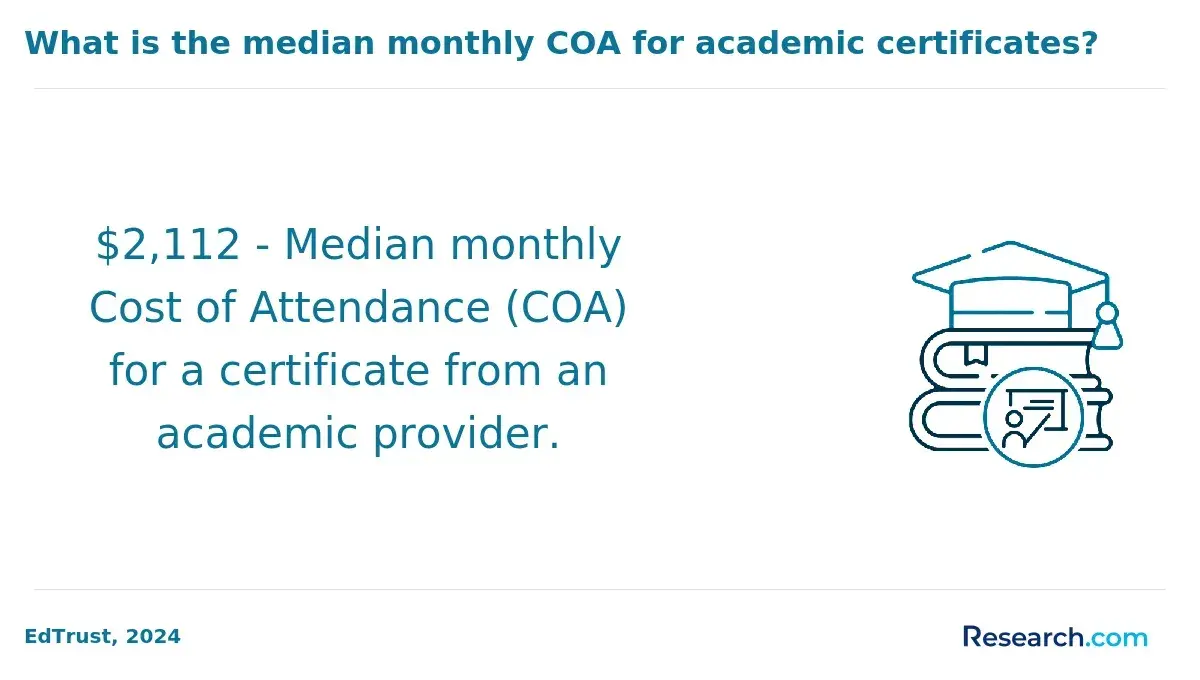
Costs vary substantially by residency status, institution type, credit count, lab intensity, clinical fees, and whether students must travel to campus or clinical sites. A tuition quote alone can understate the total expense because surgical technology students may also pay for uniforms, supplies, background checks, drug testing, immunizations, CPR training, exams, and transportation.
For broad context, the National Center for Education Statistics reported that average published tuition and fees at U.S. public two-year institutions were $3,990 for the 2023-24 academic year. That national figure is not a surgical technology program price and excludes living costs and specialized program charges, but it offers a starting point for evaluating community-college options against private career-school tuition.
| Cost category | Why it varies | Question to ask before applying |
| Tuition and mandatory fees | Public versus private pricing, residency, and credit load | What is the estimated total tuition and mandatory fee amount through completion? |
| Laboratory and technology costs | Simulation equipment, course materials, kits, and online platforms | Which lab, equipment, and technology fees are separate from tuition? |
| Clinical costs | Screening, health documentation, insurance, parking, and travel | What clinical expenses should students budget for, and who arranges the site? |
| Certification expenses | Exam application, testing, and preparation materials | Is the certification examination fee included or billed separately? |
| Living and work-schedule costs | Reduced work hours during daytime labs or rotations | What are the required clinical days, hours, and travel expectations? |
Request a written program-cost worksheet that covers the entire credential, not just the first term. Compare net cost after grants and scholarships, estimated travel expenses, clinical scheduling, and expected time away from paid work. A lower per-credit price may not be the lower-cost choice if it requires distant clinical travel or adds multiple uncovered fees.
Online degree shoppers who later consider a graduate credential can use resources on affordable master's degrees online, but graduate tuition comparisons should not be used as a proxy for the cost of a clinical surgical technology program.
Can You Get Financial Aid for an Online Surgical Tech Degree With Streamlined Admissions?
Yes. Streamlined admissions and financial aid are separate processes. A program's decision not to require recommendation letters does not by itself determine eligibility for federal, state, institutional, military, or private aid.
Students attending an eligible institution and program may be able to submit the Free Application for Federal Student Aid (FAFSA) for federal grants, loans, and work-study consideration. Eligibility depends on factors such as enrollment status, satisfactory academic progress, citizenship or eligible noncitizen status, and the school's participation in federal aid programs. Certificate length and clock-hour versus credit-hour structure can also affect aid packaging.
Before accepting an offer, ask the financial aid office for a term-by-term aid estimate and confirm whether the surgical technology cohort is eligible for the aid shown. The following checks help students avoid confusing admission approval with confirmed funding.
- Submit the FAFSA as early as practical and review any verification requests promptly.
- Ask whether institutional scholarships require a separate application, GPA, essay, or deadline.
- Confirm whether aid covers summer terms, repeated prerequisites, and the final clinical term.
- Compare grants and scholarships before borrowing, then review loan terms and projected repayment obligations carefully.
- Ask how dropping below required enrollment or failing to complete a clinical component could affect aid eligibility.
Working adults should also ask about employer tuition assistance and whether clinical schedules conflict with employment. Financial aid can reduce out-of-pocket costs, but it does not solve a schedule that makes required labs or rotations impossible to attend.
How Long Does an Online Surgical Tech Degree With No Letters of Recommendation Take to Complete?
Completion time depends on the credential, transfer credits, prerequisite status, cohort calendar, and clinical placement sequence. Many certificate programs are designed for roughly one year of full-time study, while associate degree pathways commonly take about two years when general education and prerequisites are included. A program may take longer if a student studies part time or must complete missing science courses first.
Online instruction can make lectures more accessible, but it rarely shortens the required practical sequence. Skills labs must be scheduled, competencies must be observed, and clinical rotations must occur at approved facilities. Some programs require daytime attendance even if online coursework is asynchronous.
| Timeline factor | Potential effect on completion | What to verify |
| Prerequisite completion | May delay entry into the professional cohort | Which courses must be completed before application and what grades are required? |
| Cohort start dates | Students may need to wait for the next annual or limited intake | How often does the program begin and when is the application deadline? |
| Clinical sequencing | Clinical rotations generally occur after foundational coursework and labs | Can a delayed clinical placement extend the program? |
| Part-time availability | May improve work-life fit but extend completion time | Are technical courses and clinicals available part time? |
| Transfer credit evaluation | May reduce general education coursework but not clinical competencies | Which credits can transfer and when will the evaluation be finalized? |
Do not choose a program solely because it is marketed as accelerated. Ask for a sample term-by-term plan showing prerequisite, lab, and clinical dates. Students comparing faster academic options in other fields may find an accelerated master's program psychology useful for a separate career direction, but surgical technology has clinical competencies that cannot be compressed into online coursework alone.
Can You Transfer Credits Into an Online Surgical Tech Degree Program With No Recommendation Letters?
Transfer credit may be available, especially for general education courses such as English composition, college algebra, psychology, anatomy and physiology, and medical terminology. Whether a course transfers depends on its content, grade, recency, credit hours, laboratory component, and the receiving institution's policies.
Technical surgical technology courses are more difficult to transfer because programs must confirm that prior training meets their curriculum, competency, and accreditation standards. Even when transfer credit is accepted, students may still need to complete the receiving school's labs, clinical requirements, or capstone courses.
Take these steps before assuming transferred coursework will shorten your program.
- Request official transcripts from every previously attended institution.
- Ask for a written transfer-credit evaluation before committing to enrollment whenever possible.
- Provide course descriptions or syllabi if the school requests them, particularly for science and technical courses.
- Confirm the minimum grade and course-age limits for anatomy, physiology, and other prerequisites.
- Ask whether transferred credits affect financial aid, cohort placement, or the sequence of clinical courses.
- Keep copies of the final evaluation and compare it with the published degree plan.
A common error is relying on a recruiter's verbal estimate of transferable credits. Only a formal evaluation from the institution can establish how prior coursework applies. Students who hold a prior credential should also ask whether it affects eligibility for certification or whether the program requires full completion of its own professional sequence.
How Should You Compare Online Surgical Tech Degree Programs That Do Not Require Letters of Recommendation?
The best no-recommendation program is not simply the one with the shortest form. It is the option that combines accessible admissions with credible training, workable clinical logistics, transparent total cost, and a credential that aligns with your state and employer goals.
Use the comparison points below when speaking with admissions staff. These questions help reveal whether an online or hybrid program is realistic for your circumstances.
- Is the recommendation-letter policy "not required" for the surgical technology cohort, or merely optional for some applicants?
- What GPA, prerequisite courses, entrance assessments, interviews, or healthcare-clearance items are required?
- Is the institution accredited, and does the specific surgical technology program hold appropriate current programmatic accreditation?
- What percentage of coursework, labs, and clinical education must be completed in person?
- Who obtains clinical placements, where have recent students been placed, and what travel or daytime availability is expected?
- Does the curriculum prepare graduates to pursue the Certified Surgical Technologist examination?
- What is the full estimated cost through completion, including supplies, screenings, travel, and examination fees?
- What are the program's completion, certification-exam, and job-placement disclosures, and how does the school define each measure?
Students who are organized, have completed prerequisites, and lack convenient references may benefit most from no-recommendation admissions. Applicants should reconsider or delay enrollment if they cannot attend required in-person training, cannot meet clinical health-clearance rules, or are considering an unaccredited program solely because admission appears easy.
Ultimately, employers are more likely to focus on training quality, clinical competence, certification, professionalism, and local hiring requirements than on whether recommendation letters were part of your original application. Keep a written record of each school's answers and compare the entire educational pathway before making a deposit.
Other Things You Should Know About Surgical Tech
Often, yes. Entry-level certificate and associate programs may not require references. You will still typically need transcripts, required prerequisite courses, and documentation needed for clinical participation. Confirm the policy for the specific cohort and start term.
Yes. "Optional" means you may submit letters, while "not required" means they are not needed for a complete application. Ask whether optional letters are reviewed in competitive admissions decisions and whether they can affect applicant ranking.
Policies vary. Some programs coordinate clinical sites, while others expect students to meet placement requirements within an approved area. Obtain the policy in writing and ask about travel distance, scheduling, placement delays, and any costs you must pay.
Save the published admissions checklist, confirmation that letters are not required, transcript receipts, prerequisite evaluations, cost estimates, clinical policies, and accreditation information. These records make it easier to compare programs and resolve conflicting information.
References
- How to Choose the Best Surgical Tech Program | Your Guide https://www.brooklinecollege.edu/blog/how-to-choose-the-best-surgical-tech-program/
- Surgical Professions https://www.collin.edu/academics/programs/surgical-professions-aas-surgicaltechnology.html
- Tech in Surgery TS-C (NCCT) | Exam Fee: $199 https://www.ncctinc.com/certifications/tech-in-surgery-certified
- Surgical Technology https://www.monroecc.edu/academics/majors-programs/health-sciences/surgical-technology-associate-degree/
- Surgical Technology | CAHE https://www.cahe.edu/programs/surgical-technology
- Surgical Tech Training https://www.nctc.edu/programs/health-science/surgical-tech/
- Surgical Technology https://www.fletcher.edu/programs/nursing-allied-health/surgical-technology
- Surgical Technician Online Training Program ACTS https://www.americation.org/surgical-technician-online-program
- Steps On How To Become A Surgical Tech | HowToBecome Guide https://www.learnhowtobecome.org/surgical-tech/
- Cost to Become a Surgical Tech (Programs & Certification) https://www.stepful.com/post/cost-to-become-a-surgical-tech