2027 Online Public Administration Degree Programs That Accept 60, 75, or 90 Transfer Credits

Co-Founder and Chief Data Scientist
Transfer credit can decide whether an online public administration degree takes one year or three. Many bachelor's programs require about 120 credits, so entering with 60, 75, or 90 usable credits can sharply change your remaining courses, tuition, and timeline.
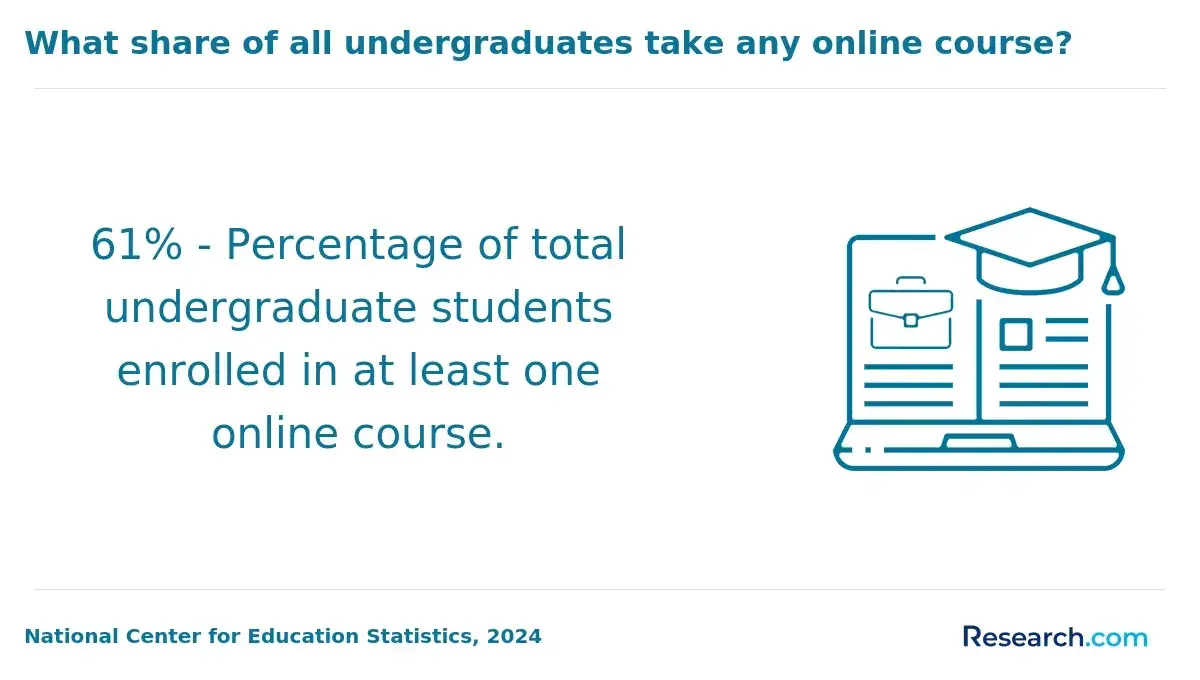
The National Student Clearinghouse Research Center reported that transfer enrollment rose 5.3% in spring 2024, showing that more students are trying to turn prior college work into completed degrees. This guide helps transfer and degree-completion students compare policies, avoid credit-loss surprises, and choose a program that fits their records.
Key Things You Should Know
- Most online bachelor's in public administration programs require about 120 credits, so 60 accepted credits may leave roughly half the degree, 75 may leave about 45 credits, and 90 may leave about 30 credits if every credit applies.
- A school's maximum transfer limit is not the same as usable credit; general electives, major prerequisites, upper-division rules, and residency requirements determine how many credits actually reduce your remaining degree plan.
- Before enrolling, request a written transfer evaluation showing accepted credits, applied credits, unmet public administration requirements, minimum residency credits, and estimated remaining tuition.
How Many Transfer Credits Can You Apply Toward an Online Public Administration Degree?
When a school says it accepts 60, 75, or 90 transfer credits, it is usually talking about the maximum number of previous college credits that can be brought into a bachelor's degree. For public administration students, the more important question is whether those credits satisfy general education, electives, public administration core courses, concentration courses, or upper-division requirements.
Accepted credits are credits the institution recognizes on your record. Applied credits are credits that count toward specific graduation requirements. A student may have 90 credits accepted but only 72 applied if many courses duplicate each other, fall outside the degree plan, or do not meet upper-level major requirements.
The table below shows how the common 60-, 75-, and 90-credit scenarios usually affect a 120-credit online public administration bachelor's degree. Use it as a planning framework, not as a guarantee, because each school's catalog and evaluation rules control the final result.
| Transfer-credit scenario | Approximate credits left in a 120-credit degree | What it usually means | Main risk to check |
| 60 transfer credits | 60 credits remaining | Often fits associate degree holders who have completed most lower-division general education requirements. | You may still need most public administration major courses, especially if your prior credits were not in government, policy, business, or social science. |
| 75 transfer credits | 45 credits remaining | Can work well for students with an associate degree plus additional college coursework. | Some extra credits may become electives instead of replacing required public administration courses. |
| 90 transfer credits | 30 credits remaining | Often the fastest degree-completion route if the school permits a 90-credit transfer maximum and your credits align well. | Residency rules and upper-division major requirements may still require a full year of institutional coursework. |
A public administration curriculum commonly includes courses in government, public policy, budgeting, ethics, administrative law, nonprofit management, human resources, statistics, and program evaluation. If your previous courses match these areas, they are more likely to apply directly than unrelated electives.
Which Online Public Administration Degree Programs Accept 60, 75, or 90 Transfer Credits?
Online public administration programs vary widely in how they handle transfer students. Some publish a maximum of 90 transfer credits for bachelor's degrees, while others may be more conservative or may accept large numbers of credits only after reviewing course level, grades, accreditation, and degree fit.
The table below gives examples of transfer-friendly online public administration or closely related public service bachelor's programs to investigate. Policies can change, so treat the listed maximums as a starting point and confirm them through the current catalog and an official evaluation.
| School or program type | Online public administration-related option | Published transfer-credit pattern to verify | Best fit |
| Southern New Hampshire University | Online BS in Public Administration | May allow up to 90 transfer credits toward a bachelor's degree. | Students with substantial prior college credit who want a broad, career-oriented public administration curriculum. |
| Liberty University | Online BS in Public Administration | Often allows up to 75% of a bachelor's degree to be transferred, which can equal about 90 credits in a 120-credit program. | Students seeking a high transfer ceiling with flexible online coursework. |
| Purdue Global | Online BS in Public Administration and Policy | Commonly advertises transfer options up to 75% of bachelor's degree requirements; students should confirm semester-credit equivalents. | Adult learners who want a policy and administration focus and may have prior college, military, or experiential learning. |
| University of Arizona Global Campus | Online BA in Public Administration | May accept a large block of approved transfer credits toward bachelor's completion. | Students who need a fully online format and want to apply previous general education and elective credits. |
| Public universities with online degree-completion pathways | Public administration, public policy, political science, public service, or organizational leadership tracks | Often accept about 60 credits from an associate degree, with additional credits reviewed individually. | Students who want regional public-university pricing, state articulation agreements, or a public-sector career focus. |
Do not choose solely by the highest stated transfer maximum. A program that accepts 90 credits but leaves you with several unmet upper-division public administration courses may take longer than a program that accepts fewer credits but applies them more efficiently. If you are still comparing undergraduate paths broadly, reviewing the earning potential and flexibility of the best 4 year degrees can also help you decide whether public administration is the right bachelor's completion route.
How Can You Tell Whether Transfer Credits Will Actually Apply Toward Your Public Administration Degree?
The only reliable way to know whether transfer credits will apply is to compare your transcript course by course against the program's degree requirements. Admissions estimates are helpful, but they are not the same as a final academic audit.
Ask each school to show how your credits fit into the degree map. The following review sequence helps you avoid confusing a generous transfer policy with a shorter path to graduation.
- Request an unofficial pre-evaluation before applying if the school offers one, especially if you have credits from multiple institutions.
- Send official transcripts from every college attended, even if you think the credits are old, incomplete, or unrelated.
- Ask which credits apply to general education, major requirements, concentration requirements, upper-division requirements, and free electives.
- Confirm whether any accepted credits are listed only as excess electives that will not reduce your remaining coursework.
- Request a written remaining-degree plan showing each course you still need and the estimated number of terms required.
- Compare the written evaluation against tuition, fees, course availability, and financial aid rules before enrolling.
Common red flags include vague promises such as "we accept up to 90 credits" without showing how those credits apply, pressure to enroll before the evaluation is complete, or a degree plan that lists many transferred credits but still requires most major courses. A transfer-friendly school should be able to explain the difference clearly.
Previous college credits can come from several sources, but each source is evaluated differently. Regionally accredited college coursework is typically the easiest to transfer, while alternative credit, military training, exams, and professional credentials may require additional review.
The table below summarizes common credit sources and how they may fit into an online public administration degree. This helps you see which credits are most likely to reduce your remaining requirements instead of becoming unused electives.
| Credit source | How it may apply | What to verify |
| Associate degree credits | Often cover lower-division general education and electives; some courses may satisfy introductory government, economics, statistics, or management requirements. | Whether the school has an articulation agreement or accepts the associate degree as a completed general education block. |
| Previous bachelor's-level coursework | May apply to upper-division electives or major-related courses if the content matches public administration requirements. | Course level, grade minimums, duplication, and whether the credits exceed the school's transfer cap. |
| Community college credits | Usually apply well to general education and lower-division electives. | Whether there is a cap on lower-division credits or community college transfer credits. |
| Business, criminal justice, political science, or social science credits | May align with public budgeting, administration, public policy, leadership, or public-sector management courses. | Whether the program treats them as major substitutions or general electives. |
| Exam credit | CLEP, DSST, AP, or IB credit may satisfy general education or elective requirements. | Minimum scores, maximum exam-credit limits, and whether the program accepts exam credit after matriculation. |
| Military training | May apply through ACE credit recommendations, especially for leadership, management, logistics, or public safety training. | Whether the school evaluates JST or CCAF transcripts and whether credits apply beyond electives. |
| Professional certifications or prior learning | May count through portfolio assessment or institutional prior learning credit. | Fees, documentation rules, maximum credit limits, and whether credits can satisfy major requirements. |
If your strongest credits are from business, management, accounting, or supervision, they may still be useful in public administration because government and nonprofit agencies need budgeting, operations, and leadership skills. Students building from an associate-level foundation may also compare pathways such as an accelerated online associates business degree before deciding which credits to carry into a public-sector bachelor's program.
Residency requirements are the minimum number of credits you must complete at the university that grants the degree. Upper-division requirements are the advanced junior- and senior-level courses you must complete, often within the major. Together, these rules explain why a school can accept 90 credits but still require you to complete 30 or more credits after transfer.
The table below shows the transfer rules that most often affect public administration degree-completion students. These rules matter because they can limit how much time and money your transfer credits actually save.
| Requirement | Common pattern | Why it matters for 60, 75, or 90-credit transfer students |
| Institutional residency | Often around 30 credits, but it varies by school. | A student bringing in 90 credits may still need to complete the final 30 credits at the enrolling institution. |
| Major residency | Some programs require a set number of public administration major credits to be completed at the school. | Previously earned public administration courses may not replace the full major core. |
| Upper-division minimum | Bachelor's programs usually require a certain number of 300- or 400-level credits. | Community college credits may transfer but may not satisfy upper-division requirements. |
| Capstone requirement | Many public administration programs require a final capstone, seminar, internship alternative, or applied project. | This course is rarely waived, even for students with extensive prior experience. |
| Minimum grade rule | Many schools require a C or higher for transfer, and some major courses may need higher grades. | Credits with low grades may be rejected or accepted only as electives. |
The practical takeaway is that 90 transfer credits is usually the upper edge of bachelor's completion, not a promise of immediate graduation. For many students, the final 30 credits are the most important because they include the public administration major, writing-intensive work, ethics, policy analysis, and the capstone that signals degree completion.
The transfer credit evaluation process turns your prior coursework into a degree plan. It usually begins with transcripts and ends with an academic audit showing what you have completed, what remains, and which credits were accepted but not applied.
Use the process below when comparing programs. Following the same steps at each school makes your options easier to compare and reduces the risk of enrolling based on incomplete information.
- Collect unofficial transcripts first so you can quickly estimate your total attempted and completed credits.
- Identify the degree you want, such as public administration, public policy, public service, or nonprofit management, because credit applicability depends on the exact program.
- Submit transcripts for a preliminary review and ask whether the school can evaluate credits before you pay an enrollment deposit.
- Review the evaluation line by line and separate accepted credits from credits that satisfy required categories.
- Ask for course substitutions if a prior course appears similar to a required public administration course but was not automatically matched.
- Confirm residency, upper-division, capstone, and minimum GPA requirements in writing.
- Calculate remaining tuition using only the credits still required, not the number of credits you hoped would transfer.
Keep syllabi for courses in government, policy, statistics, ethics, finance, management, law, criminal justice, and nonprofit administration. A syllabus can help an evaluator determine whether a course is equivalent to a required public administration class, especially when the course title is broad or unusual.
Completion time depends on three variables: how many credits apply, how many courses you take per term, and whether required courses are offered often enough. Online programs can be flexible, but a missing prerequisite or a capstone offered only in certain terms can still slow progress.
The table below gives realistic planning ranges for a student in a 120-credit online bachelor's program. It assumes transferred credits apply cleanly and does not account for repeated courses, part-time breaks, or course availability issues.
| Applied transfer credits | Approximate credits remaining | Full-time pace | Part-time pace | Best-fit student |
| 60 credits | 60 credits | About 2 academic years | About 3 to 4 years | Associate degree holders who can commit to a steady course load. |
| 75 credits | 45 credits | About 1.5 academic years | About 2.5 to 3 years | Students with an associate degree plus extra credits that align with the degree plan. |
| 90 credits | 30 credits | About 1 academic year | About 1.5 to 2 years | Degree-completion students who satisfy most lower-division and elective requirements. |
Accelerated online calendars may shorten the calendar time, but they do not remove credit requirements. A seven- or eight-week course format can help motivated adult learners move faster, but taking too many courses at once can be risky if you work full time or have family obligations.
Public administration students should also consider sequencing. Courses such as research methods, public budgeting, policy analysis, and the capstone may build on each other, so a student with 90 transfer credits may still need two or more terms if the courses must be taken in order.
Transfer credits can reduce cost because most online bachelor's programs charge tuition by the credit. The simplest formula is: credits still required multiplied by the tuition rate, plus fees, books, and any prior learning assessment costs.
College Board's 2024 Trends in College Pricing reported average published tuition and fees of $11,610 for in-state students at public four-year institutions and $43,350 at private nonprofit four-year institutions for 2024-25. Those figures are not online public administration prices, but they show why reducing required credits can matter: each additional applied transfer credit can reduce the number of credits you must pay to complete.
The table below uses an illustrative $400-per-credit tuition rate so you can see the math. Replace $400 with each school's actual tuition rate and include fees before making a final decision.
| Applied transfer credits | Credits remaining in a 120-credit degree | Illustrative tuition at $400 per credit | Cost implication |
| 60 credits | 60 credits | $24,000 | You may pay for about half the degree after transfer. |
| 75 credits | 45 credits | $18,000 | Applying 15 more credits than the 60-credit scenario would reduce billed tuition by $6,000 at this rate. |
| 90 credits | 30 credits | $12,000 | Applying 30 more credits than the 60-credit scenario would reduce billed tuition by $12,000 at this rate. |
Cost comparisons should include more than tuition. Before choosing a program, check technology fees, graduation fees, prior learning assessment fees, transcript fees, course materials, whether tuition is flat-rate or per-credit, and whether financial aid requires a minimum number of credits per term.
A bachelor's in public administration can also be a stepping stone to graduate study in public administration, public policy, nonprofit leadership, social work, or human services. If graduate school is part of your plan, compare undergraduate costs carefully so you preserve borrowing capacity for options such as the cheapest masters degree online that fits your career goals.
Yes, some online public administration programs may award credit for prior learning, military training, exams, or certifications. These credits can be especially valuable for adult learners with public-sector, military, nonprofit, law enforcement, emergency management, or administrative experience.
Alternative credit is not automatic, so you should verify the school's rules before assuming it will reduce your degree requirements. The list below shows the most common options and what to ask about each one.
- Military training: Ask whether the school evaluates Joint Services Transcript, Community College of the Air Force, or ACE-recommended training and whether credits can apply beyond free electives.
- CLEP or DSST exams: Ask which exams are accepted, the minimum score required, and whether exam credit can fulfill general education or elective requirements after admission.
- Portfolio assessment: Ask whether professional experience in government, nonprofit administration, budgeting, public safety, or program coordination can be documented for credit.
- Professional certifications: Ask whether certifications in project management, emergency management, human resources, law enforcement, or public procurement have credit recommendations.
- Workplace training: Ask whether agency training, leadership academies, or municipal management programs can be reviewed for academic credit.
Alternative credit usually works best for electives and lower-division requirements. It is less likely to replace advanced public administration courses such as policy analysis, public finance, administrative ethics, or a capstone. If your long-term interests include social programs, nonprofit leadership, or community services, you may also compare public administration with an online masters in human services after finishing the bachelor's degree.
Do Older College Credits Expire When Transferring Into an Online Public Administration Degree?
Older college credits do not always expire, but they may be harder to apply in certain subject areas. Public administration programs often accept older general education, humanities, social science, and elective credits, while courses in statistics, technology, accounting, research methods, or law may receive closer review if the content has changed significantly.
The most important factor is not age alone. Schools usually look at accreditation, grade earned, course level, duplication, and whether the course still matches the current degree requirement. A 15-year-old American government course may transfer cleanly, while an older computer applications or statistics course may need to be repeated if the program requires current skills.
Students with older credits should take a defensive approach before enrolling. The steps below can help you avoid losing time after admission.
- Send every transcript, even from schools you attended briefly or many years ago.
- Ask whether the institution has time limits for specific subjects such as statistics, accounting, technology, or research methods.
- Keep old course descriptions or syllabi if available, especially for courses that may match public administration requirements.
- Ask whether repeating one key prerequisite would unlock several upper-division courses and shorten your overall timeline.
- Get any expiration-related decision in writing before you register for your first term.
If your older credits point toward public service but your career goal has shifted toward clinical or direct-service roles, compare requirements carefully. Some fields have stricter accreditation, field placement, or licensure expectations; for example, an MSW online may require a different academic and practicum path than a public administration bachelor's degree.
Other Things You Should Know About Public Administration
Often, but not always. A completed associate degree may cover many lower-division requirements, especially when an articulation agreement exists. However, the school still has to evaluate whether your courses meet the public administration degree plan.
Usually, transfer credits count toward degree requirements but do not calculate into the new institution's GPA. Your new GPA is typically based on courses completed after enrollment, though admissions and honors rules can vary by school.
Yes. Credits from business, political science, criminal justice, sociology, economics, communications, and general education often fit well. The main issue is whether you still need the public administration core, upper-division courses, and capstone.
It depends on cost and applicability. Taking more low-cost credits can help if the receiving school confirms they will apply. It can backfire if you take courses that exceed the transfer cap, duplicate prior work, or do not satisfy remaining requirements.
- How do I log in to my Current Account? - Current Support Center https://support.current.com/hc/en-us/articles/4408250104859-How-do-I-log-in-to-my-Current-Account
- 2026 Top Online Schools for Public Administration https://www.collegeaffordabilityguide.org/subjects/public-administration/online/
- 2025 Best Online Public Administration Degrees https://www.onlineu.com/degrees/public-administration
- Best Online Universities With Generous Transfer Credit Policies https://www.collegetransitions.com/blog/best-online-universities-with-generous-transfer-credit-policies/
- Current | Future of Banking | Get Started | https://current.com/phil50/
- current https://baike.baidu.com/item/current/5342364
- Colleges Accepting 90 Transfer Credits | 2026 Guide https://credittodegree.com/guides/colleges-accepting-90-transfer-credits