2027 Online Pediatric Primary Care NP Programs for Nurses in Kentucky: MSN Routes and Clinical Requirements
Audited and Verified:
Our Editorial and Data Verification Process
Research.com uses government datasets, official education statistics and primary institutional information to support its career and degree guides. Our review process checks factual accuracy, occupational definitions, source dates and the requirements associated with the credentials discussed.
How This Article Was Fact-Checked
Our editorial team verifies salary estimates, employment projections, education requirements and program information against original data providers and official organizations. Salary figures are checked against the relevant occupational definitions and reporting periods. Information about licensure, accreditation and required in-person training is reviewed separately.
Fact-checked and verified on:

Co-Founder and Chief Data Scientist
An online pediatric primary care nurse practitioner program can let a Kentucky RN complete much of an MSN from home, but it cannot move supervised child and adolescent care online.
The consequential choice is whether a program accepts Kentucky students, prepares graduates for the right pediatric certification, and can support approved clinical placements where they live.
This guide compares MSN entry routes and explains the clinical, financial, and licensing checks to make before applying, especially if work schedules or local preceptor availability could determine whether the program is feasible.
Key Things You Should Know
- Choose an MSN track explicitly named pediatric nurse practitioner - primary care; an FNP, pediatric acute care, or non-APRN MSN is not the same preparation.
- Online coursework still requires supervised, program-approved pediatric clinical care. National NP education standards set a 750-hour direct patient care benchmark, but applicants must confirm the hours and experiences required by their specific program and certifier.
- Before paying a deposit, confirm Kentucky enrollment eligibility, the school's clinical-placement responsibilities, eligibility for the PNCB primary care exam, and the Kentucky Board of Nursing's APRN requirements.
What are online pediatric primary care NP programs for Kentucky nurses?
These are postlicensure graduate programs that prepare registered nurses to assess, diagnose, manage, and coordinate primary care for infants, children, and adolescents within the pediatric NP role.
"Online" usually describes lectures and coursework, not clinical rotations. Students must also meet any scheduled live-class, simulation, or campus attendance requirements.
A Kentucky resident need not assume that an online school based elsewhere can enroll them or arrange Kentucky clinicals. Ask each program to confirm, in writing, both Kentucky enrollment authorization and whether its pediatric primary care track supports clinical placements in your area.
If you are an RN who first needs a bachelor's degree, BSN completion pathways with alternative practice experiences may help you compare that separate step; an RN-to-BSN format does not eliminate future NP clinical requirements.
Which MSN pathway prepares nurses for pediatric primary care practice?
For a BSN-prepared RN seeking this role, the direct route is an MSN with a pediatric nurse practitioner - primary care population-focus track.
The degree title alone is insufficient: the curriculum and supervised experiences must prepare graduates for the intended pediatric primary care certification. The table separates routes that can lead to that preparation from routes that require another step.
Entry credentials change the sequence, but they do not remove the need for pediatric NP coursework and clinical evaluation:
| Starting point | Potential route | Decision-critical distinction |
| RN with a BSN | Pediatric primary care NP MSN | Verify that the named track, not merely the MSN, prepares graduates for primary care PNP certification. |
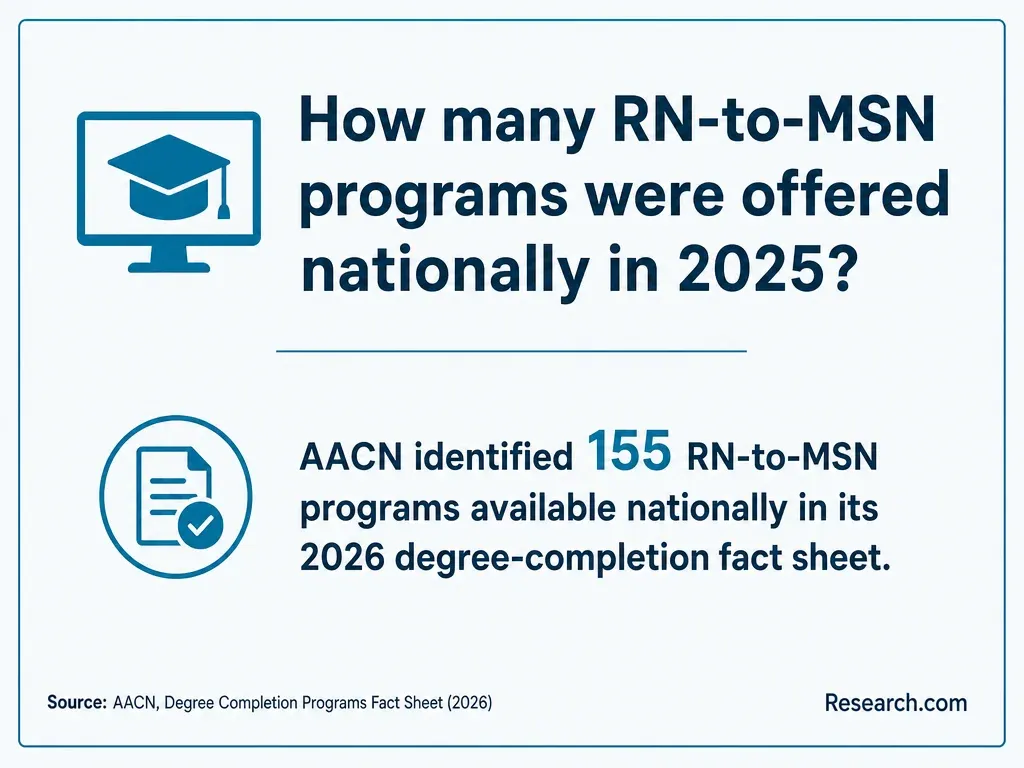
| RN with an ADN or diploma | Eligible RN-to-MSN bridge followed by a pediatric primary care NP track | Check whether the bridge actually offers this specialty and what bachelor's-level work must be completed. |
| RN with a non-nursing bachelor's degree | Program-specific RN-to-MSN or graduate admission route | Ask for a transcript review; an RN license and unrelated bachelor's degree do not guarantee entry. |
| Already-certified APRN in another population focus | Potential post-graduate pediatric primary care NP certificate | The school must assess prior coursework, competencies, and additional pediatric clinical needs. |
Nurses starting with an associate degree can compare master's nursing study after an ADN, then confirm that a particular bridge includes the pediatric primary care NP track. An FNP track covers a broader lifespan; a pediatric acute care track addresses a different practice focus. Neither should be treated as an interchangeable shortcut.
What accreditation should Kentucky nurses verify in online pediatric NP programs?
Check three separate matters: the institution's recognized accreditation, accreditation of its nursing program by an applicable nursing accreditor such as CCNE or ACEN, and the school's authority to enroll a student located in Kentucky.
Then ask the program and the Pediatric Nursing Certification Board (PNCB) whether the specific primary care track meets the educational requirements for its exam. General statements about a university's accreditation do not answer that last question.
Kentucky APRN licensure is a separate determination by the Kentucky Board of Nursing. Request written confirmation of the degree awarded, specialty designation on the transcript, and whether graduates have been eligible to seek primary care PNP certification; check the board's requirements before enrollment.
This scrutiny matters even when comparing less restrictive nursing admission options: ease of entry does not establish specialty certification eligibility or Kentucky practice authority.
Students complete supervised direct patient care with program-approved preceptors and faculty oversight, generally in settings that provide pediatric primary care. The National Task Force's NP education standards use a 750-hour direct patient care minimum as a program benchmark.
A school's required total, acceptable experiences, and a certifier's eligibility rules must still be checked individually; do not assume that RN employment, simulation, or previously completed graduate hours automatically count.
The decisive issue for a Kentucky applicant is often placement rather than lecture delivery. Before enrolling, obtain answers to these questions:
- Who finds potential sites and preceptors, and who secures agreements and final approval?
- Must rotations cover particular pediatric ages, preventive visits, or other primary care experiences?
- Can rotations occur near your home or workplace, and are there geographic restrictions?
- What are the expected weekly clinical schedule, deadlines, travel needs, and contingency plan if a site withdraws?
A working parent should compare the actual days available for supervised visits with childcare and employment commitments; asynchronous classes do not make weekday clinic hours asynchronous.
Similarly, discussion of comparing DNP practice and project requirements should not be mistaken for a way to waive the direct-care preparation needed for a new PNP role.
Expect graduate advanced pathophysiology, advanced pharmacology, and advanced health assessment alongside pediatric-focused diagnosis and management. Programs also commonly cover growth and development, health promotion, evidence-based practice, and family-centered care.
Course names and sequencing vary; the important comparison is whether supervised experiences let faculty evaluate primary care assessment and management across the pediatric population.
Review the course map rather than treating speed as proof of fit. Even fast-track DNP study options address a different degree decision; an accelerated calendar does not substitute for the pediatric primary care curriculum and clinical preparation required for this MSN goal.
Programs commonly require an active RN license, qualifying nursing education, transcripts, references, and evidence of readiness for graduate study. GPA thresholds, pediatric RN experience expectations, prerequisite courses, interviews, and whether an ADN-prepared RN can enter vary by school. Admission to the university also does not necessarily mean admission to its PNP track or clearance to begin clinicals.
Ask admissions to evaluate your actual license and transcripts, then separately confirm clinical-site requirements such as background screening, immunizations, and liability coverage.
Pediatric RN experience can strengthen preparation but does not replace formal NP education. When considering exploring attainable DNP entry requirements, keep the distinction clear: a DNP admission policy does not establish eligibility for an MSN pediatric NP track.
Completion time depends on entry credential, full- or part-time enrollment, course sequencing, and clinical-site availability. A BSN-to-MSN student may have a shorter academic sequence than an RN entering through an ADN-to-MSN bridge; either can face delays if required pediatric courses run infrequently or a placement is not approved in time. Compare each school's published plan for your intended start term, including the number of semesters with clinical hours.
Ask for a term-by-term schedule showing live sessions, campus visits, clinical days, and maximum time to completion. This is more useful than an advertised "fastest" finish.
Comparisons with PMHNP certificate programs by duration are especially misleading unless you already hold an APRN credential and are comparing the same type of population-focus transition.
There is no single Kentucky price: an online program may charge by credit, term, or residency status, and a bridge may require additional coursework. Without a verified, term-specific tuition schedule, a quoted per-credit rate would not establish the total cost.
Request an individualized estimate for the exact pediatric primary care track and your expected enrollment pace.
Compare total cost as tuition plus mandatory fees, books and equipment, clinical compliance and travel expenses, any campus visits, certification and licensing charges, and income lost to clinical scheduling.
Ask whether employer assistance covers graduate specialty courses and what happens to aid or fees if a placement delays graduation. Online PMHNP tuition and fee considerations can illustrate categories to inspect, but a different specialty's advertised price is not a pediatric MSN quote.
After completing an eligible pediatric primary care NP graduate track, graduates seek the PNCB's Certified Pediatric Nurse Practitioner - Primary Care (CPNP-PC) credential under its current eligibility and examination rules.
They then must satisfy the Kentucky Board of Nursing's requirements for APRN licensure in the appropriate role and population focus. Graduation, exam eligibility, certification, and state authorization are distinct milestones; check both organizations' current instructions before applying or practicing.
An FNP credential is not the same as CPNP-PC. Likewise, postgraduate FNP certificates organized by duration may be relevant to an APRN pursuing FNP preparation, but they should not be presented as a pediatric primary care certification route.
If you hold another APRN credential, ask the receiving school for a documented pediatric coursework and clinical gap analysis.
What careers, salaries, and job outlook await pediatric primary care NPs?
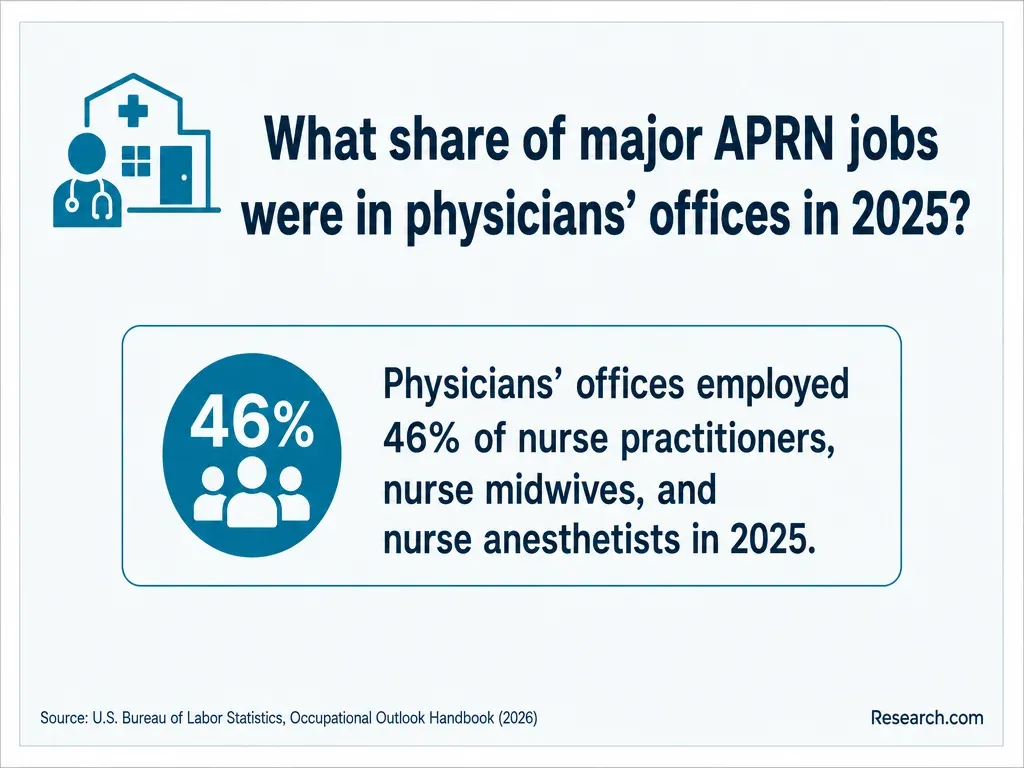
Primary care PNPs may work in pediatric practices, community clinics, and other child-focused ambulatory services, providing preventive care, evaluating common concerns, managing suitable ongoing conditions, and coordinating referrals within their education, certification, license, and workplace privileges.
Employers may also require onboarding and demonstrated competencies beyond the degree.
The U.S. Bureau of Labor Statistics reports wages and employment projections for nurse practitioners as an occupation, not separately for Kentucky pediatric primary care NPs. Its national median should therefore be treated as broad labor-market context, not a graduate salary or local job offer.
For a realistic comparison, examine Kentucky postings for the specific pediatric role, location, schedule, benefits, and experience requirements against your full education cost. Online BSN-to-MSN programs organized by tuition can inform the cost side of that comparison, but only a verified pediatric primary care track advances this particular career objective.
Other Things You Should Know About Nursing
Possibly, but clinical terms may require substantial weekday availability. Ask for the term-by-term clinical schedule before committing to a work arrangement.
Only if the program approves the site, patient experiences, preceptor, supervision, and separation of student and employee responsibilities. RN work hours do not automatically become NP clinical hours.
Policies differ. Get written details on what the school guarantees, what you must arrange, and what support exists if a Kentucky placement falls through.
Do not assume so. Patient-location rules and other states' APRN requirements may apply; verify authorization for each jurisdiction before providing telehealth care.
- Education and Training - About This Tool https://www.benefits.va.gov/gibill/comparison_tool/about_this_tool.asp
- NCSBN/Compact License | ky.gov https://kbn.ky.gov/Licensure/Pages/nurse-licensure-compact.aspx
- How To Apply - Penn Nursing - University of Pennsylvania https://www.nursing.upenn.edu/admissions/how-to-apply/
- What It's Like to Take an Online Program at the University of Kentucky? | UK Online https://online.uky.edu/blog/what-its-take-online-program-university-kentucky
- Estimated Cost of Attendance | Student Success | University of Kentucky https://studentsuccess.uky.edu/financial-aid-and-scholarships/estimated-cost-attendance
- Master of Science, Pediatric Primary Care Nurse Practitioner | Stony Brook School of Nursing https://nursing.stonybrookmedicine.edu/childHealthMaster
- RN to MSN - Pediatric Nurse Practitioner | Spring Arbor University https://online.springarbor.edu/programs/master-of-science-in-nursing/rn-to-pnp-bridge
- Nursing Certifications | Berkley School of Nursing - Georgetown University https://nursing.georgetown.edu/blog/nursing-certifications/
- Frequently Asked Questions - Onboarding Process - Nursing Field Experience - Academic Guides at Walden University https://academicguides.waldenu.edu/nursing-field/frequently_asked_questions_onboarding_process