2027 Online Pediatric Primary Care NP Programs for Nurses in Idaho: MSN Routes and Clinical Requirements
Audited and Verified:
Our Editorial and Data Verification Process
Research.com uses government datasets, official education statistics and primary institutional information to support its career and degree guides. Our review process checks factual accuracy, occupational definitions, source dates and the requirements associated with the credentials discussed.
How This Article Was Fact-Checked
Our editorial team verifies salary estimates, employment projections, education requirements and program information against original data providers and official organizations. Salary figures are checked against the relevant occupational definitions and reporting periods. Information about licensure, accreditation and required in-person training is reviewed separately.
Fact-checked and verified on:

Co-Founder and Chief Data Scientist
An Idaho RN can study pediatric primary care online, but the clinical training cannot be completed entirely online. The important decision is whether a particular MSN track will enroll Idaho residents, support approved pediatric placements, and prepare graduates for certification and Idaho advanced practice licensure.
This guide explains how to compare those requirements alongside admissions, time, and total cost, so you can rule out an attractive-looking program before committing to one that does not fit your location or career goal.
Key Things You Should Know
- Choose an MSN track explicitly preparing pediatric nurse practitioners in primary care; an FNP or pediatric acute-care track is a different educational route.
- Confirm three separate conditions before applying: Idaho enrollment authorization, workable supervised pediatric clinical placements, and eligibility for the intended certification and Idaho APRN license.
- Online coursework does not eliminate in-person clinical training. The Pediatric Nursing Certification Board's PNP-PC examination pathway specifies at least 500 supervised direct-care clinical hours; confirm the current handbook and your program's potentially higher requirement.
What are online pediatric primary care NP programs for Idaho nurses?
These are graduate nursing tracks that prepare licensed RNs to assess, diagnose, treat, and coordinate primary care for infants, children, and adolescents. "Online" generally describes lectures and coursework - not patient-care rotations, and not necessarily exams, skills sessions, or campus visits.
An Idaho nurse may need to enroll at an out-of-state university, but that university must be able to enroll the student and approve clinical education where it occurs.
The most direct MSN route is a pediatric nurse practitioner-primary care (PNP-PC) track. Schools may also offer a DNP or a post-graduate PNP-PC certificate for nurses who already have suitable graduate preparation.
Compare the actual population focus rather than the speed advertised: one-year family nursing advanced practice options prepare for a different certification and broader age population, not automatically for PNP-PC certification.
Use a school's published track page as a starting point, not proof of Idaho eligibility. Ask its graduate nursing office to confirm, in writing, the exact award, PNP-PC track, Idaho enrollment status for your entry term, required visits, clinical-placement policy, and intended certification examination.
What degree and licensure requirements do Idaho nurses need for pediatric NP practice?
An Idaho RN seeking a first NP role generally needs an active RN license, graduate education in the intended NP role and pediatric primary care population focus, the applicable national certification, and Idaho APRN licensure.
The Idaho Board of Nursing, not the university, determines whether an applicant meets state licensing requirements. Graduation, passing a certification exam, and receiving a license are separate steps.
A BSN-prepared RN can consider a PNP-PC MSN or DNP. An ADN-prepared RN must find a qualifying bridge or complete a BSN before entering a track that requires one; schools differ on whether their RN-to-MSN route includes PNP-PC preparation.
If BSN completion is the immediate obstacle, flexible BSN completion routes for licensed RNs can be compared separately, but a BSN completion program does not replace graduate NP clinical training.
An existing FNP, pediatric acute-care NP, or non-APRN MSN graduate should request an individualized transcript and clinical-hour review. Experience caring for children is valuable, but neither employment nor a different graduate degree automatically supplies missing PNP-PC coursework, supervised encounters, or certification eligibility.
How do online pediatric primary care NP programs meet clinical requirements?
Students complete supervised, program-approved patient care in person while faculty assess their progress. A placement must provide the right pediatric primary care population, appropriate preceptor, sufficient encounters, documentation, and the school's required oversight.
An RN job, volunteer work, simulation, or a site the student finds independently counts only if the program expressly accepts it under its rules.
Clinical arrangements are often the deciding constraint for an Idaho applicant, particularly outside a metropolitan area. Before paying a deposit, ask which party locates preceptors, whether the school has existing Idaho agreements, when a site must be approved, whether more than one setting is required, and what happens if a preceptor withdraws. Also ask how many hours must be completed on weekdays: asynchronous classes do not make clinic schedules asynchronous.
If you already hold another NP credential, do not assume its hours transfer. An online PMHNP certificate program guide illustrates a different population-focus transition; the PNP-PC program must evaluate your prior preparation and specify any new pediatric clinical experiences. Confirm certification-hour rules directly with the Pediatric Nursing Certification Board (PNCB) as well as the school.
Check institutional accreditation and the nursing program's accreditation separately. Nursing programs commonly seek accreditation from the Commission on Collegiate Nursing Education (CCNE) or the Accreditation Commission for Education in Nursing (ACEN); verify the published scope and status for the institution and graduate nursing program.
Neither label, by itself, confirms that a particular PNP-PC track admits Idaho residents or that a proposed Idaho clinical site is approved.
The practical test is a three-way match: the school's accredited graduate program and specialty curriculum, its authorization to enroll and place a student in Idaho, and the current requirements of PNCB and the Idaho Board of Nursing.
Request written answers if a website describes only "NP" preparation. The same scrutiny applies to DNP study options beyond highly selective programs: an accessible admission process is not evidence that a doctoral track prepares a student for pediatric primary care practice.
Expect graduate advanced physiology/pathophysiology, pharmacology, and health assessment, followed by pediatric-focused assessment and management. Specialty work commonly covers growth and development, preventive care, immunization, common childhood conditions, family education, and care coordination.
Programs also teach evidence appraisal and require supervised application of clinical judgment; course names and sequencing vary.
Read the catalog for evidence that clinical courses address primary care across the pediatric age range, not just pediatric nursing generally.
A psychiatric-mental health curriculum may share graduate foundational courses, but shorter psychiatric-mental health nursing master's pathways do not substitute for PNP-PC population-specific education. A school must decide whether any prior graduate course meets its own equivalency standards.
Schools commonly review RN license status, an accredited nursing degree or an accepted bridge credential, transcripts, GPA, recommendations, a statement of purpose, and nursing experience. Some request pediatric experience or an interview.
Admission to the university is not necessarily admission to its PNP-PC track, and clinical sites may impose additional background, immunization, or onboarding requirements.
An ADN-prepared applicant should ask whether the specific pediatric primary care track accepts bridge students, not merely whether the university advertises RN-to-MSN study.
A guide to continuing from an ADN into MSN study can help frame the route, but the school must confirm which undergraduate requirements, graduate courses, and pediatric clinical experiences remain.
Send admissions your license details, transcripts, relevant pediatric experience, and intended Idaho clinical location. Request a track-specific prerequisite review and ask whether any conditional admission could delay clinical enrollment.
Time depends on starting degree, course load, course sequencing, and when approved clinical placements are available. A BSN-to-MSN student may finish in roughly two to three years of part-time study, but that is a planning range, not a promise or a substitute for the school's current course plan. Bridge requirements, a DNP, a leave of absence, or delayed clinical approval can extend it.
Ask for a term-by-term plan showing when specialty courses and clinical hours begin. Then compare that plan with work and caregiving commitments, including daytime clinic hours and any required travel.
Shorter doctoral nursing study options are worth considering if you want a DNP, but compare their actual PNP-PC requirements and placement schedule rather than assuming a shorter advertised duration means less supervised preparation.
There is no reliable Idaho-wide price for an online PNP-PC MSN: schools set different per-credit charges, fees, clinical requirements, and tuition rules. Ask each school for a written estimate based on the credits you must complete, your enrollment pace, and any applicable residency rate.
For an initial comparison, include these costs rather than tuition alone:
- Required credits multiplied by the applicable tuition rate, plus mandatory university and clinical-course fees.
- Books, technology, background checks, health documentation, and certification and licensing expenses.
- Travel or lodging for campus visits or distant clinical sites, plus income lost when rotations conflict with paid shifts.
Compare aid eligibility and employer tuition assistance against the program's actual schedule; reimbursement may arrive after a term and may require continued employment. Cost-focused MSN pathways for bachelor's-prepared nurses offer a useful price-comparison starting point, but confirm that any quoted program includes the PNP-PC track and its required clinical costs.
The relevant national credential is PNCB's Certified Pediatric Nurse Practitioner-Primary Care (CPNP-PC). Review its current candidate handbook for degree, curriculum, clinical-hour, and application requirements. Certification supports an Idaho APRN application but does not replace the state license, employer credentialing, or setting-specific orientation.
PNP-PC graduates may seek roles in pediatric primary care practices, community clinics, and other settings serving children and families. The fit depends on duties and patient population: a position centered on acutely ill, complex hospitalized children may call for pediatric acute-care preparation instead.
If your actual goal is initial entry into nursing rather than an advanced practice role, a guide to nursing schools with no TEAS or HESI addresses a different admissions decision; TEAS or HESI policies do not establish NP-track eligibility.
What salary and job outlook can pediatric primary care NPs expect?
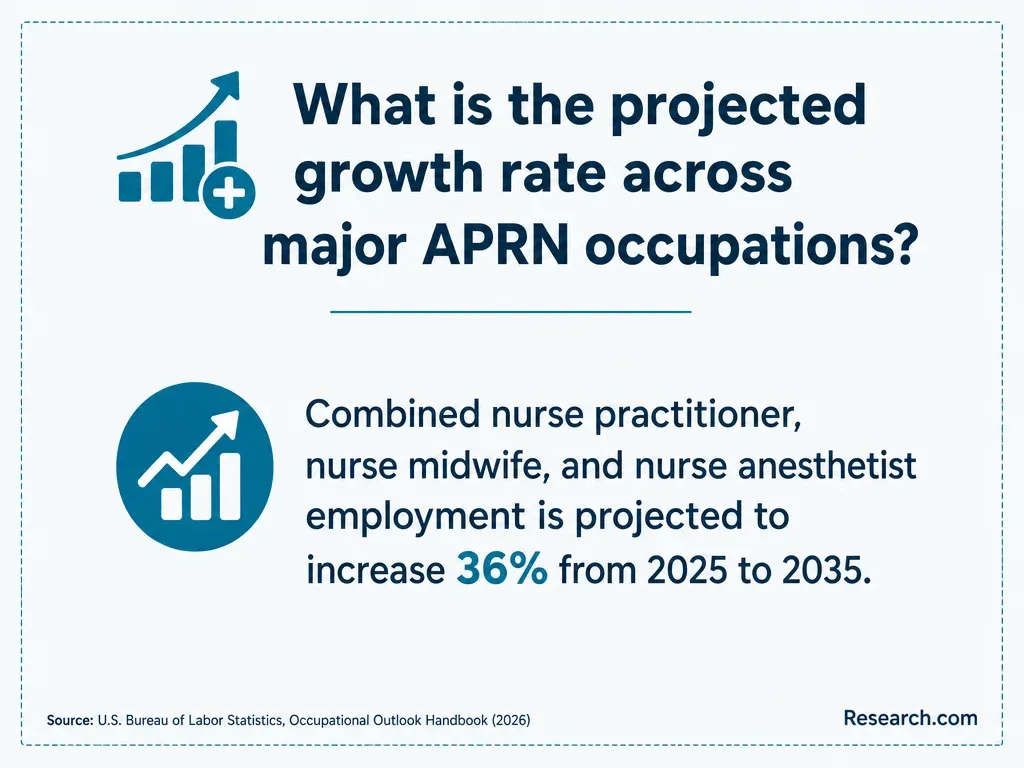
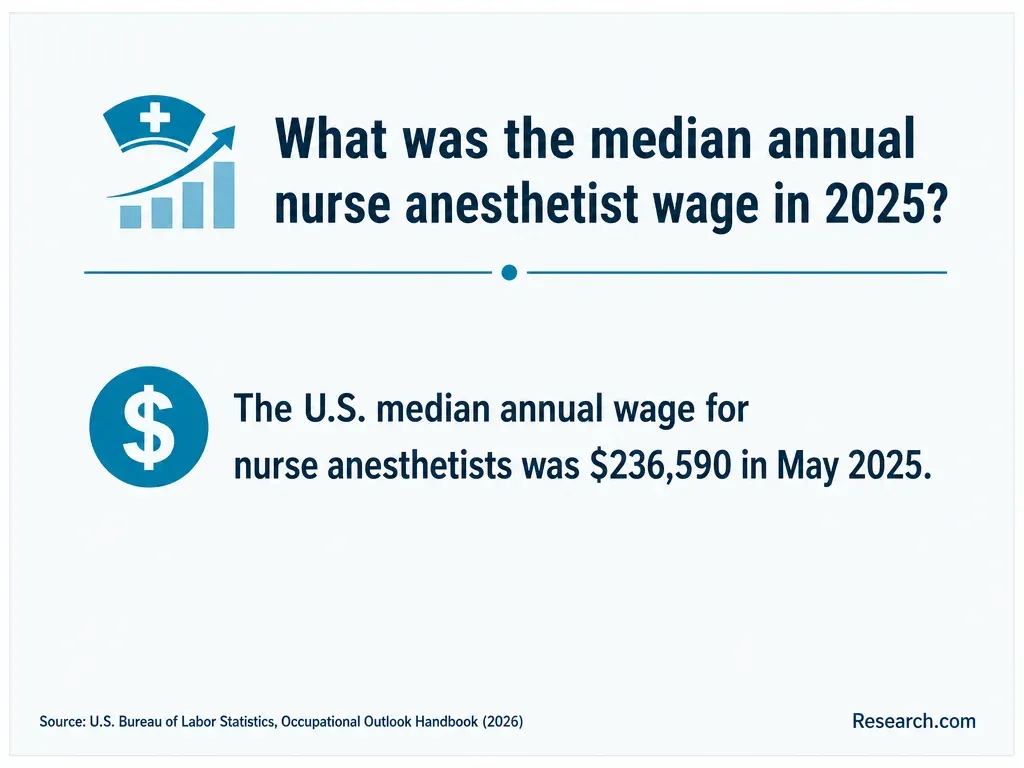
The U.S. Bureau of Labor Statistics reports wages and employment projections for nurse practitioners as an occupation, not for Idaho PNP-PC graduates separately.
Its occupational figures can indicate the broader market, but they should not be treated as a pediatric specialty salary, a new graduate's offer, or a forecast for a particular Idaho community.
For a useful local estimate, compare current Idaho pediatric primary care postings by location, experience requirement, schedule, benefits, and whether the employer will onboard a newly certified NP. Then weigh plausible offers against your full education cost and time away from RN earnings.
Comparing a PNP-PC degree with PMHNP programs compared by tuition makes sense only if you would genuinely consider either patient population; a lower-priced track or broader occupational wage figure is not a sound reason to enter the wrong specialty.
Other Things You Should Know About Nursing
Do not assume an Idaho license is enough. Check the patient's location, that state's APRN and telehealth rules, and the employer's credentialing requirements before providing care.
Possibly, if the position's duties fit the NP's education, license, and employer requirements. School nurse and school-based NP positions are not necessarily the same job.
Potentially, through appropriate additional graduate education and supervised acute-care preparation, followed by the required certification and state authorization. Primary care certification alone does not establish acute-care NP qualifications.
Tell the program before relocating. Enrollment authorization, clinical-site agreements, placement approval, and eventual licensing requirements may change with the new location, even when coursework remains online.
- Health Profession Student Clinical Training Standards | oregon.gov https://www.oregon.gov/oha/hpa/hp/pages/sct.aspx
- Third-Party Onboarding Organizations as Gatekeepers for Student Placement Decisions - PMC https://pmc.ncbi.nlm.nih.gov/articles/PMC5822945/
- Office of Clinical Placement Coordination ocpc.office.uconn.edu https://ocpc.office.uconn.edu/AGPCNPGuide
- DNP Preceptor's Toolkit | Idaho State University https://www.isu.edu/nursingpreceptor/
- Pediatric Primary Care Nurse Practitioner - College of Nursing https://nursing.osu.edu/degrees-programs/pediatric-primary-care-nurse-practitioner
- DNP: Pediatric Primary Care Nurse Practitioner | University of Maryland School of Nursing https://www.nursing.umaryland.edu/academics/doctoral/dnp/pediatric-nurse-practitioner-primary/
- RN to MSN - Pediatric Nurse Practitioner | Spring Arbor University https://online.springarbor.edu/programs/master-of-science-in-nursing/rn-to-pnp-bridge
- Graduate Clinical Compliance (GRAD-06) | Boise State Online https://www.boisestate.edu/nursing/student-resources/son-student-policy-manual/section-4-son-graduate-programs-policies/graduate-clinical-compliance-grad-06/
- Pediatric Nurse Practitioner - Primary Care - College of Nursing | University of Illinois Chicago https://nursing.uic.edu/programs/doctor-nursing-practice/dnp-focus-areas/pediatric-np-primary/
- MSN: Pediatric Primary Care Nurse Practitioner | Drexel University Catalog https://catalog.drexel.edu/graduate/collegeofnursingandhealthprofessions/pediatricprimarycarenursepractitionermsn/