2027 Online Nursing Leadership Doctorate Programs with Practicum, Internship, Clinical, or Fieldwork Requirements

Co-Founder and Chief Data Scientist
Choosing an online nursing leadership doctorate is not just about finding remote coursework; it is about confirming whether you can complete required supervised practice where you live and work. The stakes are high because the U.S. Bureau of Labor Statistics projects medical and health services manager employment to grow 23% from 2024 to 2034, much faster than average.
This guide helps nurses, administrators, educators, and advanced practice nurses compare experiential requirements, placement support, cost, timeline, accreditation, and career fit before enrolling.
Key Things You Should Know
- Most online nursing leadership doctorates with a DNP structure require supervised practice hours tied to leadership, quality improvement, policy, informatics, systems change, or an evidence-based doctoral project; PhD programs are more likely to require research experiences than clinical leadership practice.
- Online does not always mean fully remote: students may need approved local sites, qualified preceptors, campus intensives, employer permissions, background checks, immunizations, liability coverage, and state authorization clearance before beginning fieldwork.
- The career payoff depends on the role you want: the BLS reported a $117,960 median annual wage for medical and health services managers in May 2024, but salaries vary by employer, region, prior experience, and whether the doctorate supports a leadership, faculty, policy, or advanced practice pathway.
Which Online Nursing Leadership Doctorate Programs Require Practicum, Internship, Clinical, or Fieldwork Experience?
Online nursing leadership doctorate programs that are practice-focused usually require supervised experiential learning, even when lectures, discussions, advising, and scholarly work are delivered online. The most common example is the Doctor of Nursing Practice, or DNP, in executive leadership, health systems leadership, nursing administration, population health, informatics leadership, or organizational leadership.
Research-focused nursing doctorates are different. A PhD in nursing may be online or hybrid, but its required experience is usually centered on research design, teaching, scholarship, data analysis, or dissertation work rather than leadership practicum hours. If you are comparing leadership practice doctorates with research doctorates, reviewing the cheapest online nursing PhD programs can help clarify how PhD cost and structure differ from DNP leadership training.
The table below summarizes the main online doctoral pathways a nursing leadership applicant is likely to encounter. It is useful because the degree label often predicts the type of required hands-on experience more reliably than the word "online."
| Program type | Common experiential requirement | Best fit | Key caution |
| Post-MSN DNP in executive or systems leadership | Leadership practicum, DNP project hours, organizational assessment, quality improvement implementation, or policy-focused fieldwork | Experienced nurses seeking director, executive, quality, operations, informatics, or system-level leadership roles | Students may need an approved site and preceptor even if they already work in healthcare leadership. |
| Post-BSN to DNP with leadership concentration | More extensive practice hours because the student enters before the graduate nursing level is complete | BSN-prepared nurses who want a direct route to doctoral preparation | The timeline is usually longer, and clinical or leadership experiences may be sequenced across several terms. |
| DNP in nursing administration or health systems leadership | Administrative practicum, finance or operations projects, quality and safety work, population health initiatives, or executive mentorship | Nurses moving into management, service line leadership, chief nursing officer preparation, or system transformation roles | Some sites require access to confidential organizational data, which can complicate project approval. |
| DNP in informatics or data-driven leadership | Applied informatics project, workflow analysis, technology implementation, data governance, or EHR-related improvement work | Nurses interested in digital health, clinical systems, analytics, AI implementation, or informatics leadership | Students may need a site with appropriate technology access and privacy approvals. |
| Online PhD in nursing with leadership research focus | Research practicum, teaching experience, dissertation research, or scholarly residency rather than clinical leadership hours | Nurses aiming for faculty, research, policy analysis, or knowledge-generation roles | A PhD may not provide the same practice-hour structure expected in DNP leadership roles. |
| EdD or healthcare leadership doctorate with nursing focus | Fieldwork, capstone, organizational project, or applied leadership internship | Nurses interested in education leadership, workforce development, training, or interdisciplinary administration | It may not meet nursing-specific doctoral practice expectations unless clearly designed for nurses. |
Admissions requirements commonly include an active RN license, a BSN or MSN depending on entry point, graduate GPA standards, professional references, a resume, a goal statement, and sometimes national certification or leadership experience. Programs designed for working professionals may value management experience, committee work, quality improvement participation, precepting, or policy involvement because those experiences make practicum planning more realistic.
What Are the Practicum, Internship, Clinical, and Fieldwork Requirements for Online Nursing Leadership Doctorates?
These terms are often used loosely, but they are not identical. Understanding the difference helps you ask better admissions questions and avoid enrolling in a program whose in-person expectations do not fit your schedule.
The table below explains how each experiential format typically appears in an online nursing leadership doctorate. Individual schools may use different labels, so students should verify the exact hour requirement, deliverables, supervision rules, and approval process in writing.
| Requirement type | What it usually means | Common deliverables | Typical supervision |
| Practicum | Structured supervised practice connected to leadership competencies, systems improvement, or doctoral project development | Practice-hour logs, reflective summaries, leadership competency evidence, project planning documents | Faculty advisor plus site preceptor or organizational mentor |
| Internship | More immersive placement in an administrative, policy, informatics, education, or executive environment | Leadership portfolio, executive observations, strategic project, performance evaluation | Site supervisor with faculty oversight |
| Clinical experience | Direct or indirect patient-care-related practice; in leadership DNPs, this may focus on population outcomes, quality, safety, or care delivery systems rather than bedside care | Clinical-hour documentation, outcome measures, quality improvement reports, project implementation evidence | Qualified clinical or organizational preceptor approved by the program |
| Fieldwork | Applied work in a real organization, community, policy setting, academic setting, or healthcare system | Needs assessment, stakeholder interviews, policy brief, education intervention, data analysis, implementation plan | Faculty evaluator and approved field site contact |
| DNP project hours | Practice hours tied to an evidence-based project that improves care, systems, processes, policy, education, or outcomes | Proposal, implementation plan, data collection, evaluation, final presentation, manuscript or scholarly report | DNP faculty, project committee, and organizational sponsor |
Many DNP leadership programs align with national expectations that doctoral nursing practice preparation include documented post-baccalaureate practice experiences. Some post-MSN students can count verified graduate-level practice hours from prior MSN coursework, but schools differ in how they audit, approve, and cap transferred hours.
Before applying, ask the program to identify the experience in operational terms, not just catalog language. The most important items to confirm are:
- Total required hours, including whether prior MSN or certification hours may count toward the doctoral total.
- Whether hours must be completed in specific courses or can be distributed across multiple semesters.
- Whether direct patient care is required or whether indirect leadership practice is acceptable.
- Whether the doctoral project site must be the same as the practicum site.
- Whether virtual meetings, remote data work, or telehealth-related activities count toward approved hours.
- What documentation is required if the student uses a current employer as the placement site.
How Do Online Nursing Leadership Doctorate Programs Arrange Practicum and Clinical Placements?
Placement models vary widely. Some online programs maintain formal affiliation agreements and help students secure sites, while others expect students to identify a local organization and then submit it for approval.
The table below compares the major placement models. This matters because the word "online" may describe coursework delivery, not the school's responsibility for finding a usable practicum site.
| Placement model | How it works | Student advantage | Possible drawback |
| School-arranged placement | The program identifies or negotiates approved sites and preceptors for eligible students. | Less administrative burden and usually clearer compliance oversight | May be limited to certain regions, health systems, or states. |
| Student-arranged placement | The student proposes a site, preceptor, and project plan; the school reviews and approves them. | More local flexibility and potential use of the student's employer | Students carry more risk if a site declines, delays paperwork, or lacks a qualified supervisor. |
| Hybrid placement support | The student searches locally while the school provides templates, affiliation support, faculty review, and backup guidance. | Balances flexibility with institutional oversight | Support quality can vary by advisor, region, and specialty. |
| Employer-based practicum | The student completes approved leadership work at a current workplace, often outside routine job duties. | Can reduce travel and improve project relevance | Conflict-of-interest, data access, and role-boundary rules must be addressed. |
A strong placement process should be transparent before admission. Programs should be able to explain who initiates affiliation agreements, how long approvals take, what happens if a site falls through, and whether a student can begin hours before all paperwork is finalized.
Use this sequence to evaluate placement feasibility before you commit to a program:
- Request the practicum handbook, not only the marketing page, and read the hour, site, preceptor, and project approval rules.
- Ask whether your state is approved for online enrollment and experiential placement.
- Confirm whether the school, the student, or both are responsible for finding sites.
- Identify two possible local sites before enrollment in case your preferred organization cannot sign an agreement.
- Ask how many weeks affiliation agreements typically take and whether delays can postpone graduation.
- Verify whether your current employer can be used and whether your practicum activities must differ from your paid job duties.
- Get the required preceptor qualifications in writing before asking a manager or executive to supervise you.
Many students can complete leadership practicum or fieldwork near home, but local completion is never automatic. It depends on state authorization, site availability, preceptor qualifications, affiliation agreements, the type of project, and whether the program allows students to use their workplace.
This is especially important for nurses comparing different graduate nursing routes. Students looking at online nurse practitioner programs often encounter similar placement questions, but leadership doctorates may require organizational access rather than patient panels, clinical logs, or specialty-specific direct care.
Local fieldwork is most realistic when the student already has access to a healthcare organization, school of nursing, public health department, quality office, policy group, informatics team, or community health partner willing to support a doctoral project. It becomes harder when the student lives in a rural area, works for a small employer, needs access to protected data, or resides in a state where the school lacks authorization or affiliation capacity.
The table below shows common local placement scenarios and what students should verify before assuming the site will work.
| Local placement option | Why it can work | What to verify |
| Current hospital or health system | Access to leaders, data, quality initiatives, and interprofessional teams | Employer approval, data-use rules, preceptor qualifications, and separation from routine job duties |
| Ambulatory clinic, community health center, or public health agency | Good fit for population health, access, care coordination, and quality projects | Whether the site has enough scope, data, and leadership infrastructure for doctoral-level work |
| Academic nursing program | Useful for education leadership, curriculum, simulation, faculty development, and student outcomes projects | Whether education-focused fieldwork meets the program's nursing leadership competencies |
| Virtual or hybrid healthcare organization | May support informatics, telehealth, workflow, or analytics projects | Whether remote activities count as approved practice hours and how supervision is documented |
| Policy, nonprofit, or professional association setting | Strong fit for advocacy, workforce, regulation, and systems-change projects | Whether the organization can provide a qualified preceptor and measurable project outcomes |
Students should be cautious if a program advertises national online access but cannot clearly answer placement questions for their state or region. A good rule is to verify site feasibility before paying a deposit, especially if relocation, reduced work hours, or a delayed graduation date would create financial strain.
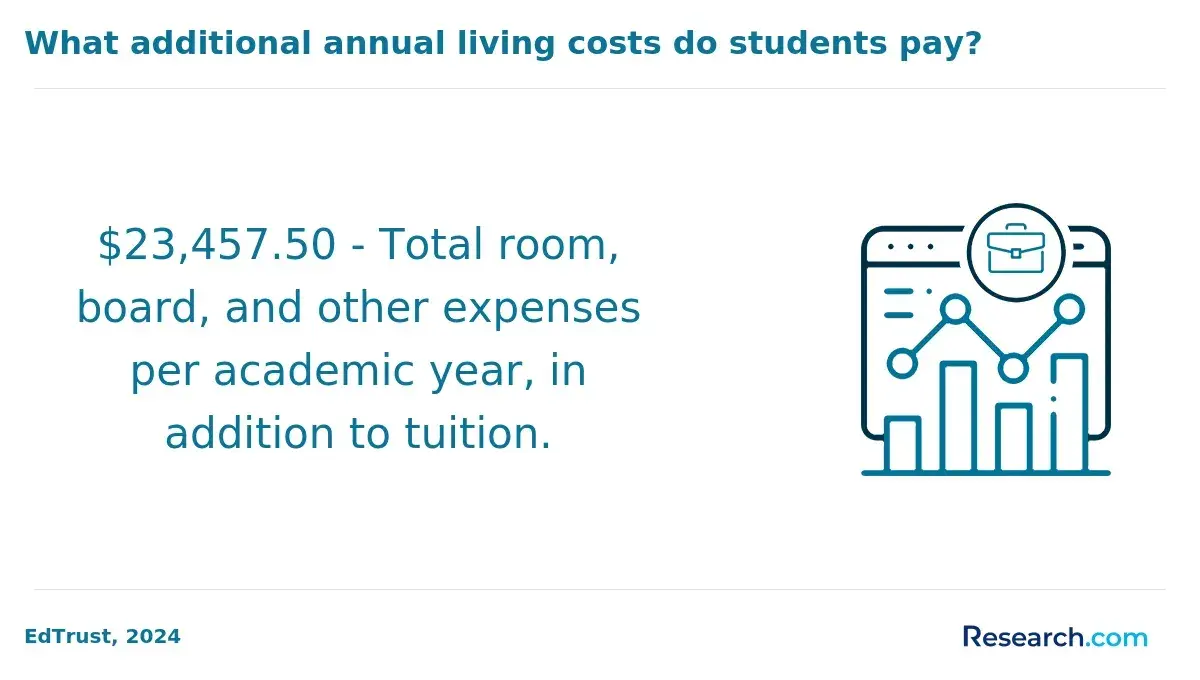
Experiential requirements can affect both direct and indirect costs. Tuition is only part of the calculation; students may also pay for background checks, immunizations, drug screening, liability insurance, travel, parking, technology, conference-style campus intensives, project materials, and unpaid time away from work.
Federal borrowing limits also matter when estimating affordability. Graduate and professional students may borrow up to $20,500 per academic year through Direct Unsubsidized Loans, so students whose annual doctoral costs exceed that amount may need savings, employer tuition benefits, payment plans, scholarships, or Grad PLUS borrowing.
The table below separates common tuition-related costs from fieldwork-related costs. This helps students compare programs with similar credit prices but very different practicum logistics.
| Cost category | How experiential requirements can increase cost | What to ask the school |
| Tuition and fees | Practice courses, project credits, continuation credits, or delayed completion terms can add charges. | Are practicum, project, and continuation credits billed at the same rate as didactic courses? |
| Compliance requirements | Background checks, health records, CPR renewal, drug screening, and liability insurance may be required before placement. | Which compliance costs are included in tuition and which are paid separately? |
| Travel and lodging | Campus intensives, executive immersions, or distant approved sites may require transportation and overnight stays. | Are any in-person intensives required, and how often do they occur? |
| Work schedule impact | Some practicum activities occur during weekday business hours when administrators, executives, and committees meet. | Can hours be completed evenings or weekends, or must they align with organizational meetings? |
| Project expenses | Printing, survey tools, data software, education materials, or implementation resources may not be covered by the site. | Are students expected to fund project materials or technology subscriptions? |
| Delay risk | Late affiliation agreements, unavailable preceptors, or project approval delays can extend enrollment. | What happens financially if placement approval delays a required course? |
Timeline also depends on entry point. A post-MSN DNP leadership program is often shorter than a post-BSN to DNP pathway because the student has already completed graduate nursing coursework. However, students who need to build a project site from scratch, collect organizational approvals, or wait for a qualified preceptor may take longer than the advertised plan of study.
To estimate the real timeline, do not rely only on "complete in as little as" language. Map each practicum course to your work calendar, identify peak job responsibilities, and ask whether missed placement milestones push students into the next academic term.
Online nursing leadership doctorates are often flexible in coursework but less flexible in supervised practice. Weekly discussion boards and asynchronous lectures may fit around work, while practicum hours may require meetings with executives, committees, clinical governance groups, informatics teams, or community partners during standard business hours.
Flexibility depends on what the program is trying to assess. A leadership practicum must show doctoral-level competencies, so programs may limit purely observational hours, routine employment tasks, or activities that do not produce measurable outcomes. Students comparing simpler admission pathways, such as the easiest NP program, should not assume that easier entry or online delivery means fewer supervised expectations in a doctoral leadership track.
The table below shows where flexibility commonly exists and where programs are usually stricter.
| Requirement area | Often flexible | Usually less flexible |
| Course delivery | Asynchronous lectures, online discussions, recorded seminars, virtual advising | Mandatory live seminars, defense presentations, synchronous project meetings |
| Site location | Local employers, community agencies, academic settings, policy organizations, or hybrid work environments if approved | States where the school lacks authorization or sites that cannot sign affiliation agreements |
| Practice schedule | Some project planning, literature review, data analysis, and documentation can occur outside business hours | Executive meetings, committee work, stakeholder interviews, and supervised activities may require weekday availability |
| Preceptor choice | Programs may accept nurse executives, advanced practice nurses, administrators, faculty, informatics leaders, or public health leaders | Preceptors must meet program qualifications and may need graduate or doctoral preparation |
| Project topic | Students may align projects with workplace needs, career goals, quality improvement, policy, education, or systems change | Projects must meet doctoral scope, ethical standards, measurable outcome expectations, and faculty approval |
Common mistakes usually come from assuming that online flexibility applies to every requirement. Avoid these errors before enrollment:
- Assuming an online doctorate can be completed entirely from home without any approved site, preceptor, campus visit, or live project defense.
- Confusing a practicum with a casual job shadowing experience instead of a supervised doctoral learning requirement.
- Choosing a program before confirming whether your state, employer, or preferred site is eligible.
- Underestimating unpaid time, travel, parking, compliance paperwork, and administrative delays.
- Assuming the school will automatically secure a convenient local placement when its policy actually requires student-arranged sites.
- Failing to verify whether your supervisor can also serve as your preceptor or whether that creates a conflict of interest.
Experiential requirements are closely tied to program quality, but they do not automatically create or expand licensure eligibility. A nursing leadership DNP may strengthen administrative, systems, policy, informatics, education, or quality improvement preparation, while an APRN-focused DNP may have separate clinical requirements tied to nurse practitioner, nurse anesthetist, nurse midwife, or clinical nurse specialist preparation.
For nursing programs, institutional accreditation and nursing programmatic accreditation are both important. Students should look for regional or national institutional accreditation recognized by the U.S. Department of Education and, when applicable, nursing accreditation from bodies such as CCNE or ACEN. Accreditation can affect federal financial aid eligibility, transfer credit, employer recognition, certification eligibility, and admission to later academic programs.
The table below explains the main approval layers students should check. This is important because a program can be academically legitimate yet still unsuitable for a student's state, licensure goal, or employer requirement.
| Requirement to verify | Why it matters | Who to contact |
| Institutional accreditation | Supports federal aid eligibility, credit recognition, and baseline institutional quality review | University accreditation page and accreditor database |
| Nursing program accreditation | Signals that the nursing curriculum and practice expectations have been externally reviewed | School of nursing and accrediting body directory |
| State authorization | Determines whether the school can enroll online students and supervise field experiences in a particular state | Program advisor and state authorization office |
| Licensure alignment | Leadership DNPs usually do not grant new APRN licensure unless they include an APRN track | State board of nursing and program director |
| Certification relevance | Some leadership certifications may value graduate education and experience, but requirements vary by certifying body | Certification organization and employer HR office |
| Site compliance | Affiliation agreements, privacy rules, immunization records, and supervisor qualifications protect students and sites | Clinical placement office and practicum coordinator |
Students should be especially careful if they are using a leadership doctorate to support a role that touches licensure, credentialing, or scope of practice. Fieldwork hours may satisfy a degree requirement without satisfying a state board, certification board, or employer policy.
Support quality can make the difference between a manageable online doctorate and a frustrating one. Strong programs provide clear handbooks, early placement planning, faculty advisors, project templates, site agreement support, compliance tracking, and escalation procedures when a placement problem occurs.
The table below identifies the types of support that matter most during doctoral fieldwork. Prospective students should ask for examples, not just general assurances that "support is available."
| Support type | What strong support looks like | Red flag |
| Placement advising | Students receive early guidance on eligible sites, preceptor qualifications, and state restrictions. | Advisors cannot explain who is responsible for finding the site. |
| Affiliation agreement help | The school provides legal templates and communicates with site administrators. | Students are told to handle legal agreements independently. |
| Faculty mentorship | Faculty help students narrow a feasible doctoral project and connect it to competencies. | Students receive little feedback until late in the proposal stage. |
| Project approval process | Milestones, rubrics, ethics review steps, and data-use expectations are clearly sequenced. | Requirements change frequently or are communicated only after enrollment. |
| Preceptor preparation | Preceptors receive role expectations, evaluation forms, contact information, and documentation rules. | Preceptors are expected to supervise without orientation. |
| Problem resolution | The program has a defined process for replacing a preceptor or approving a backup site. | No clear plan exists if a site withdraws or a project becomes infeasible. |
When speaking with admissions staff, go beyond broad questions about student services. Ask practical questions that reveal how the program works when real placement issues arise:
- How early do students begin planning practicum sites and doctoral projects?
- Who reviews whether a site is appropriate for nursing leadership practice?
- How many students in my state have completed placements recently?
- What happens if my site cannot provide required data or withdraws from the agreement?
- Can I speak with a current student or graduate about practicum planning?
- What is the typical faculty response time during proposal, implementation, and final project stages?
Practicum and clinical leadership experiences can improve career readiness when they help students produce evidence of strategic thinking, project management, outcomes evaluation, interprofessional collaboration, budgeting awareness, policy analysis, or organizational change. The value is strongest when the placement aligns with the role the student wants after graduation.
The labor market context is favorable for healthcare leadership roles, but not automatic. The BLS reported a $117,960 median annual wage for medical and health services managers in May 2024, and leadership doctorate graduates may compete for roles where prior management experience, organizational results, and communication skills matter as much as the credential itself.
The table below connects common nursing leadership doctorate experiences to potential career directions. It should be read as a planning tool, not a guarantee of employment or salary.
| Experiential focus | Skills developed | Roles it may support |
| Executive leadership practicum | Strategic planning, governance, resource allocation, executive communication | Nurse manager, director of nursing, chief nursing officer pathway, service line leader |
| Quality and safety project | Outcome measurement, root-cause analysis, implementation science, regulatory readiness | Quality director, patient safety leader, performance improvement specialist |
| Informatics or digital health fieldwork | Workflow redesign, data interpretation, technology adoption, EHR optimization | Nursing informatics leader, clinical systems manager, digital health project lead |
| Population health or public health leadership | Community assessment, equity-focused planning, care coordination, policy implementation | Population health director, public health nursing leader, community program administrator |
| Academic or workforce development project | Curriculum design, staff development, competency assessment, simulation or education evaluation | Nursing faculty, professional development leader, academic program administrator |
| Policy or advocacy fieldwork | Policy analysis, stakeholder engagement, legislative communication, systems-level thinking | Policy advisor, association leader, government or nonprofit health program manager |
Students comparing leadership and advanced practice income paths should look at role-specific data rather than assuming one nursing doctorate has a universal return on investment. For example, clinical APRN compensation can differ substantially by specialty and state, so reviewing resources such as psychiatric nurse practitioner salary data may help applicants decide whether they want a leadership doctorate, a clinical practice route, or a combination of both.
Current employer expectations are also changing. Healthcare organizations increasingly value leaders who can manage workforce shortages, quality metrics, digital transformation, AI-enabled tools, patient safety, and financial constraints. A practicum that produces a measurable project can give students interview-ready evidence of those competencies.
How Should Students Choose an Online Nursing Leadership Doctorate With Experiential Requirements?
The best program is not always the one with the fewest hours, lowest tuition, or fastest advertised timeline. The right choice is the program whose experiential requirements match your career goal, state, schedule, employer access, finances, and tolerance for placement responsibility.
Use the following decision process to compare programs before applying or depositing. It is designed to help you test whether the degree is realistic, not just attractive on paper.
- Define the role you want after graduation, such as executive leader, quality director, informatics leader, faculty member, policy specialist, or advanced practice leader.
- Choose the degree type that matches that goal: DNP for practice leadership, PhD for research and scholarship, or an education-focused doctorate for academic or workforce leadership.
- Request the practicum or fieldwork handbook from every program on your shortlist.
- Compare total required hours, accepted transfer hours, project expectations, campus intensives, and live meeting requirements.
- Confirm state authorization and placement eligibility for your home state before applying.
- Ask whether the school arranges sites, supports student-arranged sites, or expects students to secure placements independently.
- Identify likely local sites and ask whether your employer can serve as the practicum location.
- Calculate total cost, including tuition, fees, compliance expenses, travel, unpaid time, and possible delayed terms.
- Verify accreditation, licensure implications, preceptor qualifications, and whether the program meets any employer or certification expectations you care about.
- Speak with current students or alumni about placement delays, faculty responsiveness, and project approval timelines.
Students who benefit most from these programs are usually experienced nurses who want to lead systems change and can access a healthcare, academic, policy, or community setting for applied work. Students should be cautious if they need a fully remote experience, cannot adjust work hours, live in a restricted state, lack a possible site, or are seeking APRN licensure from a non-APRN leadership doctorate.
Final red flags include vague placement language, no written preceptor criteria, unclear state authorization, pressure to enroll before placement questions are answered, no backup process for failed sites, and marketing that emphasizes convenience without explaining practicum realities. A high-quality online nursing leadership doctorate should be transparent about both the flexibility it offers and the in-person responsibility it requires.
Other Things You Should Know About Nursing Leadership
Most DNP leadership programs require a DNP project rather than a traditional dissertation. PhD programs usually require a dissertation based on original research, while applied education or healthcare leadership doctorates may require a capstone, dissertation-in-practice, or organizational project.
Not always. Some programs are designed for post-MSN nurses, while others offer BSN-to-DNP pathways. Post-BSN options usually take longer because they include graduate nursing coursework before or alongside doctoral-level leadership preparation.
Many nursing doctorate programs no longer require the GRE, but policies vary. Applicants should check each school's admission page and ask whether GRE waivers, GPA minimums, leadership experience, interviews, writing samples, or professional portfolios are used instead.
Transfer credits may shorten the academic portion of the program if the school accepts prior graduate coursework. Practice hours are reviewed separately, so students should ask how prior MSN clinical or practicum hours are documented, audited, and applied toward doctoral requirements.
- Online Doctor of Nursing Practice (DNP) | DNP Degree | University of Phoenix https://www.phoenix.edu/online-nursing-degrees/nursing-practice-doctoral-degree.html
- Clinical Internship https://www.childlife.org/certification/become-certified/clinical-internship
- Do DNP Programs Include an Internship? https://www.doctorofnursingpracticednp.org/do-dnp-programs-include-an-internship/
- Types of Internships for Health and Medicine Majors | Career Advice & Interview Tips | WayUp Guide https://www.wayup.com/guide/types-internships-health-medicine-majors/
- Online DNP Program https://www.chamberlain.edu/academics/nursing-school/doctor-of-nursing-practice
- Online DNP Program - Doctor of Nursing Practice | Aspen University https://www.aspen.edu/nursing/dnp/
- Clinical Leadership Practicum Orientation and Training https://www.kumc.edu/school-of-nursing/about/preceptors/bachelor-of-science-in-nursing-preceptor/clinical-leadership-practicum-orientation-and-training.html
- Can You Earn a DNP Online? | All Nursing Schools https://www.allnursingschools.com/dnp/online-or-on-campus/
- 22 Skills You'll Gain With a DNP Degree (Nursing) https://www.baypath.edu/news/bay-path-university-blogs/post/22-skills-you-ll-gain-with-a-dnp-degree-nursing/