
2027 Online Nursing Leadership Doctorate Programs with No Dissertation Requirement

Co-Founder and Chief Data Scientist
Choosing a nursing leadership doctorate often comes down to one question: do you need a traditional dissertation, or will an applied doctoral project serve your goals better? The U. S. Bureau of Labor Statistics reported a $117,960 median annual wage for medical and health services managers in May 2024, making advanced leadership preparation a meaningful career investment.
This guide is for nurses comparing online doctoral options, especially DNP and leadership-focused programs. You will learn what "no dissertation" really means, how to verify quality, and how to choose a program that fits your timeline, budget, and career path.
Key Things You Should Know
- Yes, many online nursing leadership doctorates do not require a traditional dissertation, but legitimate programs usually replace it with a DNP scholarly project, capstone, quality improvement project, or applied practice project.
- No-dissertation does not mean no research: accredited DNP programs still require evidence appraisal, data analysis, writing, practicum hours, and a final project tied to real nursing or healthcare leadership problems.
- Career fit matters: the BLS reported $117,960 median pay for medical and health services managers in May 2024, but academic research careers may still favor dissertation-based PhD preparation.
Which Online Nursing Leadership Doctorate Programs Do Not Require a Dissertation?
Online nursing leadership doctorates without a traditional dissertation are usually professional doctorates, especially Doctor of Nursing Practice programs with executive leadership, healthcare systems leadership, nursing administration, or organizational leadership tracks. These programs are built around applying research to improve systems, patient outcomes, workforce performance, safety, or policy rather than producing original theory through a dissertation.
The table below summarizes common types of online nursing leadership doctoral programs that typically use dissertation alternatives. Because schools can change curriculum language, students should verify the current catalog, practicum requirements, and final project expectations before applying.
| Program type | Common online format | Dissertation requirement | Typical final requirement | Best fit |
| DNP in Executive Leadership | Mostly online, often with virtual or short in-person intensives | Usually no traditional dissertation | DNP scholarly project or executive leadership project | Nurse executives, directors, chief nursing officers, and system-level leaders |
| DNP in Healthcare Systems Leadership | Online coursework with practicum hours completed locally | Usually no traditional dissertation | Systems improvement, quality improvement, or practice change project | Nurses focused on operations, quality, safety, informatics, or population health leadership |
| DNP in Nursing Administration | Online or hybrid, depending on practicum and residency design | Usually no traditional dissertation | Administrative capstone or organizational practice project | Managers and administrators seeking senior leadership roles |
| EdD in Nursing Education or Healthcare Leadership | Online or low-residency | Varies by school | Applied dissertation, dissertation-in-practice, or capstone | Nurse educators, academic administrators, and leadership trainers |
| PhD in Nursing Leadership or Health Systems | Online, hybrid, or low-residency | Usually requires a dissertation | Original research dissertation | Students aiming for research faculty, grant-funded research, or theory development |
Programs that advertise "no dissertation" may still require a substantial final paper, manuscript, portfolio, presentation, or project defense. The safest way to compare options is to ask for the name of the final doctoral requirement, the number of project courses, whether the project requires IRB review, and whether students must collect or analyze organizational data.
What Replaces the Dissertation in an Online Nursing Leadership Doctorate?
In a nursing leadership doctorate, the dissertation is most often replaced by an applied doctoral project. The difference is not the absence of scholarship; it is the purpose of the scholarship. A dissertation usually contributes new knowledge to the research literature, while a DNP project applies existing evidence to improve practice, leadership, policy, or organizational outcomes.
The comparison below shows how the most common doctoral completion models differ. This matters because two programs can both say "no dissertation" while requiring very different levels of research design, writing, implementation, and organizational engagement.
| Completion model | Main purpose | Research expectation | Typical deliverable | Common in nursing leadership? |
| Traditional dissertation | Create original scholarly research | High emphasis on methodology, theory, data collection, and contribution to literature | Multi-chapter dissertation and defense | Common in PhD programs |
| DNP scholarly project | Apply evidence to improve practice or systems | Evidence review, project design, implementation, outcome evaluation, and dissemination | Final project paper, presentation, poster, or manuscript-style report | Very common in DNP leadership programs |
| Capstone project | Demonstrate mastery of leadership competencies | Varies from applied analysis to structured organizational intervention | Capstone report, portfolio, or presentation | Common in professional doctorates |
| Dissertation-in-practice | Solve a real problem of practice using scholarly methods | Applied inquiry, data analysis, stakeholder engagement, and improvement cycles | Practice-based doctoral report or defense | More common in EdD-style programs |
A strong dissertation alternative usually includes several stages that working nurses should understand before enrolling. These stages can affect how much employer support, site access, and faculty mentoring you will need.
- Problem identification: the student defines a leadership, quality, safety, workforce, access, or systems issue that can be addressed in a real practice setting.
- Evidence review: the student evaluates current research and professional standards to justify an intervention or leadership strategy.
- Project planning: the student develops a feasible implementation plan, stakeholder map, evaluation approach, and timeline.
- Implementation or simulation: the student carries out the project when permitted, or completes an approved alternative if site or policy constraints limit implementation.
- Evaluation and dissemination: the student reports outcomes, limitations, leadership implications, and recommendations for practice.
The biggest mistake is assuming a capstone is just a long term paper. In a reputable nursing leadership doctorate, the final project should show that you can translate evidence into measurable improvement in a healthcare or education setting.
Are Online Nursing Leadership Doctorate Programs Without Dissertations Legitimate and Accredited?
Yes, online nursing leadership doctorate programs without dissertations can be legitimate and accredited. The key is not whether the program has a dissertation; the key is whether the institution is institutionally accredited, whether the nursing program has appropriate professional accreditation when applicable, and whether the curriculum matches recognized doctoral expectations for nursing practice or leadership.
For nursing doctorates, students should look for institutional accreditation and, when relevant, programmatic accreditation from a recognized nursing accreditor such as CCNE or ACEN. Accreditation matters because it can affect federal financial aid eligibility, employer recognition, transferability, academic credibility, and whether the degree supports certain faculty or leadership requirements.
Use the following checks before treating any "no dissertation" program as credible. These steps help distinguish a legitimate applied doctorate from a shortcut credential.
- Confirm institutional accreditation through the school's official accreditation page and the U.S. Department of Education-recognized accreditor listed there.
- Check whether the nursing program itself is accredited if the degree is a DNP or otherwise tied to nursing practice preparation.
- Read the graduate catalog, not just the marketing page, to verify whether the final requirement is a DNP project, capstone, applied project, portfolio, or dissertation-in-practice.
- Ask whether the program requires practicum hours, project supervision, IRB or quality improvement review, and a final oral presentation or defense.
- Verify state authorization if you will complete online coursework or practicum experiences outside the school's home state.
- Ask your employer, target university, or professional board whether the degree type and accreditation meet their requirements.
A common red flag is a program that emphasizes speed and "no dissertation" but gives vague answers about accreditation, faculty credentials, practicum placement, or final project review. If you are comparing research-focused options, it may also help to review cheapest online nursing PhD programs so you understand how dissertation-based doctorates differ in purpose and structure.
Are No-Dissertation Online Nursing Leadership Doctorate Programs Easier to Complete?
No-dissertation online nursing leadership doctorates are often more practical for working professionals, but they are not automatically easier. The workload shifts from original academic research to applied evidence-based leadership work. Students may find that easier if they already have access to healthcare settings, organizational data, mentors, and leadership problems they want to solve.
The better question is whether the work aligns with your strengths. A dissertation-based PhD may be harder for students who do not want to design original research, while a DNP project may be harder for students who lack access to a practice site or who are uncomfortable leading change across teams.
Students often underestimate these parts of no-dissertation programs. Knowing these requirements early helps prevent delays near the end of the degree.
- Writing volume: DNP projects still require formal academic writing, evidence synthesis, documentation of methods, and outcome interpretation.
- Site access: leadership projects may require permission from a healthcare organization, school of nursing, clinic, or quality department.
- Data use: even applied projects may require baseline data, outcome measures, staff feedback, or process metrics.
- Practicum hours: post-master's and BSN-to-DNP pathways often include supervised practice hours that must be completed in approved settings.
- Faculty feedback cycles: final projects usually require multiple revisions, committee input, and formal approval before completion.
Students searching for the "easiest" route should be careful. A program that fits your background can feel more manageable, but quality nursing doctorates should still be rigorous. If you are comparing advanced nursing pathways more broadly, reviewing what makes an easiest NP program manageable can help you think about schedule design, clinical placement support, and academic fit without assuming that "easy" means low effort.
How Long Does It Take to Complete an Online Nursing Leadership Doctorate Without a Dissertation?
Completion time depends on entry point, enrollment intensity, transfer credits, practicum requirements, and how early the student begins the final project. Post-master's DNP leadership programs are often shorter than BSN-to-DNP pathways because master's-prepared nurses may already have graduate credits and advanced clinical or leadership preparation.
The table below summarizes common timeline patterns. These are planning ranges, not promises, because programs may use different calendars, credit loads, practicum rules, and project approval processes.
| Pathway | Typical student background | Common pace | Main timeline risks |
| Post-master's DNP in Nursing Leadership | MSN-prepared registered nurse or advanced practice nurse | Often designed for part-time working professionals | Delayed project approval, practicum site issues, limited transfer credit |
| BSN-to-DNP with leadership focus | BSN-prepared registered nurse entering doctoral study directly | Longer because it includes graduate core and doctoral coursework | Heavy course load, practicum sequencing, changing work schedules |
| EdD in Nursing or Healthcare Leadership | Nurse educator, administrator, or healthcare professional | Often cohort-based with structured project milestones | Applied dissertation requirements, residency scheduling, committee review |
| PhD in Nursing Leadership or Health Systems | Research-oriented nurse or future faculty member | Usually longer and more research-intensive | Dissertation topic development, data collection, publication expectations |
Students who want the fastest legitimate path should focus less on the phrase "no dissertation" and more on program design. Ask whether project courses begin early, whether the school helps secure practicum placements, whether students can use their workplace as a project site, and whether the final project is completed in stages instead of being left until the end.
How Much Do Online Nursing Leadership Doctorate Programs Without Dissertations Cost?
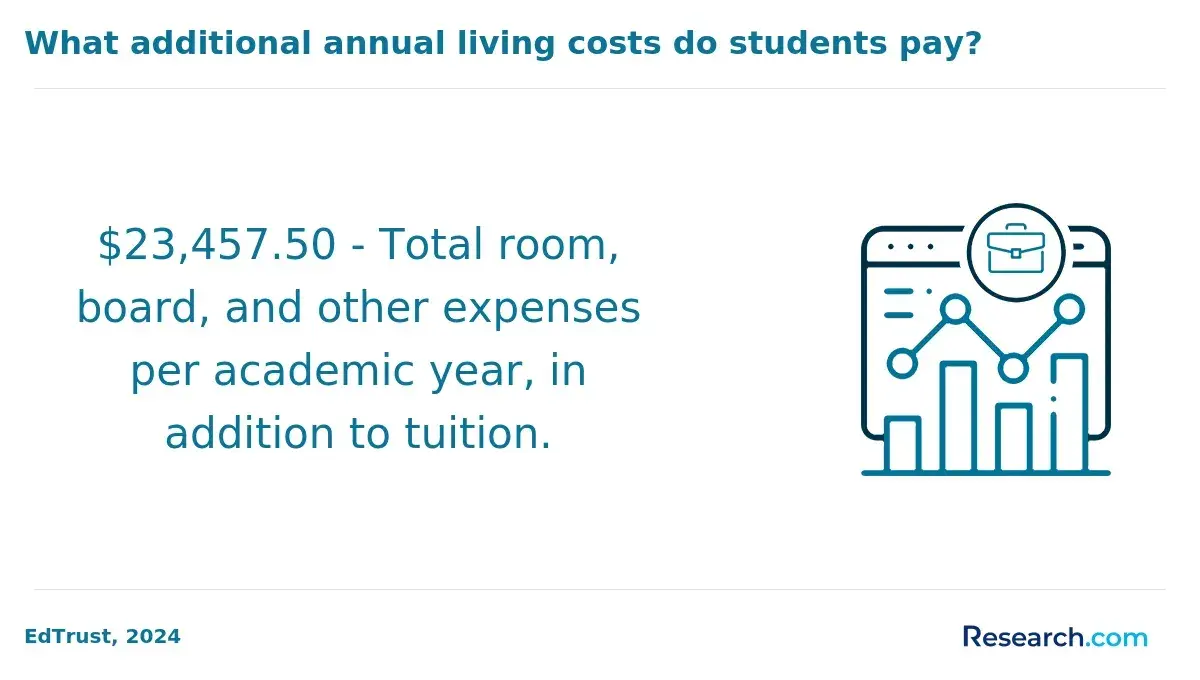
The cost of an online nursing leadership doctorate without a dissertation depends on tuition per credit, total credits, program fees, travel for residencies, practicum costs, technology fees, books, and whether the student receives employer tuition assistance. A no-dissertation format does not automatically reduce cost, because the final DNP project or capstone may require several project courses and faculty supervision.
The financial trade-off is especially important for working nurses who may borrow for graduate study. For federal student loans first disbursed in the 2024-25 academic year, graduate Direct Unsubsidized Loans carried an 8.08% fixed interest rate, which means borrowing decisions can materially affect the real cost of a doctorate over time.
The table below shows the main cost categories to compare across programs. It is more useful than comparing tuition alone because online doctoral programs often differ in fees, residency requirements, and project-related expenses.
| Cost factor | Why it matters | What to ask the school |
| Tuition per credit | This is the largest direct cost for most students | Is tuition charged at a flat online rate, in-state rate, or out-of-state rate? |
| Total required credits | A lower per-credit rate can still be expensive if the program requires many credits | How many credits are required after transfer review? |
| Residency or intensive travel | Some online programs require campus visits, hotel stays, transportation, and time away from work | Are any in-person sessions required, and how often? |
| Practicum and project costs | Students may need background checks, health documentation, site fees, software, or data tools | Are there additional costs for practicum approval or project completion? |
| Time cost | Part-time study may protect income, while full-time study may shorten the timeline | Can students slow down or pause without extra fees or re-enrollment penalties? |
| Employer support | Tuition assistance can change the return-on-investment calculation | Does the program qualify for employer reimbursement or partnership discounts? |
Before enrolling, request a written total-cost estimate based on your entry point, transfer credits, and expected pace. Also ask whether tuition can change during the program and whether project, residency, or practicum courses carry different fees.
Who Benefits Most From an Online Nursing Leadership Doctorate Without a Dissertation?
A no-dissertation online nursing leadership doctorate is usually best for nurses who want to lead practice improvement, manage healthcare teams, influence policy, teach practice-oriented content, or move into executive roles. It is less ideal for students whose main goal is to become a research scientist, tenure-track research faculty member, or principal investigator on externally funded studies.
This pathway often fits students with the following goals and working conditions. The list can help you decide whether an applied doctorate matches your situation before you invest time and money.
- Experienced registered nurses who want senior roles in healthcare operations, quality, safety, informatics, population health, or nursing administration.
- Nurse managers or directors who already see system problems at work and want to build a doctoral project around a real organizational need.
- Advanced practice registered nurses who want leadership preparation beyond clinical practice, especially in service lines, clinics, or integrated care systems.
- Nurse educators who want practice-focused doctoral preparation rather than a research-intensive PhD.
- Working professionals who need online coursework, local practicum options, and a final project connected to their current workplace or community.
Students should be cautious if they are choosing a no-dissertation doctorate mainly to avoid writing, research, or complex projects. They should also be cautious if their target employer specifically requires a PhD or a traditional dissertation for research faculty positions.
Nurses still exploring clinical graduate pathways may want to compare leadership doctorates with online nurse practitioner programs, since NP programs prepare students for a different type of advanced role with licensure and clinical practice implications.
How Does a No-Dissertation Online Nursing Leadership Doctorate Affect Career Opportunities?
A no-dissertation nursing leadership doctorate can support advancement into roles where employers value applied leadership, systems thinking, evidence-based practice, and the ability to improve outcomes. Common roles include nurse executive, director of nursing, chief nursing officer, quality improvement leader, clinical operations director, healthcare consultant, nursing faculty member, and population health leader.
The degree's value depends on the role. Hospitals and health systems may value a DNP leadership project because it demonstrates practical improvement skills. Research universities may still prefer or require a PhD for research-track faculty jobs. Teaching-focused schools may consider DNP-prepared faculty for clinical, practice, simulation, or leadership courses, but requirements vary by institution and accreditor expectations.
Career outcomes also depend on licensure and specialization. A nursing leadership doctorate does not, by itself, create nurse practitioner authority, prescriptive authority, or a new clinical license. APRNs evaluating leadership doctorates alongside clinical specialization should separate leadership ROI from clinical earnings data, such as state-level psychiatric nurse practitioner salary information.
Technology is also changing leadership expectations. Nurse leaders increasingly need to evaluate electronic health record workflows, AI-assisted documentation, predictive staffing tools, telehealth operations, cybersecurity risks, and data dashboards. A strong doctoral project can help students demonstrate that they can use evidence and data responsibly rather than simply adopting new tools because they are popular.
How Do No-Dissertation Online Nursing Leadership Doctorates Compare With Traditional Doctorates?
No-dissertation online nursing leadership doctorates and traditional dissertation-based doctorates are both legitimate when properly accredited, but they serve different purposes. The right choice depends on whether your main goal is applied leadership or original research.
The table below compares the two pathways across the decision factors that matter most to working nurses. Use it to identify which structure matches your career target rather than assuming one is universally better.
| Decision factor | No-dissertation DNP or applied doctorate | Traditional PhD or dissertation-based doctorate |
| Primary purpose | Apply evidence to improve nursing practice, systems, education, or leadership outcomes | Generate original research and contribute to nursing science |
| Final requirement | DNP project, capstone, applied project, portfolio, or dissertation-in-practice | Original dissertation with formal research design and defense |
| Best career fit | Executive leadership, quality improvement, healthcare administration, practice leadership, teaching practice-focused courses | Research faculty, nurse scientist, policy researcher, grant-funded research roles |
| Research intensity | Applied research literacy, evidence translation, project evaluation, and dissemination | Advanced methodology, theory, independent research, and publication-oriented scholarship |
| Workplace connection | Often built around real organizational problems and practice sites | Often built around research questions, datasets, populations, or theoretical gaps |
| Employer perception | Strong when the employer values practice leadership and accredited doctoral preparation | Strong when the employer values research preparation, faculty scholarship, or scientific inquiry |
A dissertation-free doctorate makes sense when your professional identity is centered on leading change. A dissertation-based doctorate makes more sense when you want to design independent studies, publish original research, mentor doctoral researchers, or compete for research-intensive academic roles. Cost can also influence the comparison; students evaluating research doctorates may want to review other programs alongside DNP options to compare both structure and affordability.
How Should Students Choose an Online Nursing Leadership Doctorate Without a Dissertation?
Students should choose a no-dissertation online nursing leadership doctorate by evaluating the full academic structure, not just the marketing phrase "no dissertation." The strongest programs are transparent about accreditation, project expectations, practicum support, faculty expertise, student outcomes, and total cost.
Use this step-by-step process to compare programs in a practical way. It will help you avoid choosing a program that looks convenient but does not match your career goal or completion needs.
- Start with your target role: decide whether you want executive leadership, nursing administration, education, quality improvement, informatics, policy, consulting, or research.
- Match the degree type to that role: choose a DNP or applied doctorate for practice leadership, and consider a PhD if original research is central to your goal.
- Verify accreditation: check institutional accreditation and nursing program accreditation where applicable before reviewing cost or speed.
- Read the catalog: confirm the exact final requirement, project sequence, practicum hours, residency rules, and grading expectations.
- Ask about project feasibility: find out whether you can use your workplace, whether site agreements are required, and how the school handles students without employer-based project access.
- Compare total cost: request a personalized estimate that includes credits, fees, travel, project expenses, and any transfer credit review.
- Evaluate faculty fit: look for faculty with leadership, quality improvement, systems, policy, or nursing administration experience related to your project interests.
- Check support services: ask about writing support, statistics help, library access, project mentoring, online student advising, and practicum coordination.
- Confirm employer recognition: ask your current or target employer how they evaluate DNP, EdD, PhD, and other doctoral credentials for promotion or hiring.
- Review completion policies: ask what happens if a project site falls through, if you need a leave of absence, or if your project requires multiple revisions.
Common mistakes include choosing the fastest-looking program, ignoring residency costs, assuming "capstone" means easy, failing to verify practicum requirements, and overlooking whether the degree supports faculty or licensure-related goals. The best choice is the program that is accredited, transparent, affordable for your situation, and aligned with the kind of doctoral work you actually want to do.
Other Things You Should Know About Nursing Leadership
Generally, a graduate of an accredited doctoral program may use the title "Doctor" in academic and professional settings, but clinical use varies by state law, employer policy, and setting. Nurses should clearly identify their professional role and credentials to avoid confusing patients.
Not always. Some programs are post-master's pathways, while others accept BSN-prepared registered nurses into BSN-to-DNP tracks. Admissions requirements vary, but schools commonly review licensure, GPA, experience, recommendations, resume, statement of purpose, and sometimes an interview.
Often, yes, if the school approves the site and the employer allows the project. You may need written site permission, a preceptor or mentor, data access approval, and review by a quality improvement or institutional review process.
No, not by itself. Nurse practitioner licensure requires an approved clinical NP program in a population focus, supervised clinical hours, national certification, and state licensure. A leadership doctorate may support advancement, but it does not replace NP clinical preparation.
References
- Professional development: The DNP and PhD as a WHNP https://npwomenshealthcare.com/professional-development-the-dnp-and-phd-as-a-whnp/
- The Complete Guide to DNP Programs: Online, Campus, and Hybrid https://www.onlinefnpprograms.com/guides/guide-to-dnp-programs/
- DNP vs PhD in Nursing: What's the Difference? | ThriveAP https://provider.thriveap.com/blog/dnp-vs-phd-nursing-whats-difference
- Doctor of Nursing Practice Education and Leadership Track https://lcu.edu/graduate-nursing/doctor-of-nursing-practice-education-and-leadership-track
- Five ways a doctoral degree in nursing can transform your career https://onlinedegrees.bradley.edu/blog/five-ways-a-doctoral-degree-in-nursing-can-transform-your-career
- Why You Should Get an Online DNP: Search PhD in Nursing Programs https://www.gograd.org/online-phd-programs/nursing/
- DNP vs Ph.D. in Nursing Degree - What’s the Difference? https://nursinglicensemap.com/nursing-degrees/dnp-degree-programs/dnp-vs-phd-in-nursing/
- Best Online PhD in Nursing Programs: The Top Student Options https://www.phds.me/online-programs/phd-in-nursing/
- Best Online Doctorate in Nursing Education Programs 2025 https://nursfpxwriters.com/top-online-doctorate-in-nursing-education-programs-for-2025/
- 2026 Online EdD Programs No Dissertation Required (Applied Capstone Projects) https://www.onlineeddprograms.com/faqs/edd-programs-no-dissertation


