2027 Online Nonprofit Management Master's Programs With No Personal Statement or Admissions Essay Required

Co-Founder and Chief Data Scientist
Applying to graduate school can feel unnecessarily slow when an admissions essay is the main barrier. Online nonprofit management master's programs with no personal statement requirement can reduce paperwork, but they do not eliminate academic screening. The U.S. Bureau of Labor Statistics projects 8% growth in social and community service manager employment from 2023 to 2033, faster than the average for all occupations. This guide helps prospective nonprofit leaders identify legitimate no-essay options, compare what replaces the essay, verify current policies, and decide whether streamlined admission supports their career goals.
Key Things You Should Know
- "No personal statement" usually means a school does not require a long narrative essay; it may still request transcripts, a résumé, recommendations, prerequisite coursework, short responses, or an explanation of a low GPA.
- No-essay admission is separate from no-GRE admission. Many online nonprofit management master's programs do not use GRE or GMAT scores, but applicants commonly still need an accredited bachelor's degree and must meet a minimum GPA, often around 2.5 to 3.0.
- Evaluate institutional accreditation, total tuition, curriculum, faculty access, and career alignment before applying. The Bureau of Labor Statistics projects 8% growth for social and community service managers from 2023 to 2033, but a simplified application alone does not establish program quality or career return.
What Does "No Personal Statement or Admissions Essay Required" Mean for Online Nonprofit Management Master's Programs?
A no-personal-statement online nonprofit management master's program does not require applicants to submit the traditional multi-paragraph narrative explaining their goals, background, leadership experience, and fit with the institution. A school may call this document a personal statement, admissions essay, goal statement, statement of purpose, or professional statement. These labels are not always interchangeable, so applicants should read the requirements for their specific program and term.
Most often, "no essay required" means the standard application does not include a long-form writing sample. It does not mean the application contains no written materials or that admission is automatic. An admissions office may still ask applicants to describe disciplinary history, explain gaps in enrollment, confirm professional experience, or answer short prompts used for placement or review.
The following comparison clarifies the documents that are commonly confused with one another.
| Application item | What it usually evaluates | Can it appear in a no-essay application? |
| Personal statement | Goals, motivation, background, and program fit | Often waived |
| Statement of purpose | Academic or professional objectives and preparation | Sometimes still required under a different name |
| Short-answer response | A focused issue, experience, or eligibility question | Yes |
| Résumé or CV | Employment, volunteer leadership, skills, and progression | Yes |
| GPA explanation | Context for academic performance below the usual threshold | May be requested conditionally |
A practical interpretation is simple: a program is genuinely no-essay only when its current graduate application checklist does not require a personal statement, statement of purpose, or comparable long-form prompt. If the application asks for a "brief goals statement," ask admissions whether it is required, how it is evaluated, and whether it functions as the program's essay.
Which Online Nonprofit Management Master's Programs Do Not Require a Personal Statement or Admissions Essay?
Dedicated nonprofit management master's degrees are less common than management, public administration, public affairs, or business programs with nonprofit-focused concentrations. That matters because a school may advertise a streamlined university-wide graduate application while a particular concentration adds supplemental requirements. The strongest approach is to use no-essay status as an initial filter, then confirm it with the program's current admissions checklist before paying an application fee.
The options below are examples of online or primarily online graduate pathways that have commonly presented graduate applications without a traditional admissions essay. Requirements, delivery formats, specializations, and deadlines can change; prospective students should obtain written confirmation for their intended start term.
| Institution and program pathway | Nonprofit-focused study option | Items to verify directly | Why it may fit |
| Southern New Hampshire University | MS in Management with nonprofit management concentration | Current essay policy, transcript review, GPA expectations, and transfer-credit rules | Designed for working adults seeking an applied management curriculum |
| University of Maryland Global Campus | MS in Management with nonprofit and association management specialization | Current admission standards, specialization availability, and any supplemental documents | May suit applicants interested in associations, governance, and organizational management |
| Liberty University | MA in Nonprofit Management | Current writing requirement, transfer policy, faith-based institutional context, and state authorization | Offers a directly titled nonprofit management degree pathway |
| University of the Cumberlands | Management graduate study with nonprofit-relevant leadership options | Whether the selected program has a nonprofit concentration and whether the application includes a goals statement | May appeal to applicants seeking broad management preparation |
These examples are not a ranking or a guarantee that every applicant will face identical requirements. Admissions policies can differ by degree, concentration, applicant type, and term. A school may remove an essay for regular admission but request one for conditional admission, scholarships, international documentation, or an academic exception.
When comparing options, prioritize curriculum over the program title. A strong nonprofit-focused curriculum usually includes fundraising, grant writing, financial management, board governance, program evaluation, strategic planning, ethics, advocacy, volunteer management, and organizational leadership. An MBA concentration can be useful for financially oriented leadership roles, while an MPA or nonprofit-specific degree may provide more direct preparation in public service systems, mission delivery, and governance.
What Admission Requirements Do Online Nonprofit Management Master's Programs Use Instead of an Essay?
Without an essay, admissions teams generally rely more heavily on verifiable academic and professional information. This can benefit applicants whose transcripts and work records clearly demonstrate readiness, but it gives applicants less room to explain a career change, unusual grades, or a nontraditional path unless the school invites supplemental context.
Common substitutes for a personal statement include the following materials. Each item can carry different weight depending on the institution and whether the applicant seeks regular or conditional admission.
- Official or unofficial undergraduate transcripts showing degree completion, cumulative GPA, and relevant coursework.
- A completed application that documents prior colleges, employment history, professional licenses, and conduct disclosures.
- A résumé documenting nonprofit, volunteer, fundraising, program, supervisory, financial, or community-engagement experience.
- One or more recommendations, particularly for programs that value leadership potential or professional maturity.
- Prerequisite courses in areas such as statistics, accounting, economics, research methods, or management when required by the curriculum.
- A short explanation or additional document if GPA, disciplinary history, degree equivalency, or transfer-credit review requires clarification.
Schools increasingly use holistic review selectively rather than universally. A strong transcript may be enough for an applicant who meets published standards, while another applicant may receive a request for a résumé, interview, or explanatory statement. This is why "no essay required" should be treated as a standard-document policy, not a promise that no additional information will ever be requested.
Applicants considering a broader skill pivot should compare the curriculum carefully. For example, an MS data science online pathway emphasizes analytics and technical modeling, whereas nonprofit management focuses on mission strategy, governance, operations, fundraising, and stakeholder relationships. Either can be useful in the sector, but they support different job targets.
Yes, some applicants can find programs that combine no essay and no GRE requirements, but eligibility still depends on the school's GPA, degree, transcript, and readiness standards. No-GRE policies are common in professionally oriented online master's programs because schools can assess prior academic performance and professional experience instead. A no-GRE policy does not remove the GPA requirement unless the program explicitly says so.
Applicants with a lower GPA should distinguish between published minimums and realistic admission strength. A program may set a minimum cumulative GPA while reserving the right to consider recent coursework, major GPA, professional experience, or graduate-level classes. Conditional admission may require students to earn a specified grade in their first courses before moving to regular standing.
This comparison shows how admissions flexibility can change the application strategy.
| Applicant situation | What a no-essay policy helps with | What still needs attention |
| Strong GPA and relevant work history | Reduces application time and duplicate writing | Confirm transcript submission and concentration-specific requirements |
| No GRE score | Allows application to test-optional or test-free programs | Check whether the policy applies to all applicants and all terms |
| GPA below the published target | May avoid a general essay requirement | Ask about conditional admission, a GPA explanation, and recent academic evidence |
| Career changer with limited nonprofit experience | Creates a faster initial application | Choose programs that accept transferable management experience and offer practical coursework |
Do not assume that omitting optional materials is always best. If a school allows an optional résumé or statement, a concise, factual document can strengthen an application with a weaker academic record. Ask whether optional documents are actually reviewed before investing time in them.
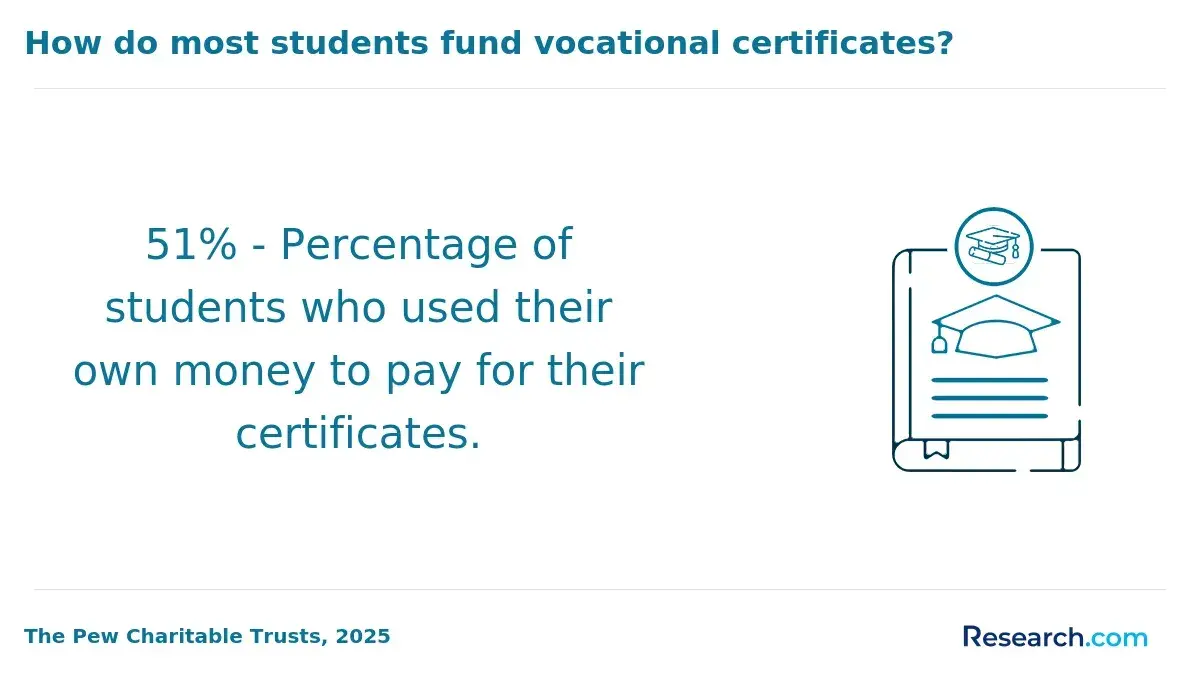
A short-term credential can also help someone build evidence of readiness before graduate study. Compare the time, cost, and occupational fit of 6 month certificate programs that pay well with nonprofit-specific professional development; a general certificate is not automatically a substitute for nonprofit finance, grant writing, or leadership experience.
Not necessarily. A waived essay removes one evaluative component and reduces administrative friction, but schools can still maintain standards through GPA thresholds, transcript reviews, prerequisite checks, enrollment caps, and conditional-admission policies. The absence of an essay says more about application design than about academic rigor, faculty quality, or graduate outcomes.
For some applicants, a traditional application may be the better choice. A statement of purpose can provide valuable context if you are moving from business, education, healthcare, military service, or another field into nonprofit leadership. It can also explain an upward grade trend, a compelling community-service record, or a precise goal such as development leadership, program evaluation, foundation work, or executive management.
Use these trade-offs when deciding whether a streamlined pathway fits.
- Choose no-essay admission when your transcript, experience, and intended program clearly meet published requirements and speed is a priority.
- Consider an essay-based program when you need to demonstrate mission alignment, explain academic context, seek highly selective opportunities, or compete for merit-based awards that review written materials.
- Do not equate flexible admission with lower quality; instead, compare accreditation, course sequence, faculty expertise, student support, and total cost.
- Do not equate a rigorous application with better career value; a more demanding process may still be a poor fit if the curriculum does not support your target role.
A common mistake is selecting the fastest application without asking how the program evaluates readiness once classes begin. Ask about academic advising, writing support, tutoring, internship expectations, live-session requirements, and the withdrawal policy. These details affect whether an accelerated admission process leads to a manageable graduate experience.
Start with institutional accreditation. In the United States, a reputable college or university should hold recognized institutional accreditation, and the institution should be listed in the U.S. Department of Education's Database of Accredited Postsecondary Institutions and Programs. Institutional accreditation is especially important for federal financial aid eligibility, employer confidence, credit transfer, and future doctoral study.
Nonprofit management does not have one universal programmatic accreditor equivalent to those used in some licensed professions. Public administration programs may seek accreditation through the Network of Schools of Public Policy, Affairs, and Administration, often called NASPAA, but that recognition is not required for every nonprofit management degree. Accreditation should therefore be one part of a broader quality review rather than the only criterion.
Use the following checks before enrolling. They help separate a legitimate streamlined application from a program with unclear academic or financial practices.
- Verify institutional accreditation through the federal database and confirm that the school is authorized to serve students in your state.
- Read the official degree plan and confirm that it includes nonprofit-relevant competencies such as fundraising, governance, budgeting, ethics, and program evaluation.
- Review faculty biographies for experience in nonprofit leadership, philanthropy, public administration, research, or related practice.
- Request the complete tuition schedule, including technology, graduation, residency, course-material, and payment-plan fees.
- Ask whether online students receive career services, library access, disability support, advising, and opportunities for applied projects or networking.
- Confirm whether credits may transfer into a later doctoral or specialist degree if that is part of your long-term plan.
Do not confuse institutional accreditation with credentials designed for unrelated professional pathways. For example, students exploring a counseling career should specifically compare CACREP accredited schools, because counseling licensure preparation has program-specific expectations that do not apply to nonprofit management degrees.
Red flags include vague accreditation claims, pressure to enroll before receiving a complete cost estimate, unclear faculty information, promises of guaranteed employment, and an inability to explain how online coursework is assessed. A legitimate admissions office should be able to state plainly whether an essay, recommendations, interview, practicum, or residency is required.
No-essay status does not make a master's degree less expensive. Total cost depends on the number of credits, per-credit tuition, mandatory fees, transfer credits, residency status where applicable, and whether the institution charges the same rate for online learners. Compare the published program total rather than only the per-credit figure, because a lower rate can still produce a higher bill if the degree requires more credits.
The National Center for Education Statistics reported that average graduate tuition and required fees at U.S. degree-granting postsecondary institutions were $20,513 in 2022-23. That national figure is not a nonprofit-management price quote and includes different institution types and graduate programs, but it provides useful context: applicants should build a program-specific budget rather than assume online study is automatically low-cost.
Before accepting admission, request these cost details in writing so you can compare schools on an equivalent basis.
- Total required credits and estimated tuition for completing the degree without transfer credit.
- Per-term and one-time fees, including technology, online learning, graduation, and course-material costs.
- Whether tuition can increase after enrollment and whether a tuition lock applies.
- Federal Direct Unsubsidized Loan and Graduate PLUS Loan eligibility for qualified students.
- Institutional scholarships, employer tuition assistance, nonprofit-sector scholarships, and payment plans.
- Expected practicum, travel, software, background-check, or conference expenses if the curriculum includes experiential learning.
Complete the Free Application for Federal Student Aid before relying on private loans. Graduate students should also ask their employer whether tuition benefits require a minimum grade, continued employment, or repayment if they leave the organization. Scholarships may have their own essays even when the academic program does not.
If your immediate objective is a promotion-ready skill rather than a full graduate credential, compare the degree's total cost against shorter training routes. The appropriate choice depends on the role: a certificate can build a targeted skill, while a master's degree may offer broader leadership, finance, strategy, and evaluation preparation.
A streamlined application is easiest when you verify requirements before opening multiple applications. Graduate schools may change requirements by term, and a general graduate-admissions page can differ from the nonprofit management program page. Save a dated copy or screenshot of the checklist and request clarification through the admissions office when wording is ambiguous.
Follow this sequence to avoid overlooked requirements and unnecessary application costs.
- Define your target role, such as program manager, development manager, grants administrator, community outreach leader, or nonprofit executive, then identify the curriculum competencies that role requires.
- Confirm that the degree is fully online or identify any residency, synchronous class, internship, or field-experience requirements.
- Read the program-specific admissions page and determine whether "no essay" also means no statement of purpose, no short-answer prompt, and no supplemental questionnaire.
- Check the bachelor's-degree, GPA, prerequisite, transcript, recommendation, résumé, and test-score requirements for your applicant category.
- Verify institutional accreditation, state authorization, total program cost, transfer-credit policy, and financial-aid deadlines.
- Request transcripts early, complete the application accurately, and retain confirmation that all documents were received.
- Ask admissions whether your file is complete and whether conditional admission, additional writing, an interview, or a program review could still apply.
Useful questions for an admissions advisor include: "Is a personal statement or statement of purpose required for this exact online concentration and start term?" "Are there any short-answer responses?" "Is the GRE waived for every applicant?" "What happens if my GPA is below the published standard?" "What is the total estimated cost through graduation?" Clear answers to those questions are more valuable than broad marketing language about easy applications.
The most common error is treating "no essay" as an invitation to apply without comparing outcomes. Apply only after reviewing courses, pacing, faculty support, and career relevance. A brief application should free up time for due diligence, not replace it.
Most online nonprofit management, management, public administration, and related master's programs are designed for completion in roughly 12 to 24 months of continuous study, although the actual timeline varies by credit requirements, course sequencing, transfer credit, part-time enrollment, and breaks between terms. The admissions essay policy has no direct effect on the number of courses or academic expectations after enrollment.
An accelerated format can work well for students with predictable work schedules and strong time-management habits. It may be less suitable for professionals in grant cycles, seasonal fundraising periods, caregiving roles, or jobs requiring travel. Before enrolling, calculate the weekly reading, discussion, group-project, and assignment expectations for each course rather than relying only on the advertised completion time.
This overview shows the planning factors that most often affect completion.
| Format | Typical planning advantage | Potential constraint |
| Accelerated full-time online | Earlier completion and less time exposed to future tuition increases | High weekly workload and limited flexibility after a missed course |
| Part-time online | Better compatibility with full-time employment and family obligations | Longer time to completion and possible future tuition changes |
| Asynchronous courses | Schedule flexibility across work shifts and time zones | Requires self-direction and timely participation |
| Synchronous or hybrid elements | Real-time faculty and peer interaction | Fixed meeting times or travel may be required |
Confirm whether courses are offered every term and in the sequence you need. A program marketed as 12 months can take longer if a required course is offered only once a year, transfer credit is denied, or work obligations require a leave. Students aiming eventually for advanced research or teaching should compare the longer commitment of a PhD online pathway separately; a professional nonprofit management master's is usually designed for applied leadership rather than doctoral research preparation.
Is an Online Nonprofit Management Master's Degree With No Admissions Essay Worth It for Your Career?
An online nonprofit management master's degree can be worthwhile when it fills a clear skill gap, supports advancement into management, or helps a professional move into mission-driven organizations. Its value comes from the curriculum, applied learning, network, institutional credibility, and your ability to use the degree in a specific career plan - not from whether the application omitted an essay.
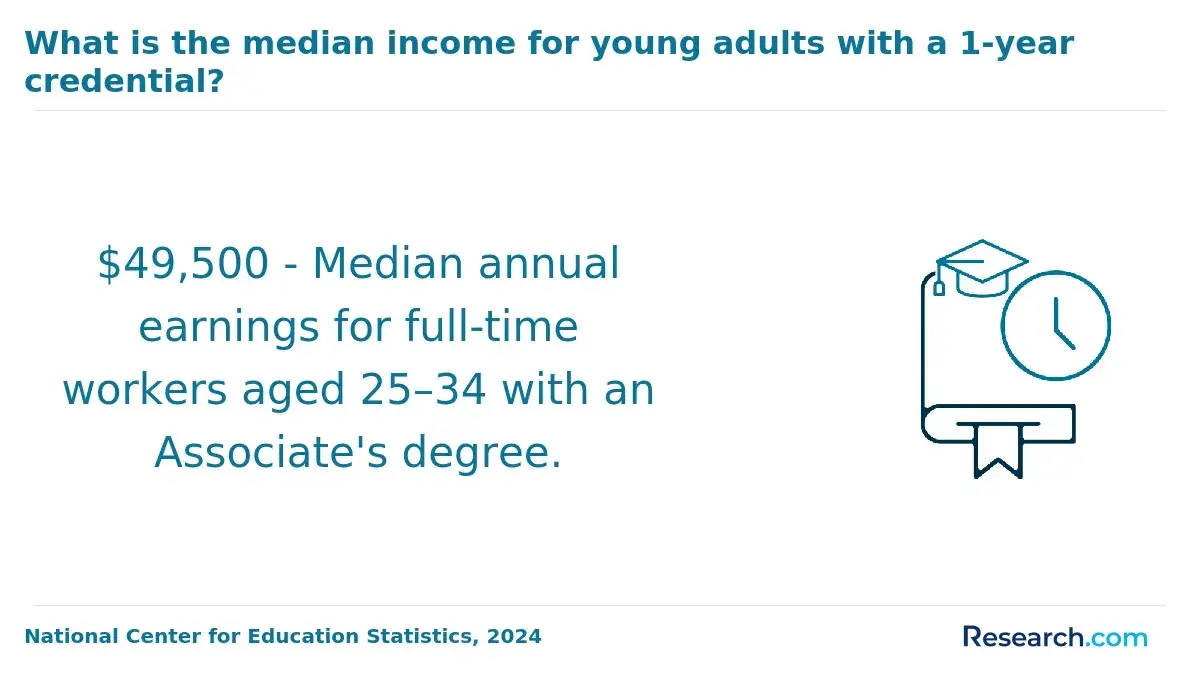
The Bureau of Labor Statistics reported a 2023 median annual wage of $74,240 for social and community service managers. This occupation includes roles across community and social service organizations, not only nonprofit-management master's graduates, and salaries vary substantially by employer, location, responsibilities, and experience. Use the figure as labor-market context, not as a prediction of your individual earnings.
Graduates may pursue roles such as program manager, nonprofit operations manager, development or fundraising manager, grants manager, volunteer director, community engagement manager, foundation program officer, or executive director. Responsibilities can include building budgets, supervising staff, measuring program results, cultivating donors, preparing grant proposals, managing boards, maintaining compliance, and communicating with community partners.
A degree is most likely to be a sound investment when the program strengthens skills your target employers request. Review job postings in your region before enrolling and look for recurring expectations in budgeting, fundraising software, grant compliance, outcome measurement, people management, data interpretation, and stakeholder communication.
Quantitative skills can be especially useful for program evaluation and impact reporting, but they are not the central focus of every nonprofit role. Students needing a stronger mathematical foundation can explore a mathematics degree online option, while recognizing that a full bachelor's degree is a much broader commitment than a statistics or analytics course selected to support nonprofit work.
Before deciding, compare the program's total price with expected career benefit at your current organization or target employers. Ask whether the degree supports promotion criteria, whether employers recognize the institution, whether alumni work in roles you want, and whether the curriculum includes a portfolio-worthy applied project. If the answer is unclear, gaining nonprofit volunteer leadership, completing targeted training, or choosing a program with stronger experiential learning may be a better first step.
Other Things You Should Know About Nonprofit Management
Yes. Schools do not use admissions terminology consistently. A statement of purpose, goals statement, professional statement, or written short response may serve a similar purpose to an essay. Read the program-specific checklist and ask whether any written narrative is required.
Many programs accept applicants without formal nonprofit employment, especially if they hold a bachelor's degree and meet GPA requirements. Relevant volunteer leadership, community engagement, fundraising, business operations, public service, or supervisory experience can still be helpful.
No. Nonprofit management is generally an administration and leadership degree, not a clinical social work credential. Social work licensure requirements are set by state boards and typically require a qualifying social work degree, supervised experience, and examinations.
Usually yes when the school accepts it and your résumé demonstrates relevant leadership or service experience. Keep it accurate and concise, and confirm that optional documents are reviewed. Do not submit an unsolicited essay unless the admissions office invites additional materials.
- Top Masterâs in Nonprofit Management Online 2019 https://www.gograd.org/online-masters-programs/best-non-profit-management-degrees/
- 'MBAs for the Public Good'? https://www.vitalcitynyc.org/mbas-for-the-public-good-does-getting-a-masters-degree-make-sense-for-nonprofit-professionals/
- The Most Affordable Online Christian Master's in Nonprofit Management - City Vision University https://www.cityvision.edu/lp/christian-online-masters-nonprofit-management/
- MBA Tuition Costs & Financing Guide https://www.clearadmit.com/mba-program-costs-financing/
- Master's with No Debt: A Strategic Guide to Funding Grad School https://www.onlinemastersdegrees.org/financial-aid/masters-with-no-debt/