2027 Online MSN Public Health Nursing Programs for Nurses in Louisiana: Population Health Practicum and Cost
Audited and Verified:
Our Editorial and Data Verification Process
Research.com uses government datasets, official education statistics and primary institutional information to support its career and degree guides. Our review process checks factual accuracy, occupational definitions, source dates and the requirements associated with the credentials discussed.
How This Article Was Fact-Checked
Our editorial team verifies salary estimates, employment projections, education requirements and program information against original data providers and official organizations. Salary figures are checked against the relevant occupational definitions and reporting periods. Information about licensure, accreditation and required in-person training is reviewed separately.
Fact-checked and verified on:

Co-Founder and Chief Data Scientist
Louisiana RNs interested in public health nursing need to look beyond an MSN program's "online" label. A track may emphasize population health without offering a public health nursing specialization, and its practicum may still require an approved local site and scheduled fieldwork.
This guide explains how to identify a suitable program, evaluate its practicum and accreditation, estimate the full cost, and distinguish community-health career preparation from APRN training. It is designed to help working nurses avoid enrolling in a convenient-looking degree that does not support their intended role.
Key Things You Should Know
- A dedicated, currently offered online public health nursing MSN at a Louisiana institution should not be assumed; confirm the active track, delivery format, and Louisiana practicum eligibility with each school.
- Online coursework does not eliminate fieldwork. Ask for the required practicum hours, approved site and supervisor criteria, placement responsibilities, and any campus visits before applying.
- Compare total cost rather than tuition alone: a hypothetical 36-credit program at $600 per credit costs $21,600 in tuition before fees, travel, supplies, or reduced work hours.
What Are Online MSN Public Health Nursing Programs in Louisiana?
An online MSN in public health nursing is a postlicensure graduate degree for RNs studying how to assess community needs, prevent disease, coordinate services, and evaluate health programs.
Courses may be online while an approved population health practicum takes place in person. Schools may call a related track public health nursing, community health, population health, or nursing leadership; those labels do not guarantee the same coursework or field experience.
The distinction matters when choosing a career goal. A non-APRN public health MSN can support community-focused RN and leadership work, but it does not prepare a graduate to practice as a nurse practitioner. It also does not provide initial nursing licensure.
Someone who is not yet an RN needs a prelicensure route first; practical nursing programs organized by duration describe a different entry-level credential, not a shortcut into an RN-required MSN.
Which Louisiana MSN Programs Offer Public Health Nursing Specializations?
No specific Louisiana-based, online MSN public health nursing specialization can be confirmed here as currently accepting students. Do not treat an older concentration listing, a general MSN webpage, or a course titled "population health" as evidence of an active specialty track. Request the current catalog and a written answer from the program before putting a school on your shortlist.
The comparison below separates the routes a Louisiana RN may encounter. It does not identify an unverified program as an active public health nursing specialization:
| Route to investigate | Potential fit | Decisive check |
| Louisiana institution with an MSN concentration explicitly named public, community, or population health nursing | Closest match if the concentration is active and its practicum fits the intended role | Obtain the current concentration plan, online attendance requirements, and fieldwork policy |
| Louisiana online MSN in leadership, education, or another non-APRN specialty | May fit a community-agency management or teaching goal | Determine whether public health content and an appropriate practicum are substantial enough for that goal |
| Out-of-state online public health nursing MSN | May provide a more clearly defined specialty | Confirm permission to enroll a Louisiana resident and complete fieldwork in Louisiana |
An RN with an associate degree should also confirm whether a school admits them directly or requires BSN-level work first. Continuing from an ADN into MSN study may be possible, but bridge coursework and the eventual MSN specialty must both match the nurse's objective.
What Accreditation Should Online MSN Public Health Nursing Programs Hold?
Check institutional accreditation and accreditation of the nursing degree separately. Institutional accreditation covers the university; nursing accreditors such as the Commission on Collegiate Nursing Education (CCNE) and the Accreditation Commission for Education in Nursing (ACEN) evaluate nursing programs within their stated scope. Confirm that the accreditation listing covers the MSN, not merely the school's BSN or another degree.
Accreditation does not, by itself, establish that a public health concentration is active, that its practicum can be completed in Louisiana, or that a graduate qualifies for APRN licensure.
Check the program's current catalog and obtain confirmation about enrollment and fieldwork eligibility. This distinction also applies when considering a later doctorate: DNP admissions and applicant preparation involve a separate degree and should not be mistaken for validation of an MSN specialty.
Most postlicensure MSN applicants need an active RN license, qualifying prior nursing education, transcripts, and a satisfactory academic record.
A school may also require statistics, recommendations, a statement of goals, an interview, or nursing experience. Requirements can differ between admission to the university and admission to a particular concentration.
Ask the admissions team to review your exact credentials before assuming eligibility, especially if you hold an ADN, have a non-nursing bachelor's degree, or plan to use prior graduate credits. If you are not licensed as an RN, compare prelicensure options instead; exploring nursing schools with attainable requirements addresses a different admissions decision from applying to a postlicensure MSN.
A suitable curriculum connects graduate nursing methods to decisions about populations rather than only individual patients. Look for epidemiology, biostatistics or data interpretation, community assessment, health promotion, health equity, program planning, policy, and evaluation.
Coursework may also address emergency preparedness, interprofessional collaboration, and ethical handling of community or agency data.
For example, a student might use approved, aggregate data to identify a gap in vaccination access, propose an outreach approach with community partners, and define measures for evaluating it. That academic exercise is not evidence that an intervention improved outcomes.
A public health curriculum also differs from the advanced assessment, pharmacology, pathophysiology, and population-specific patient-care preparation expected in an NP track; fast-track psychiatric NP MSN study serves a different practice goal.
The population health practicum is the most important "online" detail to verify. Students may work with an approved health department, community clinic, school-health program, or nonprofit on assessment, education, care coordination, or program evaluation.
The school - not the student's job title - decides whether the site, activities, supervisor, and documented hours meet degree requirements.
Before committing, get written answers to the questions below. They reveal whether the practicum is feasible alongside an RN's work schedule and whether a proposed site will count:
- How many hours are required, and must any be completed during weekday agency hours?
- Who finds the site, approves the supervisor, and arranges any required affiliation agreement?
- Can existing employment count if the work involves new, supervised learning rather than routine duties?
- Are campus visits, live meetings, background checks, or additional travel required?
- What records, project approvals, and privacy safeguards are required for data used in assignments?
Do not assume that a prior community placement or a program with lighter undergraduate clinical requirements predicts MSN fieldwork rules. Exploring RN-to-BSN nontraditional clinical formats concerns a different degree and does not establish what an MSN will accept.
Completion time depends on required credits, entry route, course scheduling, and when an approved practicum can begin. Full-time study may be faster on paper, but a nurse working shifts may progress more reliably part time.
An ADN-to-MSN bridge, prerequisite work, a delayed site agreement, or a course offered only once a year can extend the timeline.
Ask for a term-by-term plan based on your entry credentials and intended enrollment load, including the earliest and latest realistic practicum terms.
Also check whether courses are asynchronous, whether live sessions have fixed times, and whether a leave of absence changes the course sequence. A later doctoral degree has its own schedule; online DNP program length comparisons should not be used to estimate MSN completion time.
No single Louisiana price accurately represents every online public health nursing MSN, and a current tuition quote should come from the school for the applicant's entry term and residency status.
To make quotes comparable, multiply required credits by the applicable per-credit tuition, then add mandatory charges and likely fieldwork expenses.
Request an itemized estimate that includes these costs; the same tuition rate can lead to a different total once practicum and scheduling expenses are counted.
- Tuition for all required MSN and, if applicable, bridge credits; mandatory university, course, and technology fees.
- Books, software, background checks, health documentation, and any site-specific requirements.
- Practicum travel, parking, lodging or campus visits, and income lost if fieldwork reduces paid shifts.
- Extra terms or repeat courses if a placement or required course is delayed.
For illustration, not as a published school price, 36 credits at $600 per credit equal $21,600 in tuition, while 36 credits at $900 equal $32,400. That $10,800 difference is meaningful only after comparing what each program requires and supports.
Comparing lower-cost BSN-to-MSN routes can help establish a benchmark, but confirm that any lower-cost option actually offers the desired population health preparation. Ask an employer whether tuition assistance covers this degree and what service obligation applies.
Public health-focused MSN graduates may pursue roles in health departments, community clinics, school-health systems, nonprofits, and healthcare organizations.
Depending on experience and the job description, work may involve outreach, care coordination, population health analysis, program evaluation, staff education, or management. An MSN can strengthen an application, but it does not replace required RN experience, agency knowledge, or supervisory qualifications.
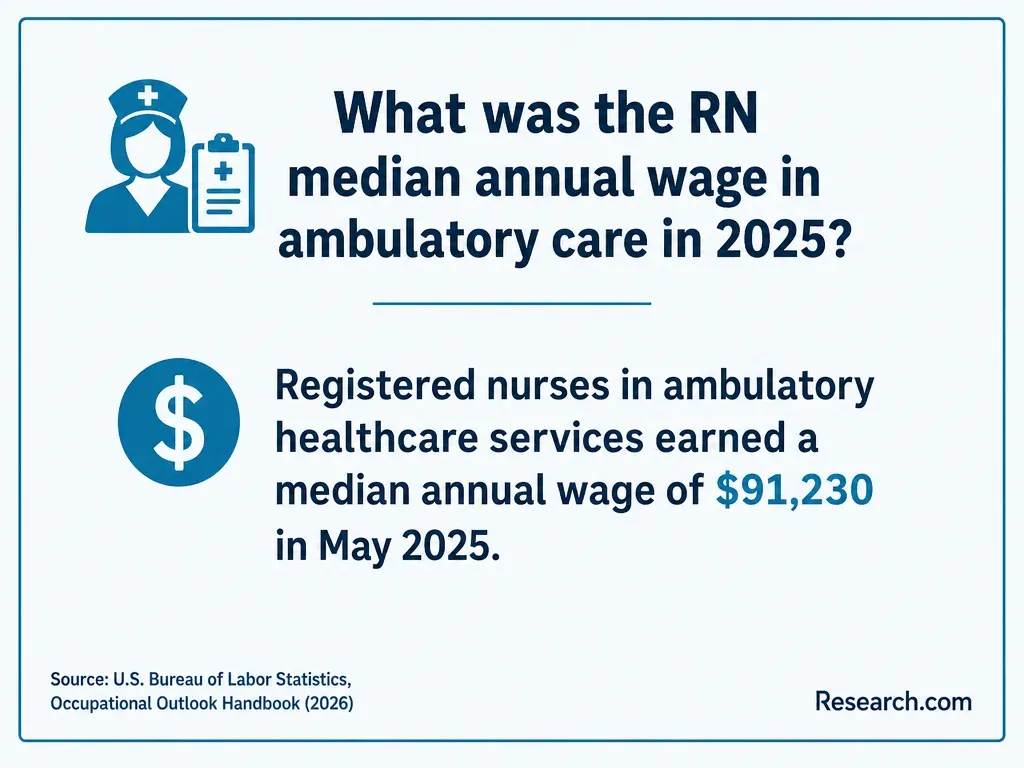
There is no reliable single salary figure for "MSN public health nurse." Employers use different job titles and pay structures. U.S. Bureau of Labor Statistics RN wage figures describe registered nurses across settings and education levels, not the earnings of public health MSN graduates; government salary schedules and a specific job posting are better evidence for an individual offer.
Compare pay with hours, benefits, caseload, and advancement opportunities, particularly if moving from shift-based hospital work into a salaried community role.
If the desired work is diagnosing and treating patients as an NP rather than designing or managing population-level services, compare a properly aligned NP program instead. Online NP program affordability comparisons address that different credential and its clinical training costs.
What Licensure and Certifications Do Louisiana MSN Graduates Need?
A Louisiana RN entering a non-APRN public health MSN should maintain the RN license needed for their work. Completing the MSN does not create a new RN license, grant APRN authority, or automatically award specialty certification.
Check Louisiana State Board of Nursing requirements for the work you intend to perform and the employer's requirements for the particular position.
Optional public health or school-nursing credentials may be relevant to a specific job, but their awarding organizations set separate eligibility and renewal rules.
Confirm the exact credential before paying for exam preparation. A nurse seeking psychiatric-mental health NP practice, for example, needs an appropriately aligned APRN educational and credentialing pathway; affordable psychiatric-mental health NP pathways are not interchangeable with a non-APRN public health MSN.
Other Things You Should Know About Nursing
Possibly. The school and employer must approve the site, supervisor, learning activities, and any use of organizational data. Routine paid duties should not be assumed to satisfy practicum requirements.
Yes, if the goal centers on epidemiology, policy, or public health administration rather than graduate nursing practice. Compare curricula and the requirements of target jobs; an MPH does not replace an RN license.
Only as permitted by the site and school under applicable privacy and oversight rules. Use approved, appropriately protected information and never include identifiable patient details in a public portfolio.
No. Hiring depends on the position's qualifications, relevant experience, available openings, and the employer's selection process. Review actual postings before choosing a concentration.
- Educating Nurses for the Future - NCBI - NIH https://www.ncbi.nlm.nih.gov/books/NBK573912/
- NYS Nursing: RN License Requirements | nysed.gov https://www.op.nysed.gov/professions/registered-professional-nursing/license-requirements
- Understanding College Costs | studentaid.gov https://studentaid.gov/resources/prepare-for-college/students/choosing-schools/consider-costs
- Cost of Attendance (Budget) | 2025-2026 Federal Student Aid Handbook https://fsapartners.ed.gov/knowledge-center/fsa-handbook/2025-2026/vol3/ch2-cost-attendance-budget
- Master of Science in Nursing (MSN) | Online Degree Program | Capella University https://www.capella.edu/online-nursing-degrees/msn-nursing-program/
- Population Health - Nursing Education (Master of Science in Nursing) - Degree/Program Listing https://www.jsu.edu/degrees/graduate/health/nursing/population-health-nursing-education-msn.html
- Tuition and Fees | LSU New Orleans https://www.lsuneworleans.edu/admissions/tuition-fees
- Online MSN Program | University of Louisiana at Lafayette https://louisiana.edu/online/majors-minors/nursing-ms-online
- Understanding Costs | LSU School of Social Work https://www.lsu.edu/financialaid/cost/index.php
- Section 3. Preceptor and Field Site Information | Academics at Walden University https://academicguides.waldenu.edu/masters-public-health-practicum-manual/site-information