2027 Online Medical Billing & Coding Degree Programs With University Scholarships: Awards, Eligibility, and Net Cost

Co-Founder and Chief Data Scientist
Tuition alone does not show what an online medical billing and coding credential will cost you. University scholarships, federal grants, transfer credit, and required course fees can change the final bill substantially. This guide is for prospective online students comparing institutional aid and program value.
The U.S. Bureau of Labor Statistics reports a $50,250 median annual wage for medical records specialists as of 2024, making careful training-cost decisions especially important. Learn how to evaluate awards, eligibility, renewal rules, and realistic out-of-pocket costs before enrolling.
Key Things You Should Know
- Online medical billing and coding students may qualify for institutional scholarships, but eligibility often depends on admission status, GPA, program level, residency, and whether the online program is included in the award.
- A scholarship's value is its effect on net cost: subtract grants and scholarships from tuition, mandatory fees, books, technology, certification preparation, and any costs not covered by the award.
- Medical records specialists had a 2024 median annual wage of $50,250, according to the U.S. Bureau of Labor Statistics; compare total borrowing against likely entry-level opportunities rather than choosing the largest advertised award.
Which Online Medical Billing & Coding Degree Programs Offer University Scholarships?
Online medical billing and coding is commonly offered as a certificate, diploma, associate degree, or a concentration within health information management. Universities may extend general institutional scholarships to online learners, but many awards are designed for campus-based, degree-seeking, full-time students. A school's public scholarship page is not proof that a particular online coding program qualifies.
The strongest options are usually regionally accredited colleges and universities that clearly confirm, in writing, that online students in the exact credential are eligible for institutional aid. Public colleges can have lower published tuition, while private universities may offer larger institutional discounts. Neither model automatically produces the lower net price.
Use this comparison framework when building a shortlist. It separates a scholarship claim from the questions that determine whether it is useful to you.
| Program setting | Typical credential options | Institutional scholarship likelihood | What to verify before applying |
| Public community college | Certificate or associate degree | May offer foundation, workforce, or local scholarships | Online-program eligibility, county or state residency rules, and course fees |
| Public university | Associate completion or health information degree pathway | May offer merit and need-based awards for degree-seeking students | Whether distance learners and part-time students are included |
| Private nonprofit university | Certificate, associate, or bachelor's pathway | May use institutional grants or tuition discounts | Whether the discount is renewable and whether it offsets tuition only |
| Career-focused school | Diploma or certificate | May advertise grants, employer partnerships, or promotional discounts | Accreditation, total charges, refund policy, and whether the "grant" reduces actual billed tuition |
Ask the financial-aid office for the scholarship name, annual amount, eligible program code, enrollment requirement, renewal standard, and whether the award is available to fully online students. If a program leads you toward broader healthcare administration work, compare its curriculum and cost with accelerated MHA programs online; the career level and admissions requirements are different, so the aid comparison should be separate.
Also confirm that the curriculum prepares students for the credential they want. Employers may value coding knowledge and certifications such as CPC, CCS, or CCA differently depending on the role. A scholarship should not outweigh a weak curriculum, unclear accreditation, or a program that does not fit your intended certification path.
How Much Scholarship Money Can Online Medical Billing & Coding Degree Students Receive?
There is no standard university scholarship amount for online medical billing and coding students. Awards can be a one-time foundation scholarship, a per-term tuition discount, an annual merit award, or need-based institutional grant aid. The amount can also change with enrollment intensity, available funds, academic profile, and whether you are pursuing a certificate or degree.
For this reason, do not treat a promotional "up to" amount as your expected award. Request a personalized financial-aid offer after admission and compare the award against the school's complete cost of attendance.
The categories below show how award structure can affect your bill even when two schools advertise similar scholarship opportunities.
| Award structure | How it is commonly applied | Potential advantage | Cost risk to check |
| One-time scholarship | Applied to the first term or academic year | Can reduce upfront charges | Later terms may be much more expensive |
| Annual renewable scholarship | Split across fall and spring or multiple terms | Offers more predictable planning if renewed | GPA, credit-load, or deadline rules can end the award |
| Per-credit tuition discount | Reduces eligible tuition charges for each credit | Can be useful for part-time online study | May not cover fees, books, exams, or retaken courses |
| Need-based institutional grant | Set after financial-aid review | May supplement federal aid for eligible students | Can change when income, FAFSA data, or enrollment changes |
A smaller scholarship at a lower-tuition public institution can beat a larger private-school award. Conversely, an institution with higher tuition may become competitive if its renewable grant is substantial and applies to all required credits. Compare the multi-term amount you are actually offered, not the maximum amount printed in marketing materials.
For career context, the Bureau of Labor Statistics projects employment of medical records specialists to grow 7% from 2024 to 2034. That outlook reflects a broad occupation, not a promise that any particular program, certification, or scholarship will produce employment. Use it as one input when deciding how much debt is reasonable.
What Are the Eligibility Requirements for Online Medical Billing & Coding Degree Scholarships?
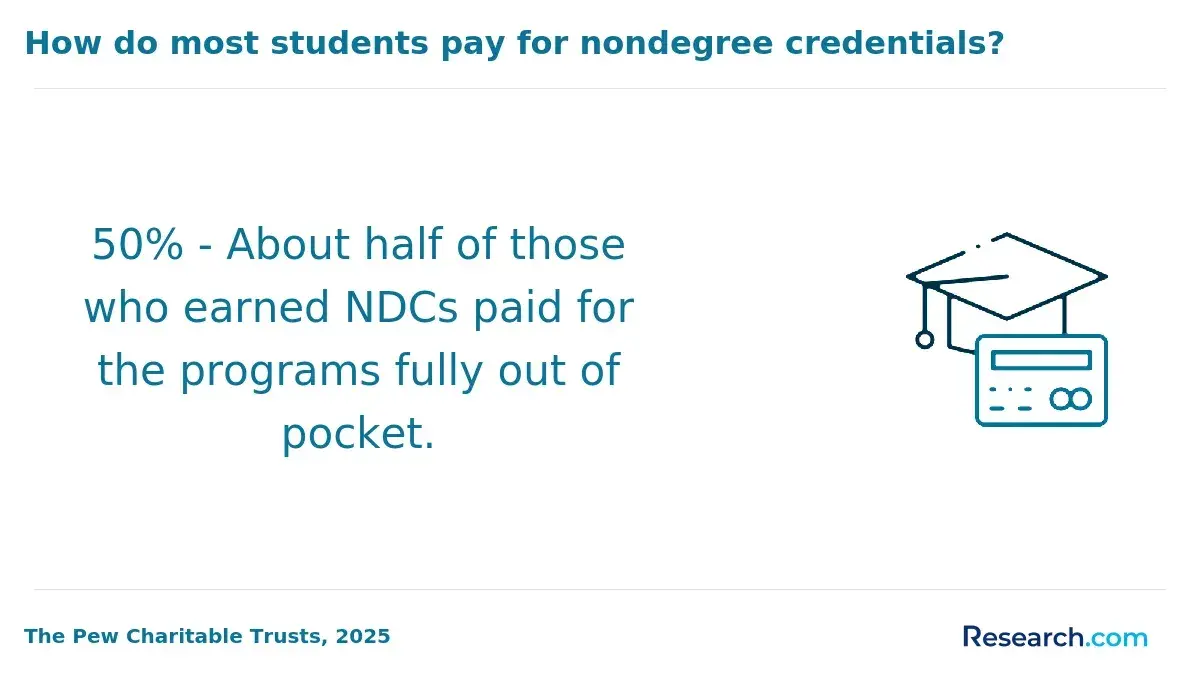
Eligibility requirements vary by institution and scholarship fund. Institutional scholarships are awards financed or administered by the school rather than federal grants. They may be based on academic achievement, financial need, location, work experience, military connection, intended career, or donor criteria.
Online status is especially important. Some schools treat online and campus students identically, while others reserve specific awards for students attending a physical campus or carrying a full-time course load.
Review these common requirements before you spend time on an application. Meeting one requirement does not guarantee selection because many scholarships are competitive and funding is limited.
- Admission to the eligible medical billing, coding, health information, or related degree program by the scholarship deadline.
- Degree-seeking status rather than nondegree or continuing-education enrollment.
- A minimum cumulative, high school, or transfer GPA for merit awards.
- Completion of the FAFSA or an institutional financial-aid form for need-based awards.
- Minimum enrollment, which may be full-time, half-time, or a stated number of credits.
- U.S. citizenship, eligible noncitizen status, state residency, or donor-specific community ties when required.
- Submission of transcripts, an essay, recommendations, proof of military affiliation, or certification goals when requested.
Do not assume a short certificate is eligible simply because the university offers scholarships to degree students. Ask whether your exact credential has a federal school code and whether institutional funds are available for certificate-level enrollment. This distinction affects both scholarship access and federal aid eligibility.
Adult learners should also ask whether prior college grades, not high school grades, will be used for merit review. Students returning after a long break may have a stronger case for workforce or donor-funded scholarships than for first-year academic awards.
How Do You Apply for University Scholarships for an Online Medical Billing & Coding Degree?
Application procedures are often separate from admission. Some institutions automatically consider admitted students for certain merit awards, while others require a scholarship portal application, FAFSA submission, essay, or additional documentation. "Automatic consideration" still may require admission by an earlier priority deadline.
Follow a documented process so you do not lose eligibility because of a missing form or incorrect program selection.
- Choose the exact online credential and verify that it is offered to students in your state.
- Apply for admission early enough to meet scholarship and financial-aid priority dates.
- Submit the FAFSA when the school requires it or when you want federal grants, work-study consideration, or federal loans.
- Activate the school's scholarship portal and complete every application for which you plausibly qualify.
- Upload transcripts and supporting documents, then retain confirmation receipts and copies of essays.
- Ask financial aid whether your online program, enrollment level, and start term are eligible for each listed award.
- Review the written award notice for amount, duration, renewal terms, disbursement schedule, and any conditions before accepting.
Keep scholarship deadlines separate from admission deadlines. A rolling-admission program may accept students close to the term start while its university scholarship competition closed months earlier.
If you are exploring longer-term clinical or leadership pathways after gaining healthcare experience, admissions and aid systems are not interchangeable. For example, DNP online programs generally require nursing education and licensure-related preparation beyond medical billing and coding training.
A useful email to financial aid is direct: ask whether "students enrolled fully online in [exact program name] for [term] are eligible for [scholarship name], and if so, what are the renewal and stacking rules?" Save the reply with your award letter.
Are Scholarships for Online Medical Billing & Coding Degree Programs Renewable Every Year?
Some scholarships renew, but renewal is never automatic unless the award terms say so. Renewable aid is institutional funding that continues into later academic periods only while the student meets stated conditions. A first-term grant, enrollment discount, or donor scholarship may have no renewal option at all.
Read the offer letter for the renewal period. It may refer to an academic year, a number of semesters, a maximum credit total, or completion within a set time. Accelerated online calendars can make these terms easy to misread because a school may use multiple shorter sessions within one academic year.
The following conditions frequently determine whether a renewable award remains in place.
- Maintain the stated cumulative GPA, which may differ from the GPA required for admission.
- Complete the required number of credits and remain enrolled at the required full-time or half-time level.
- Make satisfactory academic progress for financial-aid purposes, including pace of completion and maximum timeframe standards.
- Remain continuously enrolled or obtain approved leave before taking a break.
- Use the award within its stated time limit and in the eligible program.
- Meet any annual FAFSA, scholarship renewal form, service, or reporting requirement.
Ask whether withdrawing from one class, repeating a coding course, switching from an associate degree to a certificate, or dropping below half-time status changes the award. These events can affect both institutional scholarship renewal and federal aid eligibility.
Plan using a conservative scenario: assume only funding that is confirmed in writing, and model what you would pay if a scholarship does not renew. This is particularly important for students balancing online coursework with employment or caregiving, where a reduced course load may be necessary.
Can You Combine an Online Medical Billing & Coding Scholarship With FAFSA and Other Financial Aid?
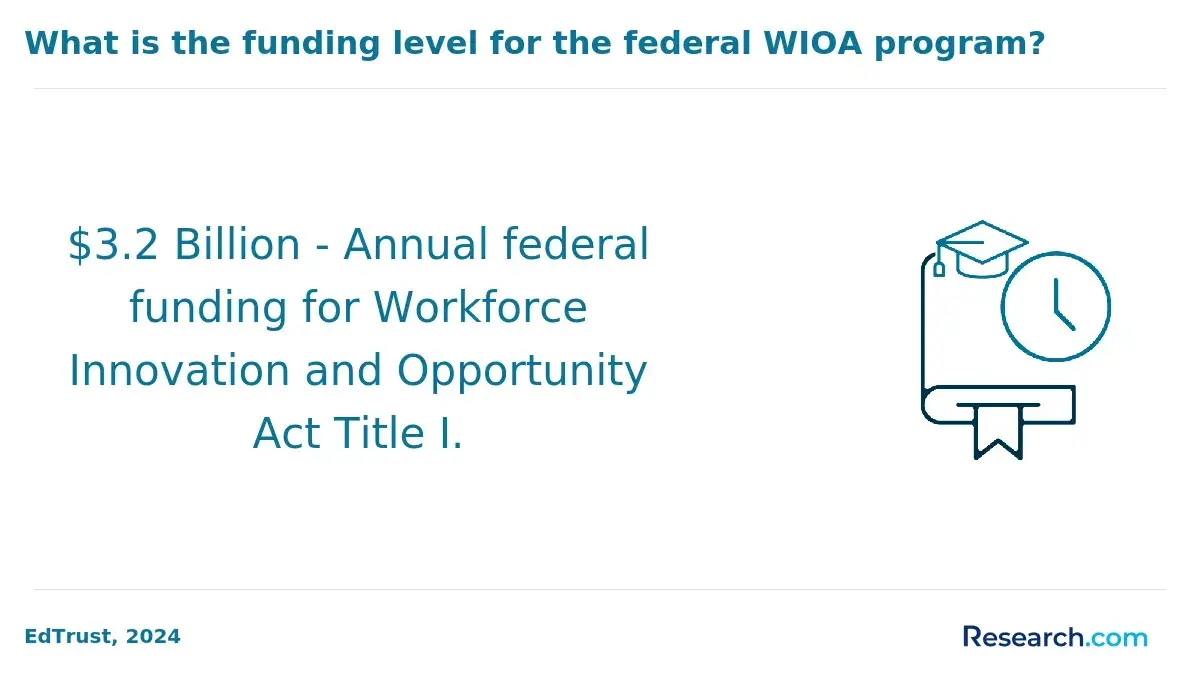
In many cases, yes. FAFSA-based federal aid, state grants, employer assistance, veterans' education benefits, external scholarships, and university scholarships can be combined, subject to program rules and the school's cost-of-attendance limit. Completing the FAFSA is worthwhile even if you expect to receive a university scholarship because it can determine eligibility for federal grants and loans.
Financial aid offices must account for all known resources. If combined aid exceeds allowable educational costs or a program-specific limit, the school may reduce an award, usually following its own packaging policy and applicable federal rules. Ask which source would be adjusted before accepting outside funding.
This table explains the practical role of common funding sources in a typical aid package.
| Funding source | How it may work with institutional scholarships | Key question to ask |
| Federal Pell Grant | May be combined for eligible undergraduate students | Is my certificate or degree eligible for federal student aid? |
| Federal Direct Loans | May fill remaining eligible costs after grants and scholarships | How much would I need to borrow after all gift aid? |
| State grant | May have residency, FAFSA, and enrollment requirements | Does online enrollment meet the state program's rules? |
| Employer tuition assistance | Can reduce employer-paid tuition but may trigger aid recalculation | Will employer benefits reduce institutional grant aid? |
| Private or community scholarship | Usually must be reported to the school | Which aid source is adjusted if my total aid is too high? |
Do not decline federal grant eligibility merely because an institutional scholarship appears large. First obtain a complete aid package showing tuition, mandatory fees, grants, scholarships, and recommended borrowing. Loans are not scholarships; they create repayment obligations and should be compared carefully.
Students considering health-related education beyond coding can use separate program comparisons, such as nursing PhD programs, but should expect substantially different degree prerequisites, funding models, and time commitments.
How Much Does an Online Medical Billing & Coding Degree Cost After Scholarships and Financial Aid?
Net cost is the amount remaining after gift aid, not simply the tuition number shown on a program page. Calculate it using the specific term or full credential plan: published tuition plus mandatory fees and expected direct educational costs, minus confirmed grants and scholarships. Loans lower the bill due now but do not lower the underlying price.
Required costs can include application fees, technology fees, e-books, code books, software access, proctoring, certification exam preparation, and certification exam fees. Some schools bundle these expenses; others bill them separately. Online delivery does not mean every fee disappears.
This illustrative calculation uses no assumed school pricing or scholarship amount. Replace each line with figures from your official student account estimate and aid offer.
| Net-cost calculation item | What to include | Why it matters |
| Total tuition | All credits required for completion multiplied by the applicable tuition rate | A low per-credit price can still lead to a high total if many credits are required |
| Mandatory institutional fees | Technology, distance-learning, registration, course, and graduation fees | Scholarships may apply to tuition but exclude fees |
| Required learning and credential costs | Books, coding references, software, supplies, proctoring, and exam-related costs | These costs influence the cash budget even when tuition is discounted |
| Confirmed gift aid | University scholarships, grants, state grants, and external scholarships | Only confirmed awards should be subtracted |
| Estimated net cost | Total educational charges minus confirmed gift aid | This is the figure to compare across schools before considering loans |
Compare costs over the entire credential, not one term. A program that accepts transfer credit or awards credit for prior learning may reduce the number of classes you must pay for, but confirm that the evaluation is free or low-cost and that credits apply directly to program requirements.
For students looking at another allied-health direction, dietitian graduate programs have different degree, supervised-practice, and credential requirements; do not use their tuition or scholarship patterns to estimate a coding program's price.
A practical red flag is an aid offer that lists a large "financial aid" total without separating grants from loans. Request a revised breakdown. The best offer is the one with the lowest realistic net cost for a credible program that you can complete under its academic and scheduling requirements.
Are There Scholarships for Transfer, Adult, Military, and Other Online Medical Billing & Coding Students?
Yes, but availability depends on the institution and the student's status. Transfer, adult, military-connected, veteran, employee, and returning students may be eligible for awards that first-time students do not see in standard admissions materials. These may include transfer merit awards, workforce-development scholarships, military tuition reductions, employer partnerships, and foundation funds for adult learners.
Eligibility often turns on documentation and enrollment classification. A military discount may require proof of service or affiliation each term. A transfer scholarship may require a minimum number of accepted credits and a qualifying transfer GPA. An adult-student scholarship may require a gap in education, employment history, or an essay describing career goals.
Use the following checks to identify opportunities that fit a nontraditional enrollment path.
- Ask whether transfer applicants are reviewed automatically or must submit a separate scholarship application.
- Request a preliminary transfer-credit evaluation before comparing total program cost.
- Confirm whether military or veteran benefits can be used with institutional scholarships and employer tuition assistance.
- Check whether part-time enrollment is eligible, especially if you plan to work while studying.
- Ask whether scholarships are available to students who begin in nontraditional terms rather than only fall entrants.
- Verify whether prior learning assessment, certification credit, or workforce training can shorten the program without reducing scholarship eligibility.
Do not rely on a military, employer, or alumni discount until you see how it appears on the billing statement. Some discounts apply only to tuition, cannot be combined with certain scholarships, or end if your employment status changes.
Career changers may also compare short-form credentials in adjacent fields, including kinesiology certification online options. They serve different job goals, so compare transferability, credential recognition, and total cost rather than assuming one path is a substitute for another.
What Is the Difference Between Merit-Based and Need-Based Scholarships for Online Medical Billing & Coding Degrees?
Merit-based scholarships are generally awarded for academic achievement, transfer GPA, leadership, service, or another accomplishment. Need-based scholarships are generally based on financial circumstances, often using FAFSA information or an institutional need-analysis process. A student may qualify for both types if the school permits stacking.
The better option is not universally the larger award. Merit aid can be more predictable when you can maintain its GPA and enrollment conditions. Need-based aid may provide stronger support for students with demonstrated financial need but can change if income, household circumstances, enrollment, or available institutional funding changes.
This comparison can help you identify the documentation and risks associated with each award type.
| Feature | Merit-based scholarship | Need-based scholarship |
| Main basis | Academic record, achievement, service, or designated talent | Demonstrated financial need under the school's process |
| Common evidence | Transcript, GPA, essay, recommendation, or activity record | FAFSA, institutional aid form, and sometimes verification documents |
| Typical renewal focus | GPA, enrollment level, and satisfactory academic progress | Continued eligibility, FAFSA filing, enrollment, and available funds |
| Common planning concern | Losing aid after grades or credit load fall below the threshold | Annual changes in need calculation or institutional packaging |
Some scholarships combine merit and need criteria, so read the award description closely. If your FAFSA circumstances have changed because of job loss, reduced work hours, or another significant event, ask the financial-aid office about its professional-judgment or special-circumstances review process. The school decides such reviews case by case.
How Should You Compare Scholarship Offers From Online Medical Billing & Coding Degree Programs?
Compare offers using the same time period and the same cost categories. An annual scholarship should be compared against annual tuition and fees; a one-term award should not be presented as if it funds a full certificate or degree. Ask every school for an itemized estimate based on your expected credit load and start term.
Before making a deposit, assemble each offer into one decision worksheet. The goal is to identify the lowest manageable total cost for an eligible online program with a curriculum, schedule, and student support model that fit your goals.
- Confirm the exact credential, delivery format, accreditation status, and certification preparation offered by each school.
- Calculate total required credits after accepted transfer credits or prior-learning credit.
- Add tuition, mandatory fees, books, software, proctoring, and expected certification-related costs.
- Subtract only confirmed grants and scholarships, not federal or private loans.
- Separate renewable aid from one-time aid and calculate a conservative later-term budget.
- Compare award conditions, including GPA, course-load, continuous-enrollment, and program-change rules.
- Ask whether external scholarships, employer assistance, or veterans' benefits reduce institutional aid.
- Review withdrawal, refund, and leave-of-absence policies before committing.
Use the questions below when a scholarship offer is unclear. They can expose differences that are invisible in a headline tuition rate.
| Question for the school | Decision value |
| Is this award available to fully online students in my exact program? | Prevents reliance on campus-only or degree-ineligible aid. |
| What charges does the scholarship cover? | Shows whether fees, books, and technology costs remain out of pocket. |
| Is the amount fixed, and for how many terms or credits? | Distinguishes a temporary discount from multi-term support. |
| What GPA and enrollment level are required to renew it? | Lets you assess whether the award is realistic with your schedule. |
| How will outside aid change this package? | Helps prevent an unexpected reduction in institutional funding. |
| What would I owe if I take fewer credits or repeat a course? | Reveals the financial risk of a slower completion timeline. |
Common mistakes include selecting the biggest scholarship without calculating the remaining tuition, assuming online students qualify for all university awards, and overlooking renewal rules. Avoid these errors by obtaining written answers, comparing full-program net cost, and keeping a backup budget for a reduced award or slower enrollment pace.
Other Things You Should Know About Medical Billing & Coding
Not always. Employers may hire candidates with a certificate, diploma, associate degree, relevant experience, or a recognized coding certification, depending on the role. An associate degree or health information program can provide broader education, but it may cost more and take longer than a focused certificate.
Programs commonly cover medical terminology, anatomy, health records, insurance claims, reimbursement systems, privacy practices, and coding systems such as ICD-10-CM, CPT, and HCPCS. Curriculum details vary, so verify that the program teaches the code sets and practical skills relevant to your intended certification or employer.
Many coursework components can be completed online, but practicum, externship, proctored examination, or identity-verification requirements vary by school. Confirm whether any in-person placement, local testing, or scheduled live session is required before enrolling.
No. Coding focuses on translating clinical documentation into standardized codes, while billing commonly focuses on claim submission, payment follow-up, denials, and account processes. Smaller employers may combine the duties, while larger organizations may use more specialized roles.
References
- Medical Billing & Coding Schools Online with Financial Aid https://www.edumed.org/online-schools/medical-billing-coding/financial-aid/
- Financial Aid for Minority Students https://www.medicalbillingandcoding.org/resources/financial-aid-minority-students/
- Top 45 Medical Billing and Coding Programs Online https://www.healthcaresystemcareersedu.org/top-45-medical-billing-and-coding-programs-online/
- Is Medical Billing and Coding in Demand? | University of Bridgeport https://www.bridgeport.edu/news/medical-billing-and-coding-demand/
- Scholarships https://www.americanmedicalbillingassociation.com/scholarships/
- The Real Cost of Medical Billing and Coding School - Advanced Coding Services https://www.advancedcodingservices.com/resources-and-knowledge/unlock-your-career-the-real-cost-of-medical-billing-and-coding-school
- Financial Aid & Scholarships For Medical Billing & Coding https://www.accreditedschoolsonline.org/healthcare/medical-billing-coding/scholarships/