2027 Online Media Arts Bachelor's Degree Completion Programs for Working Adults

Co-Founder and Chief Data Scientist
Balancing full-time work with completing a bachelor's degree in media arts online can challenge even the most disciplined adult learner. Many face scheduling conflicts, outdated transfer policies, and unclear tuition costs, making degree completion daunting. Research shows that 65% of working adults pursuing online media arts credentials cite flexible program structures as a decisive factor in enrollment.
This article systematically analyzes program designs, accreditation standards, transfer credit acceptance, tuition variations, prior learning assessments, and employment outcomes. It aims to guide prospective students in selecting programs aligned with their professional goals, financial constraints, and time availability to successfully earn their degree.
Key Benefits of Online Media Arts Bachelor's Degree Completion Programs for Working Adults
- Online media arts bachelor's degree completion programs offer flexible scheduling, enabling working adults to balance professional responsibilities with academic progress efficiently.
- Fully asynchronous coursework allows students to study at their own pace, accommodating demanding work hours without requiring them to reduce income or job commitments.
- These programs often provide accelerated paths to graduation, leveraging prior credits to shorten timelines compared to starting a traditional four-year degree anew.
What Are Online Media Arts Bachelor's Degree Completion Programs, and Who Are They Designed For?
Degree completion programs in online media arts provide a specialized route for working adults who have earned some college credits but have yet to graduate. Unlike traditional four-year bachelor's degrees that begin at the freshman level, these programs concentrate on transferring existing credits and focusing on remaining coursework to expedite graduation. The National Center for Education Statistics (NCES) reports that around 36 million American adults have some college experience but no credential, making this format ideal for those balancing education with family, career, and other responsibilities. These programs offer a flexible, efficient approach, especially appealing to those seeking one of the best online media arts degree programs for working adults.
Key characteristics of degree completion programs include:
- Accelerated Format: Courses are typically condensed into shorter terms that enable students to progress more quickly than in traditional programs.
- Transfer Credit Acceptance: These programs extensively recognize previously earned credits, reducing duplicated coursework and overall credit requirements.
- Flexible Delivery: Online or hybrid formats allow students to study around their professional and personal schedules without disruption.
- Designed for Working Adults: Course structures prioritize convenience and relevance, addressing the unique needs of adult learners.
How Do Online Media Arts Degree Completion Programs Differ From Traditional Four-Year Media Arts Bachelor's Degrees?
Online media arts degree completion programs are specifically designed for students transferring with 60 or more credits, providing a streamlined alternative to traditional four-year media arts bachelor's degrees. These completion programs focus mainly on the last 60 to 64 credits needed to graduate, whereas traditional bachelor's degrees require around 120 to 130 total credits that include general education and major coursework throughout the program.
- Credit Requirements: Completion programs mandate at least 60 transferable credits, tailoring the remaining curriculum to focus on advanced major courses. Traditional programs require completion of all credits evenly distributed between general education and major areas.
- Curriculum Sequencing: These programs are curriculum-mapped for adult learners by prioritizing major coursework and often substitute general education with competency-based assessments or life-experience credits. In contrast, traditional degrees follow a fixed semester sequence, starting with general education before progressing to specialized topics.
- Time to Completion: Completion students frequently graduate within two years or less, supported by flexible scheduling and part-time options. Traditional degrees typically require four years attending full-time.
- Cost Structure: Based on IPEDS data, completion programs may charge a similar or slightly higher cost per credit hour compared to traditional programs at the same institution. However, fewer required credits often reduce the total tuition cost.
- Transfer and Prior Learning Options: Completion pathways emphasize generous transfer policies and incorporate prior learning assessments or portfolio reviews to award credit for relevant work or military experience, a benefit less common in traditional routes.
For working adults weighing online media arts degree completion vs traditional programs, understanding these structural differences helps clarify which pathway fits their schedule and professional goals. Whether you're a community college transfer student, a military veteran, or a mid-career professional, evaluating credit requirements, curriculum flexibility, and timeframes is essential. If affordability matters, exploring online business schools also reveals options with competitive costs that can parallel media arts offerings.
2026 Update: Portfolio and Technology Readiness Checks
This 2026 update adds a practical checklist for working adults who need to confirm that an online media arts completion program fits their creative tools, portfolio goals, and home production setup before enrolling.
- Required software, editing platforms, design tools, and whether student licenses are included or purchased separately.
- Minimum computer specifications for video editing, motion graphics, digital imaging, web media, or interactive projects.
- Portfolio-building support, including faculty feedback, capstone review, and guidance on presenting completed work professionally.
- Access to virtual labs, media libraries, cloud storage, equipment checkout, or remote production resources.
- Rules on intellectual property, use of client work, and ownership of creative projects completed in class.
- Availability of technical support for file submission, rendering issues, platform access, and large media uploads.
Checking these details helps students avoid hidden workflow barriers and choose a program that supports both degree completion and a stronger creative portfolio.
Which Accredited Universities Offer the Most Affordable Online Media Arts Bachelor's Degree Completion Programs?
Several regionally accredited universities offer affordable online media arts bachelor's degree completion programs, ideal for working adults with prior college credits. These programs typically prioritize flexible schedules, generous transfer credit acceptance, and competitive per-credit tuition fees.
- Fort Hays State University: Charging a flat $226 per credit hour for all online undergraduates regardless of residency, this public institution is accredited by the Higher Learning Commission (HLC). Its online bachelor's in electronic media specifically caters to transfer students, focusing on multimedia production and applied skills.
- Southern New Hampshire University: Offering a uniform rate of $320 per credit, SNHU is accredited by the New England Commission of Higher Education (NECHE). Known for extensive transfer credit policies without caps, the program supports adult learners through personalized tutoring and accelerated courses.
- Old Dominion University: With fees of $330 per credit for in-state and $628 for out-of-state students, ODU holds accreditation from the Southern Association of Colleges and Schools Commission on Colleges (SACSCOC). Their media arts and design degree integrates interactive media technologies and offers prior learning assessments to accelerate completion.
- University of North Dakota: UND charges $457.50 per credit, flat for residents and non-residents, and is regionally accredited by the Higher Learning Commission (HLC). Its program emphasizes film, digital media, and animation, prioritizing portfolio development and real-world application.
- California State University, Dominguez Hills: Listing $396 per credit for residents and $576 for non-residents, it is accredited by the WASC Senior College and University Commission (WSCUC). The degree completion focuses on digital storytelling and visual communication, designed for those with associate degrees or equivalent credits.
The most affordable programs consistently feature flat tuition rates that do not vary by residency, broad transfer credit acceptance, and regional accreditation assuring program quality. In contrast, mid-range options often apply higher non-resident tuition and have more restrictive credit transfer rules, which can extend time to degree and increase costs.
A professional who enrolled in an online media arts bachelor's degree completion program shared that balancing coursework with a full-time job presented its challenges. They appreciated how program flexibility allowed them to work at their own pace, particularly valuing the ability to transfer community college credits seamlessly. "It was reassuring to have support through tutoring and clear credit evaluations," he recalled, emphasizing that the portfolio-building projects boosted his confidence for career advancement. The experience, though demanding, ultimately felt rewarding as it aligned well with his busy schedule and professional goals.
How Many Transfer Credits Can Working Adults Apply Toward an Online Media Arts Degree Completion Program?
Most online media arts degree completion programs set transfer credit caps, typically allowing between 60 and 90 semester hours from previous coursework. This ensures students complete a significant portion of their degree at the awarding institution, maintaining academic integrity while accelerating degree completion.
- Credit Equivalency Evaluation: Schools review transcripts closely to verify that transferred courses match curriculum standards. This detailed process often requires course descriptions or syllabi to confirm relevance and academic rigor.
- Articulation Agreements: Partnerships between community colleges and four-year universities establish clear transfer paths with predefined course equivalencies. These agreements help students avoid unnecessary credit loss and simplify the transfer process.
- Credit Loss Statistics: Data from the U.S. Department of Education's transfer summit reveals that students lose about 40% of their credits during transfers. Selecting programs with guaranteed or structured transfer pathways minimizes this loss and supports timely graduation.
- Military and Professional Credits: Some media arts degree programs accept credits recommended by the American Council on Education (ACE), including military training and professional credentials, providing flexible options especially for veterans.
- Transcript Evaluation: Students should request an official transcript evaluation before enrolling. This offers clear insight into how many credits will transfer, helping to choose the most compatible program for their academic background and to avoid surprises.
Working adults seeking the maximum transferable credits in media arts degree completion should consider programs emphasizing transfer-friendly policies and prior learning recognition. For those balancing career and education, exploring options like a cheap online masters program can also provide strategic ways to leverage existing credits while advancing academically.
What Are the Typical Admission Requirements for Online Media Arts Bachelor's Degree Completion Programs?
Most programs expect applicants to have completed between 24 and 60 transferable college credits to ensure they are ready for upper-level coursework. This baseline helps confirm prior academic experience relevant to media arts studies. Other typical requirements include:
GPA Standards: A minimum cumulative GPA of around 2.0 to 2.5 is commonly required. More competitive programs might demand higher GPAs, reflecting selective admission and elevated academic expectations.
Required Documentation: Applicants generally must provide official transcripts from all postsecondary institutions attended. Some programs also request additional materials such as letters of recommendation, personal statements, or resumes to better evaluate the candidate's skills and commitment.
Prerequisite Coursework: Introductory courses in media arts or related disciplines like digital design, graphic arts, or communications are often required or strongly encouraged. Having foundational knowledge in these areas facilitates success in advanced media arts subjects.
Admission Type: Open-admission programs accept students with fewer restrictions, offering easier entry but sometimes less academic support. Conversely, selective programs enforce rigorous standards, which can enhance the degree's reputation but limit accessibility.
Conditional Admission: Some institutions allow provisional entry to applicants who narrowly miss GPA or prerequisite thresholds. These students usually must fulfill specified conditions, such as completing coursework or maintaining certain grades, before full admission is granted.
Application Strengthening: Prospective students can improve their chances by finishing prerequisite classes at community colleges or via continuing education, demonstrating readiness and dedication to admissions committees.
A professional who advanced her career after graduating from an online media arts bachelor's completion program shared her experience. She recalled feeling uncertain when assembling her application materials, juggling transcripts and crafting a personal statement that reflected her passion. Despite some initial self-doubt, she found that taking extra prerequisite courses beforehand helped boost her confidence and made the admissions process smoother. Reflecting back, she appreciated how provisional admission options offered a valuable opportunity to prove her capability before fully enrolling. Her journey illustrated that persistence and preparation are key to navigating admissions successfully.
How Long Does It Take to Complete an Online Media Arts Bachelor's Degree Completion Program as a Working Adult?
Completion times for an online media arts bachelor's degree vary widely based on transferred credits, enrollment status, and program design. Students entering with 30 credits generally need about 90 additional hours, whereas those with 60 or 90 credits might require only 60 or 30 more, respectively. Part-time enrollment, often set at 6 credits per semester, is common for working adults but can extend graduation timelines to three or more years. In contrast, full-time accelerated schedules of 12 or more credits per semester can reduce this to as little as 18-24 months for students with ample transfer credits.
Accelerated eight-week terms increase flexibility by allowing learners to focus on fewer courses at a time but complete more courses annually. Summer sessions provide continuous study options, helping to shorten total degree durations. Programs using competency-based progression enable students to move forward as soon as they demonstrate mastery, potentially cutting time spent in courses with fixed schedules.
For example, a working professional enrolled part-time in two 3-credit classes per semester plus one summer course could complete 30 credits within 12 to 18 months. Those entering with 60 transfer credits might then finish their degree in roughly 2 to 3 years, though individual circumstances vary considerably.
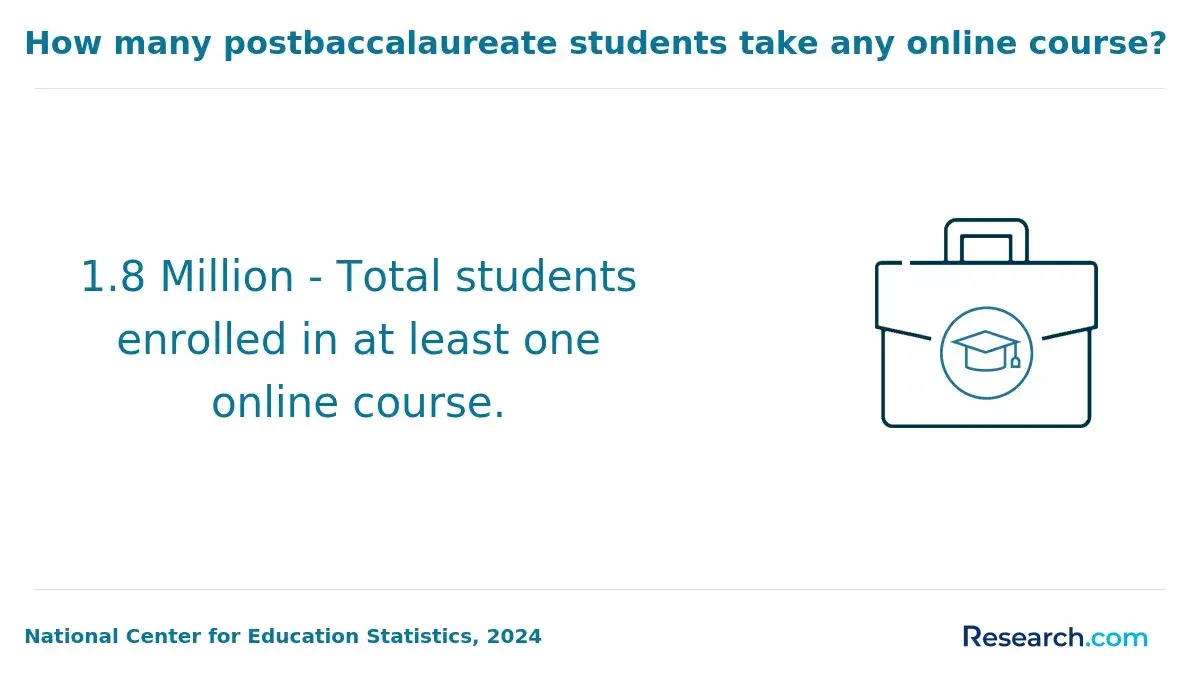
Balancing life obligations and leveraging employer support such as flexible hours or tuition reimbursement can critically influence the pace at which degrees are completed. According to recent data from the National Center for Education Statistics, nearly half of online college students are over 30 years old, highlighting the prevalence of adult learners managing education alongside work and family.
- Transfer Credits: Higher transfer credit amounts reduce required coursework, sometimes enabling degree completion in one year or less with 90 credits.
- Part-Time Enrollment: Taking 6 credits per semester suits working adults but extends time to degree, often beyond three years.
- Accelerated Terms: Eight-week courses and summer sessions allow more courses yearly, accelerating graduation.
- Competency-Based Models: Mastery-based advancement cuts down on time spent waiting out fixed academic terms.
- Employer Support: Work flexibility and tuition aid support consistent progress toward graduation goals.
What Financial Aid, Grants, and Employer Tuition Assistance Options Are Available for Online Media Arts Completion Students?
Adult learners pursuing an online media arts bachelor's degree completion program have access to a variety of financial aid resources tailored to their unique needs. Federal aid remains a cornerstone, with Pell Grants and Direct Loans available to those who file the Free Application for Federal Student Aid (FAFSA) and meet eligibility criteria. Many states also provide grants specifically aimed at adult returners or part-time students, helping to lower the overall cost of education.
Institutional scholarships frequently focus on students returning to finish their degrees, especially in creative disciplines like media arts. These awards often consider academic achievement, community involvement, or professional background. Fellowships are another avenue offering stipends or tuition support to adult learners.
Employer tuition assistance programs play a significant role for working students. Under IRS Section 127, employers can contribute up to $5,250 per year toward undergraduate education without it being counted as taxable income, making this a valuable financial benefit for degree completion students.
- Federal Aid Availability: Pell Grants and Direct Loans remain accessible to adult learners who timely submit FAFSA forms and meet eligibility standards.
- State Grants: Review your state's higher education websites for grants tailored to adult students resuming college.
- Institutional Scholarships: Look for scholarships targeting media arts degree completion students that reward academic and professional merits.
- Employer Tuition Assistance: IRS Section 127 allows employers to provide up to $5,250 annually in tax-free tuition benefits for undergraduate education.
- Financial Aid Checklist: Complete the FAFSA early, research state grants, apply for institutional scholarships, and request a tuition benefit agreement from your employer prior to enrollment.
How Does Per-Credit-Hour Tuition for Online Media Arts Completion Programs Compare Across Accredited Institutions?
Per-credit tuition for online media arts degree completion programs shows significant variation among accredited institutions. Based on recent NCES and IPEDS data, the national average per-credit cost for these online bachelor's completion programs is approximately $400. Individual tuition rates span from about $250 to over $700 per credit, reflecting differences in school type, location, and program structure. When comparing programs, it is essential to factor in transfer credit policies, as many students start with 60 to 90 credits already earned.
Ancillary fees such as technology charges, proctoring, graduation costs, and mandatory course materials can significantly increase the overall expense beyond the sticker price per credit. Textbook costs are often substantial in creative disciplines like media arts and should be included in budget planning.
Working adults examining accredited online media arts programs tuition comparison should note that a lower per-credit rate does not always translate to a more affordable degree if the program requires more total credits. Evaluating transfer credit acceptance and credit hour requirements is critical for accurate financial planning.
- Average Benchmark: Nationally, online media arts completion programs cost about $400 per credit, serving as a useful comparison marker.
- Cost Variation: Tuition rates vary widely, with some programs under $250 and others exceeding $700 per credit depending on institution specifics.
- Ancillary Fees Impact: Additional mandatory fees can raise total costs well above advertised tuition rates.
- Total Credits Required: Programs demanding more credits may cost more overall, even if per-credit tuition is lower.
For those interested in further exploring their options, including transfer credits and program details, examining specialized tracks such as a cryptocurrency degree can offer insights into diverse offerings within online education. This information supports a comprehensive approach to selecting the right accredited online media arts degree completion program.
What Prior Learning Assessment and Credit-by-Exam Options Exist in Online Media Arts Degree Completion Programs?
Prior learning assessment (PLA) offers a valuable opportunity for working adults to accelerate their online media arts degree completion by converting existing knowledge into academic credit. Many programs accept CLEP and DSST exams, portfolio assessments, and credit for military training evaluated through the American Council on Education (ACE). These options significantly reduce the time and cost required to graduate.
Common PLA policies within top programs include wide acceptance of prior learning credits-with some allowing up to 30 or more credits. Portfolio reviews often consider professional work samples, certificates from corporate training, and documented volunteer experience as evidence. Military service members particularly benefit from ACE credit recommendations, which recognize formal coursework and job training from military careers.
- CLEP and DSST Exams: These standardized tests allow students to demonstrate mastery in core subjects, earning credits without retaking equivalent courses.
- Portfolio Assessment: Candidates submit detailed documentation of professional achievements and media arts projects. Successful portfolios must clearly link prior experience to course competencies.
- ACE Credit Evaluation: ACE evaluates military and corporate training programs, providing credit recommendations accepted by most accredited institutions.
- Documentation Preparation: Students should gather syllabi, work samples, transcripts, and certificates, ensuring all materials align with program criteria for smooth credit evaluation.
Working adults exploring credit-by-exam opportunities in online media arts bachelor programs should research institutions' PLA allowances closely. Selecting programs with expansive, flexible PLA policies maximizes credit acceptance and minimizes redundant coursework.
For reliable guidance on selecting an accredited program, consider consulting accredited online electrical engineering programs, which use rigorous standards that parallel quality assurance in media arts education as well.
How Do Asynchronous Schedules in Online Media Arts Programs Accommodate Full-Time Working Professionals?
Courses allow students to access lectures, assignments, and discussions anytime, making it possible to study across any time zone or work schedule without fixed meeting times. This flexibility benefits those balancing jobs and family commitments by eliminating scheduling conflicts.
Assignment Structure: Typically, weekly modules include videos, readings, and discussion boards where participation is expected within set windows but not real-time. Assessments often have flexible deadlines, enabling students to plan work around their busiest periods.
Synchronous vs. Hybrid Formats: Synchronous courses require attendance at scheduled live sessions, which can be challenging for shift workers or frequent travelers. Hybrid programs blend live interaction with asynchronous work, offering some real-time engagement but still demanding fixed hours that may not fit all lifestyles.
Eight-Week Terms: Some institutions offer accelerated eight-week courses, letting students focus intensively on fewer subjects. This model helps maintain momentum and balances academic rigor with professional responsibilities better than traditional 16-week semesters.
Time Management Strategies: Adult learners report success using digital calendars, task management apps, and setting dedicated study blocks to stay organized and consistent. Prioritizing assignments early in the term helps avoid clashes with demanding work periods or personal obligations.
What Concentrations and Career Tracks Are Available Within Online Media Arts Degree Completion Programs?
Online media arts bachelor's completion programs typically incorporate concentrations within the standard 120-credit curriculum, avoiding additional credit requirements and allowing students to graduate on schedule without extra tuition costs. These specializations correspond to diverse career options with varying salaries as reported by the U.S. Bureau of Labor Statistics (BLS).
- Digital Design: Emphasizes graphic design, UX, and web development skills. Graduates pursue roles like graphic designer and web developer, earning median salaries between $55,000 and $75,000. This track prepares students for positions in branding and digital marketing.
- Animation and Visual Effects: Focuses on 2D/3D animation and motion graphics, with potential careers as animators and multimedia artists averaging near $75,000 annually. Certification opportunities in specialized software can enhance job prospects in entertainment and advertising.
- Media Production and Communication: Covers video editing and production management. Career paths include video editor and broadcast technician, with average wages around $60,000. Practical internships often accompany this focus.
- Interactive Media and Game Design: Concentrates on game development and virtual reality, leading to roles like game designer or VR developer, frequently earning $80,000 or more. Programs may prepare students for Unity or Unreal Engine certifications.
- Advertising and Marketing Media: Explores digital advertising strategies and content analytics, equipping graduates for marketing coordinator or digital strategist roles with salaries typically between $55,000 and $70,000.
Choosing a concentration that aligns personal interests with labor market demand benefits working adults seeking completion degrees. Many certifications linked to certain tracks require further study but substantially improve employment chances within rapidly evolving media fields.
What Graduates Say About Online Media Arts Bachelor's Degree Completion Programs for Working Adults
- Brittany: "Choosing this online media arts bachelor's program was a game-changer for me because of its clear structure and solid accreditation, which gave me confidence in the degree's value. The transfer credit policy was seamless, allowing me to apply my previous coursework without hassle. Plus, the tuition model was transparent, making it easier to manage my finances while advancing my education."
- Matthew: "Looking back, the program's emphasis on recognizing prior learning really stood out. I was able to leverage my professional experience toward course credits, accelerating my path to graduation. I've noticed a definite boost in employer interest since completing the degree, which speaks volumes about the program's relevance and how well it prepares graduates for real-world media arts roles."
- Wesley: "What impressed me most was the professional approach to curriculum design that aligns with both industry standards and accreditation requirements. The flexibility in accepting transfer credits respected my past academic effort and kept my degree completion on track. After graduating, I've found career advancement opportunities were more accessible, validating the program's focus on practical outcomes."
Other Things You Should Know About Media Arts Degrees
In 2027, some online Media Arts bachelor's degree completion programs offer flat-rate or subscription-based tuition models. These models allow students to pay a set amount for unlimited courses per term or pay a subscription fee for access to all course materials, providing budget-friendly options for working adults.
Online media arts completion programs typically offer tailored academic advising and support services designed for working adults. These include access to academic counselors, technical support, virtual tutoring, and career services such as resume building, internship placement assistance, and job search resources. Many programs also provide mentorship and networking opportunities to help students connect with industry professionals.
Completing an online media arts bachelor's degree often improves earning potential and expands career opportunities compared to stopping with some college credits. Graduates typically qualify for higher-level positions in creative, digital, and media industries that require a bachelor's degree. The investment in completing the degree tends to pay off through greater job stability and long-term career growth.
References
- 5 advantages of earning an online bachelor’s degree | Penn LPS Online https://lpsonline.sas.upenn.edu/features/5-advantages-earning-online-bachelors-degree-or-certificate-working-adult
- Funding and Financial Aid / Media University https://www.media-university.de/en/study/funding-options/funding-and-financial-aid/
- What Financial Aid Options Are Available for Online Education? - Lakewood University https://lakewood.edu/online-education-financial-aid-3/
- How does e-learning differ from traditional degree programs? https://m.umu.com/ask/q11122301573854570343
- What Is the Difference between a BS and a BA Degree? https://www.aiuniv.edu/degrees/business/articles/bs-vs-ba-degree
- The Best Online Degrees for Working Adults [Complete Guide] https://beal.edu/best-online-degrees-for-working-adults/
- Best Accredited Online Universities in 2025 https://www.study.eu/article/best-accredited-online-universities
- The Advantages of Online Learning for Working Professionals https://www.tuw.edu/school-news/advantages-of-online-learning/
- Scholarships and Grants https://www.nyfa.edu/student-finances/scholarships-and-grants/
- Grants for Online College | Edvisors https://www.edvisors.com/plan-for-college/scholarships/college-grants/online-college-grants/