2027 Return on Investment of an Online Media Arts Bachelor's Degree: Salary vs Cost

Co-Founder and Chief Data Scientist
Consider a professional with a nonrelated bachelor's degree aiming to switch careers by earning an online Media Arts bachelor's degree. They must weigh the program's cost against potential salary gains in a competitive industry.
Recent data shows graduates with a Media Arts degree earn a median annual salary about 25% higher than those with only a general arts degree. This difference highlights the importance of understanding long-term returns on education investments amid rising tuition fees and living expenses.
This article analyzes the salary benefits versus costs of an online Media Arts degree, equipping readers to make informed decisions about their career transition journey.
Key Things to Know About the Return on Investment of an Online Media Arts Bachelor's Degree
- Average tuition for online media arts bachelor's degrees ranges from $15,000 to $40,000, significantly lower than traditional programs, impacting long-term debt and overall return on investment.
- Graduates earn median salaries between $45,000 and $65,000, with potential for a 15% increase over five years, reflecting positive salary growth relative to tuition costs.
- Non-financial returns include enhanced job security, with 10% projected employment growth, plus opportunities for career advancement and professional development in creative industries.
What Is the True Cost of Earning an Online Media Arts Bachelor's Degree From Enrollment to Graduation?
When examining the total cost of an online media arts bachelor's degree, it is crucial to include both direct tuition charges and ancillary expenses that contribute to the overall financial commitment.
- Tuition Sticker Price: Published tuition fees for online media arts programs vary significantly, often ranging from $15,000 to $40,000. These figures represent the full cost before accounting for financial aid or scholarships, which can substantially affect affordability.
- Net Price After Aid: Data from the National Center for Education Statistics shows that many students pay considerably less than the sticker price due to eligibility for grants, scholarships, or employer tuition assistance. Typical net prices range between $10,000 and $25,000, depending on the institution and student circumstances.
- Technology Fees: Additional fees, typically between $500 and $1,500 over the duration of the degree, are charged to support digital platforms, software licenses, and technical assistance required for online learning.
- Course Materials and Textbooks: Specialized software and textbooks for media arts courses may cost students around $1,000 to $2,500. Some programs minimize these expenses by bundling digital resources or software within tuition costs.
- Proctoring and Exam Fees: Online courses often require remote proctoring to ensure academic integrity, which can add $50 to $150 per exam. These fees can accumulate across multiple classes.
Including these costs, prospective students should anticipate a total estimated investment of $12,000 to $45,000 to complete an online media arts bachelor's degree. This range serves as a practical baseline for measuring the program's return on investment by comparing against projected salaries and career advancement opportunities.
For those weighing educational paths, exploring options like online SLP master's programs can also provide insight into cost structures and outcomes in related fields.
Affordability and financial planning remain critical factors for first-generation college students, working professionals, and career changers deciding on tuition and fees for online media arts programs.
How Does the Starting Salary for Media Arts Bachelor's Degree Graduates Compare to the Total Cost of the Degree?
The average starting salary for media arts bachelor's degree graduates typically ranges from $40,000 to $50,000 annually for common entry-level roles such as graphic designers, multimedia artists, and animators, according to Bureau of Labor Statistics (BLS) data.
When comparing this to the total tuition cost for an online media arts degree, which varies between $15,000 and $50,000, students can expect to spend between 4 and 15 months of their starting salary to recoup the investment. This payback period depends largely on tuition rates and financial aid availability.
The comparison of total tuition cost versus salary outcomes for media arts degrees highlights that while upfront costs may seem significant, salary growth over time often offsets these initial investments.
Media arts professionals frequently advance to roles such as creative directors or digital media managers, which offer substantially higher pay. This long-term increase in earnings improves the overall return on investment beyond the entry-level salary.
Students on a restricted budget should carefully evaluate programs that offer generous scholarships or affordable tuition to reduce cost burdens. Working professionals and career changers can find the combination of flexible online programs and upward salary potential compelling enough to justify higher tuition fees.
For further options on affordable pricing, exploring online psychology degree cheap programs may offer comparative insights.
What Is the Average Return on Investment (ROI) for an Online Media Arts Bachelor's Degree Over a 10-Year Career?
Return on investment (ROI) in higher education measures the financial benefits of earning a degree compared to the costs over time.
Specifically, for an online media arts bachelor's degree, ROI represents the extra earnings a graduate achieves within 10 years versus someone with only a high school diploma or associate degree in the same field, after subtracting total educational expenses. According to Georgetown University's Center on Education and the Workforce, this is a widely accepted benchmark for evaluating degree value.
Using the 2023 Bureau of Labor Statistics median annual wage of $55,000 for media arts professionals and factoring in an average 3% yearly increase, projected 10-year earnings reach about $600,000. In comparison, a high school graduate's cumulative earnings over the same period are roughly $385,000 with similar raises. Deducting typical degree costs-ranging from $40,000 to $60,000-the net financial gain lies between $155,000 and $175,000.
When compared to the national average ROI for all bachelor's degrees, which stands near $300,000 over a decade based on Georgetown data, the media arts ROI is modestly lower but still a meaningful economic advantage. Additional benefits include improved job stability, opportunities for career growth, and personal satisfaction, enhancing the overall return on the degree investment.
A professional who recently completed an online media arts bachelor's degree shared that evaluating the costs versus expected returns was critical before enrolling. He described the process as "meticulous," involving detailed budgeting and careful comparison of salary prospects.
Balancing full-time work and study brought challenges, but he emphasized that "seeing the gradual salary growth reaffirmed the decision." He appreciated how the flexible program fit his lifestyle, noting, "It wasn't just about numbers; it was about opening doors I hadn't imagined before." This experience highlights that financial calculations are just one part of committing to an online media arts degree.
How Do Online Media Arts Program Tuition Rates Compare Across Public, Private, and For-Profit Institutions?
- Public Universities: Typically offering the most economical tuition, public institutions in-state or with flat-rate online tuition structures charge between $7,000 and $15,000 annually for online media arts bachelor's degrees. These schools benefit from recognized reputations and access to state funding, which often translates into higher graduation rates compared to for-profit colleges.
- Private Nonprofit Institutions: Charging $20,000 to $35,000 per year, private nonprofit schools emphasize personalized support, smaller classes, and extensive alumni networks. Though their tuition is higher, graduates often enjoy better job placement and income prospects due to institutional prestige and employer recognition.
- For-Profit Colleges: These providers may advertise tuition as low as $5,000 to $10,000 annually to attract cost-sensitive students. However, despite initial savings, these schools frequently report lower graduation rates and face employer skepticism, which can hinder job opportunities and salary growth, reducing long-term return on investment.
Careful evaluation of cost versus career outcomes is essential when choosing an online media arts program tuition comparison public private for-profit options. Often, the cheapest tuition does not guarantee the best ROI. Students aiming for career advancement or a budget-conscious education path should research beyond tuition figures.
For those exploring further academic options, programs like an EdD in education offer alternative routes with affordable, reputable online degrees.
What Long-Term Salary Growth Can Media Arts Bachelor's Degree Holders Expect Over a 20- to 30-Year Career?
- Early Career Growth: Within the first five years, salaries for media arts graduates typically see steady but modest increases as individuals build essential skills and gain hands-on experience. Entry-level roles-such as junior designers or assistant animators-usually provide raises that reflect the standard pace in creative industries during this foundational period.
- Mid-Career Acceleration: Around the decade mark, salary progression tends to speed up significantly. This phase often aligns with advancement into roles like senior designers or creative leads, where expertise and leadership responsibilities result in substantial pay hikes. PayScale data indicates mid-career media arts professionals earn 30% to 50% more than their starting salaries.
- Established Expertise: After about 15 years, further salary increases often coincide with securing senior leadership or specialized creative positions. At this stage, professionals benefit from enhanced recognition and advanced skills, which contribute to greater earnings and job stability.
- Lifelong Earnings Premium: Over a 20- to 30-year timeline, individuals with a media arts bachelor's degree accumulate total earnings 20% to 40% higher than counterparts without a degree in similar creative roles, supported by data from the American Community Survey.
- Non-Salary Returns: Beyond income, degree holders enjoy expanded career advancement opportunities, improved job security, and stronger access to professional networks-advantages that formal education tends to foster within the media arts sector.
One professional who built her career through an online media arts bachelor's degree shared how the journey wasn't without obstacles. She described managing coursework alongside full-time work as challenging, but essential for sharpening her discipline and time management.
She appreciated how projects simulating real-world assignments boosted her confidence, making the transition into higher-paying roles smoother. Reflecting on her growth, she noted that while salary gains were important, the program's flexibility and connection to industry tools truly prepared her for ongoing career development.
How Does the ROI of an Online Media Arts Bachelor's Degree Compare to an Associate Degree or a Professional Certificate?
Cost differences between online media arts credentials are significant. A bachelor's degree typically costs between $20,000 and $40,000 in tuition and fees, while an associate degree usually ranges from $10,000 to $15,000. Professional certificates are the most affordable, often under $5,000.
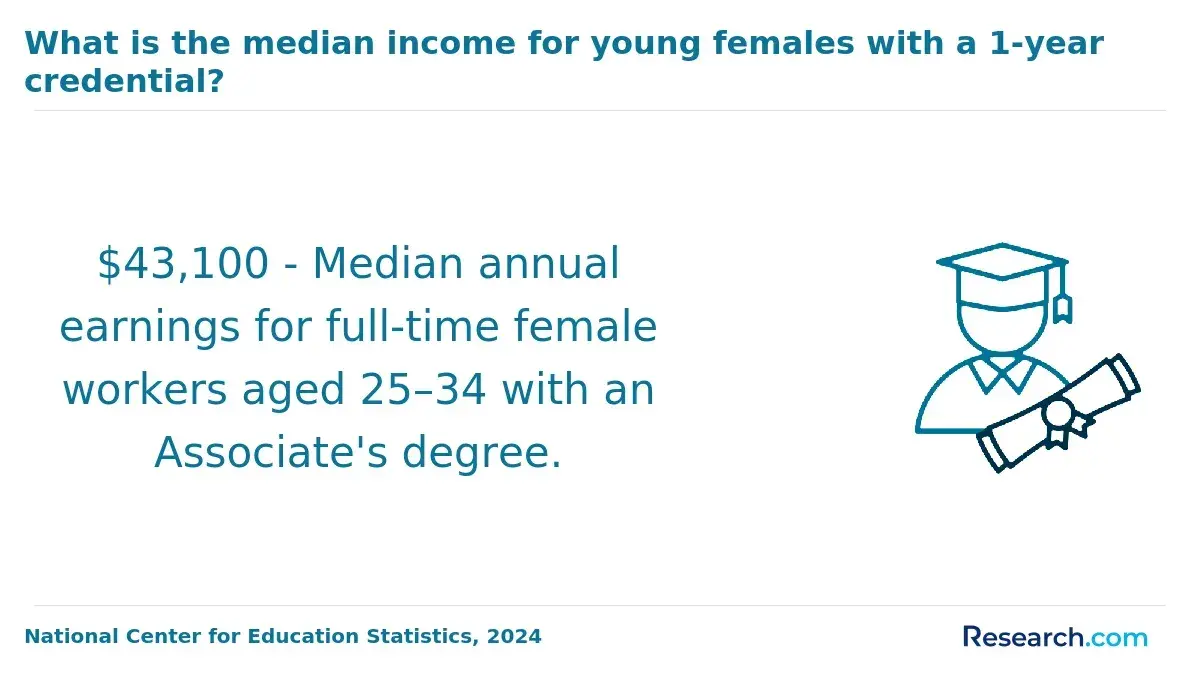
- Median Salary: Data from the Bureau of Labor Statistics highlights clear wage distinctions. Graduates with a bachelor's degree earn about $55,000 to $65,000 annually. Those with an associate degree earn around $40,000 to $50,000, and certificate holders generally make $35,000 to $45,000.
- Short-Term Investment: For individuals who need quick entry into the workforce or face budget limits, certificates and associate degrees provide faster credentialing and earlier salary increases. These options suit those requiring immediate income or hesitant to commit to a four-year program.
- Long-Term Returns: Bachelor's degree holders tend to enjoy higher lifetime earnings and greater career progression. This education level opens access to specialized roles, leadership positions, and industries with stronger growth and stability.
- Non-Financial Benefits: Beyond earnings, the bachelor's degree offers enhanced professional development, increased job security, and broader networking opportunities, all of which support career resilience.
- Decision Framework: Those prioritizing low upfront costs or a quick workforce start should weigh certificates or associate degrees. Individuals aiming for maximum earning potential and long-term advancement should consider the bachelor's degree. Working professionals seeking to upskill or advance may find value in stacking credentials with a bachelor's degree for specialized expertise.
Which Online Media Arts Specializations or Concentrations Yield the Highest Earning Potential After Graduation?
The choice of specialization within an online media arts bachelor's degree significantly influences post-graduation salaries and career advancement. Data from the Bureau of Labor Statistics (BLS) highlights how focused expertise leads to higher median wages compared to generalist media arts graduates.
The salary premium ranges between 10% to 30% depending on industry and location, making the decision on concentration critical for optimizing return on investment.
- Digital Animation: Median salaries often exceed $75,000 for graduates with skills in this area, driven by demand in entertainment, gaming, and advertising. Employers may require certifications in software like Autodesk Maya or Adobe After Effects, which add to upfront costs but improve employability.
- Interactive Media Design: Focused on UX and UI design, this track sees median earnings around $80,000. Tech firms and digital marketing agencies lead hiring, and obtaining a UX certification post-graduation can further boost income, though it entails additional expenses and time.
- Video Production and Editing: Median wages range from $55,000 to $65,000 but can increase with experience and a strong portfolio. Certain states may require licensure for film production roles, impacting time to ROI and licensing costs.
- Graphic Design: With median salaries near $53,000, specializations in motion graphics or web design can earn higher premiums. Continuous learning of new tools is essential, potentially increasing investment but improving resilience in a changing job market.
- Emerging Technologies (AR/VR): This specialization often commands salaries exceeding $85,000, concentrated in tech hubs. Ongoing education is necessary to stay current with fast-paced innovation, adding to total investment.
Students should weigh certification fees, program length, and prior experience against these median salary data to select a specialization that balances earning potential with manageable upfront costs. Those with technology aptitude and readiness for ongoing education are best poised to maximize financial and professional returns in today's competitive media arts landscape.
How Do Employer Tuition Reimbursement and Financial Aid Reduce the Net Cost of an Online Media Arts Bachelor's Degree?
Employer tuition reimbursement programs can dramatically reduce the out-of-pocket cost of earning an online media arts bachelor's degree. Under IRS Section 127, employers may offer up to $5,250 annually in tax-free tuition assistance per employee, a benefit many working students leverage.
According to the Society for Human Resource Management (SHRM), nearly 43% of U.S. employers provided tuition aid in 2022, making this a common and valuable resource for advancing careers without accumulating excessive debt. For students balancing work and study, these employer tuition reimbursement programs for online media arts degrees act as critical financial support.
Federal and institutional financial aid further lowers the net cost. Grants, scholarships, and subsidized loans help reduce reliance on private funding and debt. For example, the federal Pell Grant offers non-repayable aid to eligible students, significantly easing the financial burden. Layering these resources together-employer assistance, Pell Grants, and additional scholarships or loans-can bring the net tuition to a small fraction of the published price.
Consider a hypothetical student enrolled in an online media arts program with a $15,000 annual tuition. If the employer covers $5,250 of this under IRS Section 127 and the student receives a Pell Grant of $6,495, the remaining balance may be financed through subsidized loans or scholarships.
This approach could reduce the yearly net cost to under $4,000. Such financial strategies are especially important for first-generation college students, working adults, or career changers aiming to maximize affordability and return on investment.
Prospective students should also research specific program costs and benefits by consulting trusted sources such as real estate degree programs rankings and financial data to better compare outcomes and affordability within their chosen field.
What Hidden Costs Should Students Factor Into the Total Investment of an Online Media Arts Bachelor's Degree?
Students pursuing an online media arts bachelor's degree often underestimate the hidden expenses involved beyond tuition. These additional costs can raise the total investment by 10% to 20%, according to data from institutional disclosures and the College Board, significantly extending the break-even timeline for the degree's return on investment.
Being aware of these fees is crucial, especially for first-generation college students, working professionals, and career changers budgeting carefully. Prospective students should request a full cost-of-attendance breakdown-not just tuition-to avoid surprises.
Key additional costs include technology fees, proctoring services, graduation fees, software licenses, and professional organization memberships. For example, technology fees typically range from $200 to $500 annually to cover online platforms and IT support. Proctoring services, necessary for remote exams, usually add $30 to $50 per test.
Graduation fees can add $100 to $300 in the final term. Course-specific software licenses for design or editing applications often cost $20 to $80 monthly, either covered by the program or paid separately by students. Many students also invest in professional memberships costing $50 to $150 yearly to strengthen networks and career opportunities.
These hidden expenses significantly affect the overall costs of an online media arts bachelor's degree and the timeline to recoup the investment through increased earnings. To make informed decisions, it is helpful to compare programs based on total cost and outcomes including salary data from the Bureau of Labor Statistics and other research.
For those considering alternatives, an online architecture school may offer different cost structures and opportunities.
How Does the Accreditation Status of an Online Media Arts Program Affect Graduate Salary and Employability?
Regional accreditation evaluates the entire institution's educational quality, while programmatic accreditation targets specific media arts programs. Degrees from regionally accredited schools usually carry more weight with employers, leading to higher starting salaries and stronger negotiating power.
According to surveys by the National Association of Colleges and Employers (NACE), hiring managers overwhelmingly prefer candidates with degrees from regionally accredited institutions over those with only national or no accreditation. This preference impacts job placement and salary potential significantly.
Choosing a program lacking proper accreditation can restrict graduates from taking required licensure exams and limit admission to competitive graduate programs. Additionally, many government and healthcare jobs mandate degrees from accredited schools, so attending unaccredited programs may disqualify applicants from these opportunities.
It is crucial for students to confirm accreditation status through trusted sources such as the U.S. Department of Education's accreditation database and the Council for Higher Education Accreditation (CHEA) before committing to any media arts program.
What Entry-Level Job Titles and Salary Ranges Are Available to Graduates of Online Media Arts Bachelor's Programs?
Graduates with online media arts bachelor's degrees typically assume diverse entry-level positions blending creativity and technical skills. Salaries differ by role, industry, and credentials like internships or certifications, influencing how fast graduates recover education costs.
- Graphic Designer: Median starting salaries range from $40,000 to $50,000. Technology and advertising sectors tend to offer the highest pay. Proficiency with design software and a robust portfolio can drive early earnings upward.
- Video Editor: Entry-level pay generally falls between $38,000 and $48,000, with opportunities in entertainment, marketing, and education. Editing software certifications help boost starting salaries.
- Digital Content Producer: Salaries begin around $42,000 to $52,000. Healthcare and finance industries often pay more for digital marketing and communication roles.
- Social Media Coordinator: Salary ranges from $35,000 to $45,000, with technology and media companies offering higher entry pay. Campaign management internships frequently lead to better offers.
- Multimedia Artist and Animator: Starting salaries vary between $45,000 and $55,000. Gaming and film sectors are particularly lucrative, especially for those skilled in animation tools.
- Web Designer: Typical starting wages are $40,000 to $50,000. Technology and education industries provide competitive compensation, especially for UX design certification holders.
- Marketing Assistant: Median entry pay ranges from $37,000 to $47,000, commonly in finance and healthcare marketing. Familiarity with digital media tools benefits employability and salary.
- Photography Assistant: Entry-level salaries usually fall between $30,000 and $40,000. Commercial and fashion sectors pay more, and a professional portfolio plus formal media arts training enhance earning potential.
Internships and targeted credentials can increase starting salaries by 5 to 15 percent. Graduates who concentrate their studies or gain hands-on experience in key fields often see faster salary growth and stronger job security, making their online degree a smart financial investment.
What Graduates Say About the Return on Investment of Their Online Media Arts Bachelor's Degree
- Benson: "Choosing the online media arts bachelor's degree was a strategic decision driven by its affordable cost and promising ROI compared to traditional programs. Beyond the financial aspect, the flexibility allowed me to balance work and study, which significantly enriched my learning experience. This degree opened doors to new projects and roles, proving its value in advancing my career while providing long-term job security."
- Marianne: "Reflecting on my journey, the non-financial returns of pursuing an online media arts bachelor's degree have been truly transformative. The curriculum sharpened my creative skills and expanded my professional network, which has been vital for career growth. While the monetary ROI is important, the real gain lies in the confidence and opportunities this degree has brought to my professional life."
- Wesley: "Professionally, the online media arts bachelor's degree has been a game-changer-helping me transition into leadership roles more quickly than I expected. I weighed the ROI carefully and found that the program's cost was reasonable given the accelerated career paths it opens. The degree also enhanced my adaptability in a competitive market, making it a smart investment in both my skills and future."
Other Things You Should Know About Media Arts Degrees
On average, graduates with an online media arts bachelor's degree can recoup their tuition and fees within five to seven years through higher salaries compared to those with only a high school diploma. This estimate varies depending on factors such as program cost, initial salary, and career progression. Students attending more affordable programs or entering high-demand sectors may see a quicker return on their investment.
In 2027, graduates with an online media arts bachelor's degree can expect to see a return on investment through increased salary typically within 5 to 10 years, depending on factors like location, industry, and job role. High-demand areas and sectors such as digital marketing or animation may lead to quicker ROI.
Employer surveys consistently show that a bachelor's degree in media arts is highly valued for roles requiring technical skills and creativity. Labor market data from the Bureau of Labor Statistics indicates steady growth in media-related professions, with strong demand for graduates proficient in digital tools and multimedia production. Employers often prioritize graduates who combine artistic ability with practical digital skills, which enhances job placement prospects.
Cost-benefit analysis tools allow prospective students to compare tuition costs, financial aid, and expected earnings for specific programs. By inputting data such as program length, average graduate salaries, and debt repayment terms, students can forecast how long it will take to break even. These tools support informed decision-making by highlighting which online media arts programs offer the best financial outcomes relative to their cost and career goals.
References
- Employer Tuition Assistance - FAME Maine https://www.famemaine.com/affording-education/pay-for-school/employer-tuition-assistance/
- The University Courses With The Highest Return On Investment - Here Student Living https://herestudents.com/the-university-courses-with-the-highest-return-on-investment/
- Associate degrees and certificates are more valuable than you may think https://fordhaminstitute.org/national/commentary/associate-degrees-and-certificates-are-more-valuable-you-may-think
- Is College Worth it? | Return on Investment Analysis of College Degree https://educationdata.org/college-degree-roi
- Does College Pay Off? A Comprehensive Return On Investment Analysis - FREOPP https://freopp.org/whitepapers/does-college-pay-off-a-comprehensive-return-on-investment-analysis/