
Online MBA in Business Analytics: admissions guide for nonbusiness bachelor's graduates

Co-Founder and Chief Data Scientist
A bachelor's degree outside business can be an asset in analytics, but it may leave you unsure whether you qualify for an MBA or need accounting and statistics courses first. This guide is for nonbusiness graduates weighing an online MBA in business analytics. It explains what admissions offices commonly evaluate, how foundation requirements vary, and what to check before paying an application fee. You'll also learn how to judge whether an MBA fits your experience and goals - or whether a more focused qualification would serve you better.
Key Things You Should Know
- A nonbusiness bachelor's degree does not, by itself, rule out admission; check each school's degree, work-experience, testing, and foundation-course policies.
- Preparation is individual: a science graduate may already have quantitative skills but need accounting, while a humanities graduate may need to demonstrate both quantitative readiness and business exposure.
- The May 2025 median wage for US management occupations was $126,520, according to the Bureau of Labor Statistics; it is an occupational benchmark, not an expected salary for MBA graduates.
What is an online MBA in business analytics for nonbusiness graduates?
An online MBA in business analytics combines a broad management education with coursework on using data to make business decisions. Its MBA core generally covers subjects such as accounting, finance, operations, strategy, and leadership. Analytics coursework may address forecasting, data visualization, and the interpretation of models for managers.
For a nonbusiness graduate, the combination can connect existing disciplinary knowledge to commercial decisions. An engineer might use prior quantitative experience in operations analysis while learning how to evaluate budgets and communicate recommendations to executives. Readers with that background can also compare online MBA programs for engineers for working professionals.
Check the credential's exact name. Some schools offer a formally designated business analytics concentration; others offer only analytics electives within a general MBA. Neither arrangement necessarily provides the advanced statistics or programming depth of a specialized analytics master's degree.
Can you earn an online MBA in business analytics without a business degree?
Yes. A nonbusiness bachelor's degree is not a universal barrier to MBA admission. What matters is whether you meet a particular program's degree and experience rules and can show readiness for its graduate coursework. A nursing, history, computer science, or psychology graduate may bring useful industry knowledge, research experience, communication skills, or quantitative training - but those backgrounds create different preparation needs.
Do not assume that a school admitting nonbusiness majors also waives introductory business study. Some programs build foundational material into the MBA; others require separate courses or assessments. When comparing online MBA eligibility and admissions online MBA programs, confirm the policy for your intended intake and ask whether any required preparation adds credits, time, or cost.
What are the admission requirements for an online MBA in business analytics?
Requirements are set by individual universities, not by the analytics concentration as a whole. The table separates common application components from the questions a nonbusiness applicant should resolve before applying; none is a universal requirement.
| Application area | What to verify with the program | How to prepare |
| Bachelor's degree and transcripts | Accepted degrees, academic standards, and transcript procedures | Identify coursework that demonstrates writing, quantitative, or organizational skills |
| Professional experience | Minimum experience, preferred experience, and whether management experience is expected | Show decisions made, projects delivered, and measurable responsibilities - not just job titles |
| GMAT or GRE | Whether tests are required, optional, or eligible for a waiver | Consider a score only if it would strengthen your evidence of readiness |
| Written and professional materials | Essay, résumé, recommendation, and interview requirements | Connect your prior field, analytics interests, and specific management goal |
| Academic preparation | Required foundations, placement assessments, or recommended skills | Gather relevant coursework and ask which gaps must be addressed before enrollment |
Review deadlines and document rules on the school's current admissions page. In an essay or interview, explain why you need both management training and analytics, rather than describing a general interest in data. A concrete example from your current field can make that case more persuasive.
Sometimes, but not simply because their degree title is nonbusiness. A program may have no formal business prerequisites, require a preparatory module, or assign courses after reviewing transcripts. Accounting and finance concepts can be unfamiliar even to applicants who are strong in statistics; conversely, a graduate who has managed budgets may need more practice interpreting data than understanding business operations.
Distinguish an admission condition from a readiness recommendation. A required foundation course can affect when you start the MBA and what you pay. Recommended preparation - such as refreshing spreadsheets, descriptive statistics, or basic accounting - may be completed in a way that suits your background. Ask whether foundation work carries graduate credit, counts toward the MBA, and must be finished before analytics courses begin.
Expect a management core plus a smaller set of analytics-focused courses, although titles and depth vary by school. Core subjects help students interpret financial results, allocate resources, manage teams, and make strategic choices. Analytics courses may cover statistical reasoning, visualization, predictive methods, and translating findings into recommendations for decision-makers.
Read course descriptions rather than relying on the concentration label. If you want to lead analysts, look for projects involving business questions, data interpretation, and communication with stakeholders. If you want to build sophisticated models yourself, inspect the stated programming and mathematics requirements; an MBA may offer too little technical depth. A capstone using real organizational data can be valuable, but verify that it exists and is available to online students before treating it as a program benefit.
Completion time depends on required credits, course sequencing, enrollment pace, and any foundation work. Accelerated study can shorten the calendar but may be difficult alongside full-time work, particularly if you are learning accounting or statistics for the first time. When considering one-year online MBA programs one-year online MBA programs, check whether the advertised timeline includes prerequisites and is available at a manageable course load.
There is no single reliable price for this degree type. Request a program-specific estimate covering tuition, mandatory fees, foundation courses, books or software, and any required travel. Then compare the amount you would personally pay after confirmed employer assistance or other aid. A lower advertised tuition figure can be misleading if it excludes additional coursework, while a part-time schedule may spread payments out without reducing the total charge.
The better format depends less on where lectures appear and more on how you will learn, build relationships, and pursue your next role. These distinctions can help a nonbusiness graduate identify questions to ask of both programs.
| Decision factor | Online MBA | Campus-based MBA |
| Scheduling | May allow continued employment, but live classes and group work can still require fixed hours | Typically involves scheduled campus attendance; full-time formats can require time away from work |
| Learning support | Ask how introductory business and quantitative help is delivered remotely | Ask about access to in-person tutoring, faculty, and study groups |
| Career transition | Confirm online students' access to recruiting, projects, and career advising | Assess the actual program's employer events, internships, and recruiting access |
Someone advancing within a current organization may value the ability to apply coursework immediately. Someone attempting a substantial career switch may place greater weight on internships and employer recruiting. Neither format guarantees those opportunities. Use a guide to online MBA programs to build a shortlist, then verify scheduling and career services directly with each school.
First, confirm the university's institutional accreditation through the accreditor's directory or the US Department of Education's accreditation database. Next, check whether the business school claims separate accreditation, such as AACSB, and verify that claim in the accreditor's directory. Institutional accreditation and specialized business-school accreditation are different; neither alone tells you how well an analytics curriculum fits your goal.
For budget-conscious MBA program choices affordable AACSB-accredited online MBA programs, compare verified total charges alongside accreditation rather than treating either as a complete quality measure. Ask for the online curriculum, faculty information, a sample course schedule, and details of career support. Confirm that any advertised analytics concentration, applied project, or student service is available in the online MBA, not solely in a campus program.
Possible paths depend heavily on the experience you bring. A healthcare professional might move toward operations or service-line management; an engineer might pursue analytics-informed product or operations leadership; an experienced analyst might seek responsibility for strategy, budgets, or teams. A graduate with little professional experience should not assume the MBA alone qualifies them for a senior management role.
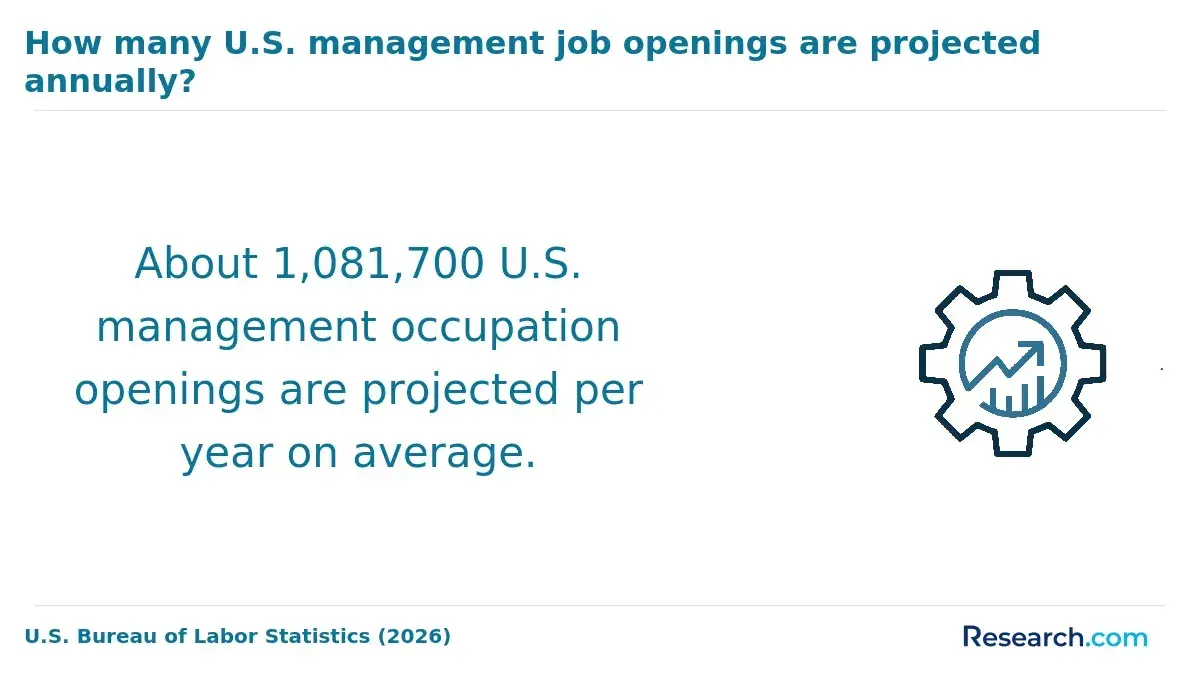
As a broad US benchmark, the Bureau of Labor Statistics reports a May 2025 median annual wage of $126,520 for management occupations. That figure covers workers across management jobs, experience levels, and educational backgrounds - not people who earned this MBA. BLS also projects management employment to grow faster than the average for all occupations from 2025 to 2035, but that outlook does not establish demand for any particular concentration.
Before enrolling for a career change, examine postings for your target role. If employers primarily seek hands-on SQL, programming, or statistical modeling, a technical course or analytics master's may be more direct. If they seek someone who can lead decisions using data and manage people and resources, the MBA may be a stronger fit - especially when paired with relevant work experience.
What certifications and skills complement an MBA in business analytics?
The most useful complement depends on your starting point. Applicants new to business can strengthen their foundation in financial statements and spreadsheet modeling. Those new to analytics can practice statistics, SQL, and visualization, then build a small portfolio that explains a business problem, method, limitations, and recommendation. Communication matters: managers must be able to challenge assumptions and explain results to people who did not build the analysis.
A software or analytics-platform certification can demonstrate familiarity with a specific tool, but it is not a substitute for managerial judgment or relevant experience. Choose one only after checking the tools used in jobs you actually want. If your goal is technical analyst work rather than business leadership, targeted training or a specialized degree may offer a clearer route than a full MBA.
Other Things You Should Know About MBA
Some schools accept applications from students nearing graduation, but enrollment usually depends on completing the degree and submitting final transcripts. Check the program's timing rules.
Briefly explain the context if the application allows it, then provide stronger, recent evidence of readiness through relevant coursework, work projects, or a test score where accepted.
Choose someone who can describe your analytical ability, initiative, collaboration, or leadership with specific examples. Follow the school's rules on professional versus academic recommenders.
Diploma wording varies by institution. Ask the registrar how the degree and any concentration appear on the diploma and transcript rather than assuming they will match the program's marketing name.
- Cost of Attendance (Budget) | 2025-2026 Federal Student Aid Handbook https://fsapartners.ed.gov/knowledge-center/fsa-handbook/2025-2026/vol3/ch2-cost-attendance-budget
- General Schedule Qualification Policies | U.S. Office of Personnel Management https://www.opm.gov/policy-data-oversight/classification-qualifications/general-schedule-qualification-policies/
- Accounting Program Guide | fsu.edu https://academic-guide.fsu.edu/node/141
- Prerequisite Requirements | Lucas Graduate School of Business | Financial Aid and Scholarship Office https://www.sjsu.edu/lucasgsb/prospective-students/msa/prerequisite-requirements.php
- Program: Business Administration M.B.A. - Academic Catalog https://catalog.csustan.edu/preview_program.php
- Online MBA | MBA Programs | School of Business | University of Connecticut https://mba.business.uconn.edu/mba-programs/online-mba/
- Quant Readiness Course | Executive MBA | UC Berkeley Haas https://mbaforexecs.haas.berkeley.edu/admissions/reapply/quant-course
- Application & Requirements - Business Analytics MBA https://business.fiu.edu/academics/graduate/business-analytics-mba/application-requirements/
- Work Experience Requirements for the Wharton MBA | MBA Program https://mba.wharton.upenn.edu/work-experience/
- Does the GMAT/GRE waiver affect my application? - Carey Blog https://blog.carey.jhu.edu/article/does-the-gmat-gre-waiver-affect-my-application


