2027 Online Leadership Master's Programs With University Scholarships: Awards, Eligibility & Tuition After Aid

Co-Founder and Chief Data Scientist
For many working professionals, the deciding factor in an online Leadership master's is not admission - it is the amount they will actually pay after university aid. Federal Direct Unsubsidized Loans for graduate students are generally capped at $20,500 per academic year, so scholarships, employer support, and school grants can materially reduce borrowing.
This guide is for prospective online Leadership students who want to compare institutional awards, eligibility, tuition, stacking rules, and renewal terms before committing. Use it to build a realistic funding plan and ask better questions of each university.
Key Things to Know About Leadership Master's Programs with Scholarships
- Online Leadership master's students may qualify for university merit scholarships, need-based grants, departmental awards, and employer partnerships, but eligibility frequently depends on enrollment level, academic record, and whether the online program is included.
- Graduate students can generally borrow up to $20,500 annually through the Direct Unsubsidized Loan program; scholarships are especially valuable because they reduce the amount that must be repaid.
- Compare the full program price - not just an advertised scholarship - by confirming covered credits, fees, renewal conditions, stacking limits, and the estimated balance after all gift aid.
What online Leadership master's programs offer university scholarships?
Many universities administer scholarships at the graduate-school or university level rather than under the exact title "Leadership." As a result, an online Master of Arts in Leadership, Master of Science in Organizational Leadership, educational leadership degree, or related management program may be eligible for the same institutional awards as other graduate programs. The important distinction is whether the university specifically includes online, part-time, and professionally oriented graduate students.
The options below are examples of places where prospective students should check the current graduate financial-aid page, program page, and admissions offer. Award availability, amount, and online eligibility can change by term, so treat a published scholarship as an opportunity to verify rather than as guaranteed funding.
| University or program type | Potential university funding route | What to confirm before applying |
| Private nonprofit university with an online leadership degree | Graduate merit scholarship, alumni award, or leadership scholarship | Whether fully online and part-time students qualify and whether the award applies to every required credit |
| Public university offering online organizational or educational leadership | Department scholarship, foundation award, or state-related graduate aid | Residency rules, program-specific eligibility, and whether distance learners pay separate online fees |
| University with employer-partnership tuition benefits | Partner discount or tuition-reimbursement coordination | Eligible employer list, minimum work status, documentation, and whether the benefit can be combined with merit aid |
| University with graduate assistantships | Assistantship stipend and/or tuition support | Whether remote students can perform the work and whether an assistantship is compatible with online enrollment |
Start with schools where the degree, delivery format, and award rules align. If you are also comparing a business-oriented concentration, reviewing marketing masters can help illustrate how program length and credit pricing affect the value of an aid offer.
Ask each admissions or financial-aid office for a written answer to four questions: Is my exact online program eligible? Is the award automatic or competitive? Is it renewable? What charges remain after the scholarship is posted?
What is the average tuition for Leadership master's programs before aid?
There is no single national tuition price for a Leadership master's because institutions use different degree titles, credit requirements, residency policies, and online-fee structures. A useful starting point is the program's total required credits multiplied by its current per-credit tuition, then adding mandatory technology, graduation, and course-material charges. This produces the published price before scholarships, grants, loans, or employer support.
For context, College Board's Trends in College Pricing 2024 reported average published tuition and fees of $12,596 for public four-year institutions for in-state students and $43,350 for private nonprofit four-year institutions at the undergraduate level. Those figures are not graduate Leadership tuition rates, but they underscore why a school's own graduate price sheet - not institution type alone - must drive your comparison.
This calculation framework helps separate a low advertised credit price from a lower total degree cost.
| Cost component | How to calculate it | Why it matters after aid |
| Tuition | Required credits × published rate per credit | Most scholarships apply here, but some exclude repeated or excess credits |
| Mandatory fees | Per-term and per-course fees × expected terms or courses | Fees may remain payable even when tuition is discounted |
| Books, software, and residencies | School estimate plus program-specific requirements | These expenses are often outside institutional scholarship coverage |
| Net tuition after gift aid | Total tuition and eligible charges − scholarships and grants | This is the figure to compare before considering loans |
A $5,000 scholarship is more valuable at a program where it applies to the full tuition balance than at one with significant uncovered fees or a short renewal period. Students considering longer academic pathways should also distinguish a master's funding package from funding for an online doctorate, which has separate tuition and aid rules.
What types of financial aid and scholarships are available for Leadership master's programs?
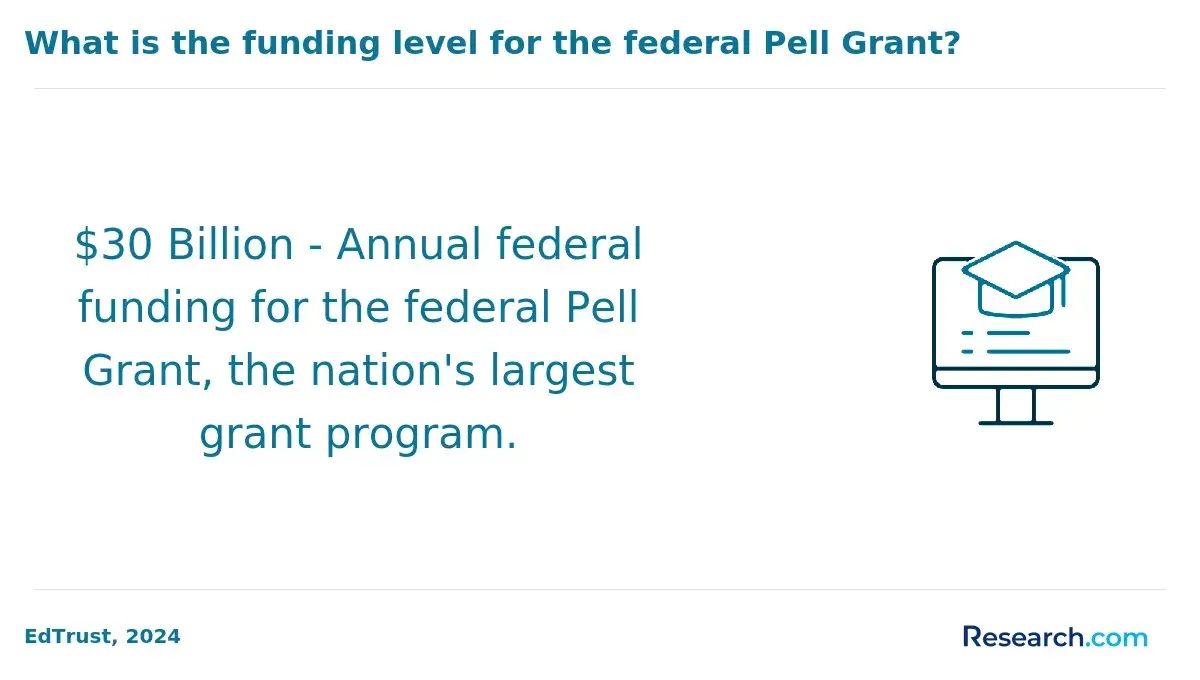
Leadership master's students commonly finance their studies with a mix of gift aid, employer benefits, and federal loans. Gift aid does not ordinarily require repayment, while loans do. Prioritize gift aid first, then compare employer assistance and borrowing options based on their conditions and timing.
The following categories clarify what each source is designed to cover and when it may make sense.
| Funding type | Typical basis | Best fit | Key limitation |
| University merit scholarship | Academic record, leadership experience, admissions profile, or program fit | Applicants with strong grades, professional achievement, or a compelling leadership record | May be competitive, limited, or restricted to new students |
| Need-based institutional grant | Financial need determined by the FAFSA or institutional review | Students whose financial circumstances demonstrate need | Availability can depend on institutional funds and annual filing |
| Departmental or foundation scholarship | Field, service, identity, employer, or leadership criteria | Applicants who closely match a defined mission or donor requirement | Often requires a separate application and earlier deadline |
| Employer tuition assistance | Employment with a participating organization | Working professionals whose employer supports role-relevant study | May require continued employment or repayment after departure |
| Federal Direct Unsubsidized Loan | FAFSA eligibility and enrollment | Students with a remaining balance after gift aid | Interest accrues and borrowing creates repayment obligations |
| Graduate assistantship | Work assignment and institutional selection | Students able to take on teaching, research, or administrative work | Less common or less accessible in fully online programs |
Submit the FAFSA even if you expect to receive merit aid. Some institutions use it to determine need-based grants and loan eligibility. Applicants exploring a different people-focused graduate specialty can compare cost structures in child psychology master's programs, but should not assume scholarship policies transfer between programs.
How much do Leadership master's scholarships typically cover?
Leadership master's scholarships range from modest one-time awards to multi-term tuition reductions, but coverage is institution-specific. Schools often state an award as a fixed amount, a per-credit discount, or a percentage of tuition. A "full tuition" award may still leave books, fees, travel, insurance, or living expenses uncovered, so the award letter must be read alongside the cost of attendance.
Use this comparison to interpret common coverage structures before choosing between offers.
| Coverage structure | What it can reduce | Decision consideration |
| Fixed award | A stated amount of eligible tuition or charges | Compare it against total program tuition; a fixed amount has less value as tuition rises |
| Per-credit scholarship | A defined amount for each eligible enrolled credit | Confirm the maximum number of credits and whether summer enrollment qualifies |
| Percentage tuition discount | A portion of tuition | Check whether the percentage applies before or after other institutional reductions |
| Full-tuition scholarship | Published tuition for eligible coursework | Ask specifically which fees and non-tuition costs remain |
Do not compare awards by amount alone. A smaller renewable scholarship at a lower-priced program can create a better net-cost outcome than a large one-time award at a more expensive institution. If your goal is to minimize undergraduate borrowing before graduate school, cost-conscious pathways such as affordable online colleges may be relevant to your broader education plan.
Who is eligible for Leadership master's scholarships?
Eligibility depends on the scholarship's purpose. Merit awards may weigh undergraduate GPA, professional advancement, community impact, recommendations, and the admissions essay. Need-based awards generally require financial information, often through the FAFSA. Departmental awards may seek demonstrated leadership in education, business, nonprofit work, public service, healthcare, or another aligned setting.
Online students should verify format-related rules early. Some awards require full-time enrollment, a campus presence, a particular start term, U.S. citizenship or eligible noncitizen status, or a minimum number of completed credits. Others are open to part-time distance learners, but that cannot be assumed from a general scholarship page.
Before spending time on an application, compare your circumstances with the written criteria below.
- Academic eligibility: required GPA, completed degree, admission status, and any prerequisite coursework.
- Enrollment eligibility: online-program inclusion, minimum credits per term, start date, and degree-seeking status.
- Financial eligibility: FAFSA filing, institutional need analysis, and requested income or tax documents.
- Professional eligibility: employer affiliation, leadership experience, service record, membership, or career field.
- Renewal eligibility: minimum cumulative GPA, satisfactory academic progress, continuous enrollment, and any annual reapplication.
Applicants who do not meet a university scholarship's rules should not treat that as a reason to abandon the degree. Employer reimbursement, payment plans, external professional associations, assistantships, and a lower-cost program may be more realistic funding routes.
What is the application process for Leadership master's scholarships?
The application process usually begins before enrollment, and scholarship deadlines may arrive earlier than the program's final admission deadline. Some awards are automatic when you apply for admission; others require a separate form, essay, recommendation, FAFSA, or interview. Missing a separate scholarship deadline is one of the most avoidable ways to lose funding.
Use this sequence to create a complete, trackable application plan.
- Request the university's current online-program tuition sheet, scholarship list, deadlines, and renewal terms in writing.
- Apply for admission early enough to receive an admissions decision before competitive scholarship deadlines.
- Submit the FAFSA if you may use federal aid or be considered for need-based institutional funding.
- Prepare a focused résumé, transcripts, leadership-impact examples, and recommendation requests that match each award's criteria.
- Complete every separate scholarship application and save confirmation records, including required uploads.
- Compare written offers by total renewable gift aid, covered charges, enrollment conditions, and net amount due each term.
- Ask for reconsideration only after presenting new, documented information, such as a stronger competing offer or a material change in financial circumstances.
A strong scholarship essay connects past evidence to future use of the degree. Rather than repeating a résumé, quantify the scope of a project when possible, explain the leadership challenge, describe your actions, and state how the graduate program supports a credible next step.
Do online Leadership students qualify for the same aid as on-campus students?
Sometimes, but not automatically. Students in an eligible online degree program can generally access federal student aid if they meet federal requirements and the institution participates in the programs. University scholarships, assistantships, donor awards, and tuition discounts are governed by each school's own terms, which may distinguish among online, hybrid, campus-based, full-time, and part-time enrollment.
The most common limitation is not the online format itself but the enrollment condition attached to the award. A scholarship requiring full-time study may be impractical for a working adult taking one or two online courses per term. Conversely, an online-specific merit award can be more useful than a larger campus award that cannot be used by distance learners.
Request confirmation of these points before accepting admission.
- Whether your exact degree code and online modality are eligible for the scholarship.
- Whether your planned credit load meets the award's minimum enrollment requirement.
- Whether the scholarship can be used in summer terms, accelerated sessions, or required residencies.
- Whether the university recalculates aid when you drop, withdraw from, or repeat a course.
- Whether remote students can compete for assistantships, fellowships, and foundation awards.
A written response from financial aid is more reliable than a general statement on a website, particularly when a program is newly launched or has multiple delivery formats.
Can Leadership master's students combine multiple scholarships and grants?
In many cases, yes. Students may combine a university merit award with an external scholarship, employer reimbursement, and federal aid, but the university can limit total assistance or reduce one award when total aid exceeds the school's cost of attendance. Institutional awards may also be marked as non-stackable, meaning only the most valuable eligible university discount applies.
Stacking smaller awards can be advantageous when each is renewable and covers different parts of the bill. It is less useful when an employer benefit requires repayment after leaving the job, an external scholarship displaces university grant aid, or a scholarship reduces eligibility for an assistantship you would prefer.
Before accepting multiple sources, ask financial aid to show how each will be applied.
- Ask which awards are stackable and whether one institutional scholarship replaces another.
- Confirm whether outside scholarships reduce loans first or reduce university grants.
- Check whether employer reimbursement is paid upfront or after successful course completion.
- Compare tax treatment with a qualified tax professional when scholarship or employer-benefit amounts may have tax implications.
- Keep copies of award letters and report outside aid as the university requires.
Do not decline a smaller award merely because it seems minor. Several modest, compatible awards can reduce borrowing meaningfully, provided they do not trigger a reduction in more favorable aid.
What are the requirements to maintain scholarship status in Leadership master's programs?
Renewal rules matter as much as the initial offer. Most renewable scholarships require satisfactory academic progress and may also require a minimum GPA, continuous enrollment, timely degree progress, good conduct standing, or a specified course load. Requirements vary widely, so a scholarship should be evaluated over the full expected program length rather than only for the first term.
Read the award letter for the exact renewal standard and ask whether the GPA threshold is cumulative or term-based. A student who reduces credits to manage work or caregiving may unintentionally fall below the enrollment level required to renew an award.
Common mistakes include assuming an admission scholarship renews automatically, dropping a course without checking aid consequences, and overlooking an annual FAFSA or scholarship renewal deadline. To protect your funding, review your academic standing before registration, retain a copy of every award term, and contact financial aid before changing your schedule.
If a documented emergency affects performance, ask promptly about an appeal. An appeal is not guaranteed, but supporting documentation and early communication may be required for the school to review an exception.
What tips can help Leadership master's students secure more scholarship funding?
Applicants improve their odds by treating funding as a portfolio rather than a single application. Start early, apply to every award for which you clearly qualify, and choose programs whose scholarship rules work with your intended pace. Working professionals should check employer tuition assistance before enrolling because it can change the value of competing university offers.
These practices make applications more competitive and reduce costly surprises.
- Build a deadline tracker that separates admission, FAFSA, university scholarship, external scholarship, and employer-benefit dates.
- Tailor each personal statement to the award's purpose, using specific examples of leadership outcomes, service, or workplace impact.
- Request recommendations early and give recommenders the scholarship criteria, résumé, and submission deadline.
- Calculate a multi-term net cost that includes tuition increases, fees, required credits, and the exact duration of each award.
- Ask whether credits transferred from another institution reduce scholarship eligibility or shorten the award period.
- Request a written aid review if your financial circumstances change or another institution offers materially better renewable gift aid.
Prioritize university awards that are renewable, compatible with your enrollment plan, and clearly applicable to your online degree. Career changers who need a lower-cost entry credential before pursuing graduate study might also consider accredited bookkeeping courses as a separate training option; it should not be viewed as a substitute for leadership scholarship eligibility.
Other Things You Should Know About Leadership
Scholarships used for qualified education expenses such as tuition and required fees may receive different tax treatment than funds used for living expenses. Employer educational assistance can also have tax considerations. Keep award records and consult a qualified tax professional for advice based on your circumstances.
You can ask for a reconsideration, particularly if you have a stronger comparable offer or documented financial change. Provide concise written evidence and ask whether additional institutional funds, payment plans, or program-specific awards are available. A school is not required to increase its offer.
Not necessarily. Compare renewable aid, total required credits, fees, program quality, schedule fit, employer support, and the amount you would need to borrow. The best offer is usually the one with the lowest realistic net cost for a program that supports your goals.
Begin before submitting your admission application. Competitive university and foundation awards can have deadlines that precede the final program deadline, and early preparation gives you time to request transcripts, recommendations, and financial-aid documents.
References
- How Much Does College Cost Guide | Scholarship America https://scholarshipamerica.org/students/resources/real-cost-of-college-guide/
- uAspire https://www.uaspire.org/news-events/how-to-calculate-the-cost-of-college-a-guide-to-financial-aid-terms
- Different types of scholarship opportunities https://www.citizensbank.com/student/articles/different-types-scholarship-opportunities.aspx
- Funding Your Online Master's Degree: How to Pay Less with Financial Aid https://www.onlinemastersdegrees.org/financial-aid/
- Average Cost of College [2025]: Yearly Tuition + Expenses https://educationdata.org/average-cost-of-college
- Apply https://www.truman.gov/apply
- Full Scholarships and Fully Funded Master's Programs in the U.S. and Abroad | ProFellow https://www.profellow.com/fellowships/full-scholarships-and-fully-funded-masters-programs-in-the-u-s-and-abroad/
- How to Plan a College Budget Beyond Tuition https://cbrg.info/college-budget-beyond-tuition/
- What Financial Aid Offers Don't Tell You About the Cost of College | U.S. GAO https://www.gao.gov/blog/what-financial-aid-offers-dont-tell-you-about-cost-college
- Social Work Scholarships https://socialworklicensemap.com/social-work-resources/social-work-scholarships/