2027 Online Higher Education Leadership Doctorate Programs with One-on-One Faculty Mentorship

Co-Founder and Chief Data Scientist
Choosing an online higher education leadership doctorate is partly an academic decision and partly a support-system decision. The right faculty mentor can shape your research, career network, and ability to finish while working full time. The stakes are meaningful: the U. S. Bureau of Labor Statistics reported a $103,960 median annual wage for postsecondary education administrators in May 2024. This guide is for prospective EdD and PhD students comparing online programs, mentorship claims, dissertation support, cost, and career value so they can choose a program with real faculty access, not just polished marketing language.
Key Things You Should Know
- One-on-one mentorship is most valuable when it is formal, recurring, faculty-led, and connected to your dissertation, applied project, or higher education leadership career goals.
- The strongest programs publish clear evidence of mentor access, such as dissertation chair assignment processes, faculty research areas, synchronous meeting expectations, and advising-load transparency.
- Cost should be weighed against usable support: federal unsubsidized graduate loans are capped at $20,500 per academic year, so students should compare total program cost, time to completion, employer tuition support, and mentor quality before borrowing.
How Does One-on-One Faculty Mentorship Work in Online Higher Education Leadership Doctorate Programs?
One-on-one faculty mentorship in an online higher education leadership doctorate means direct academic guidance from a faculty member, usually beyond routine advising. In a strong model, the mentor helps you refine your research agenda, connect coursework to leadership practice, prepare for dissertation or capstone milestones, and navigate professional opportunities in colleges, universities, community colleges, student affairs, academic affairs, enrollment management, institutional research, or policy roles.
The key distinction is between academic advising and faculty mentorship. Academic advising often focuses on registration, degree audits, policies, and deadlines. Faculty mentorship focuses on scholarly development, leadership identity, research design, professional judgment, and long-term career direction.
Online doctoral programs usually use one of several mentorship structures. The best fit depends on how much independence you want and how much structure you need while balancing work and study.
| Mentorship element | What it usually means | Why it matters |
| Faculty adviser | A faculty member assigned early in the program to guide academic planning and professional fit. | Helpful for students who need direction before choosing a dissertation topic. |
| Dissertation or capstone chair | The primary faculty guide for research design, proposal approval, data collection, analysis, and final defense. | Often the most important mentor relationship in the doctorate. |
| Committee members | Additional faculty who review the study, provide methodological or content expertise, and approve major milestones. | Broadens feedback and reduces overreliance on one faculty perspective. |
| Cohort faculty support | Faculty work with a group of students through seminars, residencies, or doctoral labs. | Useful for peer accountability but may provide less individualized attention. |
| Professional mentor or practitioner adviser | An administrator or leader with experience in higher education practice. | Can help students connect research to institutional leadership problems. |
A good mentorship model should tell you who your mentor is, when the relationship begins, how often you can meet, what feedback timelines look like, and whether the mentor has expertise aligned with your goals. If a program only says "personalized support" but cannot explain these details, treat that as an early warning sign.
Which Online Higher Education Leadership Doctorate Programs Offer the Strongest Faculty Mentorship?
The strongest online higher education leadership doctorate programs are not always the ones that use the phrase "one-on-one mentorship" most prominently. They are the programs that make faculty access verifiable. Before treating any school as a top choice, look for published faculty profiles, dissertation chair procedures, sample course sequences, research seminars, residency expectations, and evidence that doctoral students can work with faculty whose expertise matches their interests.
Because faculty assignments and program policies can change, students should use the following comparison as a screening framework rather than a permanent ranking. It shows the kinds of program evidence that usually signal stronger mentorship.
| Program evidence to look for | What a strong program provides | What to verify before applying |
| Named doctoral faculty | Faculty pages list higher education leadership, policy, student affairs, community college leadership, organizational change, or research-methods expertise. | Ask whether listed faculty currently supervise online doctoral students. |
| Early mentor assignment | Students have a faculty adviser before the dissertation stage, not only after coursework. | Ask when the first one-on-one faculty meeting happens. |
| Transparent research support | The program explains proposal development, dissertation seminars, applied research labs, or capstone coaching. | Ask how feedback is delivered and how long review cycles typically take. |
| Clear online interaction model | Mentorship includes video meetings, written feedback, virtual office hours, or scheduled doctoral check-ins. | Ask whether meetings are required, optional, synchronous, asynchronous, or student-initiated. |
| Institutional credibility | The university holds recognized institutional accreditation and clearly identifies doctorate-level faculty governance. | Confirm accreditation, program standing, and whether the program is housed in an education school or leadership department. |
Students who prefer mission-driven institutions often compare accredited public and private nonprofit options first, but institution type alone does not prove mentorship quality. A non profit online university can still vary widely in faculty availability, doctoral advising loads, and dissertation support, so the mentor model must be evaluated program by program.
A practical shortlist should include programs that can answer four questions clearly: who mentors you, how often you meet, how mentors are matched to research topics, and what happens if the mentor fit is poor. If admissions staff cannot answer those questions, ask to speak with the program director, a current doctoral student, or a recent graduate.
How Does Faculty Mentorship Support Dissertation or Applied Research in an Online Higher Education Leadership Doctorate?
Faculty mentorship is especially important in online higher education leadership doctorates because the final research requirement is where many students need the most individualized support. Depending on the degree, this requirement may be a traditional dissertation, dissertation in practice, capstone, strategic inquiry project, or applied research study focused on a real institutional problem.
A strong mentor does not write the project for you. Instead, the mentor helps you narrow a broad leadership interest into a feasible, ethical, researchable problem. For example, a student interested in student retention might study advising redesign at a community college, first-generation student support at a regional university, or predictive analytics governance in enrollment management.
Students should understand the main differences among final-project formats before choosing a program, because mentorship needs vary by format.
| Final requirement | Typical focus | Mentorship need |
| Traditional dissertation | Original scholarly research contributing to knowledge in higher education leadership or policy. | Strong methodological and literature-review guidance. |
| Dissertation in practice | Research on a practical problem of practice in an educational organization. | Guidance connecting institutional context, data, leadership action, and scholarly evidence. |
| Applied capstone | A policy, program, evaluation, or leadership intervention project. | Frequent feedback on scope, implementation, stakeholder needs, and measurable outcomes. |
| Portfolio model | A collection of doctoral products demonstrating leadership competencies. | Ongoing coaching across multiple artifacts rather than one large study. |
Before enrolling, ask whether the same faculty member supports you from topic development through final defense or whether responsibility shifts across courses, chairs, and committees. Shifts are not automatically bad, but unclear handoffs can delay progress if no one owns the next step.
The most useful mentoring conversations during the dissertation or applied project usually cover a predictable set of issues. These are the areas where one-on-one faculty access can prevent avoidable delays.
- Topic feasibility: whether the research question can be completed with available time, data access, and institutional permissions.
- Methodology fit: whether qualitative, quantitative, mixed-methods, improvement science, or program evaluation approaches match the problem.
- Ethics and approvals: whether the project needs institutional review board approval, site permission, data-use agreements, or participant protections.
- Writing expectations: how drafts are reviewed, how detailed feedback is, and how many revision cycles are typical.
- Defense preparation: how students practice explaining the study's purpose, limitations, findings, and implications for higher education leadership.
One-on-one mentorship can improve a student's chances of steady progress, but it should not be interpreted as a promise of faster completion. Doctoral progress depends on work schedule, research scope, writing discipline, data access, family responsibilities, program structure, and faculty responsiveness. Mentorship helps most when it reduces ambiguity: students know what to do next, what quality standard they must meet, and how to recover when a milestone stalls.
Online doctorate timelines vary. Some programs are built for working professionals and may take about three to four years, while accelerated models compress coursework and project milestones into a shorter schedule. Students exploring 1 year EdD programs online should pay special attention to whether mentor access is intensive enough to support the faster pace, especially if a dissertation or major applied project is still required.
The most common progress problem in online doctoral study is not a lack of intelligence; it is isolation. Students may finish coursework successfully and then lose momentum when they must independently define a study, secure approvals, collect data, and write at doctoral depth. A mentor can help convert a vague goal into a sequence of manageable milestones.
Students can evaluate whether a mentorship model is likely to support completion by asking about the program's built-in checkpoints. These details matter more than broad claims about flexibility.
- Ask when students begin discussing dissertation or capstone topics, ideally before the final coursework term.
- Ask how often students meet individually with faculty during the research phase and whether meetings are required or optional.
- Ask whether faculty provide written feedback on drafts and what the expected turnaround time is.
- Ask what happens if a student misses a milestone, changes topics, or loses access to a research site.
- Ask whether the program tracks milestone completion, time to degree, and student satisfaction with advising.
A highly structured program can sometimes support completion better than a loosely defined "individualized" model. If you need predictable deadlines, peer accountability, and step-by-step research scaffolding, a cohort-based program with strong faculty checkpoints may be more valuable than an independent model that requires you to initiate every interaction.
Online higher education leadership doctorates usually blend individual mentoring, cohort learning, asynchronous coursework, and periodic live sessions. The right model depends on how much autonomy you want, how specific your research interests are, and whether your professional network already includes experienced higher education leaders.
This comparison helps clarify the trade-offs between common mentorship models. It is especially useful when two programs look similar in curriculum but differ in how faculty interact with students.
| Model | Best fit | Strengths | Limitations |
| Dedicated one-on-one mentor | Students with a defined research or career goal who want sustained faculty guidance. | Personalized feedback, stronger research alignment, clearer professional coaching. | Quality depends heavily on mentor availability and fit. |
| Cohort-based faculty support | Students who want peer accountability and a structured timeline. | Predictable pacing, shared learning, easier community building. | May offer less individualized research guidance early in the program. |
| Dissertation-chair-only model | Independent students who mainly need support during the final research phase. | Can be efficient if coursework is highly structured. | Students may lack faculty guidance while choosing a topic or career direction. |
| Committee-based model | Students whose research crosses multiple areas, such as policy, finance, equity, and analytics. | Provides multiple expert perspectives. | Feedback can be slower if roles and timelines are unclear. |
| Practitioner-scholar model | Working professionals solving leadership problems in real institutions. | Connects scholarship with decision-making, organizational change, and applied impact. | May be less suitable for students seeking a traditional research-intensive academic path. |
Students should also consider delivery format. Fully online programs offer convenience, but hybrid or residency-based programs may create stronger relationships faster. A short residency can be valuable if it includes faculty meetings, research workshops, dissertation planning, and networking rather than general orientation activities.
The biggest mistake is assuming "online" means less faculty contact. Some online programs are intentionally designed around frequent faculty interaction, while some campus-based programs leave doctoral students to self-direct for long periods. The decisive factor is not modality; it is the structure, frequency, and accountability of mentorship.
Faculty mentorship can support career development when mentors understand both scholarship and the realities of higher education administration. Students in these programs often pursue or advance in roles such as dean, department chair, student affairs director, academic affairs administrator, enrollment leader, institutional effectiveness director, community college administrator, policy analyst, or faculty member moving into leadership.
The career value of mentorship is partly about translation. A mentor can help you turn doctoral work into professional evidence: a conference proposal, campus initiative, publication, policy brief, assessment plan, accreditation project, or leadership portfolio. That matters because higher education leadership hiring often rewards demonstrated judgment and institutional impact, not only possession of a doctorate.
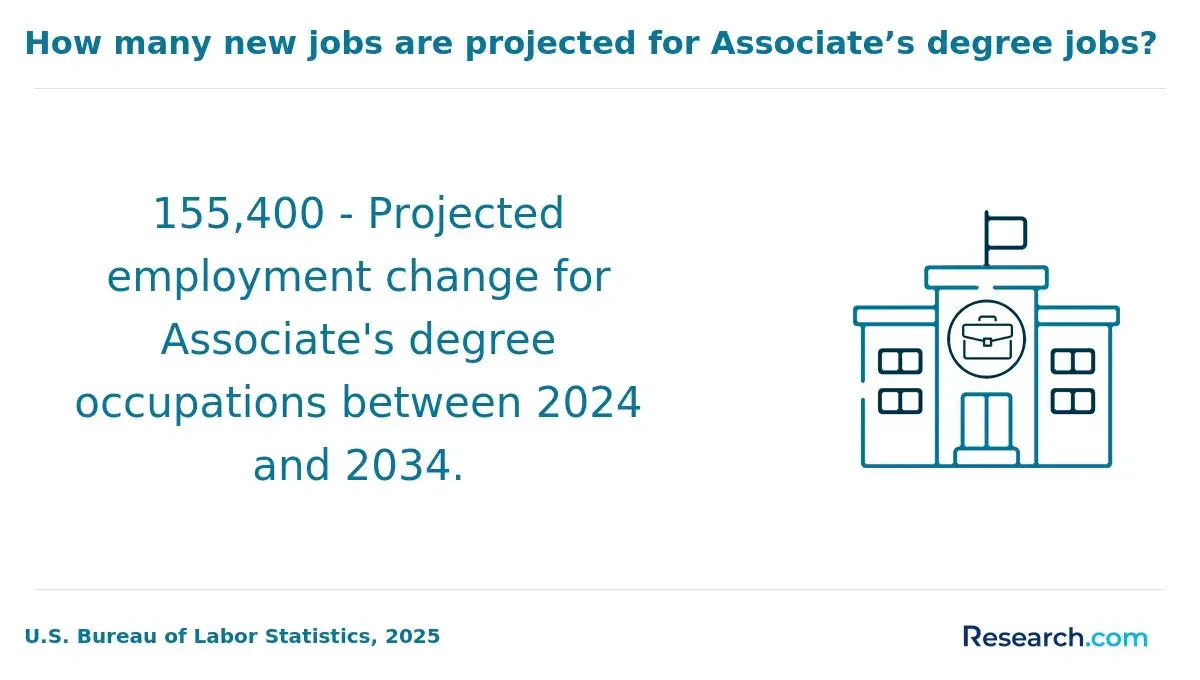
The U.S. Bureau of Labor Statistics projects employment for postsecondary education administrators to grow 3% from 2023 to 2033. That is a moderate outlook, so students should not assume the degree alone will differentiate them; they should use mentorship to build a stronger leadership narrative, research specialization, and professional network.
Mentorship can strengthen career opportunities in several concrete ways. These benefits are most likely when the faculty member has active professional connections and understands the student's target role.
- Research positioning: mentors can help students choose topics aligned with real hiring needs, such as retention strategy, student success analytics, affordability, AI governance, accreditation, or institutional transformation.
- Professional visibility: mentors may guide students toward conferences, practitioner journals, professional associations, or campus leadership projects.
- Leadership judgment: mentors can challenge students to analyze problems from financial, ethical, political, and student-success perspectives.
- Career storytelling: mentors can help students explain how doctoral research produced usable insight for an institution, not just a completed paper.
- Network access: mentors may introduce students to alumni, administrators, researchers, or policy professionals, though students should verify whether this is common practice in the program.
AI is also changing higher education leadership work. Administrators increasingly need to understand data governance, academic integrity, student-support automation, privacy, and equitable use of predictive tools. A strong mentor can help students examine these issues critically rather than treating AI as a simple efficiency tool.
A qualified online doctoral mentor should bring more than availability. The best mentors combine academic credibility, methodological knowledge, higher education leadership insight, and a record of supporting adult learners. For students pursuing higher education leadership, a mentor's practical understanding of institutions can be just as important as their publication record.
When reviewing faculty profiles, look for evidence that the mentor's expertise overlaps with your goals. A student focused on community college leadership may need a different mentor than a student studying student affairs assessment, faculty governance, online learning strategy, enrollment management, or higher education finance.
Use the following criteria to evaluate whether a potential mentor is likely to be useful for your doctoral path.
- Relevant doctoral credentials: the mentor should hold an earned doctorate in education, higher education, leadership, policy, organizational change, research methods, or a closely related field.
- Research alignment: the mentor's publications, presentations, grants, or projects should connect to the student's topic area or methodology.
- Higher education experience: practical experience as an administrator, faculty leader, policy researcher, or institutional consultant can add career relevance.
- Methodological competence: the mentor should be comfortable guiding the type of study the student expects to conduct, such as qualitative interviews, survey research, mixed methods, program evaluation, or improvement science.
- Online mentoring skill: the mentor should have a clear approach to virtual meetings, draft feedback, asynchronous communication, and supporting working professionals.
- Advising capacity: the mentor should not be supervising so many students that meaningful feedback becomes slow or superficial.
Red flags include faculty pages with little detail, no clear doctoral supervision process, heavy reliance on adjunct instructors for doctoral research guidance, vague statements about "access to experts," or no explanation of what happens if a mentor leaves the institution. Faculty turnover is not always preventable, but programs should have a plan for continuity.
Students should also ask whether they can request a mentor or whether mentors are assigned automatically. Automatic matching can work well if the program uses research interests and faculty capacity. It is riskier if assignments are based only on administrative convenience.
One-on-one faculty mentorship can raise the value of an online higher education leadership doctorate, but it does not automatically justify a higher price. The value depends on whether mentorship improves research quality, reduces avoidable delays, strengthens career positioning, and helps the student complete a meaningful doctoral project while managing work and life obligations.
Cost evaluation should start with total program cost, not only per-credit tuition. Students should include tuition, technology fees, residency travel, dissertation continuation fees, books, research software, transcript fees, graduation fees, and the opportunity cost of reduced work hours. Federal Student Aid materials for current award years list the graduate Direct Unsubsidized Loan annual limit at $20,500, which means many doctoral students may need employer support, savings, payment plans, scholarships, assistantships, or Grad PLUS borrowing if costs exceed that amount.
Mentorship affects value most when it changes the student's ability to complete the program efficiently and use the degree professionally. Students comparing traditional dissertations with applied doctoral options may also review online EdD programs no dissertation if their main goal is leadership application rather than a conventional research dissertation.
Use this cost-value lens before choosing a more expensive program based on mentorship claims.
- Calculate the full cost of attendance for the expected timeline, including fees and any required campus visits.
- Ask whether dissertation or capstone credits are included in the standard plan or billed separately if you need more time.
- Compare mentor access against tuition: scheduled one-on-one meetings, draft feedback, and faculty research fit are more valuable than vague availability.
- Estimate how the degree supports your target role, promotion path, or leadership responsibilities, without assuming automatic salary growth.
- Check employer tuition reimbursement rules, especially annual caps, grade requirements, and repayment obligations if you leave the job.
If two programs are similar in accreditation, curriculum, and outcomes, the one with clearer faculty mentorship may offer better value even at a modestly higher cost. If the cost difference is large, ask for evidence: completion support, student satisfaction data, alumni outcomes, and current-student feedback about mentor responsiveness.
One-on-one mentorship is especially useful for students whose goals are specific, research-driven, or tied to advancement in complex institutions. It is less essential for students who mainly want a structured credential, already have strong professional mentors, or prefer a cohort model with standardized milestones.
The students who tend to benefit most are those who need help connecting doctoral study to a real leadership problem. For example, a director of student success may need guidance designing an ethical evaluation of advising interventions, while an academic affairs administrator may need help studying faculty workload, curriculum governance, or program review.
Individual mentorship is often a strong fit for these student profiles.
- Working higher education professionals who want to study a problem from their own institution or sector.
- Students with a clear research interest who need a faculty expert in that area.
- Career changers moving from teaching, student services, nonprofit education, or corporate learning into higher education administration.
- Students considering future faculty, policy, assessment, institutional research, or senior leadership roles.
- Doctoral students who write well independently but need expert feedback on research design and scholarly framing.
Students who are more interested in learning design, training strategy, or digital learning leadership may find that a doctorate is not always the first or most cost-effective step. Some may build targeted expertise through best online instructional design master's programs before committing to a leadership doctorate.
A program based primarily on one-on-one mentorship may not be the best fit if you need highly predictable weekly structure, want minimal independent research, dislike initiating meetings, or are unsure about your leadership focus. In those cases, a cohort-based EdD, professional certificate, second master's degree, or employer-sponsored leadership development program may be more practical.
How Should Students Evaluate Faculty Mentorship Before Choosing an Online Higher Education Leadership Doctorate?
The best way to evaluate mentorship is to treat it as a verifiable academic service, not a promise. Admissions pages often use similar language, so students need to ask operational questions that reveal how faculty support actually works.
Before applying, gather information from the program website, catalog, faculty pages, admissions staff, program director, current students, and alumni. Then compare the answers across schools using the same criteria.
- Confirm accreditation first. The institution should hold recognized institutional accreditation, and any specialized education-school recognition should be explained clearly rather than implied.
- Identify potential mentors. Review faculty bios for research interests, publications, administrative experience, and doctoral supervision roles.
- Ask when mentorship begins. Early faculty contact is usually better than waiting until the dissertation stage.
- Ask about meeting frequency. Find out whether one-on-one meetings are scheduled, required, available by request, or dependent on faculty preference.
- Ask about communication channels. Verify whether support includes video meetings, phone calls, email, learning-management-system feedback, virtual office hours, or group seminars.
- Ask about response times. Programs should be able to describe normal timelines for draft review, advising replies, and dissertation milestone feedback.
- Ask about advising loads. You do not need a private number for every faculty member, but the program should explain how it prevents overload.
- Ask about mentor changes. Find out what happens if your topic changes, your mentor is unavailable, or the relationship is not productive.
- Speak with current students or alumni. Ask what faculty access feels like after enrollment, not just during recruitment.
- Compare mentorship with cost and flexibility. A more supportive program may be worth more, but only if the support is specific, accessible, and aligned with your goals.
Common mistakes include confusing student-success coaching with faculty mentorship, assuming every student receives the same level of access, overlooking residency requirements, choosing a mentor with poor topic fit, and believing one-on-one mentorship guarantees faster completion. The safer approach is to request evidence, compare programs consistently, and prioritize the model that matches how you actually work.
A strong final decision usually balances three factors: academic credibility, realistic affordability, and usable faculty support. If a program performs well on all three, it deserves serious consideration. If one factor is weak, the mentorship model should be strong enough to compensate in a way you can verify before enrolling.
Other Things You Should Know About Higher Education Leadership
An EdD is usually designed for practitioners who want to solve leadership problems in educational organizations. A PhD is usually more research-intensive and may fit students aiming for faculty, policy research, or scholarly careers. Program design matters more than the degree label alone.
Some are fully online, while others require short residencies, intensives, orientations, or dissertation defenses. Students should confirm travel requirements, costs, timing, and whether residencies include meaningful faculty interaction.
Common requirements include a master's degree, official transcripts, resume, statement of purpose, recommendation letters, writing sample, and sometimes an interview. Some programs also expect professional experience in education or leadership.
Usually, these programs are not designed for state licensure unless the school clearly states a licensure pathway. Students seeking superintendent, principal, or other regulated credentials should verify requirements with the program and the relevant state authority.
- 25 Best Online EdD Programs of 2025 https://www.eddprograms.org/schools/best-online-doctor-of-education-programs/
- E-Mentoring: An Innovative Twist to Traditional Mentoring https://repositorio.uahurtado.cl/bitstreams/eeb90718-d036-4c8b-87dd-e3a64b5d1e7a/download
- How to Create a Successful Employee Development & Mentorship Program in Higher Ed in 5 Simple Steps https://blog.neoed.com/how-to-create-a-successful-employee-development-mentorship-program-in-higher-ed-in-5-simple-steps
- Mentoring in Technology: Building Skills, Leadership, and Connections https://www.qooper.io/blog/mentoring-in-technology
- Ed.D. in Leadership | ACE https://ace.edu/degree-programs/doctoral-degrees/doctoral-education/doctor-of-education-in-leadership/
- 2025 Most Affordable Online Doctorates in Education https://www.onlineu.com/most-affordable-colleges/education-doctoral-degrees
- Faculty-Student Mentoring in Online Higher Education https://www.facultyfocus.com/articles/online-education/online-assessment-grading-and-feedback/faculty-student-mentoring-in-online-higher-education/
- Online EdD in Educational Leadership https://www.baypath.edu/academics/graduate-programs/educational-leadership-edd/
- E-mentoring: an effective platform for distance learning https://www.e-mentor.edu.pl/artykul/index/numer/84/id/1463
- Doctorate of Education in Educational and Organizational Leadership | York College of Pennsylvania https://www.ycp.edu/academics/programs/doctor-education-educational-organizational-leadership