2027 Online Health Administration Degree Programs With No Letters of Recommendation Required

Co-Founder and Chief Data Scientist
Finding former professors or supervisors can delay an otherwise strong application, especially for working adults and career changers. Online health administration programs with no letters of recommendation required remove that step, but applicants still need to meet academic and documentation standards. National Center for Education Statistics data released in 2024 show that more than half of U.S. postsecondary students took at least one distance education course in fall 2022. This guide helps you identify legitimate options, understand what replaces references, compare costs and outcomes, and apply with confidence.
Key Things You Should Know
- "No letters of recommendation required" means the published application checklist does not require references from any applicant; it is different from letters being optional, waived for certain applicants, or requested later by an admissions reviewer.
- Programs may still require official transcripts, a minimum GPA, a resume, a personal statement, prerequisite coursework, identity documentation, or proof of English proficiency. Simplified paperwork does not mean guaranteed admission or lower academic standards.
- Verify institutional accreditation, program curriculum, total tuition, transfer policy, and career alignment before enrolling. The U.S. Bureau of Labor Statistics reports a $117,960 median annual wage for medical and health services managers in May 2024, but management roles commonly require relevant experience in addition to education.
Which Online Health Administration Degree Programs Require No Letters of Recommendation?
Online health administration is offered at the associate, bachelor's, master's, and certificate levels. A bachelor's degree generally prepares students for entry-level administrative, patient-services, revenue-cycle, or operations roles; a Master of Health Administration (MHA) is more often designed for experienced professionals seeking management or leadership advancement.
Schools can change application rules by degree level, start term, and applicant type. The examples below identify institutions whose published online application materials have generally listed transcripts and other documentation without naming recommendation letters as a standard requirement. Confirm the requirement directly with the admissions office before paying an application fee or submitting records.
| Institution and online program type | Typical published materials to verify | Important comparison point |
| Western Governors University, bachelor's health care administration pathway | Transcripts and enrollment documentation | Competency-based pacing may suit self-directed students, but transfer evaluation remains individual. |
| Southern New Hampshire University, bachelor's health care administration | Application and prior-school transcripts | Review whether concentrations and course sequencing match your target role. |
| Purdue Global, bachelor's health care administration | Application, transcripts, and applicable placement information | Compare term structure, tuition model, and military or employer benefits if relevant. |
| University of Maryland Global Campus, bachelor's health services management | Application and official academic records | Check residency, transfer-credit rules, and whether all needed courses are available online. |
Students considering clinical or medication-focused routes should not confuse health administration with pharmacy education. Explore online pharmacist programs if your goal requires pharmacist licensure rather than health-care operations or management preparation.
What Are the Admission Requirements for Online Health Administration Degree Programs With No Recommendation Letters?
Admissions requirements depend primarily on degree level. Undergraduate applicants commonly need a high school diploma or GED and transcripts. Degree-completion applicants need college transcripts, while graduate applicants usually need a completed bachelor's degree and may face a GPA expectation or prerequisite review.
The following comparison shows common requirements that can remain in place even when references are not part of the standard application.
| Program level | Common required materials | Requirements that vary by school |
| Associate or bachelor's | Application, high school or college transcripts, identification | Minimum GPA, placement testing, math or writing prerequisites, resume |
| Bachelor's completion | Application and official college transcripts | Minimum transferable credits, general education completion, employment history |
| MHA or related master's | Application, bachelor's transcript, resume, statement of purpose | GPA, management experience, statistics prerequisite, interview, GRE waiver or score |
| Graduate certificate | Application and college transcript | Bachelor's degree requirement, GPA, relevant health-care experience |
Read the program-specific checklist rather than relying on a general university admissions page. "No recommendation letters" should appear as an absence from the required-materials list, not simply as an option to skip a field in an application portal.
Before applying, take three practical steps:
- Download or save the current admissions checklist and catalog page for the exact online degree and start term.
- Ask admissions in writing whether letters are required, optional, conditionally requested, or excluded for your applicant category.
- Request official transcripts early, because record delivery - not recommendation letters - is often the slowest part of a streamlined application.
Are Online Health Administration Programs With No Letters of Recommendation Easier to Get Into?
Not necessarily. Removing recommendations reduces administrative friction; it does not establish that a program is less selective or academically easier. Schools can assess readiness through transcripts, GPA, prerequisite grades, work history, writing samples, interviews, and capacity limits.
This format is often a good fit for applicants who have been out of school for years, work in nontraditional settings, changed careers, or cannot reasonably ask a current supervisor for a reference. It may be less suitable for applicants to competitive MHA programs where leadership potential, professional judgment, and prior health-care experience are central to the selection process.
Applicants should avoid equating admission convenience with program quality. A program can have no recommendation requirement and still expect strong academic performance; conversely, a program that requires letters is not automatically better. Compare the curriculum, faculty credentials, support services, graduation requirements, and the roles graduates are prepared to pursue.
Health administration graduates may pursue positions such as medical office manager, patient-access supervisor, health information coordinator, clinic operations specialist, or health-care project coordinator. Senior medical and health services manager roles frequently value experience with budgeting, compliance, staffing, electronic health records, quality improvement, and health-care regulations alongside a degree.
What Do Online Health Administration Programs Evaluate Instead of Letters of Recommendation?
Without recommendation letters, admissions teams generally rely more heavily on evidence that is directly attributable to the applicant. This can make the application more accessible, but it also means applicants should submit complete, accurate records and treat any required statement as a meaningful part of the review.
Schools may use the following materials to assess academic and professional readiness:
- Official transcripts to confirm prior coursework, cumulative GPA, and performance in subjects such as math, statistics, business, or health sciences.
- A personal statement or short-response essay to assess goals, communication skills, and understanding of health-care administration.
- A resume to document health-care, customer-service, billing, scheduling, compliance, leadership, or operations experience.
- Prerequisite completion to show preparation for graduate quantitative, management, or policy coursework.
- An interview or admissions consultation to clarify career goals, online-learning readiness, and program fit.
Use your statement to connect your experience to a realistic goal rather than repeating your resume. For example, a scheduling coordinator can explain how workflow bottlenecks, patient access, or insurance authorization work led them toward administrative leadership. Do not exaggerate responsibilities; admissions reviewers can compare statements with employment and academic records.
How Can You Tell if an Online Health Administration Degree With No Recommendation Requirement Is Accredited and Legitimate?
A legitimate online degree should be offered by an institution recognized by an accreditor listed by the U.S. Department of Education or the Council for Higher Education Accreditation. Institutional accreditation is the baseline check because it affects credit transferability, federal aid eligibility, and employer confidence. Programmatic accreditation can add value, but it is not available or required for every health administration degree level.
Use this verification process before enrolling:
- Confirm the institution's accreditation status in the accreditor's or federal recognition database, and verify that the status is current rather than merely claimed on a marketing page.
- Confirm that the exact degree title, delivery format, and awarding institution match what appears on the application and diploma.
- Review the curriculum for health-care finance, policy, ethics, quality improvement, informatics, operations, and leadership - not only broad business courses.
- Ask whether the program has specialized recognition or accreditation relevant to its level, such as Commission on Accreditation of Healthcare Management Education accreditation for eligible graduate programs.
- Request a written estimate of tuition, mandatory fees, transfer-credit evaluation, and any practicum or technology requirements before committing.
Red flags include pressure to enroll immediately, vague accreditation language, guarantees of employment or salary, unclear ownership of the school, and a refusal to provide a catalog or refund policy. Also be cautious when a school describes a degree as leading directly to a professional license without explaining the relevant state board requirements. Health administration is usually not a single licensed profession, although particular jobs and clinical credentials can have separate rules.
How Much Do Online Health Administration Degree Programs With No Letters of Recommendation Cost?
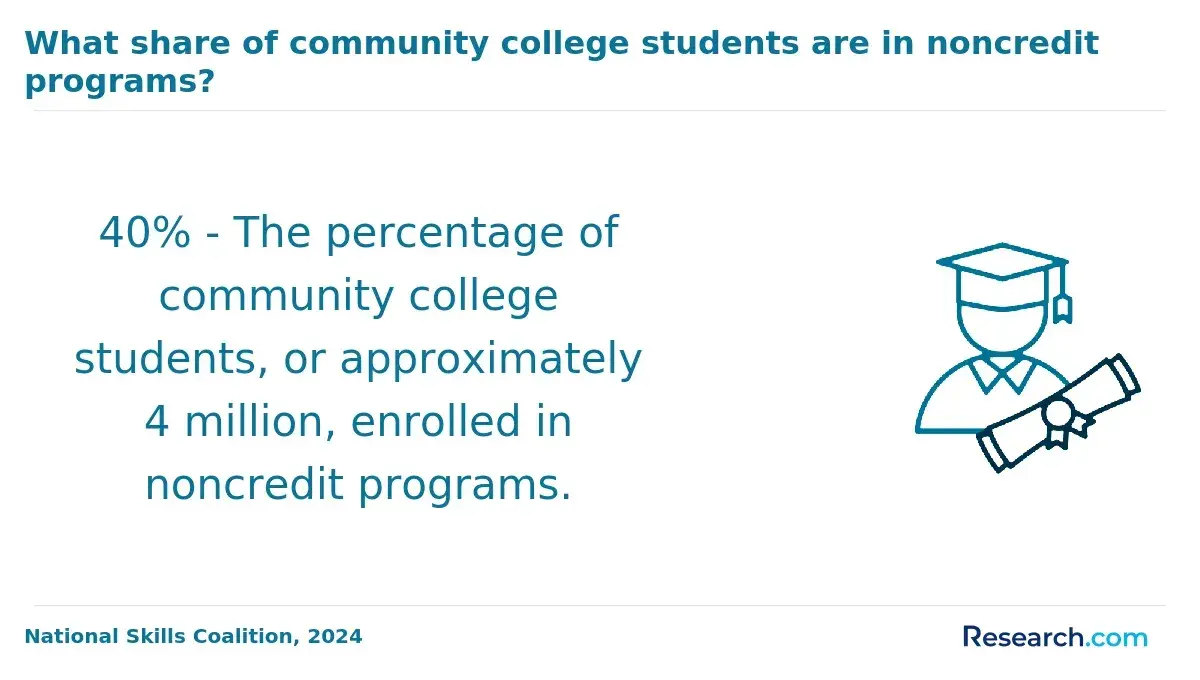
Costs vary more by institution, residency policy, transfer credits, and pacing model than by the absence of recommendation letters. A no-reference application process does not indicate a lower price. For context, College Board reported average published tuition and fees of $11,610 at public four-year in-state institutions and $43,350 at private nonprofit four-year institutions for 2024-25; online program prices can be above or below those benchmarks.
Compare a written total-cost estimate rather than only the advertised per-credit rate. This table identifies the expenses that can materially change the amount you finance.
| Cost factor | Why it matters | What to ask |
| Tuition model | Schools may charge per credit, per course, or per term. | What is the total estimated tuition for my remaining credits? |
| Transfer credit | Accepted credits can reduce time and tuition. | How many credits are likely to apply to this major after an official review? |
| Mandatory fees | Technology, graduation, course, and learning-resource fees may not be included in tuition. | Which fees are charged each term or course? |
| Practicum or travel | Some programs require fieldwork, background checks, or site-related costs. | Is a practicum required, and who arranges and pays for associated requirements? |
| Repeat-course policy | Withdrawal or unsuccessful completion can raise the total cost. | What are the academic, refund, and course-repeat policies? |
If you are comparing administrative and clinical career paths, review online nursing degrees separately. Nursing programs can involve clinical placement, licensure preparation, and costs that differ substantially from a nonclinical health administration degree.
Can You Get Financial Aid for an Online Health Administration Degree With Streamlined Admissions?
Yes. Admissions requirements and financial-aid eligibility are separate issues. Students enrolled in an eligible program at an accredited institution may qualify for federal aid if they meet applicable citizenship or eligible-noncitizen, enrollment, satisfactory academic progress, and other requirements. Completing the FAFSA is the usual starting point.
Financial aid may include grants, Direct Loans, work-study, employer tuition assistance, veterans' education benefits, and institutional scholarships. Eligibility, award amounts, and borrowing limits vary by student and program. The Department of Education's redesigned FAFSA process for the 2024-25 cycle made timing and school communication especially important, so applicants should monitor their student aid account and the institution's financial-aid requests rather than assuming an admission offer includes aid.
Before accepting loans, compare the net price after grants with your expected completion time and likely career path. Ask whether a school's scholarship requires full-time enrollment, whether employer reimbursement is available only after course completion, and whether dropping a course changes your aid eligibility.
How Long Does an Online Health Administration Degree With No Letters of Recommendation Take to Complete?
Program length depends on degree level, transfer credits, course load, and whether the format uses traditional semesters, accelerated terms, or competency-based progression. No recommendation letters can shorten the application process, but they do not automatically shorten the degree itself.
This timeline gives a practical planning range for students who remain continuously enrolled.
| Credential | Typical credit range | Common completion pattern |
| Associate degree | About 60 credits | Often about two years full time; longer with part-time enrollment |
| Bachelor's degree | About 120 credits | Often about four years from the start; less time for eligible transfer students |
| Bachelor's completion degree | Varies by credits transferred | Commonly one to two years after substantial transferable coursework |
| MHA or related master's | Commonly 30-60 credits | Often about one to three years, depending on pacing and prerequisites |
| Graduate certificate | Often 12-18 credits | Frequently less than one year to about one year of continuous study |
Accelerated terms can help motivated students move through material more quickly, but they also compress reading, assignments, and exams. Compare accelerated degree programs if speed is a priority, while confirming that the workload fits your employment and caregiving responsibilities.
Can You Transfer Credits Into an Online Health Administration Degree Program With No Recommendation Letters?
Many online health administration programs accept transfer credit, but acceptance is never automatic. Colleges typically evaluate official transcripts for course equivalency, grade minimums, age of coursework, accreditation of the sending institution, and alignment with degree requirements. Some may also award limited credit for validated prior learning, military training, or industry credentials.
To protect your time and budget, follow these steps before enrolling:
- Submit transcripts for an official transfer evaluation rather than relying on an informal estimate.
- Request a degree plan showing which transferred courses satisfy general education, major, elective, and residency requirements.
- Compare the maximum number of credits that can transfer with the number that must be completed through the new institution.
- Keep course descriptions and syllabi available if a school asks for evidence of content equivalency.
- Do not withdraw from a current course until the receiving institution confirms how it will apply.
Students with prior clinical coursework should distinguish between nursing progression and administrative degree completion. An online ASN is a nursing education pathway with different clinical and licensure considerations from a health administration curriculum.
How Should You Compare Online Health Administration Degree Programs That Do Not Require Letters of Recommendation?
The best choice is not simply the program with the fewest application documents. Compare each option against your intended job, educational starting point, budget, learning preferences, and need for flexibility. A bachelor's completion program may offer better value for a student with many transferable credits, while an experienced professional may benefit more from an MHA with leadership-focused coursework.
Use these comparison questions when speaking with admissions and financial-aid staff:
- Does the exact online program and my applicant category require zero recommendation letters, or are letters optional or conditionally requested?
- What are the minimum GPA, prerequisite, transcript, resume, essay, and interview requirements for the next available start date?
- Which accreditor recognizes the institution, and does the program hold any relevant specialized accreditation or recognition?
- What will I pay in total after accepted transfer credits, mandatory fees, books, technology, and any practicum costs?
- What are the course format, live-session expectations, group-work requirements, and student-support options for online learners?
- Which career services, internship support, employer relationships, and alumni resources are available to online students?
Prioritize curriculum and outcomes over admissions simplicity. Courses in finance, data analysis, population health, compliance, health informatics, and operational improvement can be especially relevant as health systems use more digital tools and automation. If you already hold an RN and want a nursing-focused bachelor's pathway instead, compare RN to BSN online programs; they serve a different professional objective than health administration.
A no-recommendation online health administration degree is likely a strong option when you want an accessible application process and the curriculum clearly supports your target role. Consider alternatives when a preferred employer, graduate school, or leadership path expects a different credential, substantial supervised experience, or a program with specialized graduate-level accreditation.
Other Things You Should Know About Health Administration
They can request additional information in individual cases, particularly for graduate applicants, incomplete transcripts, low GPA histories, or applicants seeking exceptions. Ask the admissions office whether letters are excluded from the standard review or merely optional.
Often, yes. Programs with streamlined admissions can work well for returning students because they may emphasize transcripts and work history rather than recent academic references. Check whether older coursework must be repeated, especially quantitative prerequisites.
Usually not. Employers typically evaluate the degree-awarding institution, accreditation, coursework, experience, skills, and interview performance - not the documents used in your admissions application.
Review the exact program's online admissions page and catalog, then contact admissions by email or chat for written confirmation. State your degree level, intended start term, and applicant type, and ask whether any recommendation letters are required, optional, or requested only under certain conditions.
References
- How does a college degree improve graduates' employment and earnings potential? - APLU https://www.aplu.org/our-work/publicuvalues/employment-earnings/
- Insider Perspectives from a Highly Selective Admissions Office https://www.dcurbanmom.com/jforum/posts/list/625983.page
- What career is right for me? | ASVAB Career Exploration Program https://www.asvabprogram.com/media-center-article/Student/college-letters-of-recommendation
- Why Employment Outcome Rates Matter | ACI Learning https://www.acitechacademy.com/blog/why-employment-outcome-rates-matter-a-guide-for-students-and-employers/
- 2025 Most Affordable Healthcare Administration Degrees Online https://www.onlineu.com/most-affordable-colleges/healthcare-administration-degrees
- Online MHA https://www.publichealthdegrees.org/online/mha/
- No, You Cannot Trust Those Job Placement Rates That Schools Report https://tcf.org/content/commentary/no-cannot-trust-job-placement-rates-schools-report/
- Data Sources for Post-Graduation Outcomes https://www.airweb.org/article/2021/09/30/data-sources-for-post-graduation-outcomes
- Online MHA Programs Ranked by Affordability (2025) https://www.mhaonline.com/blog/affordable-online-mha-programs-ranked
- College Admissions Rec Letters are a Waste of Time - Tex Admissions https://www.texadmissions.com/blog/2025/5/1/college-admissions-recommendation-letters-are-a-waste-of-time