
2027 Best Online Health Administration Doctorate Programs for Private Sector and Corporate Careers

Co-Founder and Chief Data Scientist
A Health Administration doctorate can be a strategic credential for healthcare professionals moving from operational management into corporate leadership, consulting, analytics, payer strategy, or executive decision-making. The timing matters because the U. S. Bureau of Labor Statistics reports a May 2024 median salary of $117,960 for medical and health services managers and projects 23% growth from 2024 to 2034.
This guide helps working professionals compare online doctorate options, understand private-sector value, avoid poor-fit programs, and identify the program features most likely to support corporate advancement.
Key Things to Know About Online Health Administration Doctorate Programs for Corporate Careers
- For corporate healthcare careers, applied doctorates such as a DHA usually fit leadership, strategy, operations, and consulting goals better than research-heavy PhD programs unless the target role involves research, teaching, or policy scholarship.
- The strongest online programs for private-sector goals combine flexible delivery, an applied dissertation or doctoral project, executive-level healthcare finance and analytics, and faculty or industry ties connected to hospitals, payers, health technology, consulting, or life sciences.
- Salary upside depends on role, employer, geography, and prior experience; BLS May 2024 data places medical and health services managers at a $117,960 median salary, while related corporate paths such as management analysis and data science use different labor-market benchmarks.
Will Health Administration doctorate programs benefit corporate professionals?
Health Administration doctorate programs can benefit corporate professionals when the degree is aligned with a real advancement target, not simply pursued as a prestige credential. The best fit is usually a mid-career or senior professional who already understands healthcare operations and wants to move into enterprise leadership, transformation strategy, health technology, payer operations, compliance, population health, or consulting.
The doctorate is less likely to pay off for someone who primarily needs entry-level management preparation. In that case, a masters in healthcare administration may be the more practical next credential because it is shorter, less expensive, and often sufficient for early or mid-level leadership roles.
The table below summarizes when a doctorate tends to make sense for corporate professionals and when another path may be better. Use it as an initial fit check before comparing schools.
| Professional situation | Doctorate fit | Why it matters for corporate careers |
| Director, senior manager, or vice president seeking enterprise-level roles | Strong fit | The degree can support credibility in strategy, governance, analytics, and complex organizational change. |
| Clinician moving into healthcare business leadership | Potentially strong fit | A doctorate can help translate clinical expertise into finance, policy, operations, and executive decision-making. |
| Consultant targeting healthcare transformation, value-based care, or payer-provider strategy | Strong fit if applied | Applied doctoral projects can become evidence of advanced problem-solving for client-facing work. |
| Early-career administrator with limited management experience | Usually weak fit | Employers may value practical experience and a master's degree more than a doctorate at this stage. |
| Professional pursuing faculty or academic research roles | Depends on program type | A research-focused PhD may be more appropriate than an applied DHA. |
A common mistake is assuming that any doctorate automatically leads to promotion. Corporate employers usually evaluate the doctorate alongside leadership record, measurable business outcomes, communication skill, and industry knowledge.
What makes online Health Administration doctorate programs ideal for private sector or corporate careers?
An online Health Administration doctorate is ideal for private-sector careers when it is built for working leaders and produces evidence of business impact. The degree should help you solve problems that healthcare companies actually face: cost control, digital transformation, quality improvement, market access, regulatory risk, patient experience, workforce redesign, and value-based payment models.
Program format matters because many corporate professionals cannot pause their careers for full-time study. If speed and scheduling flexibility are major concerns before pursuing doctoral study, comparing accelerated healthcare programs can also clarify whether a shorter credential should come first.
The table below highlights the program characteristics that matter most for corporate outcomes. These features are more useful than relying only on a school's brand name or a generic ranking.
| Program feature | Why it matters | Best corporate use case |
| Applied dissertation, capstone, or doctoral project | Creates a work-relevant portfolio piece instead of only a theoretical paper | Operations improvement, market strategy, quality initiatives, consulting case work |
| Healthcare finance and economics coursework | Builds fluency in margins, reimbursement, payer models, and investment trade-offs | Corporate strategy, revenue cycle, payer-provider negotiations |
| Analytics, informatics, and decision science | Supports data-driven leadership as AI and automation reshape healthcare operations | Population health, digital health, product strategy, analytics leadership |
| Executive-format online delivery | Allows working professionals to continue gaining experience while studying | Promotion-track professionals, consultants, regional leaders |
| Faculty with industry and executive experience | Improves relevance of assignments, cases, and dissertation advising | Private-sector leadership, healthcare consulting, corporate transformation |
| Transparent outcomes and alumni pathways | Helps applicants verify whether graduates move into relevant roles | ROI analysis, employer-funded education decisions |
Also check whether the curriculum is current enough to address AI adoption, cybersecurity risk, digital health platforms, consumer-driven care, and value-based reimbursement. These trends are changing how healthcare companies define leadership readiness.
What are the best online Health Administration doctorate programs for private sector careers?
The best online Health Administration doctorate program for a corporate career is not necessarily the most famous one. It is the program whose curriculum, faculty, project model, schedule, cost, and employer recognition match your target role.
The programs below are examples of online or low-residency doctoral options commonly considered by healthcare administrators. Always verify current format, tuition, admissions rules, residency requirements, and curriculum directly with the school before applying.
| Program | Doctorate type | Why it may fit private-sector careers | Best-fit corporate goal |
| Medical University of South Carolina | Doctor of Health Administration | Executive-oriented health administration structure with emphasis on leadership and applied healthcare systems knowledge | Senior healthcare operations, system leadership, executive advancement |
| University of Mississippi Medical Center | Doctor of Health Administration | Health-system setting and applied focus can support professionals seeking leadership in provider organizations or healthcare enterprises | Hospital corporate leadership, quality strategy, administration |
| Central Michigan University | Doctor of Health Administration | Designed for experienced healthcare professionals and often evaluated by applicants seeking flexible doctoral study | Healthcare executive leadership, consulting, organizational strategy |
| Franklin University | Doctor of Healthcare Administration | Online format and applied doctoral structure may suit working professionals focused on practical leadership outcomes | Corporate healthcare management, transformation projects, executive-track roles |
| Capella University | Doctor of Health Administration | Online professional doctorate model may appeal to learners who need flexibility and applied coursework | Working-adult career advancement, healthcare administration leadership |
| Walden University | Doctor of Healthcare Administration | Online healthcare leadership emphasis can support professionals interested in organizational change and population health topics | Healthcare strategy, public-private partnerships, corporate health programs |
| A.T. Still University | Doctor of Health Administration | Healthcare-focused doctoral option with relevance for professionals interested in systems-level leadership | Healthcare operations, policy-informed leadership, executive administration |
Do not treat this list as a universal ranking. For a corporate career, the better question is whether the program can help you produce boardroom-relevant evidence: a dissertation on cost reduction, access strategy, AI governance, payer contracting, clinical operations redesign, or measurable quality improvement.
Before shortlisting a program, compare these fit factors carefully:
- Whether the doctoral project can be based on your employer, industry niche, or target corporate problem
- Whether faculty have healthcare executive, consulting, payer, health technology, or policy implementation experience
- Whether the curriculum includes finance, analytics, strategy, leadership, law, ethics, and organizational transformation
- Whether the online format includes required residencies, synchronous sessions, cohort meetings, or travel that could affect your job
- Whether tuition, fees, dissertation continuation charges, and employer tuition benefits create a realistic ROI scenario
A research-focused doctorate and an applied Health Administration doctorate can both be valuable, but they serve different career strategies. Corporate professionals usually benefit more from applied doctorates when their goals involve executive leadership, operational change, consulting, payer strategy, or healthcare business innovation.
The comparison below clarifies how the two paths differ. This distinction is important because choosing the wrong doctoral model can leave you with a strong credential that does not match your intended career evidence.
| Decision factor | Research-focused doctorate | Applied Health Administration doctorate |
| Common degree examples | PhD in Health Services, Health Policy, or Health Administration | DHA, DrPH with management focus, or professional doctorate in healthcare administration |
| Main purpose | Generate original research and scholarly knowledge | Apply evidence to complex healthcare leadership problems |
| Typical final project | Traditional dissertation with methodological depth | Applied dissertation, doctoral project, or practice-based research study |
| Best corporate fit | Research strategy, policy analytics, think tanks, research leadership, faculty-adjacent roles | Executive leadership, consulting, operations transformation, payer-provider strategy |
| Potential drawback | May be too academic for some private-sector advancement goals | May be less suitable for tenure-track academic research roles |
Choose a research-focused path if your target role requires advanced methods, publication, grant-funded research, or policy scholarship. Choose an applied doctorate if you want to lead change inside a company, health system, payer organization, consulting firm, or healthcare technology business.
The current labor market favors leaders who can combine evidence with execution. The BLS projection of 23% growth for medical and health services managers from 2024 to 2034 reflects demand for people who can manage complex healthcare organizations, but it does not mean every doctoral format has the same career value.
Online Health Administration doctorate programs can build corporate skills that go beyond traditional management. At the doctoral level, the emphasis is usually on diagnosing complex systems, defending decisions with evidence, leading cross-functional teams, and translating policy or clinical realities into business strategy.
The table below maps common doctoral learning areas to private-sector skills. Use it to determine whether a program's curriculum matches the work you want to do after graduation.
| Doctoral learning area | Corporate skill gained | Where the skill is used |
| Healthcare finance and reimbursement | Evaluating profitability, payer mix, cost drivers, and investment decisions | Corporate finance, payer relations, service-line strategy |
| Quality improvement and patient safety | Designing measurable improvement programs | Provider operations, value-based care, accreditation readiness |
| Health informatics and analytics | Turning clinical, operational, and financial data into executive decisions | Digital health, population health, business intelligence |
| Organizational behavior and change | Leading teams through mergers, restructuring, automation, and new care models | Transformation offices, consulting, enterprise operations |
| Healthcare law, ethics, and compliance | Assessing regulatory risk and governance implications | Compliance, privacy, risk management, corporate governance |
| Research methods and evidence appraisal | Judging whether data supports a business decision | Strategy, policy analysis, product evaluation, executive reporting |
Data and information governance are increasingly important because corporate healthcare decisions rely on clinical, financial, claims, and consumer data. Professionals exploring analytics-heavy pathways may also find it useful to compare related career benchmarks such as health information management salary trends.
A strong doctorate should help you demonstrate these skills through deliverables, not just transcripts. Look for programs that require executive briefs, applied research proposals, financial analyses, quality dashboards, strategy memos, or stakeholder presentations.
A Health Administration doctorate can support advancement into corporate roles that require advanced judgment, credibility with senior stakeholders, and the ability to connect healthcare operations with business strategy. It does not replace experience, but it can help distinguish candidates in competitive leadership searches.
The table below connects common private-sector roles with salary benchmarks from the U.S. Bureau of Labor Statistics May 2024 Occupational Employment and Wage Statistics. These figures are occupational medians, not doctorate-specific salaries, so use them as context rather than promises.
| Corporate role or pathway | Closest BLS salary benchmark | May 2024 median salary | How a doctorate may help |
| Healthcare operations director or regional administrator | Medical and health services managers | $117,960 | Strengthens systems thinking, finance, quality, and executive communication |
| Healthcare strategy consultant | Management analysts | $101,190 | Supports evidence-based recommendations and client-facing credibility |
| Health analytics or population health leader | Data scientists | $112,590 | Adds healthcare domain expertise to analytics and decision science |
| Compliance, privacy, or regulatory affairs leader | Compliance officers | $78,420 | Builds governance, ethics, risk, and policy interpretation skills |
| Healthcare executive or corporate officer | Top executives | $103,840 | May support board-level credibility when paired with measurable leadership results |
Private-sector compensation can exceed or fall below these medians depending on employer type, bonus structure, equity, market size, and responsibility level. For example, a director at a regional health system and a vice president at a national payer may sit in very different compensation bands even if both have similar educational credentials.
The doctorate is most useful when it supports a clear role narrative: "I lead healthcare transformation using finance, analytics, policy knowledge, and evidence-based management." Without that narrative, the credential may be harder for employers to translate into business value.
Corporate partnerships can offer an advantage when they create access to real problems, executive mentors, applied research sites, guest faculty, internships, consulting-style projects, or employer-sponsored tuition pathways. The advantage is strongest when the partnership connects directly to your target sector, such as payer operations, provider strategy, pharmaceutical market access, health technology, or consulting.
The table below explains how to evaluate partnership claims. This matters because some programs use partnership language broadly, while others provide concrete opportunities that can shape your doctoral project and career network.
| Partnership signal | Potential value | What to verify |
| Employer-aligned doctoral projects | Lets you solve a real corporate problem while earning the credential | Whether your own workplace or target industry can be used as the project site |
| Executive guest speakers or advisory boards | Exposes students to current industry priorities | Whether these leaders advise curriculum or only appear occasionally |
| Healthcare company, payer, or consulting connections | May improve networking and project relevance | Whether students receive direct access, mentorship, or recruiting support |
| Employer tuition partnerships | Can reduce out-of-pocket cost | Whether benefits apply to doctoral tuition, fees, residencies, and continuation terms |
| Industry-sponsored research or innovation labs | Can support applied work in AI, operations, access, or quality improvement | Whether doctoral students can participate and publish or present work |
The trade-off is that partnership-heavy programs may be more practice-oriented and less suitable for academic research careers. Traditional academic programs may offer stronger methodological depth, but fewer direct corporate pathways.
Ask admissions staff for examples of recent doctoral projects, employer collaborations, and alumni roles. If a school cannot explain how partnerships affect student work, treat the claim as a marketing signal rather than a decision factor.
Corporate employers generally evaluate online Health Administration doctorates through the same practical lens they use for other advanced credentials: institutional credibility, accreditation, relevance to the role, evidence of applied skill, and the candidate's leadership record. The word "online" is usually less important when the school is legitimate, the program is rigorous, and the graduate can show business impact.
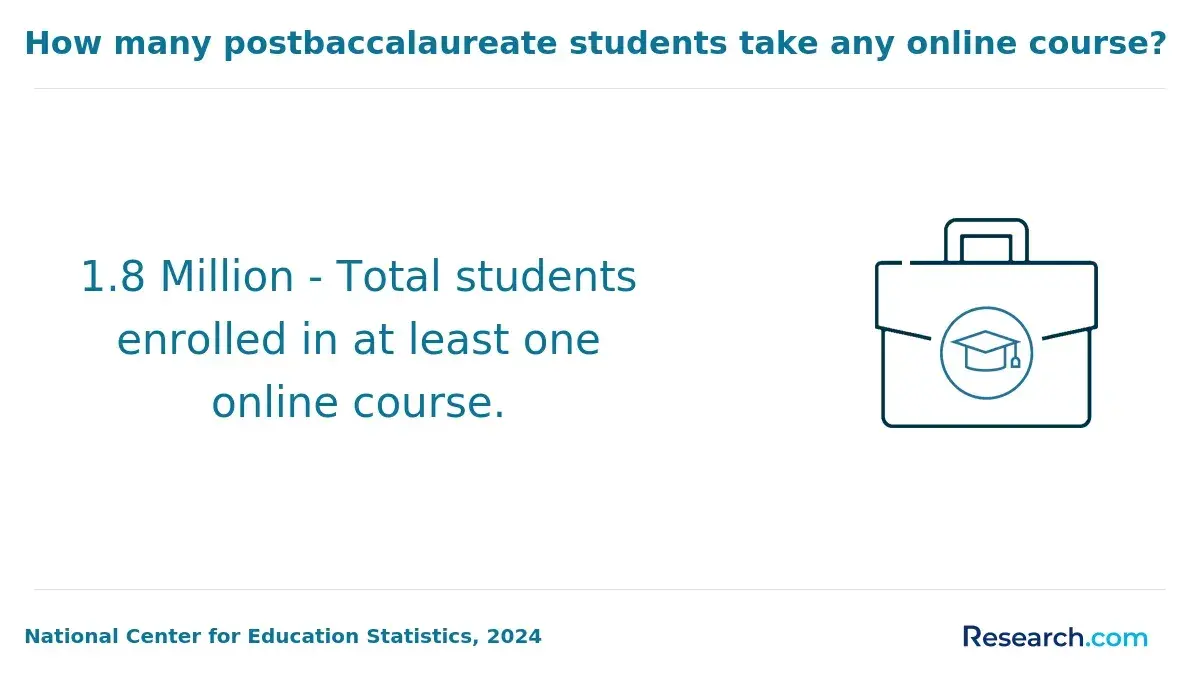
Recent U.S. higher education data shows online graduate study is now a mainstream delivery model rather than a niche format. National Center for Education Statistics data released in 2024 continued to show substantial distance-education participation among postsecondary students, which helps explain why many employers focus more on quality signals than delivery mode alone.
The table below summarizes how employers may read different credential signals. Use it to strengthen your application narrative before you enroll and before you market the degree internally.
| Employer signal | Positive interpretation | Possible concern |
| Regionally accredited university | The institution meets recognized academic quality standards | Lack of recognized accreditation can raise immediate credibility concerns |
| Applied dissertation tied to business outcomes | The candidate can turn research into operational or strategic action | A purely academic topic may be harder to connect to corporate ROI |
| Relevant leadership experience during the program | The degree complements real management responsibility | A doctorate without leadership evidence may look disconnected from role needs |
| Healthcare-specific executive coursework | The credential aligns with payer, provider, consulting, or health technology challenges | Generic leadership coursework may feel less useful in specialized healthcare roles |
| Clear explanation of online rigor | The candidate can address format questions confidently | Unclear workload, weak faculty engagement, or minimal assessment can weaken perception |
The best way to overcome skepticism is to describe what the program required: research design, financial analysis, executive presentations, data interpretation, peer collaboration, and a doctoral project with measurable relevance. Employers respond better to evidence than to credential labels alone.
Health Administration doctorate holders in the private sector can pursue roles with six-figure salary potential, but compensation varies widely. The degree may help professionals compete for higher-responsibility roles, yet salary is shaped by leadership scope, employer size, market, prior experience, bonus eligibility, and the financial performance of the organization.
The table below provides salary context using May 2024 BLS occupational medians for roles often connected to corporate healthcare leadership. These are not degree-specific outcomes, but they help frame realistic salary discussions.
| Career area | Relevant BLS occupation | May 2024 median salary | Doctorate relevance |
| Healthcare administration leadership | Medical and health services managers | $117,960 | High relevance for senior operations, service-line, and enterprise leadership |
| Corporate strategy and consulting | Management analysts | $101,190 | Useful when paired with client results, analytics, and industry specialization |
| Healthcare analytics leadership | Data scientists | $112,590 | Relevant if the program includes informatics, quantitative methods, or decision science |
| Compliance and regulatory leadership | Compliance officers | $78,420 | Relevant for privacy, risk, ethics, quality, and governance roles |
| Executive management | Top executives | $103,840 | Relevant for senior leadership, but experience and organizational scope are decisive |
ROI should be evaluated conservatively. A doctorate may be worthwhile if it supports a promotion path, employer sponsorship, consulting credibility, or a move into higher-level strategy work; it may be a poor investment if the program is expensive, misaligned, or unlikely to change your role options.
Before enrolling, estimate your break-even point using tuition, fees, travel, time commitment, employer reimbursement, and the realistic salary difference between your current role and target role. Avoid assuming that the credential alone will create a salary jump.
How do you narrow down online Health Administration doctorate programs for corporate goals?
To narrow down online Health Administration doctorate programs for corporate goals, start with the job you want and work backward. A strong program should match your target sector, leadership level, schedule constraints, and preferred evidence of expertise.
Cost should be part of the decision, but it should not be the only factor. If affordability is the first barrier, comparing the cheapest online healthcare administration degree options can help you understand lower-cost pathways before committing to doctoral tuition.
Use the following steps to build a practical shortlist:
- Define your target role, such as healthcare operations executive, payer strategy leader, consulting principal, digital health director, or compliance executive.
- Choose the doctorate type that fits that role: applied DHA for practice leadership, research-focused PhD for scholarship or research strategy, or another professional doctorate if it better matches your niche.
- Review the curriculum for finance, analytics, law, quality, strategy, leadership, and research methods instead of relying only on program titles.
- Ask whether the dissertation or doctoral project can address a corporate problem that matters to your employer or target industry.
- Verify accreditation, faculty qualifications, online format, residency expectations, total cost, continuation fees, and time-to-completion policies.
- Request alumni examples from roles similar to your goal, especially in private-sector healthcare, consulting, payer organizations, technology, or life sciences.
- Compare ROI using conservative salary assumptions and include the opportunity cost of time spent studying.
Common program-selection mistakes can be expensive. Watch for these red flags before applying:
- Choosing a program because it is called "doctorate" without confirming whether it is applied or research-focused
- Relying only on rankings instead of reviewing curriculum, faculty, project structure, and alumni outcomes
- Ignoring residency or synchronous attendance requirements that may conflict with corporate travel or leadership responsibilities
- Assuming employer tuition assistance covers all doctoral costs, including fees, books, residencies, and dissertation continuation
- Selecting a dissertation topic that is academically interesting but hard to explain in a corporate interview or promotion discussion
When speaking with advisors, ask direct questions: What roles do graduates hold? How many students complete the program while working full time? Can the doctoral project use employer data? What support exists if a dissertation stalls? Which faculty have private-sector healthcare leadership experience? The answers will reveal more than promotional language.
Other Things You Should Know About Health Administration
Many online Health Administration doctorates take about three to five years, depending on transfer credits, enrollment pace, dissertation progress, and whether the program uses a cohort or self-paced structure. The dissertation or doctoral project often determines the final timeline.
Some programs are fully online, while others require residencies, intensives, orientations, or dissertation-related meetings. Applicants should confirm travel requirements before enrolling because even short residencies can affect work schedules and total cost.
It is usually not required for most executive jobs. Many leaders hold master's degrees, clinical doctorates, MBAs, or other credentials. A doctorate can be a differentiator when it adds relevant expertise, but employers still weigh experience, results, and leadership ability heavily.
Most programs expect a master's degree, professional experience in healthcare or a related field, transcripts, recommendations, a resume, and a statement of purpose. Some programs may prefer applicants with management experience because doctoral work often assumes familiarity with organizational decision-making.
- Best Online PhD Programs for Working Professionals in the USA https://www.euroamerican.eu/best-online-phd-programs-usa-for-working-professionals
- Best Online Doctorates in Healthcare Administration 2026 https://www.onlineu.com/degrees/doctoral-healthcare-administration
- Health Management Careers https://www.ache.org/Career-Resources/Start-Your-Career/Health-Management-Careers
- Explore Public Health Careers - Public Health https://www.publichealthonline.org/careers/
- Best Online MHA Programs 2026: Rankings & Guide https://www.healthcaremanagement.org/mha/online/
- What Skills Are Important for a Healthcare Administrator? - Healthcare Administration Degree Programs https://www.healthcare-administration-degree.net/faq/what-skills-are-important-for-a-healthcare-administrator/
- Doctor of Health Administration (DHA) | Doctor of Healthcare | University of Phoenix https://www.phoenix.edu/online-healthcare-degrees/health-administration-doctoral-degree.html
- What Are the Differences in Salary Level for Different Degrees in Healthcare Management? | MHA Salary https://www.healthcare-management-degree.net/faq/what-are-the-differences-in-salary-level-for-different-degrees-in-healthcare-management/
- Careers https://www.publichealthdegrees.org/careers/
- Doctorate of Business Administration Salary: An Overview https://lsmt.org.uk/blog/doctorate-of-business-administration-salary-an-overview


