
2026 What Can You Do with a Health Administration Doctorate? Careers, Salaries, Academic Roles, and Industry Paths

Co-Founder and Chief Data Scientist
A Health Administration doctorate is usually pursued for one reason: moving from managing healthcare operations to shaping strategy, policy, research, or executive decisions. The timing is strong: the U. S. Bureau of Labor Statistics projects medical and health services manager employment to grow 29% from 2023 to 2033, far faster than average. This guide is for healthcare managers, clinicians, policy professionals, and educators weighing a doctoral credential. You will learn which careers it can support, where salaries are strongest, how online degrees are viewed, and how to decide whether the investment matches your goals.
Key Things to Know About Online Health Administration Doctorate Career Outcomes
- A Health Administration doctorate is most useful for senior leadership, applied research, consulting, teaching, policy, and complex system-change roles; it is less necessary for entry-level administration jobs.
- The clearest salary benchmark is the BLS May 2024 median wage of $117,960 for medical and health services managers, with top-end compensation often tied to large systems, payers, consulting, pharmaceuticals, and executive responsibility.
- Online doctoral programs can be respected when they are regionally accredited, academically rigorous, transparent about dissertation or capstone expectations, and aligned with the learner's intended path: executive practice, research, teaching, or policy.
What skills do you gain from Health Administration doctorate degrees?
A Health Administration doctorate is designed to build advanced judgment, not just technical knowledge. Compared with a master's degree, doctoral study usually expects you to evaluate evidence, lead cross-functional change, defend decisions with data, and produce original applied research or scholarship.
The most valuable skills are those that translate across hospitals, payers, public health agencies, consulting firms, universities, and healthcare technology organizations. The table below summarizes the skills employers are most likely to associate with doctoral-level preparation.
| Skill area | What it means in practice | Where it is useful |
| Strategic healthcare leadership | Setting long-term direction, aligning departments, managing change, and translating mission into measurable outcomes. | Hospital systems, integrated delivery networks, academic medical centers, payer organizations. |
| Health policy and regulation | Interpreting reimbursement rules, quality mandates, compliance requirements, and public health priorities. | Government agencies, nonprofits, advocacy organizations, compliance departments. |
| Healthcare finance | Evaluating budgets, service-line performance, value-based care contracts, revenue cycle risks, and capital decisions. | Executive leadership, consulting, payer-provider partnerships. |
| Applied research and evidence evaluation | Using research methods to test interventions, evaluate programs, and improve operational decisions. | Academic roles, health systems research, quality improvement, consulting. |
| Data-informed decision-making | Interpreting dashboards, population health data, clinical quality measures, and operational metrics without overrelying on automation. | Health information management, analytics leadership, digital health, population health. |
| Ethics and governance | Balancing patient outcomes, financial sustainability, workforce constraints, access, privacy, and equity. | Boards, ethics committees, senior administration, public sector leadership. |
AI and predictive analytics are making these skills more important, not less. Healthcare organizations need leaders who can question algorithmic outputs, protect patient data, evaluate bias, and decide whether a technology actually improves care or simply adds cost.
If your interest is specifically in data governance, medical records leadership, coding oversight, or health informatics management, it may also help to review the broader health information management salary landscape before choosing a doctoral specialization.
What specializations can you pursue within Health Administration doctorate degrees?
Health Administration doctorates are not all built around the same career outcome. A Doctor of Health Administration, often called a DHA, is usually practice-oriented; a PhD is usually research-oriented; a DrPH may emphasize public health leadership, policy, and population-level systems.
Choosing a specialization matters because it shapes your dissertation or capstone, professional network, employer signal, and post-degree credibility. The table below shows common specialization areas and the career directions they tend to support.
| Specialization | Best fit for | Typical career paths |
| Healthcare leadership and strategy | Professionals aiming for senior administration or system-level leadership. | Chief operating officer, vice president of operations, service-line executive, system administrator. |
| Health policy and advocacy | Professionals interested in legislation, regulation, access, reimbursement, and system reform. | Policy director, government affairs leader, public sector executive, nonprofit advocacy director. |
| Quality improvement and patient safety | Professionals focused on measurable care improvement, accreditation readiness, and risk reduction. | Chief quality officer, patient safety executive, clinical operations consultant. |
| Healthcare finance | Professionals targeting financial strategy, value-based care, payer negotiations, or revenue cycle leadership. | Finance executive, reimbursement strategist, payer-provider consultant. |
| Population health | Professionals focused on outcomes across defined patient groups or communities. | Population health director, accountable care organization leader, public health administrator. |
| Health informatics and analytics | Professionals interested in data systems, digital transformation, and information governance. | Analytics executive, informatics director, digital health strategist. |
| Higher education and research | Professionals who want to teach, publish, supervise research, or lead academic programs. | Professor, research director, program chair, academic administrator. |
A general leadership specialization is usually better for flexibility if you are still deciding between hospital operations, payer leadership, consulting, and nonprofit management. A niche specialization makes more sense when you already have a defined target, such as quality leadership, informatics, or policy.
A common mistake is choosing a specialization based only on personal interest. Before enrolling, compare job postings, faculty expertise, alumni outcomes, and the final doctoral project requirements. If you are not yet sure whether doctoral study is necessary, comparing the outcomes of a masters in healthcare administration can help you decide whether a master's credential may already meet your advancement goals.
Are online Health Administration doctorate programs respected by employers?
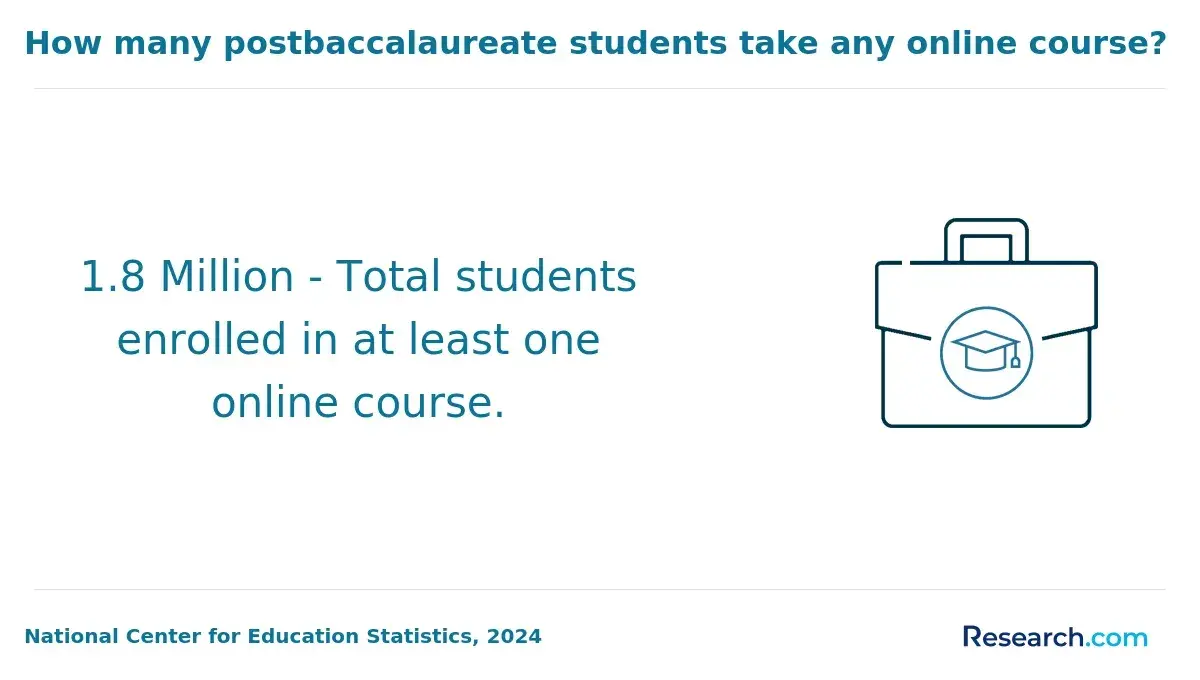
Online Health Administration doctorates can be respected by employers, but the format alone does not determine credibility. Employers usually care more about accreditation, institutional reputation, curriculum quality, faculty expertise, professional relevance, and whether the degree required serious research or applied doctoral work.
The strongest online programs are usually built for working professionals. They often combine asynchronous coursework, live seminars, research mentoring, residencies, and an applied dissertation or capstone. Hybrid formats may be better if you want more in-person networking, faculty access, or cohort bonding, while fully online formats may be better if relocation or work schedules are major barriers.
The comparison below can help you evaluate how format affects career value rather than assuming online or hybrid is automatically better.
| Program format | Strengths | Trade-offs | Best fit |
| Fully online | Maximum scheduling flexibility, no relocation, often better for full-time professionals. | Requires strong self-direction and may offer fewer in-person networking moments. | Experienced healthcare professionals who already have a workplace network. |
| Hybrid | Combines online convenience with campus intensives, residencies, or cohort events. | Travel costs and scheduling requirements can add pressure. | Students who value relationship-building and structured faculty interaction. |
| Campus-based | High access to faculty, research groups, campus resources, and academic networks. | Less flexible for working executives and may require relocation. | Students targeting traditional academic or research-intensive paths. |
Accreditation is the first credibility checkpoint. At minimum, confirm that the institution is regionally accredited by an agency recognized by the U.S. Department of Education or the Council for Higher Education Accreditation. For healthcare management programs, specialized accreditation can also be relevant, though not every doctoral program will have the same specialized accreditor as a master's program.
Another practical consideration is speed. Some students explore accelerated healthcare programs earlier in their education path, but doctoral programs should not be judged by speed alone. A shorter program is only valuable if it still provides strong mentoring, research training, and a credible final project.
What industries value professionals with Health Administration doctorate degrees?
Health Administration doctorate holders are valued in industries where healthcare delivery, financing, compliance, quality, technology, and policy overlap. The degree is especially useful when a role requires both administrative authority and the ability to analyze complex systems.
The BLS May 2024 wage estimate for medical and health services managers gives a useful market anchor: the median wage was $117,960. That figure is not doctorate-specific, but it shows that the management labor market surrounding this credential is already a high-responsibility field.
The table below outlines the sectors where doctoral-level health administration expertise can be useful and how demand typically shows up.
| Industry or sector | Why the doctorate may matter | Common roles |
| Hospitals and health systems | Large organizations need leaders who can manage quality, cost, workforce, access, and regulatory pressure at scale. | Chief operating officer, vice president, service-line executive, quality leader. |
| Academic medical centers | These employers blend care delivery, research, teaching, grants, and complex governance. | Department administrator, research operations director, faculty administrator. |
| Insurance and payer organizations | Payers need leaders who understand utilization, value-based care, provider networks, and policy incentives. | Population health executive, provider relations leader, strategy director. |
| Consulting firms | Clients pay for expertise in transformation, mergers, revenue cycle, quality, compliance, and digital strategy. | Principal consultant, healthcare strategy advisor, transformation lead. |
| Pharmaceuticals and life sciences | Organizations need expertise in market access, outcomes, health economics, and delivery-system partnerships. | Market access leader, real-world evidence strategist, health policy executive. |
| Public health and government | Agencies need leaders who can design, implement, and evaluate programs affecting communities and populations. | Health department director, program executive, policy analyst leader. |
| Healthcare technology | Digital health companies need administrators who understand workflows, compliance, privacy, and adoption barriers. | Product strategy leader, implementation executive, informatics director. |
The industry with the "best" outcome depends on your strengths. Hospitals may reward operational credibility, payers may reward finance and analytics, consulting may reward breadth and client communication, and academic medical centers may reward research literacy and institutional navigation.
What executive or leadership roles can Health Administration doctorate degrees qualify you for?
A Health Administration doctorate can support executive advancement, but it rarely works as a shortcut. Most senior roles still require a record of measurable leadership: budget responsibility, team management, quality improvement, financial results, regulatory success, and strategic execution.
The degree can be especially useful when you are competing for roles where employers expect advanced systems thinking. It can also help experienced clinicians move into administrative leadership, or help nonclinical administrators demonstrate doctoral-level credibility in healthcare environments.
The table below compares leadership roles that may align with a Health Administration doctorate and the kind of evidence employers usually want beyond the degree.
| Role | What the role does | What strengthens your candidacy |
| Chief executive officer | Leads organizational strategy, finances, culture, partnerships, and board relationships. | Enterprise leadership experience, financial results, crisis leadership, community credibility. |
| Chief operating officer | Oversees day-to-day operations, service lines, staffing, patient flow, and performance improvement. | Operational turnarounds, process improvement outcomes, multi-site leadership. |
| Chief quality officer | Leads quality, safety, accreditation, risk reduction, and outcome improvement initiatives. | Quality metrics, patient safety projects, regulatory readiness, clinical collaboration. |
| Vice president of strategy | Guides growth planning, partnerships, market analysis, mergers, and service expansion. | Market analysis, strategic planning, payer or provider partnerships, board-level communication. |
| Population health executive | Improves outcomes and cost performance across defined patient groups. | Value-based care knowledge, analytics, community partnerships, chronic disease program results. |
| Healthcare compliance or risk executive | Oversees regulatory compliance, enterprise risk, privacy, and ethical governance. | Compliance leadership, legal collaboration, audit experience, policy implementation. |
For salary context, BLS May 2024 data reported that the 90th percentile for medical and health services managers reached $239,200 or more. Readers should interpret that as a role-and-market indicator, not a promised doctoral salary. Top compensation usually reflects organizational size, geography, executive scope, and performance history.
Executive paths make the most sense if you already enjoy leading people, managing ambiguity, defending decisions, and being accountable for results. They may not be the best fit if you prefer independent analysis, scholarship, teaching, or narrow technical specialization.
Are there academic careers available for Health Administration doctorate holders?
Yes, Health Administration doctorate holders can pursue academic careers, but the type of doctorate matters. A PhD is often the strongest fit for tenure-track research roles, while a DHA, DrPH, or other applied doctorate may fit teaching-focused, practitioner-scholar, program leadership, or clinical-adjacent faculty roles.
Academic careers may appeal to professionals who want to teach future administrators, publish research, lead programs, supervise doctoral projects, or work in academic medical centers. However, academic salaries, promotion rules, and workload expectations vary widely by institution type.
The table below compares common academic roles and how doctoral preparation is typically used.
| Academic path | Typical responsibilities | Best doctoral fit |
| Tenure-track faculty | Research, publishing, teaching, service, grant activity, and student mentoring. | Usually PhD or research-intensive doctorate. |
| Teaching professor or lecturer | Course development, classroom instruction, advising, and applied learning activities. | DHA, DrPH, PhD, or related doctorate with professional experience. |
| Program director or department chair | Curriculum oversight, accreditation work, faculty management, assessment, and student outcomes. | Applied or research doctorate plus leadership experience. |
| Doctoral project chair or mentor | Guiding students through dissertations, capstones, and applied research projects. | Doctorate with strong research methods training. |
| Academic medical center administrator | Managing departments that combine clinical care, research, education, and faculty affairs. | Health administration doctorate plus complex organizational experience. |
Academic roles may pay less than corporate executive roles but can offer intellectual independence, teaching opportunities, research identity, and long-term professional influence. If your main goal is maximum compensation, industry leadership or consulting may offer stronger upside. If your goal is thought leadership, publishing, mentoring, and curriculum influence, academia may be a better fit.
A common mistake is assuming any doctorate automatically qualifies you for tenure-track work. Before choosing a program, review faculty hiring ads in your target institutions and see whether they ask for a PhD, peer-reviewed publications, grant experience, teaching experience, or a specific research agenda.
Are there consulting opportunities for Health Administration doctorate holders?
Consulting is one of the most practical nontraditional paths for Health Administration doctorate holders. The degree can strengthen credibility when paired with real operational experience, a clear specialty, and the ability to solve expensive problems for clients.
Consulting can be full-time through a firm, independent through your own practice, or part-time alongside an executive or academic role. It is strongest when your expertise is specific enough for clients to understand quickly.
These consulting areas often align well with doctoral-level health administration training because they require evidence, strategy, and change management at the same time:
- Quality improvement and patient safety consulting for hospitals, clinics, and long-term care organizations.
- Revenue cycle, reimbursement, and value-based care consulting for providers adapting to payment changes.
- Population health consulting for accountable care organizations, community health programs, and payer-provider partnerships.
- Healthcare technology implementation consulting for organizations adopting electronic health records, analytics platforms, AI tools, or workflow automation.
- Organizational transformation consulting for mergers, restructuring, service-line redesign, and leadership development.
- Accreditation, compliance, and risk-readiness consulting for organizations facing regulatory or quality oversight.
Consulting makes sense if you can package your knowledge into defined services, tolerate variable income, build relationships, and communicate recommendations clearly to executives. It may not make sense if you prefer stable roles, internal authority, predictable work, or long-term team leadership.
The doctorate can help you stand out, but clients usually buy outcomes rather than credentials. Your portfolio should show before-and-after metrics, case examples, publications, presentations, or implementation experience that proves you can improve performance.
What nonprofit or public sector roles are open to Health Administration doctorate holders?
Health Administration doctorate holders can also work in nonprofit, public sector, and mission-driven roles. These paths may not always offer the highest compensation, but they can provide strong influence over access, equity, community health, emergency preparedness, health policy, and program evaluation.
These roles are especially relevant if you want to improve systems rather than manage only one organization's financial performance. Doctoral training can help you evaluate programs, interpret evidence, lead coalitions, and communicate with policymakers.
The table below highlights public and nonprofit pathways where a doctorate can support credibility and advancement.
| Role type | Where it appears | How the doctorate helps |
| Public health administrator | Local, state, or federal health agencies. | Supports program evaluation, population health planning, and interagency coordination. |
| Health policy director | Government offices, advocacy groups, think tanks, professional associations. | Strengthens policy analysis, evidence review, stakeholder communication, and regulatory interpretation. |
| Nonprofit executive director | Community health organizations, foundations, patient advocacy groups. | Supports strategic planning, grant alignment, board reporting, and outcome measurement. |
| Program evaluation leader | Public agencies, foundations, universities, nonprofits. | Uses research methods to assess whether programs are effective, equitable, and financially sustainable. |
| Emergency preparedness or health systems resilience leader | Public health agencies, hospital coalitions, regional planning organizations. | Applies systems thinking to crisis response, continuity planning, and cross-sector coordination. |
Nonprofit and public sector roles can be a strong fit if you value mission, policy impact, community outcomes, and long-term system reform. Corporate roles may offer higher earnings potential, but public and nonprofit roles can offer broader social impact and leadership visibility.
How do Health Administration doctorate degrees impact long-term earning potential?
A Health Administration doctorate can improve long-term earning potential when it helps you move into higher-scope roles. The financial payoff usually comes from promotion, executive responsibility, consulting revenue, academic leadership, or specialized expertise, not from the diploma alone.
The most useful salary comparison is by role rather than degree title. BLS May 2024 data reported a $117,960 median annual wage for medical and health services managers, while the top 10% reached $239,200 or more. That range shows why role scope, employer type, and market are more important than simply listing "doctorate" on a resume.
The table below gives a practical view of earning potential by path. These are role-based market categories, not guaranteed outcomes for every doctorate holder.
| Career path | Typical earning pattern | What drives higher compensation |
| Hospital or health system executive | Often strong, especially in large systems and multi-site leadership roles. | Budget size, operational scope, executive track record, geography, system complexity. |
| Payer or insurance leadership | Can be strong when tied to strategy, value-based care, analytics, or network performance. | Financial responsibility, analytics expertise, provider contracting knowledge. |
| Consulting | Highly variable; can exceed salaried roles for strong specialists with steady clients. | Reputation, niche expertise, client acquisition, measurable project outcomes. |
| Academic faculty | Often stable but may be lower than senior industry leadership. | Institution type, tenure status, publications, grants, administrative appointments. |
| Public sector or nonprofit leadership | May be lower than corporate roles but can offer influence, stability, and mission alignment. | Agency level, budget authority, grant portfolio, executive responsibility. |
There is no single national advancement rate for Health Administration doctorate holders because outcomes vary by prior experience, employer, doctoral type, geography, and career path. When schools publish promotion or salary outcomes, review the sample size, graduation year, job titles included, and whether outcomes reflect self-reported alumni surveys.
Cost also affects ROI. There is no federally published national average cost of attendance specifically for DHA or Health Administration doctoral programs, but NCES data released in 2024 provides a planning baseline: average graduate tuition and required fees for 2022-23 were about $12,596 at public institutions and $29,931 at private nonprofit institutions. Doctoral students should add fees, books, residencies, travel, technology costs, and reduced work capacity when estimating total cost.
Public versus private university ROI should not be judged by institution type alone. A lower-cost public program may be ideal if it has the right faculty and format; a private nonprofit program may be worth considering if it offers strong executive networks, employer alignment, or specialized mentoring. The wrong low-cost program can still be a poor investment if it does not match your career goal.
How can you assess if a doctorate degree in Health Administration is aligned with your career goals?
The best way to assess fit is to start with the role you want, then work backward. A Health Administration doctorate is usually worth considering when the credential fills a real gap between your current experience and your target position.
Use the steps below to decide whether a doctorate is aligned with your career goals before you apply. This process helps prevent the most common mistake: enrolling because the degree sounds prestigious without knowing how it will change your options.
- Define your target outcome in one sentence, such as "I want to become a chief quality officer," "I want to teach in a health administration program," or "I want to consult on value-based care transformation."
- Review job postings for that target role and note whether they require a doctorate, prefer a doctorate, or mainly require experience.
- Choose the doctorate type that fits the outcome: DHA for applied executive practice, PhD for research-intensive academia, or DrPH for public health leadership and policy-oriented work.
- Verify institutional accreditation and ask whether the program has specialized healthcare management accreditation, employer partnerships, or faculty with expertise in your intended area.
- Compare dissertation or capstone expectations because the final project should become evidence of your expertise, not just a graduation requirement.
- Estimate total cost, including tuition, fees, travel, residencies, books, technology, and any income reduction from fewer work hours.
- Ask your employer whether tuition assistance, schedule flexibility, promotion pathways, or dissertation-site access are available.
- Speak with alumni in your target path and ask what changed after graduation, what did not change, and what they would choose differently.
It is also important to compare alternatives. If your goal is faster advancement into mid-level administration, a second master's certificate, executive education, project management credential, informatics credential, or leadership fellowship may produce a better near-term return than a doctorate.
Cost-sensitive students should not begin with rankings alone. If affordability is the barrier, reviewing options such as a cheapest online healthcare administration degree can help you think through lower-cost pathways before committing to doctoral tuition.
Watch for red flags during program selection. Be cautious if a program is unclear about accreditation, uses vague career outcome claims, has limited faculty access, cannot explain dissertation support, promises unrealistic completion timelines, or will not provide transparent tuition and fee information.
A strong program should make your next professional step more credible and more achievable. If you cannot explain how the degree connects to your target role, specialization, network, and expected return, it may be better to wait, gain more leadership experience, or choose a more focused credential.
Other Things You Should Know About Health Administration
A DHA is usually practice-oriented and designed for healthcare leaders who want to solve applied organizational problems. A PhD is usually research-oriented and better suited for people who want to publish, conduct original research, or pursue tenure-track academic roles.
Many professional doctorates take about three to five years, depending on transfer credits, enrollment pace, dissertation or capstone progress, and whether the student studies while working full time. Research doctorates can take longer, especially when they require extensive original research.
Not always. Many programs admit applicants from administration, finance, policy, public health, analytics, consulting, and nonprofit leadership backgrounds. Clinical experience can help in certain roles, but it is not universally required.
Usually no. Health Administration doctorates are leadership and research credentials, not clinical licensure programs. Licensure requirements vary by profession and state, so students should check the rules for any regulated role they plan to pursue.
References
- Top 20 Public Health Administration Jobs for PhD Graduates https://dblp.ucnedu.org/blog/top-20-public-health-administration-jobs/
- 10 careers you can pursue with a Healthcare Administration Degree - SMWC https://www.smwc.edu/10-careers-you-can-pursue-with-a-healthcare-administration-degree-blog-december-22/
- What Are the Differences in Salary Level for Different Degrees in Healthcare Management? | MHA Salary https://www.healthcare-management-degree.net/faq/what-are-the-differences-in-salary-level-for-different-degrees-in-healthcare-management/
- Healthcare Administration & Education https://www.wmcarey.edu/program/doctoral-health-administration-and-education
- Doctorate in Healthcare Administration: Lead With Prevention https://staginglungcancer.org/doctorate-in-healthcare-administration-lead-with-prevention
- 5 Careers for a Doctorate in Healthcare Administration Graduate - Healthcare Administration Degree Programs https://www.healthcare-administration-degree.net/lists/5-careers-for-a-doctorate-in-healthcare-administration-graduate/
- Five Emerging Careers in Healthcare Administration https://www.mhaonline.com/blog/five-new-healthcare-administration-careers
- Health Management Careers https://www.ache.org/Career-Resources/Start-Your-Career/Health-Management-Careers
- What Does a Healthcare Administrator Do? https://www.trident.edu/articles/what-does-a-healthcare-administrator-do/
- Healthcare Administrator Salary https://www.publichealthdegrees.org/careers/healthcare-administrator/salary/