2027 Online Health Administration Degree Programs With University Scholarships: Awards, Eligibility, and Net Cost

Co-Founder and Chief Data Scientist
An online health administration degree can look affordable until technology fees, residency rules, and limited online-student scholarships change the total. For context, average published 2024-25 tuition and fees were $11,610 at public four-year in-state colleges and $43,350 at private nonprofit colleges.
This guide is for prospective, transfer, working, and military students comparing institutional awards. Learn how scholarship eligibility, renewal terms, FAFSA aid, and program costs affect what you may actually pay - not simply the tuition or advertised scholarship amount.
Key Things You Should Know
- University-funded scholarships for online health administration students are not universal: eligibility can depend on degree level, residency, admission type, transfer status, enrollment intensity, and whether online learners are included.
- The federal Pell Grant maximum was $7,395 for the 2024-25 award year, but Pell eligibility is need-based and separate from institutional scholarships; grants and scholarships can substantially reduce billed costs without eliminating every fee or living expense.
- Compare renewable aid over the full degree, not one term: a smaller award at a lower-tuition program can create a lower net cost than a larger award at a higher-priced university.
Which Online Health Administration Degree Programs Offer University Scholarships?
Online health administration options include associate, bachelor's, master's, and certificate programs, often labeled health administration, healthcare management, health services management, or healthcare administration. Institutional scholarships are awards funded or administered by the university rather than the federal government, and a school may limit them to certain campuses, degree levels, or enrollment formats.
The strongest prospects are generally universities that expressly confirm that fully online degree-seeking students may compete for institutional aid. Do not assume an award listed on a university-wide scholarship page applies to an online Bachelor of Science in Health Administration or an online Master of Health Administration.
This comparison identifies the program features that matter before treating a school as a scholarship option.
| Program situation | Institutional scholarship likelihood | What to verify | Best fit |
| Public university online bachelor's completion program | Often varies by residency and campus policy | Whether online and transfer students are eligible; per-credit tuition | Students with transferable general education credits |
| Private nonprofit online bachelor's program | May offer merit discounts or donor-funded awards | Whether the award is renewable and applies to online tuition | Students with strong academic records seeking predictable pricing |
| Online master's in healthcare administration | Often more limited than undergraduate aid | Graduate scholarship availability, employer partnerships, and required fees | Working professionals with employer tuition assistance |
| Fully online competency-based program | May use term-based scholarships rather than traditional awards | Term charges, pace expectations, and scholarship end date | Self-directed adult learners who can progress quickly |
Start with each institution's financial-aid office and the program's admissions page, then request confirmation in writing that your exact online program is eligible. Students considering clinical or pharmacy-adjacent administrative pathways can also compare the cost structure of online pharmacist programs, although those programs have different professional and licensure requirements.
How Much Scholarship Money Can Online Health Administration Degree Students Receive?
There is no standard institutional scholarship amount for online health administration students. Universities set their own award budgets, applicant criteria, stacking rules, and annual limits. An advertised "up to" amount is a maximum possibility, not an offer every admitted student receives.
Use the award letter to separate money that reduces tuition from discounts that only apply in one term. The table below shows the main ways an award may be expressed and why the format affects its real value.
| Award format | How it works | Net-cost implication |
| Fixed annual award | A stated amount divided across eligible terms | Value depends on whether it renews for the expected time to degree |
| Per-credit scholarship | Reduces the charge for each eligible credit | Total value changes with course load and may exclude fees |
| Tuition discount | A percentage or negotiated reduction from a published rate | Compare the discounted price with competitors' final billed price |
| One-time award | Applies only to the first term or year | Can make the first-year price look lower than later years |
| Restricted donor award | Requires a defined major, background, location, or service connection | May be valuable but competitive and not automatically renewed |
At the undergraduate level, need-based federal aid may be a larger component than a university scholarship for some students. The $7,395 maximum Pell Grant for 2024-25 illustrates why completing the FAFSA can matter, but an individual award depends on federal eligibility, enrollment, and other information in the student's aid record.
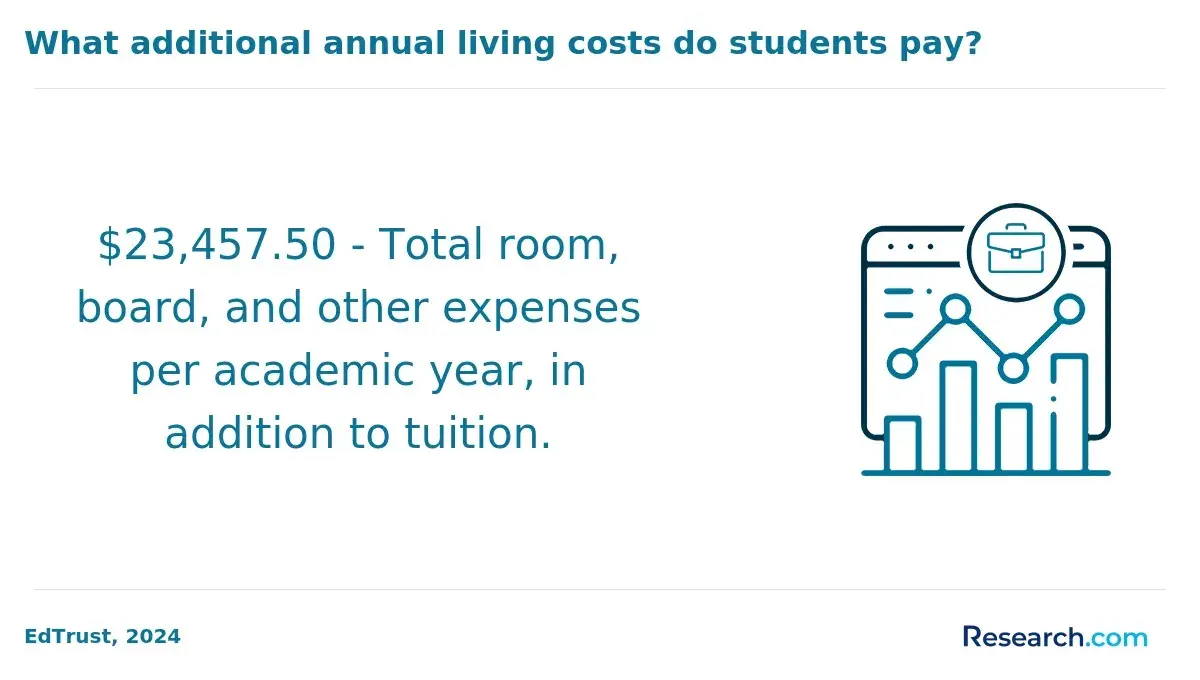
Ask for the scholarship's total maximum value, the number of terms covered, and its treatment of tuition, mandatory fees, books, technology, and living costs. Those answers are more useful than a headline award number.
What Are the Eligibility Requirements for Online Health Administration Degree Scholarships?
Eligibility requirements determine whether an applicant can receive an award and keep it. Common conditions include academic performance, a completed admission file, declared major, financial need, state residency, and a minimum number of credits each term. Online status can be an additional restriction rather than a neutral detail.
Before applying, review these conditions because they can change the value of an otherwise attractive offer.
- Confirm that students enrolled exclusively online are eligible, rather than only students assigned to a physical campus.
- Check whether the scholarship is limited to first-time freshmen, new transfers, returning students, graduate students, or a specific health-related major.
- Review the required cumulative GPA, including whether the school uses high school, transfer, or institutional GPA.
- Verify enrollment rules, such as full-time status, a minimum credit load, continuous enrollment, or a maximum number of funded terms.
- Determine whether FAFSA filing, demonstrated financial need, citizenship or eligible noncitizen status, or state residency is required.
- Read the policy on other aid because some university awards are reduced when outside scholarships or employer benefits are added.
A health administration curriculum typically covers healthcare finance, operations, policy, information systems, quality improvement, and leadership. Admission requirements commonly include prior coursework or a high school diploma for undergraduate study; master's programs may require a completed bachelor's degree. Accreditation and career requirements also vary: health administration is generally not a single licensed profession, but employers may prefer degrees from institutionally accredited schools and may value healthcare experience.
How Do You Apply for University Scholarships for an Online Health Administration Degree?
Some universities automatically consider admitted students for merit awards; others require a separate institutional application, essay, recommendation, FAFSA record, or proof of affiliation. Automatic consideration is convenient, but it does not mean every eligible applicant will receive funding.
Use this sequence to avoid missing awards or submitting an application after institutional deadlines have passed.
- Choose the exact online health administration degree and confirm its admission term, campus designation, and eligibility for institutional scholarships.
- Apply for admission early enough for scholarship review, then save the admission confirmation and student identification number.
- Submit the FAFSA if the school requests it or if you may qualify for federal, state, or need-based institutional aid.
- Complete any separate scholarship application and provide only the documents the university requests, such as transcripts, an essay, résumé, or recommendation.
- Review each award notice for amount, covered terms, enrollment requirements, renewal GPA, and whether accepting it creates additional obligations.
- Ask financial aid for a written estimate showing tuition, mandatory fees, scholarships, grants, loans, and your remaining balance.
Adult learners may benefit from programs with flexible timelines, but accelerated pacing can affect aid disbursement and annual borrowing limits. If finishing sooner is important, compare accelerated degree programs alongside their total charges and scholarship rules rather than assuming a shorter format is automatically cheaper.
Are Scholarships for Online Health Administration Degree Programs Renewable Every Year?
Many university scholarships are renewable, but renewal is conditional. "Renewable" means the university may continue the award for future terms if the student meets stated requirements; it does not necessarily mean the amount, tuition rate, or availability is guaranteed without conditions.
Renewal terms usually address academic progress and time limits. Review the written award agreement for the following points before relying on an award in a multi-year budget.
- The minimum institutional or cumulative GPA required at each review point.
- The minimum enrollment level, including whether part-time online study remains eligible.
- Whether a leave of absence, failed course, withdrawal, program change, or transfer to another campus ends the award.
- The maximum number of semesters, quarters, terms, or credits the scholarship can cover.
- Whether the school reviews academic progress annually, each term, or after a specified number of attempted credits.
- Whether the award amount can change if tuition increases or if other aid is received.
Keep a personal renewal calendar with GPA checks, FAFSA renewal dates, scholarship deadlines, and expected graduation date. If your work schedule requires part-time enrollment, obtain a direct answer from the scholarship office before enrolling; full-time requirements are a frequent reason students lose otherwise renewable awards.
Can You Combine an Online Health Administration Scholarship With FAFSA and Other Financial Aid?
In many cases, yes. A university scholarship can be combined with FAFSA-based federal aid, state grants, employer tuition assistance, veterans' education benefits, and outside scholarships. However, the school must follow federal aid rules and its own packaging policy, so adding one award can sometimes reduce another form of need-based aid or loan eligibility.
FAFSA is an application, not financial aid itself. It helps determine eligibility for federal programs such as Pell Grants, Direct Loans, and work-study, and many universities also use FAFSA information when awarding need-based institutional funds.
This overview shows why students should ask how each aid source is packaged rather than merely adding award headlines together.
| Funding source | Typical relationship to institutional scholarship | Question to ask |
| Federal Pell Grant | May stack if the student remains eligible | Will the university scholarship reduce unmet need or replace institutional grant aid? |
| Federal Direct Loans | Can often fill remaining education costs within federal limits | How much borrowing remains after grants and scholarships? |
| Employer tuition assistance | May be treated as an outside resource | Must employer funding be reported before the aid package is finalized? |
| Military or veterans' benefits | Coordination depends on benefit type and school policy | Does the institutional scholarship apply after benefits are posted? |
| Private outside scholarship | Usually reportable to the financial-aid office | Which award, if any, will be adjusted when outside funds arrive? |
Do not decline federal aid before seeing the final package, particularly if you need a contingency plan for a scholarship that is competitive or nonrenewable. You can later decide whether borrowing is necessary after comparing the actual balance due.
How Much Does an Online Health Administration Degree Cost After Scholarships and Financial Aid?
Net cost is the amount remaining after scholarships and grants are subtracted from the school's cost of attendance or billed educational charges. It is not always the same as the amount you pay directly to the university because housing, transportation, dependent care, books, and loan interest may remain personal expenses.
For a useful estimate, begin with program-specific tuition and required fees rather than broad university averages. The following formula separates the figures a financial-aid office should help you confirm.
| Calculation step | What to include | Why it matters |
| 1. Direct educational charges | Tuition, mandatory online fees, course fees, and required technology charges | These are the amounts most likely to appear on the university bill |
| 2. Minus gift aid | Institutional scholarships, federal and state grants, and outside scholarships | Gift aid generally does not require repayment if conditions are met |
| 3. Equals estimated direct balance | Remaining billed amount after gift aid | This indicates what payment plan, savings, employer aid, or loans may need to cover |
| 4. Add indirect costs | Books, supplies, internet, transportation, and living expenses where applicable | This produces a more complete affordability estimate |
Public colleges can be less expensive for in-state students, while private institutions may offset a higher published price with larger institutional awards. The comparison must be personalized because residency, transfer credits, course pace, and required fees can alter the result. Students exploring broader healthcare education costs may also compare online nursing degrees, while recognizing that nursing includes clinical, regulatory, and licensure considerations that differ from health administration.
A practical red flag is an estimate that lists only tuition and scholarship amount. Request an itemized annual projection through graduation, including the conditions that could change aid after the first year.
Are There Scholarships for Transfer, Adult, Military, and Other Online Health Administration Students?
Yes, but eligibility is highly segmented. Transfer scholarships may reward a completed associate degree or a defined transfer GPA; adult-learner awards may target returning students; military-focused funding may involve institutional discounts, service-member scholarships, or education benefits. These groups should not assume that a scholarship designed for first-time freshmen will transfer to their situation.
These student profiles often need different documents and comparisons when seeking institutional aid.
| Student group | Potential scholarship pathway | Important verification point |
| Transfer student | Transfer merit award or community-college partnership scholarship | Minimum transferable credits, transfer GPA, and whether all prior coursework is accepted |
| Adult or returning student | Completion scholarship, employer partner benefit, or re-entry award | Part-time eligibility and whether prior attendance affects eligibility |
| Active-duty military, veteran, or dependent | Military-affiliated institutional scholarship or coordinated education benefit | Benefit certification process and restrictions on combining aid |
| First-generation or low-income student | Need-based institutional grant or donor scholarship | FAFSA requirement, deadline, and annual verification |
| Student changing healthcare roles | Workforce or employer-supported award | Employment documentation and any service or repayment obligation |
Transfer planning can be especially important for healthcare workers moving into administration after clinical education. Students with nursing coursework may find useful context in an online ASN pathway, but should have the receiving university evaluate credits formally instead of relying on informal equivalencies.
What Is the Difference Between Merit-Based and Need-Based Scholarships for Online Health Administration Degrees?
Merit-based scholarships are generally awarded for academic achievement, leadership, professional accomplishments, or other nonfinancial criteria. Need-based scholarships consider financial circumstances, often using FAFSA information and the university's aid methodology. Some institutional awards combine both approaches.
Neither type is automatically better. Merit aid can be more predictable for applicants with strong grades who do not qualify for substantial need-based aid, while need-based funding can have greater value for students whose financial resources are limited. Both may carry enrollment, GPA, deadline, and program-format conditions.
This comparison helps match the scholarship search to your strongest eligibility factors.
| Feature | Merit-based scholarship | Need-based scholarship |
| Main basis | Academic record, leadership, achievement, or talent | Documented financial need and institutional criteria |
| FAFSA role | May not be required, but some schools still request it | Often required for consideration or continued eligibility |
| Common renewal focus | Minimum GPA and enrollment status | Financial need, satisfactory academic progress, and enrollment |
| Key limitation | Competitive criteria may exclude otherwise financially needy students | Amount can change when finances, enrollment, or other aid changes |
Apply for both categories whenever the university permits it. A student's aid package may include merit funding, need-based grant aid, and federal assistance, but the total package remains subject to the school's policy and cost-of-attendance limits.
How Should You Compare Scholarship Offers From Online Health Administration Degree Programs?
The best scholarship value is the offer that produces the lowest realistic cost for your academic plan while preserving program quality and flexibility. A large first-year award can be less valuable than a smaller renewable award if the larger award expires, applies only to tuition, or requires full-time enrollment you cannot maintain.
Compare each offer using the same enrollment plan and expected graduation timeline. These questions reveal the differences that promotional materials often leave unclear.
- What are total tuition and mandatory fees for every remaining credit after approved transfer credits are applied?
- Is the scholarship available to fully online health administration students in your admission category?
- Is the stated amount per term, per year, or for the entire degree, and what costs does it exclude?
- What GPA, credit load, satisfactory academic progress, and continuous-enrollment rules apply to renewal?
- Can the award be combined with Pell Grants, employer assistance, military benefits, and outside scholarships?
- What is the estimated direct balance for the first year and each later year if tuition or aid changes?
- Does the online program have appropriate institutional accreditation, relevant curriculum, support services, and scheduling for your career goals?
Health administration can lead toward roles in clinic operations, patient services, healthcare finance, records management, quality improvement, and healthcare management. The U.S. Bureau of Labor Statistics projects employment of medical and health services managers to grow 23% from 2024 to 2034, indicating strong demand but not guaranteeing a specific role or salary for any graduate. For registered nurses seeking a management-oriented next step, comparing RN to BSN online programs may also help clarify whether a nursing advancement route or a health administration degree better matches your experience.
Make your final decision only after receiving written award terms and a program-specific cost estimate. If two schools have similar net costs, prioritize the one whose scholarship conditions, transfer-credit evaluation, course scheduling, and student support best fit your likelihood of completing the degree.
Other Things You Should Know About Health Administration
Employer acceptance usually depends more on the university's institutional accreditation, curriculum, relevant experience, and the applicant's skills than on whether coursework was online. Confirm that the degree title, transcript, and program outcomes align with the roles you want, such as clinic operations, patient access, healthcare finance, or quality management.
Time to completion varies by degree level, transfer credits, course load, prerequisites, and term format. A student with substantial transferable credits may finish a bachelor's completion program sooner than a first-time student, while part-time study can extend the timeline. Ask the university for an individualized graduation plan.
Most entry-level health administration and healthcare management roles do not require one universal professional license. Specific jobs, employers, and states can have separate expectations, particularly when a role involves regulated clinical services, long-term care administration, billing, privacy, or compliance.
Look for coursework and practical learning in healthcare operations, budgeting, communication, health information systems, policy, compliance, quality improvement, data interpretation, and leadership. If possible, ask whether the program includes applied projects, internships, career support, or opportunities to work with healthcare organizations.
References
- Healthcare Administration Scholarships https://www.healthadministrationdegrees.com/healthcare-administration-scholarships/
- Best Affordable MHA Programs (Top Low-Cost Rankings) https://www.healthcaremanagement.org/mha/affordable/
- 25 Great Scholarships for Healthcare Management Students - Healthcare Management Degree Guide https://www.healthcare-management-degree.net/great-scholarships-for-healthcare-management-students/
- Bachelor of Public Health Scholarships and Grants https://teach.com/online-ed/healthcare-degrees/online-bachelor-public-health/scholarships/
- Health Care Scholars United - Scholarship America https://scholarshipamerica.org/scholarship/unitedhealthfoundation/
- Scholarships for Healthcare Administration Majors https://www.smartscholar.com/scholarships/scholarships-for-healthcare-administration-majors/
- Are There Scholarships Available for Healthcare Administration? - Healthcare Administration Degree Programs https://www.healthcare-administration-degree.net/faq/are-there-scholarships-available-for-healthcare-administration/
- Master of Health Administration - Online https://www.unthealth.edu/tcom/public-health/online-master-of-health-administration.html
- Scholarships https://www.aupha.org/resourcecenter/scholarships
- 2025 Most Affordable Healthcare Administration Degrees Online https://www.onlineu.com/most-affordable-colleges/healthcare-administration-degrees