2027 Online Geography Degree Programs With No Letters of Recommendation Required

Co-Founder and Chief Data Scientist
Applying to an online geography degree can be difficult when you do not have recent professors or supervisors available to write recommendations. Programs with no recommendation-letter requirement can reduce that barrier while still reviewing transcripts, GPA, and preparation.
This matters as online enrollment remains a major part of U.S. higher education: the National Center for Education Statistics reported that more than half of postsecondary students took at least one distance-education course in fall 2023. This guide helps prospective students identify credible options, verify requirements, compare costs, and choose a program aligned with GIS, environmental, planning, or geospatial career goals.
Key Things You Should Know
- "No letters of recommendation required" means applicants do not need to submit recommendation letters for the stated program and applicant type; it does not mean transcripts, GPA standards, prerequisites, essays, or other documents are waived.
- Examples of undergraduate options that have commonly used streamlined institutional admissions include Arizona State University Online, University of Florida Online, and Oregon State Ecampus, but applicants should confirm requirements for their exact major, term, and transfer status before applying.
- Program quality matters more than streamlined admissions: verify institutional accreditation, GIS and geospatial coursework, faculty support, total cost, transfer rules, and career alignment; the U.S. Bureau of Labor Statistics reports a $78,380 median annual wage for cartographers and photogrammetrists in May 2024.
Which Online Geography Degree Programs Require No Letters of Recommendation?
Most no-recommendation geography options are undergraduate programs because bachelor's admissions commonly emphasize high school or college records rather than professional references. Graduate geography, GIS, and geospatial science programs are more likely to request recommendations, although some may waive them for applicants with substantial experience or prior degrees.
The programs below are examples of online or primarily online geography-related bachelor's pathways whose general admissions processes have not ordinarily required recommendation letters. Requirements can change by enrollment category, so treat this as a starting list rather than a guarantee.
| Institution and online pathway | Degree focus | Typical no-recommendation admissions approach | Best fit |
| Arizona State University Online | BS in Geographic Information Science | Institutional application, academic records, and applicable admission criteria; recommendations are generally not part of undergraduate admission. | Students focused on GIS, mapping, spatial analysis, and technical geospatial work. |
| University of Florida Online | BA in Geography | Academic record review and required application materials; recommendation letters are generally not a standard undergraduate requirement. | Students seeking a broad human, physical, environmental, or regional geography foundation. |
| Oregon State University Ecampus | BA or BS in Geography and Geospatial Science | Application and academic-record review; undergraduate admission normally does not depend on recommendation letters. | Students wanting geography combined with geospatial methods and flexible online study. |
Program names, delivery formats, and admissions rules can change. A related online pathway, such as an architecture degree online, may also use portfolio-based or prerequisite-based review rather than recommendations, but its career preparation and curriculum are not interchangeable with geography.
Before paying an application fee, open the university's admissions page and the major's page separately. Confirm whether the school means "not required," "optional," or "not required for first-year applicants but required for transfer or graduate applicants." An optional letter can still be useful for an applicant with an uneven academic record, but it should never be assumed to be unnecessary without checking the current application checklist.
What Are the Admission Requirements for Online Geography Degree Programs With No Recommendation Letters?
Streamlined admissions remove one document from the application; they do not remove academic evaluation. Bachelor's applicants generally need a completed application, official or self-reported academic records, and evidence that they meet the institution's minimum preparation standards. Transfer applicants usually must submit official college transcripts and may face separate requirements for credits earned elsewhere.
Requirements vary substantially by school and applicant level, but the following comparison shows the materials applicants should expect to encounter.
| Applicant type | Common required materials | Requirements that may vary |
| First-year bachelor's applicant | Application, high school transcript or self-reported coursework, and proof of graduation | Minimum GPA, math preparation, placement testing, residency documentation, and standardized test policy |
| Transfer bachelor's applicant | Application and official transcripts from each college attended | Transfer GPA, transferable-credit minimum, general education equivalencies, and lower-division geography or math prerequisites |
| Graduate applicant | Application, bachelor's transcript, statement of purpose, and often a resume | Recommendations, quantitative prerequisites, writing sample, portfolio, GRE policy, and professional experience expectations |
Geography students should pay special attention to quantitative preparation. GIS, remote sensing, cartography, environmental analysis, and spatial statistics courses may expect comfort with algebra, data analysis, or introductory computing. A broad BA in geography may have fewer technical entry prerequisites than a GIS-intensive BS, but both can include analytical coursework.
Applicants should also distinguish university admission from major admission. Some schools admit students to the university first and require a separate application, minimum GPA, or prerequisite completion before entry into a specialized GIS or geospatial track.
Are Online Geography Programs With No Letters of Recommendation Easier to Get Into?
Not necessarily. A program that does not request recommendations may be administratively simpler to apply to, particularly for working adults, military-affiliated students, career changers, and applicants who have been out of school for years. It may still be selective based on GPA, completed coursework, available capacity, or suitability for a technical concentration.
Recommendation letters offer schools a third-party view of an applicant's academic readiness, communication, and persistence. When a program removes them, admissions staff may rely more heavily on objective records such as completed coursework and grades. This can make expectations clearer, but it does not lower the importance of meeting them.
A common mistake is treating "no recommendations" as "open admission" or guaranteed entry. Avoid that assumption by asking admissions staff whether the posted GPA is a minimum eligibility threshold, a competitive benchmark, or a guarantee only after all prerequisites are met. Students with weak grades should consider whether completing transferable coursework in algebra, statistics, environmental science, or introductory GIS could strengthen their record before applying.
Applicants who need extensive faculty mentorship, a research thesis, or a highly specialized graduate credential should not choose solely on application simplicity. In those cases, the curriculum, faculty expertise, project opportunities, and technical resources may be more important than whether references are required.
Schools commonly use documents that show prior academic performance and readiness for online learning. The strongest application presents a consistent story: your previous coursework, professional experience, and stated goal should make sense for the geography specialization you want to pursue.
Where recommendations are not required, admissions reviewers may focus on the following evidence.
- Official transcripts and cumulative GPA, including performance in math, science, social science, statistics, or computing courses relevant to the chosen track.
- A personal statement or short-response essay explaining interests in GIS, environmental change, urban issues, planning, population geography, or spatial data.
- A resume documenting relevant employment, military service, volunteer work, fieldwork, mapping, data analysis, environmental work, or technical software experience.
- Prerequisite completion, particularly for GIS, remote sensing, geospatial programming, and quantitative analysis concentrations.
- Writing samples, portfolios, interviews, or skills assessments when a graduate program uses a more individualized review process.
Use the personal statement to explain facts that a transcript cannot show, such as a career transition into geospatial analysis or why a lower grade occurred. Do not use it to repeat your resume. Instead, connect specific experience to the program's courses and identify a plausible outcome, such as preparing for GIS technician, planning support, environmental data, emergency management, or location-intelligence work.
For applicants comparing professional degrees, admissions evidence can differ by discipline. For example, best EdD programs online may emphasize professional leadership experience and written goals, while a geography program may place greater weight on quantitative readiness and geospatial coursework.
A legitimate online geography degree is awarded by a recognized U.S. college or university and carries the same institutional accreditation framework as its campus-based degrees. Geography does not generally have a single universal programmatic accreditor comparable to those used in some licensed health fields, so institutional accreditation, curriculum quality, and transparent university operations are especially important.
Use these steps to verify a program before enrolling.
- Confirm that the institution appears in the U.S. Department of Education's Database of Accredited Postsecondary Institutions and Programs and identify its recognized institutional accreditor.
- Check that the degree title, major, delivery format, and awarding institution match across the university catalog, admissions page, and financial-aid information.
- Review the curriculum for substantive geography instruction, such as physical or human geography, GIS, cartography, remote sensing, spatial analysis, research methods, and a capstone or applied project where appropriate.
- Ask whether online students receive access to GIS software, library services, career advising, tutoring, faculty office hours, technical support, and proctored assessment policies.
- Request the full cost of attendance, transfer-credit evaluation policy, withdrawal rules, and confirmation that recommendations are not required for your applicant category.
Red flags include vague accreditation claims, pressure to enroll before you receive written cost information, unclear faculty credentials, missing course catalog details, and promises of rapid credentials without explaining credit requirements. Employers generally focus on the accredited institution, degree content, demonstrable skills, and experience rather than on whether you submitted references during admission.
For geospatial careers, ask whether the curriculum teaches widely used workflows such as spatial databases, coordinate systems, map design, remote sensing interpretation, and data visualization. A portfolio of maps, dashboards, analyses, or capstone work can provide practical evidence of competence beyond the diploma.
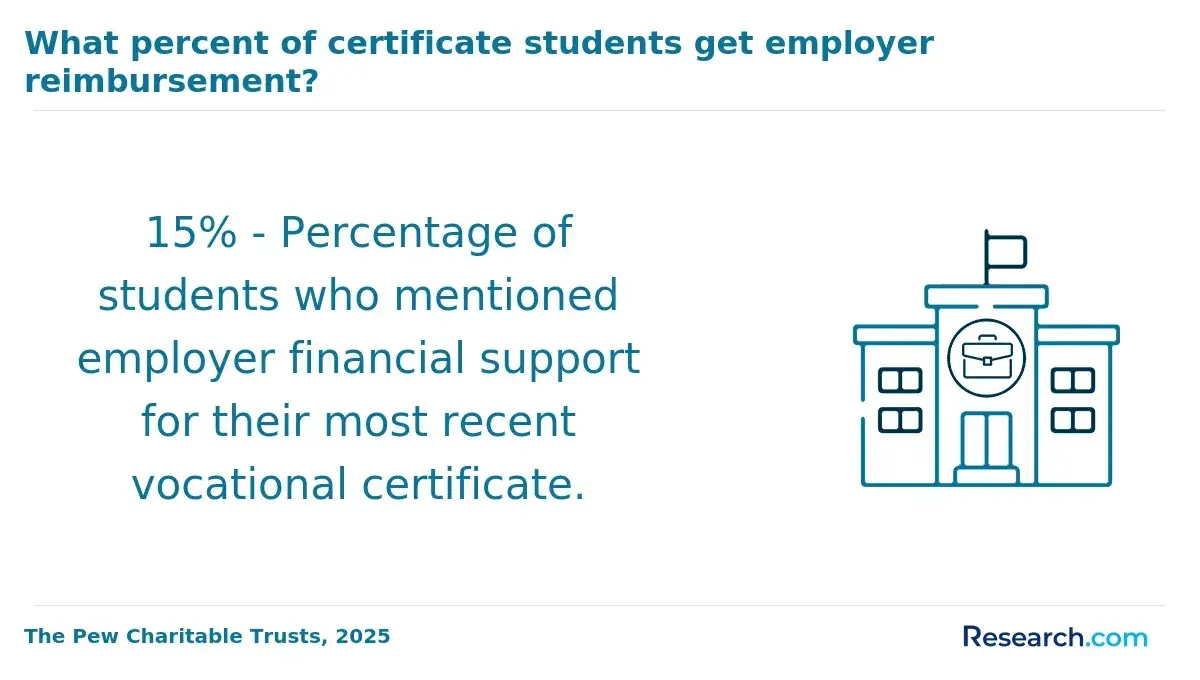
No-recommendation admissions do not inherently make a geography degree cheaper. Total cost depends on residency policy, credit load, transfer credits, course fees, technology, textbooks, proctoring, and whether online students pay different tuition than campus students. For broad context, the College Board reported average published tuition and fees of $11,610 for in-state students at public four-year U.S. institutions in 2024-25; an online program's actual price can be higher or lower.
Compare costs by the full degree plan rather than by one advertised per-credit rate. The table identifies expenses that can materially affect an online geography budget.
| Cost factor | Why it matters for online geography students | What to confirm |
| Tuition per credit | Rates may differ for residents, nonresidents, online cohorts, and upper-division courses. | Whether the published rate applies to your residency and major. |
| Remaining credits | Transfer evaluation determines how many credits you must still pay for. | A written preliminary transfer estimate and degree audit timeline. |
| Technology and software | GIS coursework may require a capable computer, storage, internet access, or specialized software. | Hardware standards, software licenses, remote-lab access, and added fees. |
| Course and field components | Some geography courses include lab, field, mapping, or proctoring charges. | Whether required activities are online, local, optional, or travel-based. |
| Opportunity cost | Course pace affects work hours and time to completion. | Part-time availability, asynchronous access, and predictable scheduling. |
Request a net-price estimate after transfer credit, grants, and employer support rather than comparing tuition alone. Students considering a graduate degree should also compare the shorter completion window and intensity of an online master with the depth of training needed for a particular GIS, planning, or research role.
Yes. If an eligible institution offers an approved online degree program, students may generally pursue federal financial aid by completing the Free Application for Federal Student Aid (FAFSA). The absence of recommendation letters has no direct effect on eligibility for federal grants, Direct Loans, work-study, veterans' education benefits, or many institutional awards.
Financial aid depends on more than admission. Enrollment intensity, satisfactory academic progress, prior borrowing, dependency status, and the program's eligibility all affect what a student may receive. Students should compare the school's financial-aid offer with the amount they will actually need to borrow after grants and outside support are applied.
Before committing, take these practical steps.
- Submit the FAFSA early enough to meet both federal and institutional deadlines, even if the school has rolling admission.
- Ask whether online students can receive the same institutional scholarships as campus students and whether separate scholarship applications require essays or references.
- Confirm the minimum number of credits needed each term for your desired aid status and whether accelerated sessions affect disbursement timing.
- Ask the veterans' services office or employer-benefits team about eligibility if you use GI Bill benefits, tuition assistance, or employer reimbursement.
- Compare annual borrowing with likely career pathways and retain the written financial-aid offer before making an enrollment deposit.
A streamlined application can make enrollment more accessible, but it should not rush a financial decision. If aid leaves a large gap, consider a lower-cost transfer route, part-time enrollment, employer support, or an institution with more favorable online tuition policies.
A bachelor's degree typically requires about 120 semester credits. A first-year student studying full time often needs roughly four academic years, while transfer students may finish sooner if a school accepts a substantial portion of their prior coursework. Part-time study can be a practical choice for working adults but extends the timeline.
Online delivery changes scheduling more than it changes academic credit requirements. Asynchronous courses may let students complete weekly work around jobs and family responsibilities, but GIS labs, group assignments, exams, and capstones still require regular participation. Accelerated terms can shorten calendar time, although taking too many compressed technical courses at once can make learning software and quantitative methods harder.
Use the program's sample degree map to count remaining credits, prerequisite sequences, and capstone timing. GIS and remote sensing courses may need to be taken in order, so a delayed prerequisite can affect graduation more than a general education course.
Students seeking a fast pace can compare approaches used in an accelerated psychology bachelor's degree online, but should confirm that an accelerated structure still allows adequate time for geography's technical assignments and portfolio development.
Many online geography bachelor's programs accept transfer credit, but no-recommendation admission does not guarantee that every previous course will apply toward the degree. Schools typically review official transcripts after application and determine whether courses meet general education, elective, lower-division, or major requirements.
Transfer credit is especially valuable because it can reduce both completion time and tuition. However, students should avoid enrolling based only on an informal estimate from a recruiter or generic transfer tool. Obtain a written evaluation or ask when the official evaluation will be completed.
These questions can prevent costly transfer surprises.
- How many total credits can transfer, and is there a residency requirement requiring a minimum number of credits from the awarding institution?
- Which courses satisfy geography, GIS, statistics, programming, science, and general education requirements rather than only electives?
- What minimum grade is required for transfer, and are older technical courses subject to review?
- Will prior learning, military training, industry certifications, Advanced Placement, CLEP, or community-college coursework receive credit?
- Can you receive a preliminary degree plan before enrolling, and what is the appeal process for denied equivalencies?
Transfer policies differ across fields. Learners examining advanced professional pathways, including best EdD programs online, should expect graduate transfer rules to be narrower than bachelor's-level rules. For geography, prioritize whether technical courses transfer as direct equivalents, since that affects your ability to enter advanced GIS coursework on schedule.
How Should You Compare Online Geography Degree Programs That Do Not Require Letters of Recommendation?
Start by viewing no-recommendation admission as one comparison point, not the deciding factor. The right option should match your intended work, budget, prior credits, technical background, and preferred learning format. A broad geography degree may support environmental, policy, education, and regional-analysis interests, while a geospatial science degree may be better for students seeking hands-on GIS and spatial-data roles.
This comparison framework helps applicants separate convenient admissions from long-term program value.
| Comparison area | What strong options show | Why it affects your decision |
| Admissions clarity | A current checklist clearly states whether recommendations are not required, optional, or conditional. | Prevents incomplete applications and inaccurate assumptions. |
| Curriculum | Courses align with your target area: GIS, human geography, physical geography, environment, remote sensing, or planning. | Determines what knowledge and portfolio work you gain. |
| Instructional format | Clear information on live sessions, asynchronous work, labs, exams, group projects, and field expectations. | Shows whether the format fits your schedule and learning needs. |
| Career preparation | Capstone projects, software access, career services, internships, and support for building a work portfolio. | Helps translate coursework into demonstrable skills. |
| Cost and transfer value | Transparent tuition, fee schedule, aid information, and written transfer evaluation process. | Supports a realistic completion and borrowing plan. |
| Institutional quality | Recognized accreditation, published faculty information, a detailed catalog, and accessible student services. | Helps verify legitimacy and employer-recognized credentials. |
After narrowing your list, contact each admissions office with the same questions and save the responses. Ask whether your applicant category needs recommendations, what GPA and prerequisites apply, how online GIS software is delivered, how credits will transfer, and what the estimated total cost will be after aid.
Career outcomes should guide the final choice. Cartographers and photogrammetrists create and analyze geographic data, maps, and imagery, while geography graduates may also work in planning support, environmental organizations, emergency management, market analysis, transportation, and public agencies.
The Bureau of Labor Statistics projects 6% employment growth for cartographers and photogrammetrists from 2023 to 2033, but a geography degree alone does not qualify every graduate for every geospatial role; technical coursework, a portfolio, and relevant experience remain important.
It can be useful to compare how other digitally oriented fields present career evidence. For example, best colleges for social media marketing often emphasize applied portfolio work, a model geography students can adapt by documenting maps, spatial analyses, dashboards, and capstone projects.
Other Things You Should Know About Geography
Often, yes. No-recommendation programs can be particularly practical for adult learners without recent academic references. You may still need official transcripts, and a personal statement or resume can help explain your work history, career goals, and readiness to return to school.
Bachelor's programs do not use the GRE. Graduate program GRE policies vary: some do not require scores, some make them optional, and others may request them. Check the exact graduate concentration, because GIS, geography, environmental science, and planning programs can have different rules within the same university.
Basic file management, spreadsheet use, online research, and comfort learning new software are helpful. GIS-heavy programs may introduce the required software, but students benefit from patience with data, maps, coordinate systems, and quantitative problem-solving. Review the school's hardware and software requirements before enrollment.
Check the current admissions checklist for your degree level and applicant type, then email or call admissions for written confirmation. Ask specifically whether letters are required for your intended major, start term, transfer status, scholarship applications, and any separate departmental review.
- Admission Requirements https://hss.mnsu.edu/academic-programs/geography/graduate/admission-requirements/
- Jobs & Careers - AAG https://www.aag.org/jobs-careers/
- Data on geography at university | RGS https://www.rgs.org/research/higher-education-resources/data-on-geography-at-university
- Best Online Bachelor's Degrees in Geography - GISDegree.org https://www.gisdegree.org/online/bachelors-in-geography/
- 2025 Most Affordable Online Colleges & Degrees https://www.onlineu.com/most-affordable-colleges