2027 Online Geography Degree Programs With University Scholarships: Awards, Eligibility, and Net Cost

Co-Founder and Chief Data Scientist
An online geography degree may advertise accessible tuition, but the amount you personally pay depends on institutional scholarships, federal aid, fees, transfer credit, and enrollment status. College Board reported average 2024-25 published tuition and fees of $11,610 at public four-year in-state institutions and $43,350 at private nonprofit colleges.
This guide helps prospective geography students compare university-funded awards, confirm online eligibility, calculate net cost, and avoid choosing a program based on tuition or a headline scholarship alone.
Key Things You Should Know
- University scholarships for online geography students are not standardized: some schools extend central merit or need-based awards to online learners, while others limit funds to campus-based enrollment, specific colleges, or full-time students.
- The maximum Federal Pell Grant for the 2024-25 award year is $7,395, but Pell eligibility is need-based and does not replace the need to confirm an institution's separate scholarship amount, renewal terms, and online-program rules.
- Compare a written annual aid offer against total tuition, mandatory fees, books, technology, residency requirements, and the number of credits remaining; a larger scholarship can still produce a higher net cost at a higher-priced university.
Which Online Geography Degree Programs Offer University Scholarships?
Institutional aid availability can change by term, student residency, degree level, and modality. The programs below are practical starting points, but applicants should obtain written confirmation that their specific online geography major is eligible before treating a scholarship as part of their budget:
| Program type or example | Potential institutional-aid route | Important verification question |
| Oregon State University Ecampus geography and geospatial science pathway | University and college scholarship opportunities may be available through central application processes | Does the named scholarship accept Ecampus students and this major? |
| University of Arizona Online geography pathway | Central university scholarships and departmental opportunities may have separate online rules | Is the award available to online, out-of-state, transfer, or part-time students? |
| Online GIS or geospatial degree related to geography | College-level STEM, mapping, data, or adult-learner awards may apply | Does the award cover a degree program, rather than only a certificate or campus course? |
| Private nonprofit online bachelor's program with geographic or environmental concentration | Institutional grants may be packaged with admission aid | Is the grant renewable, and is it reduced if other aid is received? |
Do not assume that a school with scholarships for online students has scholarships specifically reserved for geography. Ask financial aid whether online geography students are considered automatically, whether the scholarship requires a separate application, and whether the award is institutional gift aid rather than a loan.
Students comparing adjacent fields may also review an architecture degree online when their interest centers on land use, planning, built environments, or geographic design. It is a different academic path, but it can help clarify whether geography, GIS, planning, or design better matches the intended career.
How Much Scholarship Money Can Online Geography Degree Students Receive?
There is no reliable universal scholarship amount for online geography majors. Institutional awards can range from a small one-time credit to multiyear tuition support, and the amount depends on the university's budget, your academic record, financial need, residency, transfer status, and enrollment intensity. A published maximum is not an expected award.
The most useful way to interpret an offer is to convert it into an annual and per-credit value, then compare it to charges that cannot be covered. This table separates the main award structures applicants may encounter:
| Award structure | How the amount is commonly stated | What to check before valuing it |
| Fixed annual scholarship | A set amount for one academic year | Whether it is divided by term, prorated for part-time study, and renewable |
| Per-credit tuition scholarship | An amount or discount attached to eligible credits | Credit cap, excluded courses, fee coverage, and whether summer is included |
| Full-tuition award | Tuition may be covered up to stated limits | Mandatory fees, books, software, living expenses, and online course charges usually remain |
| Need-based institutional grant | Amount based partly on financial circumstances | FAFSA requirement, annual review, and possible adjustment after other aid posts |
| Departmental or donor scholarship | A competitive one-time or renewable amount | Major restriction, portfolio or essay requirement, and recipient-selection timeline |
For context, the Federal Pell Grant maximum is $7,395 for the 2024-25 award year. That is federal need-based grant aid, not a university scholarship, but it shows why students should evaluate the entire gift-aid package rather than isolating one institutional award.
Ask for an itemized offer showing tuition, required fees, institutional scholarships, federal and state grants, work-study, and loans separately. A financial-aid letter that combines grants and loans in a single "award" total does not show the actual scholarship value.
What Are the Eligibility Requirements for Online Geography Degree Scholarships?
Eligibility requirements are the rules that determine whether you can receive an award. They commonly address admission status, academic performance, financial need, major, residency, and how many credits you take. Online enrollment is often its own eligibility condition, not merely an administrative detail.
Before applying, review these conditions in the scholarship terms and confirm them with the university rather than relying on a general scholarship webpage:
- Admission category: First-year, transfer, returning, graduate, nondegree, and international students may be evaluated under different rules.
- Program modality: Confirm that fully online geography students qualify; some awards require campus attendance or exclude distance learners.
- Enrollment level: Awards may require full-time enrollment, a minimum number of credits each term, or continuous enrollment through fall and spring.
- Academic record: Merit awards may use high school GPA, transfer GPA, prior college GPA, standardized scores where considered, or demonstrated achievement.
- Financial need: Need-based university grants usually require a FAFSA and may require further verification documents.
- Major and academic progress: A geography, GIS, environmental science, or geospatial major may be required, along with satisfactory academic progress toward the degree.
- Residency and citizenship status: Some state-funded institutional programs have residency or eligible-noncitizen rules that differ from privately funded scholarships.
Adult learners should be especially careful about the full-time requirement. A scholarship that appears generous but is unavailable below 12 credits may not help a working student taking one or two online courses at a time.
If you are comparing admissions requirements across online disciplines, an accelerated psychology bachelor's degree online can illustrate how transfer-credit policies and accelerated calendars may affect eligibility and time to completion. Those policies remain school-specific and should not be assumed to apply to geography programs.
Most students need to complete more than the admission application. Some colleges automatically screen admitted students for merit aid, while others require a scholarship portal, FAFSA, departmental form, essay, recommendation, or proof of geography-related work. Automatic consideration is convenient, but it may not include competitive departmental awards.
A disciplined application sequence reduces the chance that an online student misses a separate deadline:
- Confirm that the school offers the exact online geography, geography and geospatial science, or GIS degree you intend to complete.
- Apply for admission early enough to meet scholarship priority dates, which can be earlier than the general admission deadline.
- Submit the FAFSA if you are eligible and want consideration for federal, state, or need-based institutional aid.
- Open the university scholarship portal and filter opportunities by online status, degree level, transfer status, residency, and major.
- Prepare requested evidence, such as transcripts, a résumé, a personal statement, mapping or GIS projects, community work, or recommendations.
- Save confirmation records, and ask the financial aid office when decisions will be released and whether the award is conditional.
- Review the official award notice and accept only the aid you understand, separating scholarships and grants from loans.
A common mistake is submitting the FAFSA and assuming it doubles as every scholarship application. FAFSA supplies financial information used for federal aid and some institutional need analysis, but it does not automatically enter every university or departmental scholarship competition.
Some university scholarships are renewable, meaning the school may continue them for later years if you meet stated conditions. Renewal is not automatic merely because an award was labeled multiyear in marketing material. The binding terms are in the award notice and scholarship agreement.
These renewal features determine whether an initial award remains useful through graduation:
| Renewal condition | Why it changes long-term cost | What to request in writing |
| Minimum cumulative GPA | A single weak term can place aid at risk if the threshold is strict | The required GPA, review timing, probation option, and appeal process |
| Minimum credit load | Part-time online study can reduce or eliminate an award | Required credits per term and treatment of summer enrollment |
| Continuous enrollment | A work, health, or family leave may interrupt eligibility | Deferral and reinstatement rules for approved leave |
| Maximum renewal terms | An award may end before a student finishes remaining credits | Number of covered semesters, quarters, or academic years |
| Satisfactory academic progress | Federal-style progress standards can affect aid even with an acceptable GPA | Completion-rate and maximum-timeframe requirements |
| Annual funding availability | Some grants are re-evaluated based on need or institutional funding | Whether the amount is guaranteed, estimated, or subject to re-award |
Calculate a conservative budget using only aid that is confirmed as renewable. If an award is one-time, divide it by the number of years you expect to study only for planning purposes; do not treat it as recurring tuition support.
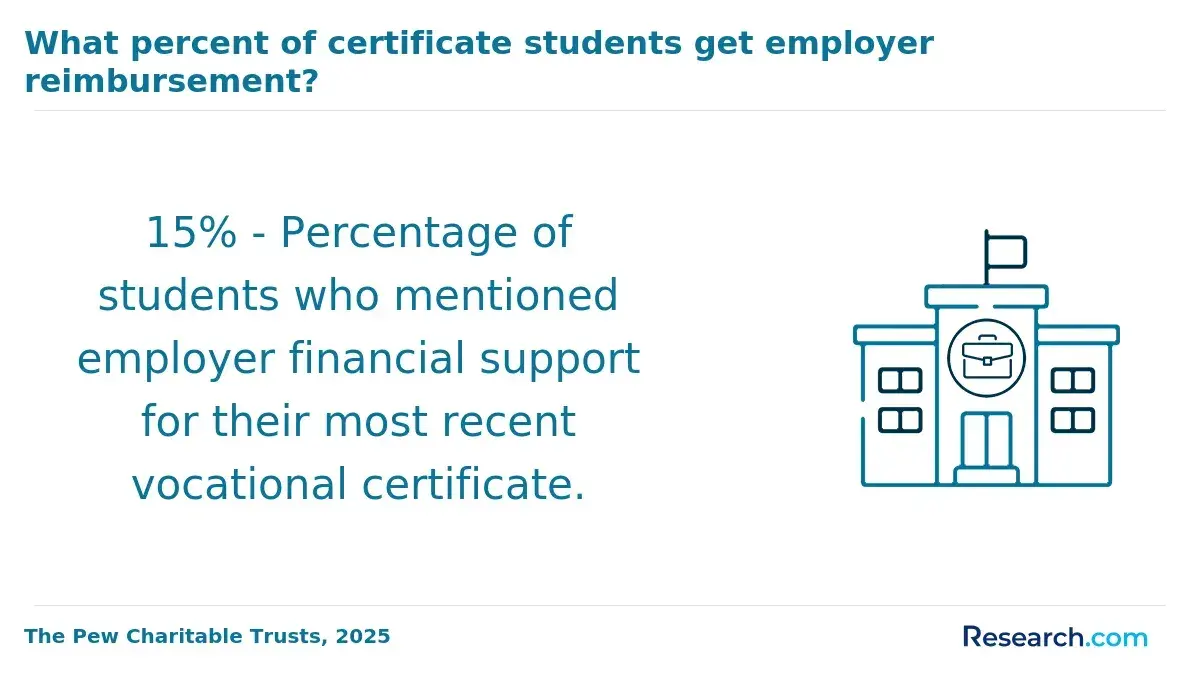
In many cases, yes. An institutional scholarship can be combined with FAFSA-based federal aid, state grants, employer tuition assistance, military education benefits, and outside scholarships. This is often called aid stacking. However, the school may revise an institutional grant when other aid changes, and total aid cannot exceed the institution's cost-of-attendance rules.
FAFSA is still worth filing for eligible students even when a merit scholarship seems likely. It establishes eligibility for federal grants, Direct Loans, work-study when offered, and many need-based institutional awards. The FAFSA itself does not award a fixed scholarship amount.
Before accepting an outside scholarship or employer benefit, ask the financial-aid office how it will be applied. The following questions reveal whether added aid lowers your net cost or merely changes the composition of your package:
- Will an outside scholarship first reduce unmet tuition and fees, or will it replace institutional grant aid?
- Is the university scholarship stackable with Pell Grants, state grants, military benefits, and employer reimbursement?
- Does the school reduce loans before reducing grants when additional resources are reported?
- Are scholarships restricted to tuition, or can they apply to mandatory fees, books, mapping software, or course materials?
- Must employer reimbursement be repaid to the school if you leave the employer or fail a course?
Students pursuing graduate study later may find that aid structures differ substantially from undergraduate awards. Reviewing an online master option can help show how short graduate formats affect total tuition exposure, although graduate scholarships and federal aid rules are not interchangeable with undergraduate geography aid.
Net cost is the amount remaining after scholarships and grants are subtracted from the school's charges and, for broader budgeting, from other education expenses. It is not the same as published tuition, and it is not necessarily the same as the amount financed with loans. Loans must be repaid and should not be counted as a discount.
Use the school's official tuition schedule for your residency and online program, then perform this calculation for one academic year.
Annual net cost = tuition and required fees + books, technology, and required course expenses − scholarships − grants − approved employer or military education benefits.
This illustrative comparison shows why a larger award does not automatically create the lower-cost choice. The figures are examples only, not published prices or awards from a particular university.
| Cost component | Program A | Program B | Decision implication |
| Annual tuition and required fees | $12,000 | $20,000 | Published price is the starting point, not the final price |
| University scholarship | $2,000 | $6,000 | Program B has the larger advertised award |
| Other grants | $3,000 | $3,000 | Equal grant aid does not erase tuition differences |
| Estimated annual net cost before books and living costs | $7,000 | $11,000 | Program A costs less despite its smaller scholarship |
Also assess time to degree. Transfer credits, prior-learning credit, course availability, and whether required geography labs or field experiences can be completed online may change the number of terms you pay for. A low per-credit rate can be less valuable if it leaves you with many uncovered credits or delays graduation.
College Board's 2024-25 average published tuition and fees figures provide broad market context, but they do not predict an individual online geography student's bill. Public institutions may charge online students in-state, out-of-state, or separate distance-learning rates, and private institutions may use a single rate with varying institutional aid.
Yes, but these students should not rely on first-year scholarship pages. Transfer, adult, military-affiliated, veteran, active-duty, reservist, spouse, and returning students may qualify through separate institutional pathways. Eligibility can be stronger when an applicant has transferable credits, military training, employer support, community-college achievement, or a demonstrated connection to GIS, conservation, planning, or public service.
Each group should look for the following forms of support alongside general university scholarships:
- Transfer students: Transfer-merit awards, community-college partnership scholarships, Phi Theta Kappa-related opportunities where offered, and transfer-credit evaluations that reduce total credits needed.
- Adult and returning students: Re-entry scholarships, completion grants, prior-learning assessment, and part-time-friendly awards that do not require traditional full-time attendance.
- Military-affiliated students: Military tuition rates, institutional military grants, veterans' services, education-benefit certification, and policies for deployment-related course interruptions.
- Rural, regional, or workforce-focused students: Scholarships tied to the university's service area, environmental workforce needs, teaching, public lands, or local government partnerships.
- Students changing fields: Awards supporting data analytics, sustainability, mapping, or workforce reskilling may be relevant when the geography curriculum includes those skills.
For transfer applicants, the value of accepted credit can exceed a modest scholarship because fewer remaining credits can lower total tuition. Request a preliminary transfer evaluation and ask whether geography prerequisites, statistics, GIS coursework, and general education credits will apply to the degree.
Working adults comparing programs in other fields may also encounter different affordability models in the best EdD programs online. Doctoral pricing and aid differ from undergraduate geography study, but the same practice of comparing total completion cost rather than a single term's price remains useful.
Merit-based scholarships are awarded primarily for demonstrated achievement, such as GPA, academic performance, leadership, creative work, transfer achievement, or relevant accomplishments. Need-based scholarships consider financial circumstances, often using FAFSA information and sometimes additional institutional documentation. A student can qualify for both types, but each has different application and renewal risks.
This comparison helps identify which opportunities deserve the most attention in your search:
| Feature | Merit-based scholarship | Need-based scholarship or grant |
| Primary basis | Academic or other documented achievement | Demonstrated financial need under applicable methodology |
| Typical application route | Admission review or scholarship application | FAFSA plus university aid review, sometimes a separate form |
| Common renewal focus | GPA, credit load, and continued enrollment | Continuing need, FAFSA filing, academic progress, and available funding |
| Effect of income changes | Often limited unless the award has separate need conditions | May change after annual financial-information review |
| Best planning use | Useful when terms clearly guarantee an amount and duration | Useful when financial need is substantial, but budget conservatively for annual changes |
Neither type is automatically better. A renewable merit award can be predictable for a student able to maintain the requirements, while need-based aid can be more significant for a student with substantial demonstrated need. Compare the written net-cost estimate and renewal conditions, not the scholarship label.
How Should You Compare Scholarship Offers From Online Geography Degree Programs?
Compare offers on a multiyear, program-specific basis. The best scholarship value is the offer that leaves you with the lowest manageable cost for an accredited program that fits your goals, schedule, and transfer situation—not necessarily the largest award shown on the letter.
Create one worksheet for every finalist and use the same categories for each school. These questions uncover the differences that marketing summaries often omit:
- Is the institution appropriately accredited, and does the online degree transcript identify the credential you expect to earn?
- What is the exact annual tuition rate for your residency, program, and expected credit load?
- Which fees are mandatory, including online course, technology, proctoring, GIS software, lab, or graduation fees?
- How much of the package is scholarship or grant money, and how much is borrowed money?
- Is each institutional award guaranteed, competitive, one-time, or renewable?
- What GPA, credit load, and continuous-enrollment standards apply to renewal?
- Will the scholarship change if you study part-time, take summer classes, transfer credits, or receive outside aid?
- How many credits will transfer, and how many terms are realistically required to finish?
- Does the curriculum include GIS, spatial analysis, remote sensing, statistics, field methods, or internships that support your intended career?
- What is your estimated total out-of-pocket cost through completion, including costs not billed by the university?
Red flags include an award described only as "up to" a maximum, no written renewal language, estimates that include loans as aid, unexplained fees, or a school that will not confirm whether fully online geography students are eligible. Ask for a revised written estimate if your enrollment plan is part-time, includes transfer credit, or differs from the standard full-time model.
If you are also weighing a digital-marketing pathway, reviewing the best colleges for social media marketing may help compare program structure and costs. Keep scholarship comparisons separate for each field because awards, course requirements, and career outcomes can differ materially.
Other Things You Should Know About Geography
Geography graduates may pursue work in GIS, mapping, planning support, environmental analysis, logistics, community development, conservation, emergency management, and data analysis. Job requirements vary: some GIS and planning roles prefer technical coursework, portfolios, internships, or graduate study in addition to a bachelor's degree.
For many career-focused students, yes. GIS, spatial analysis, cartography, remote sensing, data visualization, and statistics can make a geography degree more directly applicable to technical roles. Review required courses rather than assuming every geography program has the same level of GIS training.
Employers generally focus on the institution's accreditation, the degree, relevant technical skills, work samples, and experience. An online format can be a practical choice when it offers the same academic standards and opportunities to complete GIS projects, internships, or applied research.
A traditional bachelor's degree typically requires about 120 credits, but completion time depends on transfer credits, course load, prerequisite sequencing, and summer enrollment. Obtain a degree plan showing the remaining credits and course schedule before estimating how many years of scholarship eligibility you will need.
- USGIF Scholarship Program | USGIF https://usgif.org/education/usgif-scholarship-program/
- Financial Aid For Online College Students | LearnHowToBecome.org https://www.learnhowtobecome.org/career-resource-center/financial-aid-for-online-colleges/
- The Guide - AAG https://www.aag.org/guide-to-geography-programs-and-opportunities/
- Decoding the Net Price Crisis in Higher Education https://www.onegoal.org/about/blog/decoding-the-net-price-crisis-in-higher-education/
- Top 10 Low-Cost Online Bachelor's in Geography https://www.greatvaluecolleges.net/rankings/online-bachelors-geography/
- Scholarships and Grants for College | DeVry University https://www.devry.edu/tuition-financial-aid/financial-aid/scholarships-grants.html
- Best Online Bachelor's Degrees in Geography - GISDegree.org https://www.gisdegree.org/online/bachelors-in-geography/
- Tuition and Financial Aid https://online.cudenver.edu/admissions/tuition-and-financial-aid
- 50+ Scholarships & Grants for Study Abroad in 2025 | Go Overseas https://www.gooverseas.com/blog/study-abroad-scholarships-grants