2027 Online General Studies Degree Programs That Accept 60, 75, or 90 Transfer Credits

Co-Founder and Chief Data Scientist
If you already have a stack of college credits, the real question is not just whether an online General Studies degree will accept 60, 75, or 90 credits-it is whether those credits will actually move you closer to graduation. Transfer enrollment rose 4.4% in fall 2024, according to the National Student Clearinghouse Research Center, showing renewed demand for flexible degree-completion routes. This guide helps transfer and returning students compare policies, understand remaining requirements, estimate cost and time savings, and avoid enrolling before they know how their credits apply.
Key Things You Should Know
- Most bachelor's degrees require about 120 credits, so transferring 60, 75, or 90 applicable credits could leave roughly 60, 45, or 30 credits remaining before graduation.
- A school may "accept" up to 90 transfer credits, but only credits that fit general education, major, elective, upper-division, and residency requirements reduce your remaining degree plan.
- The most transfer-friendly online General Studies programs usually require at least 30 credits completed through the degree-granting institution, which is why 90 transfer credits is a common practical ceiling.
How Many Transfer Credits Can You Apply Toward an Online General Studies Degree?
In an online General Studies bachelor's degree, transfer credits are prior college-level credits reviewed by the new school for possible use toward the degree. The important distinction is accepted credits versus applied credits: accepted credits appear on your transfer record, while applied credits satisfy a specific requirement in your degree audit.
For most students, the 60-, 75-, and 90-credit scenarios correspond to different levels of degree completion. The table below uses a common 120-credit bachelor's degree model to show how the numbers usually affect your remaining workload.
| Transfer-credit scenario | What it often means | Approximate credits remaining in a 120-credit degree | Decision point for students |
| 60 transfer credits | You may have an associate degree or two years of prior coursework. | About 60 credits | Confirm whether lower-division general education is complete or whether you still need specific distribution courses. |
| 75 transfer credits | You may have more than an associate degree but not enough for senior standing. | About 45 credits | Check whether excess lower-division credits become electives instead of satisfying upper-division requirements. |
| 90 transfer credits | You may be near the maximum many bachelor's programs allow. | About 30 credits | Verify institutional residency, capstone, major, and upper-division requirements before assuming you can finish in one year. |
A General Studies major is often more flexible than a tightly sequenced major such as engineering, nursing, or teacher licensure because it may use broad elective categories. However, flexibility is not the same as unlimited transferability. Schools can still reject credits from non-accredited institutions, duplicate courses, remedial coursework, low grades, or credits that do not match the degree plan.
Which Online General Studies Degree Programs Accept 60, 75, or 90 Transfer Credits?
The following examples represent common types of online General Studies, Liberal Studies, or Interdisciplinary Studies programs that may work for students bringing 60, 75, or 90 credits. Policies can change, so use this as a shortlist framework and request an official evaluation before enrolling.
| Program or program type to compare | Typical transfer-credit fit | Why it may work for General Studies transfer students | What to verify before applying |
| Online Bachelor of General Studies at transfer-focused public universities | Often suitable for 60 to 90 credits | These programs are commonly built for students who have broad prior coursework and need a flexible completion path. | Minimum institutional credits, state residency rules, and whether your associate degree clears general education. |
| Online Liberal Studies or Interdisciplinary Studies bachelor's programs | Often suitable for 75 to 90 credits | They may allow multiple subject areas to combine into a customized degree plan. | Whether credits apply to a concentration, only to electives, or to upper-division requirements. |
| Adult degree-completion programs with 30-credit residency requirements | Often suitable for students near 90 credits | A 30-credit residency requirement can make the path predictable if the rest of the degree audit is already satisfied. | Whether the final 30 credits include required seminars, capstones, writing-intensive courses, or upper-level electives. |
| Universities with generous prior learning assessment policies | Often useful for students with 60 to 75 traditional credits plus work or military learning | Prior learning may help fill elective gaps when traditional transfer credits are not enough. | Fees, documentation requirements, portfolio review limits, and whether prior learning credits count toward residency. |
| Community-college transfer pathway programs | Often best for students with about 60 credits | Articulation agreements may make associate-degree credits easier to apply toward the bachelor's degree. | Whether the pathway applies only to specific associate degrees, states, campuses, or catalog years. |
A student with 90 credits should not automatically choose the school with the highest published transfer maximum. A school accepting fewer credits may still be faster if its degree audit applies more of your credits to required categories and offers the remaining courses every term.
How Can You Tell Whether Transfer Credits Will Actually Apply Toward Your General Studies Degree?
The safest way to know whether your credits will apply is to obtain a degree audit or official transfer evaluation that maps each course to a requirement. Admissions estimates can be helpful, but they are not a substitute for a documented plan showing exactly what remains.
Use the following steps before committing to a program, especially if you are comparing schools that advertise 60-, 75-, or 90-credit transfer options.
- Request unofficial pre-evaluations from several accredited online General Studies programs and ask each school to identify how many credits are accepted and how many are applied to the degree.
- Send transcripts from every college you attended, even if you withdrew, earned low grades, or believe the credits will not matter.
- Ask for a requirement-by-requirement breakdown covering general education, major or concentration, electives, upper-division credits, residency, writing, math, and capstone requirements.
- Compare the remaining courses by credit count, tuition rate, term length, course availability, and prerequisites rather than comparing transfer maximums alone.
- Get the final evaluation in writing before enrolling, and ask whether it can change after admission, catalog updates, or faculty review.
One common red flag is a program that highlights "up to 90 transfer credits" but cannot tell you which credits will count toward graduation. Another is a school that accepts many electives but still leaves you with missing required courses that delay completion. If your credits cluster in a specific field, such as legal studies, it may also be worth comparing a broader completion degree with career-aligned options like the best online paralegal programs.
What Types of Previous College Credits Can Transfer Into an Online General Studies Degree?
Online General Studies programs may accept several kinds of prior college learning, but each source is evaluated differently. Traditional college credits from accredited institutions are usually the easiest to evaluate, while alternative credits often require extra documentation or are capped separately.
The table below summarizes common credit sources and the main issue to check for each one. This matters because two students with the same number of previous credits can have very different remaining degree plans.
| Credit source | Common transfer use | Main limitation to check |
| Regionally accredited college courses | General education, electives, major-related coursework | Minimum grade, course equivalency, duplication, and catalog age |
| Associate degree coursework | Lower-division general education and electives | Whether the full associate degree is covered by an articulation agreement |
| Four-year university coursework | Upper-division electives, concentration courses, remaining bachelor's requirements | Whether credits are still considered current for the subject area |
| Community college credits | Lower-division requirements and electives | Caps on two-year college transfer credits and lower-division limits |
| Military training | Electives, leadership, technical, or physical education categories | ACE recommendation, institutional policy, and documentation through official military transcripts |
| Exam credit | Introductory general education or elective requirements | Required score, duplicate credit restrictions, and maximum exam-credit limits |
| Professional certifications | Career-related electives or technical credits | Whether the school recognizes the credential and how much credit it awards |
How Do Residency and Upper-Division Requirements Affect General Studies Transfer Students?
Residency requirements determine how many credits you must complete through the institution awarding the degree. In many online bachelor's programs, a 30-credit institutional minimum is the reason 90 transfer credits is a practical maximum for a 120-credit degree.
Upper-division requirements are equally important. A student may transfer 90 credits but still need 30 credits of 300- or 400-level coursework if most prior credits were lower-division community college classes. The table below explains how these rules can change the value of your transfer credits.
| Requirement type | How it affects transfer students | Why it matters for 60, 75, or 90 credits |
| Institutional residency | Requires a minimum number of credits from the degree-granting school | Even with 90 accepted credits, you may still need 30 credits from the new university. |
| Upper-division requirement | Requires advanced courses, often at the junior or senior level | Excess lower-division credits may transfer as electives but not satisfy upper-level requirements. |
| Major or concentration requirement | Requires credits in approved subject areas | General Studies is flexible, but the school may still require a focus area or approved distribution. |
| Capstone requirement | Requires a final project, seminar, portfolio, or research course | Capstones are usually not transferable and must be completed at the school awarding the degree. |
| General education requirement | Requires writing, math, humanities, social science, natural science, or diversity courses | A high transfer total does not help if you are missing a required foundational category. |
Residency and upper-division rules can also shape long-term academic planning. If you want to move from a bachelor's degree into leadership-focused graduate study or eventually compare online PhD programs in organizational leadership, choose upper-level courses that strengthen writing, research, management, and organizational analysis skills rather than filling the last 30 credits randomly.
How Does the Transfer Credit Evaluation Process Work for an Online General Studies Degree?
The transfer evaluation process is the point where a broad promise becomes a usable degree plan. It usually starts with transcript collection and ends with an audit showing remaining credits, but the timeline and level of detail vary by school.
Expect the process to include several steps. Completing them in order reduces the risk of enrolling in a program that accepts many credits but leaves unexpected requirements unfinished.
- Gather official transcripts from every previously attended college and request military, exam, or certification records if relevant.
- Ask the admissions or transfer office whether it can provide an unofficial review before you submit a full application or enrollment deposit.
- Review the school's transfer catalog, minimum grade rules, accreditation requirements, and limits on exam, military, or prior learning credits.
- Request a written degree audit that separates credits accepted, credits applied, credits not used, and credits still required.
- Meet with an academic advisor to build a term-by-term completion plan based on course availability, prerequisites, and your preferred enrollment pace.
- Confirm how changes in major, concentration, catalog year, or enrollment status could affect the evaluation after you start.
A practical comparison should focus on the final degree plan, not the initial transfer estimate. If one school accepts 90 credits but leaves 36 required credits because of upper-division gaps, and another accepts 78 credits but leaves only 42 credits with cheaper tuition and better course availability, the better choice depends on both time and cost.
How Long Does It Take to Finish an Online General Studies Degree With 60, 75, or 90 Transfer Credits?
Completion time depends on how many credits remain, how often required courses are offered, and whether you study full time or part time. Online programs may offer accelerated terms, but the limiting factor is often course sequencing rather than the raw number of credits left.
The table below provides a practical planning estimate for a 120-credit bachelor's degree. It assumes the transferred credits apply to the degree and that required courses are available when needed.
| Applicable transfer credits | Approximate credits remaining | Full-time pace of 12 credits per term | Part-time pace of 6 credits per term | What can extend the timeline |
| 60 credits | 60 credits | About 5 standard terms | About 10 standard terms | Missing general education categories, prerequisites, or limited course rotations |
| 75 credits | 45 credits | About 4 standard terms | About 8 standard terms | Upper-division requirements or concentration courses not offered every term |
| 90 credits | 30 credits | About 3 standard terms | About 5 standard terms | Residency, capstone, writing-intensive courses, or required senior-level electives |
Many returning students choose part-time online study because they are balancing work, caregiving, or military responsibilities. If your goal is graduate study in social services, for example, a General Studies degree can meet the bachelor's requirement for some programs, but you may want to choose electives intentionally before comparing the best online MSW programs.
How Much Can Transfer Credits Reduce the Cost of an Online General Studies Degree?
Transfer credits can reduce the cost of an online General Studies degree by reducing the number of credits you must pay the new school to complete. The savings are not automatic, however, because tuition rates, fees, residency requirements, repeated courses, and unused credits can change the final bill.
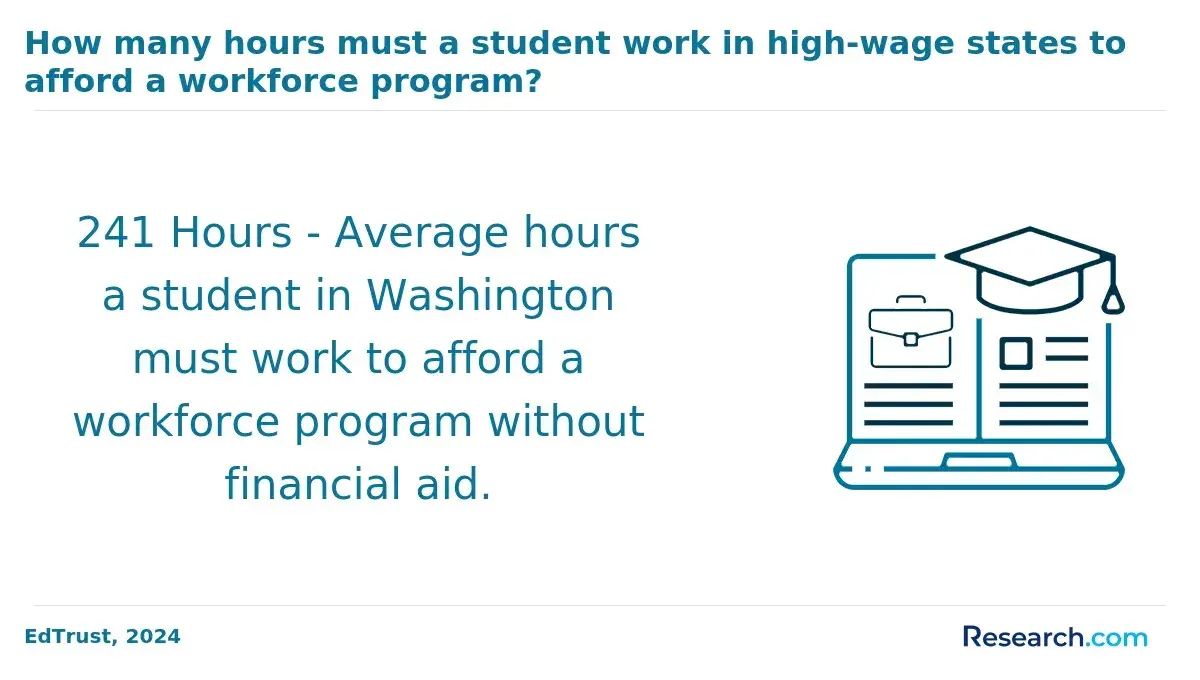
College Board's 2024 pricing data reported average published tuition and fees of $11,610 for in-state students at public four-year colleges for one academic year. Using that as a rough 30-credit benchmark, the table below shows why applicable transfer credits can matter financially.
| Applicable transfer credits | Credits avoided in a 120-credit degree | Rough tuition-and-fee value avoided using a 30-credit public four-year benchmark | Important limitation |
| 60 credits | 60 credits | About $23,220 | This does not include institutional fees, books, technology charges, or differences in online tuition. |
| 75 credits | 75 credits | About $29,025 | Some credits may transfer as excess electives and not reduce required tuition as much as expected. |
| 90 credits | 90 credits | About $34,830 | You may still owe at least 30 credits of tuition because of residency requirements. |
To compare costs accurately, ask each school for the total estimated price of your remaining degree plan, not just the per-credit tuition. Include application fees, transfer evaluation fees, online course fees, graduation fees, textbooks, prior learning assessment fees, and the cost of any repeated or prerequisite courses.
Can Prior Learning, Military Training, Exams, or Certifications Count Toward an Online General Studies Degree?
Yes, some online General Studies programs may award credit for prior learning, military training, standardized exams, workplace training, or professional certifications. These credits are especially useful for adults who have fewer than 90 traditional college credits but significant documented learning outside the classroom.
Before relying on nontraditional credit, check how the school treats each source. The following list highlights the most important questions because alternative credit rules vary more than standard college-transfer policies.
- Does the school follow American Council on Education credit recommendations for military, workplace, or training programs?
- Are CLEP, DSST, AP, IB, or other exam credits accepted, and what score is required?
- Is there a separate cap on exam, certification, military, or portfolio-based credit?
- Can prior learning credits satisfy only electives, or can they meet general education, major, or upper-division requirements?
- Do prior learning credits count toward the 30-credit institutional residency requirement, or must residency credits be completed through online courses at the university?
- What fees apply for portfolio review, transcription of credits, or faculty evaluation?
Alternative credit can be valuable, but it is not always the fastest route. If a portfolio takes months to prepare and only awards elective credit, taking an online course may be more efficient. Students with psychology, criminal justice, or human services credits should also consider how those credits support future goals; for example, exploring what can you do with a masters in forensic psychology can help you choose undergraduate electives more strategically.
Do Older College Credits Expire When Transferring Into an Online General Studies Degree?
Older college credits do not always expire, but they can lose usefulness depending on the subject, accreditation, and degree requirement. General education credits in areas such as history, literature, or communication may transfer after many years, while technology, science, business, healthcare, and professional coursework may be reviewed more strictly for currency.
Schools usually evaluate older credits in context. A decades-old English composition course may still meet a writing requirement, but an old computer applications course may transfer only as an elective or not at all if the content is outdated.
Watch for these common mistakes when transferring older credits into an online General Studies degree.
- Assuming old credits are unusable without asking for an evaluation.
- Assuming old credits automatically satisfy current major, technology, science, or quantitative requirements.
- Ignoring catalog changes that may require newer general education categories, such as information literacy or diversity coursework.
- Failing to explain prior coursework with syllabi, course descriptions, or catalog pages when the title is unclear.
- Enrolling before confirming whether older credits apply to requirements or only appear as unused transfer electives.
If you have older credits, gather course descriptions from the catalog year in which you took the class. When descriptions are not enough, ask whether syllabi, faculty review, or placement testing can help demonstrate that the learning still matches current degree requirements.
Other Things You Should Know About General Studies
A General Studies degree from an accredited institution is a legitimate bachelor's degree. Employer response depends on the role, your experience, skills, internships, certifications, and how well you explain the degree's focus. It is usually strongest when paired with a clear concentration, work history, or career-relevant electives.
Often, yes, if the school is institutionally accredited and the program is eligible for federal student aid. File the FAFSA, ask whether you qualify as a transfer or returning student, and confirm that your remaining courses are required for the degree, because aid generally cannot cover unrelated coursework.
Many universities do not list the delivery format on the diploma, but policies vary. Ask the registrar what appears on the diploma and transcript if this matters to you. Employers usually focus more on accreditation, degree level, major, and relevant experience than on whether courses were online.
Usually, but changing majors can reduce the usefulness of your transfer credits. A course that works as a General Studies elective may not satisfy a more structured major. Before switching, request a new degree audit showing remaining credits, added prerequisites, cost, and expected graduation date.
References
- Top Online Schools That Accept Transfer Credits https://www.edvisorly.com/student-guides/online-schools-that-accept-transfer-credits