2027 Cheapest Accredited Online General Studies Degree Programs That Accept FAFSA

Co-Founder and Chief Data Scientist
Choosing an online general studies degree is often a cost decision first: you want a flexible bachelor's path without taking on unnecessary debt. The stakes are real, as the maximum Federal Pell Grant for the 2025-26 award year is $7,395, which can substantially reduce tuition for eligible students. This guide is for adult learners, transfer students, military-affiliated students, and career changers comparing accredited online programs that accept FAFSA. You'll learn how to identify low-cost options, estimate net price, verify aid eligibility, and decide whether the cheapest program is also the best value.
Key Things You Should Know
- The cheapest FAFSA-eligible online general studies programs often advertise tuition from about $259 to $375 per credit, but the best deal depends on fees, transfer credits, grants, and how quickly you finish.
- FAFSA participation means the institution can offer federal aid, not that every student receives free tuition; Pell Grant eligibility for 2025-26 can reach up to $7,395 for students with sufficient financial need.
- A 120-credit bachelor's degree can cost far less when students transfer 60 to 90 credits, because every accepted 3-credit course can eliminate hundreds or more in tuition before aid is applied.
Which Are the Cheapest Accredited Online General Studies Degree Programs That Accept FAFSA?
The cheapest accredited online general studies degrees that accept FAFSA are usually public universities, competency-based public programs, or nonprofit online divisions with low per-credit tuition and generous transfer policies. A general studies degree is an interdisciplinary program that lets students combine prior credits and elective coursework across fields such as business, communication, social science, humanities, technology, and public service.
The table below compares examples of low-cost online bachelor's programs in general studies, liberal studies, multidisciplinary studies, or closely related degree-completion pathways. Tuition changes often, so use these figures as a screening tool and confirm current rates, fees, residency rules, and federal aid participation directly with the school before applying.
| Institution | Online degree option | Accreditation type | Published online tuition basis | Estimated 120-credit tuition before aid | FAFSA participation |
| Fort Hays State University | Bachelor of General Studies | Institutionally accredited, public university | About $259.16 per credit | About $31,099 | Yes |
| University of Maine at Presque Isle | YourPace Bachelor of Liberal Studies | Institutionally accredited, public university | About $1,700 per 8-week session | Varies by pace and completed sessions | Yes |
| Arkansas State University | Online Bachelor of General Studies | Institutionally accredited, public university | About $282 per credit | About $33,840 | Yes |
| University of Arkansas Grantham | Bachelor's in Multidisciplinary Studies | Institutionally accredited, public online university | About $295 per credit | About $35,400 | Yes |
| Eastern New Mexico University | Bachelor of University Studies | Institutionally accredited, public university | About $307.50 per credit for many online undergraduates | About $36,900 | Yes |
| Southern New Hampshire University | Online Bachelor of Arts in General Studies | Institutionally accredited, private nonprofit university | About $330 per credit | About $39,600 | Yes |
| LSU Alexandria | Online Bachelor of General Studies | Institutionally accredited, public university | About $325 per credit | About $39,000 | Yes |
| Columbia College | Online Bachelor of General Studies | Institutionally accredited, private nonprofit college | About $375 per credit | About $45,000 | Yes |
The lowest listed tuition is not automatically the lowest final cost. A $330-per-credit program that accepts 90 transfer credits may be cheaper for you than a $259-per-credit program that accepts only 60, because you would pay for fewer remaining credits.
To compare programs fairly, start with total out-of-pocket cost instead of advertised tuition. Use this sequence before you apply:
- Confirm the institution is accredited by an agency recognized for federal student aid purposes.
- Confirm the school participates in Title IV federal student aid and that the specific online program is aid-eligible.
- Ask for a written transfer credit estimate before enrolling, especially if you have community college, military, AP, CLEP, or prior university credits.
- Request a full cost breakdown that includes tuition, mandatory fees, books, course materials, graduation fees, and technology fees.
- Compare net price after grants and scholarships, then compare any remaining loan amount.
How Does FAFSA Eligibility Work for Online General Studies Degree Programs?
FAFSA eligibility starts with the institution, not the marketing page. A school must participate in federal student aid programs, and the student must meet federal eligibility rules. In most cases, an online bachelor's degree at an eligible accredited university can qualify for federal grants and loans the same way an on-campus bachelor's degree can.
However, FAFSA eligibility does not mean the federal government will pay the full cost. The FAFSA calculates eligibility for aid based on factors such as income, assets, family size, dependency status, enrollment intensity, and the school's cost of attendance. For low-cost general studies programs, this matters because a Pell Grant may cover a larger share of tuition than it would at a high-tuition private institution.
Students should verify several items before assuming an online general studies program can be funded with federal aid:
- The school has an active federal school code and participates in Title IV aid programs.
- The degree is an eligible credential, not a noncredit certificate, continuing education sequence, or standalone professional development program.
- The student will enroll at least half time if they plan to use federal student loans.
- The student is meeting satisfactory academic progress rules, which usually include GPA, completion rate, and maximum time-frame requirements.
- The online format does not change aid eligibility, but short-term subscription, self-paced, or competency-based formats may have different disbursement schedules.
One common mistake is treating "accepts FAFSA" as the same thing as "affordable." FAFSA is the application gateway; affordability depends on the school's cost, your aid package, transfer credits, scholarship availability, and whether you borrow responsibly.
How Much Does an Online General Studies Degree Cost After Financial Aid?
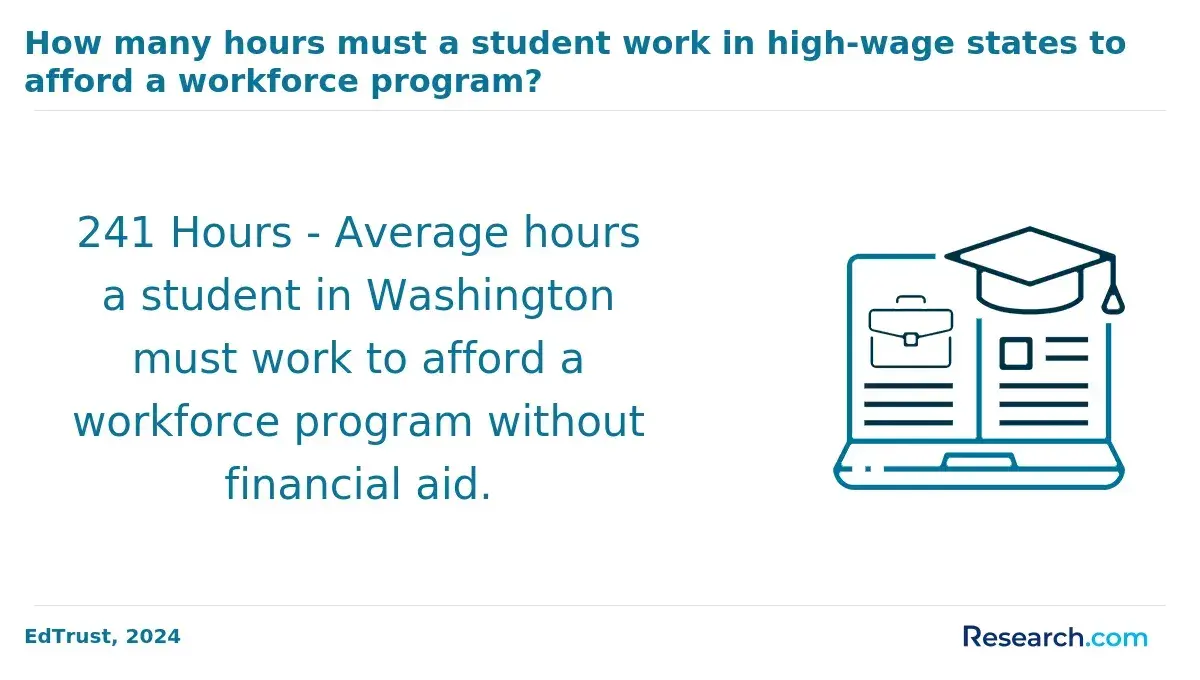
The real cost after financial aid is your net price: total cost of attendance minus grants and scholarships, plus any amount you choose to borrow. For online students, total cost may include tuition, mandatory fees, books, technology, online course fees, prior learning assessment fees, and graduation fees.
The table below shows how grants and transfer credits can change the estimated cost of a low-cost online bachelor's degree. It uses a sample $300-per-credit program to illustrate the math, not to predict an individual aid award.
| Completion scenario | Credits still needed | Tuition before aid at $300 per credit | Potential Pell Grant impact | What it means |
| No transfer credits | 120 | $36,000 | Up to $7,395 per award year for eligible students | The degree may still require loans or out-of-pocket payments across multiple years. |
| 60 transfer credits accepted | 60 | $18,000 | Grants may cover a much larger share of remaining tuition. | This is often the strongest value point for community college transfer students. |
| 90 transfer credits accepted | 30 | $9,000 | A high-need student may be able to reduce or avoid borrowing, depending on timing and aid rules. | This can be the most affordable route for adult degree-completion students. |
For context, the College Board reported average published tuition and fees of about $11,610 for in-state students at public four-year institutions for 2024-25. Many online general studies programs can be cheaper than that annual benchmark, but only if fees are limited and the student's transfer plan is efficient.
To estimate your own after-aid cost, calculate in this order:
- Multiply remaining required credits by the tuition rate.
- Add mandatory fees, estimated materials, proctoring charges, and graduation costs.
- Subtract grants and scholarships that do not need to be repaid.
- Subtract employer tuition assistance, military education benefits, or state aid if applicable.
- Use federal loans only for the remaining gap, and compare the total borrowed amount with realistic career plans.
Which Affordable Online General Studies Degree Programs Offer the Best Value?
The best-value online general studies programs are not always the absolute cheapest. A stronger value program combines low net price, recognized accreditation, flexible scheduling, meaningful transfer credit, advising support, and coursework that connects to your career goal.
| Value factor | Why it matters | Best-fit student |
| High transfer credit acceptance | Reduces the number of credits you must pay for | Adult learners, community college graduates, returning students |
| Low per-credit tuition with few fees | Keeps the baseline cost predictable | Students paying mostly out of pocket or with limited grant aid |
| Competency-based or accelerated format | Can reduce cost if you complete courses quickly | Highly self-directed students with prior knowledge |
| Strong advising and degree mapping | Prevents wasted electives and excess credits | Students with mixed credits from multiple institutions |
| Career-aligned concentrations | Helps make a broad degree more marketable | Students targeting business, public service, communication, or graduate study |
A low-cost general studies degree is a strong value when it helps you finish a bachelor's degree efficiently for a career path that values any accredited bachelor's credential. It may be less useful if you need a specialized credential, licensure preparation, or a technical major with strict prerequisite sequencing.
For example, students targeting licensed clinical or healthcare roles should compare general studies against specialized pathways such as online SLP programs, because licensure-focused fields often require specific accredited graduate preparation rather than a broad undergraduate major alone.
Are the Cheapest Online General Studies Degree Programs Properly Accredited?
Accreditation is also important for transfer credits, graduate school admission, employer recognition, and access to federal aid. General studies programs usually do not require a separate specialized programmatic accreditation, but the institution itself should be in good standing.
Before enrolling, check these accreditation red flags carefully:
- The school uses vague language such as "internationally accredited" without naming a recognized accrediting agency.
- The program advertises extremely fast completion for students with few or no prior credits.
- The institution cannot clearly explain federal aid eligibility for the specific online degree.
- The school pressures you to enroll before providing a transfer evaluation and cost estimate.
- Credits may not transfer to other accredited colleges if you later change schools.
Reliable schools should make accreditation, tuition, fees, academic calendar, refund policies, and financial aid rules easy to find. If a school is inexpensive but unclear about accreditation or aid eligibility, treat that as a serious warning sign.
What FAFSA Grants and Federal Aid Can Pay for an Online General Studies Degree?
FAFSA can connect eligible online general studies students to several forms of federal aid. Grants and scholarships are the most valuable because they generally do not need to be repaid, while loans can help cover gaps but increase long-term cost.
The table below summarizes major federal aid types that may apply to an eligible online bachelor's program. Exact awards depend on federal rules, institutional cost of attendance, enrollment status, and the student's FAFSA results.
| Aid type | Repayment required? | How it can help online general studies students | Important limitation |
| Federal Pell Grant | No, in most cases | Can reduce tuition substantially for students with financial need | Maximum award is limited and depends on eligibility and enrollment intensity |
| Federal Supplemental Educational Opportunity Grant | No, in most cases | May provide additional grant aid for students with exceptional need | Not all schools have funds available |
| Direct Subsidized Loan | Yes | Can cover remaining cost with interest benefits while enrolled | Available only to eligible undergraduates with financial need |
| Direct Unsubsidized Loan | Yes | Can help cover gaps after grants and scholarships | Interest begins accruing after disbursement |
| Federal Work-Study | No loan repayment | Can provide part-time earnings if the school participates and positions are available | Online students may have fewer convenient job placements |
A common mistake is borrowing the full amount offered without asking whether you need it. Federal loans can be useful, but for a low-cost general studies degree, the goal should be to graduate with the smallest practical debt load.
Students considering graduate school should also remember that undergraduate borrowing affects future flexibility. If your long-term plan involves human services or counseling-adjacent fields, compare undergraduate debt carefully before moving toward options such as the best online MSW programs.
How Do Transfer Credits Lower the Cost of an Online General Studies Degree?
Transfer credits are often the biggest cost-saving tool in an online general studies degree. Because general studies programs are designed to be flexible, they may accept more prior coursework than highly structured majors with rigid prerequisite chains.
The financial effect is straightforward: every accepted course reduces the credits you still need to buy. At $300 per credit, one accepted 3-credit course can reduce tuition by $900 before fees and aid; at scale, transfer acceptance can matter more than a small difference in tuition rate.
Students should ask each school for a transfer review before making a deposit. The most useful questions are specific:
- How many credits can I transfer into the bachelor's degree?
- Is there a maximum number of community college, military, CLEP, AP, or prior learning credits?
- Will my old credits count toward major, general education, elective, or free elective requirements?
- How many credits must be completed at your institution to graduate?
- Will any transferred credits affect financial aid eligibility, pace of completion, or satisfactory academic progress?
Be careful with programs that accept many credits but apply them mostly as electives while still requiring a long list of institutional courses. The cheapest route is not the one with the most accepted credits on paper; it is the one with the fewest remaining credits required for graduation.
Which Students Benefit Most From a Low-Cost Online General Studies Degree With FAFSA?
A low-cost FAFSA-eligible online general studies degree is usually best for students who already have credits, need a flexible bachelor's credential, and do not require a specialized undergraduate major for licensure. It works especially well when the student's goal is degree completion, career mobility, promotion eligibility, or preparation for a broad graduate program.
The students most likely to benefit include:
- Adult learners returning with 30 or more prior college credits.
- Community college graduates who want an affordable bachelor's completion pathway.
- Military-affiliated students combining federal aid, tuition assistance, or education benefits.
- Working adults who need asynchronous classes and predictable part-time pacing.
- Students seeking a bachelor's credential for roles where the employer does not require a specific major.
Students should be more cautious if they are targeting jobs that require a specific major, state licensure, clinical fieldwork, teacher certification, engineering preparation, or a tightly sequenced science curriculum. In those cases, the cheapest general studies degree may delay the specialized training they actually need.
Career changers should compare the degree against narrower programs when the job target is specific. For example, someone pursuing legal support roles may find a more direct skills match in the best online paralegal programs than in a broad general studies curriculum.
How Does the Cost of an Online General Studies Degree Affect Career ROI?
Career ROI depends on the relationship between what you pay, how much you borrow, how quickly you finish, and whether the degree improves your employment options. General studies can be a good ROI degree when it helps you meet a bachelor's requirement for advancement without overpaying for credits you do not need.
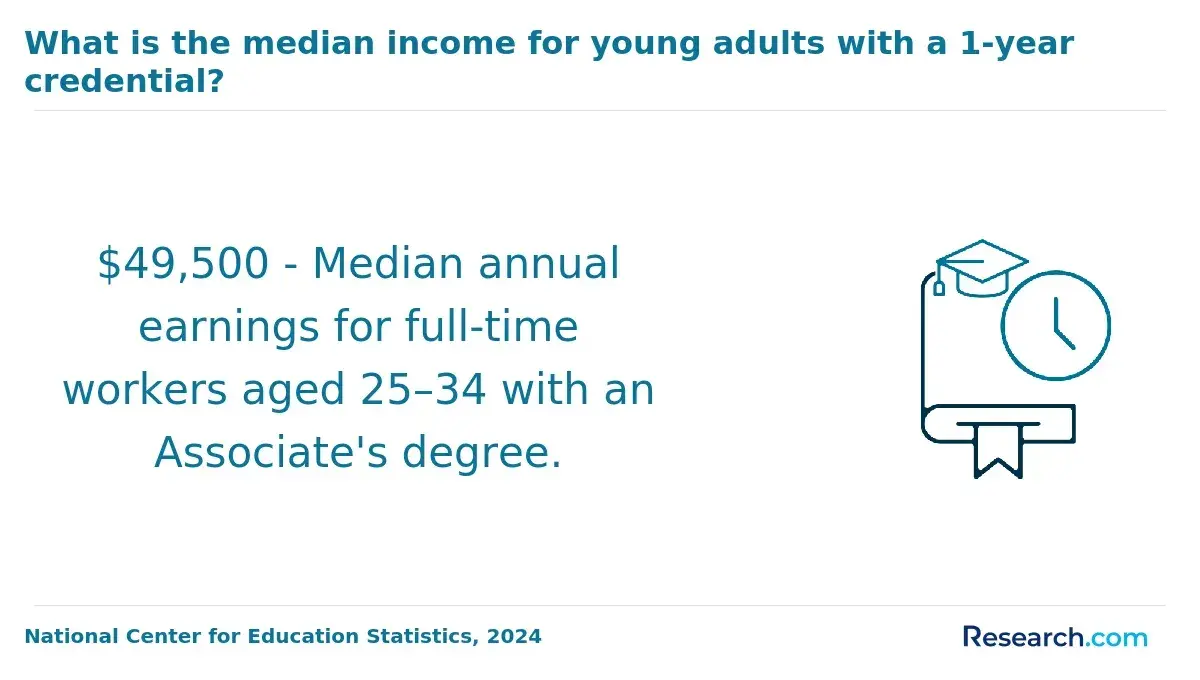
Salary outcomes vary because general studies graduates enter many fields. The U.S. Bureau of Labor Statistics reported 2024 median weekly earnings of $1,543 for workers age 25 and older with a bachelor's degree, compared with $930 for those with only a high school diploma. This does not mean a general studies degree guarantees higher earnings, but it shows why completing a bachelor's degree can matter in labor markets where employers use degree requirements as a screening tool.
To judge ROI realistically, compare cost against the type of role you want. A low-debt degree can be worthwhile for administrative management, nonprofit, sales, operations, public service, or graduate school preparation. A higher-cost program may be worth it only if it provides stronger advising, better transfer acceptance, a concentration aligned with your field, or a faster path to completion.
Do not use average salary data as a promise. Instead, use it as a boundary check: if the degree would require heavy borrowing but does not connect to a clear job target, promotion, or graduate pathway, the financial risk rises.
If your goal is a psychology-adjacent career, review specialized education requirements early. A broad bachelor's degree may support graduate admission in some cases, but questions such as what can you do with a masters in forensic psychology show why career-specific graduate planning matters before choosing the cheapest undergraduate route.
How Should Students Choose the Cheapest FAFSA-Eligible Online General Studies Degree?
The right choice is the program with the lowest credible net cost for your goal, not necessarily the lowest tuition line. Your decision should balance accreditation, FAFSA eligibility, transfer credits, total cost, completion speed, academic support, and career relevance.
Use this practical checklist before enrolling:
- Confirm institutional accreditation and federal aid participation.
- Get a written transfer credit evaluation before committing.
- Ask for a full cost of attendance estimate for your expected enrollment pace.
- Compare grants and scholarships before comparing loans.
- Check whether tuition differs for in-state, out-of-state, online, military, or part-time students.
- Ask how often online courses are offered and whether delayed course availability could extend your timeline.
- Review degree requirements to ensure the curriculum supports your career or graduate school goal.
- Calculate total borrowing under best-case and cautious-case scenarios.
- Compare at least three schools using net price, not advertised tuition alone.
- Ask what happens to your aid if you withdraw, drop below half time, or fail to meet satisfactory academic progress.
A more expensive school can be the smarter financial choice if it accepts more credits, offers stronger advising, reduces time to graduation, or provides a concentration that improves your next step. Conversely, the cheapest school may be the wrong choice if it creates excess credits, weak support, or unclear career alignment.
Students who plan to move into leadership-focused graduate education should also think beyond bachelor's completion. If a future doctorate is part of the plan, compare undergraduate debt carefully before considering pathways such as online PhD programs in organizational leadership.
Other Things You Should Know About General Studies
It can be, as long as the degree comes from a properly accredited institution. Employer response depends on the role, your experience, your skills, and how well you explain the degree's relevance to the job.
A full 120-credit bachelor's degree usually takes about four years of full-time study. Students with transfer credits may finish much faster, while part-time students may take longer.
Often yes, but it depends on the graduate program. Some programs accept many undergraduate majors, while others require specific prerequisites, GPA standards, test scores, field experience, or licensure-related coursework.
An associate degree can help with transfer, entry-level jobs, or lower-cost exploration. A bachelor's degree is usually more useful when employers require a four-year credential or when you plan to apply to graduate school.
References
- Free Application for Federal Student Aid (FAFSA) | USAGov https://www.usa.gov/fafsa
- What is FAFSA? Complete Guide for 2026 https://www.neit.edu/blog/what-is-fafsa
- What type of student financial aid do I qualify for? https://www.ffbkc.com/blogs/borrowing/type-of-financial-aid-qualify/
- A comprehensive guide to types of financial aid for college students https://www.citizensbank.com/learning/types-of-federal-financial-aid.aspx
- Get a Degree Online | The Benefits of Earning Your Degree Online at TUW https://www.tuw.edu/school-news/cost-of-online-degree-tuw/
- Undergraduate Online Financial Aid | Bushnell University https://www.bushnell.edu/financial-aid/undergraduate-online/
- Financial Aid for Online Programs | Illinois College https://www.ic.edu/online/tuition/financial-aid
- College Graduation Rates and How ACE Compares | ACE Blog https://ace.edu/blog/college-graduation-rates-and-how-ace-compares/
- Can You Get Financial Aid for Online College? Finding Out https://beal.edu/can-you-get-financial-aid-for-online-college/
- Best Accredited Online Universities in 2025 https://www.study.eu/article/best-accredited-online-universities