2027 Online Forensic Psychology Master's Programs Under $20,000: Total Tuition and Required Fees

Co-Founder and Chief Data Scientist
An advertised tuition rate can make an online forensic psychology master's degree look affordable while mandatory fees, extra credits, and residency rules push the final bill higher. This guide is for prospective students seeking a cost-conscious path into forensic, legal, behavioral health, or justice-related work.
The U.S. Bureau of Labor Statistics reports a $94,310 median annual wage for psychologists in May 2024, but forensic psychology education alone does not qualify every graduate for psychologist licensure. Use this guide to compare full program cost, fit, and career relevance before applying.
Key Things You Should Know
- An online forensic psychology master's program is truly under $20,000 only when required tuition and unavoidable institutional fees remain below that threshold for the credits needed to graduate.
- Credit totals matter as much as tuition rates: a 30-credit program at $600 per credit costs $18,000 before mandatory fees, while a 36-credit program at the same rate costs $21,600.
- A low-cost nonclinical degree can support justice, research, advocacy, or behavioral-analysis careers, but it usually does not by itself meet state requirements to become a licensed psychologist.
How Much Does an Online Forensic Psychology Master's Degree Under $20,000 Cost in Total?
A realistic under-$20,000 target means the amount required to earn the degree - not merely the tuition shown on a marketing page. Total program cost generally includes tuition for every required credit, recurring mandatory fees, and any compulsory residency, practicum, or graduation charges. Books, optional test preparation, and living expenses are separate personal costs, but students should still budget for them.
Most online forensic psychology master's programs require roughly 30 to 36 graduate credits. A program can remain below $20,000 if it uses a low per-credit rate, charges a flat online tuition rate regardless of residency, requires fewer credits, or combines those features. The following examples show the math students should use when comparing published rates; they are cost models rather than promises of a particular school's current price.
| Cost model | Required credits | Tuition rate | Tuition total | Illustrative required fees | Estimated required program total |
| Low-rate 30-credit program | 30 | $500 per credit | $15,000 | $750 | $15,750 |
| Mid-range 33-credit program | 33 | $550 per credit | $18,150 | $900 | $19,050 |
| Near-limit 36-credit program | 36 | $525 per credit | $18,900 | $1,000 | $19,900 |
Programs closest to the limit leave little room for annual tuition increases, course repeats, or fees that are not included in the online tuition quote. By contrast, a program with a lower base price may be a better financial choice even if it has fewer live sessions, fewer concentration options, or less individualized career support.
Before treating a program as affordable, request or locate the current graduate tuition schedule and calculate: required credits × applicable rate + every mandatory per-term, per-credit, and one-time fee. Ask whether the quoted rate is locked for continuing students or can change while you are enrolled.
What Required Fees Can Increase the Cost of an Online Forensic Psychology Master's Degree Beyond $20,000?
Required fees are the most common reason an advertised under-$20,000 program costs more than expected. Schools may charge them each term, each credit, each course, or once at enrollment and graduation. A fee is required when students cannot enroll, access coursework, or graduate without paying it.
Review the student-account and graduate-catalog pages for the following charges, then add only the fees that apply to your format and enrollment pattern.
- Application, enrollment, matriculation, and graduation fees.
- Technology, distance-learning, student-services, and learning-management-system fees.
- Course, assessment, laboratory, proctoring, or competency-evaluation fees.
- Background checks, fingerprinting, liability insurance, or placement costs when a practicum is required.
- Mandatory on-campus residency, travel, lodging, or intensive-session expenses.
Do not assume that "online" means no campus-related charges. Some programs are fully asynchronous, while others include synchronous classes, a weekend residency, supervised fieldwork, or an in-person capstone presentation. These requirements may add direct expenses and can affect work schedules.
A useful comparison separates required educational cost from optional or personal cost. Tuition and mandatory fees determine whether the degree meets the $20,000 threshold. Textbooks, a computer, internet service, travel for optional events, and lost work time may not be billed by the institution, but they still affect affordability.
Ask the bursar or admissions office for a written estimate based on your intended start term, full credit load, and residency status. If the answer does not identify fees separately, treat the advertised tuition as incomplete rather than assuming the final cost.
How Does Per-Credit Tuition Affect the Total Cost of an Online Forensic Psychology Master's Degree Under $20,000?
Per-credit tuition determines the base cost of programs that do not use a flat program price. The calculation is simple: multiply the published graduate rate by the number of credits required for graduation. Then add mandatory fees and subtract only aid that you have actually been awarded.
This table shows the maximum average tuition rate a program can charge before fees if the student wants to keep tuition alone at or below $20,000.
| Required program credits | Maximum tuition per credit at a $20,000 tuition ceiling | Planning implication |
| 30 credits | $666.67 | Fees must fit below the remaining budget if total cost must stay under $20,000. |
| 33 credits | $606.06 | Programs above this rate exceed the tuition-only target. |
| 36 credits | $555.56 | A modest fee burden can make a near-limit rate unaffordable. |
| 39 credits | $512.82 | Higher-credit curricula require especially low rates or a flat-price structure. |
Students sometimes compare a low rate with a longer curriculum against a higher rate with fewer credits and assume the lower rate wins. It may not. A 36-credit program at $520 per credit has $18,720 in tuition, while a 30-credit program at $600 per credit has $18,000. The shorter option costs less in tuition and may also reduce term-based fees.
Check whether all credits carry the same rate. Differential pricing may apply to online courses, graduate courses, out-of-state students, part-time enrollment, or summer terms. Also confirm whether prerequisite courses are required before admission. A missing statistics, psychology, or research-methods prerequisite can add both time and expense without counting toward the master's degree.
How Long Does It Take to Complete an Online Forensic Psychology Master's Degree Under $20,000?
Many online forensic psychology master's programs can be completed in about 18 to 24 months of continuous study, although the actual timeline depends on credit requirements, course sequencing, transfer credit, and whether the student attends part time. A cohort program may have a predictable completion date but fewer opportunities to accelerate. A course-by-course program can offer more scheduling control but may delay graduation if a required class is offered only once a year.
Format affects both convenience and cost. Asynchronous courses allow students to complete work around employment and family obligations, but they still have weekly deadlines. Synchronous courses provide scheduled interaction but can conflict with work hours. Hybrid programs may add travel and lodging costs even when most coursework is online.
When comparing timelines, focus on the academic calendar rather than a general "finish fast" claim. Review the number of credits permitted per term, required course order, capstone timing, practicum expectations, and breaks between sessions. Taking more credits can shorten the calendar time, but it can also increase the amount due at one time and make it harder to maintain strong academic performance.
A shorter program is often valuable for students changing careers quickly or seeking advancement in an existing justice-related role. A longer, more flexible program can be the better value for working adults if it avoids course withdrawals, repeated classes, or reduced employment income.
How Can Students Verify Accreditation for an Online Forensic Psychology Master's Degree Under $20,000?
Accreditation is a quality-assurance review of an institution or program. For most online forensic psychology master's degrees, the most important starting point is institutional accreditation recognized by the U.S. Department of Education or the Council for Higher Education Accreditation. Verify the school's status directly through the accreditor or federal database, not only through an institutional claim.
Programmatic accreditation is more limited in this specialty. The American Psychological Association primarily accredits doctoral professional psychology programs, internships, and postdoctoral residencies rather than typical terminal master's programs in forensic psychology. Therefore, a master's program may be legitimate and institutionally accredited without holding APA programmatic accreditation.
Use these checks to evaluate whether the credential fits your planned next step.
- Confirm institutional accreditation and note the accrediting agency's current status.
- Read the curriculum for research methods, ethics, psychopathology, assessment, law, and forensic applications relevant to your goal.
- Ask whether the degree is designed for licensure preparation, doctoral study, justice-system employment, or nonclinical applied work.
- Check the licensing board in the state where you intend to practice before assuming a master's degree meets any clinical requirement.
- Request written confirmation of whether an online student receives the same degree and transcript designation as an on-campus student.
This distinction matters particularly for students whose goal is counseling, therapy, or clinical assessment. Review the different types of therapy degrees before choosing a forensic psychology curriculum, because a nonclinical forensic master's is not interchangeable with a licensure-oriented counseling, social work, marriage and family therapy, or clinical psychology degree.
Do Out-Of-State Students Pay More for an Online Forensic Psychology Master's Degree Under $20,000?
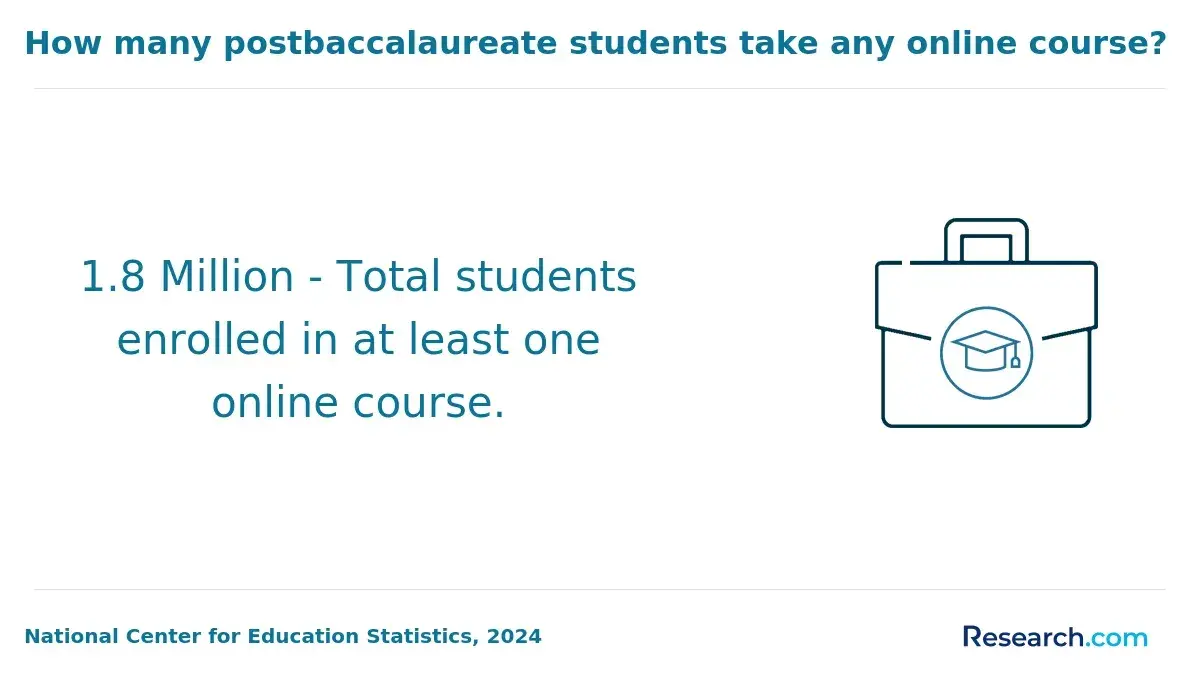
Out-of-state students may pay more, but many online programs use a single nationwide tuition rate. Public universities are the most likely to distinguish resident from nonresident pricing, while some institutions charge one online graduate rate regardless of where the student lives. Never assume that online delivery automatically removes residency pricing.
Residency classification can affect more than tuition. It may influence eligibility for state-funded aid, fee waivers, clinical placements, and whether the institution is authorized to enroll students where you live. State authorization is especially important if the curriculum includes a practicum, internship, or supervised experience.
Compare the school's online graduate rate with its resident and nonresident rates, then ask which rate applies for the entire program. Also ask whether relocating after admission changes eligibility, whether military-affiliated students receive a separate rate, and whether annual increases apply equally to online students. A school that appears inexpensive in-state can exceed $20,000 quickly at its nonresident rate.
If two programs have comparable total costs, a flat-rate option can provide more budget certainty for students who may move, work across state lines, or live outside the institution's home state. The resident-rate option may still be preferable when it has an established local placement network or directly supports a state-specific career plan.
Can Transfer Credits Keep the Total Cost of an Online Forensic Psychology Master's Degree Under $20,000?
Transfer credits can lower the number of courses you must pay for, but graduate transfer policies are often narrow. Schools may limit the number of accepted credits, require a minimum grade, set a time limit on prior coursework, and accept only courses that closely match their own curriculum. Capstones, internships, and core forensic courses are frequently nontransferable.
For a student comparing programs near the $20,000 limit, each approved three-credit course can have a meaningful effect. At a tuition rate of $550 per credit, a three-credit transfer would reduce tuition by $1,650, before any change in term-based fees. Approval is never automatic, so students should avoid building their budget around tentative transfer credit.
Before applying, send official transcripts and course descriptions for a preliminary review if the school offers one. Ask whether transferred credits reduce total tuition, reduce time to completion, or both. A course accepted as elective credit may satisfy the degree requirement but not replace the specific class that is creating a scheduling bottleneck.
Transfer flexibility can be especially useful for students who already hold graduate coursework in psychology, criminal justice, research methods, or behavioral science. It is less helpful for students changing from a substantially different field. Those considering clinical advancement should also understand how degree ladders differ; for example, an ADN to NP pathway is a nursing education route and does not substitute for psychology training or forensic specialization.
Can Financial Aid Bring the Cost of an Online Forensic Psychology Master's Degree Below $20,000?
Yes. Federal Direct Unsubsidized Loans, Graduate PLUS Loans, employer tuition assistance, institutional scholarships, military education benefits, and private scholarships may reduce the out-of-pocket amount a student pays during enrollment. Financial aid does not reduce the school's published total cost unless it is grant or scholarship aid; loans must be repaid with interest.
Graduate students should submit the Free Application for Federal Student Aid and review the aid offer alongside the program's full cost estimate. The U.S. Department of Education's current federal aid rules and annual borrowing limits can change, so confirm eligibility for the enrollment year rather than relying on older online guidance.
Use a net-cost approach when comparing offers. Start with required tuition and fees, subtract scholarships, grants, employer payments, and verified benefits, then identify the remaining amount that would be paid from savings, income, or borrowing. Do not count a loan as a discount.
Students who work in hospitals, public agencies, corrections, insurance, or administrative settings may have employer benefits that change the equation. If your interests overlap with health-system leadership rather than forensic practice, comparing online MHA programs can help clarify whether an employer-aligned management degree offers stronger tuition support or clearer advancement opportunities.
A common mistake is accepting the largest loan amount offered without first checking whether a smaller enrollment load, scholarship deadline, payment plan, or employer reimbursement policy can reduce borrowing. Consider the repayment obligation alongside expected career use of the degree.
Is an Online Forensic Psychology Master's Degree Under $20,000 Worth the Cost for Career Advancement?
An affordable forensic psychology master's can be worthwhile when it provides skills and credentials that match a defined career target. Common nonclinical paths include victim advocacy, correctional rehabilitation, case management, behavioral research, intelligence analysis, probation-related work, program evaluation, policy support, and justice-system administration. Job titles and hiring requirements vary widely by employer and jurisdiction.
The degree is not a direct substitute for doctoral education and supervised training required for psychologist licensure. The U.S. Bureau of Labor Statistics projects 6% employment growth for psychologists from 2024 to 2034. That outlook covers the broader psychologist occupation, not a guaranteed outcome for master's-level forensic psychology graduates, so it should be used as labor-market context rather than an earnings forecast for every program.
Career value is strongest when the curriculum builds transferable competencies: ethical decision-making, research literacy, report writing, trauma-informed practice, legal-system knowledge, data interpretation, and communication with multidisciplinary teams. Students seeking clinical assessment or independent practice should prioritize a licensure-compatible educational pathway instead of selecting a forensic master's solely because it is inexpensive.
A higher-priced option may be justified when it offers supervised experience, a curriculum tied to your employer's hiring standards, faculty expertise in your intended specialty, substantial research opportunities, or scheduling that enables you to remain employed. A lower-cost program may be sufficient when you already work in a related field and need graduate-level forensic knowledge rather than a new professional license.
Career changers should also compare adjacent fields before enrolling. A forensic psychology degree serves a different purpose from top dietetics masters programs, which prepare students for nutrition- and dietetics-focused professional goals. Comparing the required credential against the work you actually want to perform helps prevent paying for a degree with limited relevance.
How Should Students Choose the Best-Value Flat-Rate Online Forensic Psychology Master's Program?
A flat-rate program charges the same published tuition regardless of credit load, residency, or sometimes total program length, depending on the institution's policy. It can simplify budgeting, but "flat rate" does not automatically mean all fees, books, residencies, or repeated courses are included. The best-value option is the one with a transparent full cost and a curriculum that supports your next career step.
Compare finalists using the same set of questions rather than choosing the lowest advertised number.
- Confirm the exact degree title, total credits, required courses, concentration options, and whether the curriculum is clinical or nonclinical.
- Request the full tuition-and-fee estimate for your anticipated start term and ask what circumstances could increase it.
- Verify institutional accreditation, state authorization, and any practicum, residency, background-check, or technology requirements.
- Match course format to your schedule by checking asynchronous availability, live meeting times, course sequence, and expected weekly workload.
- Compare career alignment, faculty expertise, student support, transfer-credit rules, and employer relevance after confirming affordability.
Flat-rate pricing can be especially attractive for students who need predictable payments or plan to take heavier course loads. Per-credit pricing may be better for students who need part-time pacing, expect to transfer graduate credits, or want to pause between terms without paying a bundled price.
Do not select a program simply because it is the least expensive. A similarly priced degree with better research-methods training, a more useful concentration, stronger academic advising, or a workable synchronous schedule may have greater practical value. Likewise, students whose long-term goals are in advanced clinical or healthcare practice should compare the appropriate professional pathway; MSN to DNP online programs are designed for nursing professionals and represent a different credential, licensure, and career track.
Other Things You Should Know About Forensic Psychology
Forensic psychology applies psychological research and behavioral knowledge to legal and justice contexts. Criminal justice programs generally focus more broadly on policing, courts, corrections, crime policy, and system administration. The better choice depends on whether you want deeper behavioral-science training or broader justice-system preparation.
Some do, while others use a research capstone, thesis, or applied project instead. A practicum can improve exposure to professional settings but may require background checks, site approval, supervision, travel, and scheduling flexibility. Confirm the requirement before enrollment.
Requirements commonly include a bachelor's degree, official transcripts, a personal statement, recommendations, and sometimes psychology or statistics prerequisites. Graduate test requirements vary by institution. Applicants without a psychology background should check whether prerequisite coursework is needed.
It can strengthen preparation for doctoral applications through graduate research, strong grades, faculty recommendations, and relevant coursework. However, doctoral admissions are competitive, and acceptance depends on the specific program's standards, research fit, experience, and application strength.
References
- Online Forensic Psychology Master's | 100% Online | TUW https://www.tuw.edu/academics/psychology/online-masters-in-forensic-psychology/
- Online Master's Degree in Forensic Psychology https://www.monroeu.edu/academics/king-graduate-school/online-masters-degree-forensic-psychology
- Decoding Tuition, Fees, and Other College Costs: A Practical Guide for Students https://www.onlineu.com/magazine/decoding-tuition-fees-and-other-college-costs
- How To Become A Forensic Psychologist: Step-By-Step Guide https://www.psychology.org/careers/forensic-psychologist/
- Forensic Psychology Master's Programs Online: Compare Schools https://www.onlinemastersdegrees.org/best-programs/psychology/forensic-psychology/
- Forensic Psychology: Online Master's Degree Programs https://www.criminaljusticeprograms.com/specialty/forensic-psychology/online-masters-degree
- Online Master's Degrees in Forensic Psychology - No GRE Required https://www.forensicscolleges.com/blog/resources/no-gre-online-masters-in-forensic-psychology