2027 Online Forensic Psychology Doctorate Accreditation Guide: Institutional, Programmatic, and Licensure Considerations

Co-Founder and Chief Data Scientist
Choosing an online forensic psychology doctorate can affect licensure, financial aid, internships, and employer recognition. NCES reported in 2024 that about 3 in 5 postbaccalaureate students took at least one distance education course in fall 2022, making online quality checks more important than ever.
This guide is for prospective doctoral students comparing accredited programs, especially those who may pursue psychologist licensure or forensic practice roles. You will learn how institutional accreditation, programmatic accreditation, state authorization, and state licensing rules differ so you can avoid programs that may not support your goals.
Key Things You Should Know
- The school should be accredited by an accreditor recognized by the U.S. Department of Education or CHEA, and the accreditor should appear in an official recognition database.
- APA accreditation is commonly expected for clinical, counseling, and school psychology doctoral programs, but APA does not accredit standalone "forensic psychology" doctorates as a specialty category.
- Federal professional-licensure disclosure rules effective July 1, 2024 make it especially important to confirm whether an online doctorate meets educational requirements in the state where you live or plan to practice.
Is an Online Forensic Psychology Doctorate Accredited Differently From an On-Campus Program?
An online forensic psychology doctorate is not supposed to be accredited under a separate or lower standard simply because courses are delivered at a distance.
Accreditation reviews the institution, the program's curriculum, faculty qualifications, student support, assessment practices, clinical training arrangements, and outcomes. Delivery format matters only because the school must show that online students receive appropriate instruction, supervision, technology access, and academic support.
The more important question is what type of doctorate you are considering. "Forensic psychology doctorate" can mean a licensure-oriented clinical psychology PsyD or PhD with forensic training, a counseling psychology doctorate with forensic electives, or a non-licensure PhD focused on research, policy, criminal justice, or consulting. Those options can have very different accreditation and licensing implications.
The table below summarizes how accreditation considerations usually compare across online and campus formats. Use it to separate format questions from licensure and program-type questions.
| Question | Online Doctorate | On-Campus Doctorate | Why It Matters |
| Is institutional accreditation required? | Yes, if you want recognized academic standing and access to federal aid when otherwise eligible. | Yes, for the same reasons. | Institutional accreditation affects legitimacy, transfer, aid, and employer acceptance. |
| Is programmatic accreditation reviewed differently? | No, but the accreditor will examine distance delivery, supervision, and student support. | No, but the accreditor will examine campus-based training and resources. | Licensure boards may care more about programmatic accreditation than delivery format. |
| Are practicum and internship requirements waived? | Usually no. | Usually no. | Clinical psychology licensure typically requires supervised in-person experience. |
| Does online delivery create state issues? | Often yes, because the student may live in a different state from the school. | Sometimes, especially if clinical placements occur outside the school's state. | State authorization and licensure disclosures can affect whether you may enroll or complete placements. |
In short, online delivery is not the problem by itself. The risk comes from assuming that a legitimate-looking online doctorate automatically meets professional psychology licensure requirements in every state. It may not.
What Is the Difference Between Institutional and Programmatic Accreditation for an Online Forensic Psychology Doctorate?
Institutional accreditation evaluates the school as a whole. Programmatic accreditation evaluates a specific academic program or professional training pathway. For an online forensic psychology doctorate, you usually need to understand both because each answers a different question.
Institutional accreditation asks whether the university is academically and administratively sound. Programmatic accreditation asks whether a specific psychology doctoral program meets professional standards for a defined field, such as clinical psychology.
The comparison below shows why confusing the two is one of the most common mistakes prospective students make.
| Accreditation Type | What It Reviews | Common Decision Question | Forensic Psychology Doctorate Implication |
| Institutional accreditation | The entire college or university, including governance, finances, academic quality, student services, and integrity. | Is this school recognized as a legitimate institution? | Usually necessary for federal student aid eligibility, transfer recognition, and basic academic credibility. |
| Programmatic accreditation | A specific professional program, its curriculum, faculty, supervised training, assessment, and outcomes. | Does this program meet professional standards for a licensure pathway? | Often important for clinical, counseling, or school psychology licensure, internships, and employer screening. |
| State authorization | Whether the institution may offer online education to students in a given state. | Can this school legally enroll me where I live? | Does not prove that the program satisfies psychology licensure requirements. |
| Professional licensure approval | Whether a state licensing board accepts the education and supervised experience for a regulated profession. | Will this degree help me qualify for the license I want? | Must be checked state by state before enrollment. |
For psychology doctorates, the key programmatic accreditor to understand is the American Psychological Association Commission on Accreditation. APA accreditation applies to doctoral programs in clinical, counseling, and school psychology, as well as internships and postdoctoral residencies.
It does not accredit forensic psychology as a standalone doctoral specialty, so a "forensic psychology doctorate" may be institutionally accredited but not APA-accredited if it is not a clinical, counseling, or school psychology program.
How Can You Verify That an Online Forensic Psychology Doctorate and Its Accreditor Are Legitimate?
You should verify accreditation through independent databases, not only through a program website or admissions brochure. Legitimate institutions usually make accreditation easy to confirm, but the final check should come from recognized accreditor listings and official program directories.
Use this sequence before submitting an application or paying a deposit. It helps you confirm both the school and the program without relying on marketing language.
- Search the school in the U.S. Department of Education Database of Accredited Postsecondary Institutions and Programs and confirm the institution name, campus, accreditor, and accreditation status.
- Check whether the accreditor is recognized by the U.S. Department of Education or CHEA; recognition matters because unrecognized "accreditors" can be used by diploma mills.
- If the doctorate is marketed as clinical, counseling, or school psychology, verify programmatic accreditation directly in the APA Commission on Accreditation program directory.
- Confirm whether the accreditation applies to the specific program, delivery format, campus, and degree level you plan to enter.
- Ask the school for written licensure disclosures for your state and keep copies of all responses from admissions, field placement, and program leadership.
- Contact your state psychology licensing board before enrollment and ask whether the program's degree type, accreditation status, supervised experience, and internship model meet current educational requirements.
Be cautious if a school uses vague statements such as "fully accredited curriculum," "internationally accredited," or "approved by professional experts" without naming the accreditor and the recognition source. A legitimate accreditation claim should be specific, verifiable, and current.
The following table highlights common red flags and better alternatives. It is useful when a program sounds attractive but its accreditation language is unclear.
| Red Flag | Why It Is Risky | Better Evidence to Request |
| The school says it is "accredited" but does not name the accreditor. | You cannot tell whether the accreditor is recognized or whether the claim applies to the institution. | The exact accreditor name and a match in an official recognition database. |
| The program says it is "designed for licensure" in broad terms. | Licensure rules vary by state and may require APA-accredited doctoral education or specific supervised training. | A written state-by-state licensure determination for your location. |
| The school promises fast completion with minimal supervised experience. | Psychologist licensure typically requires substantial supervised clinical training. | A curriculum map showing practicum, internship, residency, and supervision requirements. |
| The program is in candidacy but advertised like it is fully accredited. | Candidacy is not the same as full accreditation and may not satisfy licensing boards or employers. | Written clarification from the accreditor and your licensing board. |
It depends on the purpose of the doctorate. If your goal is to become a licensed psychologist who provides assessment, diagnosis, therapy, expert testimony, competency evaluations, or other regulated clinical services, programmatic accreditation can be critical.
If your goal is research, teaching, policy work, victim advocacy leadership, corrections administration, or consulting that does not require psychologist licensure, institutional accreditation may be the more central requirement.
The challenge is that forensic psychology sits at the intersection of psychology, law, and public safety. Some roles require a psychology license; others do not. Before enrolling, classify your intended outcome clearly.
- Licensure-oriented path: Look for a doctoral program in clinical, counseling, or school psychology with appropriate programmatic accreditation, then add forensic coursework, research, practicum, internship, or postdoctoral experience.
- Non-licensure forensic path: An institutionally accredited forensic psychology doctorate may support research, teaching, policy, or administrative goals, but it may not qualify you to practice independently as a psychologist.
- Specialty credential path: Forensic psychology board certification generally comes after doctoral education, licensure, supervised experience, and specialty practice; it is not the same as graduating from a forensic psychology program.
If you are still comparing graduate-level options before committing to a doctorate, reviewing forensic psychology master's programs can help you see whether forensic coursework, research preparation, or career exploration meets your needs before you pursue a licensure-focused doctoral route.
For psychologist licensure, the accreditation that matters most is usually the accreditation attached to the professional psychology program, not the forensic label. Many states focus on whether the doctorate is in clinical psychology, counseling psychology, school psychology, or another psychology field acceptable under state law, and whether the program meets required coursework and supervised experience standards.
Forensic psychology is often a specialization layered onto a licensure-eligible psychology doctorate. That means a student who wants to perform court-related psychological assessment or treatment should usually prioritize a licensure-eligible clinical or counseling psychology doctorate first, then build forensic expertise through electives, practicum sites, internships, postdoctoral training, supervision, and continuing education.
Credential requirements vary, but the following distinctions are important when you compare programs.
| Goal | Accreditation or Credential Usually Most Relevant | Important Limitation |
| Licensed psychologist practice | Doctoral program accreditation acceptable to the state board, often APA accreditation for clinical, counseling, or school psychology pathways. | State boards make the final decision, and rules vary. |
| Forensic psychology specialization | Forensic coursework, supervised forensic practica, internship experience, postdoctoral supervision, and professional training. | A forensic concentration alone does not grant licensure. |
| Board certification in forensic psychology | Post-licensure specialty certification, such as board certification through a recognized professional psychology specialty board. | Certification generally comes after licensure and practice experience, not immediately after graduation. |
| Academic or research career | Institutional accreditation and the program's research quality, faculty expertise, dissertation support, and publication opportunities. | Programmatic clinical accreditation may be less central if the role is not clinical or licensure-based. |
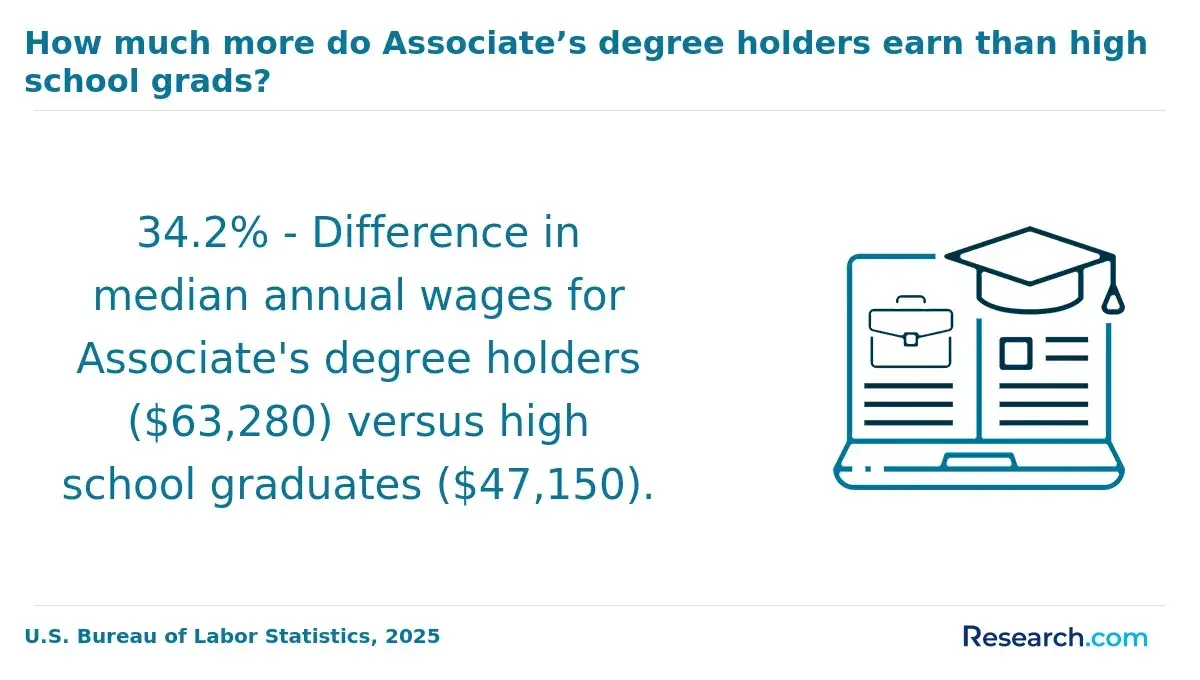
Salary should not be the only reason to choose a licensure path, but it is part of the planning process.
The BLS reported a May 2024 median annual wage of $94,310 for psychologists, which gives prospective students a broad labor-market benchmark rather than a guarantee. For more context on compensation ranges and career settings, see this guide on how much do forensic psychologists make.
Only your state licensing board can give the controlling answer. A school may be accredited, reputable, and allowed to enroll online students, yet still fail to meet a particular state's psychology licensure requirements. This is especially important if you live in one state, attend a university in another, and complete practicum or internship placements in a third.
Most psychologist licensing boards examine several categories of evidence. Before enrolling, compare the program against your state's current rules rather than relying on general national statements.
- Degree field and level: Confirm whether the state requires a doctoral degree in psychology and whether forensic psychology alone is acceptable or whether clinical, counseling, or school psychology training is expected.
- Accreditation status: Determine whether the board requires APA accreditation, accepts other recognized accreditation, or conducts a curriculum-by-curriculum review.
- Coursework: Check requirements for assessment, diagnosis, ethics, research methods, biological bases of behavior, social bases of behavior, cognitive-affective bases, diversity, and intervention.
- Supervised experience: Verify practicum, internship, postdoctoral hours, supervisor qualifications, and whether distance supervision is allowed.
- Examinations: Review whether the state requires the EPPP, jurisprudence exams, oral exams, or additional state-specific assessments.
- Criminal background and character review: Forensic psychology students should pay special attention to background-check rules because placements may occur in courts, correctional settings, hospitals, or agencies serving vulnerable populations.
If your long-term goal is clinical practice but you are not ready for a doctorate, comparing an online clinical psychology masters can help you understand the clinical training ladder. However, a master's degree by itself usually does not replace a doctoral degree when a state requires doctoral-level psychologist licensure.
For licensure-oriented psychology doctorates, supervised experience is often as important as the coursework. Online students may complete didactic classes remotely, but clinical training usually takes place in approved local or regional settings.
Forensic psychology students may need placements in courts, correctional facilities, forensic hospitals, community mental health agencies, law enforcement-related programs, or assessment clinics.
Before enrolling in an online doctorate, ask how placements are arranged. The best answer is usually specific, documented, and state-aware. The following questions can help you identify whether the program has a realistic clinical training model.
- Does the program require in-person practicum, internship, residency, or campus intensives, and where do they occur?
- Who is responsible for finding placements: the school, the student, or both?
- Are placements available in your state, and do they meet your state board's supervision rules?
- Does the program require an APA-accredited internship, and how does it support students in the internship match process?
- Are forensic placements guaranteed, competitive, optional, or dependent on local site availability?
- What happens if your state restricts online students from completing clinical placements without additional approvals?
Students interested in working with minors in courts, custody cases, trauma services, juvenile justice, or child protective settings may also need specialized developmental training.
Comparing child psychology master's programs can help clarify whether child and adolescent coursework should be part of your preparation before or alongside doctoral forensic training.
Accreditation can affect the practical value of your degree long before you apply for licensure. It influences whether you can use federal student aid, whether another school may accept your credits, whether employers trust the credential, and whether you can qualify for internships, postdoctoral training, or further certification.
Cost is a major reason to verify accreditation early. For the 2024-25 award year, federal Direct Unsubsidized Loans for graduate students carried an 8.08% fixed interest rate. That rate does not mean a doctorate is unaffordable, but it does mean borrowing for an unrecognized or non-licensure-eligible program can create serious financial risk.
The table below shows how accreditation can affect common education and career decisions. It is not a substitute for school, employer, or licensing-board policies, but it shows where recognition issues tend to appear.
| Decision Area | Why Accreditation Matters | What to Verify |
| Federal financial aid | Institutional accreditation by a recognized accreditor is tied to Title IV eligibility when the school and program otherwise qualify. | Confirm the institution's aid eligibility and program participation with the financial aid office. |
| Transfer credits | Schools often review whether previous credits came from an accredited institution and whether courses match doctoral requirements. | Ask for written transfer-credit policies before enrolling. |
| Internships and postdoctoral training | Competitive clinical sites may prefer or require students from APA-accredited programs. | Ask whether recent students obtained approved internships and in which settings. |
| Employment | Employers may screen for accredited degrees, licensure eligibility, and supervised clinical experience. | Review job postings for roles you want and note accreditation or licensure language. |
| Further study or certification | Postdoctoral fellowships, board certification, and academic appointments may consider program quality and accreditation. | Check requirements for the next credential before starting the doctorate. |
One common mistake is choosing the lowest-cost doctorate without checking whether it supports the desired professional outcome. A better approach is to compare total cost, accreditation, licensure alignment, placement support, completion expectations, and career fit together.
What Happens if an Online Forensic Psychology Doctorate Loses Accreditation or Is Only in Candidacy?
Candidacy, probation, show-cause status, withdrawal, and loss of accreditation can all affect students, but they do not mean the same thing. The key is to understand the program's exact status, effective dates, teach-out protections, and whether licensing boards or employers will accept the credential.
Candidacy is a step toward accreditation, not full accreditation. A program in candidacy may be progressing through review, but students should not assume that full accreditation is guaranteed. Accreditation can also be withdrawn if a school or program fails to meet standards, and the consequences may depend on when you enrolled, when you graduated, and what your state board requires.
If a program is in candidacy or has an adverse accreditation action, take these steps before making a decision.
- Ask the school for the official accreditor letter or public action notice explaining the status, effective date, and next review date.
- Confirm whether current students are covered by any teach-out agreement or transition plan.
- Ask your state licensing board whether graduation during candidacy, probation, or teach-out would satisfy educational requirements.
- Find out whether internships, practicum sites, or postdoctoral programs treat the status differently from full accreditation.
- Compare the risk against alternative accredited programs before paying nonrefundable deposits or relocating for clinical requirements.
The safest approach is to avoid relying on future promises. If licensure is your goal, a program that is already fully accredited and clearly accepted by your state board usually carries less risk than a program that hopes to receive accreditation later.
Other Things You Should Know About Forensic Psychology Programs
No. Criminal profiling is only one narrow activity sometimes associated with behavioral analysis. Forensic psychology is broader and may include assessment, treatment, consultation, research, expert testimony, competency evaluations, risk assessment, and work with courts, attorneys, agencies, or correctional systems.
Yes, depending on the role. Research, victim services, corrections administration, policy analysis, program evaluation, and some consulting roles may not require psychologist licensure. Clinical assessment, diagnosis, therapy, and independent psychological practice generally require the appropriate state license.
Neither is automatically better. A PsyD often emphasizes clinical practice, while a PhD often emphasizes research along with clinical training when it is a clinical psychology PhD. The better choice depends on whether you want to practice, conduct research, teach, consult, or pursue a mixed career.
They usually need legal-system literacy, not necessarily a law degree. Useful preparation may include coursework or supervised experience in mental health law, ethics, expert testimony, criminal and civil procedures, correctional systems, juvenile justice, and assessment standards used in legal settings.
- Raising the Bar: The Impact of Accreditation on Psychology Training | SoMAP - The Society of Modern Applied Psychology https://thesomap.org/raising-the-bar-the-impact-of-accreditation-on-psychology-training/
- Online Doctoral Degrees in Forensic Psychology - PhD Programs https://www.forensicscolleges.com/online/phd-in-forensic-psychology
- Online and Hybrid PhD & PsyD Programs in Psychology https://www.psychologist-license.com/phd/
- How Long Does it Take to Become a Forensic Psychologist? https://www.onlineeducation.com/psychology/faqs/how-long-to-become-forensic-psychologist
- Forensic Psychology Courses and Training Guide https://www.forensicpsychology.pro/forensic-psychology-training/
- Forensic Psychology Schools and Degree Programs https://www.criminaljusticeprograms.com/specialty/forensic-psychology/
- Forensic Psychology Emphasis | PhD in Clinical Psychology https://paloaltou.edu/academic-programs/phd-clinical-psychology/forensic-emphasis
- What to Look For with Accreditation https://mastersinpsychologyguide.com/articles/masters-in-psychology-accreditation-what-to-look-for/
- How To Become A Forensic Psychologist: Step-By-Step Guide https://www.psychology.org/careers/forensic-psychologist/
- Psychology Accreditation: What you need to know https://www.onlinepsychologydegrees.com/articles/accreditation/