
2027 Online English Language Learning Doctorate Programs with Practicum, Internship, Clinical, or Fieldwork Requirements

Co-Founder and Chief Data Scientist
Choosing an online English language learning doctorate is not just about coursework; it is about whether you can realistically complete supervised practice while working and living where you are. The U. S. Bureau of Labor Statistics reported a $60,560 median annual wage for adult basic education, secondary education, and ESL teachers in May 2024, showing that advanced preparation must be weighed carefully against cost and time.
This guide helps educators, TESOL professionals, ESL leaders, and doctoral applicants compare practicum, internship, clinical, and fieldwork requirements before enrolling.
Key Things You Should Know
- Online English language learning doctorates with hands-on requirements are usually EdD, PhD, or applied doctorate programs in TESOL, bilingual education, curriculum and instruction, literacy, or educational leadership; not every online program requires formal field hours.
- Experiential requirements can add indirect costs such as transportation, unpaid time, background checks, supervisor fees, and delayed completion; federal graduate Direct Unsubsidized Loans are capped at $20,500 per academic year.
- Practice-based doctorates are most valuable when the placement matches the career goal, such as ESL program leadership, teacher preparation, curriculum supervision, district multilingual learner services, or higher education teaching and research.
Which Online English Language Learning Doctorate Programs Require Practicum, Internship, Clinical, or Fieldwork Experience?
Online English language learning doctorate programs rarely use one standard model. Some are research-heavy doctorates with no formal practicum, while others are applied EdD programs that require field-based inquiry, supervised leadership practice, or a workplace-based capstone connected to multilingual learners.
The table below summarizes the program types most likely to include experiential requirements. Because universities change catalogs, students should verify the current handbook, not just the marketing page.
| Program type | Common degree labels | Likelihood of hands-on requirement | Typical experiential component | Best fit |
| Applied TESOL or English language learning doctorate | EdD in TESOL, EdD in English Language Learning, EdD in Second Language Instruction | Moderate to high | Field-based capstone, supervised instructional inquiry, program evaluation, or applied research in an ESL setting | Experienced ESL teachers, coordinators, and curriculum leaders |
| Bilingual education or multilingual education doctorate | EdD or PhD in Bilingual Education, Multilingual Education, or Curriculum and Instruction with ESL concentration | Moderate | School-based research, community engagement, district-level project, or educator preparation fieldwork | Educators working with bilingual learners, dual-language programs, or district multilingual services |
| Educational leadership doctorate with ESL focus | EdD in Educational Leadership with specialization, concentration, or dissertation focus in English learners | Moderate | Leadership internship, administrative field experience, improvement science project, or workplace-based capstone | Teachers moving into school, district, nonprofit, or state-level leadership |
| Literacy, reading, or language education doctorate | EdD or PhD in Literacy, Language, and Culture; Reading Education; Language Education | Varies | Clinical literacy assessment, school-based intervention, research practicum, or supervised teaching experience | Literacy specialists, reading coaches, and teacher educators working with multilingual learners |
| Research-focused second language acquisition doctorate | PhD in Second Language Acquisition, Applied Linguistics, Language Education | Low to moderate | Research apprenticeship, teaching assistantship, data collection in schools, or dissertation field research | Students aiming for university research, policy analysis, or advanced scholarly roles |
The key distinction is whether the doctorate is designed for practice improvement or scholarly research. Practice-focused EdD programs are more likely to require field-based projects, while PhD programs may require research experience rather than a supervised practicum.
What Are the Practicum, Internship, Clinical, and Fieldwork Requirements for Online English Language Learning Doctorates?
The terms practicum, internship, clinical experience, and fieldwork are often used loosely, but they are not interchangeable. Understanding the difference helps applicants estimate workload, supervision needs, and whether a current job can satisfy the requirement.
This comparison shows how experiential terms usually differ in online English language learning doctoral programs. Programs may combine more than one category, especially in applied EdD pathways.
| Requirement | What it usually means | Common setting | Supervision level | Decision factor |
| Practicum | A structured, course-linked experience focused on applying specific instructional, assessment, or leadership skills | K-12 ESL classroom, adult education program, teacher preparation setting, or language program | Usually supervised by faculty, a site mentor, or both | Good for students who need guided practice tied closely to coursework |
| Internship | A broader professional role or leadership experience completed over a term or multiple terms | District office, school leadership team, curriculum department, nonprofit, or higher education unit | Often requires an approved site supervisor | Best for students seeking administrative, coordinator, or program director roles |
| Clinical experience | Direct work with learners, candidates, or clients under structured observation and evaluation | Literacy clinic, language assessment setting, educator preparation program, or intervention site | Typically more formal and evaluation-driven | Important when the degree intersects with assessment, literacy intervention, or licensure-related practice |
| Fieldwork | Applied observation, data collection, program evaluation, or action research in an authentic education setting | Student's school, district, community program, or research site | Varies from faculty oversight to local mentor review | Useful for students whose dissertation or capstone depends on access to real learners or programs |
A common mistake is assuming that a dissertation study counts as fieldwork automatically. Some programs treat dissertation data collection separately from practicum or internship requirements, so students should ask whether the required experience appears on the degree plan, in a course syllabus, or only as part of the final research project.

How Do Online English Language Learning Doctorate Programs Arrange Practicum and Clinical Placements?
Placement arrangements vary widely. Some schools maintain formal placement support, while others expect doctoral students to identify a site, secure a qualified supervisor, and submit documentation for approval.
Before enrolling, applicants should understand the placement model because it determines how much responsibility shifts to the student. The table below outlines the most common models.
| Placement model | How it works | Student responsibility | Main risk | Best for |
| School-arranged placement | The university coordinates or assigns approved sites when available | Provide location preferences, complete onboarding, and meet site requirements | Limited availability in some regions | Students who need stronger logistical support |
| Student-identified, school-approved placement | The student proposes a workplace or local organization and the program approves it | Find the site, confirm supervisor qualifications, and submit forms | Approval delays or rejected sites | Working educators with access to ESL, bilingual, literacy, or language learning settings |
| Employer-based placement | The student completes requirements at a current school, college, district, or agency | Separate doctoral duties from normal job duties and document supervision | Conflict of interest or insufficient role variety | Full-time educators and administrators |
| Project-based field site | The student completes an improvement, evaluation, or research project at an approved setting | Secure permissions, protect learner data, and align the project with program outcomes | Research approval and data access barriers | Students completing applied dissertations or capstones |
Applicants should ask for placement policies in writing. Useful questions include the following:
- Who is responsible for finding a practicum, internship, clinical, or fieldwork site?
- Does the school maintain placement agreements in my state or region?
- Can my current employer serve as the approved site?
- What qualifications must the site supervisor hold?
- What happens if a site withdraws or a supervisor leaves mid-term?
- Are there background checks, immunizations, liability insurance, or district onboarding requirements?
A strong placement process should include clear approval timelines, written supervisor expectations, backup procedures, and a named office or faculty contact who handles site problems.
Many students can complete fieldwork near home, especially if they already work in a school, college, adult education program, language institute, nonprofit, or district office serving English learners. However, "online" does not always mean "available in every state" or "fully local."
Local completion depends on state authorization, site availability, supervisor credentials, learner access, and whether the activity meets the program's doctoral-level outcomes. A K-12 ESL teacher, for example, may be able to complete an applied inquiry project at work, while a student pursuing an administrative internship may need a district-level placement beyond a regular classroom assignment.
Students should confirm local feasibility before submitting an enrollment deposit. The safest approach is to complete these checks in order:
- Request the current practicum or fieldwork handbook and identify every in-person requirement.
- Ask whether the program accepts placements in your state, district, or employer type.
- Confirm whether the experience must involve K-12 learners, adult ESL learners, preservice teachers, program administration, or research participants.
- Verify whether your current job duties can count or whether the program requires new responsibilities outside normal employment.
- Ask the potential site supervisor to review the program's evaluation forms before you enroll.
- Check whether district approval, institutional review board review, or data-sharing permission could delay your start date.
The biggest red flag is vague language such as "students are responsible for securing appropriate sites" without explaining what counts as appropriate. That wording is not necessarily bad, but it means the applicant must investigate placement feasibility early.
Experiential requirements can affect the total price of a doctorate even when they do not increase tuition directly. Students may need to pay for travel, parking, fingerprinting, background checks, substitute coverage, unpaid release time, conference-style residencies, or additional terms if a placement is delayed.
Graduate borrowing limits also matter. Federal graduate Direct Unsubsidized Loans allow up to $20,500 per academic year, so students whose tuition and fieldwork expenses exceed that amount may need savings, employer aid, scholarships, payment plans, or Graduate PLUS Loans.
The table below separates direct program charges from indirect fieldwork-related costs. This distinction helps students compare online programs more realistically.
| Cost or timeline factor | How it can affect students | What to ask before enrolling |
| Tuition structure | Per-credit tuition can make extra practicum or dissertation continuation credits expensive | Are fieldwork courses included in the required credit total? |
| Placement delay | A postponed site approval can push graduation into another term | What is the average approval timeline for remote students? |
| Travel and local transportation | Students may need regular trips to schools, districts, clinics, or residencies | How many in-person visits are required each term? |
| Unpaid hours | Internship or fieldwork blocks may conflict with full-time teaching or administrative schedules | Can hours be completed during evenings, summers, or at the current workplace? |
| Compliance expenses | Sites may require background checks, fingerprinting, liability insurance, or training modules | Which costs are paid by the student? |
| Research approval | Dissertation fieldwork involving learners can require additional review and permissions | How early should students begin site and research approval? |
Students looking for lower-cost practice-based doctorates should compare tuition and fees alongside placement flexibility. Lists of cheapest online EdD programs can be a useful starting point, but the lowest tuition option is not always the least expensive if it requires extensive travel or unpaid field hours.
Flexibility depends less on the online learning platform and more on the fieldwork design. Some programs let students complete hours during regular employment, while others require scheduled observations, synchronous meetings, leadership activities, or site-based evaluation during school-day hours.
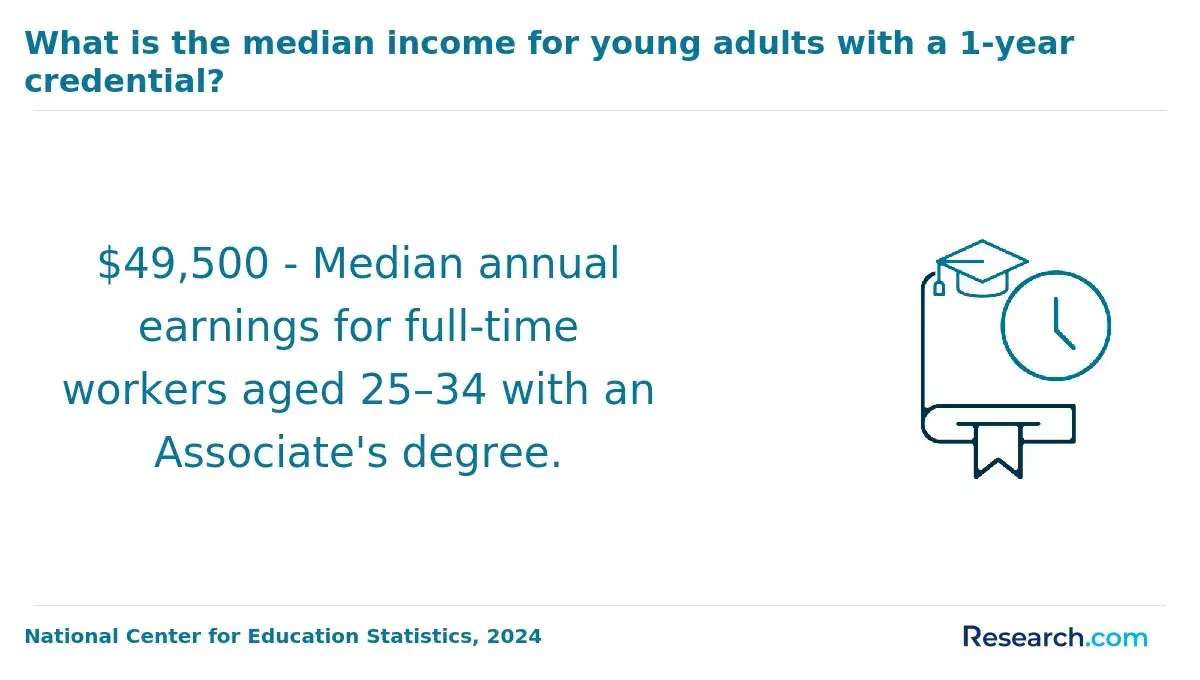
Applicants comparing accelerated options should be especially careful. Some 1-year EdD programs online may be designed for students who already have advanced graduate preparation or a clearly defined professional site, but a short timeline can be difficult if fieldwork approvals, supervisor availability, or dissertation data collection are uncertain.
These features usually indicate stronger flexibility for working professionals:
- Fieldwork can be completed at an approved current workplace when duties are sufficiently advanced and documented.
- The program allows summer, evening, or distributed hours instead of requiring large weekday blocks.
- Students may use a local school, district, adult ESL program, college, nonprofit, or virtual language-learning setting if it meets learning outcomes.
- Faculty provide early site review before the practicum or dissertation term begins.
- The program publishes clear alternatives if a student changes jobs, moves, or loses access to a site.
Programs are less flexible when they require a narrow type of site, a supervisor with a rare credential, campus-based clinical days, or cohort-based field activities that cannot be rescheduled. Students with unpredictable work schedules should ask whether missed site hours can be made up without delaying graduation.
Employer Confidence in Online vs. In-Person Degree Skills, Global 2024

Accreditation and licensure are separate issues. Institutional accreditation affects federal financial aid eligibility, credit transfer, and employer recognition, while licensure or endorsement rules are set by states, agencies, or professional boards.
An English language learning doctorate may support advancement, leadership, or teacher education work, but it does not automatically lead to ESL teacher licensure, bilingual endorsement, principal licensure, reading specialist licensure, or administrative certification. If the program claims to prepare students for a regulated role, the fieldwork must align with the required standards in the student's state.
Students who already hold an Education Specialist degree may compare advanced standing pathways, including EDS to EdD programs, but they still need to verify whether previous internships, leadership hours, or specialist-level fieldwork satisfy doctoral requirements.
The following checks help prevent accreditation and licensure mistakes:
- Confirm the university's institutional accreditation through a recognized accreditor.
- Ask whether the doctoral program itself holds any specialized accreditation relevant to educator preparation, leadership, literacy, or TESOL-related preparation.
- Contact the state education agency if the degree is intended to support licensure, endorsement, or salary lane movement.
- Request written confirmation about whether practicum, internship, or fieldwork hours meet state-specific standards.
- Verify whether out-of-state online students are eligible for placements in their location.
- Ask employers whether the degree and fieldwork format meet advancement, reimbursement, or promotion requirements.
The safest rule is simple: never assume doctoral fieldwork satisfies a professional requirement unless the university and the relevant licensing authority confirm it.
Support quality can determine whether a student finishes on time. In strong programs, fieldwork is not treated as an afterthought; it is planned, supervised, documented, and connected to doctoral learning outcomes.
Students should look for support across the full fieldwork cycle, from site search to final evaluation. The most useful supports include the following:
- A field placement coordinator or faculty advisor who explains site requirements before enrollment or early in the program.
- Templates for site agreements, supervisor evaluations, learner privacy documentation, and time logs.
- Orientation for site supervisors so expectations are consistent across locations.
- Regular faculty check-ins during practicum, internship, clinical, or fieldwork terms.
- Clear procedures for replacing a site or supervisor if the original placement becomes unavailable.
- Guidance on research ethics, especially when dissertation or capstone work involves English learners, minors, assessment data, or classroom observations.
Students should also ask current doctoral candidates about response times. A program may have strong written policies but weak day-to-day support if approvals take weeks or faculty feedback arrives after site deadlines have passed.
Hands-on doctoral experiences can strengthen career outcomes when they build evidence of leadership, research, curriculum design, assessment, program evaluation, and measurable improvement for multilingual learners. They are less valuable when they simply add hours without producing a portfolio, study, intervention, or leadership project that employers can understand.
For salary context, the U.S. Bureau of Labor Statistics reported a $74,720 median annual wage for instructional coordinators in May 2024. This figure does not represent a guaranteed outcome for doctorate holders, but it helps applicants evaluate whether a doctoral investment aligns with curriculum, assessment, professional development, or district-level language learning roles.
Practice-based experiences may support several career paths:
- ESL, ESOL, TESOL, or multilingual learner program coordinator roles in schools and districts.
- Curriculum and instructional leadership positions focused on language development, literacy, and culturally responsive teaching.
- Teacher educator, clinical supervisor, adjunct faculty, or higher education roles in TESOL and language education.
- Assessment, compliance, and program evaluation roles connected to English learner services.
- Research, policy, nonprofit, or consulting roles focused on multilingual education access and outcomes.
Students interested in curriculum technology, online language learning, or educator training may also compare doctoral study with related graduate preparation, such as the best online instructional design master's programs, especially if their goal is course design rather than doctoral research or leadership.
The best career value comes from alignment. A student aiming for district leadership may benefit from an internship in multilingual program administration, while a future professor may need research apprenticeships, publications, conference presentations, and teaching experience more than a school-based practicum.
How Should Students Choose an Online English Language Learning Doctorate With Experiential Requirements?
The right program is the one that matches your career goal and your real-life capacity to complete supervised work. A prestigious or fast program may be a poor fit if the fieldwork cannot be completed in your state, schedule, or workplace.
Use this decision process before applying or accepting admission:
- Define the target role first, such as ESL district leader, TESOL faculty member, bilingual education researcher, literacy specialist, curriculum director, or language program administrator.
- Choose the degree type that fits the role: EdD for applied leadership and practice improvement, PhD for research and scholarship, or another applied doctorate if the program is built around professional projects.
- Request the degree plan and identify every required practicum, internship, clinical, residency, capstone, dissertation, or fieldwork component.
- Calculate total cost beyond tuition, including travel, compliance fees, unpaid work time, extra terms, and possible dissertation continuation credits.
- Confirm site feasibility before enrollment, especially if you live far from campus or outside the university's usual placement region.
- Ask whether your employer can serve as a site and whether your regular job duties can count toward hours.
- Verify accreditation, state authorization, licensure relevance, and employer recognition in writing.
- Compare placement support, not just tuition, rankings, or course convenience.
Common red flags include unclear fieldwork language, no named placement contact, no written policy for out-of-state students, vague supervisor qualifications, and promises that sound broader than the catalog. Another mistake is choosing the program with the fewest hours automatically. Fewer hours may be convenient, but if the program provides little applied experience, it may not support leadership or clinical practice goals as well as a more structured option.
An online English language learning doctorate with experiential requirements is most worth considering when the placement is realistic, the supervision is meaningful, the fieldwork connects directly to your career goal, and the total cost remains manageable.
Other Things You Should Know About English Language Learning
Not always. Some programs require teaching experience or educator licensure, while others accept applicants from higher education, adult education, nonprofit, curriculum, or language program backgrounds. Always check admissions requirements for teaching credentials, master's degree field, GPA, writing samples, and professional experience.
Most doctoral programs require either a dissertation, applied dissertation, doctoral capstone, or scholarly project. PhD programs usually emphasize original research, while EdD programs often focus on solving a practice-based problem in an education setting.
Yes, many programs welcome multilingual applicants. International or multilingual applicants may need to submit English proficiency scores unless they qualify for a waiver based on prior study, citizenship, or institutional policy.
They overlap but are not identical. TESOL usually refers to teaching English to speakers of other languages, while English language learning can also include bilingual education, multilingual learner policy, literacy development, language assessment, and educational leadership for programs serving English learners.
- Blogging for Academic Purposes with English Language Learners: An Online Fieldwork Initiative https://citejournal.org/volume-13/issue-1-13/english-language-arts/blogging-for-academic-purposes-with-english-language-learners-an-online-fieldwork-initiative
- Top 5 Low-Cost Doctorates in English Language Learning https://www.greatvaluecolleges.net/rankings/online-doctorate-english-language-learning/
- Choosing the “Right” Doctoral Program: How To Decide Which Program Is Right for YOU - NSSLHA Blog https://blog.nsslha.org/2024/07/09/choosing-the-right-doctoral-program/
- Complete Guide to TEFL Practicum Requirements | TEFL Institute https://teflinstitute.com/blog/tefl-practicum-requirements-guide/
- English Teaching Practicum - Intercambio Uniting Communities https://intercambio.org/volunteer-position/english-teaching-practicum/
- Teaching Internship - English 680 | English Department https://ngwpenglish.mystagingwebsite.com/graduate/ma/teaching-internship/
- Doctor of Education in TESOL (EdD) | Online TESOL Doctorate | Anaheim University https://anaheim.edu/schools-and-institutes/graduate-school-of-education/doctor-of-education-in-tesol.html
- Education Doctorate Programs https://catalog.alverno.edu/laps/ed/edd/
- Doctorate: Global Education - EdD (Online) https://graduate.sit.edu/program/doctorate-global-education-edd/
- 25 Best Online EdD Programs of 2025 https://www.eddprograms.org/schools/best-online-doctor-of-education-programs/


