2027 Online Educational Leadership Degree Programs With No Application Fee and Rolling Admissions

Co-Founder and Chief Data Scientist
Choosing an online educational leadership degree is often a timing and cost decision as much as an academic one. The median pay for elementary, middle, and high school principals was $104,070 in May 2024, according to the U.S. Bureau of Labor Statistics, making leadership credentials financially meaningful for many educators. This guide is for teachers, coordinators, and school professionals comparing no-fee, rolling-admission options. You will learn how these policies work, where they can save money, what to verify, and how to choose a program based on total value rather than convenience alone.
Key Things You Should Know
- No-application-fee programs can reduce upfront costs, but the savings are usually small compared with tuition, technology fees, course materials, and federal loan costs.
- Rolling admissions means applications are reviewed continuously or in repeated cycles, but financial aid, cohort, licensure, and course-registration deadlines may still apply.
- The best online educational leadership programs are accredited, transparent about state licensure alignment, and clear about whether they prepare students for principal, district, higher education, or non-licensure leadership roles.
Which Online Educational Leadership Degree Programs Have No Application Fee and Rolling Admissions?
Several U.S. universities offer online educational leadership, administration, or organizational leadership degrees that advertise no application fee and flexible admissions. Because fee waivers and start dates can change by term, the programs below should be treated as a practical shortlist to verify before applying, not as a substitute for checking the current admissions page.
The table compares examples based on the factors that matter most at the first screening stage: degree level, fee policy, admissions flexibility, and whether the program is commonly tied to school-leadership licensure.
| School | Online educational leadership option | Application-fee positioning | Admissions format | Decision note |
| American College of Education | M.Ed. in Educational Leadership and related leadership pathways | Advertises no application fee | Frequent starts with continuous application review | Strong fit for working educators seeking a low-upfront-cost, fully online format; licensure alignment varies by state and concentration. |
| Arkansas State University | M.S.E. in Educational Leadership online | Online program pages commonly advertise no application fee | Multiple start dates with rolling-style admissions windows | Useful for teachers seeking an administrator-preparation pathway, but applicants should confirm state-specific principal licensure requirements. |
| Capella University | M.S. in Education and leadership-related specializations | Advertises no application fee for many online programs | Frequent start dates | May appeal to adult learners who want flexible pacing; verify whether the exact track is licensure, endorsement, or non-licensure. |
| Grand Canyon University | M.Ed. in Educational Administration and leadership-related graduate programs | Typically advertises no application fee | Continuous admissions with frequent online starts | Good to compare if you want frequent entry points; review field-experience, practicum, and state authorization details carefully. |
| National University | Educational administration, teaching, and leadership-related graduate pathways | Advertises no application fee | Year-round enrollment with frequent course starts | Best for students who need accelerated monthly-style pacing; confirm the credential objective before enrolling. |
| Walden University | M.S. in Education, Ed.S., and Ed.D. options with leadership-related specializations | Advertises no application fee | Multiple starts and continuous admissions advising | May fit students pursuing broader leadership or doctoral goals; compare tuition structure and dissertation or capstone expectations. |
| UMass Global | M.A. in Educational Leadership and Administration and related options | Often promotes no application fee for many programs | Multiple sessions with flexible admissions | Worth considering for students who want a nonprofit university model; verify current fee policy and state-specific administrator requirements. |
A no-fee application is most useful when it lets you compare several legitimate programs without paying each school just to be considered. It is less useful if the program has higher tuition, limited licensure portability, mandatory residencies you cannot attend, or a start date that does not match your financial aid timeline.
How Does Rolling Admission Work for Online Educational Leadership Degree Programs?
Rolling admission means a school reviews applications as they arrive instead of waiting for one annual deadline. In online educational leadership programs, this often pairs with several start dates per year, shorter academic sessions, or cohort launches that repeat throughout the year.
The key point is that "rolling" does not mean "deadline-free." Schools may keep reviewing applications continuously while still setting separate cutoffs for transcript receipt, financial aid packaging, course registration, internships, field placements, or cohort capacity.
This comparison shows how rolling admissions differs from traditional deadline-based admissions and why the distinction matters for working adults.
| Admissions model | How decisions are usually made | Best for | Main risk |
| Rolling admission | Applications are reviewed as files become complete | Applicants who want flexibility or need a near-term start | Waiting too long can mean missing a preferred start date, aid deadline, or available course seat. |
| Multiple fixed deadlines | Applications are reviewed in cycles tied to several terms | Students who can plan around known dates | Missing one deadline may delay enrollment by a full term. |
| Single annual deadline | Applications are reviewed after one priority date | Competitive programs, cohorts, or licensure pathways with limited seats | Less flexibility for career changers or teachers responding to district promotion timelines. |
For educational leadership applicants, applying earlier in a rolling cycle can help with practical planning. It gives the school more time to evaluate transcripts, confirm teaching-license status, review field-experience eligibility, and clarify whether the program meets your state's administrator or principal requirements.
How Much Can Students Save by Choosing an Online Educational Leadership Degree With No Application Fee?
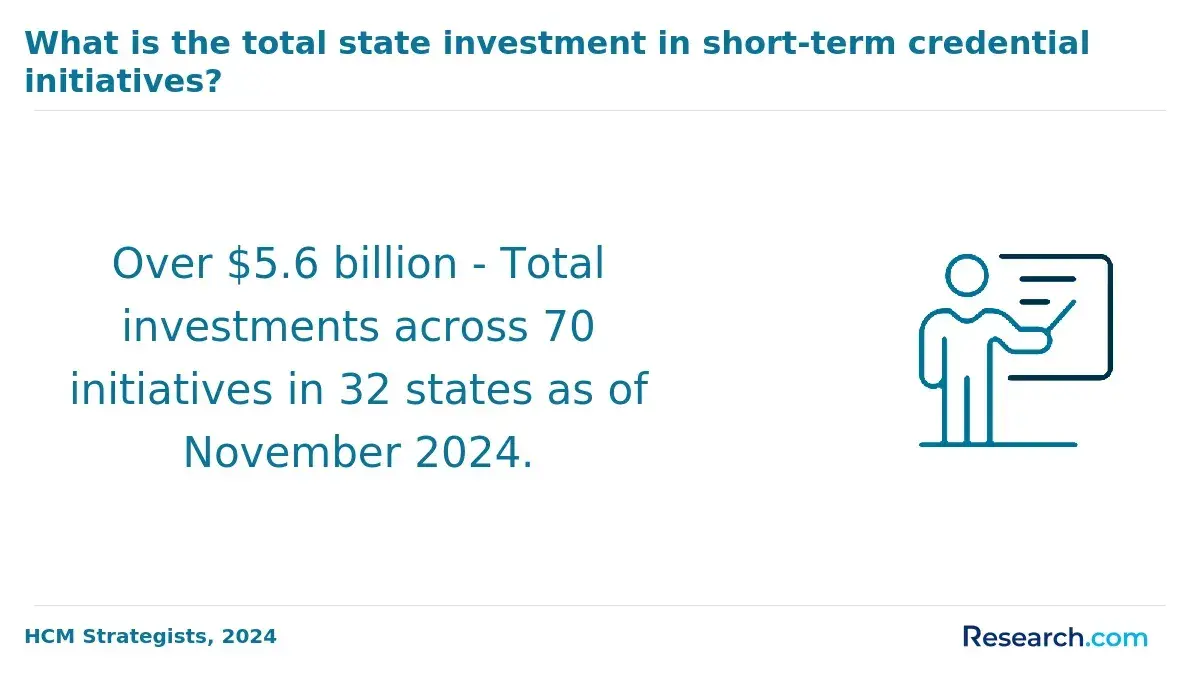
The direct savings are simple: if a school charges no application fee, you avoid that upfront cost. The bigger question is whether the no-fee policy leads to meaningful affordability once tuition, fees, loan costs, and time to completion are considered.
Application-fee savings matter most when you are applying to several programs for comparison. For example, avoiding multiple paid applications can make it easier to compare admission offers, transfer-credit decisions, and financial aid estimates before committing to one school.
Still, students should put the waived fee in context. Federal Student Aid lists a 1.057% origination fee for Direct Unsubsidized Loans first disbursed during the current federal fee period, which means financing costs alone can exceed a typical application fee if you borrow a large portion of tuition. The practical takeaway is to celebrate the waived fee, but evaluate the full price of attendance before enrolling.
Use the following cost categories to see where a no-application-fee program may still become expensive.
| Cost category | Why it matters | What to ask |
| Tuition per credit | This is usually the largest cost driver in a graduate degree. | Is tuition charged per credit, per term, or by subscription-style pacing? |
| Program fees | Technology, graduation, background-check, assessment, and clinical-placement fees can add up. | Are all required fees included in the published tuition estimate? |
| Transfer credits | Accepted graduate transfer credits can reduce time and cost. | How many credits may transfer, and do transferred credits apply to the leadership core? |
| Licensure-related expenses | Principal or administrator pathways may require exams, background checks, or field supervision. | Which costs are paid to the school, and which are paid to state agencies or testing vendors? |
| Time to completion | A slower path can increase indirect costs, while an overly fast path may be unrealistic for full-time teachers. | What is the expected timeline for part-time students? |
A no-fee online educational leadership degree is financially attractive when it is also competitive on total tuition, credit transfer, aid availability, and career relevance. It is a weak bargain when the waived application fee distracts from higher long-term costs.
What Are the Admission Requirements for No-Fee Online Educational Leadership Degree Programs?
Admission requirements vary by degree level and whether the program is designed for principal licensure, teacher leadership, district administration, higher education, or organizational leadership. Most online master's-level educational leadership programs expect applicants to have a bachelor's degree, official transcripts, and professional experience in education.
The table below summarizes common requirements so applicants can identify what to prepare before starting several no-fee applications.
| Requirement | Common expectation | Why it affects admissions |
| Bachelor's degree | Required for master's programs; master's degree often required for Ed.S. or Ed.D. programs | Confirms graduate-level eligibility. |
| Official transcripts | Required from prior colleges or universities | Used to verify degree completion, GPA, prerequisites, and transfer-credit potential. |
| Minimum GPA | Often required, though thresholds vary by school | Applicants below the threshold may need conditional admission, additional documentation, or professional evidence. |
| Teaching license | Common for principal-preparation or administrator-licensure tracks | Some states require an active educator license before leadership certification. |
| Professional experience | Often expected for school leadership tracks | Leadership programs usually build on classroom, coaching, curriculum, or school-based experience. |
| Recommendations | May be required from supervisors, principals, or academic references | Helps demonstrate leadership readiness and professional judgment. |
| Statement of purpose | Frequently required or recommended | Shows career goals, fit with the program, and understanding of educational leadership responsibilities. |
| Background check or field-placement clearance | May be required before internships or practicums | Important for programs involving school-based leadership experiences. |
GRE requirements are less common than they once were in many online education programs, but applicants should not assume tests are automatically waived. The safest approach is to confirm the requirement for the exact degree, concentration, and licensure route.
When Should Students Apply to Online Educational Leadership Degree Programs With Rolling Admissions?
Students should apply as soon as they know their preferred start term, especially if the program includes licensure review, transfer-credit evaluation, internship approval, or employer tuition assistance. Rolling admissions gives flexibility, but earlier applications usually create more room to solve documentation problems.
For working educators, a good application timeline starts backward from the desired first course. Applicants comparing accelerated options may also want to review how pacing works in 1 year master's programs, because speed only helps when the schedule is realistic alongside teaching, family, and fieldwork.
Use this sequence to build a practical rolling-admissions timeline around a target start date.
- Eight to twelve weeks before the preferred start, request unofficial program guidance and confirm whether the application fee is currently waived.
- Six to ten weeks before the start, order official transcripts from every prior institution and ask how long transfer-credit review takes.
- Five to eight weeks before the start, confirm whether the program aligns with your state's administrator, principal, or supervisor credential requirements.
- Four to six weeks before the start, submit recommendations, a statement of purpose, license documentation, and any required employment verification.
- Three to five weeks before the start, file or update the FAFSA if you plan to use federal aid and ask whether the school has a separate priority aid deadline.
- Two to four weeks before the start, finalize registration, employer tuition benefits, payment arrangements, and technology requirements.
A common mistake is assuming that year-round application review means you can apply days before classes begin. That may work for some non-licensure programs, but it can fail if transcript delays, prerequisite reviews, or cohort capacity block registration.
How Can Students Strengthen an Online Educational Leadership Degree Application?
A strong educational leadership application does more than prove academic eligibility. It shows that the applicant understands school improvement, instructional leadership, equity, data use, staff development, community engagement, and the realities of leading adults in educational settings.
Applicants can strengthen their file by connecting past experience to future leadership responsibilities. The following steps are especially useful for teachers, instructional coaches, department chairs, and aspiring administrators.
- Write a focused statement of purpose that names the leadership role you are preparing for, such as assistant principal, principal, curriculum leader, district administrator, or higher education administrator.
- Show evidence of leadership beyond job title, including mentoring teachers, leading professional learning communities, coordinating assessments, managing school initiatives, or supporting curriculum adoption.
- Ask recommenders to discuss specific leadership behaviors, not just reliability or classroom performance.
- Explain any GPA weakness with professional growth, recent graduate coursework, certifications, or measurable accomplishments.
- Prepare a concise resume that highlights school improvement work, data analysis, family engagement, supervision, training, and cross-functional collaboration.
- Confirm that your teaching license, years of experience, and current role meet any state-specific expectations before applying to a licensure track.
One red flag is submitting a generic application to every no-fee program simply because there is no financial downside. Even with no application fee, a weak or unfocused file can delay admission, reduce scholarship consideration, or lead to admission into a track that does not match your career goal.
Are Online Educational Leadership Degree Programs With No Application Fees Accredited and Legitimate?
Yes, many legitimate online educational leadership programs charge no application fee and use rolling admissions. However, those features do not prove quality. Accreditation, state authorization, licensure alignment, faculty qualifications, field-experience structure, and student support are more important indicators.
Educational leadership applicants should verify two layers of quality assurance: institutional accreditation and program relevance. Institutional accreditation confirms that the college or university meets broad academic and operational standards. Program-level educator preparation recognition, such as CAEP alignment or state approval, may matter if the degree is intended to lead to principal or administrator licensure.
Licensure-sensitive fields require extra caution, whether a student is considering educational leadership, counseling, nursing, or an architecture degree. Online format does not remove state-specific rules, supervised experience requirements, or credentialing exams.
Before applying, students should verify the following directly with the school and, when licensure is involved, with the state education agency.
- The institution holds recognized accreditation from an accreditor accepted by the U.S. Department of Education.
- The exact educational leadership program is approved or accepted for the credential you want in your state.
- The school is authorized to enroll online students from your state.
- Any internship, practicum, residency, or fieldwork requirement can be completed where you live or work.
- The program clearly distinguishes licensure, endorsement, and non-licensure tracks.
- The school publishes total tuition, required fees, refund policies, and satisfactory academic progress requirements.
A major warning sign is vague language such as "may help prepare" without clear state-by-state licensure information. If your goal is a public school administrator credential, do not enroll until the school confirms the pathway in writing.
How Do Financial Aid and Total Costs Compare Among Online Educational Leadership Degree Programs?
Financial aid can make two programs with similar tuition feel very different. Online educational leadership students may use federal loans, school scholarships, employer tuition assistance, district reimbursement, military benefits, payment plans, or state grant programs, depending on eligibility.
Graduate borrowing costs are especially important now. Federal Student Aid lists a 7.94% fixed interest rate for Direct Unsubsidized Loans first disbursed from July 1, 2025 through June 30, 2026, which means students should compare not only sticker price but also how much they may need to borrow.
The same cost discipline applies across online degrees, whether a student is comparing educational leadership with a cybersecurity degree online or another career-focused graduate pathway. The right comparison is total out-of-pocket cost after aid, not just tuition per credit.
This table shows the cost items students should request from each school before accepting admission.
| Cost or aid factor | Why it changes affordability | Best comparison question |
| Tuition model | Per-credit, per-term, and subscription models reward different pacing styles. | What is the estimated total tuition for my expected completion timeline? |
| Mandatory fees | Online, technology, graduation, assessment, and placement fees may not appear in headline tuition. | What required fees are not included in the tuition estimate? |
| Scholarships | Some schools offer educator, partner-district, military, or alumni awards. | Are scholarships automatic, competitive, renewable, or deadline-based? |
| Employer reimbursement | District benefits can lower net cost but may require grade minimums or continued employment. | Will the school defer payment until employer reimbursement arrives? |
| Transfer-credit policy | Approved credits can reduce tuition and shorten completion time. | How many graduate credits can apply to this exact degree plan? |
| Course load | Taking too many courses while teaching full time can risk withdrawals or repeated courses. | What pace do most working educators successfully complete? |
| Financial aid deadlines | Rolling admission does not always extend aid priority dates. | What aid forms or scholarship applications have separate deadlines? |
The best-value program is not always the one with the lowest application cost or the fastest start. It is the one that combines manageable tuition, credible outcomes, appropriate licensure alignment, and a schedule you can complete without unnecessary borrowing or stop-outs.
Which Students Benefit Most From No-Fee, Rolling-Admission Online Educational Leadership Degrees?
No-fee, rolling-admission online educational leadership degrees are most useful for students who need flexibility but are still prepared to make a careful decision. They often fit licensed teachers, instructional coaches, department chairs, curriculum specialists, and education professionals who want to move into formal leadership without pausing their careers.
These programs can also help applicants who are comparing people-centered graduate pathways, such as education leadership and online MSW programs, because no-fee applications reduce the cost of exploring several mission-driven career directions before choosing one.
Students most likely to benefit usually share several characteristics.
- They are working adults who need online coursework, evening flexibility, asynchronous learning, or multiple start dates.
- They already meet core eligibility requirements, such as a bachelor's degree, education experience, and, for licensure tracks, an active teaching credential.
- They want to compare admission and aid offers from multiple accredited schools without paying several application fees.
- They have a near-term promotion, district leadership opportunity, or salary-lane deadline that makes a traditional annual deadline impractical.
- They can complete fieldwork, internships, or leadership projects through their current school, district, or approved local site.
Students should be more cautious if they are not sure they want school leadership, do not meet licensure prerequisites, need extensive in-person support, or are choosing a program mainly because it is easy to enter. Rolling admission can make enrollment faster, but it should not rush a high-cost decision.
How Should Students Choose Among No-Fee Online Educational Leadership Degree Programs?
Students should choose among no-fee online educational leadership programs by ranking total value, not convenience. A waived application fee and rolling admissions are helpful only after the program has passed checks for accreditation, licensure relevance, affordability, support, and career fit.
If you are deciding between education leadership and broader management pathways, compare outcomes and curriculum focus carefully. For example, an MBA in operations management online may build business-process leadership skills, while educational leadership programs focus more directly on instruction, school law, supervision, learning systems, and education policy.
Use this decision framework after you have a shortlist of accredited, no-application-fee programs.
- Define the target role first: principal, assistant principal, curriculum director, instructional coach, district administrator, higher education leader, nonprofit education manager, or doctoral-level researcher.
- Separate licensure and non-licensure programs, because the wrong track can cost time without moving you toward the credential you need.
- Ask each school for a written total-cost estimate that includes tuition, required fees, transfer-credit decisions, and expected time to completion.
- Compare start dates with your work calendar, financial aid deadlines, district reimbursement cycle, and fieldwork availability.
- Review course delivery carefully, including asynchronous work, live sessions, practicum hours, residency requirements, and group-project expectations.
- Check student support, including academic advising, licensure advising, field-placement help, writing support, technology support, and career services.
- Look beyond admission speed and ask how many students complete the program, how internships are supervised, and how alumni use the credential.
The strongest choice is usually the program that removes application friction without lowering your standards. If a traditional-deadline program has better licensure alignment, stronger field placements, lower total cost, or superior district recognition, it may be worth waiting for that deadline instead of choosing the fastest no-fee option.
Other Things You Should Know About Educational Leadership
An educational leadership degree may support roles such as assistant principal, instructional coach, curriculum coordinator, dean of students, program director, district specialist, higher education administrator, or nonprofit education manager. The best fit depends on the degree level, state rules, and whether the program is licensure-focused.
Not automatically. A master's degree is often the practical route for aspiring school administrators, while an Ed.D. may fit experienced educators pursuing executive leadership, policy, research-informed practice, or senior district roles. The better option depends on your current credentials and career goal.
Many programs are designed for full-time educators, but workload varies. Students should ask about weekly time expectations, live class requirements, fieldwork hours, and whether projects can be completed in their current school setting.
Some programs require a capstone, portfolio, action-research project, internship evaluation, or comprehensive assessment instead of a traditional thesis. Doctoral programs may require a dissertation or applied doctoral project, so students should confirm the final requirement before enrolling.
References
- Affordable Universities for International Students & Online Degrees 2026 https://northcypruseducation.com/blog/affordable-universities-for-international-students-a-guide-to-online-degrees/
- Cost of College by Country [2025]: Average Tuition Fees https://educationdata.org/average-cost-of-college-by-country
- 2025 Most Affordable Online Master's Programs https://www.onlineu.com/most-affordable-colleges/masters-degrees
- What Can You Do With a Master's in Education Leadership? https://www.salemu.edu/blog/educational-leadership-careers/
- Rolling Admissions Explained: How It Works and When You Should Apply https://riseglobaleducation.com/blogs/rolling-admissions-explained-how-it-works-and-when-you-should-apply
- How Online College Costs Vary in the US and Europe https://orlandomom.com/how-online-college-costs-vary-in-the-us-and-europe/
- Rolling Admissions Guide: What, When, Why? https://www.ivywise.com/blog/what-does-rolling-admissions-mean/
- Free Study Abroad: Complete List of Countries with No Tuition Fees for International Students - Spain Internship https://spain-internship.com/blog/list-country-free-study-abroad/
- Compare Tuition Fees in Europe - StudyinEurope.eu https://www.studyineurope.eu/tuition-fees/
- Online Master’s Programs in Educational Leadership: Compare Schools https://www.onlinemastersdegrees.org/best-programs/education/educational-leadership/