2027 Online Educational Leadership Degree Programs That Accept 60, 75, or 90 Transfer Credits

Co-Founder and Chief Data Scientist
If you already have college credits, the biggest question is not whether an online Educational Leadership degree accepts transfer credits-it is how many will count toward graduation. National Student Clearinghouse Research Center data shows transfer enrollment rose 4.4% in fall 2024, making credit mobility a timely issue for degree-completion students. This guide explains how 60, 75, or 90 accepted credits can affect remaining courses, cost, timeline, residency rules, and program fit so you can compare online Educational Leadership options before enrolling.
Key Things You Should Know
- For a 120-credit bachelor's degree, transferring 60 credits usually leaves about 60 credits, 75 credits leaves about 45 credits, and 90 credits may leave about 30 credits-but only if those credits satisfy general education, elective, upper-division, and major requirements.
- A school may accept up to 90 transfer credits while still requiring 30 credits in residence, specific Educational Leadership major courses, field-based assignments, or upper-division coursework that cannot be replaced by lower-level transfer credits.
- Before choosing a program, request a degree-specific transfer evaluation that separates credits accepted by the university from credits applied to the Educational Leadership degree plan, because that distinction determines time to completion and tuition savings.
How Many Transfer Credits Can You Apply Toward an Online Educational Leadership Degree?
In most cases, 60-, 75-, and 90-credit transfer policies apply to online bachelor's degree-completion programs related to educational leadership, education studies, school administration foundations, organizational leadership, or workforce education. Graduate Educational Leadership programs, especially principal licensure or superintendent preparation programs, usually have much lower transfer limits because they must meet state and accreditation standards.
The key distinction is accepted credits versus applied credits. Accepted credits are credits the institution recognizes on your transcript. Applied credits are the credits that actually fill requirements in your specific Educational Leadership degree audit.
The table below shows how transfer-credit levels usually affect a 120-credit online bachelor's degree. Use it as a planning framework, not as a guarantee, because each school's degree map and residency policy can change the result.
| Transfer-credit scenario | Typical remaining credits in a 120-credit degree | What it may mean for the student | Main risk to verify |
| 60 transfer credits | About 60 credits remaining | Often fits associate degree holders who have completed most lower-division general education courses. | Some education or leadership prerequisites may still be missing. |
| 75 transfer credits | About 45 credits remaining | Can work well for students with an associate degree plus additional college coursework. | Credits may transfer as electives instead of satisfying major or upper-division requirements. |
| 90 transfer credits | About 30 credits remaining | Often the fastest degree-completion path when the school allows 75% of the bachelor's degree to transfer. | Residency rules may still require the final 30 credits at the enrolling institution. |
A higher transfer maximum is useful only when the degree audit shows that your credits reduce the exact coursework you still need. A 90-credit allowance can be less valuable than a 75-credit allowance if many credits are placed in unused electives.
Which Online Educational Leadership Degree Programs Accept 60, 75, or 90 Transfer Credits?
Online Educational Leadership transfer options usually fall into three categories: bachelor's completion programs with an education leadership focus, broader organizational leadership programs that allow education-related electives, and graduate Educational Leadership programs with limited transferability. If you are also comparing regulated helping-profession pathways, such as online MSW programs, remember that licensure-oriented degrees often have stricter curriculum rules than general degree-completion programs.
The table below summarizes the types of online programs most likely to accept 60, 75, or 90 credits. It is more useful than relying on one advertised maximum because it connects transfer limits to the kind of Educational Leadership outcome the program may support.
| Program type | Common transfer-credit range | Best fit | Important limitation |
| Online bachelor's in educational leadership, education studies, or education administration foundations | 60 to 90 credits when offered as a 120-credit bachelor's completion pathway | Students with prior college credit who want education-sector leadership preparation without assuming immediate administrator licensure. | May not meet state principal licensure requirements by itself. |
| Online bachelor's in organizational leadership with education-related electives | 60 to 90 credits at transfer-friendly universities | Students working in schools, nonprofits, training departments, or community education programs. | Education-specific coursework may be limited compared with a dedicated education program. |
| Online bachelor's in workforce education, instructional leadership, or career and technical education leadership | 60 to 90 credits depending on articulation agreements and technical-credit policies | Students with community college, military, technical, or workplace-training backgrounds. | Technical credits may transfer as electives unless the program has a clear pathway for them. |
| Online master's in Educational Leadership or educational administration | Often far below 60 credits | Licensed teachers seeking principal, administrator, or advanced leadership preparation. | State approval, internships, and licensure standards usually limit transfer credit. |
When searching, look for phrases such as "degree completion," "up to 90 transfer credits," "75% transfer limit," "prior learning assessment," and "transfer-friendly bachelor's." Then confirm whether the program is specifically built for education-sector leadership or only offers general leadership coursework.
How Can You Tell Whether Transfer Credits Will Actually Apply Toward Your Educational Leadership Degree?
The only reliable way to know whether transfer credits will apply is to compare your completed courses against the official degree requirements. A general admissions estimate can tell you what the university may accept, but a degree audit shows what actually counts toward the Educational Leadership plan.
Use the following steps before you commit to a program. The sequence matters because it helps you avoid enrolling based on a transfer maximum that does not reduce your remaining coursework.
- Send official transcripts from every college you attended, including community colleges, four-year schools, and institutions where you completed only a few courses.
- Ask for a program-specific transfer evaluation, not just a university-wide credit estimate.
- Request a written degree map showing remaining general education, major, elective, upper-division, and residency requirements.
- Ask which accepted credits apply directly to the Educational Leadership major and which count only as free electives.
- Confirm whether any field experience, capstone, practicum, or internship course must be completed through the new institution.
- Compare the remaining credits, not the advertised transfer maximum, across at least two or three schools.
Common red flags include vague promises that "most credits transfer," refusal to provide a written evaluation before enrollment, unclear accreditation status, and degree plans that accept many credits but still require almost the same number of major courses.
What Types of Previous College Credits Can Transfer Into an Online Educational Leadership Degree?
Educational Leadership transfer students often bring a mix of general education, education-related, business, psychology, communication, and elective credits. Credits from highly structured professional programs may need more course-by-course review; for example, students changing fields from an architecture degree may have many valid credits, but only some may match education leadership requirements.
The table below explains the credit sources most likely to appear in a transfer evaluation and how they may be used in an online Educational Leadership degree.
| Previous credit type | How it may apply | What to verify |
| General education courses | Often satisfy writing, math, science, humanities, and social science requirements. | Whether the school requires specific general education categories or minimum grades. |
| Education courses | May apply to major foundations, electives, or concentration requirements. | Whether course content matches the degree's education leadership outcomes. |
| Business or management courses | May support leadership, finance, human resources, or organizational behavior requirements. | Whether the program accepts them as major courses or only electives. |
| Psychology, sociology, or communication courses | Often fit education, student development, family engagement, or communication requirements. | Whether the courses are lower-division or upper-division. |
| Technical, vocational, or workforce training credits | May apply in workforce education or career and technical education pathways. | Whether the institution accepts nontraditional or ACE-recommended credit. |
| Unused electives | Can help reach the total credit requirement for graduation. | Whether the degree still has elective space available after other transfer credits are applied. |
Most schools also set minimum grade rules, commonly requiring a passing grade or a minimum grade such as C for transfer. Major courses may have stricter standards than general electives, especially when the degree is tied to educator preparation or state requirements.
How Do Residency and Upper-Division Requirements Affect Educational Leadership Transfer Students?
Residency requirements are one of the biggest reasons a student with 90 accepted credits may still need to complete 30 or more credits at the new school. "Residency" does not necessarily mean living near campus; in online programs, it usually means earning a minimum number of credits through the institution awarding the degree.
The following comparison shows how residency and upper-division rules can change the value of a generous transfer policy. This matters because Educational Leadership degrees often require advanced coursework in school systems, supervision, policy, ethics, finance, assessment, or organizational change.
| Requirement type | Why it matters | Example impact on a transfer student |
| Institutional residency | Ensures the student completes a minimum portion of the degree at the graduating school. | A school may accept 90 credits but still require 30 credits completed through its online program. |
| Major residency | Requires some Educational Leadership major courses to be completed at the institution. | Transferred education courses may count as electives rather than replacing core leadership courses. |
| Upper-division minimum | Ensures students complete enough junior- and senior-level coursework. | Community college credits may transfer well but may not satisfy upper-division requirements. |
| Capstone or field-based course | Measures program-specific outcomes and applied leadership skills. | The final project, practicum, or capstone often cannot be transferred. |
The practical takeaway is simple: ask schools for the number of remaining required credits, the number of remaining upper-division credits, and the number of remaining Educational Leadership major credits. Those three numbers are more important than the advertised transfer-credit maximum.
How Does the Transfer Credit Evaluation Process Work for an Online Educational Leadership Degree?
A transfer credit evaluation is the formal review that determines how prior coursework fits into your new program. For online Educational Leadership students, the process should produce a written plan that shows what you have completed, what remains, and which requirements cannot be replaced by transfer credit.
Follow this process when comparing schools. It gives you a consistent way to evaluate each option instead of relying on admissions language that may not reflect your final degree audit.
- Collect unofficial transcripts first so admissions advisors can give an early estimate before you pay transcript fees.
- Submit official transcripts to every finalist school, because final evaluations typically require official records.
- Provide course descriptions or syllabi for older, uncommon, or education-specific courses if the evaluator cannot determine equivalency.
- Ask for separate totals for accepted credits, credits applied to the major, credits applied to general education, and credits applied as electives.
- Request an updated plan of study showing course sequence, start dates, prerequisites, and estimated graduation term.
- Confirm the appeals process if a course seems equivalent but was not applied to the requirement you expected.
Do not enroll based only on a preliminary verbal estimate. Preliminary evaluations can change after official transcripts arrive, after the department reviews major courses, or after the registrar applies institutional transfer rules.
How Long Does It Take to Finish an Online Educational Leadership Degree With 60, 75, or 90 Transfer Credits?
The time to finish depends on how many credits remain, how many courses you take per term, and whether required courses are offered every session. Students planning to move from a bachelor's completion program into graduate study may also compare later options such as 1 year master's programs, but Educational Leadership licensure tracks may require internships or state-approved sequences that cannot always be accelerated.
The table below gives a practical timeline estimate for a 120-credit online bachelor's degree. It assumes the transferred credits apply efficiently and that the student can access required courses without long scheduling gaps.
| Applied transfer credits | Estimated remaining credits | Possible full-time timeline | Possible part-time timeline |
| 60 credits | 60 credits | About 2 academic years if taking a full course load | Often 3 to 4 years depending on term structure |
| 75 credits | 45 credits | About 1.5 academic years with steady enrollment | Often 2.5 to 3 years |
| 90 credits | 30 credits | About 1 academic year if courses are available in sequence | Often 1.5 to 2 years |
Career goals can also affect the timeline. According to the U.S. Bureau of Labor Statistics, the median annual wage for elementary, middle, and high school principals was $104,070 in May 2024, but these roles commonly require teaching experience, a master's degree, and state administrator licensure. A bachelor's degree in an education leadership-related field can be a step toward that path, but it should not be treated as a shortcut around state requirements.
How Much Can Transfer Credits Reduce the Cost of an Online Educational Leadership Degree?
Transfer credits can reduce cost by replacing courses you would otherwise have to take and pay for at the new institution. Students comparing leadership-focused degrees sometimes evaluate education programs alongside business options such as an MBA in operations management online, but undergraduate transfer savings are usually driven by remaining credits, per-credit tuition, fees, and whether the credits apply to the degree plan.
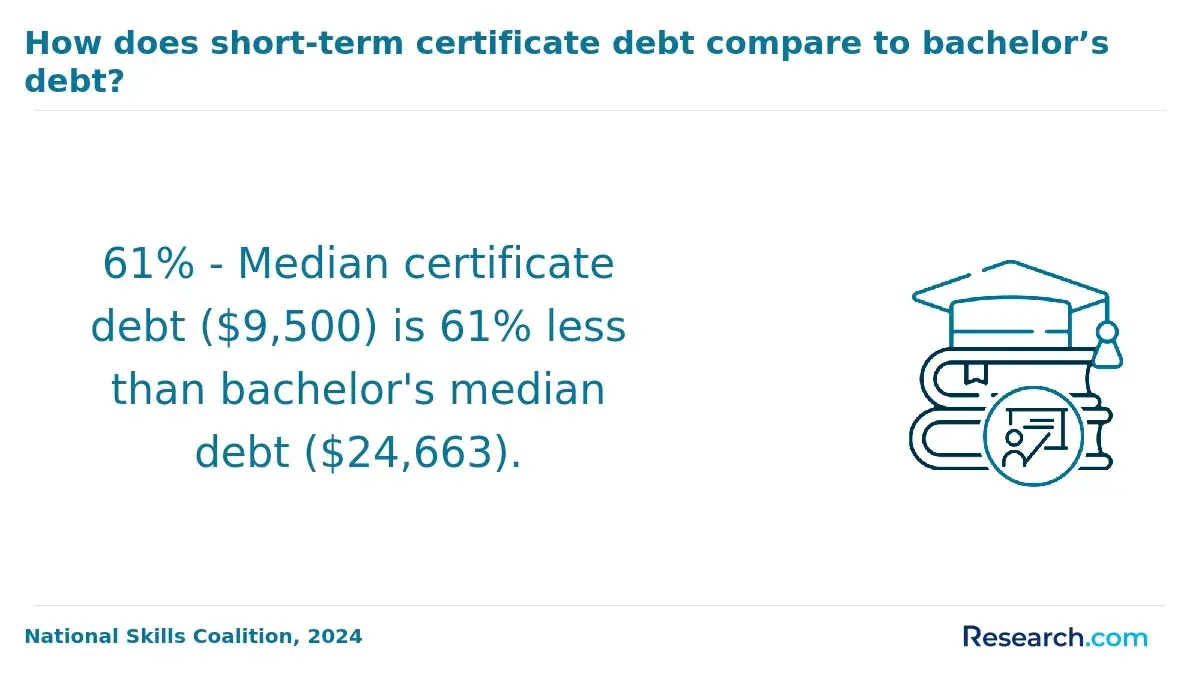
College Board's 2024 pricing data reported average published tuition and fees of $11,610 for in-state students at public four-year institutions and $43,350 at private nonprofit four-year institutions for the 2024-25 academic year. For transfer students, the lesson is not that every online program will match those averages; it is that every extra term and unused credit can materially affect total cost.
The table below shows how to think about cost reduction without assuming that every accepted credit produces equal savings.
| Cost factor | How transfer credits can help | What can reduce the savings |
| Tuition charged per credit | Fewer remaining credits usually means fewer tuition charges. | Transferred credits that count only as unused electives may not reduce required coursework. |
| Program fees | Shorter enrollment may reduce term-based fees. | Some online programs charge technology, assessment, or graduation fees regardless of transfer status. |
| Books and materials | Fewer courses can mean fewer course-material expenses. | Upper-division education courses may have specialized materials or assessment costs. |
| Financial aid timing | A shorter plan can reduce borrowing needs. | Part-time enrollment, satisfactory academic progress rules, and aid limits can affect eligibility. |
| Opportunity cost | Finishing sooner may help students qualify earlier for roles requiring a bachelor's degree. | Licensure, graduate study, or employer requirements may still add time after graduation. |
To compare programs accurately, ask each school for the total remaining credits, estimated tuition for those credits, required fees, and whether any transfer credits are excluded from the degree plan. The cheapest advertised tuition is not always the lowest total cost if the program applies fewer of your prior credits.
Can Prior Learning, Military Training, Exams, or Certifications Count Toward an Online Educational Leadership Degree?
Some online Educational Leadership-related bachelor's programs allow credit for prior learning, military training, standardized exams, workplace training, or professional certifications. This can be especially helpful for adult learners, although education programs tend to review nontraditional credit more carefully than fields where certification-based credit is more common, such as a cybersecurity degree online.
These credit sources may help fill electives, general education requirements, or workforce-related degree components. They are less likely to replace core Educational Leadership courses if the program requires institution-specific outcomes.
- Prior learning assessment: Some schools let students submit portfolios showing college-level learning from work, training, or leadership experience.
- Military credit: ACE-recommended military training may transfer, especially into electives, leadership requirements, or workforce education pathways.
- Standardized exams: CLEP, DSST, AP, or IB credits may satisfy general education or elective requirements if the school accepts the exam and score.
- Professional certifications: Training credentials may count when they align with the degree, but they often require departmental review.
- Employer or union training: Some institutions evaluate documented workplace learning, particularly in adult education or technical education pathways.
Ask whether alternative credits count toward the transfer maximum. A school that accepts up to 90 credits may include prior learning, exam credit, and military credit within that same cap rather than allowing them in addition to 90 transcripted credits.
Do Older College Credits Expire When Transferring Into an Online Educational Leadership Degree?
Older credits do not automatically expire, but they may receive extra scrutiny. General education courses such as English composition, history, or humanities often remain usable for many years, while technology, assessment, education law, special education, data use, and policy-related courses may need to be more current.
The table below shows how schools often treat older credits. Policies vary, so use this as a question guide for admissions, registrar, and program advisors.
| Older credit type | Likelihood of transfer | Reason it may be reviewed carefully |
| English, humanities, social science, and general electives | Often transferable if earned at an accredited institution | Usually less affected by rapid regulatory or technical change. |
| Foundational education courses | May transfer as major credit or electives | Content may need to align with current program outcomes. |
| Educational technology courses | May be limited if outdated | Platforms, accessibility expectations, and instructional tools change quickly. |
| Education law, policy, or compliance courses | Often reviewed closely | Legal and regulatory content can change by state and over time. |
| Field experience or practicum credits | Often difficult to transfer | The receiving school may require supervised experiences under its own standards. |
If your credits are more than a decade old, prepare syllabi, catalog descriptions, or work documentation that shows continued relevance. Also ask whether you can test out, complete a portfolio, or substitute newer professional learning for a course that does not transfer cleanly.
Other Things You Should Know About Educational Leadership
No. A bachelor's degree related to Educational Leadership may support careers in education administration support, training, nonprofit education, or preparation for graduate study, but principal licensure usually requires a master's degree, teaching experience, state-approved coursework, and supervised internship requirements.
Often, yes, especially if the associate degree comes from a regionally accredited college and includes transferable general education courses. However, the school still must evaluate whether those credits satisfy the specific Educational Leadership degree requirements.
It can help if the target university confirms the courses will transfer and apply to your degree. Do not take extra courses first without written approval, because they may transfer only as electives or exceed the program's transfer-credit cap.
Ask for the total remaining credits, remaining major credits, upper-division requirements, residency requirement, estimated total tuition and fees, course schedule, accreditation status, and whether the program supports your intended career or licensure path.
References
- Masters Degree In Educational Leadership (Tier I) - Georgia ONmyLINE https://georgiaonmyline.org/degree-program/albany-state-university/tier-i-masters-degree-in-educational-leadership
- Online Master’s in Educational Leadership — Worcester State https://online.worcester.edu/programs/education/med-educational-leadership-and-administration/
- The Best Online Master's in Educational Leadership Programs https://www.onlinecolleges.net/rankings/best-online-masters-educational-leadership/