2027 Cheapest Accredited Online Educational Leadership Degree Programs: Tuition, Fees, and Financial Aid

Co-Founder and Chief Data Scientist
Choosing an affordable accredited online Educational Leadership degree is not just about finding the lowest tuition line. It means comparing tuition, mandatory fees, licensure costs, financial aid, and the net price you may actually pay. The decision matters because the BLS reported a May 2024 median wage of $104,070 for elementary, middle, and high school principals, but leadership credentials can still be expensive.
This guide is for teachers and education professionals comparing online programs, accreditation, FAFSA options, scholarships, transfer credits, and total program value before enrolling.
Key Things You Should Know
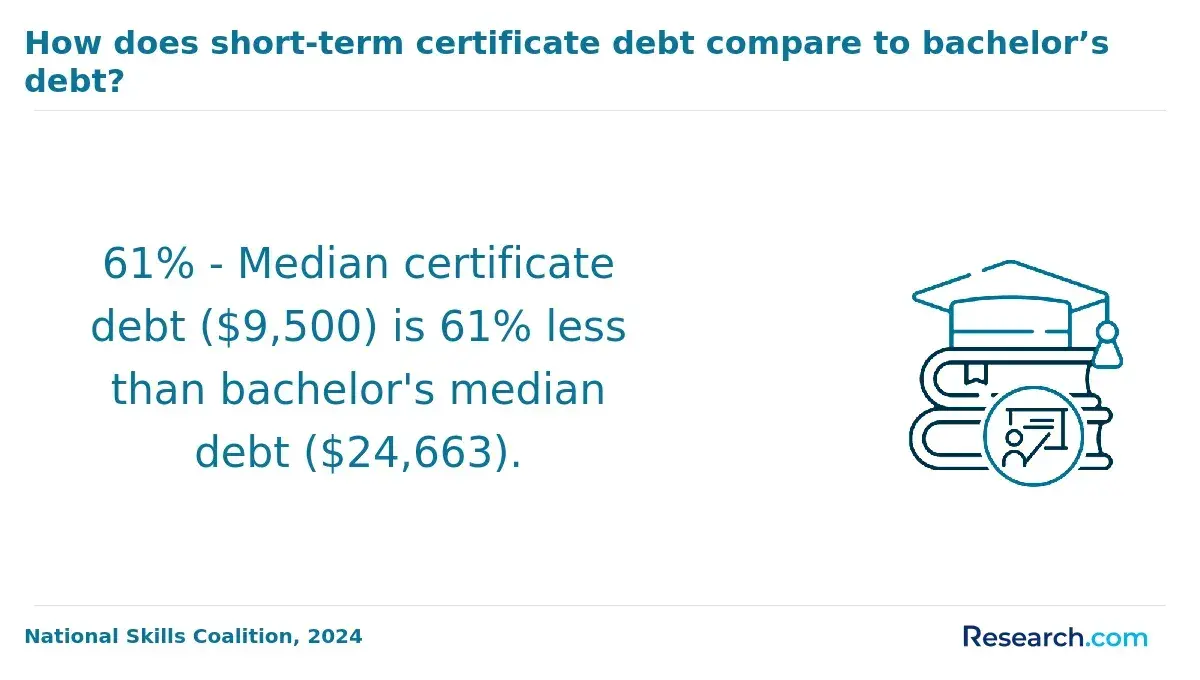
- The cheapest accredited online Educational Leadership options commonly start around $9,500 to $12,240 in published tuition and required program charges, with competency-based programs potentially costing less if completed quickly.
- Online fees, internship fees, licensure exams, background checks, books, and lost scholarship eligibility can change which program is truly cheapest.
- For aid eligibility, verify both institutional accreditation and Title IV participation; eligible graduate students may access up to $20,500 per year in Direct Unsubsidized Loans, while scholarships, grants, district benefits, and transfer credits can reduce borrowing.
What Are the Cheapest Accredited Online Educational Leadership Degree Programs?
The cheapest accredited online Educational Leadership degree programs are usually master's-level programs designed for licensed teachers who want to move into principal, assistant principal, curriculum leadership, instructional leadership, or district-level roles. Some schools also offer Ed.S., Ed.D., or certificate pathways, but the lowest total costs are typically found in 30- to 36-credit online master's programs with flat online tuition.
When comparing programs, treat the figures below as a starting point rather than a final bill. Schools can change rates, and some totals include required fees while others publish tuition separately from per-term, graduation, technology, or licensure-related costs. The most affordable choice is the accredited program that meets your state licensure goal at the lowest net price after aid.
The table below highlights accredited online Educational Leadership programs that are commonly among the lower-cost options based on published online tuition or program-cost information. It focuses on programs that combine relatively low advertised cost with recognized institutional accreditation and, where applicable, educator-preparation approval.
| Program to check first | Typical online degree format | Published cost signal | Why it may be affordable | Accreditation and fit notes |
| Western Governors University | M.S. Educational Leadership, competency-based terms | About $4,125 per 6-month term plus required term fees; total depends on completion speed | Can be one of the lowest-cost choices for students who finish quickly because tuition is charged by term, not by credit | Institutionally accredited; verify state licensure alignment before enrolling. |
| American College of Education | M.Ed. Educational Leadership or related leadership pathway | Program costs are commonly advertised near the sub-$10,000 range for many master's options | Low per-credit tuition and online-first delivery can reduce campus-based fees | Institutionally accredited; confirm whether the specific track meets your state's administrator license rules. |
| Fort Hays State University | Online M.S. in Educational Administration | Published virtual graduate tuition commonly places a 30-credit program near the mid-$9,000 range before any unusual add-ons | Public-university pricing and online tuition can be competitive for out-of-state students | Institutionally accredited; check internship and state approval requirements. |
| Lamar University | Online M.Ed. in Educational Administration | Published total tuition-and-fee figures have commonly been listed under $10,000 for the full program | Accelerated online courses and all-in program pricing make comparison easier | Institutionally accredited; particularly relevant for students pursuing Texas administrator preparation, but out-of-state students must verify portability. |
| Southeastern Oklahoma State University | Online M.Ed. Educational Leadership or school-administration pathway | Published online program pricing often falls around the high-$9,000 range for 30 credits | Low per-credit online tuition and short course blocks can help working teachers control cost | Institutionally accredited; verify state-specific licensure and field-experience rules. |
| University of the Cumberlands | Online master's-level education leadership or administration pathway | Graduate online tuition is commonly around the low-$10,000 range for a 30-credit program before some fees | Competitive private-university tuition may be attractive if the program matches your state requirements | Institutionally accredited; confirm whether the exact program is licensure or non-licensure. |
| Arkansas State University | Online M.S.E. in Educational Leadership | A 36-credit structure at commonly advertised online tuition rates often places total tuition around the low-$12,000 range | Still relatively affordable, though the higher credit count can raise total cost compared with 30-credit programs | Institutionally accredited; useful for students who need a structured administrator-preparation curriculum. |
A few patterns stand out. Competency-based programs can be the cheapest if you complete courses quickly, but they can become less affordable if you need extra terms. Per-credit public university programs are easier to forecast, but the total cost can rise if your state requires extra internship hours, licensure exams, or prerequisite coursework. Private online colleges can be affordable, but you should confirm that the specific degree, not just the institution, fits your career and licensure plan.
How Were the Cheapest Online Educational Leadership Degree Programs Ranked?
The ranking should not be based on advertised tuition alone. A low per-credit rate can be misleading if the program requires more credits, charges high technology fees, limits transfer credits, or does not meet your state's administrator licensure requirements.
A practical ranking method compares the cost a student is likely to pay to complete the credential. The strongest affordability comparison uses the following sequence:
- Confirm institutional accreditation from a U.S. Department of Education-recognized accreditor.
- Identify whether the program is a master's, Ed.S., Ed.D., certificate, licensure, or non-licensure pathway.
- Multiply the required credits by the online tuition rate, or use the school's published total-program price if it includes fees.
- Add mandatory technology, distance-learning, student-services, graduation, background-check, internship, and licensure-related fees.
- Check whether tuition is the same for in-state and out-of-state online students.
- Estimate net price after scholarships, grants, employer tuition benefits, district reimbursement, and transfer credits.
- Compare value indicators such as licensure alignment, completion support, field placement help, faculty experience, and career relevance.
This method favors programs that are both inexpensive and usable. For example, a $10,000 program that leads to the correct principal certification may be a better value than an $8,000 non-licensure leadership degree if your goal is a building-level administrator role.
The table below shows how ranking factors should be weighted when students are looking for the cheapest accredited online Educational Leadership degree without sacrificing eligibility or career fit.
| Ranking factor | Why it matters | How to interpret it |
| Total program cost | Shows the likely full academic charge before aid. | Use total cost rather than per-credit tuition whenever possible. |
| Mandatory fees | Fees can change the cheapest option. | Ask for a written fee estimate for the entire program. |
| Accreditation | Protects transferability, federal aid access, and employer recognition. | Verify the institution and the specific educator-preparation pathway. |
| Licensure alignment | Educational leadership often connects to state administrator credentials. | Do not assume an online program qualifies you in every state. |
| Financial aid availability | Net price may be lower than sticker price. | Compare scholarships, grants, district benefits, and federal loan eligibility. |
| Time to completion | Longer enrollment can increase fees and delay career benefits. | Compare full-time, part-time, accelerated, and competency-based pacing. |
How Can You Verify the Accreditation of an Online Educational Leadership Degree Program?
Accreditation is the first affordability filter because an unrecognized program can cost less upfront but create expensive problems later. In Educational Leadership, you should look at both institutional accreditation and program-specific approval tied to educator preparation or principal licensure.
Use this verification checklist before applying or paying an enrollment deposit:
- Search the institution in the U.S. Department of Education's Database of Accredited Postsecondary Institutions and Programs.
- Confirm that the accreditor is recognized for Title IV federal financial aid purposes.
- Check whether the school participates in federal student aid programs, because accreditation alone does not automatically mean every program is aid-eligible.
- Review the program page for CAEP recognition, state educator-preparation approval, or state licensure disclosures.
- Ask the program director whether the degree meets administrator, principal, or instructional-leadership requirements in your state.
- Confirm whether online fieldwork, internships, and clinical leadership hours can be completed in your local school or district.
- Save written responses from admissions, licensure, and financial-aid staff before enrolling.
The most common red flag is vague language. A school may say it is accredited, but that does not always mean the Educational Leadership degree leads to principal licensure. Another warning sign is a program that advertises national online availability but does not clearly disclose state authorization or licensure limitations.
The table below separates the main types of recognition students often encounter. Understanding the difference can prevent you from paying for a degree that does not support your intended career path.
| Type of recognition | What it tells you | What it does not guarantee |
| Institutional accreditation | The college or university meets broad academic and administrative standards. | It does not automatically confirm principal-licensure eligibility. |
| Programmatic educator-preparation recognition | The education program may meet standards from a body such as CAEP or a state approval agency. | It may not apply to every track, concentration, or state. |
| State licensure approval | The program is designed to meet a specific state's administrator or principal requirements. | It may not transfer cleanly to another state. |
| Title IV eligibility | Students in eligible programs may use federal financial aid. | It does not mean the program is the cheapest after fees and borrowing costs. |
How Much Does an Accredited Online Educational Leadership Degree Really Cost?
The real cost of an accredited online Educational Leadership degree includes tuition, mandatory fees, course materials, fieldwork costs, licensure expenses, and financing costs if you borrow. Tuition is the price of instruction. Mandatory fees are required charges you must pay to enroll or graduate. Total program cost is the full billed academic cost before aid. Net price is what remains after grants, scholarships, tuition benefits, and other gift aid.
Students comparing education leadership options often also compare accelerated degrees in other fields, such as 1 year master's programs, because the same principle applies: shorter does not always mean cheaper unless the full fee schedule and completion timeline work in your favor.
The table below shows how two programs with similar tuition can produce different total costs. The numbers are illustrative categories, not a substitute for a school-issued cost sheet.
| Cost component | Why it affects affordability | What to ask the school |
| Tuition | Largest published cost and easiest to compare. | Is tuition charged per credit, per term, or as a full-program package? |
| Online or technology fee | Can add a required charge each course or term. | Is the online fee included in the advertised price? |
| Student services fee | May be required even for fully online students. | Is it charged every semester or only once? |
| Internship or clinical fee | Educational leadership programs often include supervised field experiences. | Are field-placement support fees required? |
| Licensure exams and background checks | Often paid outside tuition and may be required for administrator certification. | Which exams and clearances are required in my state? |
| Books and digital materials | Some programs use inclusive-access course materials while others do not. | What is the expected materials cost for the full program? |
| Loan fees and interest | Borrowing increases the long-term cost of attendance. | What aid can reduce the amount I need to borrow? |
A simple affordability formula is useful: total published tuition plus mandatory fees plus required out-of-pocket program costs minus grants, scholarships, employer benefits, and transfer-credit savings equals estimated net price. If you borrow, add loan fees and interest when comparing long-term cost.
Which Tuition Models Make Online Educational Leadership Degree Programs More Affordable?
Online Educational Leadership programs use several tuition models. The cheapest model depends on your work schedule, transfer credits, pace, and ability to complete fieldwork without delaying enrollment.
The table below compares common tuition models and the type of student each model usually benefits most.
| Tuition model | How it works | When it can be cheaper | Risk to watch |
| Per-credit tuition | You pay for each credit hour attempted. | Best when the program has a low credit count and limited fees. | Extra credits, prerequisites, or repeated courses raise cost. |
| Flat-rate term tuition | You pay one price for a term and complete as much as allowed. | Best for fast, organized students who can complete courses quickly. | Extra terms can erase the savings. |
| Full-program package price | The school advertises one tuition-and-fee amount for the degree. | Best when the package includes mandatory fees. | Licensure exams, books, and background checks may still be separate. |
| In-state public tuition | Residents receive a lower public-university rate. | Best for students in states with strong online public options. | Some online programs still charge special distance-learning fees.. |
| Same-rate online tuition | Online students pay the same rate regardless of residency. | Best for out-of-state students seeking predictable pricing. | The rate may be higher than a resident public option. |
Flat-rate and competency-based tuition are increasingly visible across graduate education, including business programs such as an MBA in operations management online. For Educational Leadership students, this model is most valuable when you can balance teaching, coursework, and required internship hours without extending into additional billing terms.
To choose the right model, build two estimates: one for your best-case completion timeline and one for a slower timeline. If the slower timeline makes a flat-rate program more expensive than a per-credit program, the predictable per-credit option may be safer.
What Fees and Hidden Costs Should Online Educational Leadership Degree Students Expect?
Hidden costs are not always intentionally hidden; they are often spread across tuition pages, course catalogs, licensure disclosures, and student handbooks. For Educational Leadership students, the biggest surprises usually come from fieldwork, certification, and state-specific requirements.
Before enrolling, request a full cost sheet that includes the following categories:
- Application, transcript-evaluation, enrollment, and graduation fees.
- Technology, online-learning, library, student-services, and course-platform fees.
- Books, e-books, digital access codes, assessment tools, and subscription materials.
- Background checks, fingerprinting, liability insurance, and professional-clearance costs.
- Principal, administrator, or school-leadership licensure exam fees required by your state.
- Internship, practicum, supervision, or field-placement fees.
- Travel costs for any required residency, orientation, assessment, or local fieldwork meeting.
- Tuition increases that may apply if you take longer than the advertised completion timeline.
One common mistake is comparing only the tuition page and ignoring the course schedule. A program with eight-week courses may require continuous enrollment to finish quickly; if your school-year workload forces you to pause, term-based fees can add up. Another mistake is assuming books are minor. In some programs, digital course materials are bundled into each course, while in others students buy them separately.
The safest approach is to ask the bursar, not only admissions, for a written estimate of billed charges. Then ask the program director for non-billed requirements such as exams, clearances, and internship documentation.
How Does FAFSA and Federal Financial Aid Work for Online Educational Leadership Degree Programs?
FAFSA-based federal aid can apply to online Educational Leadership degrees if the school participates in Title IV aid and the student is enrolled in an eligible degree or certificate program. Online delivery by itself does not disqualify a program. The key questions are accreditation, federal-aid participation, enrollment status, satisfactory academic progress, and whether the specific program is aid-eligible.
Graduate students are generally not eligible for Pell Grants, but federal loans may be available. For current federal aid rules, graduate and professional students may borrow up to $20,500 per year through Direct Unsubsidized Loans, and some may use Grad PLUS Loans for remaining eligible costs after a credit check. Borrow only what you need, because loan fees and interest increase total repayment cost.
FAFSA rules apply broadly across online graduate programs, whether a student is comparing education leadership or professional tracks such as online MSW programs. The important step is verifying that the specific online program is included in the school's eligible academic offerings.
Use this process to estimate aid before you commit:
- Complete the FAFSA using the school code for each institution you are considering.
- Ask the financial-aid office whether your exact Educational Leadership program is Title IV eligible.
- Confirm the minimum credits required for half-time graduate enrollment.
- Review your aid offer and separate gift aid from loans that must be repaid.
- Ask whether scholarships or tuition discounts reduce institutional aid, loan eligibility, or both.
- Calculate the remaining net price after grants, scholarships, employer benefits, and any tuition reimbursement.
- Borrow only after comparing monthly repayment estimates and public-service repayment options that may apply to educators.
The FAFSA Simplification changes replaced the Expected Family Contribution with the Student Aid Index, but graduate students should still focus on the aid offer's practical result: how much of the program is covered by gift aid, how much must be paid out of pocket, and how much would become debt.
Which Scholarships, Grants, and Tuition Benefits Can Help Pay for an Online Educational Leadership Degree?
Scholarships, grants, and tuition benefits can make a slightly more expensive accredited program cheaper than the lowest sticker-price option. The key is to identify aid that does not need to be repaid and confirm whether it is renewable for every term of the program.
The table below summarizes common funding sources for online Educational Leadership students and the questions that help determine whether the funding lowers net price.
| Funding source | How it can help | Question to ask |
| Institutional graduate scholarships | Reduce tuition directly at the school. | Is the award renewable for the full program? |
| College of education grants | May support teachers entering leadership or shortage-area roles. | Is the grant limited to licensure-seeking students? |
| School district tuition reimbursement | Employers may reimburse part of tuition after successful course completion. | Must I stay employed in the district for a set period? |
| Union or professional-association scholarships | Can provide smaller awards that reduce out-of-pocket costs. | What membership or service requirements apply? |
| State educator grants | May support leadership development, rural schools, or shortage areas. | Does my program and employment location qualify? |
| Military and veteran benefits | Can reduce or cover eligible tuition and fees. | Does the school certify online graduate education benefits? |
Teachers should also ask human resources about tax-free employer educational assistance. Many employers can provide up to $5,250 per year in qualified educational assistance under federal tax rules, though policies vary by district and employer. This benefit can materially reduce net price if it applies before you borrow.
Be careful with awards that sound generous but are not renewable. A one-term scholarship may lower your first bill but leave later terms unfunded. Ask for the total award value across the full degree, not just the first semester.
Can Transfer Credits, Prior Learning, and Competency-Based Study Lower the Cost of an Online Educational Leadership Degree?
Transfer credits, prior learning, and competency-based study can lower the cost of an online Educational Leadership degree, but only when the school's policies allow them to replace required credits. Many graduate programs limit transfer credit, require a minimum number of credits to be completed at the institution, or reject older coursework.
This cost-saving strategy is common across online degree searches, including fields such as a cybersecurity degree online, but Educational Leadership students must be especially careful because licensure programs often have prescribed coursework and supervised field requirements.
Ask these questions before assuming transfer credits will reduce your bill:
- How many graduate transfer credits can be applied to the Educational Leadership degree?
- Do transferred courses reduce tuition, or do they only satisfy electives?
- Is there a time limit on prior graduate coursework?
- Will transfer credits still count if I am pursuing principal or administrator licensure?
- Does the program require a minimum number of credits taken in residence?
- Can prior leadership experience waive coursework, or is it used only for admission review?
- Will competency-based progress let me complete more courses in the same billing term?
Competency-based programs can be powerful for experienced educators who already understand school law, instructional leadership, assessment, and organizational management. However, they require self-direction. If you need more structure, a low per-credit program with predictable eight-week courses may be a better financial and academic fit.
The biggest mistake is enrolling first and asking about transfer later. Always request a preliminary transfer evaluation before accepting admission, especially if your goal is to reduce total credits and not simply enter with advanced standing.
How Should Students Compare the Net Price, Quality, and Return on Investment of Online Educational Leadership Degree Programs?
The best-value online Educational Leadership degree is not always the cheapest advertised program. It is the program that meets your credential goal, minimizes unnecessary borrowing, fits your schedule, and supports the leadership role you want. For many students, paying slightly more for the right state-approved licensure pathway is more rational than choosing a cheaper non-licensure program that does not qualify them for target roles.
ROI comparisons should include career context, but not promises. The BLS reported a May 2024 median wage of $104,070 for elementary, middle, and high school principals. That figure can help frame the value of administrator preparation, but salaries vary by district, state, school level, union contract, experience, and whether the role requires a principal license.
Students in regulated or credential-sensitive fields face similar trade-offs when comparing options such as an architecture degree, the lowest tuition is not a good deal if the program does not support the credential, licensure, or portfolio outcome the student needs.
Use this decision checklist to compare net price, quality, and return on investment:
- Calculate total program cost using tuition, mandatory fees, books, licensure exams, and fieldwork costs.
- Subtract confirmed grants, scholarships, employer reimbursement, district benefits, and transfer-credit savings.
- Verify institutional accreditation, Title IV eligibility, state authorization, and licensure alignment.
- Compare completion time against your teaching workload and family schedule.
- Review student support, faculty experience, internship placement help, and access to licensure advising.
- Ask whether graduates are eligible for the administrator credential you want in your state.
- Compare debt against realistic salary movement, not against best-case promotions.
- Choose the lowest net-price program that satisfies accreditation, licensure, quality, and career-fit requirements.
Red flags include pressure to enroll before receiving a written cost estimate, unclear accreditation language, no state licensure disclosure, nonrenewable scholarships presented as full-program discounts, and program pages that advertise a low tuition rate without disclosing total required credits. A strong program should make cost, accreditation, and licensure information easy to verify.
Other Things You Should Know About Educational Leadership
Yes, but only if the program is designed and approved for that purpose in the relevant state. Some online Educational Leadership degrees are non-licensure programs for teachers, coordinators, or education professionals who want leadership skills without pursuing a principal credential.
Financial aid options for a 2027 Educational Leadership degree program often include federal loans, scholarships, and grants. Students should complete the FAFSA to determine eligibility for federal assistance and explore specific scholarships offered by their chosen institution.
Many programs are built for working teachers and use asynchronous courses, evening work, or accelerated terms. The harder part is usually the internship or practicum, so confirm whether field hours can be completed at your current school or district.
Admission requirements typically include a bachelor's degree, teaching credentials, and at least two years of relevant work experience. Some programs might also require GRE scores or a personal statement. Check specific school requirements to ensure eligibility for the 2027 academic year.
References
- M.Ed. in Educational Leadership | ACE https://ace.edu/degree-programs/masters-degrees/masters-education/master-of-education-in-educational-leadership/
- Where have people done online Master in Education and Leadership. https://internationalschoolsreview.com/v-web/bulletin/bb/viewtopic.php
- 2025 Most Affordable Online Master's Degrees in Educational Leadership https://www.onlineu.com/most-affordable-colleges/educational-leadership-masters-degrees
- 25 Cheapest Online EdD Programs of 2025 https://www.eddprograms.org/schools/affordable-online-doctor-of-education-programs/
- 15 Cheapest Online Programs in Educational Leadership and Administration https://www.topeducationdegrees.org/cheapest-online-programs-in-educational-leadership-and-administration/
- Most Affordable Online Master’s in Education for 2025 https://www.onlinemastersdegrees.org/most-affordable/education-programs/
- Best Online Degree Programs for Working Adults: A 2026 Ranking and Guide https://www.graygroupintl.com/blog/best-online-degree-programs/
- Scholarships & Financial Aid | North Carolina | American Leadership Academy https://www.alaschools.org/nc/student-services/college/scholarships
- Types of Financial Aid https://www.hhloans.com/types-of-financial-aid/
- 50 Most Affordable Online Master’s in Education Administration (Educational Leadership) - Best Colleges Online https://www.bestcollegesonline.org/most-affordable/online-masters-education-administration/