
2027 Online Curriculum Design Doctorate Programs with No Dissertation Requirement

Co-Founder and Chief Data Scientist
Choosing an online curriculum design doctorate without a dissertation is really a choice about how you want to prove doctoral-level expertise. The stakes are practical: the U. S. Bureau of Labor Statistics reported a $74,720 median annual wage for instructional coordinators in May 2024, showing that advanced curriculum expertise can matter in education and training careers.
This guide is for educators, instructional designers, administrators, and training leaders who want a doctorate but prefer applied work over a traditional dissertation. You will learn how these programs work, what to verify, and when this pathway is worth the investment.
Key Things You Should Know
- Yes, some online curriculum design-related doctorates do not require a traditional five-chapter dissertation, but most replace it with a capstone, applied doctoral project, dissertation-in-practice, or portfolio that still requires research, writing, data analysis, and faculty review.
- The most common no-dissertation pathway is an EdD, not a PhD; a PhD is usually better for students aiming for tenure-track research roles, while an EdD is usually better for applied leadership, curriculum improvement, instructional design, and organizational change.
- Cost and debt should be evaluated carefully because federal graduate loan rates for 2025-26 are 7.94% for Direct Unsubsidized Loans and 8.94% for Grad PLUS Loans, making completion time, transfer credit, and total tuition more important than advertised convenience.
Which Online Curriculum Design Doctorate Programs Do Not Require a Dissertation?
You can earn an online doctorate related to curriculum design without a traditional dissertation, but the exact program title matters. Schools may use terms such as curriculum and instruction, instructional design and technology, learning design, educational leadership, or educational practice rather than "curriculum design" alone.
The table below summarizes the online doctoral program types most likely to fit a no-dissertation search and how to interpret their final project language before enrolling.
| Program type | Common online degree title | Traditional dissertation required? | Typical final requirement | Best fit |
| Professional education doctorate | EdD in Curriculum and Instruction | Often no traditional dissertation, but varies by school | Capstone, applied doctoral project, improvement project, or dissertation-in-practice | K-12 curriculum leaders, instructional coaches, district specialists, academic administrators |
| Learning design doctorate | EdD in Instructional Design, Learning Technologies, or Educational Technology | Sometimes no traditional dissertation | Design-based project, technology integration study, portfolio, or applied research project | Instructional designers, learning experience designers, corporate training leaders |
| Educational leadership doctorate | EdD in Educational Leadership with curriculum-related concentration | Often replaced by applied research | Problem-of-practice study, leadership capstone, or action research project | School administrators, program directors, higher education staff, policy or assessment leaders |
| Research doctorate | PhD in Curriculum and Instruction or Learning Sciences | Usually yes | Original dissertation based on independent research | Future professors, researchers, policy scholars, research-methods specialists |
A strong no-dissertation program should clearly state the culminating requirement in the catalog, not just in marketing copy. Look for course names such as "doctoral capstone," "applied research project," "problem of practice," "scholarly project," or "doctoral portfolio," then confirm whether the requirement is individual or team-based, publishable or practice-based, and completed across multiple courses or at the end of the program.
Common admissions requirements usually include a master's degree, professional experience in education or training, a statement of purpose, transcripts, letters of recommendation, and sometimes a writing sample. GRE requirements are less common in many professional EdD programs, but applicants should verify this directly because policies differ by school.
What Replaces the Dissertation in an Online Curriculum Design Doctorate?
A no-dissertation doctorate does not mean "no research." It means the final doctoral work is usually designed to solve a real curriculum, instruction, assessment, technology, or organizational learning problem rather than produce a traditional academic dissertation.
The table below compares common doctoral completion models so you can see what type of work you would actually be signing up for.
| Completion model | Main purpose | Typical evidence required | How it differs from a dissertation | Reader takeaway |
| Traditional dissertation | Create original scholarly research | Literature review, research design, data collection, analysis, defense, final manuscript | Usually more theory-driven and often designed for academic contribution | Best if you want a research-heavy path or may pursue faculty research roles |
| Capstone project | Apply research to a professional problem | Needs assessment, project design, implementation plan, evaluation, written report, presentation | Usually narrower and more practice-focused than a dissertation | Best if you want to improve curriculum, instruction, training, or learning systems |
| Applied doctoral project | Study and solve a problem of practice | Organizational data, stakeholder analysis, intervention, evaluation, recommendations | May resemble action research but is tied closely to a real workplace or field setting | Best for working professionals with access to a school, district, college, nonprofit, or company setting |
| Dissertation-in-practice | Use scholarly inquiry to improve professional practice | Problem statement, literature base, data-informed intervention, equity or systems analysis, defense | Can be as rigorous as a dissertation but judged by practical impact rather than theory contribution alone | Best for EdD students who want research discipline with a practice-centered outcome |
| Doctoral portfolio | Demonstrate mastery across doctoral competencies | Artifacts, research papers, design products, reflection, oral presentation, faculty assessment | Usually cumulative rather than one long manuscript | Best for students who want to show broad professional growth and applied expertise |
The best replacement depends on your career goal. If you want to lead curriculum redesign in a district, create scalable learning programs for a company, or evaluate instructional interventions, an applied capstone may be more useful than a dissertation. If you want to publish research, teach research methods, or compete for tenure-track roles, a dissertation-based doctorate may offer stronger preparation.
Are Online Curriculum Design Doctorate Programs Without Dissertations Legitimate and Accredited?
Yes, online curriculum design doctorate programs without dissertations can be legitimate and accredited. The key issue is not whether the program uses a dissertation; it is whether the institution is properly accredited, whether the degree requirements are transparent, and whether the credential fits your professional goal.
For U.S. students, institutional accreditation is the first checkpoint. Accreditation from a recognized institutional accreditor helps determine whether the school can participate in federal financial aid, whether credits may be considered by other institutions, and whether employers are more likely to recognize the degree. Programmatic accreditation may also matter in some education fields, but curriculum design doctorates do not always have a required program-level accreditor.
Licensure is where students need to be especially careful. A curriculum design doctorate usually does not by itself grant teacher, principal, superintendent, school psychologist, or counselor licensure.
If your career goal is tied to a regulated role, compare the doctorate with the credentialing rules for that role; for example, students pursuing school psychology should review school psychology programs online accredited by NASP rather than assuming a curriculum-focused EdD will meet school psychology requirements.
Before applying, verify the following details because these are common places where students misunderstand "no dissertation" claims.
- Confirm the school's institutional accreditation through the U.S. Department of Education or CHEA-recognized accreditor listings, not only the school's homepage.
- Read the graduate catalog description of the final doctoral requirement and look for the exact courses tied to the capstone, applied project, portfolio, or dissertation-in-practice.
- Ask whether the final project requires original data collection, human subjects approval, a committee review, a defense, or publication-style formatting.
- Check whether the degree is designed for licensure, endorsement, salary advancement, district leadership, higher education roles, or professional development only.
- Verify online format details, including synchronous class meetings, campus residencies, internships, fieldwork, and required access to a professional site.
Are No-Dissertation Online Curriculum Design Doctorate Programs Easier to Complete?
No-dissertation online doctorates are not automatically easier. They may be more practical, more structured, and sometimes faster to complete, but the final project can still be demanding because it requires doctoral-level problem definition, evidence gathering, analysis, implementation planning, and professional writing.
The main difference is the type of difficulty. A dissertation can be difficult because it is long, independent, theory-driven, and research-intensive. A capstone or applied project can be difficult because it is tied to real stakeholders, real data, workplace constraints, deadlines, and measurable recommendations.
Students often run into trouble when they treat a no-dissertation doctorate as a shortcut. These are the most common mistakes to avoid.
- Assuming "no dissertation" means there is no major writing requirement, when many programs still require a lengthy scholarly report and oral presentation.
- Confusing a capstone with a simple class project, even though doctoral capstones usually require research methods, literature synthesis, and formal evaluation.
- Choosing the fastest advertised program without checking completion rates, faculty availability, or whether the final project is embedded in coursework.
- Ignoring the need for a project site, stakeholder access, student data, curriculum documents, or organizational permission.
- Assuming employers view all doctorates the same way, even though research universities, school districts, nonprofits, and companies may value different doctoral experiences.
A dissertation-free doctorate may feel more manageable for working professionals because the work is connected to their current job. That connection can be a strength, but it can also become a barrier if the student changes jobs, loses access to data, or cannot get approval to study a workplace problem.
How Long Does It Take to Complete an Online Curriculum Design Doctorate Without a Dissertation?
Most online curriculum design doctorates without a traditional dissertation take about three to four years for working adults, although some accelerated formats may be shorter and some part-time paths may take longer. The timeline depends less on the word "dissertation" and more on credit load, transfer credit, project sequencing, residency requirements, and how early the final project begins.
The table below gives a practical timeline comparison for common doctoral structures.
| Pathway | Typical structure | Possible completion pace | Main timeline risk |
| Accelerated online EdD | Short terms, year-round enrollment, limited electives, embedded capstone | About two years in some programs, sometimes less for unusually compressed formats | Heavy workload and limited flexibility if life or work responsibilities change |
| Standard online EdD with capstone | Part-time coursework plus applied project courses | About three to four years | Project approval, data access, or committee feedback delays |
| Part-time professional doctorate | Lighter course load designed for full-time workers | Four or more years | Extended tuition payments and momentum loss |
| Traditional dissertation-based PhD or EdD | Coursework, comprehensive exams, proposal, dissertation, defense | Often longer and more variable | Independent dissertation progress and faculty committee availability |
Accelerated programs can be appealing, but students should read the curriculum carefully. Some 1-year EdD programs online may be designed for students who already have extensive graduate preparation, transfer credits, or a clearly defined professional project, so the advertised pace may not match every applicant's situation.
To estimate your own timeline, ask the school whether the capstone begins in the first year, whether courses are sequential, whether you can pause enrollment, and whether the final project must be completed in a workplace setting. A structured capstone can shorten the path, but only if the program gives students consistent milestones and faculty feedback.
How Much Do Online Curriculum Design Doctorate Programs Without Dissertations Cost?
Costs vary widely because online EdD and curriculum-related doctoral programs usually charge by credit, and total credits can differ substantially. A useful cost estimate should include tuition, fees, books, technology charges, residency travel, project expenses, and loan interest if you borrow.
Use the following simple scenarios to understand how per-credit pricing changes total tuition before fees and interest.
- $45,000 for a 60-credit doctorate priced at $750 per credit
- $72,000 for a 60-credit doctorate priced at $1,200 per credit
- $90,000 for a 60-credit doctorate priced at $1,500 per credit
These examples are not promises of what a specific school will charge; they show why the per-credit rate matters. A program that looks only slightly more expensive per credit can cost much more across 50 to 70 doctoral credits, especially if it requires additional fees or extra terms to finish the capstone.
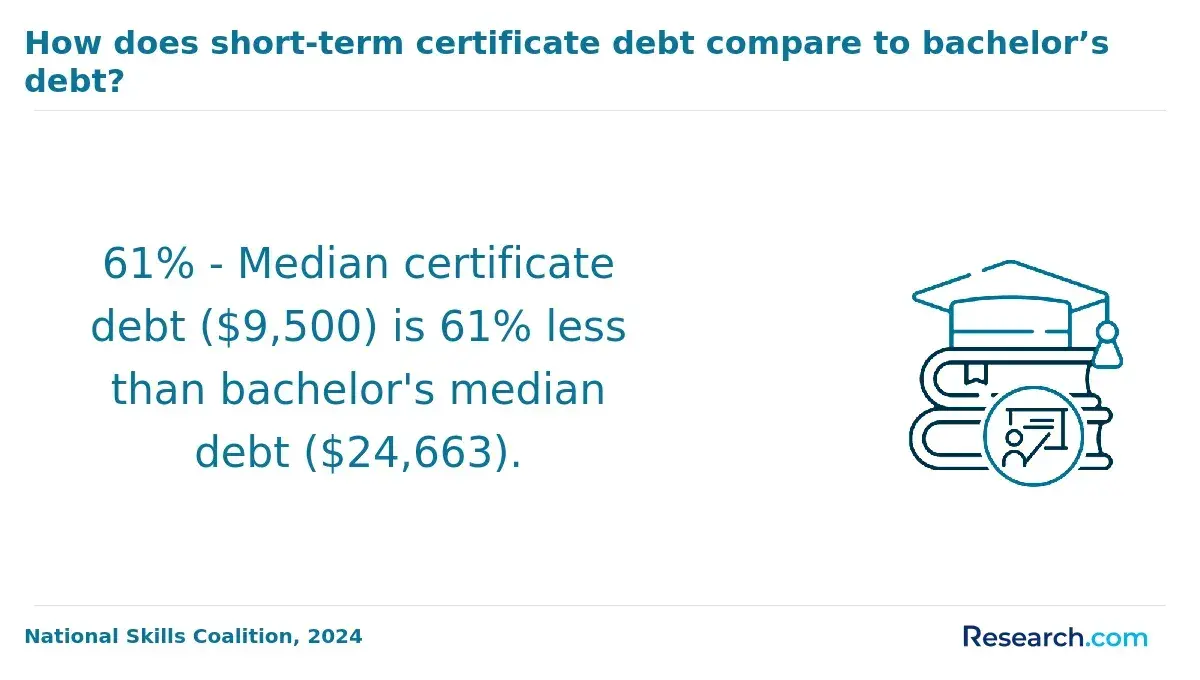
Borrowing costs also matter. Federal Student Aid lists 2025-26 fixed interest rates of 7.94% for graduate Direct Unsubsidized Loans and 8.94% for Grad PLUS Loans, so a slower or more expensive program can increase the long-term cost of the degree. Graduate students can also borrow up to $20,500 per academic year in Direct Unsubsidized Loans before considering Grad PLUS or other options.
Students comparing tuition should look beyond the sticker price. Rankings of the cheapest online EdD programs can help you identify lower-cost options, but affordability still depends on transfer credit, employer tuition assistance, residency costs, and whether the program's final project can be completed on schedule.
Before enrolling, ask the financial aid or billing office for a written cost breakdown that includes all required credits, fees, residency charges, graduation fees, and estimated costs if the capstone extends beyond the planned term. This is especially important for working professionals who plan to pay per term or use employer reimbursement.
Who Benefits Most From an Online Curriculum Design Doctorate Without a Dissertation?
An online curriculum design doctorate without a dissertation is best for experienced professionals who want to use doctoral study to improve learning systems, lead curriculum initiatives, or move into senior education and training roles. It is usually less ideal for students whose primary goal is to become a tenure-track research professor at a university where a traditional dissertation and publication record may carry more weight.
This pathway often fits people in roles where applied evidence matters more than producing original theory. Examples include district curriculum directors, instructional coordinators, assessment leaders, learning and development managers, higher education program directors, online learning administrators, and senior instructional designers.
The degree may be especially useful for students who already have a master's degree and professional access to a real learning problem. If you are earlier in your career, a master's may be a more efficient step first; comparing the best online instructional design master's programs can help you decide whether you need a doctorate now or should build specialized design experience before doctoral study.
A dissertation-free doctorate may be a strong fit if the following conditions describe you.
- You want to lead curriculum, instruction, assessment, or learning technology improvement rather than conduct full-time academic research.
- You already work in a school, district, college, nonprofit, company, or agency where you can study and improve a real instructional problem.
- You prefer structured milestones, faculty coaching, and applied deliverables over a long independent dissertation process.
- You need an online format because you are balancing full-time work, family responsibilities, military service, or geographic limitations.
- You can explain to employers how the capstone or applied project produced evidence-based professional value.
You may want to avoid this pathway if you need a doctorate specifically for research-intensive academic hiring, if your employer requires a dissertation-based doctorate, or if your state licensing board has strict degree-program requirements. In those cases, a traditional PhD or dissertation-based EdD may be the safer choice.
How Does a No-Dissertation Online Curriculum Design Doctorate Affect Career Opportunities?
A no-dissertation online curriculum design doctorate can support career advancement, but its value depends on your role, employer, experience, and how well the program aligns with your career target. Employers typically care about accreditation, relevant expertise, leadership ability, project outcomes, and whether the doctorate helps solve the organization's learning problems.
The labor market for curriculum and learning roles is broad. The U.S. Bureau of Labor Statistics reported a $74,720 median annual wage for instructional coordinators in May 2024, while training and development managers had a median annual wage of $127,090. These figures should not be read as degree guarantees; they simply show the salary context for roles where curriculum, instructional improvement, and learning strategy can be valued.
The table below connects common career paths with the kind of doctoral preparation that may be most relevant.
| Career direction | Typical responsibilities | How a no-dissertation doctorate may help | When a dissertation may matter more |
| K-12 curriculum leadership | Curriculum review, instructional coaching, assessment alignment, teacher support | Applied capstone can demonstrate improvement planning and evidence-based decision-making | University-based research or policy analysis roles may prefer dissertation training |
| Instructional design and learning technology | Design online courses, evaluate learning products, integrate AI or LMS tools, improve learner outcomes | Design-based doctoral project can show practical expertise with technology-enabled learning | Research scientist roles in learning sciences may prefer a PhD |
| Higher education administration | Program assessment, faculty development, online learning quality, accreditation support | Doctoral capstone can align with institutional improvement and assessment needs | Tenure-track faculty roles may require discipline-specific research credentials |
| Corporate learning and development | Workforce training, leadership development, skills programs, learning analytics | Applied doctorate can support senior strategy roles where business impact matters | Academic research roles in organizational learning may value dissertation experience |
Technology is also changing what curriculum professionals do. AI tools are increasingly used to draft learning objectives, analyze learner data, personalize content, and create training simulations, but employers still need experts who can evaluate quality, ethics, accessibility, bias, and instructional effectiveness. A strong doctoral capstone can help students show that they can use evidence, not just tools, to improve learning.
The smartest way to use the degree is to build a portfolio around the final project. Save evidence of needs analysis, curriculum maps, assessment tools, implementation plans, stakeholder communication, and outcome evaluation so you can translate the doctorate into job interviews, promotion reviews, consulting proposals, or leadership applications.
How Do No-Dissertation Online Curriculum Design Doctorates Compare With Traditional Doctorates?
No-dissertation online curriculum design doctorates and traditional dissertation-based doctorates can both be rigorous, but they serve different purposes. The better choice depends on whether you want to become a research producer, an applied leader, or a practitioner-scholar who bridges evidence and practice.
The comparison below shows the most important trade-offs students should weigh before choosing a doctoral structure.
| Decision factor | No-dissertation online EdD or professional doctorate | Traditional dissertation-based doctorate |
| Primary purpose | Apply research to solve a real curriculum, instruction, or learning problem | Produce original research that contributes to scholarship |
| Final product | Capstone, applied doctoral project, portfolio, dissertation-in-practice, or improvement study | Formal dissertation with proposal, research study, committee review, and defense |
| Best career fit | Education leadership, instructional design, curriculum administration, learning and development | Research faculty, policy research, academic scholarship, research-intensive roles |
| Online flexibility | Often designed for working professionals with structured courses | Can be online, hybrid, or campus-based, but independent research may be less predictable |
| Research depth | Applied research and evaluation focused on professional practice | Deeper independent research design and scholarly contribution |
| Completion predictability | Often more structured if the final project is embedded in coursework | Can vary widely depending on dissertation progress and committee feedback |
| Employer perception | Strong when aligned with applied leadership and accredited institution quality | Strong when research training, publication, or academic hiring is central |
The biggest mistake is assuming one format is universally better. A dissertation-free EdD may offer stronger practical value for a district curriculum leader who wants to implement a literacy intervention. A dissertation-based PhD may be the better fit for a student who wants to study curriculum theory, publish peer-reviewed research, or compete for research faculty positions.
Think of the choice as a fit question, not a prestige shortcut. If the final project develops the skills your target employer values, the no-dissertation structure can be a smart choice. If your next step requires deep independent research credentials, a traditional dissertation may be worth the extra time and uncertainty.
How Should Students Choose an Online Curriculum Design Doctorate Without a Dissertation?
Choosing the right online curriculum design doctorate without a dissertation requires more than searching for "no dissertation." You need to verify the academic structure, accreditation, career fit, workload, and total cost before you apply.
Use the following steps to compare programs in a way that protects your time, money, and career plans.
- Start with your career goal and decide whether you need applied leadership preparation, research training, licensure alignment, salary advancement, or a credential for senior education and training roles.
- Confirm the exact degree title and final requirement in the graduate catalog, including whether the program uses a capstone, applied project, dissertation-in-practice, portfolio, or another term.
- Verify institutional accreditation through recognized accreditation sources and check whether any programmatic accreditation or state approval is relevant to your occupation.
- Ask admissions advisors whether the final project requires original data collection, a project site, human subjects review, a committee, an oral defense, or publication-style formatting.
- Compare total cost using credits multiplied by tuition, then add fees, residency travel, books, technology charges, continuation credits, and loan interest if you plan to borrow.
- Review the curriculum for research methods, curriculum theory, instructional design, assessment, learning technologies, leadership, equity, evaluation, and data-informed decision-making.
- Ask how many students finish the capstone on time, how faculty advising works, and what happens if your project site changes during the program.
- Speak with alumni or current students about workload, faculty responsiveness, online course quality, and whether the final project helped with promotion or career movement.
- Check employer expectations before enrolling, especially if you plan to use the doctorate for district salary lanes, administrative advancement, higher education hiring, or consulting credibility.
- Choose the program whose format, final project, cost, timeline, and accreditation best match your specific professional outcome, not just the one with the shortest completion claim.
Good questions can reveal whether "no dissertation" is a meaningful alternative or simply a different label for a major doctoral research requirement. Ask direct questions such as: "How long is the final written project usually?" "Is there a defense?" "What data do students typically collect?" "Can the project be completed at my current workplace?" and "What support is available if my project stalls?"
The best program is not necessarily the fastest or cheapest. It is the one that gives you credible doctoral training, a manageable completion path, and a final project that you can explain clearly to employers, clients, or academic committees.
Other Things You Should Know About Curriculum Design
Yes, if you earn an accredited doctoral degree, you may generally use the title "Doctor" in appropriate professional contexts. Be transparent about the degree type, such as EdD, and follow employer, state, and professional norms.
Many prefer or require professional experience in education, instructional design, training, administration, or a related field. Some programs accept applicants from corporate learning, nonprofit training, healthcare education, or military training backgrounds.
Sometimes. Schools may accept a limited number of post-master's or doctoral-level transfer credits, but capstone, research, and residency courses often must be completed at the degree-granting institution.
They overlap but are not identical. Curriculum design focuses on what learners should learn across courses or programs, while instructional design focuses more on how learning experiences, materials, technologies, and assessments are built.
References
- PhD Career Outcomes by Program https://streamlinedai.app/blog/phd-career-outcomes-by-program
- Graduate Without a Dissertation? Master’s and PhD Options https://premierdissertations.com/graduate-without-dissertation/
- How To Choose The Right Instructional Design PhD Program https://elearningindustry.com/choose-right-instructional-design-phd-program
- How Long a Doctorate Degree Takes: Fast and Slow Doctoral Programs https://www.phds.me/ask-the-expert/how-many-years-is-a-doctorate-degree/
- Breaking the Traditional PhD Timeline- A One Year PhD? - Swiss School of Business Research https://ssbr-edu.ch/breaking-the-traditional-phd-timeline-a-one-year-phd/
- Online PhD Programs in Curriculum and Instruction https://aituedu.org/online-phd-programs-in-curriculum-and-instruction/
- What Is a Non-Dissertation Doctorate, and Is It Right for You? https://www.snu.edu/blog/what-is-a-non-dissertation-doctorate-and-is-it-right-for-you
- 2025 Most Affordable Online Doctorates in Education https://www.onlineu.com/most-affordable-colleges/education-doctoral-degrees
- 90+ Online Ed.D. Programs With No Dissertation in 2026 https://www.eddprograms.org/schools/no-dissertation/


