2027 Online Criminal Justice Degree Programs With No Letters of Recommendation Required

Co-Founder and Chief Data Scientist
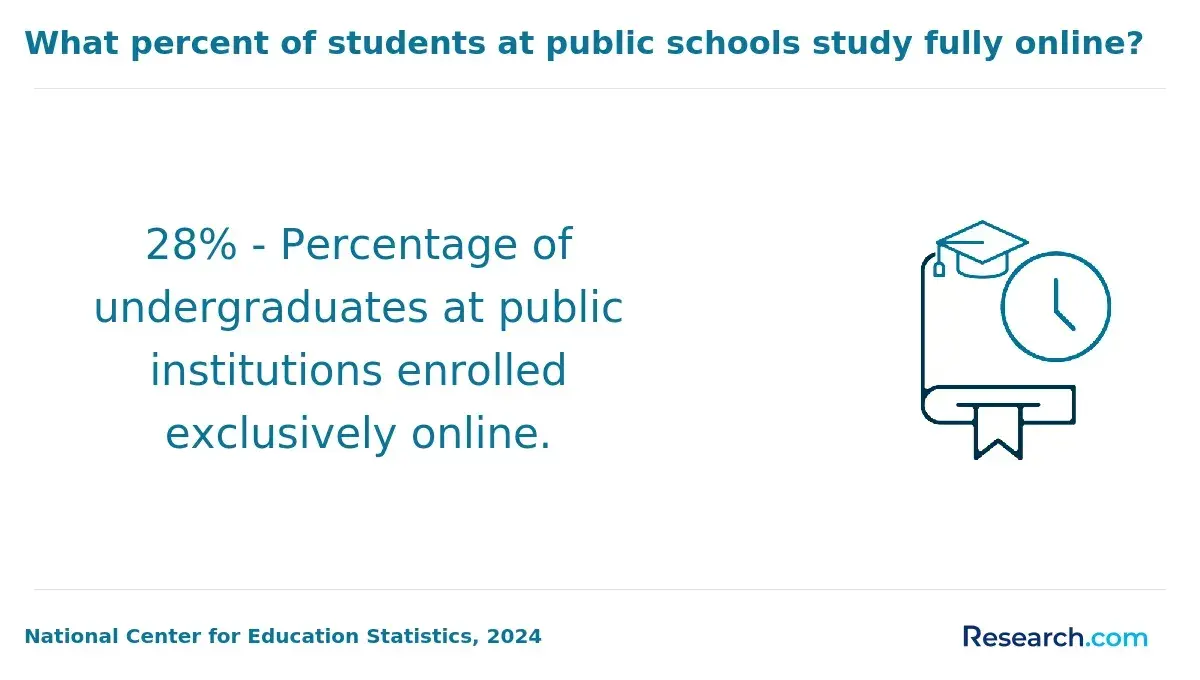
Applicants returning to school often do not have recent professors or supervisors available to write recommendations. Online criminal justice programs can offer a more streamlined route, especially at the undergraduate level. National Center for Education Statistics data show that about 54% of U.S. postsecondary students took at least one distance education course in fall 2022, reflecting how common flexible study has become.
This guide explains which programs may not require letters, what they review instead, and how to compare quality, cost, transfer policies, and career relevance before applying.
Key Things You Should Know
- "No letters of recommendation required" means the school does not require recommendation submissions for the specific degree and applicant type; transcripts, a minimum GPA, identity documents, an essay, or placement testing may still apply.
- Recommendation-free admissions are most common for associate and bachelor's criminal justice programs; graduate programs frequently use letters to assess academic readiness, professional judgment, and research potential.
- Compare institutional accreditation, total tuition, transfer-credit limits, practicum expectations, and career alignment - not application simplicity alone. For context, average 2023-24 published tuition and fees were $11,610 at public four-year institutions and $41,540 at private nonprofit four-year institutions, according to NCES.
Which Online Criminal Justice Degree Programs Require No Letters of Recommendation?
Many online undergraduate criminal justice programs do not ask for recommendation letters, particularly schools designed for adult learners, transfer students, and applicants seeking multiple start dates. Requirements can change by term, residency status, degree level, and applicant background, so a program should be treated as "no recommendations required" only when its current application checklist expressly omits them.
The examples below illustrate common types of online undergraduate programs whose published admissions processes have generally emphasized an application and transcripts rather than recommendation letters. Confirm the requirement directly with the institution before paying an application fee or enrolling.
| Institution and online program type | Typical degree level | Common application materials | Recommendation-letter status to verify |
| Southern New Hampshire University criminal justice program | Bachelor's | Application and prior-school transcripts | Generally not listed for undergraduate admission |
| Purdue Global criminal justice program | Bachelor's | Application, transcripts, and identity or enrollment documentation | Generally not listed for undergraduate admission |
| Arizona State University Online criminology and criminal justice program | Bachelor's | Application, academic records, and applicable admission pathway materials | Typically not part of standard first-year admission materials |
| Colorado State University Global criminal justice program | Bachelor's | Application and official transcripts | Typically not listed for undergraduate admission |
These are not endorsements or guarantees of admission. Some schools request extra documents when a transcript is incomplete, an applicant seeks an exception, or a student applies to a graduate certificate or master's program. A student considering adjacent investigative or technology-focused work may also compare an online cyber security degree, since cybercrime and digital evidence roles can call for more technical preparation than a general criminal justice curriculum provides.
To verify a program's policy, use the program-specific admissions page rather than a general university admissions page. Ask whether letters are required, optional, accepted but not reviewed, or waived only for applicants meeting a stated GPA or transfer-credit threshold.
What Are the Admission Requirements for Online Criminal Justice Degree Programs With No Recommendation Letters?
A no-recommendation policy removes one document from the application; it does not eliminate admissions review. Associate and bachelor's programs commonly focus on prior academic records and whether applicants meet baseline institutional eligibility rules. Graduate criminal justice programs usually have more extensive requirements because coursework may involve policy analysis, research methods, leadership, or specialized justice practice.
The following comparison shows what applicants commonly encounter by degree level. Exact GPA thresholds, prerequisite courses, and testing policies vary by institution.
| Application item | Associate or bachelor's program | Master's program |
| Completed application | Usually required | Usually required |
| Official transcripts | Usually required | Usually required from all postsecondary schools |
| High school completion or equivalent | Usually required for first-year applicants | Not usually relevant if a bachelor's degree is required |
| Minimum GPA | May apply, especially for direct admission | Commonly required |
| Personal statement or essay | Often optional or not required | Frequently required |
| Resume and relevant experience | Sometimes requested | Often requested |
| Standardized test scores | Often test-optional or not required | GRE policies vary; many programs do not require it |
| Letters of recommendation | Often not required | Common, unless the program explicitly waives them |
Applicants should prepare records early because transcript processing, not the online form, can be the slowest part of admission. If a school uses conditional admission, ask what academic performance is required in the first term to remain enrolled and whether conditional status affects financial aid or access to upper-level courses.
Are Online Criminal Justice Programs With No Letters of Recommendation Easier to Get Into?
They may be easier to apply to, but they are not automatically easier to enter or complete. Removing letters reduces dependence on third parties and can help working adults, military-affiliated students, career changers, and people who have been away from college. The school may still assess transcripts, prior coursework, GPA, writing readiness, and capacity to meet academic policies.
A streamlined process should not be confused with open admission, guaranteed admission, or lower academic standards. Criminal justice coursework commonly includes criminology, corrections, policing, constitutional law, ethics, research methods, and statistics. Students who struggle with academic writing or quantitative research may need tutoring or introductory coursework regardless of the recommendation policy.
Consider the trade-off in practical terms: a school with fewer application barriers can be a good fit when your record clearly demonstrates readiness, but a more selective program may offer specialized faculty, field experiences, or a curriculum better aligned with your goal. Admission requirements are only one part of value.
Before applying, ask admissions staff whether the program has any of the following conditions that could affect your path:
- A required college-preparatory, English, math, or statistics prerequisite.
- A minimum cumulative GPA for transfer admission or progression into upper-division coursework.
- A background check, immunization record, or separate screening requirement for internships or agency placements.
- State-specific residency, professional eligibility, or field-placement restrictions.
Applicants should be especially careful if a school markets "easy acceptance" while providing little information about accreditation, faculty, curriculum, student support, or total cost. Transparent schools explain both access requirements and academic expectations.
What Do Online Criminal Justice Programs Evaluate Instead of Letters of Recommendation?
Letters normally give admissions committees outside evidence of an applicant's reliability, writing ability, professional conduct, and potential. When letters are not required, institutions generally rely more heavily on objective records and applicant-supplied materials. This approach can be helpful for applicants with strong transcripts or relevant employment but limited access to academic references.
Schools may use the following materials to build an admissions picture without recommendation letters:
- Official transcripts to confirm degree completion, transfer eligibility, course history, and GPA.
- A personal statement to assess goals, communication skills, interest in justice work, and readiness for online learning.
- A resume to document public safety, military, social services, corrections, legal support, security, or community-service experience.
- Employment history or professional credentials when applicants seek credit evaluation or graduate admission.
- Writing samples, interviews, or placement assessments at institutions using individualized review.
Use these materials strategically. A concise statement should explain why criminal justice fits your career plan, identify any relevant experience, and address an academic gap only if the application asks for context. Do not assume an essay is unimportant merely because it replaces letters; it may be the clearest evidence of your judgment and communication skills.
Criminal justice is broad, so connect your application to a realistic direction such as corrections, probation support, victim advocacy, emergency management, fraud investigation, or policy analysis. Students who are still comparing fields may find that a list of fun majors in college that pay well helps place criminal justice alongside other career-oriented academic options.
How Can You Tell if an Online Criminal Justice Degree With No Recommendation Requirement Is Accredited and Legitimate?
Accreditation is more important than whether a program requires recommendations. For most criminal justice degrees, institutional accreditation from an accreditor recognized by the U.S. Department of Education or the Council for Higher Education Accreditation is the central quality check. It affects credit transfer, federal aid eligibility, employer confidence, and eligibility for future graduate study.
Use this process to verify a school before applying or transferring credits:
- Confirm the institution's accreditation status in the U.S. Department of Education's Database of Accredited Postsecondary Institutions and Programs.
- Match the legal school name and campus or online division to the listing; similar names can be misleading.
- Review the criminal justice curriculum, faculty credentials, course delivery format, and student-support services.
- Ask whether internships, field experiences, or background checks are required and whether the school arranges placements in your state.
- Request a written estimate of tuition, mandatory fees, transfer credits accepted, and time remaining to graduate.
- Check whether your intended job has agency, civil-service, certification, or state requirements beyond the degree.
Most criminal justice roles do not require a single universal programmatic accreditor in the way some health professions do. That makes institutional accreditation, transparent outcomes information, and curriculum relevance particularly important. A specialized credential can still matter for a chosen path: for example, behavior-focused justice or human-services interests may lead some students to review BCBA programs online, which follow a different professional preparation and certification route.
Legitimacy red flags include pressure to enroll immediately, unclear accreditation language, missing faculty information, unexplained fees, promises of law-enforcement employment, and claims that a degree alone qualifies graduates for police certification. Police hiring standards and academy requirements are set by agencies and states, not by a general online degree.
How Much Do Online Criminal Justice Degree Programs With No Letters of Recommendation Cost?
No-recommendation admissions do not determine tuition. Online criminal justice costs depend on school type, residency rules, whether tuition is charged per credit or per term, transfer credits, course-load pace, fees, and financial aid. Published tuition is a starting point rather than the amount every student pays.
NCES reported average published tuition and fees for 2023-24 of $11,610 at public four-year institutions and $41,540 at private nonprofit four-year institutions. Those figures are broad campus-based benchmarks, not online criminal justice price quotes, but they show why students should compare the full institutional cost instead of judging a program by a monthly payment or a single per-credit figure.
This table identifies the cost items that are most useful when comparing online options.
| Cost factor | Why it matters | What to confirm |
| Tuition model | Per-credit and flat-rate terms create different costs at different enrollment speeds. | Rate, number of credits required, and future tuition increases. |
| Transfer credit | Accepted credits can reduce remaining courses and total tuition. | Maximum transfer limit and applicability to major requirements. |
| Mandatory fees | Technology, graduation, course-material, and service fees can add to the bill. | Which fees apply to fully online students. |
| Course materials | Digital textbooks may be included, rented, or billed separately. | Estimated materials cost for a typical term. |
| Field experience expenses | Travel, background checks, and screening may be the student's responsibility. | Whether the program requires local placement costs. |
Ask for a net-price estimate after transfer review and financial aid, then compare the projected total cost to your career target. A criminal justice bachelor's may support entry into many public safety, compliance, and social-service-adjacent roles, but it is not a substitute for agency training, graduate credentials, or technical expertise where employers require them. Students considering supervisory business roles after gaining justice experience may eventually compare an MBA AACSB online option, though an MBA should be chosen for a defined advancement goal rather than as an automatic next step.
Can You Get Financial Aid for an Online Criminal Justice Degree With Streamlined Admissions?
Yes. Online enrollment and the absence of recommendation letters do not by themselves prevent a student from receiving federal financial aid. Eligibility depends primarily on the student, the institution, the program, enrollment intensity, satisfactory academic progress, and other federal rules. Students should complete the Free Application for Federal Student Aid as early as possible and follow their school's aid timeline.
Federal grants, Direct Loans, work-study opportunities where available, employer tuition assistance, military education benefits, state programs, and institutional scholarships can all be relevant. Recommendation letters may be required for a separate scholarship application even when they are not required for admission, so review each funding opportunity independently.
Before accepting aid, compare the financial-aid offer with the program's actual billing schedule. A school using frequent short terms may distribute aid differently from a traditional semester calendar. Students should also ask whether withdrawing from a course, dropping below half-time enrollment, or failing to meet academic progress standards could change future eligibility.
A practical financial review should include the following questions:
- Is the institution eligible to participate in federal student aid programs?
- What is the estimated net price after grants, scholarships, military benefits, and employer support?
- Which charges are billed each term, and which are paid separately?
- How many credits must be taken to receive the aid amount shown?
- What loan amount is necessary after using nonrepayable aid first?
Borrow only after comparing expected debt with likely entry-level opportunities in your target region and role. Salary, hiring standards, and advancement prospects vary substantially among law enforcement, corrections, nonprofit services, government administration, security, and private-sector compliance work.
How Long Does an Online Criminal Justice Degree With No Letters of Recommendation Take to Complete?
Program length depends on degree level, transfer credit, course sequence, and how many courses a student takes each term - not on whether recommendation letters are required. A full-time associate degree commonly requires about two years, while a bachelor's degree commonly requires about four years without transferred coursework. Accelerated calendars can shorten the time between course starts, but students still need to complete all required credits and meet academic standards.
The table below gives planning ranges rather than guarantees. Transfer evaluations and required prerequisites can change an individual timeline.
| Credential | Typical credit expectation | Common completion pattern | Best suited for |
| Associate degree | About 60 credits | About two years full-time | Students seeking an entry-level credential or a transfer foundation |
| Bachelor's degree | About 120 credits | About four years full-time before transfer credit | Students seeking broader preparation for justice, public service, or administrative roles |
| Master's degree | Varies by curriculum | Often one to two years full-time | Professionals pursuing specialization, leadership, policy, or research preparation |
Working students should examine course availability, not only advertised completion time. If required courses are offered in sequence or only during certain terms, taking one class at a time can extend the timeline. Ask whether courses are asynchronous, whether live attendance is required, and whether internships must be completed during business hours.
For students who need stronger analytical preparation, criminal justice research methods can involve data interpretation and basic statistics. Exploring online math degrees may be useful for those considering crime analysis, intelligence analysis, research, or data-heavy public-sector careers.
Can You Transfer Credits Into an Online Criminal Justice Degree Program With No Recommendation Letters?
In many cases, yes. Transfer credit is evaluated separately from admission requirements, so a program that does not require recommendations may still conduct a detailed review of prior coursework. Credits are more likely to transfer when they come from an institutionally accredited school, meet minimum grade standards, and align with the receiving institution's general education or criminal justice requirements.
Transfer policies can have a larger effect on cost and completion time than admissions paperwork. A school may accept a substantial number of credits overall but apply fewer credits to the criminal justice major, leaving students to complete core courses in residence.
Before choosing a program, request an official or preliminary transfer evaluation and ask these targeted questions:
- How many total credits may transfer, and how many may apply specifically to the criminal justice major?
- What minimum grade is required for transfer credit?
- Will prior law enforcement academy, military, professional training, CLEP, or prior-learning assessment credit be considered?
- What is the residency requirement, meaning the minimum number of credits that must be completed through the new institution?
- Will transferred courses satisfy statistics, research methods, ethics, or upper-level requirements?
Do not withdraw from a current school or assume a course will transfer based on a verbal estimate. Get the evaluation in writing, preserve course descriptions and syllabi, and compare the remaining degree plan before making an enrollment decision.
How Should You Compare Online Criminal Justice Degree Programs That Do Not Require Letters of Recommendation?
The best option is not necessarily the one with the shortest form or fastest admissions decision. A strong comparison starts with your intended use for the degree: agency employment, promotion, corrections, victim services, legal support, private security, compliance, graduate school, or a career change. Employers generally focus more on the degree's legitimacy, your skills, relevant experience, and any required agency qualifications than on whether your application included recommendations.
Use the following comparison framework after verifying that a program truly does not require letters for your applicant category:
- Confirm institutional accreditation and check that the credential appears on the school's official academic catalog.
- Compare the required curriculum, especially courses in law, ethics, research methods, diversity, corrections, policing, and cybercrime if relevant.
- Calculate total estimated cost after transfer credit and aid rather than comparing only advertised tuition rates.
- Review online delivery expectations, including deadlines, proctored exams, group projects, synchronous sessions, and internship requirements.
- Match concentrations and electives to your intended occupation instead of selecting a broad program solely because admission is simple.
- Ask for written answers about transfer credit, time to completion, field placement, withdrawal rules, and whether recommendations are ever needed for scholarships or special tracks.
Career outcomes should be interpreted carefully. The U.S. Bureau of Labor Statistics reported a 2024 median annual wage of $77,270 for police and detectives, but this occupation has agency-specific hiring, academy, physical, background, and residency requirements; an online criminal justice degree alone does not qualify someone for the role. Other graduates may work in corrections, court administration, security management, social services, investigations support, or compliance, where duties and pay differ.
A no-recommendation program is a sensible choice when you need a practical admissions pathway and the school also meets your quality, budget, and career criteria. It may be a poor fit if you need a highly specialized clinical, forensic, research, or law-enforcement training pathway that the online curriculum cannot provide. Compare the degree plan with actual job postings and agency requirements in the location where you expect to work.
Other Things You Should Know About Criminal Justice
Often, yes. Streamlined undergraduate admissions can be especially useful for adult learners without recent academic references. You will still usually need official transcripts or proof of high school completion, and some schools may request additional information if your academic record is incomplete.
Only submit them if the school says optional letters are accepted and reviewed. Unrequested materials may not be added to the application file. A stronger transcript, resume, or required personal statement is usually a better use of time when letters are not part of the review process.
Not by themselves. Police departments and state training systems set their own hiring, background, physical fitness, academy, age, citizenship, and education rules. A criminal justice degree can support preparation for some roles, but applicants should check requirements with the specific agency.
Verify them immediately before submitting your application and again if you defer to a later term. Review the program-specific checklist and ask admissions for written confirmation that no letters are required for your degree level, start date, and applicant category.
References
- 2025 Most Affordable Online Criminal Justice Degrees https://www.onlineu.com/most-affordable-colleges/criminal-justice-degrees
- Online Criminal Justice Degrees (Types, Benefits & FAQ) https://www.allcriminaljusticeschools.com/criminal-justice/criminal-justice-online-degree/
- Does the Letter of Recommendation Still Matter in College Admissions? https://www.saraharberson.com/blog/letter-of-recommendation-still-matter-college-admissions
- Financial Aid And Scholarships For Criminal Justice Degrees https://www.accreditedschoolsonline.org/criminal-justice-degree/financial-aid-scholarships/
- Financial Aid Tips for Criminal Justice Students https://www.criminaljusticeprograms.com/financial-aid/
- Earn An Online Criminal Justice Degree | OEDb.org https://www.oedb.org/rankings/online-criminal-justice-programs/