2027 Fastest Accredited Online Criminal Justice Master's Programs With No Thesis Requirement

Co-Founder and Chief Data Scientist
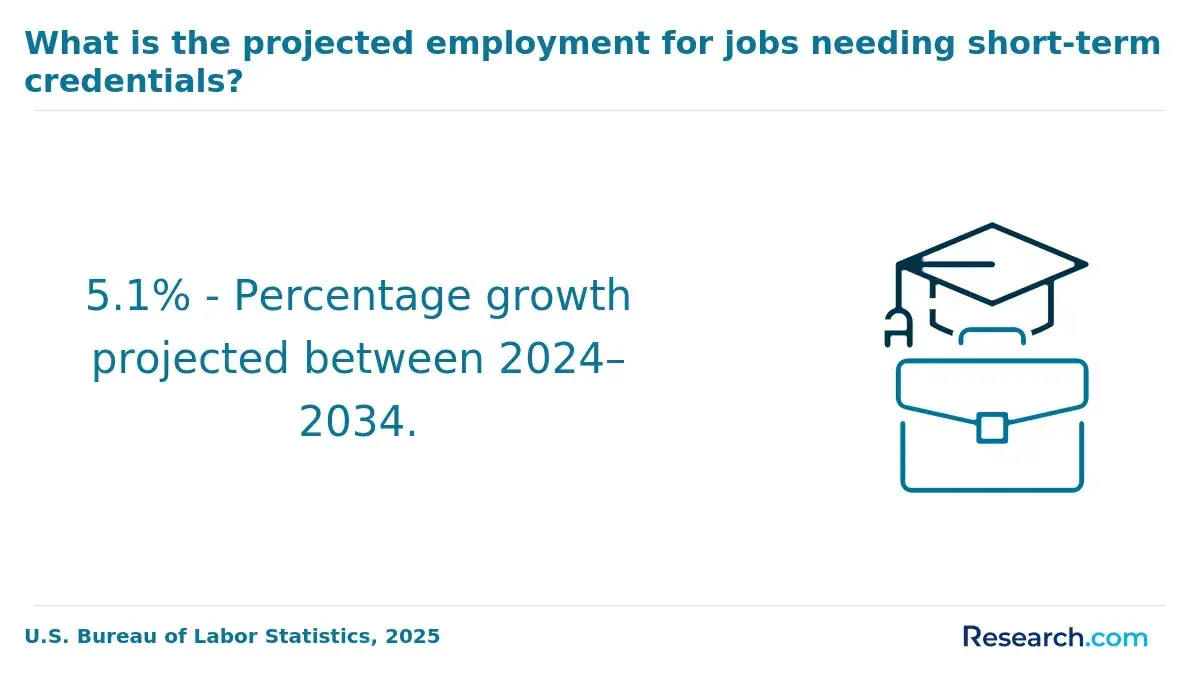
A thesis can add semesters to a criminal justice master's degree, which is why many working professionals seek accredited online programs with applied capstones or comprehensive exams instead. The U.S. Bureau of Labor Statistics projects 4% employment growth for police and detectives through 2033, underscoring continued demand for advanced public-safety expertise.
This guide compares legitimate no-thesis options, explains what "fastest" really means, and helps professionals, career changers, and future doctoral applicants choose a program that fits their goals.
Key Things to Know About the Fastest Accredited Online Criminal Justice Master's Programs
- Accredited online criminal justice master's programs commonly require about 30 to 36 credits; an accelerated full-time pace can make completion in roughly 12 to 18 months possible, while part-time study generally takes longer.
- A no-thesis degree is not necessarily a low-rigor degree: schools may require a policy capstone, applied research project, internship, portfolio, or comprehensive examination instead.
- Institutional accreditation is the essential legitimacy check; students considering doctoral study should also confirm that the no-thesis curriculum includes research methods, statistics, and a substantial faculty-supervised project.
Are there accredited Criminal Justice master's programs that don't require a thesis?
Yes. Many regionally or institutionally accredited U.S. universities offer online Master of Science, Master of Arts, or Master of Criminal Justice programs that do not require a traditional thesis. These programs normally retain graduate-level core coursework in criminological theory, research methods, ethics, policy, administration, or justice-system analysis, but substitute a practice-oriented culminating experience for an original thesis.
"No thesis" does not mean "no final requirement." It means the degree plan does not require a lengthy original research manuscript defended before a committee. Students should read the current graduate catalog rather than relying on a marketing page, because some universities offer both thesis and non-thesis plans, and requirements can differ by concentration or campus.
The comparison below shows the practical distinction prospective students should understand before prioritizing speed.
| Feature | Thesis track | No-thesis track |
| Main purpose | Develop original research and scholarly writing | Apply research and professional knowledge to practice |
| Typical final requirement | Faculty-supervised thesis and defense | Capstone, comprehensive exam, applied project, internship, or portfolio |
| Best fit | Students considering research-intensive doctoral study | Working professionals seeking advancement or specialized practice skills |
| Pacing risk | May extend if research approval, data collection, or revisions take longer | Usually follows scheduled course terms, though projects still require planning |
| Research preparation | Deep experience designing and reporting an independent study | Varies substantially by curriculum and final assessment |
For most management, investigations, policy implementation, corrections, emergency-management, and community-safety roles, a no-thesis format can be appropriate. For applicants who may pursue a PhD soon after graduation, the answer is more conditional: select a program with methods training and an applied research component, or choose a thesis route.
What replaces thesis requirements in fast-track Criminal Justice master's programs?
Fast-track programs usually replace a thesis with an assessment designed to demonstrate that students can synthesize graduate coursework and use evidence in a professional setting. The alternative matters more than the label. A well-designed capstone involving data analysis and a written policy recommendation can be more relevant to an employer than a purely theoretical paper, while an exam-only option may provide less evidence of applied work.
Ask admissions staff which culminating requirement applies to your exact online degree plan and whether it is completed individually, with a team, or through a timed examination. Common alternatives include the following.
- Applied capstone project: Students analyze a real criminal justice problem, such as evidence-based policing, recidivism reduction, victim services, or organizational policy.
- Comprehensive examination: Students demonstrate mastery of core concepts, often through written responses, case analysis, or an online proctored assessment.
- Professional portfolio: Students assemble analytical work, program evaluations, policy memos, and other artifacts completed across the curriculum.
- Internship or practicum: Students complete supervised field-based work and usually submit reflective or analytical assignments.
- Research paper or directed study: Students complete a shorter faculty-guided research project without the formal thesis process.
Do not assume a capstone is automatically easier than a thesis. It can demand extensive research, collaboration, presentations, and revision. The key advantage is predictability: capstone work is often embedded in a scheduled final course, whereas thesis timelines can depend on proposal approval, human-subjects review, access to data, and committee feedback.
How rigorous are Criminal Justice master's programs without thesis requirements?
A credible no-thesis criminal justice master's program should remain rigorous through graduate-level admissions standards, sequenced coursework, faculty assessment, research literacy, and a meaningful culminating requirement. Speed comes from compressed terms, year-round calendars, and fewer thesis-specific milestones - not from eliminating academic standards.
Rigor is easier to evaluate through curriculum evidence than through promotional phrases such as "accelerated." Review the catalog for research methods, statistics or data analysis, criminological theory, policy evaluation, ethics, and a final assessment. Also examine whether instructors are active criminal justice scholars or experienced practitioners and whether online students receive substantive feedback.
These signals can help distinguish a compressed but credible degree from a program that simply moves too quickly for its workload.
| Stronger rigor signals | Questions or red flags |
| Required research methods and evidence-analysis coursework | No clear methods, statistics, or research-literacy component |
| A published curriculum with credit totals and course descriptions | Vague claims about completion time without a term-by-term plan |
| Faculty-supervised capstone, project, or examination | No explanation of what replaces the thesis |
| Regular feedback, office hours, and academic support for online learners | Difficulty identifying faculty access or student-support policies |
| Institutional accreditation and transparent graduate catalog policies | Claims of "accreditation" without naming a recognized accreditor |
Students moving into crime analysis, intelligence, digital investigations, or administrative roles may benefit from adding quantitative coursework. Those comparing analytical career paths can also explore a master's degree in data science online, particularly when their career target emphasizes data management, forecasting, or technical analytics more than justice administration.
What are the fastest accredited online Criminal Justice master's programs?
The fastest legitimate options are usually online programs with approximately 30 credits, multiple start dates, short terms, and a required full-time course load. A published "as few as" timeline is not a personal guarantee: transfer-credit rules, prerequisite needs, course availability, work schedules, and capstone sequencing can change the actual finish date.
The programs below are examples of established universities that have advertised online criminal justice master's pathways with non-thesis completion options or applied culminations. Verify the current catalog, residency requirements, and specific completion plan directly with each institution before applying.
| University and online program | Published credit load or structure | Common advertised pace | What to confirm |
| University of West Florida, M.S. in Criminal Justice | 30 graduate credits | Accelerated options may support completion in about 12 months for qualified full-time students | Current capstone or exit requirement, concentration availability, and course rotation |
| University of North Alabama, M.S. in Criminal Justice | Graduate curriculum typically structured around 30 credits | Accelerated online pacing may support completion in about 12 to 18 months | Whether a thesis option is elective or required for the selected plan |
| University of Cincinnati, M.S. in Criminal Justice | Online graduate curriculum with specialized coursework | Often designed for working professionals; pace depends on enrollment intensity | Current credit total, culminating assessment, and whether full-time acceleration is available |
| Boston University, M.S. in Criminal Justice | Graduate program with online course delivery options | Timeline varies by course load and transfer-credit evaluation | Residency expectations, final project requirements, and term scheduling |
Use this table as a shortlist, not a ranking. "Fastest" should mean the shortest realistic path that still gives you the skills your next role requires. If leadership and budgeting are central to your intended move into public-sector management, compare the curriculum with MBA programs online before deciding that a criminal justice specialization is the better return on investment.
Before accepting an offer, request a written degree map showing required courses by term. Confirm whether you must take one, two, or more courses at a time, whether courses are synchronous, and whether the capstone can be delayed by a prerequisite.
What accreditation should you verify for no-thesis Criminal Justice master's programs?
For an online criminal justice master's degree, start by verifying institutional accreditation from an accreditor recognized by the U.S. Department of Education or the Council for Higher Education Accreditation. Institutional accreditation is especially important because it affects transferability, eligibility for federal student aid where applicable, employer confidence, and doctoral admissions review.
Criminal justice does not have one universal programmatic accreditor equivalent to the specialized accreditation systems used in some licensed professions. That makes institutional accreditation, transparent academic governance, and the specific curriculum especially important. A school may accurately state that it is accredited even when the criminal justice department itself has no separate professional accreditation.
Use the following process before you pay an application fee or deposit.
- Find the university's accreditor in the school's official accreditation statement and verify the institution in the accreditor's directory.
- Check that the exact credential is a master's degree awarded by the accredited institution, not a certificate offered through an unrelated partner.
- Read the graduate catalog for credit requirements, admissions standards, grading rules, and the no-thesis culminating requirement.
- Ask whether online students receive the same diploma, transcript designation, faculty oversight, and student services as campus students.
- Confirm how prior graduate credits are evaluated and whether transfer credits actually reduce the time to degree.
Be cautious when a provider emphasizes speed while withholding its accreditor's name, total credits, faculty list, or refund policies. Also avoid treating "licensed," "authorized," "approved," and "accredited" as interchangeable terms; they are not.
What skills might you miss without Criminal Justice thesis requirements?
Students in a no-thesis track can still learn research skills, but they may receive less practice conducting an extended independent study from proposal through final defense. The extent of the gap depends on the alternative requirement. A data-driven capstone with faculty feedback can build many of the same competencies, whereas a comprehensive exam may emphasize knowledge retention more than research production.
This comparison identifies skills a thesis often develops and practical ways no-thesis students can intentionally build them.
| Potentially reduced thesis experience | How to build the skill in a no-thesis program |
| Developing an original research question over several semesters | Choose a capstone topic with a narrow, answerable operational problem |
| Preparing a literature review at thesis depth | Take an elective in research design or complete an independent study |
| Navigating research ethics and data-access planning | Ask to participate in faculty research or use de-identified public data in a capstone |
| Writing a long-form scholarly manuscript | Build a portfolio containing a policy brief, methods memo, and research report |
| Defending methodological choices before a committee | Present capstone findings to faculty, peers, or a professional audience |
Students interested in cybercrime, digital evidence, or security operations should also make sure the program includes current technical content. A criminal justice curriculum can complement the fastest way to get a cybersecurity degree online, but it does not automatically provide the hands-on networking, systems, or security-engineering preparation expected in technical cybersecurity roles.
One common mistake is selecting a no-thesis plan and later discovering that a doctoral application requires a writing sample. Avoid that problem by saving polished research papers, requesting detailed faculty feedback, and asking whether the capstone can be completed as an individual research project.
How do employers view Criminal Justice master's programs without thesis requirements?
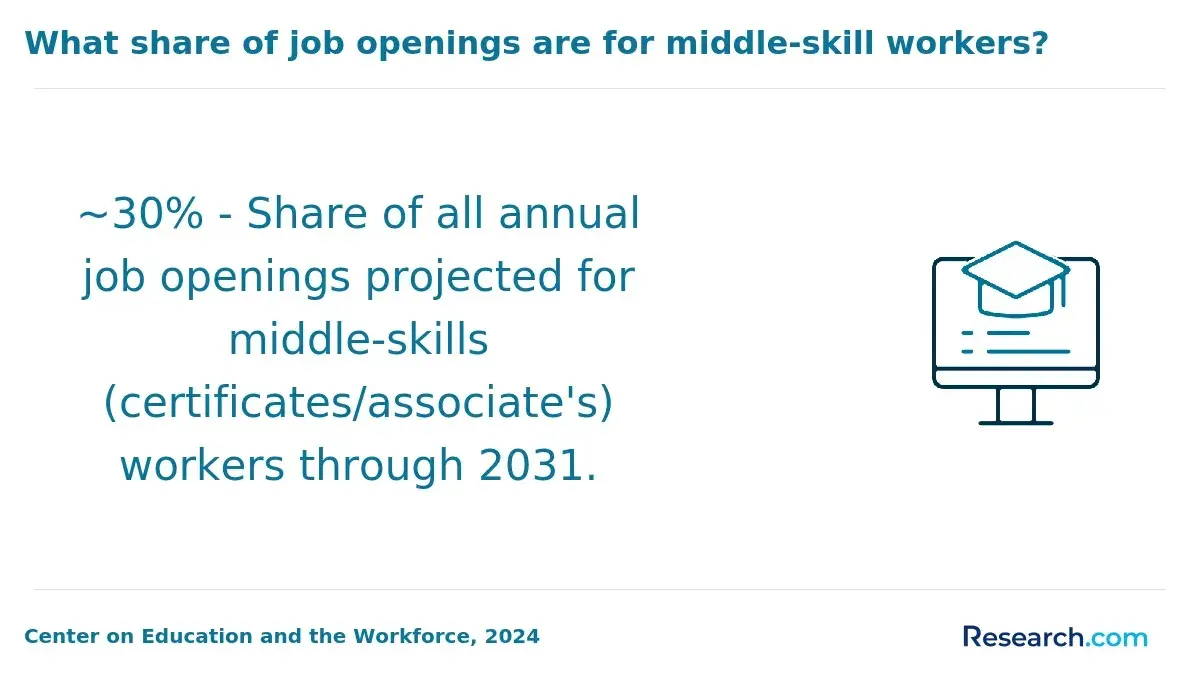
Employers usually focus more on the awarding institution, relevant experience, professional judgment, specialized coursework, and demonstrated results than on whether a transcript includes a thesis. Most employers do not request a thesis, and many job descriptions list a master's degree as preferred without specifying a thesis track. For applied criminal justice employers, a strong capstone, policy analysis, internship, or portfolio can offer directly relevant evidence of capability.
The U.S. Bureau of Labor Statistics reported a May 2024 median annual wage of $77,270 for police and detectives. That occupation-wide figure is not a master's-degree salary and should not be used to estimate an individual return; pay varies by agency, role, geography, experience, union agreements, and local government budgets. It does show why applicants should connect a degree to a specific advancement pathway rather than assume the credential alone changes compensation.
To make a no-thesis credential easier for employers to evaluate, translate its outcomes into job-relevant evidence. Consider these steps.
- List relevant graduate coursework such as intelligence analysis, corrections, homeland security, leadership, juvenile justice, or policy evaluation.
- Describe the capstone in achievement-focused language, including the problem analyzed, evidence used, and recommendation produced.
- Maintain a sanitized portfolio that protects agency confidentiality while showing analytical writing and presentation skills.
- Ask supervisors which competencies are required for promotion before choosing electives or a concentration.
Students aiming for victim advocacy, behavioral-health coordination, or community-service administration may need education beyond criminal justice. Depending on the role and state requirements, compare a criminal justice program with human services degree online options; counseling licensure generally requires a separate, specifically accredited pathway.
Will skipping thesis requirements limit PhD options in Criminal Justice?
Skipping a thesis can limit some PhD applications, but it does not automatically close the door. Doctoral admissions committees typically evaluate research fit, academic record, methods preparation, faculty recommendations, writing samples, and prior research experience as a package. A thesis is a clear signal of research readiness, but an excellent applied research capstone, conference presentation, coauthored paper, or research-assistant experience can also strengthen an application.
A no-thesis master's is more likely to be sufficient when a prospective PhD program does not require a prior thesis and the applicant can document quantitative or qualitative research skills. It is less ideal for students targeting research-intensive doctoral programs immediately after graduation, especially when the master's curriculum lacks advanced methods, statistics, and sustained faculty mentorship.
If doctoral study remains possible, take these precautions while enrolled.
- Choose research methods, statistics, program evaluation, and advanced theory electives whenever available.
- Select a capstone that uses a transparent research design and produces a polished writing sample.
- Develop relationships with faculty members who can discuss your analytical and research abilities in recommendation letters.
- Ask prospective PhD departments whether they expect a thesis, a scholarly writing sample, specific methods coursework, or faculty research alignment.
- Keep copies of approved papers, research proposals, data-analysis outputs, and presentation materials.
Applicants considering counseling-oriented doctoral or licensure paths should not assume criminal justice coursework meets professional counseling standards. Review CACREP-accredited online counseling programs separately when the career objective involves clinical counseling preparation.
What advantages come with finishing Criminal Justice master's programs faster?
Finishing faster can reduce the time you spend balancing tuition payments, coursework, and delayed career moves. It may also let professionals apply new skills to current work sooner, which can be valuable when an employer is considering candidates for supervisory, analyst, policy, or training responsibilities.
Speed has meaningful trade-offs. Accelerated terms concentrate reading, discussion posts, group work, and assessments into fewer weeks. A schedule that appears manageable on paper may be difficult for students working rotating shifts, handling overtime, caring for family members, or serving in agencies with unpredictable incident demands.
The following factors help determine whether accelerated completion improves the degree's value for you.
| Potential advantage | Decision check |
| Earlier completion | Confirm the final course and capstone are offered when you need them |
| Potentially lower indirect costs | Compare total tuition, fees, technology costs, and any residency expenses rather than cost per credit alone |
| Faster application of skills at work | Ask whether assignments can address problems in your professional setting without violating confidentiality rules |
| Continuous enrollment momentum | Assess whether short terms allow enough time for reading, writing, and faculty feedback |
| Quicker access to advanced electives | Verify that concentrations and electives are available in the sequence advertised |
A fast degree is most useful when it supports a defined next step, such as eligibility for an internal promotion, movement into an analyst role, or preparation for a related graduate credential. Do not borrow based solely on a projected promotion; ask your employer whether the degree is recognized in its classification, promotion, or tuition-assistance policies.
Are Criminal Justice master's programs without thesis requirements right for you?
A fast, accredited, no-thesis online criminal justice master's program is often a strong fit for professionals who want advanced knowledge for leadership or specialized practice and who need predictable, course-based completion. It can also work for career changers who want a structured introduction to justice policy, corrections, investigations, homeland security, or public-safety administration.
A conventional thesis track and a slower pace are usually better choices for students who want to produce original scholarship, seek close long-term research mentorship, compete for research-intensive PhD admission, or need a substantial writing sample. Students who want clinical licensure should investigate the degree requirements for that profession rather than assume a criminal justice master's qualifies them.
Use these questions to make a final enrollment decision.
- Is institutional accreditation independently verifiable, and is the exact online degree shown in the university catalog?
- What specifically replaces the thesis, and will that requirement produce work relevant to my target role?
- Can I realistically complete the required weekly workload while accounting for overtime, family obligations, and field commitments?
- Does the curriculum include the research, analytics, leadership, or specialization courses my next position actually values?
- What is the total estimated cost after tuition, mandatory fees, books, technology, and any travel requirements?
- If I may pursue a PhD, can I build a research writing sample and secure meaningful faculty recommendations?
The strongest choice is not always the program with the shortest advertised timeline. It is the accredited program whose pacing, final requirement, academic support, and career relevance match the outcome you want from the investment.
Other Things You Should Know About Criminal Justice
Some accredited universities advertise completion in about 12 months for students who enroll full time, follow an uninterrupted accelerated schedule, and meet all prerequisites. Confirm the current course sequence and capstone timing because a one-year timeline may not be available to every student.
Many universities issue the same diploma for online and campus-based versions of the same degree, but policies vary. Ask admissions whether the delivery format appears on the diploma or transcript and obtain the answer in writing if it matters to you.
Possibly, but accelerated terms can require substantial weekly reading, writing, collaboration, and assessments. Students with rotating shifts or frequent overtime may prefer one course per term or a standard-paced program rather than rely on an aggressive timeline.
Many schools consider a limited number of previously completed graduate credits, usually subject to grade, recency, equivalency, and accreditation rules. Transfer approval is not automatic, so request an official evaluation before assuming credits will shorten your program.
References
- Best Online Master's In Criminal Justice https://www.criminaljusticedegreeschools.com/rankings/best-online-masters/
- How Long is a Master's in Criminal Justice (MSCJ) Program? https://www.forensicscolleges.com/blog/resources/how-long-to-earn-masters-in-cj
- One moment, please... https://www.profellow.com/fellowships/fully-funded-masters-programs-in-criminal-justice/
- How Long to Complete MA in Criminal Justice | University of Bridgeport https://www.bridgeport.edu/news/how-long-to-complete-masters-in-criminal-justice/
- Criminal Justice Capstone Project Topics - A-Z-Topics https://a-z-topics.com/criminal-justice-capstone-project-topics/
- Thesis vs. Non-Thesis Master's Programs: Which One Is Right for You? | UT Permian Basin Online https://online.utpb.edu/about-us/articles/humanities/thesis-or-no-thesis-which-one-is-right-for-you
- Capstone Options in Master's in Communication Programs (Thesis vs Project) https://www.mastersincommunications.com/features/guide-to-graduate-communication-capstone-options
- 2025 Most Affordable Master's in Criminal Justice Online https://www.onlineu.com/most-affordable-colleges/criminal-justice-masters-degrees
- Thesis and Capstone Requirements for Criminal Justice Programs https://www.criminaljustice.com/resources/writing-a-thesis/
- Earn An Online Criminal Justice Degree | OEDb.org https://www.oedb.org/rankings/online-criminal-justice-programs/