
2027 Online Criminal Justice Administration Doctorate Programs with Strong Student Support: Advising, Writing Help, and Career Services

Co-Founder and Chief Data Scientist
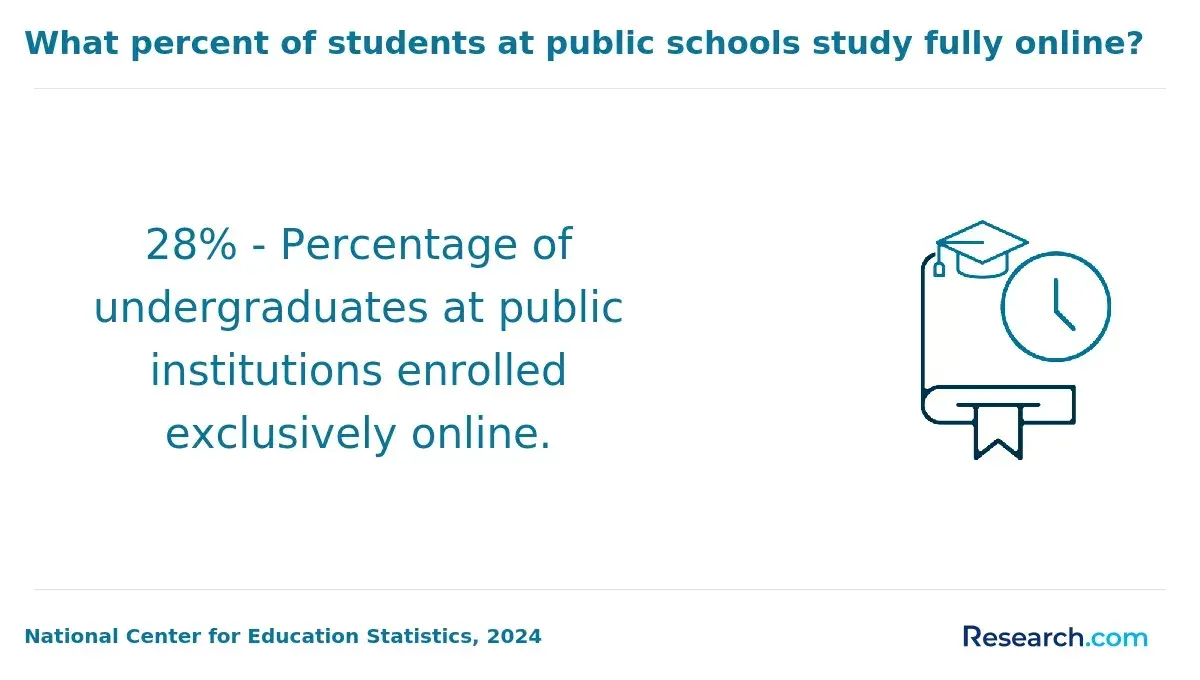
Choosing an online criminal justice administration doctorate is partly about curriculum, but support often determines whether working professionals can persist through research, writing, and career planning. NCES reported in 2024 that about 38% of graduate students were enrolled exclusively in distance education, making online doctoral support more important than ever. This guide is for prospective doctoral students comparing programs. You will learn how to evaluate advising, dissertation mentoring, writing help, faculty access, research support, technology, wellness resources, and career services before enrolling.
Key Things You Should Know
- Strong online doctoral support should include proactive academic advising, faculty mentoring, dissertation guidance, doctoral-level writing help, research and library assistance, career coaching, technical support, accessibility services, and clear response-time expectations for fully online students.
- Support quality varies more than service labels suggest: a dedicated advisor, scheduled dissertation milestones, live writing consultations, and doctoral career coaching are usually more useful than generic advising, self-service tutorials, or a job board alone.
- Recent federal data show online graduate study is mainstream, and 2024-25 federal loan rules allow graduate students to borrow up to $20,500 annually in Direct Unsubsidized Loans, so comparing support quality is also a financial risk-management step.
What Student Support Services Should Strong Online Criminal Justice Administration Doctorate Programs Provide?
A strong online criminal justice administration doctorate should support students across the full doctoral journey: admissions, coursework, research design, comprehensive exams, dissertation or capstone completion, and career advancement.
Student support means more than having a help desk. It means the program has people, processes, and technology that help online doctoral students stay on track without needing to visit campus.
Programs may use different degree titles, including Doctor of Criminal Justice, PhD in Criminal Justice, Doctor of Public Administration with a criminal justice concentration, or related leadership doctorates. If you are still comparing earlier degree pathways, an online criminal justice degree can be a useful reference point for understanding the field before moving into doctoral-level study.
The table below summarizes the support categories that matter most and what "strong" support looks like for fully online doctoral students.
| Support area | What it should include | Why it matters in an online doctorate |
| Academic advising | Degree planning, course sequencing, milestone tracking, registration help, and proactive outreach | Doctoral students often balance full-time work, research deadlines, and program policies that can affect time to completion |
| Dissertation or capstone mentoring | Clear committee formation, proposal guidance, research design feedback, and regular chair access | Many students struggle most after coursework, when independent research replaces structured classes |
| Writing support | Doctoral writing consultations, APA support, literature review guidance, editing feedback, and citation help | Criminal justice administration doctorates require advanced policy, leadership, and research writing |
| Research and library support | Remote database access, librarian appointments, statistics help, methodology resources, and IRB guidance | Students need credible evidence for policy analysis, organizational research, and dissertation studies |
| Career services | Executive resume support, interview preparation, academic job-market guidance, networking, and promotion planning | Doctoral students may seek leadership, teaching, consulting, policy, or research roles rather than entry-level positions |
| Technology and wellness support | Learning platform help, accessibility services, telehealth or counseling referrals, and online orientation | Distance learners need reliable access and support outside traditional campus hours |
A good program should also explain who provides each service. For example, an academic advisor may help with registration and policy questions, while a faculty mentor or dissertation chair should guide research quality. If a school cannot explain the difference, that is a sign to ask more questions before enrolling.
How Does Academic Advising Work in Online Criminal Justice Administration Doctorate Programs?
Academic advising in an online doctoral program should help students make informed decisions about courses, research milestones, leave policies, transfer credits, and graduation requirements. In criminal justice administration, advising is especially important because students often enter with different backgrounds, such as law enforcement leadership, corrections administration, homeland security, public policy, legal studies, or social services.
Federal Student Aid rules for 2024-25 allow eligible graduate students to borrow up to $20,500 annually in Direct Unsubsidized Loans before considering Grad PLUS Loans.
That borrowing limit does not mean a doctorate is affordable by default; it means students should use advising to avoid unnecessary courses, delays, and repeat credits. Reviewing the full criminal justice degree price can also help students think about tuition, fees, books, technology costs, and financing before committing.
When comparing advising models, look beyond whether advising exists. Ask whether the support is proactive, specialized, and available when online doctoral students are actually working on school tasks.
- Dedicated doctoral advisor: A named advisor who understands the criminal justice administration doctorate is usually better than a general call-center model for complex degree planning.
- Milestone tracking: Strong programs map out coursework, exams, proposal approval, IRB review, dissertation chapters, defense, and graduation deadlines.
- Online appointment access: Advising should be available by video, phone, email, or chat, with evening or flexible scheduling for working professionals when possible.
- Documented response times: Programs should state whether students can expect a reply within a specific business-day window rather than leaving communication norms vague.
- Policy guidance: Advisors should help students understand transfer credit limits, continuous enrollment rules, dissertation extension costs, and academic standing policies.
The strongest advising models combine administrative accuracy with student-centered planning. A responsive advisor cannot make the program easy, but they can help students avoid preventable delays caused by missed forms, misunderstood policies, or poor course sequencing.
What Dissertation Mentoring and Committee Support Should Online Criminal Justice Administration Doctoral Students Expect?
Dissertation mentoring is often the difference between completing coursework and finishing the doctorate. In online criminal justice administration programs, dissertation topics may focus on police leadership, corrections policy, community supervision, emergency management coordination, reentry programs, organizational ethics, homeland security, juvenile justice, or evidence-based public safety management.
Students should expect clear guidance on how faculty mentors, dissertation chairs, and committee members are assigned. A strong program does not wait until the final year to explain the dissertation process. It introduces research expectations early and gives students a realistic sense of faculty availability, topic fit, and approval timelines.
The following mentoring features are especially important because they affect momentum after coursework ends.
- Early topic development: Coursework should help students identify a feasible problem of practice or research question before they reach the proposal stage.
- Transparent chair selection: Students should know whether they choose a chair, apply for one, or receive an assignment based on faculty expertise and workload.
- Committee expectations: The program should explain how many committee members are required, what each member reviews, and how feedback is resolved.
- Proposal and defense preparation: Online students should receive guidance on virtual presentations, research justification, methodology defense, and revision cycles.
- IRB and ethics support: Programs should help students prepare research involving agencies, employees, justice-involved populations, or sensitive administrative data.
One red flag is a program that advertises "faculty mentoring" but cannot describe how often students meet with chairs or how long dissertation feedback typically takes. Another is a program with broad faculty interests but limited expertise in the student's intended research area. For doctoral-level work, mentor fit matters as much as mentor friendliness.
What Writing and Dissertation Help Is Available in Online Criminal Justice Administration Doctorate Programs?
Doctoral writing support should be more advanced than undergraduate tutoring. Criminal justice administration students may need help with literature reviews, policy analysis, theoretical framing, methodology chapters, APA style, executive writing, and translating workplace problems into researchable questions.
Many online programs advertise writing centers, but the format and depth of help can vary widely. The table below shows how to distinguish basic writing resources from support that is more appropriate for doctoral students.
| Writing support type | Basic version | Stronger doctoral version |
| Writing center access | Email-based paper review with general grammar comments | Live consultations with staff trained in graduate research writing |
| Dissertation feedback | General formatting checklist | Chapter-level support for argument structure, synthesis, and scholarly tone |
| Citation and style help | APA handouts or citation generator links | APA review for dissertation manuscripts, tables, references, and in-text citations |
| Literature review support | Advice to "find more sources" | Help organizing themes, identifying gaps, and building a defensible scholarly rationale |
| Writing accountability | Optional workshops | Writing groups, dissertation boot camps, milestone check-ins, or scheduled writing plans |
Students who have been away from school for several years should pay close attention to writing support. A doctorate requires different habits than professional report writing. Strong programs help students learn how to synthesize research, support claims with evidence, and revise based on faculty feedback without losing momentum.
Before enrolling, ask whether writing support is included in tuition, whether doctoral students receive priority access, and whether appointments are available outside standard business hours. Also ask whether writing coaches review dissertation chapters or only shorter course papers.
Do Online Criminal Justice Administration Doctorate Programs Provide Research, Statistics, and Library Support?
Yes, strong online criminal justice administration doctorate programs should provide remote research, statistics, and library support. These services are critical because doctoral students must evaluate evidence, design defensible studies, and work with peer-reviewed literature rather than relying only on professional experience.
Research support should be practical and accessible. A student studying corrections staff retention, for example, may need help finding peer-reviewed sources, developing a survey, understanding sampling, protecting participant confidentiality, and interpreting results.
The program should provide support for each stage rather than assuming students can figure it out alone. Look for research support that is available to distance learners in usable formats.
- Online library access: Students should have remote access to criminal justice, public administration, law, policy, psychology, sociology, and education databases relevant to their research.
- Research librarian appointments: Librarians should offer video or chat consultations for search strategy, source evaluation, citation management, and literature review organization.
- Statistics support: Programs should provide tutoring, workshops, software guidance, or faculty help for quantitative, qualitative, or mixed-methods research.
- Methodology guidance: Students should receive help matching research questions with appropriate designs, data sources, and analytic methods.
- IRB support: Online students should get clear instructions for human-subjects review, especially when working with agency employees or sensitive justice data.
AI tools are changing research workflows, but they do not replace scholarly judgment. Strong programs now commonly set policies on generative AI use, plagiarism, citation integrity, and data privacy. Students should ask how the program teaches ethical AI use in literature searching, outlining, editing, and research documentation.
What Career Services Should Online Criminal Justice Administration Doctorate Programs Offer Doctoral Students?
Career services for doctoral students should be more advanced than entry-level resume review. Many students in online criminal justice administration doctorates are already working professionals seeking promotion, transition, teaching opportunities, consulting roles, research positions, or executive leadership. Career support should reflect that reality.
BLS May 2024 wage data show that police and detectives had a median annual wage of about $77,000, while emergency management directors were near $86,000. These figures do not predict what a doctoral graduate will earn, but they show why students should connect the degree to a specific leadership, academic, policy, or administrative goal before taking on doctoral costs.
Strong doctoral career services should help students clarify whether the doctorate fits their target path. For example, a criminal justice administrator moving toward emergency preparedness, compliance, or workplace safety leadership may also compare adjacent fields such as the best online environmental health and safety programs if their career goals involve risk management and regulatory oversight.
Useful career services for online doctoral students often include the following elements.
- Executive resume and CV support: Students may need both a leadership resume for agency roles and an academic CV for teaching or research positions.
- Promotion and career-mapping coaching: Career staff should help students connect doctoral projects to command staff, policy, consulting, or administrative advancement goals.
- Academic job-market preparation: Students interested in teaching should receive help with teaching statements, research statements, sample syllabi, and interview preparation.
- Networking access: Programs should offer virtual events, alumni connections, practitioner panels, and faculty introductions that include online students.
- Portfolio development: Students should be able to turn course projects, policy briefs, conference presentations, or dissertation findings into professional evidence of expertise.
A common mistake is assuming that a doctorate automatically improves career outcomes. The more practical question is whether the program helps students build credible evidence of leadership, research, teaching, or policy expertise that employers can evaluate.
How Accessible Are Faculty and Support Staff in Online Criminal Justice Administration Doctorate Programs?
Faculty and staff access is one of the clearest indicators of online program quality. Online doctoral students need timely answers because delays can affect research approvals, registration, financial aid, dissertation progress, and graduation timelines. Accessibility is not only about whether faculty have office hours; it is about whether those hours work for remote students with jobs and family obligations.
Good programs set communication expectations early. They explain how students should contact faculty, advisors, librarians, writing coaches, technology support, and career staff. They also make it clear which issues require faculty input and which can be handled by administrative teams.
When evaluating accessibility, ask specific questions rather than accepting general claims about personal attention.
- How often can online doctoral students meet with faculty advisors or dissertation chairs? Look for predictable appointment access, not only informal availability.
- What is the expected response time for faculty and staff emails? A stated business-day window is more useful than vague assurances.
- Are evening or weekend appointments available? This matters for working professionals in law enforcement, corrections, courts, and emergency services.
- Who helps when a faculty member is unavailable? Strong programs have escalation paths for urgent advising, dissertation, or technology issues.
- Are online students included in research talks, speaker events, and office-hour opportunities? Access should not depend on living near campus.
One useful test is to contact admissions with detailed support questions and observe the response. If the school cannot provide clear answers before enrollment, support may not become clearer after tuition is paid.
How Do Online Criminal Justice Administration Doctorate Programs Build Peer, Cohort, and Mentoring Support?
Peer support helps online doctoral students stay connected during a long and often isolating program. Cohorts, mentoring groups, virtual residencies, discussion seminars, and alumni networks can help students exchange ideas, prepare for research milestones, and learn how others balance professional and academic responsibilities.
Cohort models are common in professional doctorates, but they are not automatically better for every student. A cohort can provide structure and accountability, while a flexible asynchronous model may work better for students with rotating shifts or unpredictable agency responsibilities. The best choice depends on the student's schedule, learning style, and need for community.
The table below compares common online doctoral community models and what students should consider.
| Support model | Potential benefit | Possible limitation |
| Cohort-based courses | Students move through classes together, which can build accountability and peer relationships | Less flexibility if a student needs to slow down or take a term off |
| Asynchronous seminars | Students can participate around work schedules and time zones | Community may feel weaker without live interaction |
| Virtual residencies | Students can meet faculty, practice presentations, and prepare for dissertation milestones remotely | May require fixed attendance times that conflict with work obligations |
| Faculty or alumni mentoring | Students can receive career and research guidance from experienced professionals | Quality depends on mentor availability and matching process |
| Writing or dissertation groups | Students gain accountability during proposal and chapter development | Groups need structure to remain productive |
Students should ask whether online doctoral learners are intentionally included in mentoring opportunities or simply given access to discussion boards. Real community support usually involves scheduled interaction, shared milestones, and faculty or staff facilitation.
What Technology, Accessibility, and Student Wellness Support Do Online Criminal Justice Administration Doctorate Programs Provide?
Technology support is a core academic service in an online doctorate. If students cannot access the learning platform, library databases, video meetings, statistical software, or dissertation submission tools, academic progress can stop. Strong programs provide orientation, troubleshooting, and clear technical requirements before courses begin.
Accessibility services are equally important. Online doctoral students may need accommodations for disabilities, chronic health conditions, military service-related needs, temporary medical issues, or caregiving constraints.
Programs should explain how students request accommodations and how those accommodations apply to remote coursework, exams, residencies, and dissertation defenses.
Students should verify the following support services before enrolling.
- Online orientation: The program should introduce the learning platform, library systems, advising process, academic integrity rules, and doctoral milestones.
- Technical support hours: Help should be available when online students typically study, including evenings or weekends when possible.
- Software access: Students should know whether statistical, qualitative analysis, citation management, or plagiarism-checking tools are included or require extra payment.
- Accessibility services: The school should provide a clear process for accommodations in online courses, virtual meetings, exams, and dissertation defenses.
- Wellness and counseling resources: Doctoral study can be stressful, so programs should explain what mental health, crisis, or referral services are available to distance learners.
Wellness support should not be treated as a bonus. Many criminal justice professionals work in high-stress environments, and doctoral study adds sustained cognitive and time pressure. Programs that acknowledge wellness, workload planning, and burnout prevention may provide a more realistic environment for long-term persistence.
How Can You Compare Online Criminal Justice Administration Doctorate Programs Based on Student Support Quality?
The best way to compare online criminal justice administration doctorate programs is to evaluate support as a system, not as a list of services. A program may advertise advising, writing help, faculty mentoring, and career services, but the real question is whether online doctoral students can use those services easily, repeatedly, and at the right points in the program.
Students who are still exploring criminal justice education pathways may want to compare doctoral expectations with earlier options such as the best online associate degree programs in criminal justice. At the doctoral level, however, support needs shift from general student services to research supervision, professional positioning, and dissertation completion.
Use the following steps to compare support quality before applying or enrolling.
- Map your support needs: Identify whether you need more help with writing, statistics, career transition, faculty mentoring, scheduling flexibility, or technology access.
- Ask for support details in writing: Request information on advisor assignments, dissertation chair access, writing center eligibility, career coaching, and response-time expectations.
- Review the dissertation process: Look for clear milestones, committee policies, IRB guidance, proposal timelines, and defense procedures for online students.
- Test responsiveness: Contact admissions, advising, financial aid, and career services with specific questions and compare how quickly and clearly they respond.
- Speak with current students or alumni: Ask whether support was proactive, whether faculty feedback was timely, and whether online students felt included.
- Compare total cost against support depth: A lower-cost program may be a good fit if you are highly independent, but stronger support may justify higher tuition if it helps reduce delays or mismatched expectations.
The table below highlights common red flags and better alternatives to look for when comparing programs.
| Red flag | Why it matters | Better sign |
| "Mentoring available" with no explanation | The term may refer to informal help rather than structured dissertation guidance | Clear chair assignment process, meeting expectations, and committee timeline |
| Writing center only reviews short papers | Doctoral students need help with long-form research writing | Dissertation chapter support, literature review help, and APA guidance |
| Career services focused on entry-level jobs | Doctoral students often need executive, academic, or consulting support | CV review, leadership coaching, academic job preparation, and alumni networking |
| No stated response-time expectations | Delayed communication can slow registration, research approval, and dissertation progress | Published communication norms for faculty, advisors, and support offices |
| Online students excluded from events | Distance learners may miss networking and mentoring opportunities | Virtual workshops, livestreamed events, online residencies, and remote participation options |
Strong support does not guarantee completion, employment, promotion, or publication. It does, however, reduce uncertainty and helps students make better decisions about time, money, research expectations, and career fit.
Other Things You Should Know About Criminal Justice Administration
It can be either. A PhD typically emphasizes theory, research methods, and academic scholarship, while a professional doctorate often focuses on leadership, applied research, and organizational problem-solving. Students interested in university research roles should compare faculty research strength, while students pursuing senior administration should examine applied projects, leadership coursework, and practitioner networks.
Some are fully online, while others require short residencies, intensives, dissertation defenses, or orientation sessions. Students should verify whether any campus or synchronous attendance is required, how often it occurs, and whether travel costs are included in the estimated cost of attendance.
Most programs expect a master's degree, graduate transcripts, professional or academic references, a statement of purpose, and sometimes a writing sample. Some programs prefer applicants with criminal justice, public administration, law enforcement, corrections, homeland security, legal studies, or policy experience, but requirements vary by school.
Usually no. This type of doctorate is generally designed for leadership, teaching, policy, research, consulting, or administrative advancement rather than professional licensure. Requirements for law enforcement, corrections, emergency management, or legal roles are typically set by employers, agencies, states, or professional boards.
References
- Online Criminal Justice Degrees (Types, Benefits & FAQ) https://www.allcriminaljusticeschools.com/criminal-justice/criminal-justice-online-degree/
- Best Online Doctorate in Criminal Justice - Top Online Degree Programs https://www.collegeconsensus.com/rankings/best-criminal-justice-doctorate-programs-online/
- Essentials for Criminal Justice Students | University of Phoenix https://www.phoenix.edu/articles/criminal-justice/essentials-for-criminal-justice-students.html
- Best Criminal Justice Degree Programs for 2026 | PoliceOfficer.org https://policeofficer.org/degree-programs/criminal-justice/
- Best Online Criminal Justice Degrees https://www.onlineu.com/degrees/criminal-justice
- Student Advising Framework - VinUni Policy https://policy.vinuni.edu.vn/all-policies/student-advising-framework/
- Internships | Criminal Justice Services https://cjs.mecknc.gov/Internships


