2027 Online Communication Master's Programs Under $20,000: Total Tuition and Required Fees

Co-Founder and Chief Data Scientist
An advertised tuition figure can make an online communication master's degree appear affordable while required fees, extra credits, and residency rules push the final bill above $20,000. This guide is for prospective students comparing budget-conscious programs for communications, public relations, organizational communication, or digital media careers. It explains how to calculate a true program total, evaluate format and accreditation, and weigh career value.
The U.S. Bureau of Labor Statistics reported a $66,750 median annual wage for media and communication occupations in May 2024, making careful program-to-career alignment especially important.
Key Things You Should Know
- A program qualifies as under $20,000 only when its published tuition and mandatory institutional fees for every required credit stay below that amount; an appealing per-credit rate alone is not enough.
- Most communication master's degrees require roughly 30 to 36 credits, so a $500 per-credit rate produces $15,000 for 30 credits but $18,000 for 36 credits before required fees.
- Value depends on more than price: verify institutional accreditation, delivery format, concentration fit, transfer rules, and whether the curriculum supports the communication role you want.
How Much Does an Online Communication Master's Degree Under $20,000 Cost in Total?
An online communication master's degree under $20,000 is generally a graduate program whose required instructional charges remain below that threshold for a student completing the standard curriculum. Communication programs may lead to a Master of Arts, Master of Science, or professionally oriented communication degree, with coursework in strategic communication, public relations, digital content, organizational communication, research methods, and leadership.
To compare schools fairly, calculate the published completion cost rather than relying on a "starting at" price. The calculation below separates charges that are normally known before enrollment from expenses that can vary by student.
| Cost component | How to calculate it | Why it matters |
| Tuition | Required program credits × applicable per-credit rate, or the published flat program rate | This is usually the largest charge. |
| Mandatory fees | Per-term fees × expected terms, plus required graduation or online-learning fees | These can determine whether a program remains below the limit. |
| Required academic expenses | Required course materials, software, residencies, or assessments | Some are billed separately from tuition. |
| Student-specific expenses | Optional travel, technology upgrades, lost work time, or prerequisite courses | Important for budgeting, but not always included in a school's program price. |
Ask each admissions or bursar office for a written estimate based on your entry term, residency status, anticipated transfer credits, and expected pace. A school can be a sensible choice near the $20,000 ceiling if it includes useful services, such as career advising or required software, that a cheaper option bills separately.
Students also comparing adjacent graduate pathways may find an online SLP program useful for understanding how a clinically regulated degree can have very different cost and placement requirements from a general communication degree.
What Required Fees Can Increase the Cost of an Online Communication Master's Degree Beyond $20,000?
Required fees are charges a student cannot decline while enrolled, even if they are not labeled tuition. Common examples include application, enrollment, technology, distance-learning, student-service, graduation, transcript, proctoring, and course-material fees. A fee may be modest per term but become meaningful in a part-time program that lasts several terms.
The following cost categories help distinguish charges that should be included in an under-$20,000 comparison from expenses that depend on individual choices.
| Expense type | Usually required? | How to handle it in a comparison |
| Application and enrollment fees | Often | Add them if all admitted students must pay them. |
| Online-learning, technology, or student-service fees | Often | Multiply recurring fees by the expected number of terms. |
| Graduation and commencement fees | Often | Include the mandatory graduation charge; exclude optional ceremony purchases. |
| Books, ebooks, and software | Sometimes | Include only items designated as required by courses or the program. |
| Campus visits or residencies | Program-dependent | Budget travel and lodging separately if attendance is mandatory. |
| Personal computer and internet service | Student-dependent | Plan for them, but do not treat them as a school-billed fee unless required by the institution. |
A frequent mistake is counting only the first term's bill. Instead, request the fee schedule for the full academic year and determine whether fees are assessed per credit, per course, per semester, or once per program. Also check whether a required capstone, internship, or portfolio course carries a special charge.
Online delivery can reduce commuting and housing costs, but it does not automatically eliminate travel. Students interested in relationship-focused helping professions should similarly compare the supervised-practice requirements in the cheapest online MFT programs before assuming that an online label means fully remote completion.
How Does Per-Credit Tuition Affect the Total Cost of an Online Communication Master's Degree Under $20,000?
Per-credit tuition affects total cost because graduate communication programs do not all require the same number of credits. A low rate can still result in a higher total when a curriculum requires more credits, prerequisites, or repeated courses. Conversely, a flat-rate program can offer cost certainty when it covers all standard required credits.
This comparison shows why prospective students should multiply the applicable rate by the degree's graduation requirement before ranking programs by affordability.
| Example tuition structure | Credits required | Tuition calculation | Tuition total before fees |
| $450 per credit | 30 | 30 × $450 | $13,500 |
| $500 per credit | 30 | 30 × $500 | $15,000 |
| $500 per credit | 36 | 36 × $500 | $18,000 |
| $600 per credit | 36 | 36 × $600 | $21,600 |
The final example exceeds the target before any fees, which shows why "under $600 per credit" is not a reliable affordability claim for every master's program. Confirm whether the listed rate applies to graduate courses, applies to online students, and is guaranteed for continuing students or may change by term.
Credit count also affects workload. A 36-credit curriculum may provide more elective room, research training, or a concentration, while a 30-credit curriculum may be the better fit for an experienced professional seeking a focused credential. For students whose goal is broad management rather than communication specialization, an accelerated online business degree may offer a different curriculum and pacing model to compare.
How Long Does It Take to Complete an Online Communication Master's Degree Under $20,000?
Many online communication master's programs can be completed in about 12 to 24 months, depending on credit requirements, course sequencing, and enrollment intensity. A 30-credit degree taken at six credits per term takes five terms; a student taking three credits per term needs twice as many terms. Actual completion can take longer if required courses are offered only in certain terms or if a capstone follows all core coursework.
Format affects both schedule fit and cost exposure. The comparison below identifies common delivery models and the questions that matter before enrolling.
| Format | Typical learning pattern | Cost and fit consideration |
| Asynchronous online | Recorded lectures, discussion boards, and deadlines without regular live meetings | Often works well for shift workers; confirm group-project expectations and weekly workload. |
| Synchronous online | Live virtual classes at scheduled times | Can provide real-time interaction but may limit flexibility across work schedules or time zones. |
| Hybrid or low-residency | Online coursework with required campus or intensive sessions | Add travel, lodging, and time-off costs to the budget. |
| Accelerated terms | Shorter sessions with concentrated coursework | May shorten completion time, but can be difficult to combine with full-time work. |
Do not assume finishing faster always costs less. A rapid schedule may reduce the number of recurring term fees and allow an earlier career move, but it can also require fewer work hours or make withdrawing from a course more costly. Review the academic calendar, capstone sequence, maximum time-to-degree policy, and whether summer enrollment is required.
Students seeking a research, archives, or information-management path may encounter different practicum and course-sequencing expectations in an MLIS degree. Comparing the required experiences - not just program length - helps clarify which credential fits the intended work.
How Can Students Verify Accreditation for an Online Communication Master's Degree Under $20,000?
Students should verify institutional accreditation before applying or paying a deposit. Institutional accreditation evaluates the college or university as a whole and is usually the key credential employers, graduate schools, and federal aid systems consider. Communication master's programs do not universally require a separate programmatic accreditor, so the relevance of specialized recognition depends on the concentration and career goal.
A reliable verification process requires checking independent records rather than relying solely on marketing language. Take these steps before making a final decision:
- Find the institution in the U.S. Department of Education's Database of Accredited Postsecondary Institutions and Programs or confirm it through the named accrediting agency.
- Confirm that the accreditation status is current and applies to the degree-granting institution, not merely an affiliated platform or extension provider.
- Review the curriculum, faculty credentials, and learning outcomes for the communication specialty you want, such as strategic communication, public relations, health communication, or organizational leadership.
- Ask employers or doctoral programs of interest whether they have any specific degree, accreditation, portfolio, or experience expectations.
- If your goal involves licensure or clinical practice, check the relevant state board because a general communication degree may not meet professional eligibility rules.
Accreditation alone does not establish quality or career fit. It is a necessary screening tool, followed by a closer review of curriculum, instructional support, assessment, and graduate outcomes. Be cautious when a school's accreditation claim cannot be independently verified or when it avoids stating the degree-awarding institution.
Do Out-Of-State Students Pay More for an Online Communication Master's Degree Under $20,000?
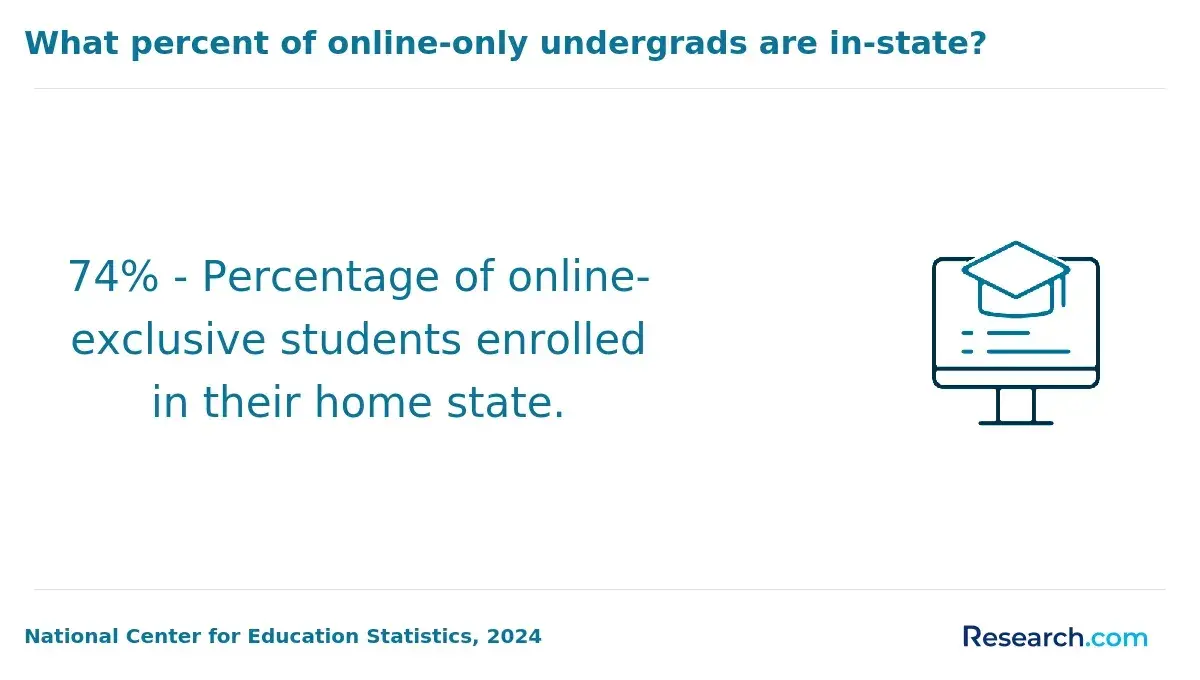
Out-of-state students may pay more at public universities, but many online graduate programs use one nationwide rate regardless of residency. A uniform online rate can make an out-of-state public institution competitive, while a program that charges traditional nonresident tuition can exceed $20,000 even when its in-state estimate appears affordable.
Before comparing advertised totals, identify which pricing policy applies to you.
| Tuition policy | Effect on out-of-state online students | What to confirm |
| Single online graduate rate | Students generally pay the same per-credit or flat amount regardless of residence. | Whether every required course uses the online rate. |
| Resident and nonresident rates | Nonresidents may have a higher tuition calculation. | Residency rules and whether online enrollment qualifies for any exception. |
| Regional or reciprocity discount | Eligible students may receive a reduced rate. | Eligibility, renewal requirements, and whether the discount applies to graduate online study. |
| Employer or military partnership rate | Eligible students may receive a negotiated rate. | Whether the benefit applies through graduation and can be combined with other aid. |
Ask for a personalized estimate before application, particularly if you recently moved, live near a state border, work for a partner employer, or plan to take any campus-based course. Also verify whether remote students are eligible for the same services and whether separate distance-learning fees apply. A lower resident rate is not a practical option if establishing residency would delay enrollment or require conditions you cannot meet.
Can Transfer Credits Keep the Total Cost of an Online Communication Master's Degree Under $20,000?
Transfer credits can lower both the number of credits remaining and the final tuition bill, but they are not automatic. Communication master's programs often limit the number, age, grade, and content of credits accepted. Schools may require that transferred courses match a specific core requirement and may still require all capstone, residency, or final-project work to be completed at the institution.
Use this process to determine whether transfer credit will genuinely keep your total below $20,000:
- Request the written transfer policy before applying, including the maximum transferable credits and minimum grade requirement.
- Provide official transcripts and, when requested, course descriptions or syllabi for a preliminary evaluation.
- Calculate the remaining required credits after the evaluation, not before.
- Confirm whether transferred work changes your course sequence, financial-aid enrollment level, or time-to-degree deadline.
- Obtain the final transfer decision in writing and revise the program-cost calculation with mandatory fees included.
A common error is assuming undergraduate communication courses will transfer into graduate study. Graduate schools usually evaluate graduate-level coursework differently, and professional experience or certificates may not replace degree credits. Transfer credit is most valuable when it removes required coursework without weakening preparation for the job or concentration you intend to pursue.
For example, language-focused career plans can require competencies beyond a general communication curriculum; comparing a spanish degree online can help students assess whether language study is a better direct match for their professional objective.
Can Financial Aid Bring the Cost of an Online Communication Master's Degree Below $20,000?
Financial aid can reduce a student's net price below $20,000, but it does not change the published program cost. Graduate students may qualify for institutional scholarships, employer tuition assistance, assistantships where available, veterans' education benefits, and federal student loans after filing the Free Application for Federal Student Aid. Grants and scholarships reduce out-of-pocket cost; loans must be repaid with interest.
Build an aid plan around confirmed awards rather than expected funds. The steps below separate reliable funding from possibilities that require further action.
- File the FAFSA early and review the school's financial-aid requirements and priority deadlines.
- Ask whether online graduate students are eligible for institutional scholarships, graduate assistantships, or departmental awards.
- Check employer education benefits for annual caps, eligible programs, grade requirements, and repayment obligations if you leave the employer.
- Compare the net cost after grants and scholarships separately from borrowing, and review loan repayment implications before accepting funds.
- Ask whether tuition increases, dropped courses, or part-time enrollment could change aid eligibility.
Federal aid rules, institutional awards, and employer programs vary, so the financial-aid office is the appropriate source for an individualized offer. Avoid using the maximum amount you can borrow as a spending target. A program that costs slightly more may still be preferable if it provides stronger alignment with your desired work and requires less borrowing overall.
Is an Online Communication Master's Degree Under $20,000 Worth the Cost for Career Advancement?
An under-$20,000 online communication master's degree can be worth the cost when it develops skills directly tied to a realistic next role, such as communication manager, public relations specialist, content strategist, internal communications professional, community relations coordinator, or marketing communications professional.
Communication work typically combines audience analysis, persuasive writing, digital content planning, research interpretation, presentation, campaign measurement, and stakeholder management.
The U.S. Bureau of Labor Statistics projected employment of public relations specialists to grow 6% from 2023 to 2033, faster than the average for all occupations. That outlook indicates ongoing opportunity, but it does not mean a master's degree is required for every role or that it ensures advancement. Employers may weigh portfolios, writing samples, industry knowledge, analytics skills, and professional experience heavily.
Assess the investment against the role you want rather than against a generic salary promise. This comparison can help determine when the degree is likely to add value.
| Career situation | When an affordable master's may help | When another step may be better first |
| Working communication professional | Seeking leadership, strategic planning, research, or a specialization that supports promotion. | Experience or a targeted certificate may address the immediate skill gap more efficiently. |
| Career changer | Needs a structured portfolio, current digital communication skills, and professional network-building. | Entry-level roles, internships, or foundational coursework may be needed before graduate study. |
| Public relations or strategic communication applicant | Program offers relevant writing, media relations, analytics, and campaign coursework. | A general curriculum lacks the industry-specific work samples employers request. |
| Doctoral or research-oriented applicant | Degree includes research methods, faculty mentorship, and a substantial project. | A purely applied program does not provide the research preparation required for the next step. |
Compare the degree's capstone, portfolio expectations, elective options, faculty background, and career support with local job postings. A lower-cost program is often sufficient for professionals who need credible graduate-level training and flexibility; a higher-cost option may be justified when it offers a uniquely relevant specialization, strong employer access, or required experiential learning that supports a specific goal.
How Should Students Choose the Best-Value Flat-Rate Online Communication Master's Program?
The best-value flat-rate online communication master's program is not necessarily the one with the lowest headline price. A flat rate is valuable because it can make the total predictable, but students should confirm exactly what it covers: all standard credits, fees, course materials, concentration courses, and any extension needed to complete the capstone.
Use the following comparison sequence to choose between similarly priced options:
- Start with a written all-in estimate for the standard curriculum and identify every charge excluded from the flat rate.
- Confirm the required credit count, expected completion schedule, and whether the rate is locked for continuing students.
- Match concentrations and electives to the communication work you want to pursue, rather than choosing based on the title alone.
- Compare asynchronous, synchronous, and residency requirements against your work, caregiving, and travel constraints.
- Verify institutional accreditation and review faculty, capstone, portfolio, internship, and career-support features.
- Check admissions prerequisites, transfer limits, and technology requirements that could add time or cost.
- Choose the program with the strongest career fit among the options whose verified total and borrowing needs are manageable.
Red flags include a price that excludes "applicable fees," an unclear number of required credits, no stated tuition policy for future terms, vague accreditation language, or a curriculum without practical communication deliverables. Keep copies of tuition pages, fee schedules, and email confirmations because published rates can change.
For many students, the right choice is a regionally accessible, institutionally accredited online program with a transparent total, flexible format, and coursework that produces work samples relevant to their target role. Paying more is reasonable only when the added feature is concrete and useful for your career plan - not merely a marketing claim.
Other Things You Should Know About Communication
A communication master's degree typically emphasizes messaging, audiences, media, organizational communication, public relations, and communication strategy. A marketing master's degree generally focuses more on customer behavior, market research, branding, pricing, and revenue-oriented strategy. Review course titles and learning outcomes because program names can overlap.
Requirements vary by institution. Many programs use a holistic application review and may not require the GRE, but applicants commonly need a bachelor's degree, official transcripts, a statement of purpose, recommendation letters, and sometimes a writing sample or résumé. Confirm requirements for the specific entry term.
Some programs use capstone projects, campaign plans, research papers, presentations, or digital content that can support a professional portfolio. Ask whether students produce employer-ready work and whether they retain access to it after graduation.
It may support eligibility for some community college or adjunct teaching opportunities, subject to institutional hiring standards. Full-time faculty roles and many secondary-school teaching positions can require additional credentials, graduate credits in a particular discipline, state certification, or a doctorate.
References
- How Long Does It Take to Complete a Master's Degree Program? https://www.calsouthern.edu/articles/how-long-is-a-masters-degree
- Why Should I Study a Master's in Communication? https://www.mastersincommunications.org/why-should-i-study-a-masters-in-communication/
- 2025 Most Affordable Online Master's in Communications https://www.onlineu.com/most-affordable-colleges/communications-masters-degrees
- Is Grad School Worth It? A Comprehensive Return on Investment Analysis - FREOPP https://freopp.org/whitepapers/is-grad-school-worth-it-a-comprehensive-return-on-investment-analysis/
- How Long is an Online Master's in Communication Program? https://www.onlineeducation.com/communication/faqs/how-long-to-earn-a-communications-masters-degree-online
- One Year Online Master's in Communication Programs (12 to 16 months) https://www.mastersincommunications.com/faqs/one-year-online-programs