2027 Online Clinical Research Management Doctorate Program Costs: Tuition, Fees, Financial Aid, and Employer Reimbursement

Co-Founder and Chief Data Scientist
An online Clinical Research Management doctorate can advance a career in clinical trials leadership, but the cost can be hard to judge before enrollment. Federal graduate loan rates for 2025-26 are 7.94% for Direct Unsubsidized Loans and 8.94% for Grad PLUS Loans, so borrowing decisions matter. This guide is for working professionals comparing online doctoral programs, financial aid, employer reimbursement, and long-term value. You'll learn how to estimate total cost, spot hidden expenses, and decide whether the degree fits your career goals.
Key Things to Know About Online Clinical Research Management Doctorate Program Costs
- There is no single federal average for online Clinical Research Management doctorate tuition, but a practical planning range is often built from credit totals: 54 to 72 credits multiplied by the school's per-credit graduate rate.
- Graduate financial aid can be substantial but expensive: eligible students may borrow up to $20,500 per academic year in Direct Unsubsidized Loans, while Grad PLUS can cover remaining certified cost of attendance after other aid.
- Employer reimbursement is often the best cost-reduction path for working clinical research professionals because IRS rules allow up to $5,250 in annual employer-provided educational assistance to be excluded from taxable income when program rules are met.
What is the average tuition cost of an online Clinical Research Management doctorate program?
The most accurate answer is that the U.S. does not publish a clean national average specifically for online Clinical Research Management doctorates. These programs are often housed under clinical research administration, health sciences, regulatory science, translational health, public health, or healthcare leadership departments, so tuition must be compared program by program.
For budgeting, start with the credit-hour model because most online doctoral programs charge by credit. The table below shows how total tuition changes when the same student chooses a lower-cost, middle-cost, or higher-cost online doctoral pricing structure.
| Planning scenario | Typical credit load used for estimate | Example per-credit tuition | Estimated tuition before fees | What it means for the student |
| Lower-cost online public or flat-rate option | 54 credits | $700 | $37,800 | Most attractive when the curriculum is accredited, relevant, and does not require extensive travel. |
| Mid-range online doctoral option | 60 credits | $1,000 | $60,000 | A reasonable planning midpoint for comparing aid, reimbursement, and loan needs. |
| Higher-cost private or specialized option | 72 credits | $1,400 | $100,800 | May be worth considering only when faculty expertise, employer recognition, or career fit clearly justify the premium. |
Use these figures as a budgeting framework rather than a guaranteed average. A program requiring 72 credits at a modest per-credit rate can cost more than a 54-credit program with a higher rate, so the lowest sticker price per credit is not always the lowest total tuition.
When comparing programs, ask the admissions or bursar's office for a written tuition projection from first term through dissertation completion. That projection should include required credits, expected annual tuition increases, dissertation continuation charges, and whether any prior graduate credits can reduce the required total.
Are online Clinical Research Management doctorate programs subject to distance learning or technology fees?
Yes. Many online doctoral students pay technology, online learning, student services, library, graduation, transcript, proctoring, or dissertation-related fees in addition to tuition. These charges may look small per term, but they can compound across a multi-year doctorate.
Distance-learning fees matter because they can change the real price difference between two programs. A lower per-credit tuition rate can lose its advantage if the school adds large mandatory fees each term.
| Fee type | How it is commonly charged | Why it matters | Question to ask before enrolling |
| Online or technology fee | Per credit, per course, or per term | Can add recurring cost throughout the entire program | Is this fee included in the published tuition estimate? |
| Student services fee | Usually per term | May apply even if the student never visits campus | Are online students charged the same fee as campus students? |
| Proctoring or assessment fee | Per exam or per course | Can affect courses with statistics, research methods, or compliance exams | Are proctoring costs paid to the school or a third-party vendor? |
| Dissertation continuation fee | Per term after coursework | Can become expensive if the dissertation takes longer than planned | How many continuation terms do most students need? |
| Graduation and records fees | One-time charge | Usually modest but still part of total cost | Are these fees listed in the official cost of attendance? |
A common mistake is comparing only base tuition and ignoring fees that appear after the first bill. Before committing, request the official cost of attendance for the specific online program, not just the general graduate tuition page.
What out-of-pocket expenses should online Clinical Research Management doctorate students anticipate?
Online study reduces commuting and relocation costs, but it does not eliminate out-of-pocket expenses. Clinical research management doctoral students often need software, research tools, professional association memberships, conference access, and sometimes travel for residencies, practicum activities, or dissertation defense requirements.
The expenses below are the ones most likely to surprise students because they may not appear in the tuition headline. Review them before deciding how much to borrow or how much employer support to request.
- Required computer upgrades, webcam, headset, secure internet, and backup storage for research files.
- Statistical or qualitative research software used for dissertation analysis, such as packages for data coding, survey design, or biostatistical work.
- Textbooks, journal access, style manuals, and research-methods resources not covered by the university library.
- Travel, lodging, meals, and missed work time for required campus intensives, dissertation defense, or professional presentations.
- Professional memberships or certification-preparation materials connected to clinical research operations, regulatory affairs, compliance, or project management.
- Background checks, immunization records, site onboarding, or compliance documentation if the program includes field-based research or applied practice.
Students who are still exploring health-related career paths may find it useful to compare doctoral costs against shorter credentials, including medical assistant programs, because the right investment depends on whether the goal is entry-level patient support, clinical operations management, or doctoral-level research leadership.
The safest approach is to build a personal "true cost" worksheet. Include tuition, mandatory fees, optional but likely expenses, travel, loan origination fees, interest during enrollment, and any income reduction if you cut work hours to complete dissertation milestones.
Does in-state versus out-of-state residency status impact online Clinical Research Management doctorate tuition?
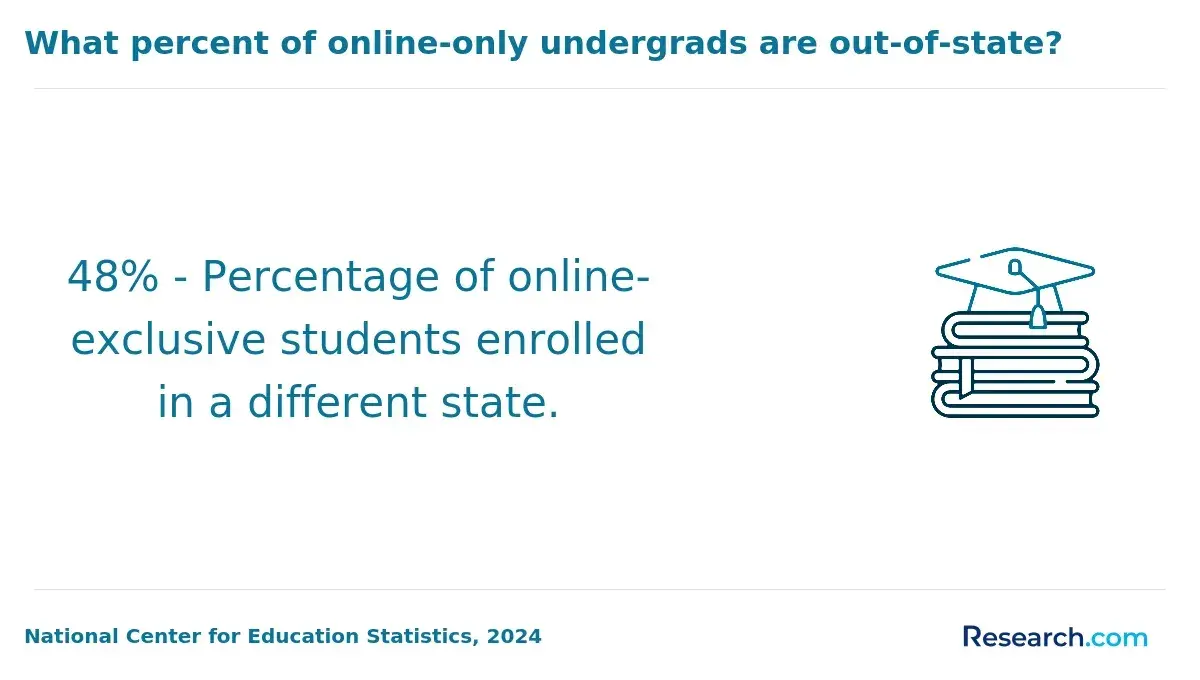
Residency status can matter, but it depends on the school's pricing model. Some public universities still charge different graduate tuition rates for in-state and out-of-state students, while others use a flat online rate for all distance learners. Private nonprofit and private for-profit institutions often use one rate regardless of state residency, though fees and scholarships can still vary.
The table below shows how residency pricing affects affordability. It also explains when each model may be the better financial choice.
| Pricing model | Who may benefit most | Main advantage | Main risk |
| Public in-state graduate tuition | Residents who qualify under the school's rules | Often the lowest published rate when available | May require proof of residency and may not apply to all online programs |
| Public out-of-state graduate tuition | Students choosing a specialized program outside their state | May provide access to a rare clinical research or health sciences doctoral concentration | Can be significantly more expensive than in-state or flat-rate online options |
| Flat-rate online tuition | Working adults comparing programs nationwide | Simplifies comparison and may reduce the penalty for living out of state | May still include technology, residency, or dissertation fees |
| Private institution flat tuition | Students prioritizing curriculum fit, faculty expertise, or flexible scheduling | Predictable pricing regardless of state | Sticker price may be higher, so aid and employer support become more important |
Do not assume an online program automatically qualifies you for the lowest public university rate. Ask whether the rate is determined by your physical residence, program modality, campus classification, or a special online tuition policy.
A practical rule is to compare total program cost, not residency labels. A public out-of-state program with fewer credits and no residency travel may cost less than an in-state option with higher fees and longer dissertation enrollment.
How do total costs for an online Clinical Research Management doctorate compare to traditional on-campus programs?
Online programs are not automatically cheaper, but they often reduce indirect costs. The biggest savings usually come from avoiding relocation, commuting, parking, and lost work hours. For working clinical research coordinators, trial managers, regulatory specialists, and healthcare administrators, preserving income can be more valuable than a small tuition difference.
The comparison below separates direct academic charges from lifestyle and opportunity costs. This distinction is important because a program with similar tuition can still be more affordable if it allows you to remain employed full time.
| Cost category | Online doctorate | On-campus doctorate | Decision factor |
| Tuition | May be per-credit, flat-rate online, or residency-based | Often residency-based at public universities | Compare total credits and annual tuition increases |
| Fees | Technology, online learning, and dissertation fees are common | Campus, facility, student activity, and lab fees may apply | Ask for a complete fee schedule |
| Travel and housing | Usually lower, unless residencies are required | Can be high if relocation or commuting is needed | Estimate costs across the full program length |
| Employment flexibility | Often designed for working professionals | May require daytime availability | Consider lost wages, not just tuition |
| Networking | May rely on virtual cohorts and professional placements | May provide more in-person faculty and lab access | Choose based on career goals and research needs |
If you are comparing online doctoral options across healthcare fields, reviewing the cost structure of an online pharmacy school can help you see how other professional doctorates handle tuition, fees, and affordability trade-offs.
Online is usually the stronger financial fit when you already work in clinical research and need to keep earning while studying. On-campus may make more sense when your research requires lab access, funded assistantships, or intensive faculty collaboration that the online program cannot provide.
Can graduate assistantships and fellowships reduce online Clinical Research Management doctorate costs?
They can, but online doctoral students should not assume they will be eligible. Traditional assistantships often require on-campus teaching, lab work, or administrative hours. Online professional doctorates may offer fewer assistantships than research-intensive PhD programs, but some schools provide doctoral scholarships, tuition discounts, research assistant roles, or dissertation fellowships.
Use the following checklist when asking about institutional funding. It helps you separate true tuition reduction from awards that are limited, competitive, or unavailable to distance learners.
- Ask whether online doctoral students are eligible for the same assistantships as on-campus doctoral students.
- Confirm whether an assistantship includes tuition remission, a stipend, health insurance support, or only hourly pay.
- Ask how many awards are typically available to students in the clinical research, health sciences, or related doctoral department.
- Find out whether part-time students can qualify, since many working professionals enroll part time.
- Ask whether dissertation-stage students can apply for completion fellowships or research grants.
- Request the renewal criteria, including GPA, enrollment load, work-hour expectations, and satisfactory academic progress rules.
The main red flag is an advertised "doctoral funding opportunity" that is not actually available to online or professional-practice students. If funding is central to your decision, get eligibility and award details in writing before paying an enrollment deposit.
What financial aid options are available for students enrolled in an online Clinical Research Management doctorate?
Eligible online doctoral students can often use the same federal financial aid system as campus-based graduate students, provided the institution is properly accredited and the program meets federal aid requirements. The Free Application for Federal Student Aid is the starting point for federal loans and some institutional aid decisions.
For 2025-26, federal graduate Direct Unsubsidized Loans carry a 7.94% fixed interest rate, and Grad PLUS Loans carry an 8.94% fixed interest rate. Those rates make it important to borrow only what you need and to prioritize scholarships, employer support, and payment plans before relying heavily on PLUS borrowing.
| Funding option | Typical value or limit | Best use | Important limitation |
| Direct Unsubsidized Loan | Up to $20,500 per academic year for eligible graduate students | Core federal loan source for tuition and required costs | Interest accrues during enrollment |
| Grad PLUS Loan | Up to the school-certified cost of attendance minus other aid | Covering remaining tuition, fees, and approved living costs | Higher interest rate and credit check requirement |
| Institutional scholarship | Varies by school and program | Reducing tuition without increasing debt | May be competitive, renewable, or limited to certain enrollment levels |
| Payment plan | Spreads charges across a term | Reducing short-term cash pressure | Does not reduce the actual price |
| External scholarship or professional grant | Varies by sponsor | Supporting dissertation, conference, or research expenses | Deadlines and eligibility criteria vary widely |
Students comparing health doctoral options may also want to examine how tuition and aid differ in an online pharmacy school, especially because professional doctorates can use different pricing models than research-oriented PhD programs.
Before borrowing, ask the financial aid office to explain the full cost of attendance, loan origination fees, annual borrowing limits, satisfactory academic progress rules, and what happens financially if dissertation completion takes longer than expected.
Does employer tuition reimbursement cover an online Clinical Research Management doctorate?
Employer tuition reimbursement may cover an online Clinical Research Management doctorate when the degree is job-related and the employee meets company rules. This is commonest when the student already works in clinical research operations, pharmaceutical research, contract research organizations, academic medical centers, hospital research administration, regulatory affairs, quality assurance, or healthcare data leadership.
Under current IRS educational assistance rules, employers can generally provide up to $5,250 per employee per year in tax-free educational assistance when the plan qualifies. That amount will not pay for an entire doctorate by itself, but over several years it can meaningfully reduce the amount a student borrows.
Employer reimbursement policies vary, so read the plan before enrolling. Pay close attention to these terms because they affect your real savings.
- Annual reimbursement cap and whether the cap follows the calendar year, fiscal year, or academic year.
- Minimum grade requirement for reimbursement after each course or term.
- Whether doctoral tuition, dissertation credits, fees, books, and technology charges are eligible.
- Whether the school must be regionally accredited or otherwise approved by the employer.
- Whether reimbursement is paid upfront, after grades post, or after proof of payment.
- Service commitment or repayment clause if you leave the employer shortly after receiving benefits.
Employer support makes the most sense when the doctorate directly supports a business need, such as improving trial start-up timelines, strengthening regulatory compliance, leading decentralized trial operations, managing research teams, or building evidence-generation strategy.
How can working professionals negotiate employer sponsorship for an online Clinical Research Management doctorate?
The strongest sponsorship request is not framed as a personal education wish. It is framed as a business case showing how the doctorate will help the organization solve problems in clinical trial operations, quality systems, research compliance, protocol management, patient recruitment, vendor oversight, or data-driven decision-making.
Use this sequence to prepare the conversation. It gives your manager and human resources team the information they need to evaluate cost, risk, and return.
- Identify the employer's current pain points, such as slow study activation, audit findings, staff turnover, protocol deviations, or trial budget overruns.
- Match specific courses, dissertation topics, or applied projects to those pain points.
- Prepare a cost-sharing proposal that includes tuition, fees, expected employer contribution, your personal contribution, and any federal aid you may use.
- Offer a work-continuity plan showing how you will maintain performance during coursework and dissertation milestones.
- Ask for partial sponsorship if full tuition coverage is unrealistic, such as annual reimbursement, paid conference travel, dissertation data support, or flexible scheduling.
- Clarify service commitments in writing so both sides understand repayment rules if your employment changes.
A common mistake is asking only after admission, when deadlines and deposits create pressure. Start the conversation before applying so you can choose programs that fit the employer's reimbursement rules and your department's budget cycle.
If your organization is cautious, propose a pilot arrangement for the first academic year. After you demonstrate course success and work impact, you can request expanded sponsorship for later dissertation or leadership coursework.
What ROI can graduates expect from an online Clinical Research Management doctorate?
ROI depends on the student's starting role, total program cost, debt level, employer support, and career path after graduation. A doctorate may be most valuable for professionals pursuing senior clinical research leadership, research administration, regulatory strategy, academic teaching, consulting, or executive roles where advanced research expertise and management credibility matter.
Recent U.S. labor data gives useful context, although it does not isolate this exact degree. The Bureau of Labor Statistics reported a 2024 median pay of $117,960 for medical and health services managers, while medical scientists had a 2024 median pay of $100,590. These figures should be used as labor-market reference points, not promises of post-graduation earnings.
The table below shows how ROI thinking should change depending on your intended outcome. It helps identify when the degree is more likely to be a strategic investment and when a lower-cost credential may be enough.
| Career goal | Doctorate ROI potential | Why the degree may help | When to be cautious |
| Clinical research director or operations leader | Potentially strong for experienced professionals | Can support leadership credibility, systems thinking, and advanced research oversight | Less useful if you lack several years of clinical research experience |
| Regulatory affairs or quality leadership | Moderate to strong when paired with compliance experience | Can strengthen evidence evaluation, policy interpretation, and organizational leadership | Certifications or targeted master's coursework may be cheaper for some roles |
| Academic teaching or program leadership | Strong when a doctorate is preferred or required | May qualify candidates for faculty, curriculum, or doctoral mentoring responsibilities | Check whether the institution prefers a PhD over a professional doctorate |
| Independent consulting | Variable | Can improve credibility with sponsors, sites, or healthcare organizations | ROI depends heavily on client pipeline and business development skill |
| Career change into clinical research | Often weak as a first step | Doctoral coursework may build knowledge | Entry-level experience or a master's may provide a better cost-to-benefit ratio |
Students considering research-heavy healthcare careers may also compare the doctorate against an online biology degree or other science pathway if they still need foundational preparation before entering clinical research.
A practical ROI test is simple: estimate total debt at graduation, identify realistic roles you could pursue within two to five years, compare likely salary movement to your current compensation, and factor in non-salary value such as promotion eligibility, job security, consulting credibility, and teaching opportunities.
This degree is usually worth considering if you already work in clinical research and need a terminal credential for leadership or academic goals. It may not be the right investment if you are using it to enter the field with no experience, if the program requires heavy borrowing without a clear advancement path, or if a certificate, master's degree, or employer-sponsored training would meet the same goal at lower cost.
Other Things You Should Know About Clinical Research Management
Not always. A PhD is usually research-intensive and may focus on original scholarly contribution, while professional doctorates often emphasize applied leadership, operations, and practice-based research. Employers and universities may value these credentials differently, so match the degree type to your target role.
Many working adults should plan for roughly three to five years, depending on transfer credit, course load, dissertation progress, and whether the program uses a cohort format. The longer the dissertation phase lasts, the more continuation fees and indirect costs can accumulate.
At minimum, confirm that the institution is accredited by an agency recognized by the U.S. Department of Education. Also check whether the program's school or department has relevant professional recognition in health sciences, public health, research administration, or regulatory education if that matters for your career goal.
Usually not for clinical research management roles, but requirements vary by job. Some positions prefer candidates with nursing, pharmacy, medicine, public health, or other clinical backgrounds, while others focus on trial operations, regulatory knowledge, data management, or leadership experience.
References
- Average Cost of a Doctorate Degree [2026]: Ph.D., Psy.D. & More https://educationdata.org/average-cost-of-a-doctorate-degree
- Costs guidance for grants | Cancer Research UK https://www.cancerresearchuk.org/for-researchers/apply-for-and-manage-your-funding/research-policies-and-guidance/costs-guidance-grants
- How Much Does It Typically Cost to Take a Clinical Research Course? - Clinical Research Courses FAQ | VIARES https://viares.com/blog/general/how-much-does-it-typically-cost-to-take-a-clinical-research-course/
- How Does Tuition Reimbursement Work? (And How to Ask for It) https://www.wallstreetprep.com/knowledge/how-does-tuition-reimbursement-work-and-how-to-ask-for-it/
- Educational Funding https://phdproject.org/educational-funding/
- 2025 Most Affordable Online Doctorates in Education https://www.onlineu.com/most-affordable-colleges/education-doctoral-degrees
- The Difference Between Public and Private Nonprofit Colleges — GGU Military https://military.ggu.edu/blog/private-nonprofit-college-benefits
- Tuition fees for research courses 2025-2026 https://www.cranfield.ac.uk/study/taught-degrees/fees-and-funding/research-tuition-fees-2025
- Funding your Degree https://gradsense.org/funding-your-degree/
- How Much Does a PhD Cost https://aituedu.org/how-much-does-a-phd-cost/