2027 Online Clinical Research Management Degree Programs With No Application Fee and Rolling Admissions

Co-Founder and Chief Data Scientist
Choosing an online clinical research management degree is often a timing and cost decision as much as an academic one. The field matters because clinical trials, regulatory compliance, data quality, and patient safety all depend on trained research professionals. The U. S. Bureau of Labor Statistics reports a May 2024 median wage of $100,590 for medical scientists, a related career category.
This guide helps working adults, career changers, and healthcare professionals compare no-fee, rolling-admission programs without mistaking admissions convenience for overall value.
Key Things You Should Know
- No-application-fee programs can save an applicant $50 to $300 upfront when applying to several schools, but tuition, technology fees, practicum costs, and transfer-credit rules usually matter far more.
- Rolling admissions means applications are reviewed as they arrive; it does not mean unlimited seats, automatic admission, or identical course availability at every start date.
- The strongest choices combine institutional accreditation, transparent total cost, clinical research-focused curriculum, flexible start dates, and outcomes aligned with roles such as clinical research coordinator, trial manager, regulatory specialist, or clinical operations manager.
Which Online Clinical Research Management Degree Programs Have No Application Fee and Rolling Admissions?
Online clinical research management degrees are usually offered as master's degrees, graduate certificates, or bachelor's-completion programs connected to clinical trials, regulatory affairs, health sciences, or research administration. Because application-fee and rolling-admission policies change frequently, students should treat any program list as a starting point and verify both features directly on the admissions page or with the graduate admissions office before applying.
The table below shows how to evaluate programs that are commonly positioned for online clinical research, clinical trial management, or clinical research administration students. Use it to compare fit, not as a substitute for confirming the current fee waiver and admissions calendar.
| Program or program type to verify | Credential level | Online availability | No-application-fee point to confirm | Rolling-admissions point to confirm | Best fit |
| National University-style online clinical research administration programs | Master's or graduate certificate | Often fully online | Confirm whether the school currently charges $0 for the specific graduate application | Confirm monthly or multiple annual start dates | Working adults who want frequent entry points and accelerated course blocks |
| MCPHS-style online clinical research programs | Master's or graduate certificate | Often online or low-residency | Confirm whether the health sciences graduate application is currently free | Confirm whether review is rolling until a cohort is full | Students seeking a health-sciences institution with clinical trial and regulatory coursework |
| Campbell University-style clinical research programs | Master's | Online or hybrid options may vary | Confirm whether the graduate application fee is waived for the program | Confirm application review windows and start terms | Students who want a program connected to pharmacy, health sciences, or applied clinical research |
| Online regulatory affairs and clinical trial management programs | Master's or certificate | Commonly online | Confirm whether the institution charges no fee or offers a waiver code | Confirm whether applications are reviewed continuously or by priority deadline | Applicants focused on FDA submissions, compliance, monitoring, or sponsor-side operations |
A school should not be considered a true match unless it confirms both conditions for the exact program and term: no application fee and rolling or continuous admissions. Some universities waive fees only during promotions, only for domestic applicants, only for alumni, or only after a webinar or advisor code.
How Does Rolling Admission Work for Online Clinical Research Management Degree Programs?
Rolling admission means a program reviews completed applications as they are submitted rather than waiting for one fixed deadline. In online clinical research management programs, this can help applicants start sooner, but it also means earlier applicants may have better access to seats, scholarships, preferred start terms, and first-course availability.
This comparison shows how rolling admissions differs from fixed-deadline admissions and why the difference matters for online students balancing work, transcripts, and financial aid.
| Admissions model | How review usually works | Student advantage | Main risk | Best strategy |
| Rolling admission | Applications are reviewed as files become complete | More flexibility and faster decisions | Seats or scholarships may run out before the final date | Apply early once transcripts and references are ready |
| Priority deadline with rolling review | Early applicants receive first consideration, then review continues if space remains | Balances flexibility with scholarship access | Late applicants may have fewer aid options | Use the priority deadline as the real deadline |
| Fixed deadline | Applications are reviewed after a set date | Clear planning timeline | Missed deadline may delay enrollment by a term or year | Work backward from the deadline by at least 8 to 12 weeks |
Students should confirm exactly what "rolling" means before relying on it. Ask whether admissions decisions are released weekly, monthly, or after committee meetings; whether each start date has limited seats; and whether financial aid, employer tuition assistance, and course registration have separate deadlines.
How Much Can Students Save by Choosing an Online Clinical Research Management Degree With No Application Fee?
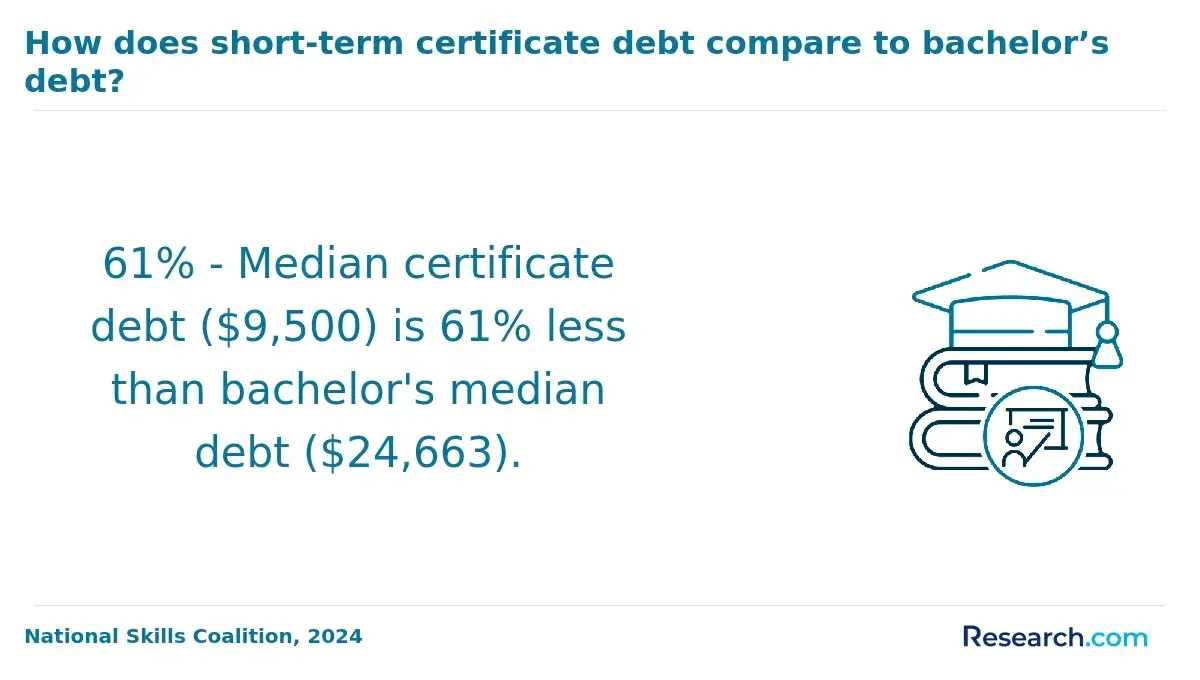
A no-application-fee online clinical research management degree can reduce upfront costs, especially for students comparing multiple schools. However, application-fee savings are usually small compared with tuition, books, technology fees, graduation fees, and the cost of taking extra credits that do not transfer.
The examples below show how fee waivers can help at the application stage while also showing why they should not drive the final enrollment decision by themselves.
| Application scenario | Fee charged by each program | Number of applications | Upfront application cost | What the savings means |
| All selected programs charge no fee | $0 | 4 | $0 | Student can compare several admission offers without application-fee pressure |
| Comparable programs charge a moderate fee | $50 | 4 | $200 | No-fee options free up money for transcript orders, test-score reports, or enrollment deposits |
| Comparable programs charge a higher fee | $75 | 4 | $300 | Savings are useful, but still minor if tuition differs by thousands of dollars |
The bigger financial question is total program cost. For graduate borrowers, Federal Student Aid lists the annual Direct Unsubsidized Loan limit for graduate and professional students at $20,500. That figure matters because a program that costs more than available lower-cost federal loan limits may push students toward Grad PLUS loans, payment plans, employer funding, or personal savings.
A practical rule is to value a waived application fee as a convenience, not as proof of affordability. If Program A saves $75 at application but costs $6,000 more overall than Program B, the no-fee feature is not financially meaningful unless Program A also offers stronger transfer credit, faster completion, better employer alignment, or better aid.
What Are the Admission Requirements for No-Fee Online Clinical Research Management Degree Programs?
Admission requirements vary by degree level, but online clinical research management programs usually look for academic readiness, healthcare or science exposure, professional communication skills, and the ability to handle compliance-heavy coursework. Some programs are designed for current clinical research coordinators, nurses, laboratory professionals, pharmacists, and health administrators, while others accept career changers with prerequisite coursework.
Applicants should expect some combination of the following requirements and should confirm which items are waived, optional, or required for the exact term they want.
- Completed online application, even when the application fee is $0.
- Official transcripts from all colleges attended, including transfer, community college, and graduate coursework.
- Bachelor's degree for master's programs, often with a preferred background in health sciences, life sciences, public health, nursing, pharmacy, or a related field.
- Minimum GPA requirement or conditional-admission pathway for applicants below the standard threshold.
- Resume showing healthcare, research, regulatory, laboratory, data, project management, or patient-facing experience.
- Statement of purpose explaining interest in clinical trials, research operations, patient safety, compliance, or regulatory affairs.
- Letters of recommendation, commonly from supervisors, faculty, principal investigators, or clinical managers.
- Prerequisite coursework in biology, statistics, research methods, healthcare systems, or ethics when required by the program.
- English-language proficiency documentation for applicants whose prior education does not meet the school's exemption rules.
Students comparing clinical research management with advanced nursing leadership should be careful not to mix credentials. A fastest DNP program online is designed for doctoral-level nursing practice, while a clinical research management degree is usually built around trial operations, regulatory compliance, data integrity, and research administration.
When Should Students Apply to Online Clinical Research Management Degree Programs With Rolling Admissions?
Students should apply as soon as they can submit a complete and strong file, not simply as late as the rolling-admissions policy allows. Rolling programs may continue accepting applications, but a late file can still miss course registration windows, financial aid packaging timelines, employer reimbursement deadlines, or limited seats in required first-term courses.
The table below gives a practical application timeline for students targeting an upcoming online start date. It is especially useful for working adults who need time to gather transcripts and employer documentation.
| Time before desired start | What to complete | Why it matters |
| 12 to 16 weeks | Shortlist accredited programs and verify no-fee and rolling-admission policies | Prevents wasted time on programs that do not actually meet both criteria |
| 8 to 12 weeks | Request transcripts and ask recommenders | Incomplete files are one of the most common causes of delayed decisions |
| 6 to 8 weeks | Submit the application and financial aid materials | Allows time for review, aid packaging, and enrollment advising |
| 3 to 6 weeks | Review admission decision, transfer-credit evaluation, and total cost | Gives the student time to compare offers instead of enrolling under pressure |
| 1 to 3 weeks | Register for courses and complete orientation | Late registration may limit access to preferred course sections |
A common mistake is assuming rolling admissions means there is no real deadline. In practice, the best deadline is the earliest date that lets a student submit a complete file while still leaving enough time to compare costs, aid, transfer credits, and schedule fit.
How Can Students Strengthen an Online Clinical Research Management Degree Application?
A strong clinical research management application connects the applicant's background to the work of clinical trials: protecting participants, following protocols, documenting accurately, managing timelines, and communicating across sponsors, sites, investigators, and regulatory teams. This is especially important for online programs because admissions committees want evidence that students can manage independent coursework and professional responsibilities at the same time.
Applicants can improve their files by focusing on evidence rather than broad claims. The following steps help translate work experience into admissions value.
- Use the resume to show research-related responsibilities, such as screening participants, maintaining source documents, handling adverse-event reporting, coordinating IRB submissions, tracking protocol deviations, or managing study calendars.
- In the statement of purpose, name the specific clinical research function you want to grow into, such as clinical operations, site management, regulatory affairs, data management, quality assurance, or trial project management.
- Ask recommenders to comment on reliability, documentation quality, ethics, teamwork, and attention to detail rather than writing only a general character reference.
- If you lack direct trial experience, highlight transferable work in patient care, pharmacy, laboratory science, health IT, public health, compliance, project coordination, or data analysis.
- Address any weak academic history directly by explaining what has changed, such as recent coursework, certifications, professional experience, or improved time-management capacity.
Current employer expectations are shifting toward data literacy, decentralized trial operations, electronic trial master files, remote monitoring tools, and AI-assisted workflows. Applicants do not need to be software engineers, but they should show comfort with regulated technology, careful documentation, privacy expectations, and learning new systems.
Are Online Clinical Research Management Degree Programs With No Application Fees Accredited and Legitimate?
No application fee does not make a program low quality, and rolling admissions does not make a program less legitimate. The key question is whether the institution is properly accredited, whether the curriculum matches clinical research careers, and whether the school is transparent about costs, online requirements, and student support.
Use this checklist before submitting personal information, transcripts, or enrollment deposits to any no-fee program.
- Confirm institutional accreditation through a recognized accreditor listed by the U.S. Department of Education or the Council for Higher Education Accreditation.
- Check whether the degree name and curriculum clearly cover clinical research, clinical trials, regulatory affairs, research ethics, biostatistics, protocol management, quality assurance, or health data.
- Verify whether the program is fully online, hybrid, synchronous, asynchronous, or requires campus visits, intensives, internships, or proctored exams.
- Ask whether credits are transcripted as graduate, undergraduate, certificate, or continuing education credits.
- Confirm whether credits can transfer into a higher credential, such as a master's degree, if you begin with a certificate.
- Review faculty qualifications, student services, library access, career support, and clinical research industry connections.
- Avoid programs that pressure immediate enrollment, hide tuition, refuse to discuss accreditation, or describe rolling admission as guaranteed acceptance.
Accreditation checks are important across health-related online degrees, not only clinical research. For example, students comparing a nursing PhD online should also confirm institutional accreditation, research support, faculty fit, and whether the program's outcomes match the student's career goal.
How Do Financial Aid and Total Costs Compare Among Online Clinical Research Management Degree Programs?
Financial aid and total costs can vary widely among online clinical research management programs, even when application fees are waived. The most affordable choice is usually the program with the best combination of tuition, transfer credit, time to completion, aid eligibility, employer reimbursement compatibility, and career relevance.
The table below summarizes the cost categories students should compare before deciding that a no-fee program is financially better.
| Cost category | What to ask | Why it affects total value |
| Tuition per credit | Is tuition charged by credit, term, subscription period, or flat program rate? | Two programs with the same degree title can differ substantially in total tuition |
| Required credits | How many credits are required after transfer evaluation? | More required credits can outweigh a lower per-credit price |
| Institutional fees | Are there technology, online learning, graduation, library, or clinical placement fees? | Fees can change the real cost beyond advertised tuition |
| Transfer credit | How many prior graduate or professional credits can apply? | Generous transfer rules can reduce both cost and time |
| Books and software | Are e-texts, statistics software, or exam-proctoring tools included? | Course materials can add recurring term costs |
| Financial aid deadlines | Are scholarship, FAFSA, assistantship, or employer reimbursement deadlines separate from admission? | Rolling admission does not automatically extend aid deadlines |
Federal borrowing costs also matter. For loans first disbursed during the 2024-25 award year, Federal Student Aid set the graduate Direct Unsubsidized Loan interest rate at 8.08%. That rate means students should compare out-of-pocket cost, employer assistance, scholarships, and program length before borrowing for a higher-priced option.
The same cost discipline applies to other healthcare pathways. Students comparing clinical research programs with clinical nursing routes may find it useful to review how tuition and total cost are evaluated in lists of the most affordable online FNP programs, even though the career outcomes and licensure paths are different.
Which Students Benefit Most From No-Fee, Rolling-Admission Online Clinical Research Management Degrees?
No-fee, rolling-admission online clinical research management degrees are especially useful for students who need flexibility but are still ready to move quickly. They work best when the applicant has a clear career goal and can use the flexible admissions calendar to start sooner without skipping due diligence.
These student profiles tend to benefit most from this program format.
- Working clinical research coordinators who want to move into project management, monitoring, regulatory affairs, or site leadership.
- Nurses, pharmacists, laboratory professionals, radiology professionals, public health workers, and allied health staff who want to transition into clinical trials or research operations.
- Career changers with science, data, compliance, or healthcare-adjacent experience who need an online format while continuing to work.
- Students applying to several programs who want to compare admission decisions without spending heavily on application fees.
- Applicants who missed a fixed-deadline program but can still begin in a nearby online term through rolling admission.
Students should be cautious if they are choosing the program only because it is easy to apply. A nurse whose primary goal is psychiatric prescribing, for instance, should compare clinical research management with online PMHNP programs because the credentials lead to very different responsibilities, licensure expectations, and career paths.
How Should Students Choose Among No-Fee Online Clinical Research Management Degree Programs?
The best program is not necessarily the one with the fastest application or the lowest upfront fee. Students should choose based on total fit: accreditation, curriculum, career alignment, cost, start-date flexibility, student support, and whether the program helps them reach a realistic next role in clinical research.
Use the following decision process to compare no-fee online clinical research management degree programs before enrolling.
- Confirm the exact credential you need: bachelor's completion, graduate certificate, master's degree, or a related regulatory affairs or health sciences degree.
- Verify the school's current application-fee policy in writing, especially if the fee waiver depends on a code, event, employer partnership, or enrollment advisor.
- Ask admissions to define rolling admission, including decision timing, final file deadlines, start dates, and whether seats are capped.
- Compare total program cost after transfer credits, fees, textbooks, technology, and any required practicum or residency expenses.
- Review the curriculum for clinical trial design, Good Clinical Practice, regulatory requirements, ethics, statistics, protocol management, data quality, and project leadership.
- Ask whether the program supports career goals such as clinical research associate, clinical trial manager, regulatory specialist, clinical operations manager, or research quality professional.
- Check online format details, including synchronous meetings, group work, proctored exams, and whether courses are offered every term.
- Compare financial aid and scholarship deadlines separately from admission deadlines.
- Speak with an advisor about transfer-credit limits, course sequencing, time to completion, and what happens if you pause enrollment.
- Choose the program only if its academic value and career fit remain strong after the no-fee and rolling-admission benefits are removed from the equation.
Students coming from other healthcare fields should also compare whether a different credential better matches their target role. For example, someone seeking entry into imaging rather than clinical trials may need to evaluate online associate radiology tech programs instead of a clinical research management degree.
Other Things You Should Know About Clinical Research Management
It may support roles such as clinical research coordinator, clinical trial assistant, clinical research associate, regulatory affairs specialist, clinical operations specialist, research project manager, or site manager. Job eligibility depends on experience, employer requirements, degree level, and whether the role requires specific certifications.
Certification is not always required, but it can help in some roles. Common industry credentials include certifications from organizations such as ACRP or SOCRA. Employers may require a mix of education, trial experience, Good Clinical Practice training, and role-specific knowledge.
Many programs are fully online, but some include synchronous sessions, applied projects, internships, campus visits, or proctored exams. Students should confirm format details before enrolling, especially if they work full time or live far from campus.
Usually no. Clinical research management degrees generally do not lead to a healthcare license by themselves. They are more often designed for research operations, trial oversight, regulatory work, compliance, and management roles. Licensed professionals should maintain any separate nursing, pharmacy, laboratory, or allied health license required for their current role.
References
- Virtual Postgraduate Certificate in Clinical Trial Management | Parexel Academy https://www.parexel-academy.com/virtual-postgraduate-certificate-in-clinical-trial-management/
- 10 Universities with Full Funding & No Application Fees for International Students (Part 1) https://williamlebeau.com/blog/no-application-fee-full-scholarships-international-students-part-1
- Top Benefits of Clinical Research Training https://ccrps.org/clinical-research-blog/top-benefits-of-clinical-research-training
- Top certifications for clinical research: Boost your career and credibility https://www.sermo.com/resources/certifications-for-clinical-research/
- Why Study Clinical Research Operations? | Innopharma Education https://www.innopharmaeducation.com/blog/why-study-clinical-research-operations
- Getting Started in Clinical Research - ACRP https://acrpnet.org/career-center/getting-started-in-clinical-research
- US Universities Without Application Fee | 2026 International Guide https://northcypruseducation.com/blog/us-universities-without-application-fee-your-complete-guide/
- Clinical Research Management (MS – online) - Biomedical Science Graduate Programs https://school.wakehealth.edu/education-and-training/graduate-programs/clinical-research-management-ms
- Top 25 Clinical Research and Clinical Research Management Master's Degree Programs - Healthcare Management Degree Guide https://www.healthcare-management-degree.net/best/clinical-research-clinical-research-management-masters-programs/
- Buy Now Pay Later | Lafayette Federal Credit Union https://www.lfcu.org/news/youth-student-finances/college-admissions-options-explained-early-action-early-decision-rolling-and-regular/